
Author Name: Bruce Zheng
Author Role: Co-Founder and Valve Engineer at NTGD Valve
Author Bio: Bruce Zheng is Co-Founder and Valve Engineer at NTGD Valve, focusing on industrial valve selection, application, and technical content for global B2B buyers.
Last Updated: May 18, 2026
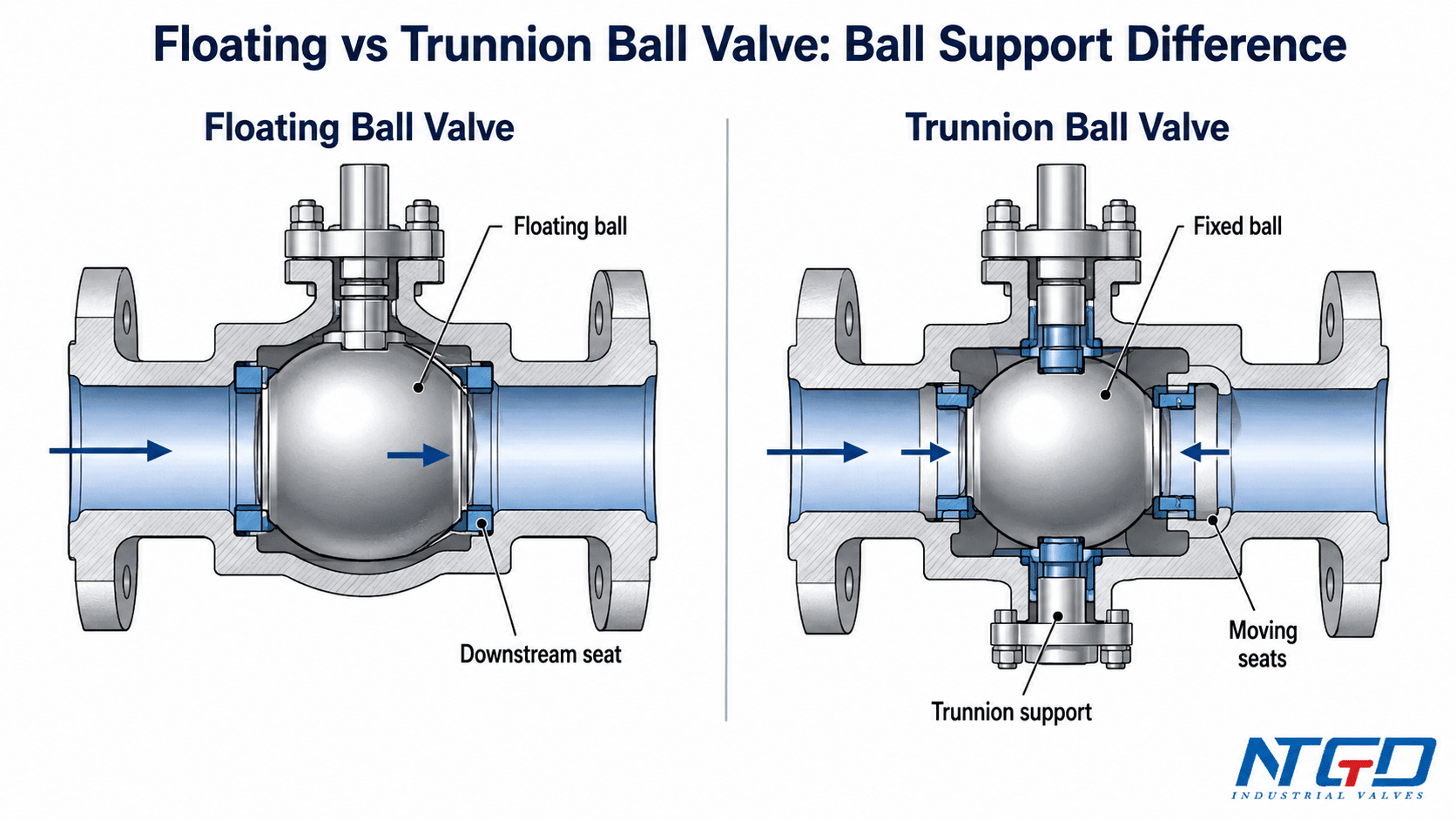
When comparing a trunnion ball valve vs floating ball valve, the main difference is how the ball is supported and how sealing force is created. In a floating ball valve, line pressure pushes the ball slightly toward the downstream seat. In a trunnion ball valve, the ball is mechanically supported by trunnions, and spring-loaded or pressure-assisted seats move toward the fixed ball.
When comparing a floating ball valve vs trunnion ball valve from a selection perspective, floating designs are usually preferred for smaller, cleaner, moderate-pressure shutoff service where simplicity and lower initial cost matter. Trunnion mounted designs are usually preferred for larger sizes, higher pressure, lower operating torque, actuator operation, DBB-related requirements, or critical isolation service.
This guide explains the difference between floating and trunnion ball valve designs from an engineering selection perspective.
Trunnion vs Floating Ball Valve: Quick Comparison
The table below gives a practical overview before looking at each design in more detail.
| Comparison Point | Floating Ball Valve | Trunnion Ball Valve | Selection Meaning |
|---|---|---|---|
| Ball support | Ball is not rigidly supported by trunnions | Ball is supported by upper and lower trunnions or bearings | This determines whether pressure can move the ball against the seat or whether the ball remains fixed under load |
| Ball movement | Ball can move slightly toward the downstream seat | Ball stays fixed and rotates on its axis | Movement affects seat contact stress, operating torque, and wear behavior |
| Seat movement | Seat is generally fixed while the ball moves toward it | Seats move toward the fixed ball | Moving seats are important in many high-pressure trunnion designs because sealing force is controlled by seat design |
| Sealing load path | Line pressure pushes the ball against the downstream seat | Spring-loaded or pressure-assisted seats seal against the fixed ball | The load path directly affects sealing stability, seat load, torque demand, and actuator sizing |
| Pressure suitability | Common in low to moderate pressure service | Common in higher pressure or more demanding service | The final choice depends on pressure, size, seat design, valve rating, and project specification |
| Size suitability | Often used in smaller or moderate sizes | Often selected for larger bore valves | Larger sizes increase the force acting on the ball and seat, making support structure more important |
| Operating torque | Can increase as pressure and size increase | Usually lower in high-pressure or large-size service | Torque affects manual operation, gearbox selection, and pneumatic or electric actuator sizing |
| Cost | Lower initial cost in many applications | Higher initial cost due to more components | Compare upfront cost with lifecycle risk, downtime exposure, and actuator requirements |
| Maintenance | Simpler structure, fewer components | More complex structure, more inspection points | Maintenance planning should consider service severity, seat wear, access, and shutdown cost |
| DBB / cavity relief | Limited or design-dependent | More commonly available in trunnion designs | DBB, body bleed, and cavity relief must be confirmed by seat design and datasheet |
| Typical fit | Clean service, compact pipelines, moderate duty | High-pressure, large-size, automated, or critical isolation service | Use service conditions, not only valve name, to decide |
What Is a Floating Ball Valve?
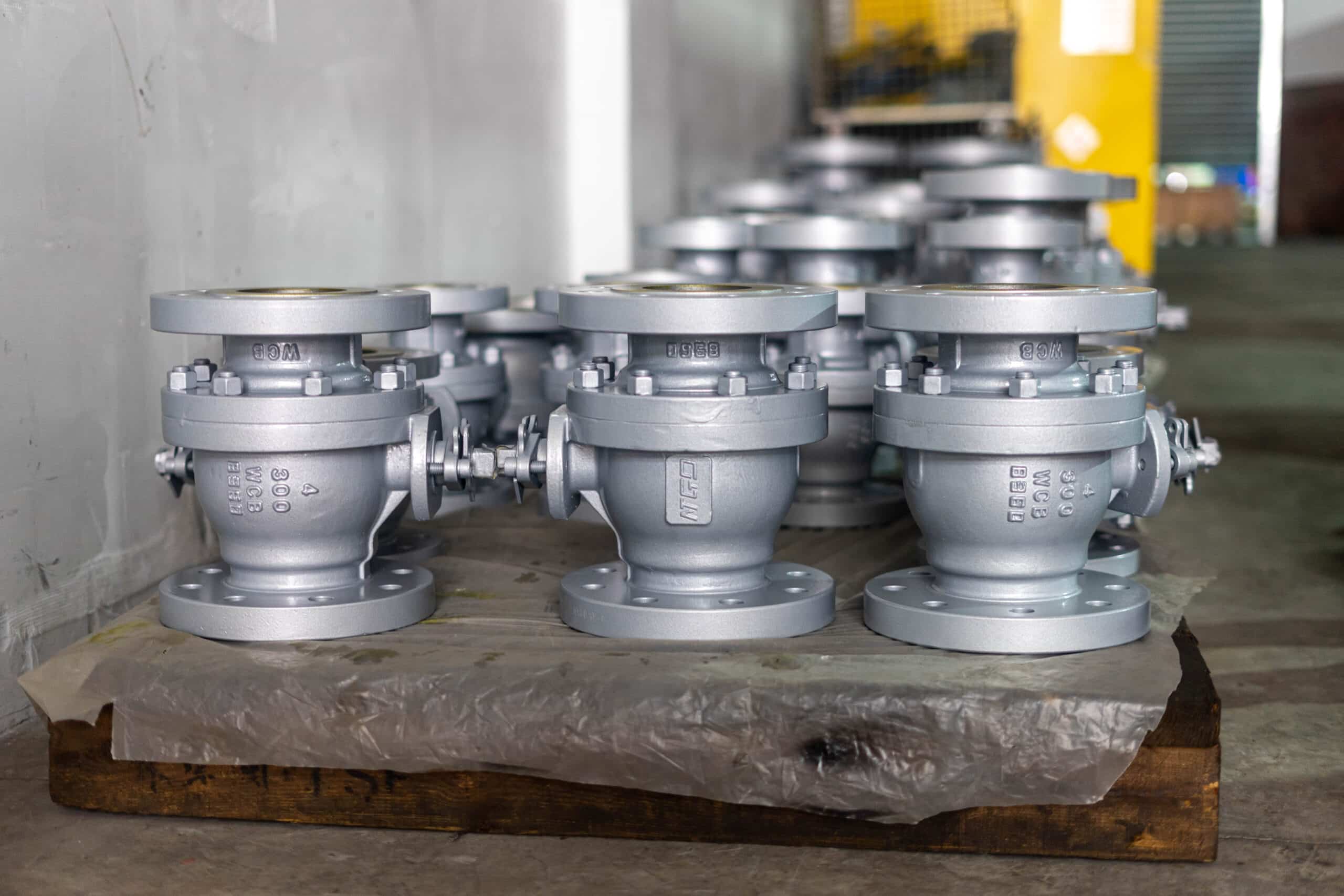
A floating ball valve is a quarter-turn ball valve in which the ball is held mainly by the seats instead of being fixed by trunnions. The stem rotates the ball, but the ball can move slightly inside the valve body when pressure acts on it.
Floating Ball Support and Downstream Seat Sealing
In a floating ball valve, line pressure pushes the ball toward the downstream seat when the valve is closed. The downstream seat carries the main sealing load. This pressure-assisted action helps the valve shut off flow, especially in smaller or moderate-pressure services.
This design is simple and widely used because it has fewer internal support components than a trunnion mounted design. However, as valve size, differential pressure, or service severity increases, the force pushing the ball into the downstream seat can also increase. That higher seat load may raise operating torque, increase seat wear risk, or require closer attention to actuator sizing.
Where Floating Ball Valves Usually Fit
A floating ball valve is often a good fit when the service is relatively clean, the pressure is moderate, and the project requires a compact, cost-effective shutoff valve.
- smaller or moderate pipeline sizes;
- clean liquid or gas service;
- low to medium pressure isolation;
- manual operation or simple automation;
- applications where lower initial cost matters;
- services where DBB or body cavity relief is not a primary requirement.
A floating design should not be selected only because it is simpler or cheaper. Media condition, pressure class, seat material, temperature, and operating frequency still need to be checked before final specification.
What Is a Trunnion Ball Valve?
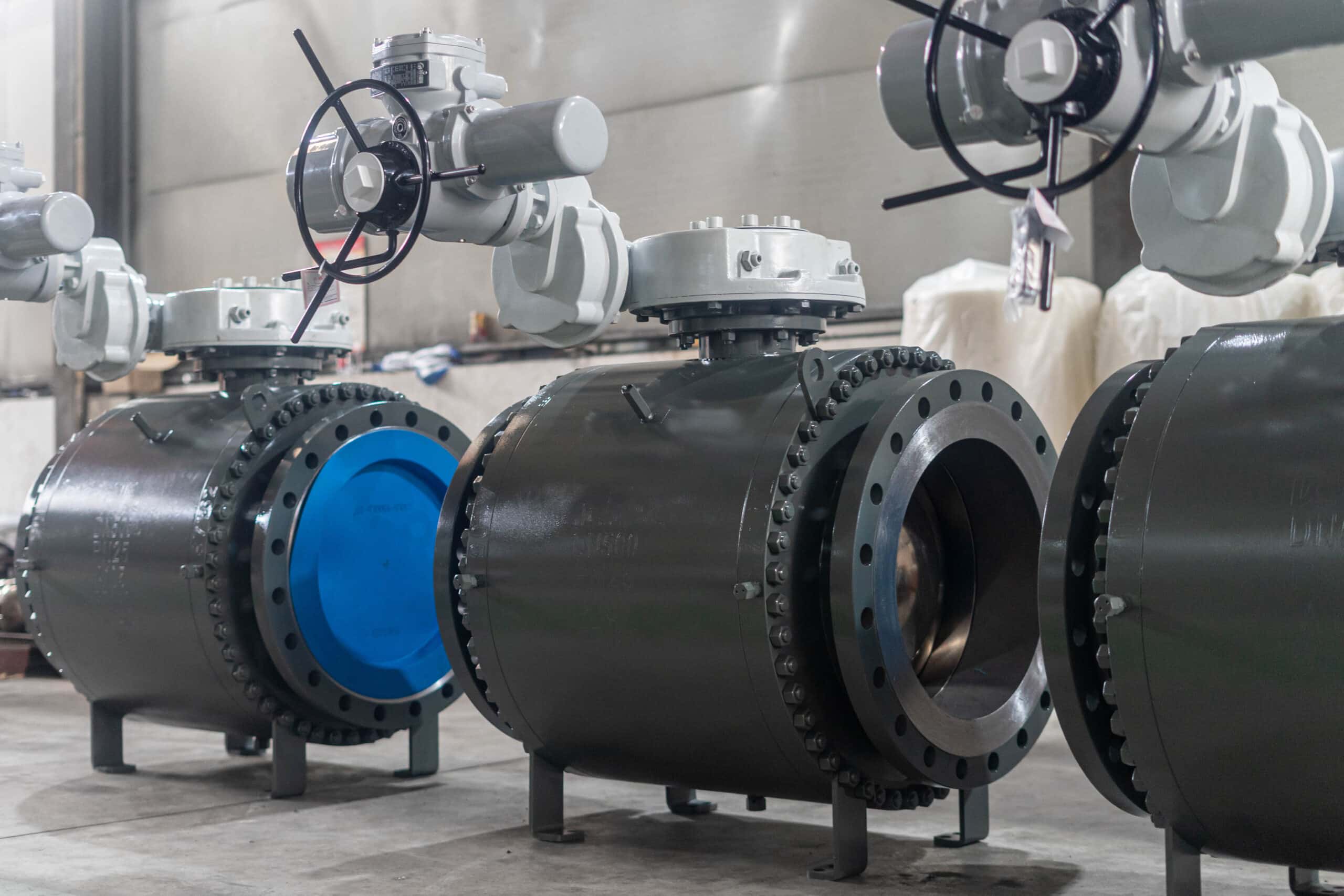
A trunnion ball valve is a ball valve in which the ball is mechanically supported by upper and lower trunnions, shafts, or bearings. The ball remains fixed in position and rotates on its axis instead of being pushed downstream by line pressure.
Fixed Ball Support and Moving Seats
The most important point is:
In a trunnion ball valve, the ball stays fixed, and the seats move toward the ball.
This is sometimes described as a fixed-ball design, because the ball is held in place by upper and lower supports rather than floating downstream under pressure. Spring-loaded or pressure-assisted seats press against the fixed ball to create sealing.
Because the pressure load is absorbed by the trunnion support system instead of forcing the ball heavily into the downstream seat, a trunnion design can reduce operating torque in larger or higher-pressure applications. This fixed ball and moving-seat logic is the engineering reason trunnion mounted ball valves are commonly selected for demanding pipeline isolation, large bore valves, actuator operation, and services where stable sealing and lower torque are important.
Where Trunnion Ball Valves Usually Fit
A trunnion ball valve is often selected when the application involves:
- higher pressure;
- larger valve size;
- frequent operation;
- pneumatic, electric, or hydraulic actuation;
- critical pipeline isolation;
- DBB, body bleed, or cavity relief requirements;
- high differential pressure;
- services where stable torque is important for actuator sizing.
Trunnion ball valves are not automatically “better” in every situation. They usually have more components and a higher initial cost. For smaller, clean, moderate-pressure service, a floating design may be the more efficient choice.
Key Engineering Differences Between Trunnion and Floating Ball Valves
The difference between a trunnion and floating ball valve is not only the name of the design. It is the way pressure load moves through the ball, seats, stem, body, and actuator.
Ball Support and Ball Movement
In a floating ball valve, the ball is supported by the seats and can shift slightly under line pressure. This movement helps press the ball against the downstream seat. In moderate service, this can provide reliable shutoff with a simple structure. In more demanding service, the same movement can increase contact stress between the ball and seat.
In a trunnion ball valve, the ball is supported by trunnions or bearings at the top and bottom. The ball does not move downstream under pressure. It rotates around a fixed axis.
This structural difference affects sealing load, seat wear, operating torque, actuator sizing, and maintenance planning. For engineering selection, the question is not only “which valve is stronger,” but how the support method behaves under the expected pressure, size, media, and operation frequency.
Sealing Load Path and Seat Mechanism
The sealing logic is different in each design.
| Sealing Factor | Floating Ball Valve | Trunnion Ball Valve |
|---|---|---|
| Main movement under pressure | Ball moves slightly toward downstream seat | Seats move toward fixed ball |
| Main sealing location | Downstream seat | Seat-to-ball interface, depending on seat design |
| Load behavior | Ball load on seat can increase with pressure | Trunnion support helps absorb pressure load |
| Torque effect | Higher seat load can increase operating torque | Fixed ball support can reduce torque in demanding service |
| Engineering concern | Seat wear and torque under higher load | Seat design, spring load, DBB / cavity relief configuration |
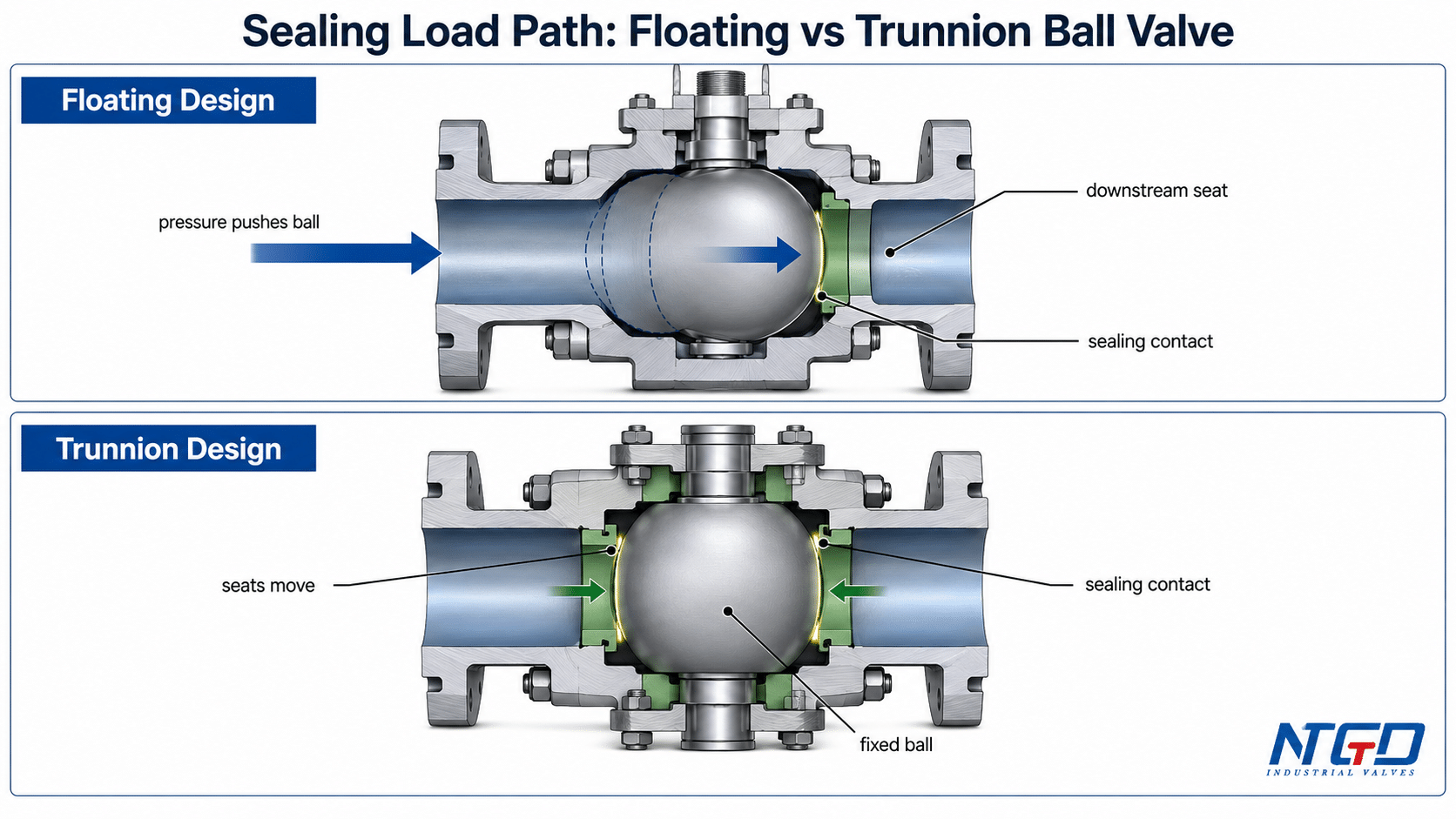
For this reason, a simple feature comparison is not enough. The buyer should confirm how the valve seals, how the seats are designed, and what the project requires under actual operating conditions.
The sealing load path also explains why two ball valves with similar size and pressure class can behave differently in service. A floating design may create more seat load as differential pressure increases, while a trunnion design can distribute pressure load through the support structure and seat mechanism.
Pressure, Size, and Operating Torque
Pressure, size, seat load, and operating torque are connected.
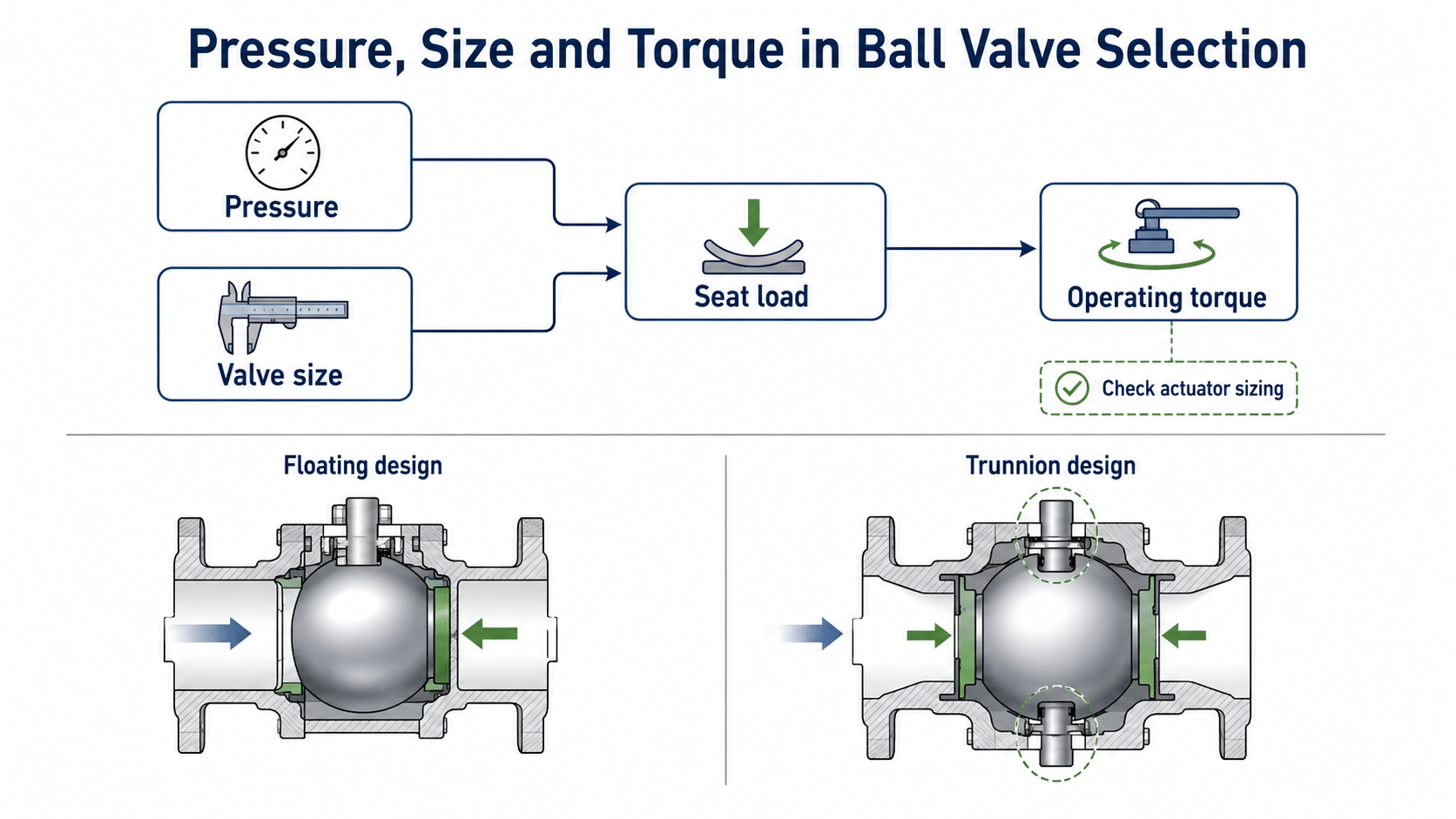
As pressure increases, the force acting on a given area also increases, so the load acting on the ball and seats can increase. As valve size increases, the effective area exposed to pressure can also increase. In a floating ball valve, this can increase the force pressing the ball into the downstream seat. That may make the valve harder to operate, especially in larger sizes or under high differential pressure.
A trunnion ball valve helps manage this load by supporting the ball mechanically. Because the ball is fixed, the valve can often operate with lower torque in high-pressure or large-size service.
This does not mean every high-pressure application must use trunnion design, and it does not mean floating valves cannot handle demanding service. The final decision depends on valve construction, seat material, pressure rating, size, temperature, media, actuator capacity, and manufacturer data.
Actuator Sizing and Automation
Operating torque matters when the valve will be operated by gear, pneumatic actuator, electric actuator, or hydraulic actuator.
If torque is underestimated, the actuator may be oversized, undersized, slow to operate, or unreliable during pressure changes. A floating ball valve can be suitable for many automated services, but in larger or higher-pressure applications, the torque increase may become a key selection issue.
A trunnion mounted ball valve is often preferred when:
- the valve is large;
- pressure is high;
- operation is frequent;
- actuator sizing must remain stable;
- remote or automated isolation is required;
- startup and shutdown conditions create higher differential pressure.
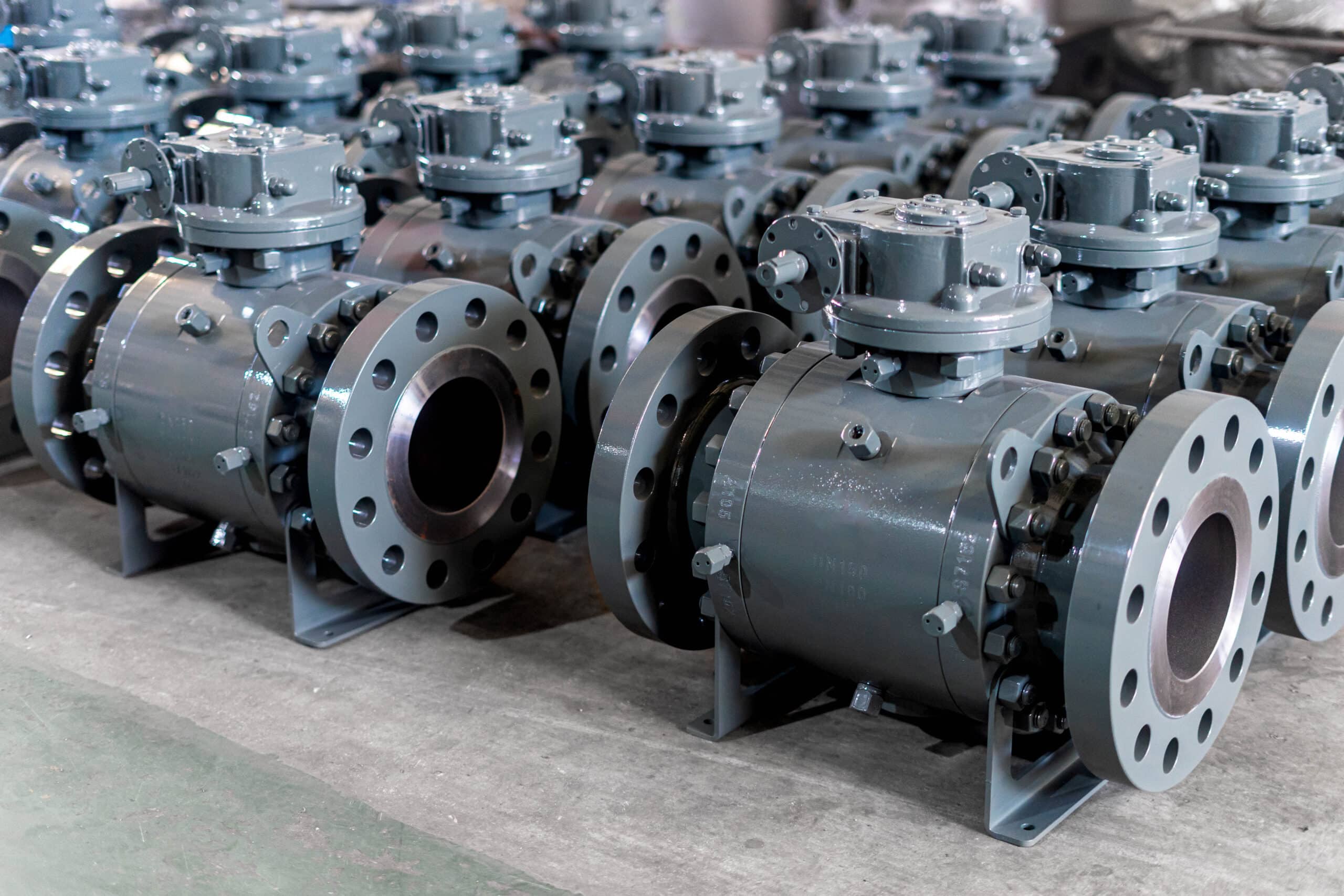
The actuator should be selected from confirmed valve torque data, not from valve type alone. For automated service, the required breakaway torque, running torque, safety factor, and pressure condition should be reviewed together before actuator selection.
Cost, Maintenance, and Lifecycle Trade-Off
Floating ball valves usually have a simpler structure and lower initial cost. This makes them attractive for general service where pressure, size, and operating frequency are not extreme.
Trunnion ball valves normally have more components, such as trunnion supports, bearings, spring-loaded seats, body cavity features, and sometimes DBB-related configurations. This increases initial cost and inspection requirements, but it may reduce operational risk in larger or more critical pipelines.
A practical comparison should include:
| Decision Factor | Floating Ball Valve | Trunnion Ball Valve |
|---|---|---|
| Initial cost | Usually lower | Usually higher |
| Component complexity | Lower | Higher |
| Torque under demanding service | May increase | Often more stable |
| Maintenance planning | Simpler structure | More components to inspect |
| Critical isolation value | Application-dependent | Often stronger fit |
| Lifecycle decision | Best when service is moderate | Best when pressure, size, automation, or shutdown risk matters |
The correct choice is not simply the cheaper valve. It is the valve that fits the service condition and avoids unnecessary lifecycle risk.
DBB, Cavity Relief, and Body Bleed Requirements
Some trunnion ball valve designs can support double block and bleed, body bleed, or cavity pressure relief functions. These features can be important in pipeline isolation, gas service, hydrocarbon service, or critical maintenance operations.
However, DBB or cavity relief should never be assumed only because a valve is trunnion mounted. The ability to achieve DBB or manage cavity overpressure is not inherent to all trunnion mounted valves. It depends on the seat design, sealing arrangement, self-relieving seat configuration, body bleed connection, cavity relief arrangement, and project specification.
If DBB, DIB, body bleed, or cavity pressure relief is required, it should be clearly stated in the RFQ and checked against the valve datasheet.
When to Choose Floating vs Trunnion Ball Valve
A condition-based selection matrix is usually more useful than a long list of industries. The same industry may use both floating and trunnion ball valves depending on pressure, size, media, and operation.
This matrix gives general selection guidance. If conditions are mixed, such as high pressure with a small valve size, moderate pressure with a very large bore, dirty media with automation, or clean service with strict DBB requirements, a more detailed review of torque, seat design, lifecycle cost, and maintenance risk is required.
| Service Condition | Better Fit | Why It Matters | Check Before Final Selection |
|---|---|---|---|
| Small clean pipeline | Floating ball valve | Simpler structure and lower cost may be sufficient | Pressure class, seat material, connection type |
| Moderate pressure shutoff | Floating ball valve, if size and torque remain suitable | Floating design can provide reliable isolation in suitable service | Media, temperature, torque |
| High pressure service | Often trunnion ball valve | Fixed ball support helps manage pressure load | Confirm valve rating and seat design |
| Large bore pipeline | Often trunnion ball valve | Lower torque and stronger support may be needed | Bore size, actuator torque, project standard |
| Frequent operation | Often trunnion | Stable torque can reduce operating risk | Cycle frequency and actuator sizing |
| Automated operation | Often trunnion for demanding service | Torque affects actuator selection | Confirm breakaway and running torque |
| Critical isolation | Often trunnion | DBB or body bleed may be required | Confirm DBB / DIB configuration |
| Tight budget, moderate service | Floating ball valve | Lower initial cost may be acceptable | Do not ignore lifecycle risk |
| Abrasive or high-temperature service | Depends on seat and sealing surface | Floating vs trunnion alone is not enough | Seat material, trim, coating, media condition |
| Limited maintenance access | Depends on lifecycle risk | Shutdown cost may matter more than initial price | Maintenance interval and access space |
Seat Material and Severe Service Boundary
Floating vs trunnion design is only one part of valve selection. In abrasive, corrosive, high-temperature, cryogenic, or metal-seated service, the seat material and sealing surface design may be as important as the ball support structure.
For example, a trunnion design may help manage pressure load, but the wrong seat material can still cause leakage, wear, or operating problems. A floating design may be suitable in clean moderate service, but may not be the right choice for dirty media or severe differential pressure.
When service is severe, confirm:
- seat material;
- body and ball material;
- coating or hardfacing requirement;
- media cleanliness;
- temperature range;
- pressure class;
- operating frequency;
- shutdown and maintenance access.
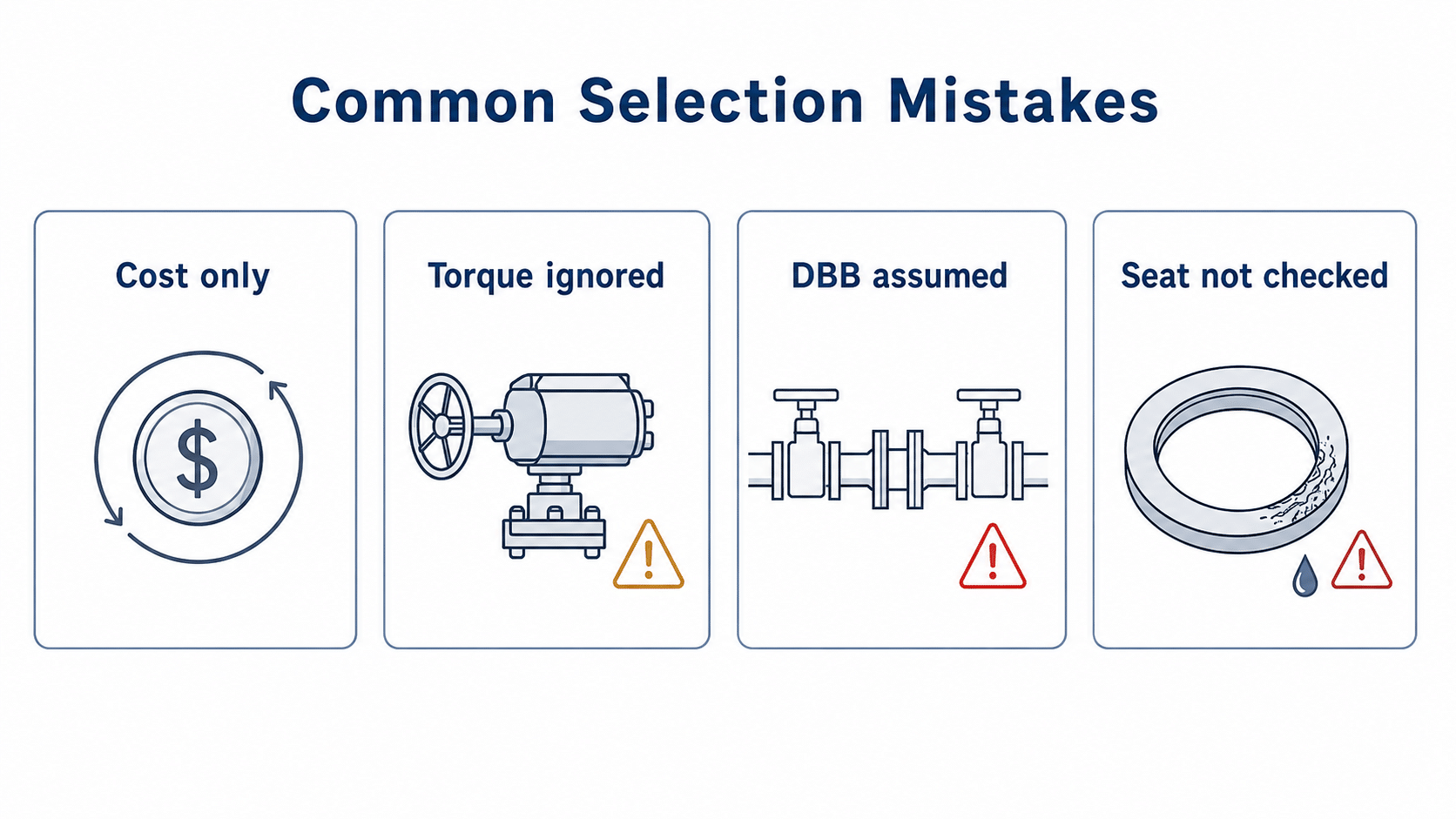
Common Selection Mistakes to Avoid
Choosing by Initial Cost Only
Floating ball valves often cost less at the beginning, but lower initial cost does not always mean lower lifecycle cost. If pressure, torque, shutdown risk, or actuator sizing is ignored, the cheaper option may become more expensive after installation.
Using Floating Design Where Torque Becomes Critical
A floating ball valve can become harder to operate as pressure or valve size increases. If the actuator is selected without checking actual torque requirements, the valve may not operate reliably under real service conditions.
This can lead to slow operation, actuator undersizing, premature seat wear, or unreliable shutoff during startup, shutdown, or high differential pressure conditions.
Overspecifying Trunnion Design for Simple Service
A trunnion ball valve is not always necessary. For smaller, clean, moderate-pressure service, a floating ball valve may provide the required shutoff performance with a simpler structure and lower cost.
Overspecifying trunnion design can increase procurement cost, maintenance complexity, and lead time without improving practical performance.
Ignoring DBB, Seat Design, and Cavity Relief Requirements
DBB and cavity relief are design-specific. They should not be assumed.
Assuming that a standard trunnion ball valve automatically provides DBB or cavity overpressure protection without verifying seat design can create operational risk in critical isolation service. If the project requires DBB, DIB, body bleed, or cavity pressure relief, these requirements must be confirmed before purchase.
Treating Floating vs Trunnion as the Whole Specification
The design choice is important, but it is not the complete valve specification. A correct RFQ also needs material, pressure class, bore type, seat material, temperature range, actuation, end connection, standard, and testing requirements.
Final Checklist Before Selecting Floating or Trunnion Ball Valve
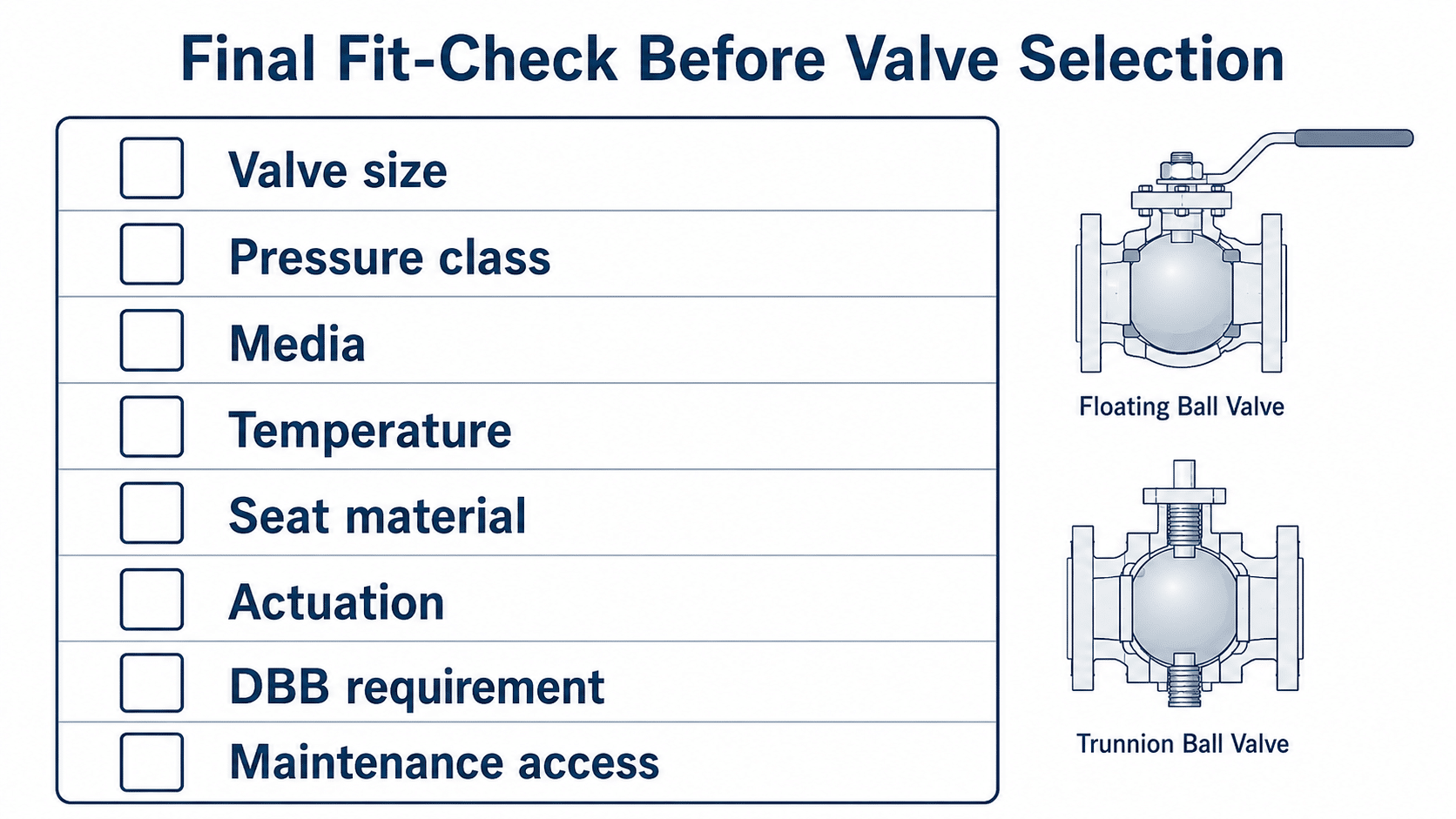
Before selecting a floating or trunnion ball valve, confirm the following information.
| Checklist Item | Why It Matters |
|---|---|
| Valve size / bore | Affects flow capacity, torque, and installation space |
| Pressure class | Helps determine whether floating or trunnion design is suitable |
| Media | Clean, corrosive, abrasive, gas, liquid, slurry, or hydrocarbon service may require different designs |
| Temperature | Affects seat, seal, body, and trim material selection |
| Seat material | Soft seat, reinforced seat, or metal seat may be required depending on service |
| Body and ball material | Must match media, temperature, pressure, and corrosion requirements |
| Operation method | Manual, gear, pneumatic, electric, or hydraulic operation affects torque planning |
| Required operating torque | Important for actuator sizing and reliable operation |
| DBB / cavity relief / body bleed requirement | Must be confirmed by valve design and datasheet |
| End connection | Flanged, welded, threaded, or other connection must match pipeline design |
| Applicable standard or project specification | API, ASME, fire-safe, or project rules may apply depending on service |
| Maintenance access | Impacts inspection, repair, downtime, and lifecycle cost |
| Shutdown risk | Critical lines may justify a more robust design |
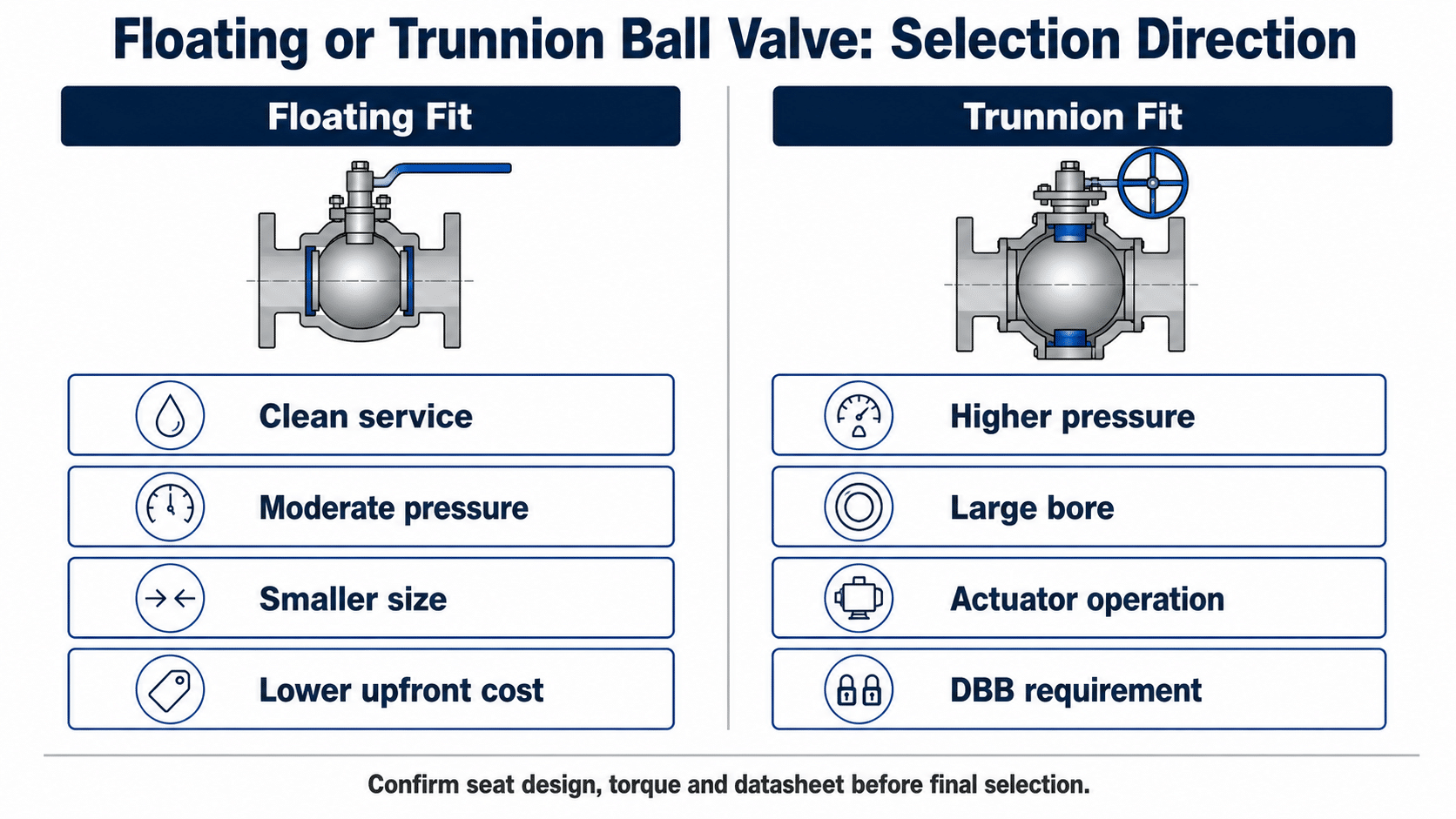
Confirming these parameters is the first step before selecting the valve design. With this information available, an engineering review can verify whether a floating or trunnion ball valve is the better fit for the specific pressure, media, torque, sealing, and maintenance conditions.
This checklist keeps the comparison focused. It does not replace a complete ball valve selection review, but it helps buyers avoid choosing only by valve name or initial price.
FAQ
What is the main difference between a trunnion and a floating ball valve?
The main difference is ball support and sealing load path. In a floating ball valve, line pressure pushes the ball toward the downstream seat. In a trunnion ball valve, the ball is mechanically supported and remains fixed while the seats move toward the ball.
What is a trunnion ball valve?
A trunnion ball valve is a quarter-turn ball valve with a ball supported by trunnions, shafts, or bearings. The ball rotates on a fixed axis, while spring-loaded or pressure-assisted seats seal against the ball.
What is a floating ball valve?
A floating ball valve is a ball valve in which the ball is not fixed by trunnions. The ball can move slightly under line pressure, which pushes it against the downstream seat to create sealing.
When should I use a trunnion mounted ball valve?
Use a trunnion mounted ball valve when the service involves higher pressure, larger size, frequent operation, actuator operation, DBB requirements, body bleed requirements, or critical pipeline isolation.
When should I use a floating ball valve?
Use a floating ball valve when the service is clean, the pressure and size are moderate, the structure should be simple, and lower initial cost is important. Always confirm pressure class, seat material, media, and temperature before final selection.
Why does a trunnion ball valve usually require lower operating torque?
A trunnion ball valve usually requires lower operating torque in demanding service because the ball is mechanically supported. The pressure load is not transferred in the same way as a floating design, where the ball can be forced into the downstream seat.
Is a floating ball valve suitable for high pressure?
A floating ball valve can be designed for many pressure ratings, but suitability depends on valve size, seat design, material, operating torque, and actuator capacity. As pressure and size increase, the seat load and operating torque can become important limitations. For high-pressure or large-size service, a trunnion design is often preferred, but the final decision should follow the valve datasheet and project specification.
Is a trunnion ball valve always better than a floating ball valve?
No. A trunnion ball valve is not always better. It is usually a stronger fit for high-pressure, large-size, automated, or critical isolation service, but it is also more complex and usually more expensive. For simple clean service, a floating ball valve may be the better practical choice.
Does every trunnion ball valve have DBB?
No. DBB capability depends on seat configuration, body construction, sealing arrangement, and body bleed or cavity relief design. If DBB, DIB, body bleed, or cavity relief is required, it should be specified in the RFQ and verified from the manufacturer’s datasheet.
What information should be confirmed before selecting floating or trunnion design?
Confirm valve size, pressure class, media, temperature, seat material, body material, bore, end connection, operation method, actuator requirement, DBB or cavity relief requirement, applicable standard, and maintenance access.
Conclusion
The choice between a trunnion ball valve and a floating ball valve should be based on support structure, sealing load path, pressure, size, torque, operation method, and service risk.
A floating ball valve is often the practical choice for clean, smaller or moderate-pressure shutoff service where simplicity and lower initial cost matter. A trunnion ball valve is often the better fit for high-pressure, large-size, automated, DBB-related, or critical isolation applications where lower torque and stronger support are important.
The safest selection method is not to choose by valve name alone. Confirm the actual service conditions, required sealing function, seat design, actuator torque, material compatibility, and project specification before finalizing the valve.
Need application-specific valve selection support? Prepare the valve size, pressure class, media, temperature, seat material, body material, end connection, operation method, actuator requirement, and DBB or cavity relief requirement. These details help verify whether a floating or trunnion ball valve design is the better fit for the service.
