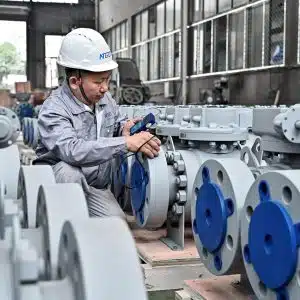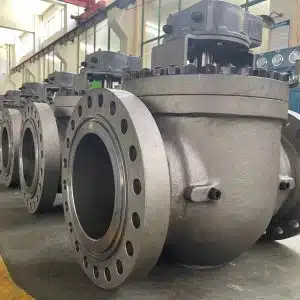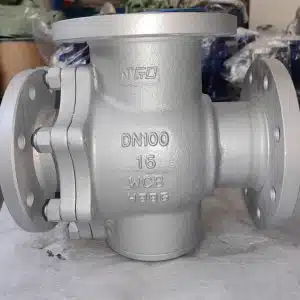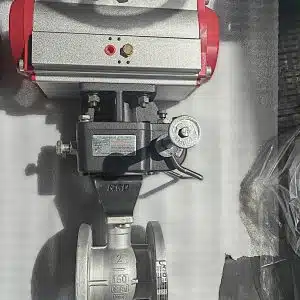
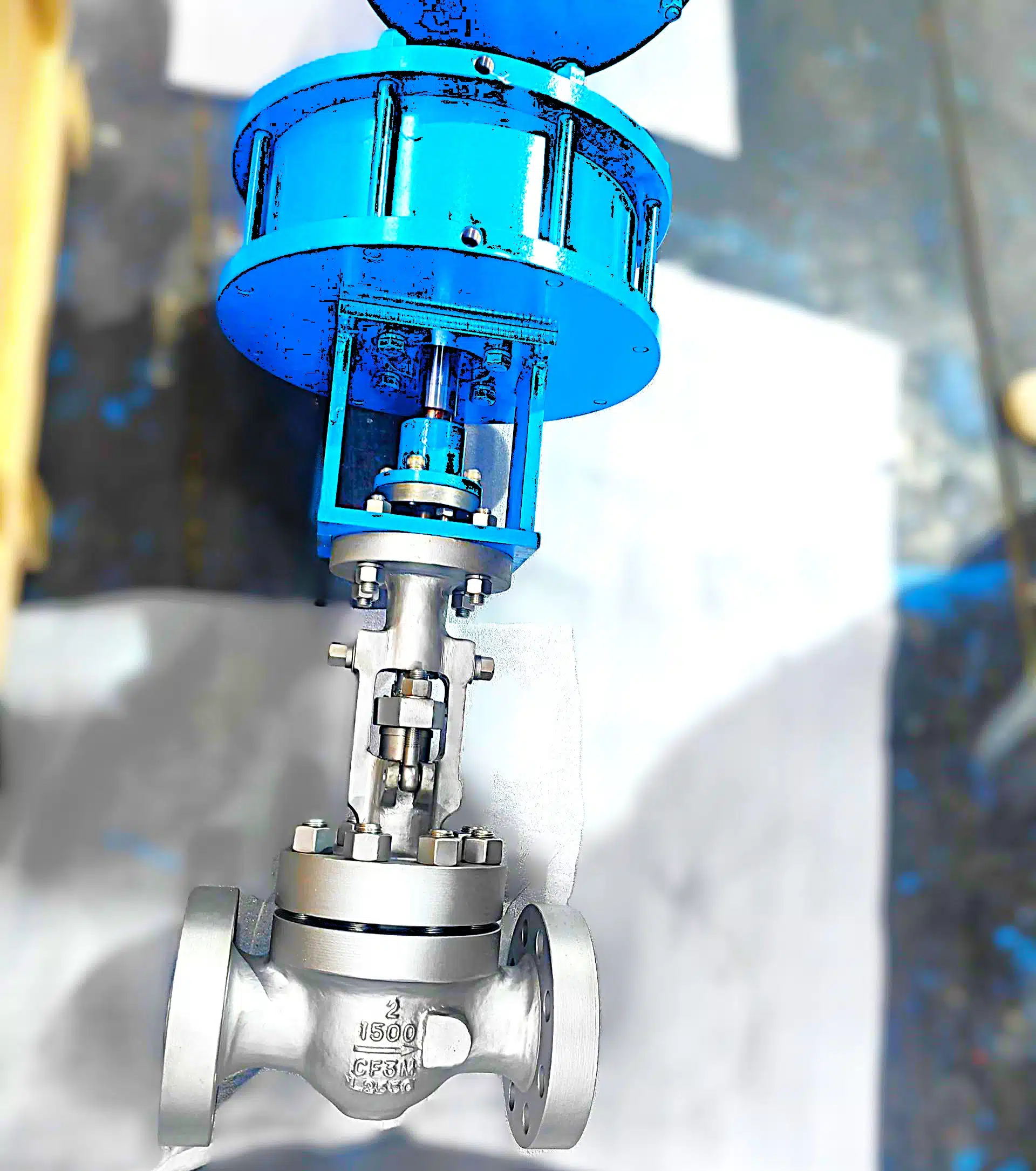
An orbit rising stem ball valve, commonly called an orbit valve, is a severe-service isolation valve designed to achieve tight shutoff without seat rubbing during rotation. Unlike a conventional ball valve, which turns against the seats during opening and closing, an orbit valve uses a lift-then-turn mechanism: the core lifts away from the seat first, rotates without contact, and then wedges back into the shut position. This operating logic helps reduce seat wear, stabilize shutoff performance, and improve service life in demanding isolation duty.
For engineers and buyers, the real question is not simply what an orbit valve is, but when its non-rubbing shutoff design is worth selecting over a conventional ball valve. Orbit valves are typically specified where isolation reliability, repeatable shutoff, and reduced maintenance matter more than lowest first cost, such as gas transmission, molecular sieve dryer switching, meter isolation, emergency shutdown systems, and other critical block service.
NTGD supplies orbit rising stem ball valve solutions for project-oriented applications, with options for manual, pneumatic, electric, and hydraulic actuation, as well as project-based material, pressure class, end connection, and documentation support.
What Is an Orbit Rising Stem Ball Valve?
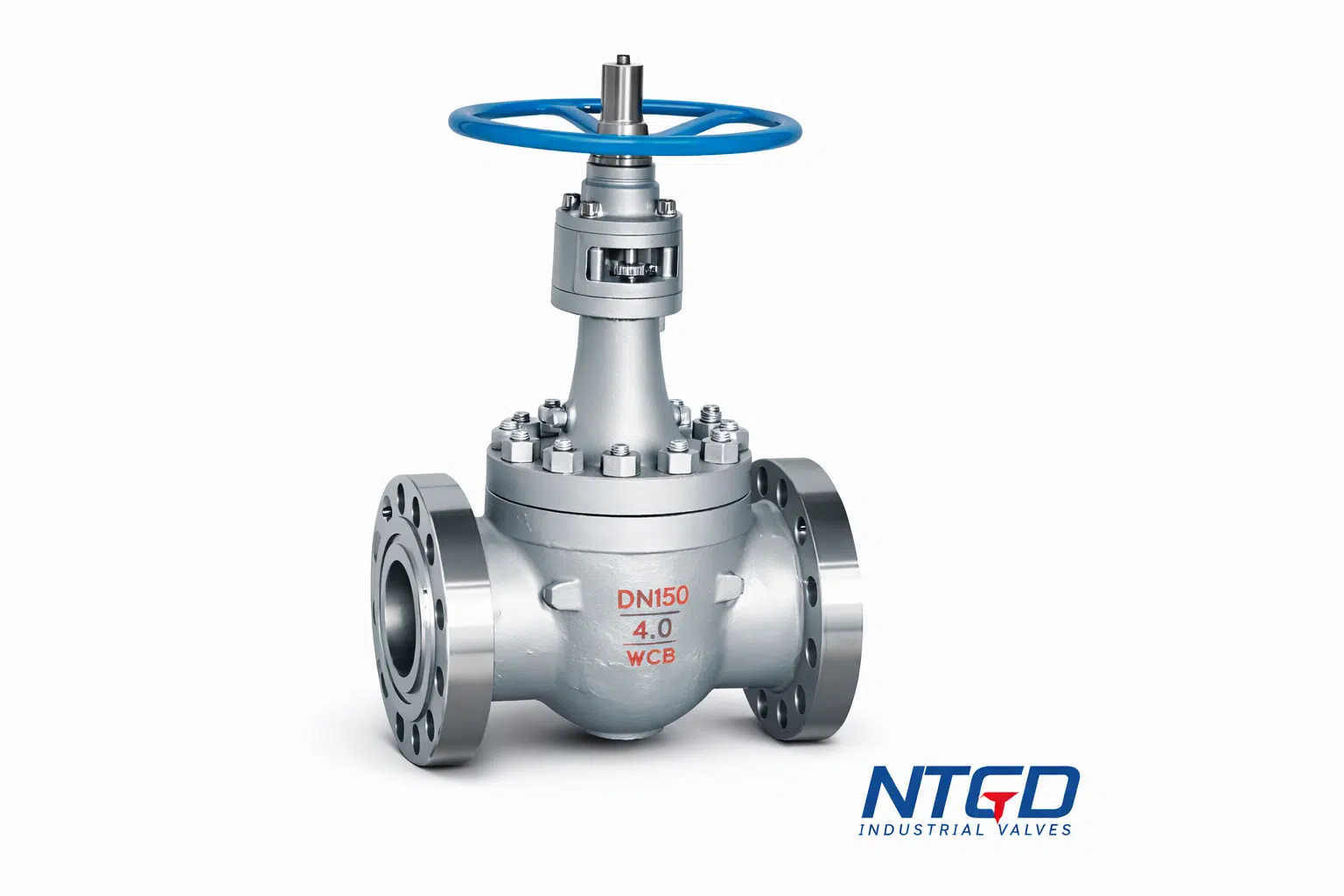
An orbit rising stem ball valve is a quarter-turn isolation valve that combines a ball-type shutoff element with a guided rising stem motion. Its defining feature is that the sealing surfaces are separated before rotation begins. That difference is critical in applications where repeated cycling, seat wear, torque increase, or long-term shutoff stability become real operating concerns.
In practical procurement terms, orbit valves are selected when the application requires:
-
reliable shutoff in critical isolation duty
-
lower seat wear in repeated cycling service
-
more stable torque behavior over time
-
better suitability for severe gas isolation or switching duty
-
engineered selection rather than commodity valve purchasing
This is why orbit valves are widely associated with critical isolation service, not just general shutoff.
Orbit Valve vs Rising Stem Ball Valve
In engineering and procurement language, orbit valve and rising stem ball valve are often used interchangeably. The latter term is more descriptive because it refers directly to the motion of the stem and closure element during operation.
Orbit Valve vs Orbital Valve
Some buyers search for orbital valve when they actually mean orbit valve. On this page, we are referring specifically to the industrial orbit rising stem ball valve used for pipeline and process isolation duty.
How an Orbit Valve Works
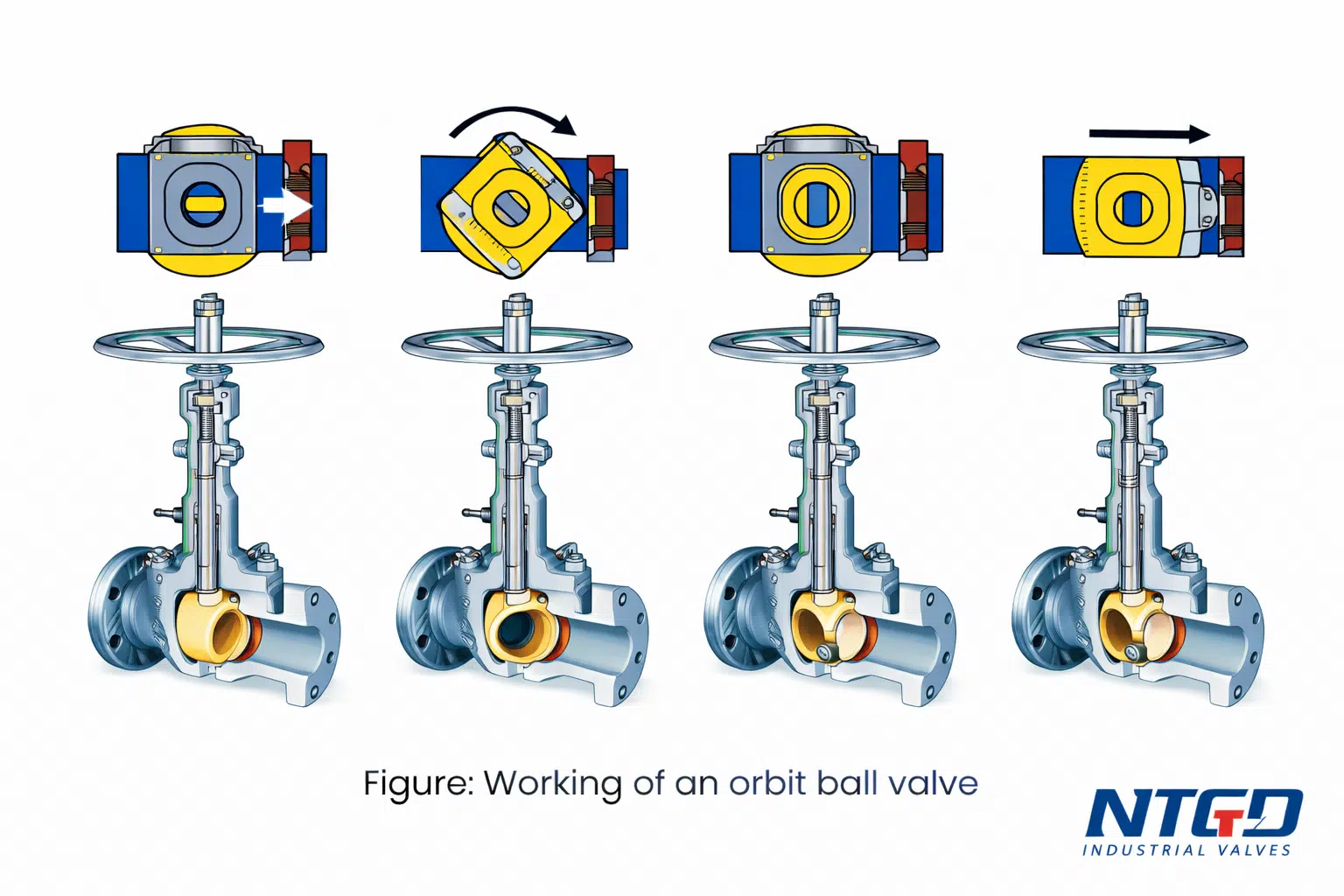
The working principle of an orbit valve is best understood as a four-step operating sequence. The value of this design lies in how the valve closes and opens, not just in what it looks like.
Step 1: Closed and Mechanically Wedged Shut
In the fully closed position, the core is pressed firmly against the seat. The stem and guide mechanism hold the closure element in a wedged shut position that provides positive isolation.
Image block recommendation: Step 1 micro-diagram showing core in full contact with seat
Caption: Closed position — the core is mechanically wedged against the seat for positive shutoff.
Suggested alt text: orbit-rising-stem-ball-valve-closed-position-mechanical-wedging
Step 2: Stem Lifts the Core Away from the Seat
When the valve begins to open, the stem rises through its guided motion and lifts the core clear of the seat before rotation starts. This lift-off action is the reason orbit valves are known for non-rubbing sealing motion.
Image block recommendation: Step 2 micro-diagram showing visible gap between core and seat
Caption: Lift-off stage — the core moves away from the seat before rotation, preventing rubbing.
Suggested alt text: orbit-valve-lift-off-no-rubbing-diagram
Step 3: Core Rotates Without Seat Contact
With the sealing surfaces already separated, the core rotates to the open position without scraping against the seat. This differs fundamentally from a conventional ball valve, where the ball rotates in contact with the seats.
Image block recommendation: Step 3 micro-diagram showing 90-degree rotation in lifted position
Caption: Rotation stage — the core turns without seat contact, minimizing seat wear.
Suggested alt text: orbit-valve-rotation-without-seat-contact-diagram
Step 4: Full Open Flow Path
In the fully open position, the valve provides the intended flow path according to its bore configuration. During closing, the sequence reverses: the core rotates while clear of the seat, then wedges back into the shut position at the end of the stroke.
Image block recommendation: Step 4 micro-diagram showing open flow arrows
Caption: Full open position — flow passes through the valve after the core completes rotation.
Suggested alt text: orbit-valve-full-open-flow-path-diagram
Why This Motion Matters in Real Service
In severe isolation duty, valves do not usually fail because they cannot close once. They fail because repeated operation gradually damages the sealing surfaces, increases leakage risk, or changes torque behavior. The orbit valve mechanism directly addresses that failure mode by separating lifting and rotation.
Orbit Valve Parts and Internal Structure
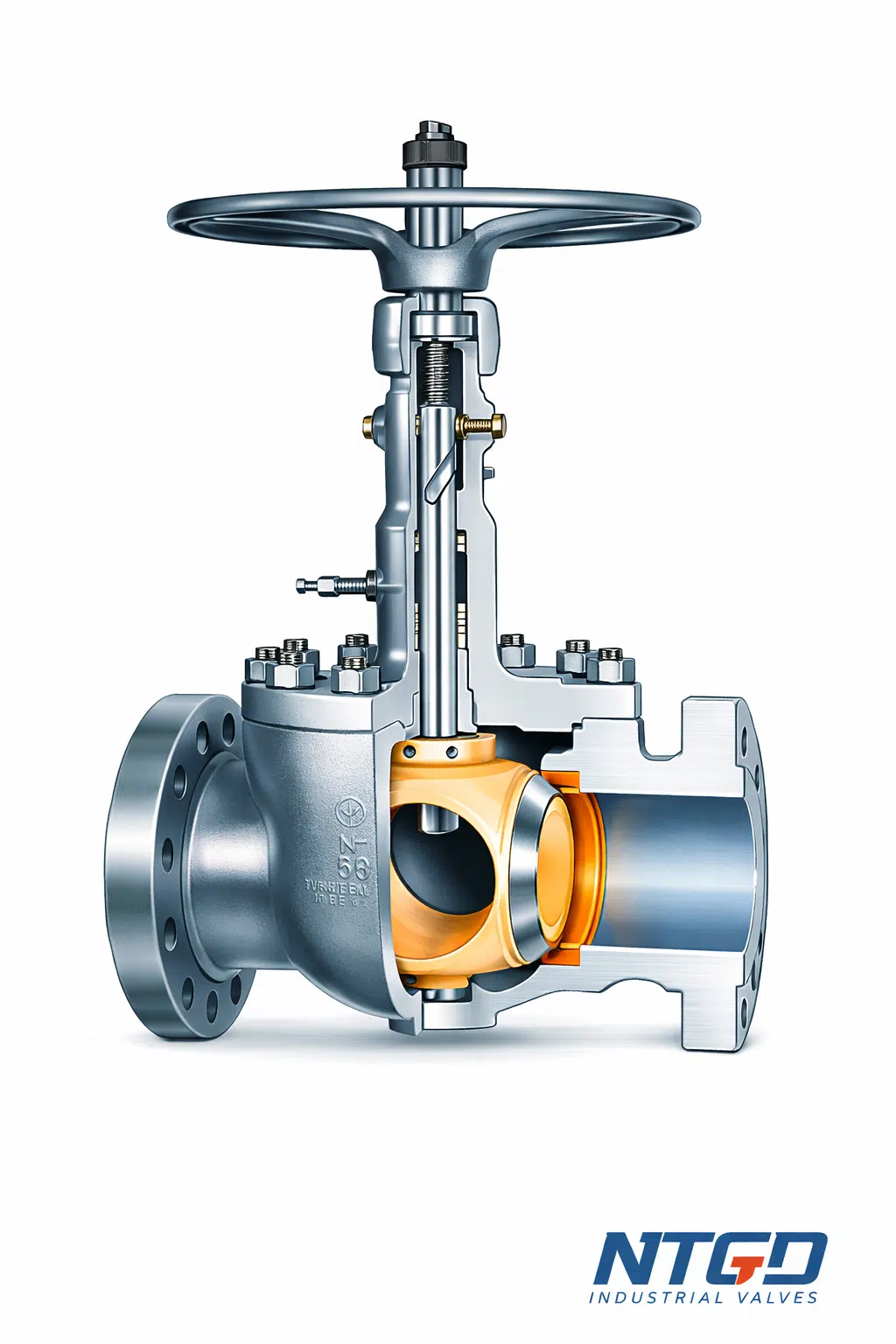
Understanding orbit valve parts is important not only for design review, but also for selection, maintenance planning, replacement parts support, and documentation approval.
Main Parts of an Orbit Valve
| Part | Function | Why It Matters in Selection |
|---|---|---|
| Valve Body | Pressure-containing shell housing the valve internals | Determines pressure class, corrosion resistance, and end connection type. Buyers must confirm whether body material and rating match the service conditions. |
| Bonnet / Top Closure | Provides access to internal components | Influences serviceability, maintenance philosophy, and inspection access. |
| Stem | Transfers actuator or manual motion to the core | Critical to the lift-and-turn sequence, torque transmission, and operating stability. |
| Core / Closure Element | Main shutoff element | Defines shutoff behavior, wear characteristics, and severe-service suitability. |
| Seat | Primary sealing interface | Affects shutoff integrity, wear tendency, and compatibility with the medium and operating cycle frequency. |
| Guide Pin / Guide Slot | Controls rising and rotating movement | Central to motion accuracy and long-term shutoff consistency. |
| Packing | Seals around the stem to prevent external leakage | Important where emissions control, gas service, or low-leakage performance is required. |
| Bearings / Bushings | Support movement and reduce friction | Affect torque smoothness, wear control, and mechanical stability. |
| Actuator Interface | Connects the valve to powered or manual actuation | Important for automation philosophy, shutdown logic, and control integration. |
| Fire-Safe Sealing Elements | Provide backup sealing in fire scenarios | Relevant in hydrocarbon and fire-risk applications where fire-safe design is specified. |
What an Orbit Valve Parts Diagram Should Show
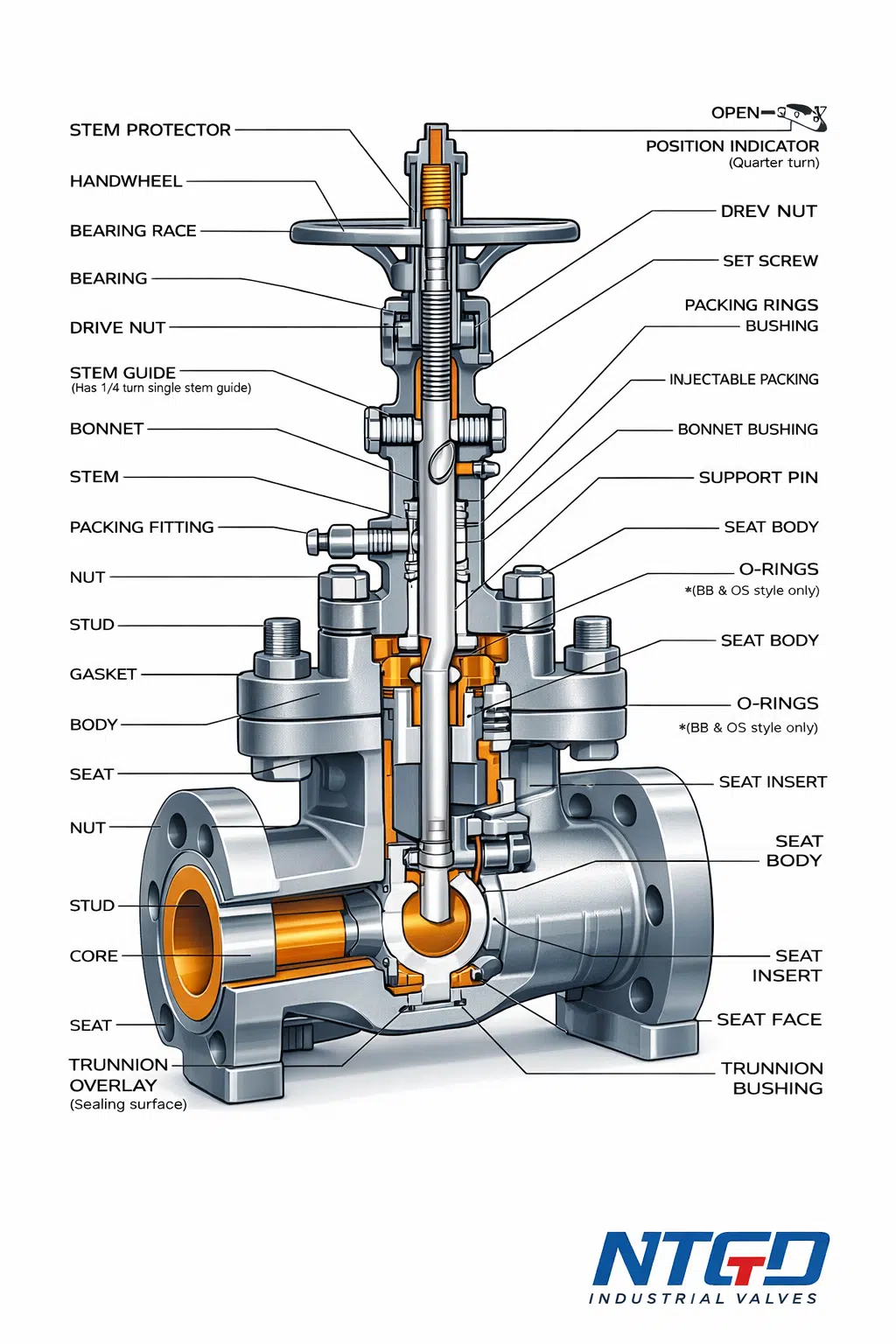
A useful orbit valve parts diagram should clearly identify:
-
body
-
bonnet
-
stem
-
core
-
seat
-
packing
-
guide mechanism
-
bearings
-
actuator interface
-
flow direction
For engineers and maintenance teams, this is more valuable than a generic product photo because it helps clarify how the shutoff structure actually works.
Orbit Valve Replacement Parts & Compatibility
Buyers searching orbit valve parts are often not looking for a definition. They are looking for replacement seats, packing, guide parts, gaskets, or maintenance-related components.
NTGD can support replacement parts inquiries for orbit rising stem ball valves based on available valve information, including:
-
valve size
-
pressure class
-
body material
-
end connection
-
actuation type
-
nameplate data
-
drawing or datasheet
-
installed valve photos, when available
Typical replacement inquiries may involve:
-
seat assemblies
-
packing sets
-
gaskets
-
guide pins or guide components
-
stem-related parts
-
actuator accessories
Replacement support should always be reviewed against actual installed valve data rather than nominal size alone.
CTA: Request Orbit Valve Parts Review | Ask for Parts List Support
Download suggestion: Download Orbit Valve Parts Diagram (PDF)
Orbit Valve Standards and Project Compliance Options
In industrial valve procurement, design explanation alone is not enough, especially when project approval is tied to standards such as API Spec 6D. Buyers also need to know whether the valve can be supplied to the required standards, inspection scope, and documentation package.
Common Compliance References for Orbit Valve Projects
| Feature or Requirement | Common Standard / Reference | Why It Matters to Buyers | NTGD Supply Basis |
|---|---|---|---|
| Pipeline valve design | API 6D | Often required for pipeline and critical isolation applications | Can be reviewed and supplied to project requirement |
| Pressure-temperature design basis | ASME B16.34 | Defines design envelope and rating logic | Can be reviewed and supplied to project requirement |
| Flanged dimensions | ASME B16.5 | Ensures piping compatibility | Available per project configuration |
| Butt-welding ends | ASME B16.25 | Required for welded piping systems | Available per project configuration |
| Fire-safe design | API 607 / API 6FA | Important for hydrocarbon and fire-risk service | Optional, subject to project specification |
| Fugitive emission control | ISO 15848-1 / API 622 | Relevant where low external leakage is required | Optional configuration, subject to project requirement |
| Sour service material review | NACE MR0175 / ISO 15156 | Important for H2S-containing applications | Optional, subject to service review |
| Inspection and testing | Project-specific QA / ITP / test plans | Required for quality control and final acceptance | Documentation scope available upon request |
Core Design Advantages and Compliance Relevance
The value of an orbit valve is not only in the motion itself, but in how that motion relates to project requirements:
-
non-rubbing shutoff logic is relevant where long-term sealing reliability matters
-
packing configuration is important where emissions control or gas service is a procurement checkpoint
-
fire-safe options matter in hydrocarbon systems where post-fire sealing integrity is part of the specification
-
material review matters in corrosive or sour service applications
-
testing and records matter because many project delays happen at documentation review, not at factory assembly
Important Procurement Note
The correct way to specify an orbit valve is not to request only “orbit valve.” A proper RFQ should confirm:
-
applicable standard
-
pressure class
-
body and trim materials
-
fire-safe requirement
-
emissions requirement
-
end connection type
-
actuation method
-
testing scope
-
documentation package
Standards should not be treated as marketing labels. They are procurement and approval parameters that should be confirmed before quotation finalization, not after purchase order release.
Orbit Valve vs Ball Valve
Orbit valves are often discussed alongside ball valves, but the two are not interchangeable in every service from a lifecycle perspective.
| Comparison Item | Orbit Valve | Conventional Ball Valve |
|---|---|---|
| Opening / closing motion | Lift-then-turn rising stem motion | Rotational ball motion against seats |
| Seat rubbing during operation | Minimized by design | Present during normal operation |
| Seat wear tendency | Lower in repeated severe isolation duty | Higher in demanding or high-cycle service |
| Torque trend over time | More stable in suitable severe service | May rise as seats wear or deposits build |
| Shutoff focus | Critical isolation reliability | Broad general-purpose isolation |
| Best use case | Severe block duty, switching service, gas isolation | General plant and pipeline isolation |
| Initial cost | Higher | Usually lower |
| Lifecycle logic | Favored when maintenance and shutoff consistency matter | Favored where service is less demanding and cost sensitivity is higher |
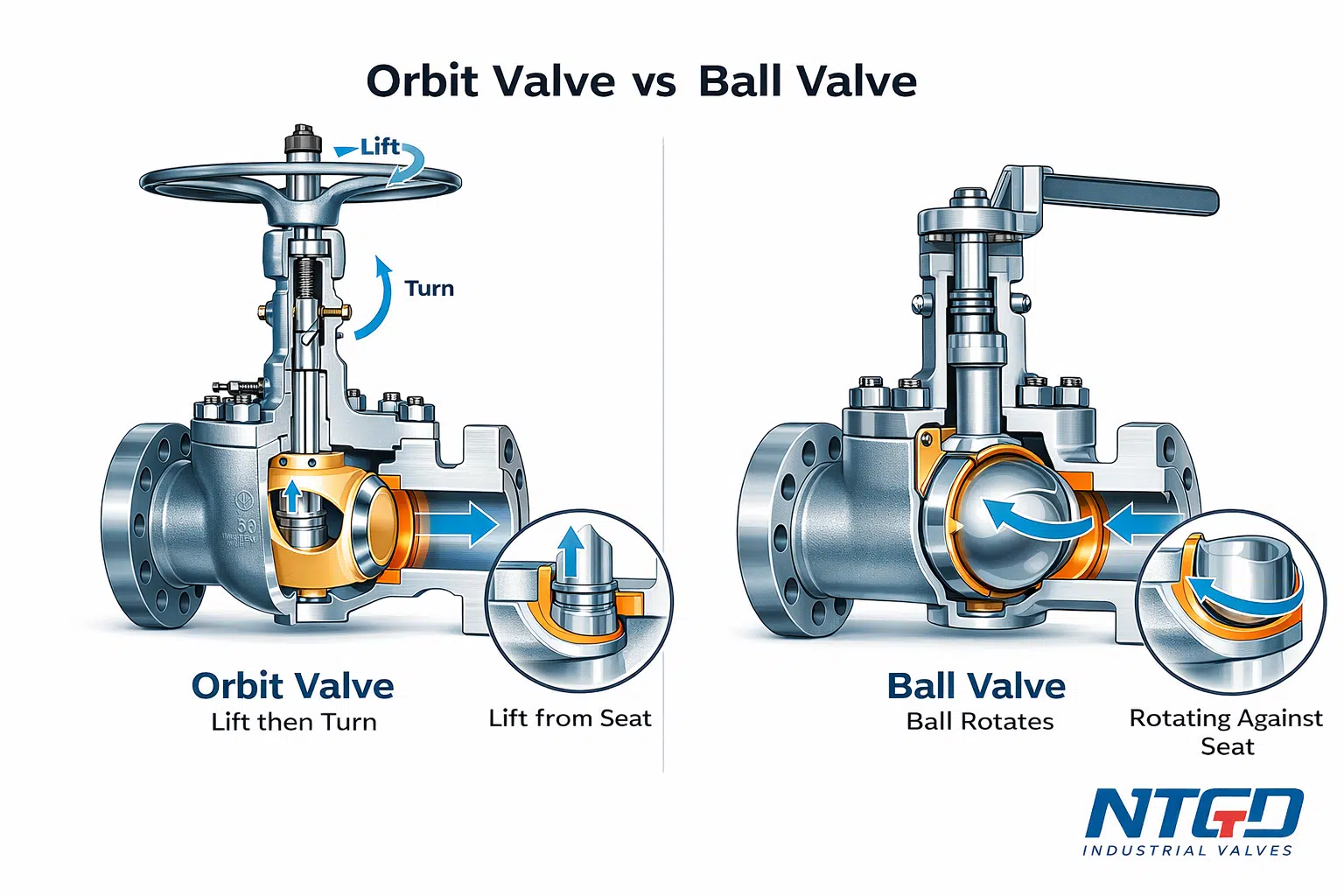
Quick Selection Guide — When Is an Orbit Valve Worth the Premium?
Choose an orbit valve for evaluation first when the service involves:
-
high-cycle dry gas isolation
-
molecular sieve dryer switching
-
critical block duty where shutoff consistency matters
-
applications where seat wear has already been a recurring problem
-
shutdown or switching duty where maintenance access is difficult or costly
A conventional ball valve may still be the better commercial choice when:
-
the service is general-purpose isolation
-
cycle frequency is low
-
shutoff is important, but not unusually demanding
-
the project is highly cost-sensitive and the operating conditions do not justify the orbit mechanism
This is not just a price comparison. It is a comparison of:
-
seat life
-
maintenance interval
-
shutoff consistency
-
downtime exposure
-
documentation and project expectations between orbit valves and floating ball valves and trunnion ball valves
Orbit Valve vs Plug Valve
Orbit valves and plug valves are both used in shutoff service, but they are not selected for the same reasons.
A plug valve is often considered where cavity behavior, solids handling, or particular shutoff geometry suits the application. An orbit valve is more specifically selected for critical isolation using a non-rubbing shutoff sequence.
The right choice depends on:
-
service medium
-
solids content
-
cycle frequency
-
shutoff expectation
-
maintenance philosophy (which is why some engineers still evaluate lubricated plug valves for cavity-sensitive service)
Orbit Valve vs Gate Valve
A gate valve uses a linear gate movement and is widely used in general shutoff service. An orbit valve uses a guided lift-and-turn motion that separates the sealing surfaces before rotation.
In repeated severe isolation service, an orbit valve may offer a more suitable shutoff mechanism. In lower-cycle general isolation service, a conventional gate valve may remain the more familiar and economical choice.
Orbit Valve Applications by Service
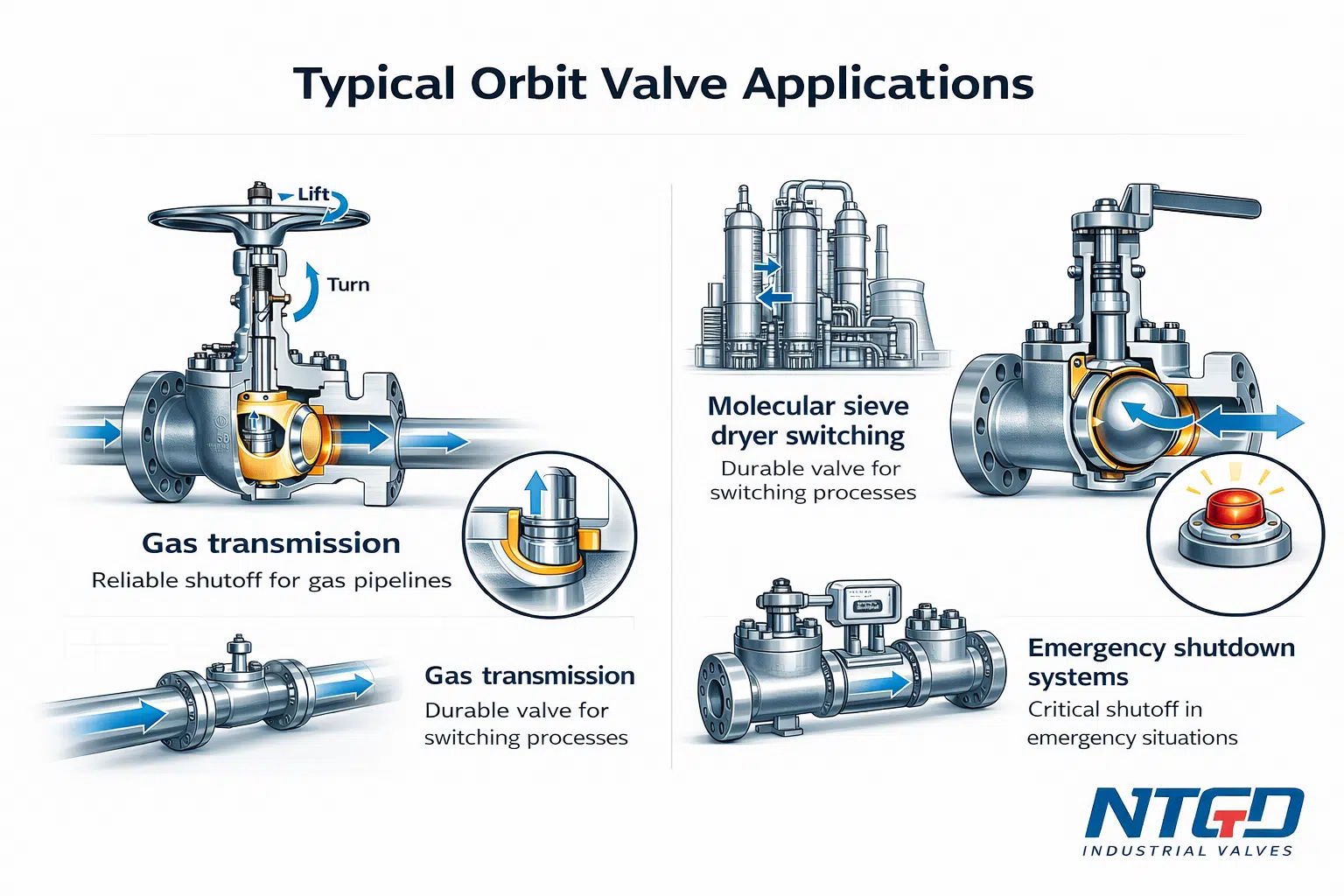
The most useful way to describe orbit valve applications is not by listing industries, but by identifying what problem the valve solves in each service.
Gas Transmission and Compressor Stations
Orbit valves are well suited for gas isolation systems where shutoff reliability, stable torque behavior, and maintenance predictability are important. In these services, repeated operation and sealing degradation can become lifecycle problems with conventional rotary shutoff valves.
Molecular Sieve Dryer Switching
This is one of the most recognized orbit valve applications. Dryer switching duty often involves frequent cycling, tight shutoff requirements, and strong reliability expectations. In such service, seat wear from repeated rubbing can become a serious issue. The orbit valve mechanism addresses that directly.
Meter Isolation
Meter systems require dependable shutoff during maintenance, testing, or isolation procedures. In this context, the value of an orbit valve lies in its ability to provide repeatable shutoff confidence, especially where sealing consistency matters more than commodity valve cost.
Emergency Shutdown (ESD) and Critical Block Service
In shutdown service, the question is not just whether the valve can operate, but whether it can do so reliably when required. Orbit valves are considered where actuator compatibility, severe-duty shutoff logic, and project documentation all matter in the selection process.
Product Segregation and Block Service
Where fluid separation and positive shutoff are important, orbit valves may be chosen to reduce long-term sealing degradation and improve isolation confidence.
Severe Isolation in Oil & Gas and Petrochemical Systems
Orbit rising stem ball valves are often reviewed for projects involving:
-
upstream and midstream gas systems
-
petrochemical block duty
-
dryer switching
-
severe isolation points
-
projects with specific emissions, fire-safe, or documentation requirements
How to Select an Orbit Valve
Selecting an orbit valve correctly requires more than matching size and pressure class. The best results come from confirming both service conditions and project approval requirements before RFQ.
1. Confirm the Service Medium
Start with the fluid itself:
-
dry gas
-
hydrocarbon liquid
-
corrosive fluid
-
sour service medium
-
emissions-sensitive service
This directly affects body material, trim, packing, and testing requirements.
2. Confirm Pressure Class
Define the required rating clearly, such as Class 150, 300, 600, 900, 1500, or project-specific higher ratings.
3. Confirm Operating Temperature
Temperature affects body and trim selection, packing arrangement, and the suitability of optional design features.
4. Confirm Bore Requirement
Identify whether the application needs full bore or reduced bore, depending on flow, pigging, and system resistance expectations.
5. Confirm End Connection
Typical options include:
-
flanged
-
butt weld
-
RTJ, where specified
6. Confirm Actuation Method
Select based on site philosophy, response requirement, and available utility:
-
manual
-
pneumatic
-
electric
-
hydraulic
7. Confirm Compliance Requirements
State any project requirement for:
-
API-based design standards
-
fire-safe design
-
low-emission performance
-
sour service review
-
third-party inspection
-
material traceability
8. Confirm Operation Frequency
A valve used rarely in shutdown service is not selected the same way as one used frequently in switching duty. Operation frequency should influence both design review and lifecycle expectations.
9. Confirm the Documentation Package
In international industrial projects, documentation delays are often a larger commercial problem than fabrication itself. Missing or incomplete documents can delay approval, site acceptance, commissioning, or even payment release.
A missing MTC can create material traceability problems. A missing GA drawing can delay piping verification. A missing IOM manual can slow commissioning and maintenance planning.
For that reason, document requirements should be confirmed during RFQ, not after order placement.
Purchaser Documentation Checklist
| Document | Why Buyer Needs It | When to Confirm |
|---|---|---|
| Technical Datasheet | Confirms the commercial and technical offer matches the service | Before quotation finalization |
| GA Drawing | Verifies dimensions, actuator envelope, and piping fit | During technical review |
| MTC / Material Certificates | Supports material traceability and inspection approval | Before PO or final document list approval |
| Hydro / Seat Leak Test Report | Confirms testing scope and shutoff verification | Before FAT / final release |
| IOM Manual | Supports installation, operation, and maintenance planning | Before shipment |
| Painting / Marking Details | Important for project conformity and field handling | During order execution |
| Inspection Release Documents | Needed for QA handover and project file closure | Before shipment release |
Orbit Valve RFQ Checklist
| Item | Buyer Should Confirm |
|---|---|
| Service medium | Gas, liquid, corrosive, sour, dry, etc. |
| Pressure class | Required rating |
| Temperature | Minimum and maximum operating temperature |
| Valve size | NPS / DN |
| Bore type | Full bore or reduced bore |
| End connection | Flanged, BW, RTJ, other |
| Actuation | Manual, pneumatic, electric, hydraulic |
| Compliance | Fire-safe, low-emission, material review, inspection scope |
| Testing | Hydro, gas, seat leak, witness inspection |
| Documents | Datasheet, drawing, certificates, manual |
Material Selection Guidance
| Service Condition | Typical Body Direction | Trim / Seat Direction | Packing Direction |
|---|---|---|---|
| General hydrocarbon service | Carbon steel option | Shutoff-focused trim selection | Standard project packing |
| Corrosive process service | Stainless or alloy option | Corrosion-resistant trim review | Upgraded packing review |
| Sour service | Service-reviewed material selection | Sour-service-compatible review | Project-specific packing review |
| Emissions-sensitive gas service | Project-specified body | Shutoff-focused trim review | Low-emission packing option |
Orbit Valve Actuators and Configuration
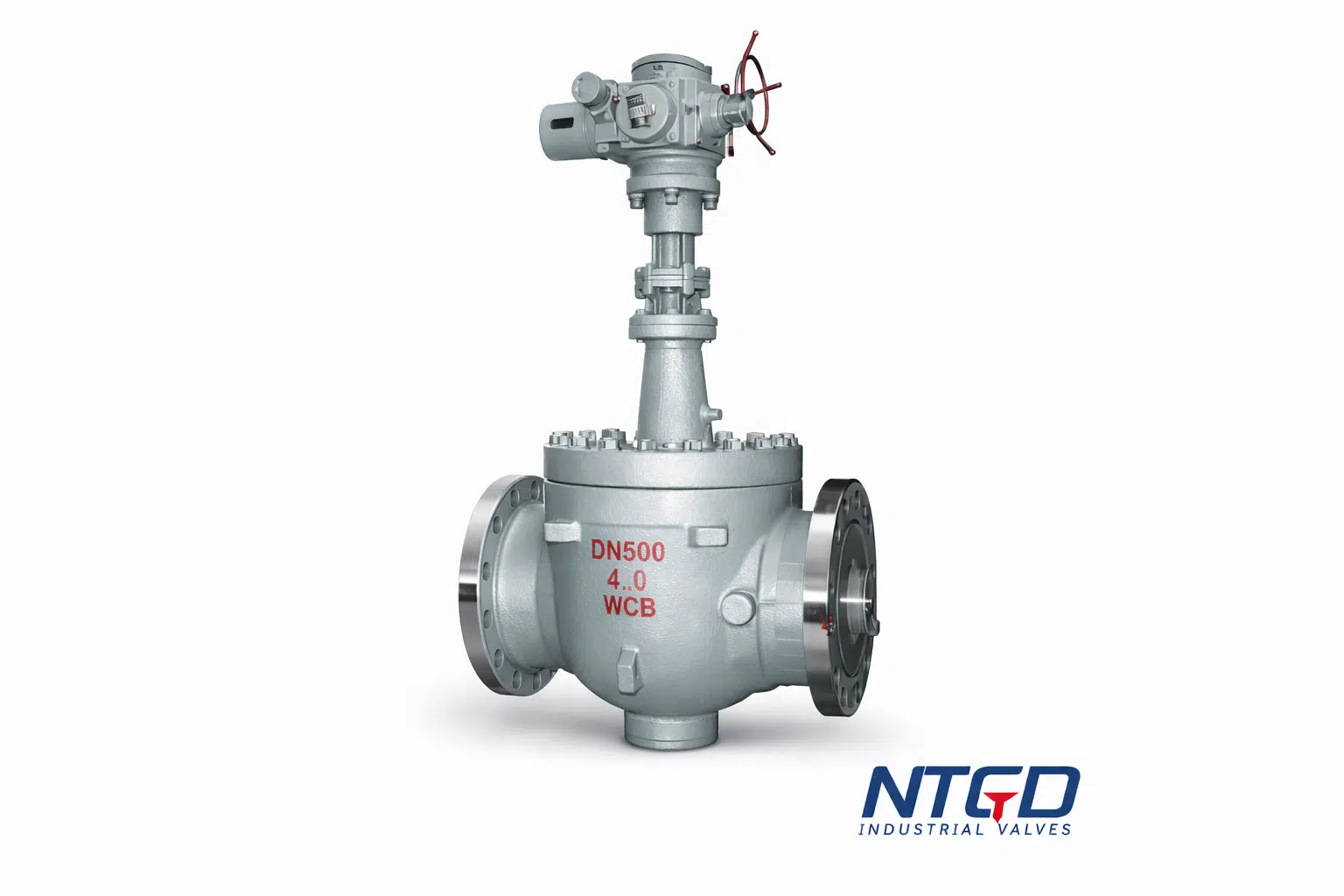
The correct actuator is determined not only by available utility, but also by shutdown philosophy, torque requirement, and response expectation.
| Actuation Type | Best For | Main Advantage | Main Limitation |
|---|---|---|---|
| Manual | Local operation, lower automation requirement | Simpler and lower initial cost | Not ideal for remote or automatic shutdown |
| Pneumatic | Fast-response automated isolation | Strong fit for process automation and ESD logic | Requires air supply and accessory integration |
| Electric | Remote operation where compressed air is unavailable | Good for electrically integrated control systems | May require more detailed shutdown logic review |
| Hydraulic | High-force or specialized actuation systems | Strong output capability | Requires hydraulic support system |
Key Actuator Selection Points
When reviewing orbit valve actuator requirements, buyers should confirm:
-
required torque
-
open / close time
-
fail position
-
manual override requirement
-
control interface
-
accessory package
-
local vs remote operation
Users searching for orbit valve actuators are usually trying to determine whether the valve can be supplied in the exact configuration their project needs. That is why actuator discussion should be based on configuration logic, not generic actuator definitions.
Orbit Valve Packing and Low-Emission Design
Packing is a major selection checkpoint, not a minor accessory. In gas service or emissions-sensitive applications, stem sealing performance can be as important as internal shutoff, which is why buyers often review leakage requirements against ISO 15848-1.
Why Packing Matters
Packing selection affects:
-
external leakage control
-
emissions performance
-
maintenance interval
-
service suitability
-
project acceptance in regulated applications
Standard Packing vs Low-Emission Option
| Requirement | Standard Packing Direction | Low-Emission Option Direction |
|---|---|---|
| General plant isolation | Often suitable | Usually not required unless specified |
| Gas service with tighter leakage expectations | May require review | Often reviewed as preferred option |
| Emissions-sensitive project | Usually insufficient without review | Should be specified during RFQ |
| Maintenance-sensitive operation | Depends on service and packing arrangement | May improve long-term leakage control strategy |
What Buyers Should State in the RFQ
If the project has external leakage limits, hazardous gas exposure, or low-emission compliance requirements, that must be stated in the RFQ. Otherwise, the quote may be based on a standard packing arrangement that does not match the approval expectation.
An orbit valve may also be reviewed with:
-
injectable packing arrangements
-
project-specific packing configurations
-
documentation support for emissions-related requirements
Typical Orbit Valve Specifications
Below is a typical specification snapshot for an orbit rising stem ball valve page. Final scope should always be confirmed against actual project requirements.
| Parameter | Typical Project Range |
|---|---|
| Valve Type | Orbit Rising Stem Ball Valve |
| Size Range | Project-dependent |
| Pressure Class | Class 150 and above, subject to configuration |
| Bore | Full bore or reduced bore |
| Body Materials | Carbon steel, stainless steel, project-based alloy options |
| End Connections | Flanged, BW, RTJ, project-specific |
| Actuation | Manual, pneumatic, electric, hydraulic |
| Service Focus | Critical isolation |
| Documentation | Datasheet, drawing, test record, manual, subject to project scope |
| Optional Features | Fire-safe review, low-emission review, sour service review |
What Buyers Usually Need Beyond the Table
A specification table alone is rarely enough for final project approval. Buyers often also need:
-
catalog page
-
technical datasheet
-
GA drawing
-
material summary
-
testing scope
-
marking details
-
certificate list
Orbit Valve Diagrams & Drawings
Buyers searching orbit valve diagram or orbit valve drawing often want immediate access to a visual technical reference rather than a general product explanation.
This page should include or link to the following diagram types:
-
Working Principle Diagram
-
Parts Cross-Section Diagram
-
Packing Detail Diagram
-
General Arrangement Drawing
-
Dimension Drawing
-
Parts Identification Sheet
Where possible, provide both:
-
view online
-
download as PDF
Recommended Download Blocks
-
Download Orbit Valve Working Principle Diagram (PDF)
-
Download Orbit Valve Parts Diagram (PDF)
-
Request Orbit Valve GA Drawing
-
Request Orbit Valve Dimension Drawing
This section is especially important because visual engineering assets often support both technical review and internal customer approval.
Orbit Valve Catalog, Datasheet, Drawing & O&M Resources
High-intent buyers often search orbit valve catalog because they need technical reference material before asking for a formal quotation.
Instant Download Resources
Where available, this page should provide direct access to:
-
Product Catalog
-
General Technical Datasheet
-
Parts Diagram PDF
Request-Based Project Resources
The following are usually project-specific and should be requested with service details:
-
GA Drawing
-
O&M Manual
-
Material Summary
-
Inspection / Test Documentation Package
Recommended Resource Access Logic
-
use direct download for general resources
-
use request-based delivery for project-specific documents
-
clearly distinguish between general and project-specific files to reduce confusion
Recommended CTAs:
-
Download Orbit Valve Catalog (PDF)
-
Download General Technical Datasheet
-
Request GA Drawing
-
Request O&M Manual
-
Request Documentation Package
Why Choose NTGD for Orbit Valve Projects
Buyers searching for orbit valve manufacturer, orbit valve supplier, or orbit valve company are not just looking for definitions. They are evaluating whether the supplier can support a real project from RFQ to documentation handover.
What NTGD Supports in an Orbit Valve RFQ
NTGD can support orbit valve inquiries with:
-
application-based selection review
-
actuation configuration discussion
-
datasheet support
-
GA drawing request handling
-
document package discussion
-
replacement inquiry review
-
technical clarification during RFQ stage
What Buyers Usually Care About Beyond Price
In project procurement, buyers often evaluate suppliers based on:
-
response speed
-
technical clarity
-
documentation support
-
conformity to project requirements
-
testing and inspection communication
-
ability to support replacements or changes during execution
That is why orbit valve supply should be presented not only as a hardware offer, but as a technical and documentation support process.
Global Supply and Project Support
Depending on project scope, support may include:
-
severe isolation application review
-
gas service isolation review
-
actuation-related technical discussion
-
drawing and data confirmation
-
replacement inquiry assistance
Have a current orbit valve RFQ or replacement need? Share your datasheet, nameplate, or project conditions with our engineering team.
Replacement and Compatibility Support
Many replacement inquiries are not for new design projects, but for installed valves already in service. In those cases, the most useful first step is a case-by-case compatibility review.
NTGD can review replacement inquiries based on available information such as:
-
original valve size
-
pressure class
-
body material
-
end connection
-
actuation type
-
nameplate data
-
installed valve photos
-
existing drawings or datasheets
Some buyers contact us when evaluating replacement options for installed orbit valves from other major brands. Compatibility should be reviewed based on actual installed valve data rather than assumed interchangeability.
Best Way to Start a Replacement Inquiry
For faster review, provide:
-
valve nameplate photo
-
project specification, if available
-
valve tag number
-
known leakage or maintenance issue
-
drawing or old datasheet, if available
Frequently Asked Questions About Orbit Valves
What is an orbit valve?
An orbit valve is a severe-service isolation valve that uses a rising stem lift-and-turn mechanism to open and close without the sealing surfaces rubbing during rotation. It is typically selected where shutoff reliability and lower seat wear matter in repeated service.
Internal prompt: See the working principle section above for the 4-step operating sequence.
Why is an orbit valve called a rising stem ball valve?
It is called a rising stem ball valve because the closure element lifts away from the seat before rotating. That rising motion separates the sealing surfaces first, helping reduce abrasion compared with a conventional ball valve.
Internal prompt: See the working principle and comparison sections for details.
What is the difference between an orbit valve and a ball valve?
A conventional ball valve rotates against the seats during operation, while an orbit valve lifts the core away from the seat before rotation. This difference can make orbit valves better suited to repeated severe isolation service where seat wear is a concern.
Internal prompt: Review the Orbit Valve vs Ball Valve comparison above.
What does an orbit valve parts diagram include?
A proper orbit valve parts diagram should show the body, bonnet, stem, core, seat, packing, guide mechanism, bearings, and actuator interface. This helps engineers understand operation, maintenance, and replacement support requirements.
Internal prompt: See the parts and compatibility section above.
Why are orbit valves more expensive than conventional ball valves?
Orbit valves use a more complex guided rising-stem shutoff mechanism and are typically evaluated for severe-service applications rather than commodity isolation duty. The higher initial cost is often justified when the application places more value on shutoff consistency, reduced seat wear, and longer maintenance intervals.
Internal prompt: Review the quick selection guide in the comparison section above.
Are orbit valves available with fire-safe design?
They can be reviewed with fire-safe design options where the project requires them. Fire-safe expectations should be stated clearly during RFQ so the quotation and documentation scope align with the project specification.
Internal prompt: See the standards and compliance section above.
What is the difference between an orbit valve and a gate valve?
A gate valve uses a linear gate movement, while an orbit valve uses a guided lift-and-turn motion. Orbit valves are typically considered where repeated severe isolation duty and non-rubbing shutoff logic are more important than commodity shutoff design.
Internal prompt: Review the comparison section above.
Can orbit valves be supplied with replacement parts?
Replacement support can be reviewed for seats, packing, gaskets, and other maintenance-related components based on the installed valve data. Nameplate information, photos, and drawings help improve review accuracy.
Internal prompt: See the replacement parts and compatibility section above.
What documents should be requested before ordering an orbit valve?
Buyers should usually confirm the technical datasheet, GA drawing, material certificates, testing records, and IOM requirements before order finalization. In project procurement, document delays often create bigger approval problems than fabrication itself.
Internal prompt: Review the purchaser documentation checklist above.
Where are orbit valves typically used?
Orbit valves are commonly reviewed for gas isolation, molecular sieve dryer switching, meter isolation, ESD-related shutoff duty, and other critical block service where shutoff reliability is a priority.
Request Support for Your Orbit Valve Project
If you are evaluating an orbit rising stem ball valve for a new project, replacement requirement, or document review, the fastest next step is to send the key project details:
-
service medium
-
valve size
-
pressure class
-
temperature range
-
end connection
-
actuation type
-
required standards
-
required documents
-
replacement or new project status
Tap to Request a Quote !