
A steam globe valve is a critical shut-off and throttling valve designed for industrial steam service. It is widely used in boiler lines, steam distribution headers, turbine auxiliary systems, HVAC heating loops, and process pipelines where operators need stable flow control together with dependable shut-off performance.
In real projects, steam globe valve selection is not a routine sizing exercise. Improper selection can lead to seat erosion, stem leakage, unstable pressure control, excessive pressure drop, vibration, short maintenance intervals, and unplanned downtime. These risks become more serious when the valve is exposed to superheated steam, repeated throttling duty, high differential pressure, or frequent thermal cycling.
Industrial-Grade Steam Globe Valves — Engineered for Your System
NTGD supplies steam globe valves for real operating conditions rather than generic catalog descriptions. Selection support can be based on pressure-temperature rating, throttling duty, body and trim material, bonnet arrangement, packing performance, and actuation requirements. For projects involving boiler steam, process steam, or high-temperature industrial service, technical communication at the selection stage is often the difference between long service life and early valve failure.
If you are evaluating steam globe valves for a new installation, plant upgrade, or replacement project, NTGD can support the selection process with technical discussion, document support, and quotation assistance based on your actual steam conditions.
What Is a Steam Globe Valve and When Is It Used?
A steam globe valve is a linear-motion valve used to open, close, and regulate steam flow. Unlike valve types that are mainly intended for full-open or full-closed isolation, a globe valve is especially suitable for applications where gradual control of steam flow is required.
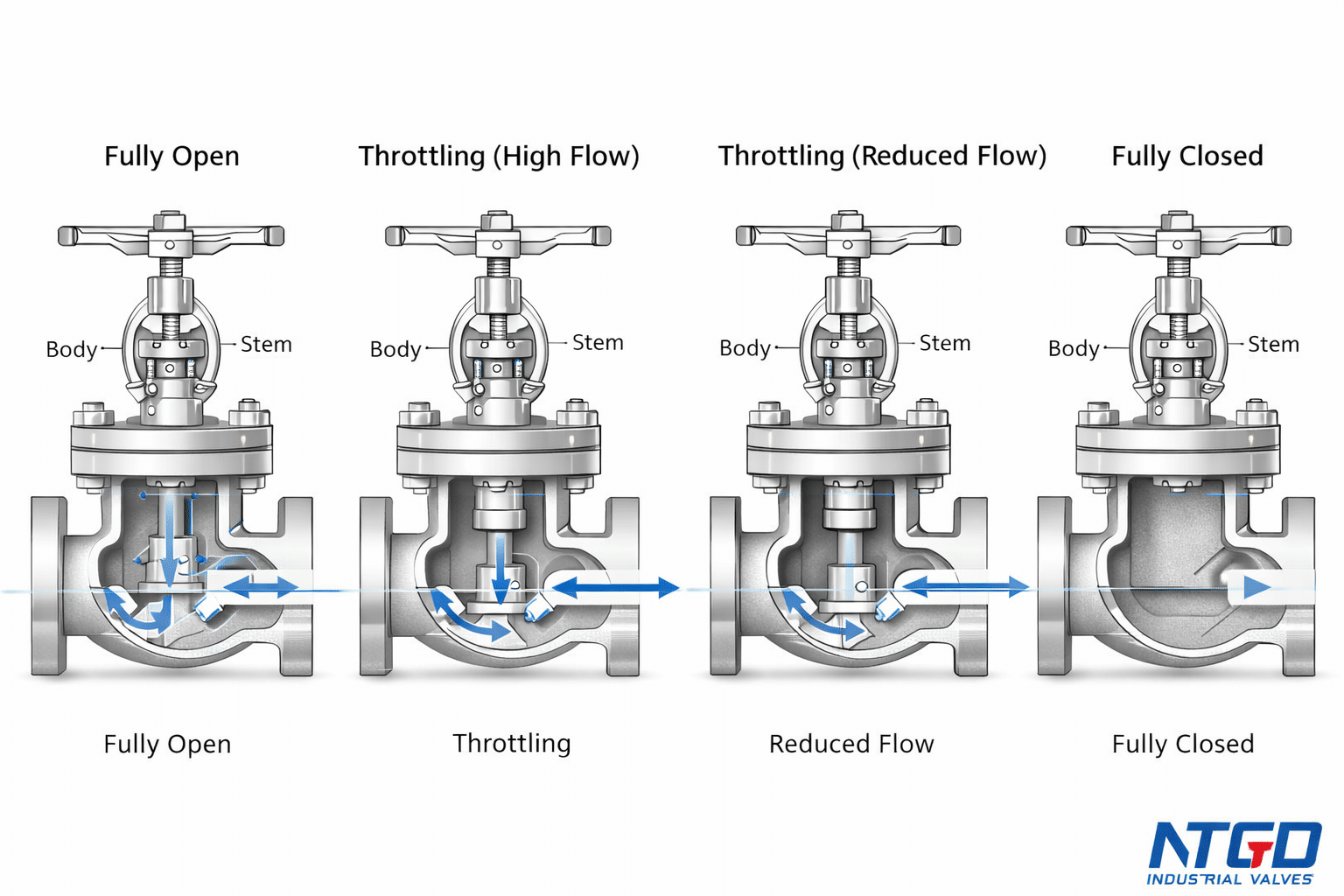
In a typical globe valve, the disc moves vertically relative to the seat. When the disc lifts, steam passes through the internal flow path. When the disc lowers and contacts the seat, the valve shuts off the flow. Because disc travel can be controlled progressively, the valve is well suited to throttling duty as well as shut-off service.
Steam globe valves are commonly used in:
- boiler steam lines
- steam distribution systems
- turbine auxiliary lines
- power generation facilities
- chemical processing systems
- pharmaceutical steam service
- food and beverage steam systems
- HVAC heating and utility steam lines
- condensate-related auxiliary service
These applications often involve high temperature, fluctuating pressure, startup and shutdown cycles, and partial-open operation. That is why steam service valves must be evaluated more carefully than general utility valves.
Why Industrial Buyers Choose Steam Globe Valves for Steam Systems
In steam systems, buyers do not select a globe valve simply because it is a familiar valve type. They choose it because the application requires more than isolation alone. An industrial globe valve is commonly selected when the system needs one or more of the following:
- controlled throttling rather than simple on-off duty
- more stable flow regulation under varying load
- dependable shut-off under high-temperature service
- better control over downstream steam delivery
- compatibility with manual or actuated regulation
- trim options suitable for erosion-prone throttling conditions
For boiler systems, steam control points, and process lines where regulation quality matters, the globe valve in steam control systems is often the practical engineering choice.
Steam Globe Valve Selection Guide for Industrial Steam Service
Selecting a steam globe valve should begin with the actual operating condition rather than nominal size alone. In many steam projects, poor performance is caused by selection based only on pressure class, while steam temperature, throttling duty, trim design, and pressure drop are not evaluated thoroughly.
Steam temperature and steam condition
The first question is whether the service involves saturated steam or superheated steam. Saturated steam systems can still be demanding, but superheated steam typically imposes greater stress on body material, bonnet sealing, packing, and trim surfaces. As operating temperature rises, allowable pressure for metallic materials changes, and temperature derating becomes a critical part of valve selection.
Shut-off duty or throttling duty
A valve used mainly for open-close isolation may not require the same trim design as a valve operating in partial-open position for long periods. In continuous or frequent throttling duty, seat erosion, wire drawing, noise, and flow-induced wear become much more important. A steam globe valve intended for throttling should be selected with appropriate trim design rather than treated as a standard shut-off valve.
Pressure class selection
Pressure class must be matched to both pressure and temperature. In steam systems, class selection cannot be judged only by room-temperature values. Engineers should confirm pressure-temperature rating under the actual operating condition, especially in boiler, superheated steam, and turbine-related applications, with reference to ASME B16.34.
Material selection
Body, bonnet, stem, seat, disc, backseat, and packing materials should be chosen according to steam temperature, cleanliness, corrosion risk, pressure level, and expected maintenance interval. The correct selection is not the most expensive material by default. It is the material set that fits the real service duty.
Bonnet and sealing arrangement
For many industrial services, bolted bonnet construction is common. In higher-pressure or higher-temperature steam applications, pressure seal bonnet or other more robust arrangements may be preferred. Packing design is also critical because stem leakage in steam service affects both safety and maintenance cost.
Manual or actuated operation
Manual handwheel operation is suitable for many utility and process duties. Pneumatic or electric actuation is more appropriate where remote operation, repeatable throttling, automation, or control integration is required.
Flow direction and installation
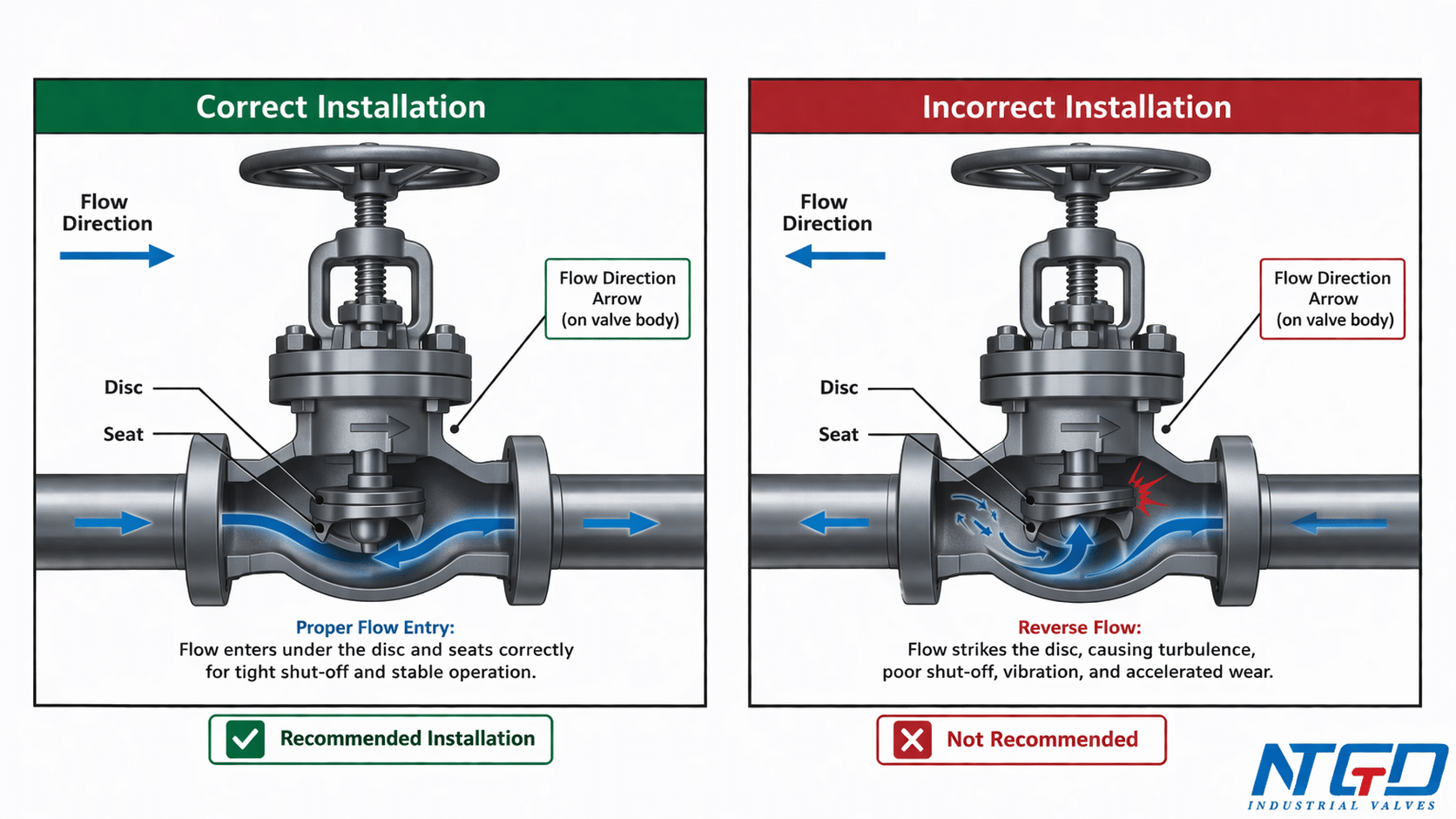
Steam globe valves are directional. They should be installed according to the flow arrow marked on the body. Incorrect installation can reduce shut-off performance, increase internal wear, create vibration problems, and shorten service life.
Selection support for severe service
If the application involves severe throttling, high differential pressure, superheated steam, or long-cycle operation, selection should include trim facing material, flow characteristic, packing design, and maintenance access rather than size and class alone.
Need help selecting the right steam globe valve for your system? NTGD can support technical review based on steam type, temperature, pressure, duty, and valve configuration requirements.
Best Materials and Trim Options for Steam Globe Valves
Material selection is one of the most important engineering decisions in steam valve service. A low-value product page may simply list carbon steel, stainless steel, and alloy steel as if they were interchangeable. In actual steam duty, each material choice changes pressure capability, resistance to thermal stress, erosion behavior, maintenance interval, and overall service life.
Carbon steel for general steam service
Carbon steel is commonly used in industrial steam systems because it offers good strength and cost-effectiveness for many standard applications. It is often selected where temperature and pressure remain within the design range and where the environment is not strongly corrosive.
Stainless steel for cleaner or more demanding environments
Stainless steel may be preferred where corrosion resistance is more important, where media cleanliness requirements are higher, or where the process environment is more demanding than standard utility steam duty. It may also be selected for cleaner process steam systems where contamination control is a consideration.
Alloy steel for high-temperature steam duty
For higher-temperature steam service, alloy steel bodies and trims may be required. In superheated steam systems, standard material selection may not provide sufficient long-term strength or resistance to thermal cycling, so engineers often review steam temperature and pressure relationships during selection. Under these conditions, upgraded material selection becomes a reliability requirement rather than a premium option.
Seat and disc facing materials
In throttling duty, sealing surfaces are often the first components to deteriorate. Seat erosion, wire drawing, and flow-induced wear become more severe when the valve operates partially open under high differential pressure. Hardfaced sealing surfaces can significantly improve resistance to wear and extend maintenance interval in demanding steam service.
Packing materials
Packing in steam service must withstand temperature, stem movement, and long operating cycles while maintaining reliable sealing to atmosphere. High-temperature steam duty typically requires more careful packing selection than general fluid service. Packing design affects leakage risk, maintenance frequency, and operator safety.
Engineering note: a common steam valve failure pattern
In steam service, one of the most common causes of premature globe valve failure is trim erosion in continuous throttling duty. A valve may appear correctly selected in terms of size, pressure class, and body material, yet still fail early because the trim was not matched to the actual throttling condition.
A typical failure pattern is wire drawing on the seat and disc surfaces in superheated steam service where the valve remains partially open for long periods. In this case, the root cause is often not the body material, but the lack of suitable hardfacing or trim design for that duty. This is why steam globe valve selection must consider not only material grade, but also throttling duty, trim facing, and expected service cycle.
Not sure which material set fits your steam condition? NTGD can review your temperature, pressure, and valve duty to help determine a more suitable body, trim, and packing combination.
How a Steam Globe Valve Works
A steam globe valve works through linear movement of the disc relative to the seat. When the handwheel is turned, the stem transmits motion to the disc. The disc moves upward to open the flow path and downward to close against the seat. In actuated valves, the same operating principle applies, but motion is provided by pneumatic, electric, or other actuator force rather than manual torque.
This design provides two important benefits in steam systems. First, it allows controlled throttling rather than abrupt flow change. Second, it provides dependable shut-off when the valve is selected correctly for the service.
Why globe valves are widely used for steam control
Steam control requires stability. When operators need to regulate pressure or flow gradually, a globe valve is usually a better choice than a valve intended only for quick isolation. The linear regulation effect makes the valve more suitable for controlled steam service and more predictable under varying load, which is why globe valves are widely used for throttling and control applications.
Why working principle matters in real projects
Understanding the working principle is not only useful for training. It directly affects valve selection. If the valve will be used in repeated throttling service, the buyer must consider trim material, erosion resistance, flow path, and pressure drop. If the valve is intended mainly for shut-off, the priority may shift toward shut-off integrity, body strength, and reliable stem sealing.
The key takeaway for engineers is that a valve selected for throttling must be evaluated by flow characteristic and trim design, not only by pressure class. That distinction affects process stability, erosion rate, maintenance interval, and total lifecycle cost in steam applications.
Steam Globe Valve Components and Structural Design
A steam globe valve includes several core components, but the important engineering question is not only what each component is called. The more important question is how each component behaves under steam load and where failure risk usually develops.
Handwheel or actuator
The handwheel is used for manual operation. Where automation or remote control is required, the valve may be fitted with a pneumatic or electric actuator. The operation method should be selected according to plant control requirements, not simply pipe size.
Body
The body forms the main pressure boundary and houses the internal flow path. In steam service, body integrity is critical because the valve must withstand internal pressure, thermal cycling, and operating stress over time.
Bonnet
The bonnet encloses the upper internal assembly and forms part of the pressure-retaining structure. The body-bonnet joint is especially important in high-pressure and high-temperature steam duty, where sealing performance and structural reliability are under greater stress.
Stem
The stem transfers force from the operator or actuator to the disc. Stem straightness, thread quality, surface condition, and sealing performance at the packing area all influence reliability and operating smoothness.
Disc and seat
These are the primary sealing and throttling components. In steam systems, they are also the most exposed to erosion, leakage, and wear. Their material and facing design should match the intended service, especially where throttling is frequent.
Packing
Packing seals the stem area and helps prevent leakage to atmosphere. In steam service, packing performance is a major maintenance and safety concern. Proper packing type, correct adjustment, and temperature suitability are essential.
Guiding structure or cage
Some designs include a guiding structure or cage that improves disc alignment and influences flow behavior. Internal guidance affects control stability, wear pattern, and throttling performance.
Sectional diagram showing internal structure and sealing mechanism of a steam globe valve.
Structural points buyers should review
When evaluating a steam globe valve, buyers should ask:
- What body and trim materials are being supplied?
- Is the seat design suitable for throttling steam service?
- What bonnet construction is being used?
- What packing is recommended for the operating temperature?
- Is the valve intended for shut-off only, or for real throttling duty?
- Is the trim design appropriate for the expected differential pressure?
Types of Steam Globe Valves
Steam globe valves can be classified by body pattern, bonnet design, and operation method, as shown in this globe valve types and selection guide. This structure is more useful for industrial buyers than a disconnected feature list because it links design type to service logic.
By body pattern
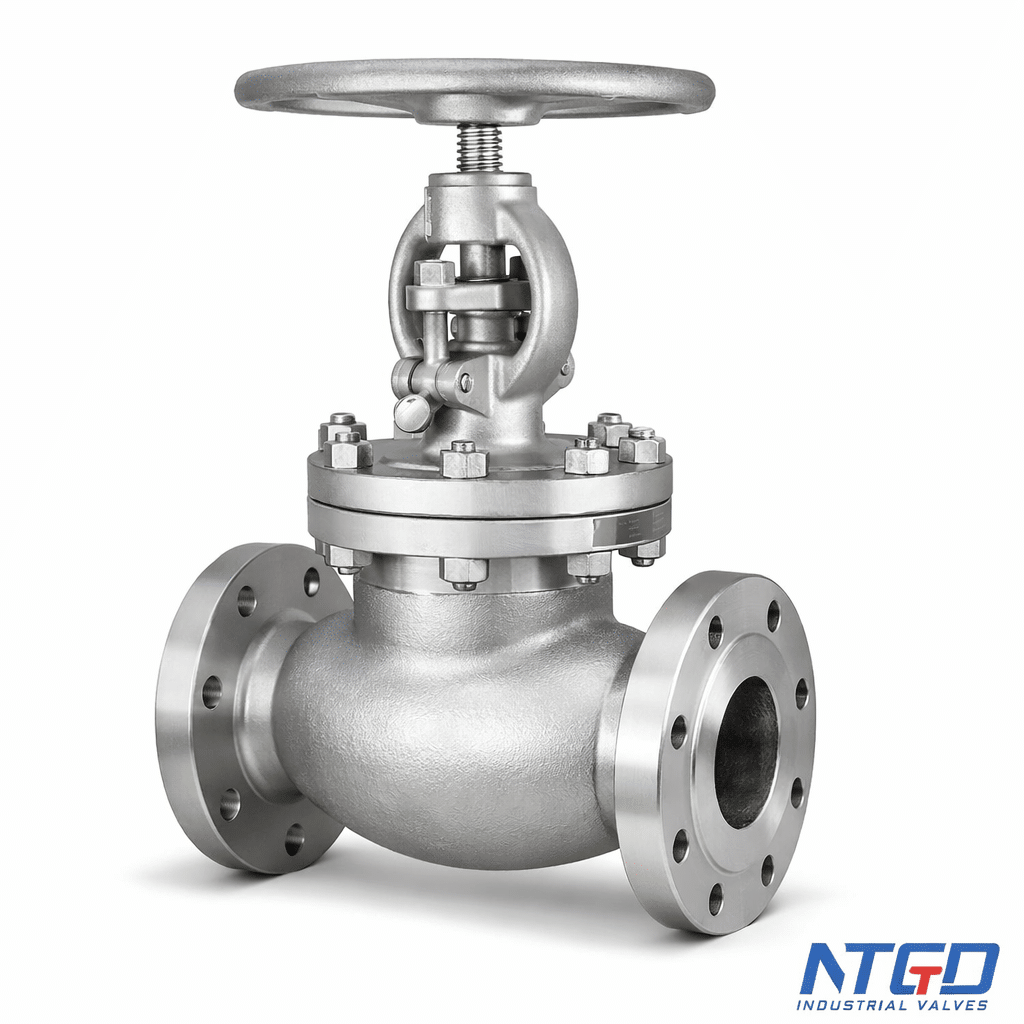
Standard pattern steam globe valve
Also known as T-pattern, this is the most common design. It is widely used where throttling performance is important and where the resulting pressure drop is acceptable within the system design.
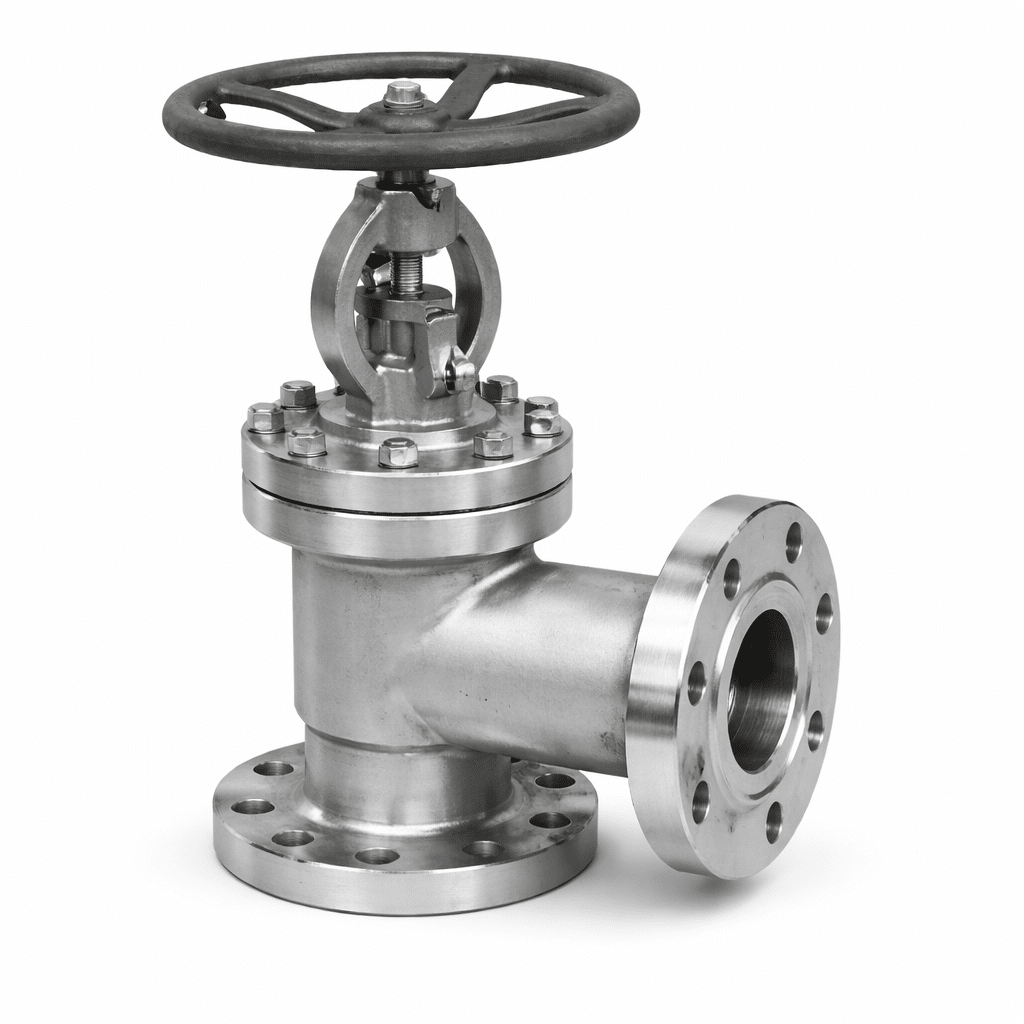
Angle pattern steam globe valve
In an angle pattern design, inlet and outlet are arranged at approximately 90 degrees. This configuration may be preferred where the piping layout already changes direction, where reducing elbows and joints is desirable, or where integrated direction change improves installation logic. For these applications, an angle globe valve may be worth reviewing alongside a standard pattern globe valve.
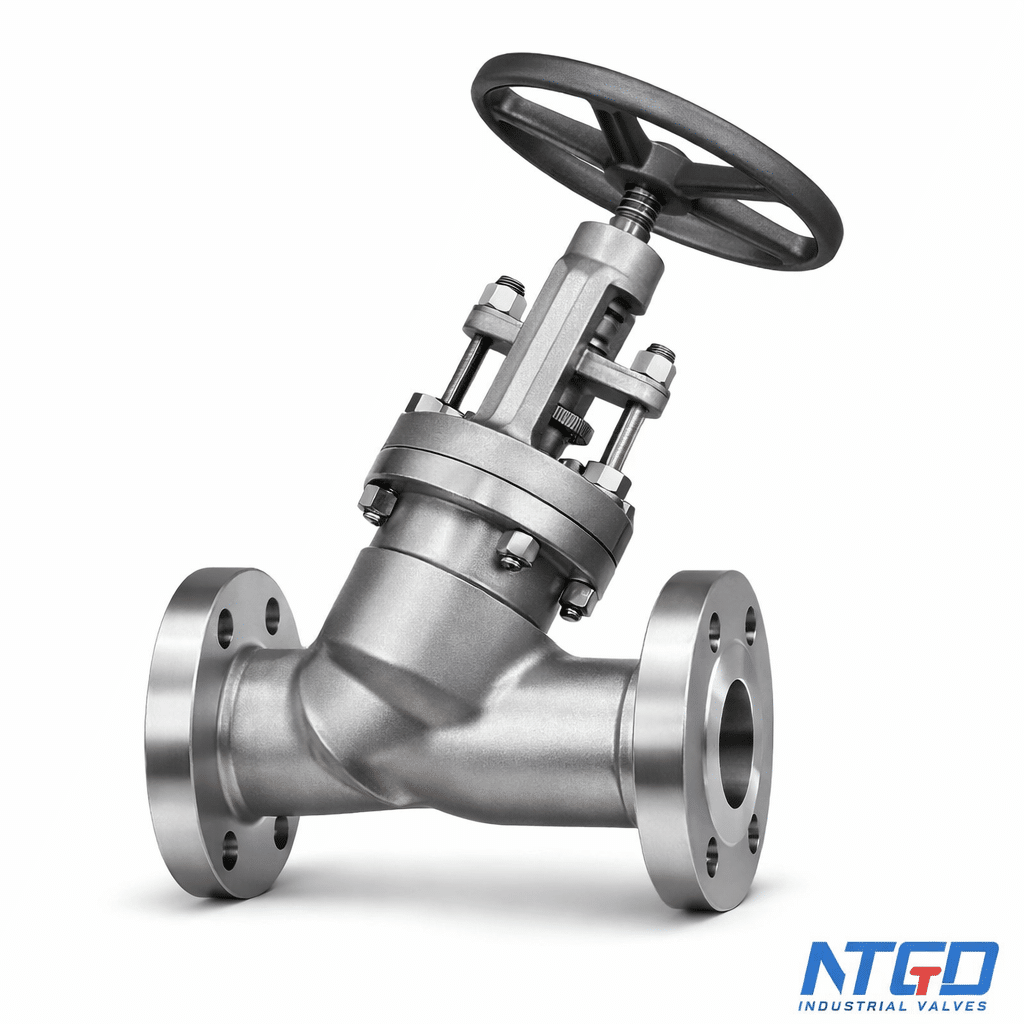
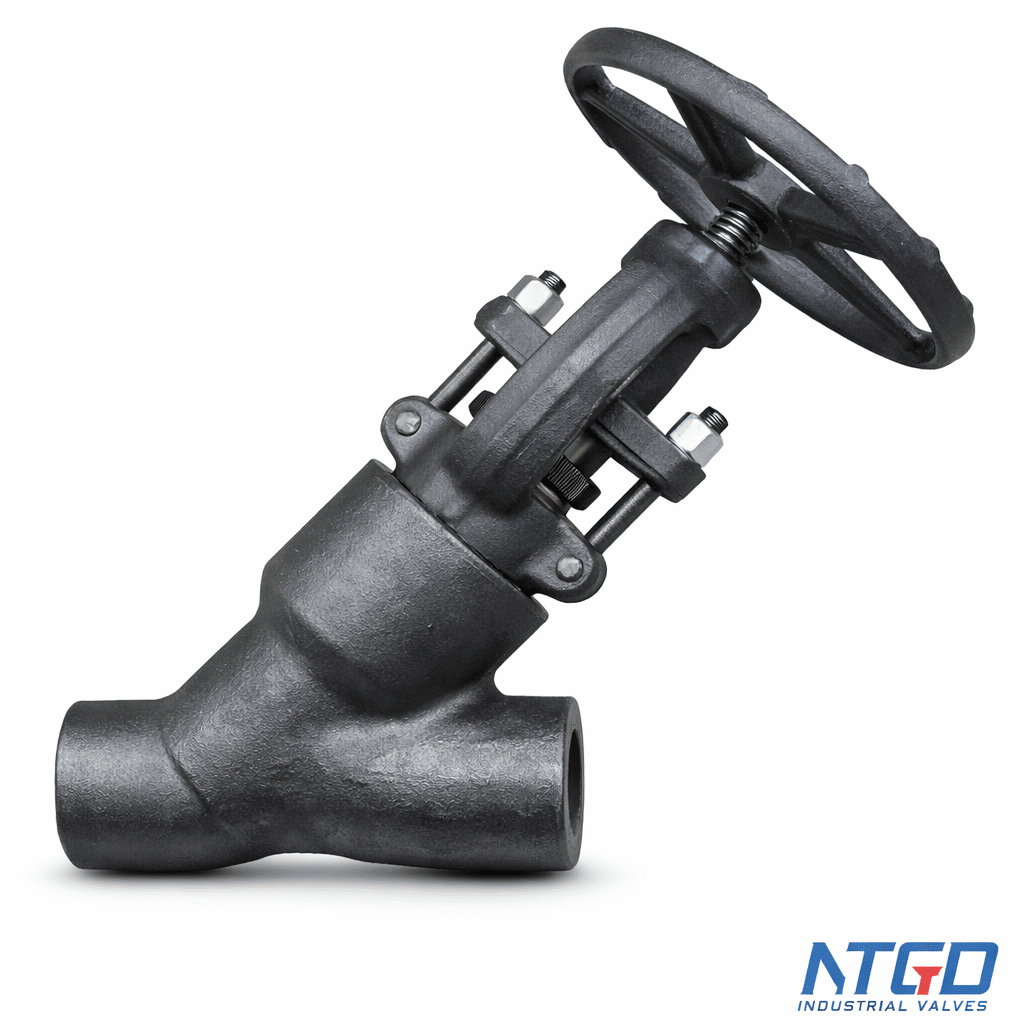
Oblique or Y-pattern steam globe valve
This Y-pattern globe valve design reduces the degree of flow direction change compared with a standard pattern globe valve. It is often considered where lower pressure loss is important but the advantages of globe-type shut-off and throttling are still required.
By bonnet design
Screwed bonnet
Typically used in lighter or more moderate service where simplicity and economy are important.
Bolted bonnet
A common design for industrial service. It provides robust construction and is widely used in many steam applications.
Pressure seal bonnet
Often selected for higher-pressure and higher-temperature steam service where the sealing arrangement benefits from system pressure.
Welded bonnet
Used where leakage control is critical and maintenance access is less important. Because repair is less convenient, this design is typically selected only where service conditions justify it.
By operation method
Manual steam globe valve
Suitable where local operation is acceptable and automation is not required.
Pneumatic or electric actuated steam globe valve
Suitable where remote control, repeated throttling, or integration with plant automation is required.
Technical Specifications of NTGD Steam Globe Valves
The exact configuration of a steam globe valve depends on project requirements, but a structured technical specification section is essential because engineers, technical buyers, and procurement teams need quick access to selection data.
| Item | Typical Range / Option |
|---|---|
| Valve Type | Industrial Steam Globe Valve |
| Size Range | 1/2”–24” (DN15–DN600) |
| Pressure Class | Class 150–Class 2500 |
| Application | Steam shut-off, throttling, pressure control |
| Body Pattern | Standard / Angle / Oblique |
| Bonnet Type | Screwed / Bolted / Pressure Seal / Welded |
| Body Material | Carbon Steel / Stainless Steel / Alloy Steel |
| Trim Material | Stainless Steel / Hardfaced Trim Options Based on Duty |
| Operation | Handwheel / Pneumatic / Electric / Hydraulic |
| End Connection | Based on project requirement |
| Design & Manufacture | Can be supplied according to project requirements including API 600 / API 623 / BS 1873 where applicable |
| Pressure-Temperature Rating | ASME B16.34 where applicable |
| Face-to-Face Dimensions | ASME B16.10 where applicable |
| End Flanges | ASME B16.5 / ASME B16.47 where applicable |
| Leakage / Testing Reference | API 598 / ISO 5208 where applicable |
| Suitable Service | Boiler steam, process steam, power plant, HVAC, chemical, industrial utility |
For detailed pressure-temperature data, trim options, and project-specific technical documents, the final specification should always be confirmed against the actual supplied configuration rather than a generic description alone, especially where API 623 requirements apply.
If you need full datasheet support, pressure-temperature information, or project-based configuration guidance, contact NTGD for technical review.
Steam Globe Valve vs Gate Valve, Ball Valve, and Butterfly Valve in Steam Systems
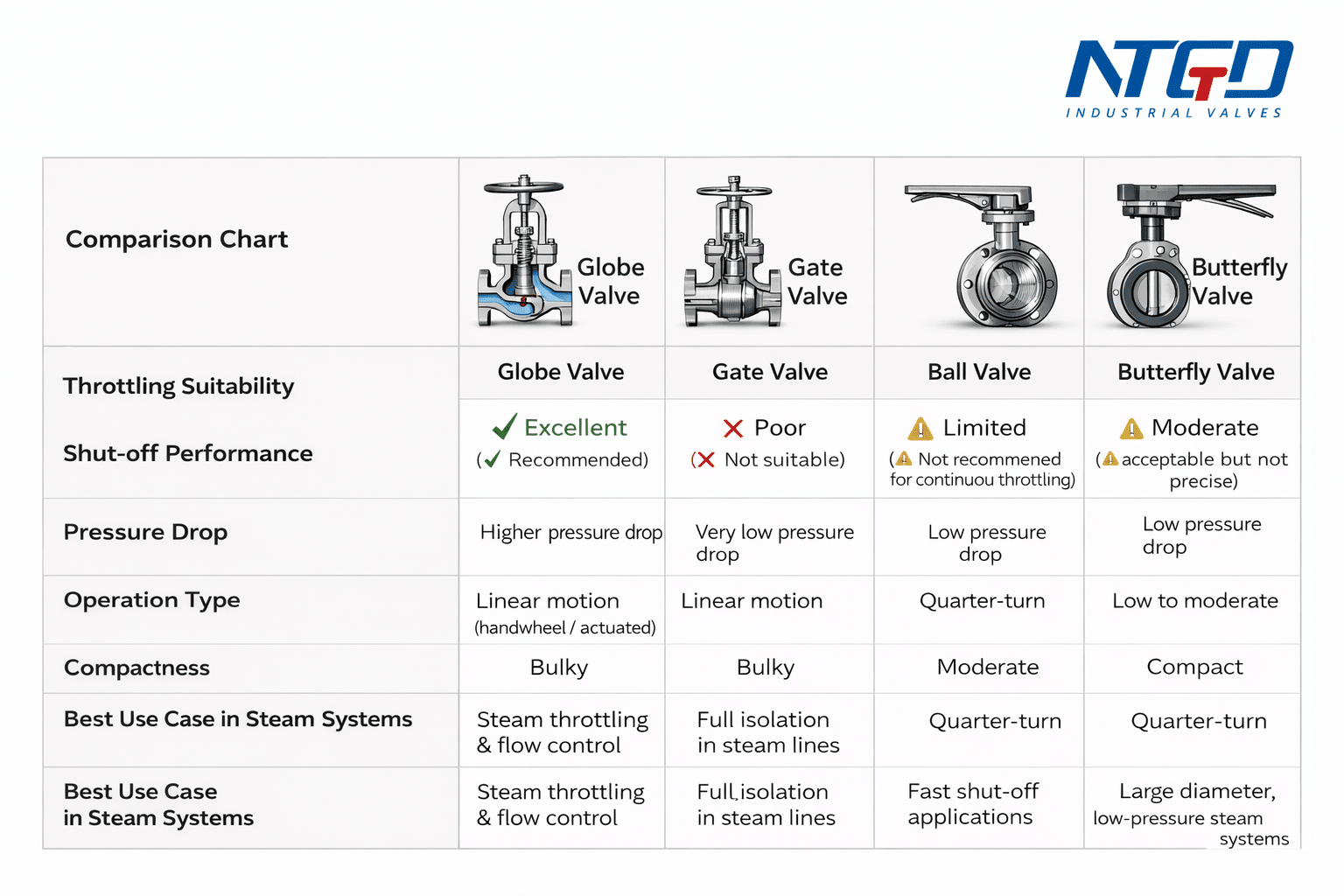
Steam system buyers rarely compare only one valve type. They also evaluate whether a gate valve, ball valve, or butterfly valve may be more suitable for the duty. That is why comparison content is important both for search intent coverage and for real buying decisions.
Steam globe valve vs gate valve
A gate valve is generally more suitable for full-open or full-close isolation where low pressure drop is important. A steam globe valve is generally more suitable where throttling or controlled flow regulation is required. If the application involves repeated adjustment, control stability, or pressure regulation, a globe valve is usually the better choice.
Steam globe valve vs ball valve
Ball valves provide quick quarter-turn shut-off and perform well in many isolation services. However, in steam throttling duty, a globe valve is often the more stable and safer choice because it is designed for linear regulation rather than simple rapid shut-off.
Steam globe valve vs butterfly valve
Butterfly valves are often selected for size, weight, and space advantages, especially in larger diameters. Where more precise flow regulation, more stable shut-off control, or more demanding steam service is involved, a globe valve may be the stronger engineering choice.
Quick selection guide
| If your priority is… | The better valve is… |
|---|---|
| Precise flow regulation and throttling | Globe Valve |
| Lowest possible pressure drop | Gate Valve |
| Quarter-turn fast on/off operation | Ball Valve |
| Compact size and lower weight in large diameters | Butterfly Valve |
For steam applications requiring both dependable shut-off and controlled flow, a globe valve is usually the preferred choice.
Installation, Maintenance, and Failure Prevention in Steam Systems
A high-quality steam globe valve can still fail early if it is installed incorrectly or maintained poorly. In steam service, installation practice and operating discipline often matter as much as the valve design itself.
Correct installation direction
Steam globe valves are directional. The valve should be installed according to the body flow arrow. Incorrect flow direction can affect shut-off behavior, increase internal wear, and create performance problems during operation.
Proper orientation and support
The installation position should follow manufacturer guidance and piping design requirements. In steam service, correct support, suitable stem orientation where required, and allowance for thermal expansion all matter.
Clean the pipeline before installation
Debris in the line can damage the seat or disc during startup. Foreign material is one of the most common causes of early leakage in new installations.
Warm-up and startup practice
Steam systems often require controlled startup. Sudden temperature change and pressure shock can shorten valve life. Gradual warm-up helps reduce thermal stress, packing instability, and seat damage.
Packing adjustment and leakage monitoring
Packing should be monitored during operation. Over-tightening increases stem friction and wear. Under-tightening can lead to steam leakage. A balanced adjustment is essential in high-temperature service.
Typical failure risks in steam service
Seat leakage
Often caused by wear, erosion, or debris trapped in the sealing area.
Stem leakage
Often related to packing condition, stem surface wear, incorrect packing selection, or poor adjustment.
Excessive pressure drop
May occur when the wrong valve pattern or an undersized valve is selected for the application.
Noise and vibration
Noise and vibration are often linked to severe throttling, high differential pressure, flow instability, or the need for a more suitable high-pressure globe valve selection.
Common steam globe valve selection mistakes
In real industrial projects, many early valve failures are caused by selection mistakes rather than manufacturing defects. Common examples include:
- selecting pressure class without checking temperature derating
- using standard trim for continuous throttling service
- ignoring flow direction during installation
- using unsuitable packing for high-temperature steam duty
- selecting by valve type name alone without reviewing actual service condition
Avoiding these mistakes can significantly improve service life, reduce leakage risk, and lower overall maintenance cost.
Facing leakage, erosion, vibration, or premature trim damage in your steam system? NTGD can support troubleshooting review and replacement selection based on the actual failure condition.
Advantages and Limitations of Steam Globe Valves
A strong industrial valve page should explain both where the product performs well and where engineering caution is required.
Where steam globe valves perform well
Steam globe valves offer strong throttling capability, stable shut-off control, and broad applicability across industrial steam systems. They are widely used where operators need reliable regulation and where performance matters more than minimizing pressure drop alone. They can also be supplied in multiple body patterns, bonnet designs, and actuation options.
Limitations engineers should understand
A globe valve typically creates more pressure drop than a gate valve because the flow path changes direction inside the body. It may also be heavier than some alternative valve types, especially in higher pressure classes. In severe throttling service, unsuitable trim selection can lead to erosion, noise, or frequent maintenance. These are not reasons to reject globe valves. They are reasons to select the correct design for the duty.
Engineering takeaway
A steam globe valve is not the right answer for every steam line. It is the right answer when the system requires controlled steam flow, dependable shut-off, and a design suited to regulation rather than simple isolation alone.
Why Choose NTGD for Steam Globe Valve Projects
Industrial buyers do not only need a product description. They need a supplier that can understand the service condition behind the inquiry.
NTGD supports steam globe valve projects with technical communication, project-based configuration support, and assistance during the evaluation stage. For industrial buyers, the important issue is not generic marketing language. It is whether the supplier can help match the valve to the real operating condition.
NTGD can support buyers with:
- steam globe valve selection based on pressure, temperature, and duty
- body and trim material recommendations for steam service
- manual and actuated valve options
- support for boiler, process, utility, and HVAC steam applications
- technical document discussion based on project requirements
- quotation support aligned with actual application conditions
For steam valve projects, that selection support matters because the right configuration is rarely determined by valve name alone. Service temperature, pressure drop, duty cycle, installation logic, trim design, and maintenance expectation all affect the final recommendation.
Available Technical Documents and Support
For B2B buyers, technical documents are often part of the purchase decision. A valve page that only explains the product but does not mention documentation support may lose technically serious buyers before inquiry.
Depending on project scope and supply configuration, buyers may request:
- product datasheet
- pressure-temperature information
- general arrangement drawing
- material information
- testing-related documentation
- installation and maintenance guidance
- quotation support for project review
This stage is also an important conversion point. Some users are not ready to place an order, but they are ready to request technical documents. In industrial procurement, that request often becomes the beginning of a real sales conversation.
Need technical documents for review? Contact NTGD to discuss the required data for your steam valve project.
Related Steam System Valve Solutions
A strong steam valve page should also help users continue their technical evaluation across related products and valve patterns.
Recommended related solutions may include:
- Angle globe valves for steam piping systems are suitable for lines requiring 90-degree directional change.
- Actuated Globe Valve for automated steam regulation
- A bellows seal globe valve may be suitable for applications where stem leakage control is critical.
- General Globe Valve product pages covering additional body patterns and configurations
- Related steam-system isolation and control valve pages where available
This strengthens topic authority, improves internal linking logic, and helps search engines understand that the site covers steam and globe valve topics as a connected cluster rather than isolated pages.
Steam Globe Valve Common Engineering Questions
What is a steam globe valve used for?
A steam globe valve is used to open, close, and regulate steam flow in industrial steam systems. It is commonly selected where stable throttling and reliable shut-off are both important, such as boiler lines, process steam systems, and HVAC steam control points.
Can a globe valve be used for steam throttling?
Yes. A globe valve is one of the most commonly used valve types for steam throttling because its linear disc movement allows more controlled regulation than many valves intended mainly for on-off isolation. For continuous throttling duty, trim design and erosion resistance should be evaluated carefully.
What is the correct flow direction for a steam globe valve?
A steam globe valve should be installed according to the flow direction marked on the valve body. Correct directional installation is important for proper shut-off performance, internal wear control, and long service life.
Can a steam globe valve be installed backwards?
A steam globe valve should not be installed against the specified flow direction unless the design and application clearly allow it. Backward installation can affect shut-off behavior, increase vibration risk, and accelerate internal wear.
What material is suitable for steam globe valves?
The correct material depends on steam temperature, pressure, cleanliness, and service condition. Carbon steel may be suitable for many standard services, while stainless steel or alloy steel may be more appropriate for cleaner, corrosive, or higher-temperature applications. Trim material and packing are also critical parts of the material decision.
How do I choose the correct pressure class for a steam globe valve?
Pressure class should be selected according to actual operating pressure and temperature, not pressure alone. Steam service requires pressure-temperature evaluation under the real working condition, especially in superheated steam duty.
What is the difference between standard pattern, angle pattern, and oblique pattern steam globe valves?
A standard pattern valve is the most common design and is widely used for throttling service. An angle pattern valve is useful where the pipeline changes direction. An oblique or Y-pattern valve helps reduce flow resistance compared with a standard pattern while still offering globe-type control advantages.
How to prevent water hammer in steam globe valves?
Water hammer prevention starts with proper system design and operating practice. Correct installation direction, gradual startup and shutdown, removal of trapped condensate, and suitable valve selection for the service all help reduce pressure shock. In severe service, trim design and system layout should also be reviewed, including steam control valve sizing guidance where throttling duty is significant.
Why does a steam globe valve leak from the seat?
Seat leakage may be caused by worn sealing surfaces, debris trapped in the valve, throttling erosion, unsuitable trim selection, or incorrect operating practice. In many cases, leakage is a service-matching problem rather than a simple manufacturing issue.
How to reduce steam leakage from globe valve packing?
Packing leakage can be reduced by selecting packing suitable for steam temperature, applying correct gland adjustment, maintaining stem surface condition, and avoiding over-tightening or under-tightening. In high-temperature steam systems, packing design deserves special attention.
What is the difference between a steam globe valve and a steam control valve?
A steam globe valve is a valve type defined by its linear disc-and-seat operating principle. A steam control valve is a broader functional category describing valves used to regulate process conditions. Some steam globe valves are used as control valves, but not every globe valve is designed for automatic control duty.
Can steam globe valves be actuated?
Yes. Steam globe valves can be supplied with pneumatic, electric, or hydraulic actuation where remote operation, repeatable control, or automation is required.
Do you provide technical support for steam globe valve selection?
Yes. NTGD can support technical discussion, configuration review, and quotation assistance based on project requirements and operating conditions.
Can I request drawings or technical documents before placing an order?
For industrial projects, buyers commonly request technical information during evaluation. You can contact NTGD to discuss document requirements such as datasheets, drawings, material information, and other review documents.
Can NTGD supply steam globe valves according to API 623?
For projects requiring specific standards, buyers should state those requirements during inquiry. Supply configuration and applicable standards should always be confirmed against the requested design, pressure class, material, and project documentation requirements.
Summary
A steam globe valve is a strong choice for industrial steam systems where operators need shut-off control and throttling performance in one valve. Compared with general-purpose valve descriptions, real steam valve selection requires deeper evaluation of operating pressure, steam temperature, valve pattern, body and trim material, bonnet construction, packing performance, and installation logic.
Steam globe valves are widely used in boiler systems, process steam lines, HVAC heating service, and power-related applications because they provide more controlled regulation than many valve types intended mainly for isolation. The best result, however, depends on correct selection. Buyers should not choose only by valve name, nominal size, or pressure class. They should choose according to actual service duty.
If you are looking for an industrial steam globe valve manufacturer for boiler steam, process steam, or high-temperature service, NTGD can support your project with technical discussion, product selection assistance, and quotation support.
Ready to Move Forward? Tell Us About Your Steam System
To support accurate selection and quotation, it is helpful to provide:
- steam type: saturated or superheated
- operating pressure and temperature
- valve size and connection type
- required duty: shut-off, throttling, or both
- manual or actuated operation requirement
- any requested standard, document, or project specification
Contact NTGD to discuss your steam service condition and receive a more suitable steam globe valve recommendation for your application.
