
Author Name: Bruce Zheng
Author Role: Co-Founder and Valve Engineer at NTGD Valve
Author Bio: Bruce Zheng is Co-Founder and Valve Engineer at NTGD Valve, focusing on industrial valve selection, application, and technical content for global B2B buyers.
Last Updated: May 7, 2026
Choosing a double block and bleed ball valve manufacturer is not only a sourcing decision. Choosing the wrong manufacturer can lead to leakage exposure, unplanned downtime, delayed project approval, or a valve that cannot be released because the drawings, material records, or test documents do not match the project requirement.
In DBB isolation duty in oil and gas service, petrochemical, power, marine, and pipeline isolation applications, the valve must isolate pressure from two sides, provide a bleed path, and support safe maintenance or system verification. A weak manufacturer may still provide a valve that looks correct on paper, but fails the real procurement test: pressure class, seat sealing, material traceability, testing records, documentation, delivery support, and spare parts availability.
This guide reviews leading double block and bleed ball valve manufacturers and explains how to compare them from an engineering and purchasing perspective. Instead of treating the list as a simple ranking, use it as a starting point for checking manufacturer capability.
A qualified DBB ball valve manufacturer should be evaluated by:
- DBB ball valve route: the manufacturer should explain whether floating, trunnion, modular, single-body, or dual-ball construction fits the isolation duty, pressure class, and installation envelope.
- Pressure and size capability: the manufacturer should confirm class rating, bore type, end connection, and actuation route before quotation, because a wrong match can create technical clarification loops or an invalid offer.
- Materials and sealing system: body, trim, ball, stem, seat, and seal choices should match the medium, corrosion risk, temperature boundary, and leakage expectation.
- Standards and documents: API, ASME, fire-safe, fugitive emission, pressure test, seat test, and material records should be treated as approval evidence, not marketing wording.
- Project support: engineering review, drawings, spare parts, lead time, and after-sales response determine whether a custom DBB ball valve order can move from RFQ to procurement without avoidable delay.
Top Double Block and Bleed Ball Valve Manufacturers to Know
The companies below are commonly considered when buyers search for double block and bleed valve manufacturers, DBB ball valve manufacturers, or double block and bleed valve companies. The list should not replace project-specific verification. For critical service, always confirm the exact valve design, pressure class, material, seat arrangement, testing scope, and documentation package before purchase.
| Manufacturer | Country / Region | DBB Ball Valve Route to Verify | Screening Strength | Best-Fit Buyer Profile |
|---|---|---|---|---|
| NTVAL | China | Custom DBB ball valves, industrial isolation service | Application review and flexible DBB valve manufacturing for project-based specifications | Buyers needing China-based manufacturing with project customization |
| DomBor | China | Ball valve and industrial valve route; verify DBB-specific construction | Broad valve manufacturing base; buyers should verify DBB isolation design, test scope, and project-specific documents | Buyers comparing China-based valve manufacturers for oil and gas or process work |
| Alco Valves | UK | Modular DBB valves, high-pressure service | Compact DBB layouts, severe-service experience, and instrumentation/process isolation support | Buyers needing high-pressure DBB solutions and compact system layouts |
| Bonney Forge | USA | DBB valves in multiple designs, materials, and pressure classes | Established industrial valve manufacturing, testing capability, and project documentation support | Buyers needing proven DBB valve supply for oil, gas, power, or process systems |
| Warren Valve | USA | DBB and block valve supply for industrial services | North America supply and replacement support; buyers should verify DBB-specific construction and documentation | Buyers needing North America-based service and replacement support |
| Novel Valves Pvt. Ltd. | India | Floating and trunnion DBB ball valves, full or reduced bore | Size/class range, material variety, actuation options, and specification flexibility | Buyers comparing cost-effective DBB valve manufacturing with broad specification options |
| Gowin | Taiwan | DBB valves for petrochemical, marine, and power applications | Custom order coordination and technical project support for industrial DBB valve applications | Buyers needing regional supply with engineering coordination |
| Weldon Valve | USA | High-pressure DBB valves and sealing-focused designs | High-pressure isolation orientation and oil/gas service experience | Buyers needing robust isolation valves for upstream or process conditions |
| Baltic Valve | Germany | DBB valves for chemical, water, power, and industrial service | Standards-oriented European supply; buyers should verify DBB ball valve route and project documentation | Buyers needing European supplier options and standards-oriented documentation |
| NTGD Valve | China | DBB ball valves for power, petrochemical, metallurgy, marine, petroleum, and natural gas service | Industrial valve manufacturing, application review, and technical selection support | Buyers needing DBB ball valve options with engineering communication and specification review |
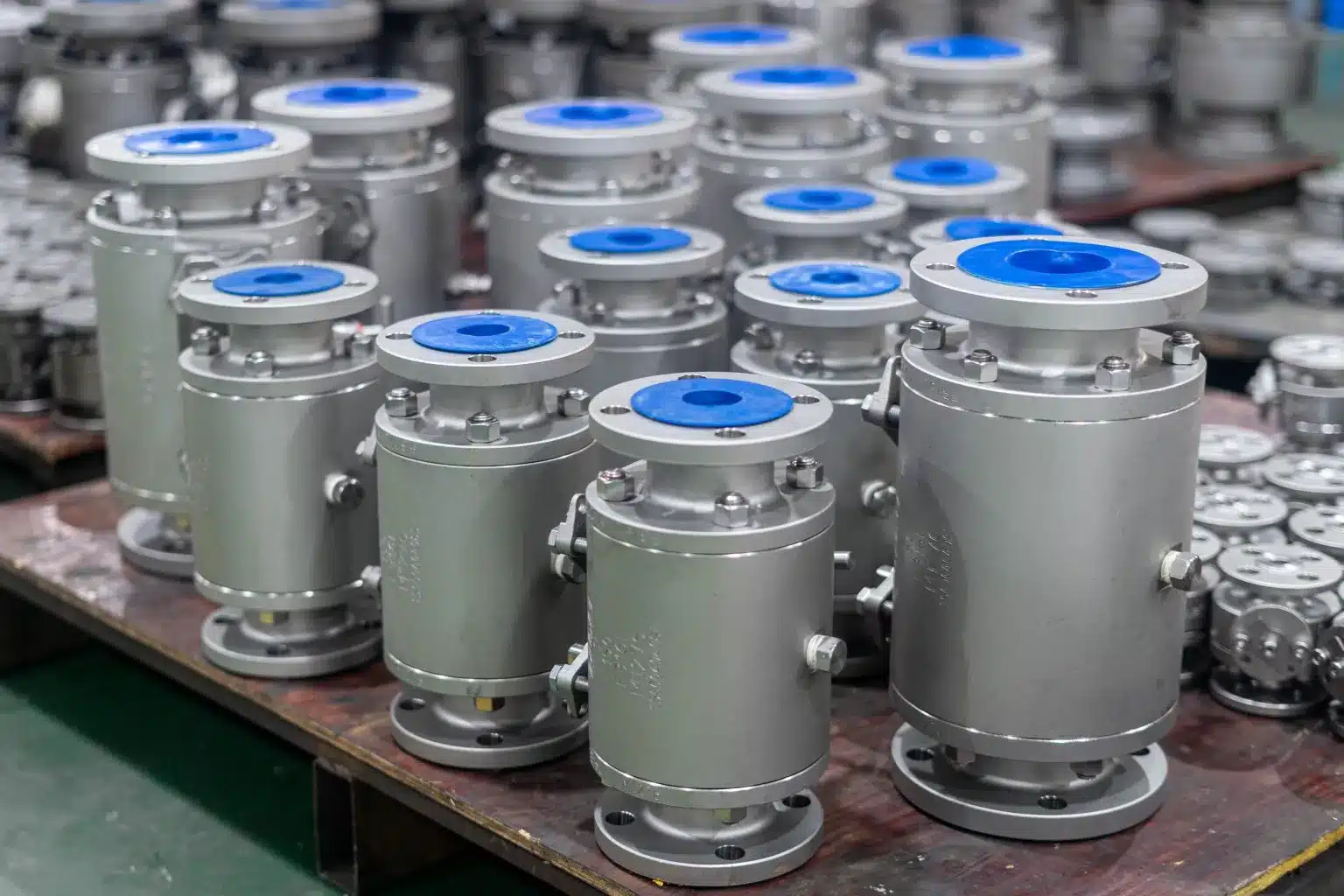
How to read this manufacturer list
Do not select a DBB ball valve manufacturer only because the company appears in a top list. A top list can help build a supplier pool, but it cannot confirm whether a manufacturer can meet your service conditions.
Before shortlisting a company, check three points:
- Does the manufacturer clearly supply DBB ball valves for the service you need?
DBB can refer to several valve arrangements. This article focuses on DBB ball valve manufacturers, not every DBB plug, needle, manifold, or gate valve source. - Can the manufacturer support the required pressure class, material, bore, seat design, and test standard?
A company that supplies low-pressure compact DBB valves may not be suitable for high-pressure pipeline isolation. - Can the manufacturer provide documents, drawings, test records, and engineering support before shipment?
Documentation quality is often a better signal than marketing language. In common industrial projects, missing drawings, MTRs, pressure test reports, or seat test records can delay technical approval, create procurement rework, or prevent the valve from being released after arrival.
What Makes a Qualified DBB Ball Valve Manufacturer?
A qualified double block and bleed ball valve manufacturer must prove more than production capacity. The manufacturer should be able to connect valve construction to isolation duty, pressure boundary safety, leakage control, and maintenance access.
Engineering and manufacturing capability
A DBB ball valve is selected when the system needs two isolation barriers and a bleed path between them. The manufacturer should understand how this requirement affects:
- Ball and seat arrangement
- Cavity bleed or vent design
- Pressure containment
- End connection selection
- Body construction
- Stem sealing
- Seat leakage testing
- Material traceability
For DBB ball valves, the manufacturer should also clarify whether the design is based on:
- Floating ball construction
- Trunnion-mounted construction
- Modular compact construction
- Single-body DBB design
- Dual-ball design
- Full bore or reduced bore flow path
A qualified manufacturer should be able to explain before quotation why one construction route fits your duty better than another and provide drawings or datasheets for technical confirmation. A supplier that only replies “we can supply all types” may still be able to sell a valve, but it may not be the right technical source for severe service or project-based procurement.
Quality control, testing, and traceability
A documented valve quality control system should go beyond visual inspection. For industrial DBB ball valves, ask whether the manufacturer can provide:
- Material certificates or MTRs
- Pressure test records
- Seat leakage test records
- Fire-safe test evidence when required
- Fugitive emission test evidence when required
- Dimensional inspection records
- Drawings and datasheets before production approval
- Packing and shipment inspection records
This is especially important for oil and gas, petrochemical, offshore, high-pressure, and hazardous media service. In those applications, a valve failure is not only a replacement issue. It can create downtime, leakage exposure, safety risk, and compliance problems.
Project support, delivery, and spare parts
A strong DBB ball valve manufacturer should support the project before and after the order. Useful support includes:
- Application review before quotation
- Material and seat selection guidance
- Drawing confirmation
- Standard and test requirement confirmation
- Spare parts recommendation
- Lead time confirmation for stock and custom valves
- Installation and maintenance guidance
- Fast response when documentation is requested
Price should not be ignored, but it should not be the first filter. A low purchase price that comes with incomplete documents, unavailable spare parts, wrong material or seat compatibility, or missing test records can create downtime, maintenance, and approval costs that outweigh the initial price difference.
DBB Ball Valve Manufacturer Capability Matrix
Use this matrix to compare DBB ball valve manufacturers before asking for a final quotation.
| Capability Area | What to Check | Why It Matters | Strong Manufacturer Signal |
|---|---|---|---|
| DBB ball valve route | Floating, trunnion, modular, single-body, dual-ball | A wrong route can create torque, isolation, pressure-class, or installation mismatch | Manufacturer can compare floating, trunnion, and modular routes against the project duty and provide drawings or datasheets for confirmation |
| Pressure and size range | Class rating, NPS/DN range, bore type | Prevents selecting a supplier outside the actual pipeline requirement | Datasheet shows class, bore, end connection, and test scope |
| Material capability | Body, trim, ball, stem, seat, seal material | Controls corrosion resistance, temperature limit, and media compatibility | Manufacturer can provide MTRs and material options |
| Seat and sealing design | Soft seat, metal seat, self-relieving seat, double piston effect | Affects leakage control, cavity pressure behavior, and DBB / DIB boundary | Manufacturer can explain seat arrangement, self-relieving or double piston behavior, and seat test scope |
| Standards and testing | API / ASME / ISO / fire-safe / emission tests | Confirms whether the valve meets project or end-user requirements | Test reports and certificates are available before shipment |
| Documentation support | Drawings, datasheets, inspection records, test certificates | Documentation gaps can delay approval, shipment release, or site acceptance | Drawings, MTRs, pressure test records, seat test records, and inspection records are available during technical clarification |
| Application support | Oil and gas, petrochemical, power, marine, water, severe service | Matches the valve route to real operating conditions | Manufacturer asks for medium, pressure, temperature, and isolation requirement before finalizing the offer |
| Delivery and spare parts | Lead time, stock availability, service kits, packing | Affects downtime and lifecycle support | Manufacturer can confirm realistic delivery and spare parts plan |
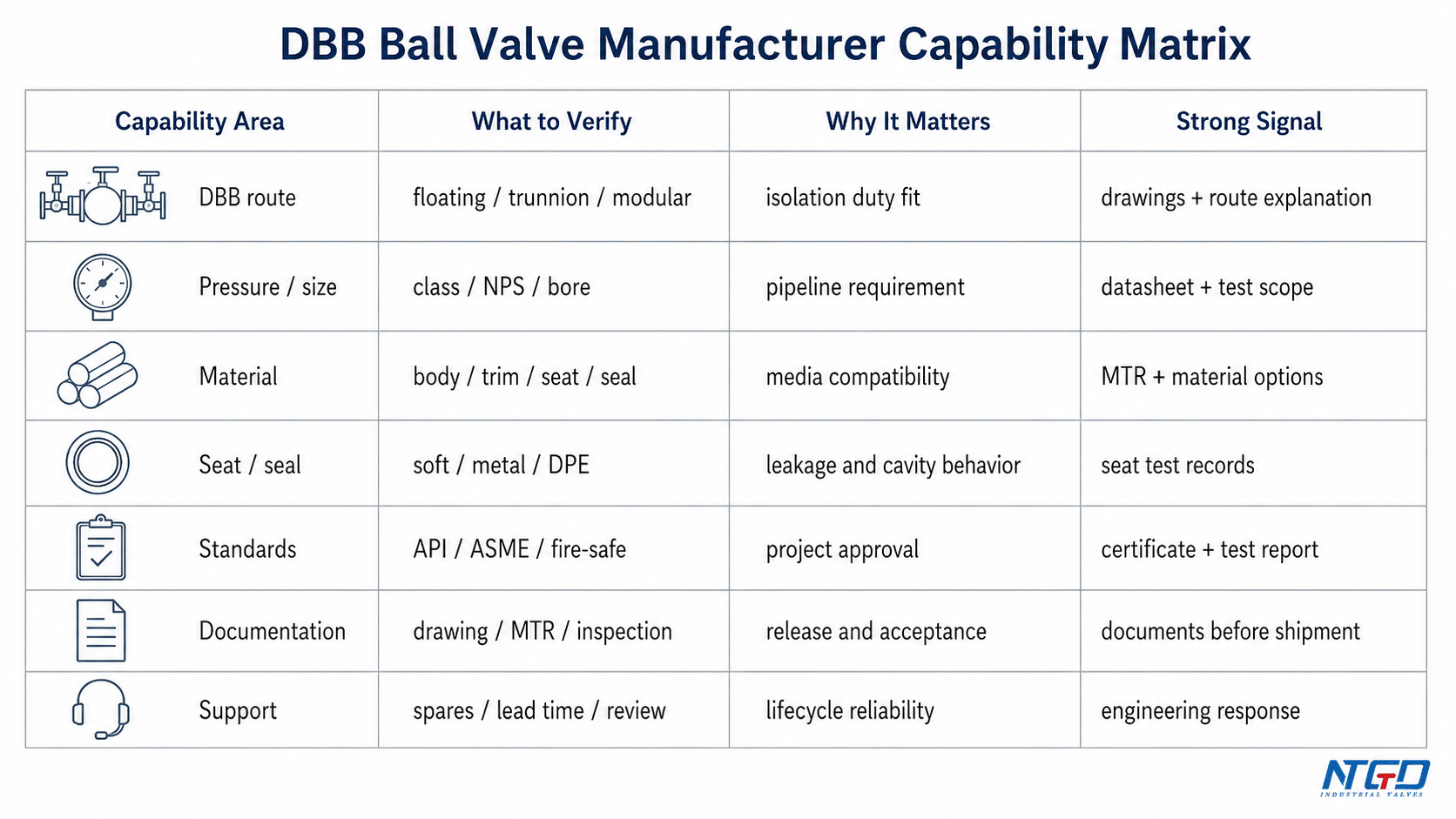
This matrix also helps distinguish a manufacturer from a general supplier. A general s
upplier may provide a quotation quickly, but a manufacturer or factory should be able to explain construction, pressure test, seat design, material selection, and documentation in more detail.
Product Range and Construction Routes to Verify
A DBB ball valve manufacturer should not be evaluated only by company size. The key question is whether its ball valve type and port route match your service conditions.
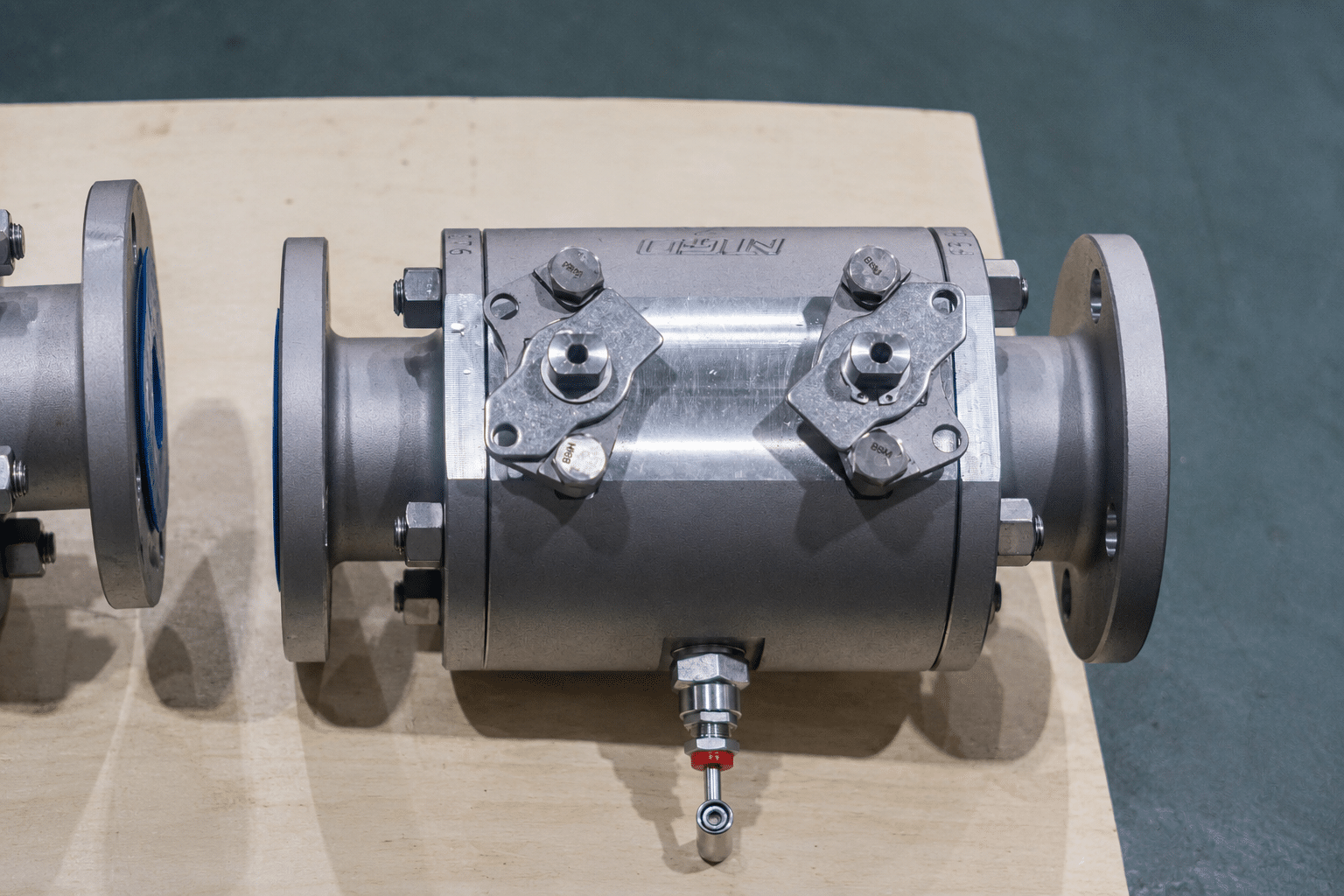
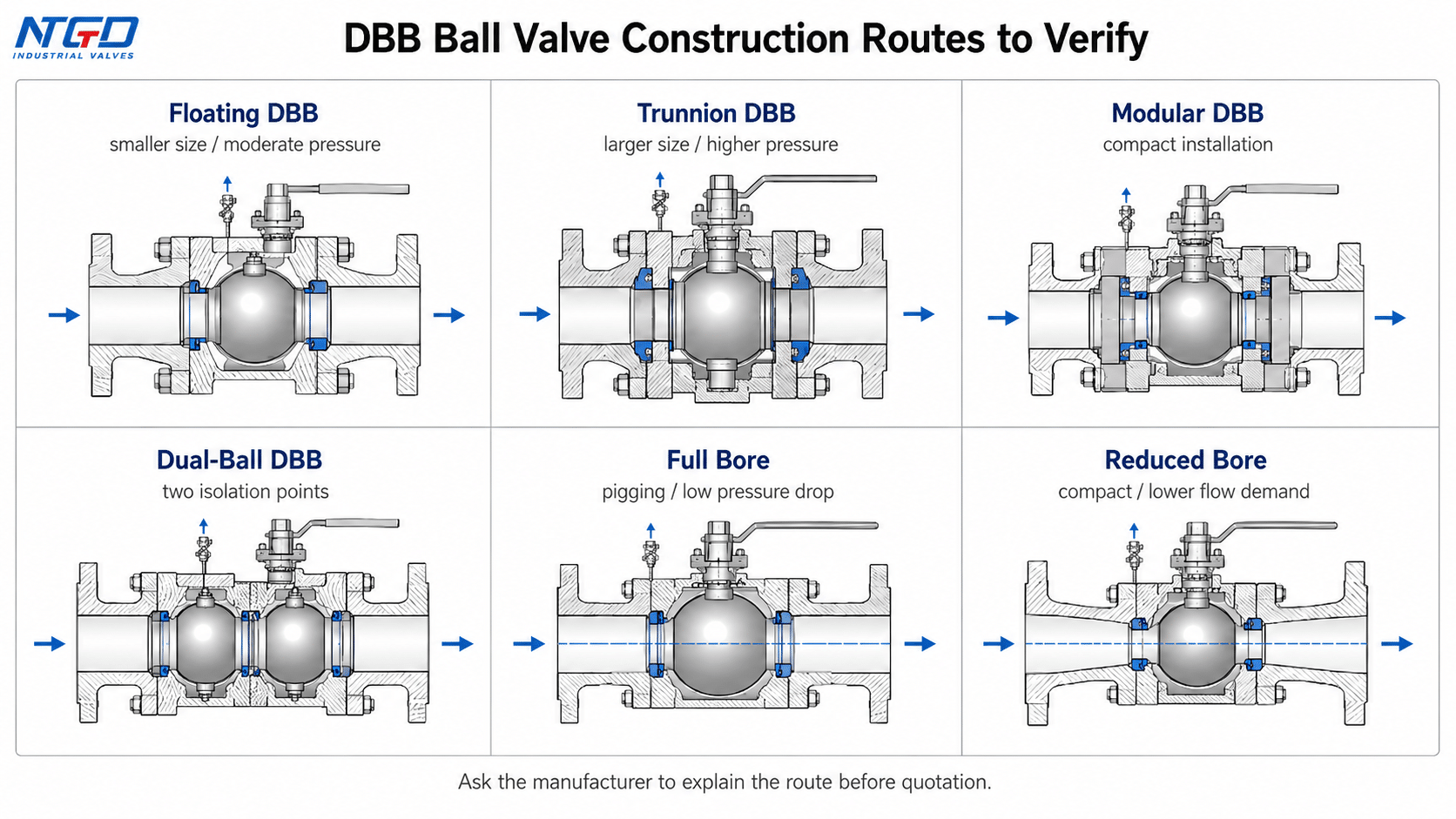
Floating vs trunnion DBB ball valves
Floating DBB ball valves are commonly used in smaller sizes or moderate pressure ranges. The ball is supported mainly by the seats. This route can be compact and cost-effective, but it may not be suitable for every high-pressure or large-bore application.
Trunnion-mounted DBB ball valves support the ball with upper and lower trunnions. This reduces operating torque and improves suitability for larger sizes, higher pressure classes, and pipeline isolation duties. When the project involves high pressure, large diameter, frequent operation, or automation, trunnion capability becomes an important manufacturer screening point.
For larger sizes, higher pressure classes, pipeline isolation, automation, or frequent operation, verify trunnion DBB capability first. For smaller sizes or moderate-pressure compact service, then compare whether the floating route is technically sufficient.
When comparing DBB ball valve manufacturers, ask:
- Does the manufacturer offer floating, trunnion, or both?
- Which pressure classes are available for each route?
- Which seat design is used?
- Can the manufacturer support gear, pneumatic, electric, or hydraulic actuation?
- Is the valve full bore or reduced bore?
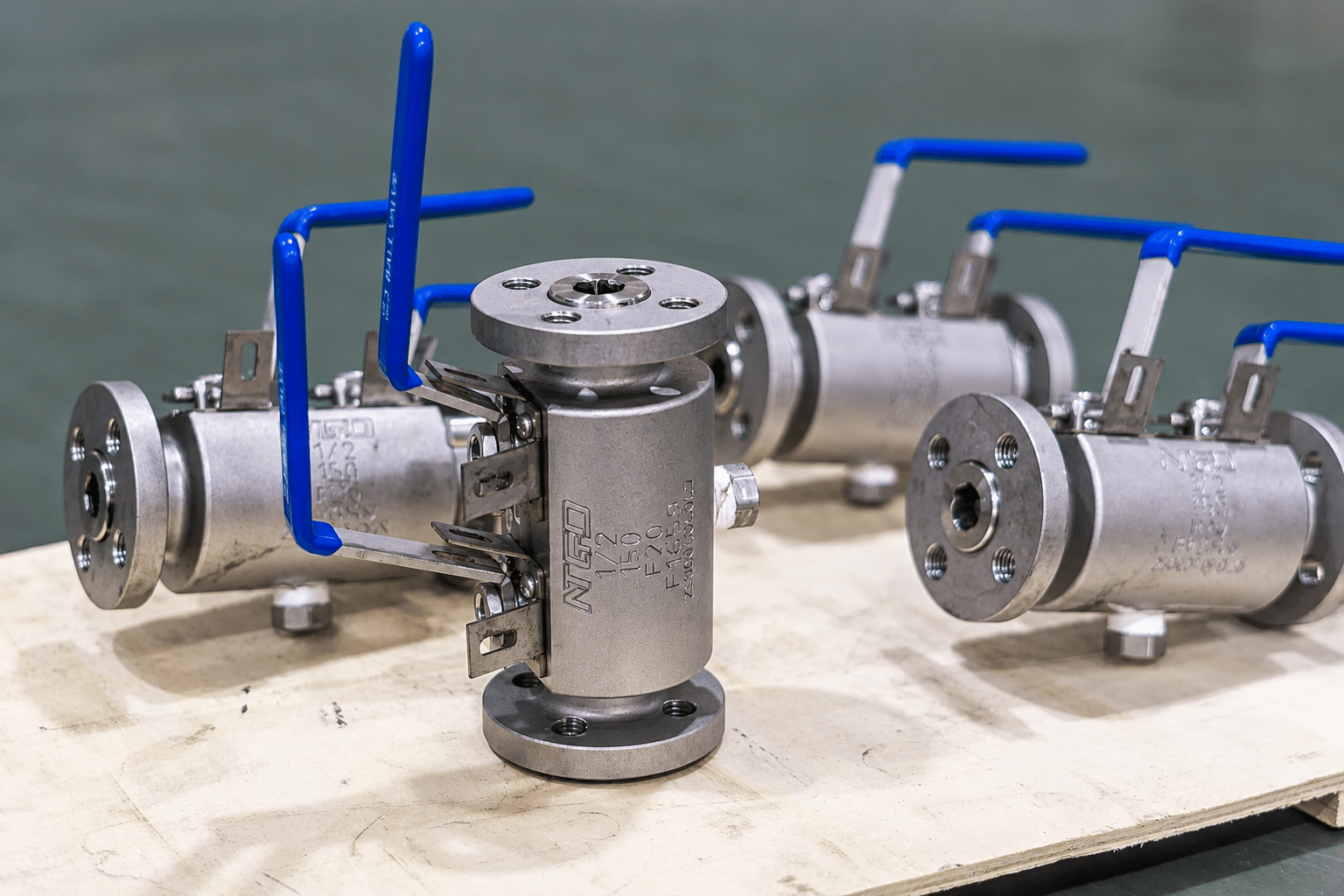
Modular, single-body, and dual-ball designs
DBB ball valves can be supplied in several construction routes. A compact modular DBB valve can reduce weight and installation space compared with two separate isolation valves and one bleed valve. A dual-ball design may provide two distinct closure members in one assembly. A single-body DBB design may be selected when space, leak paths, and maintenance access are important.
The right route depends on the service:
| Construction Route | Typical Selection Logic | What to Verify |
|---|---|---|
| Modular compact DBB | Space saving, fewer leak paths, compact piping layout | Whether the manufacturer can provide the body construction, end connection adaptation, bleed arrangement, and test record for that compact route |
| Floating DBB ball valve | Smaller sizes or moderate pressure service | Seat design, pressure rating, torque expectation, leakage test scope, and whether this route is adequate for the duty |
| Trunnion-mounted DBB ball valve | Larger size, higher pressure, pipeline isolation | Seat arrangement, cavity relief, actuation route, test standard, and documented trunnion DBB capability |
| Dual-ball DBB design | Stronger physical separation between two isolation points | Body length, weight, maintenance access, and test procedure for each isolation point |
| Full bore design | Pigging, low pressure drop, pipeline service | Bore size, flow path, end connection, and confirmation that full-bore construction is available in the required class |
| Reduced bore design | Compact design, lower cost, less critical pressure drop | Flow restriction, pressure drop, and whether reduced bore is acceptable for the application |
Seat, seal, and material options
Seat and seal design is central to DBB performance. The manufacturer should explain whether the valve uses soft seats or metal seats, self-relieving seats, or double piston effect seats. The correct route depends on pressure, temperature, media, leakage requirement, and safety philosophy.
Material selection should also be tied to service data, not only availability. Carbon steel, stainless steel, duplex stainless steel, alloy steel, and nickel alloys may appear in manufacturer catalogs, but the final material route should be checked against the medium, corrosion risk, temperature, pressure, and end-user specification.
For high-pressure double block and bleed ball valve applications, do not accept a generic material statement. Request the specific body material, trim material, seat material, seal material, pressure class, and test standard.
Standards, Testing, and Documents to Request Before Buying
Certifications are useful only when they can be verified. A DBB ball valve manufacturer may mention API, ASME, ISO, fire-safe, or emission-related standards, but procurement teams should ask what documents are available for the exact valve being supplied.
Standards to check
The applicable standards depend on project requirements. Commonly referenced standards and requirements may include:
| Standard / Requirement | What It Helps Verify | Procurement Note |
|---|---|---|
| API 6D | Pipeline valve design and testing expectations | For pipeline or oil and gas isolation, confirm whether API 6D applies to the exact DBB ball valve design being offered, not only to the manufacturer’s general valve range. |
| ASME B16.34 | Pressure-temperature rating and valve pressure boundary design | Useful for pressure class and material verification; confirm the pressure-temperature rating under ASME B16.34 against the specified material and class. |
| API 6A | Wellhead and upstream service requirements when applicable | Only relevant if the project requires this service route; do not use it as a generic DBB valve requirement |
| API 598 | Valve inspection and pressure testing | Ask for the actual test report for the supplied valve or batch, not only the phrase “tested according to API 598” |
| API 607 / fire-safe testing | Fire-safe performance for soft-seated valves when required | Confirm whether the API 607 fire-test scope matches the supplied valve configuration and seat route. |
| ISO 15848 / emission-related requirements | Fugitive emission control | Important for petrochemical, refinery, and environmental compliance where ISO 15848-1 fugitive-emission type testing is specified. |
| CRN or regional approvals | Jurisdictional compliance in specific markets | Verify only when the destination market or project specification requires it; do not treat it as a universal global filter |
Do not assume every manufacturer holds every certificate. The safer wording in procurement is: “Please confirm which standards apply to this exact valve and provide the related certificate or test record.”
Testing and inspection records
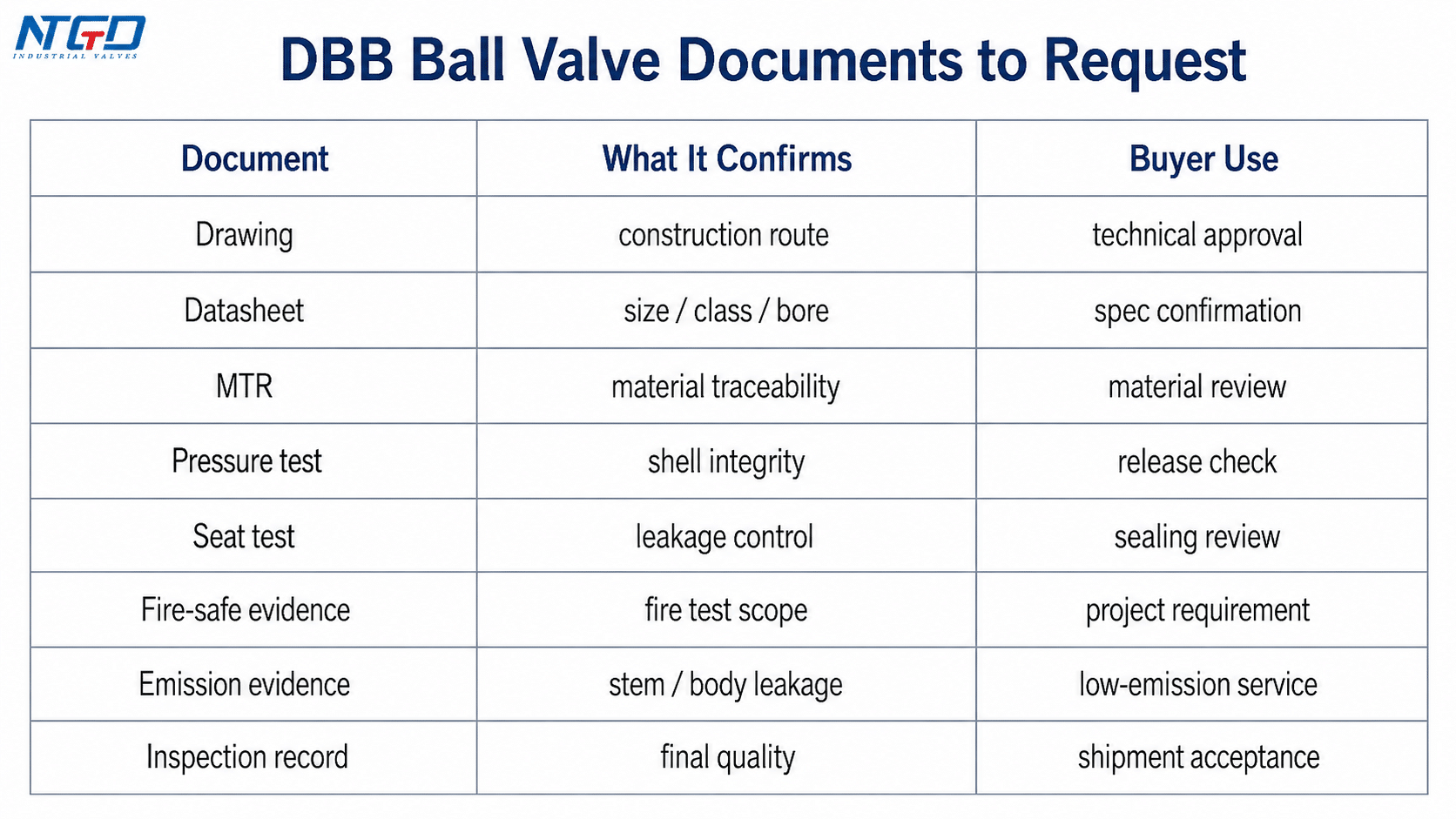
For critical service, request evidence instead of relying on catalog language. Useful documents include:
- Pressure test report
- Seat leakage test report
- Shell test report
- Fire-safe test report if required
- Fugitive emission test report if required
- Material test report
- Dimensional inspection record
- Coating or surface treatment record if applicable
- Final inspection report
- Packing list and marking confirmation
A manufacturer that can provide this information early usually gives the buyer more confidence during technical review.
Drawings and datasheets
Before ordering, ask for drawings and datasheets that confirm:
- Valve size and pressure class
- Bore type
- Body construction
- End connection
- Face-to-face dimension
- Actuation type
- Stem sealing design
- Seat material
- Body and trim material
- Bleed port arrangement
- Applicable test standard
This step prevents a common procurement problem: buying a valve that matches the name “double block and bleed ball valve” but does not match the actual project requirement.
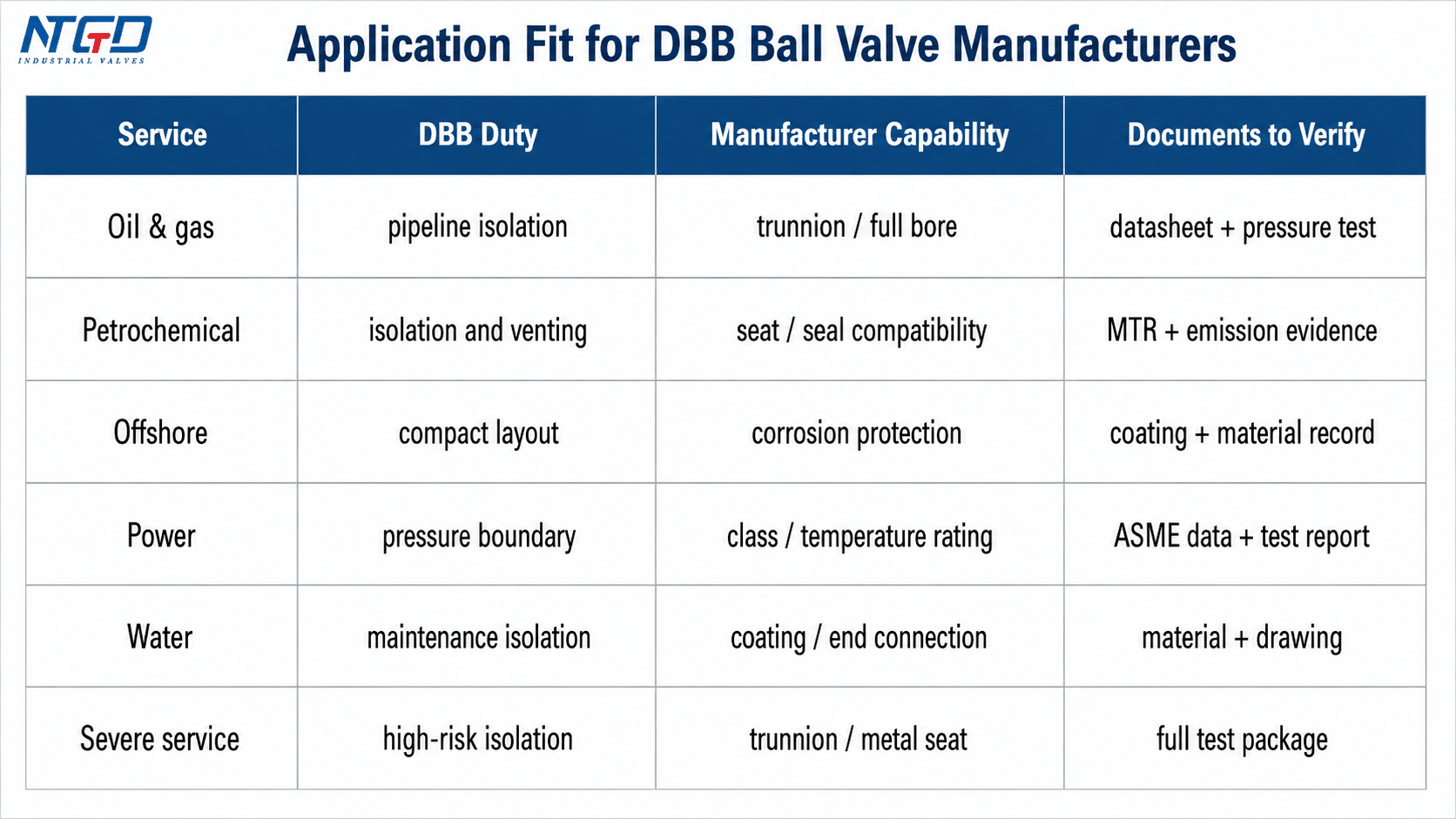
Application Fit by Service Condition
The same DBB ball valve manufacturer may not be suitable for every service. Application fit should be checked by matching the operating conditions to manufacturer capability.
| Application | Why DBB Isolation Is Used | Manufacturer Capability to Verify | Documents / Data to Request |
|---|---|---|---|
| Oil and gas pipeline isolation | Safe isolation during maintenance, pigging, or system verification | Trunnion route, full bore option, pressure class, API-related testing | Datasheet, pressure test, seat test, material records |
| Petrochemical and chemical processing | Isolation and venting around reactors, tanks, or process lines | Chemical compatibility, seat/seal material, emission control | Material selection data, emission test evidence, MTR |
| Offshore and marine service | Compact layout, corrosion exposure, maintenance access | Compact body, corrosion-resistant material, coating, actuation support | Material certificate, coating record, drawing approval |
| Power generation | Isolation of steam, feedwater, or auxiliary systems depending on pressure and temperature | Pressure-temperature rating, body material, seat route | ASME-related data, pressure test, temperature rating |
| Water and wastewater | Maintenance isolation and system safety | Corrosion resistance, end connection, operation type | Material data, coating specification, installation drawing |
| Severe service | High pressure, high temperature, corrosive or hazardous media | Trunnion-mounted route, metal seat or special seat option, severe-service material capability, fire-safe / emission / pressure testing capability | Full test package, MTR, seat leakage test, fire-safe or fugitive emission evidence when required, engineering review notes |
For oil and gas service, do not select a double block and bleed valve supplier only because the quotation is fast. Verify whether the supplier can provide the required DBB ball valve design and whether the manufacturer behind the supply can support the testing and documentation package.
Manufacturer, Supplier, Factory, or Company: How to Classify Your Buying Source
Search results and procurement discussions often mix the terms manufacturer, company, supplier, and factory. They are related, but they are not the same.
| Buying Source | What It Usually Means | What to Verify |
|---|---|---|
| Manufacturer | Produces or engineers the valve directly | Production capability, design control, testing, documents, quality system |
| Factory | Manufacturing site or production source | Machining, assembly, testing capacity, inspection process |
| Supplier | Sells or distributes valves, may or may not manufacture | Source of product, access to documents, technical support, warranty responsibility |
| Company | Broad term for manufacturer, supplier, or brand owner | Actual role in design, production, testing, and support |
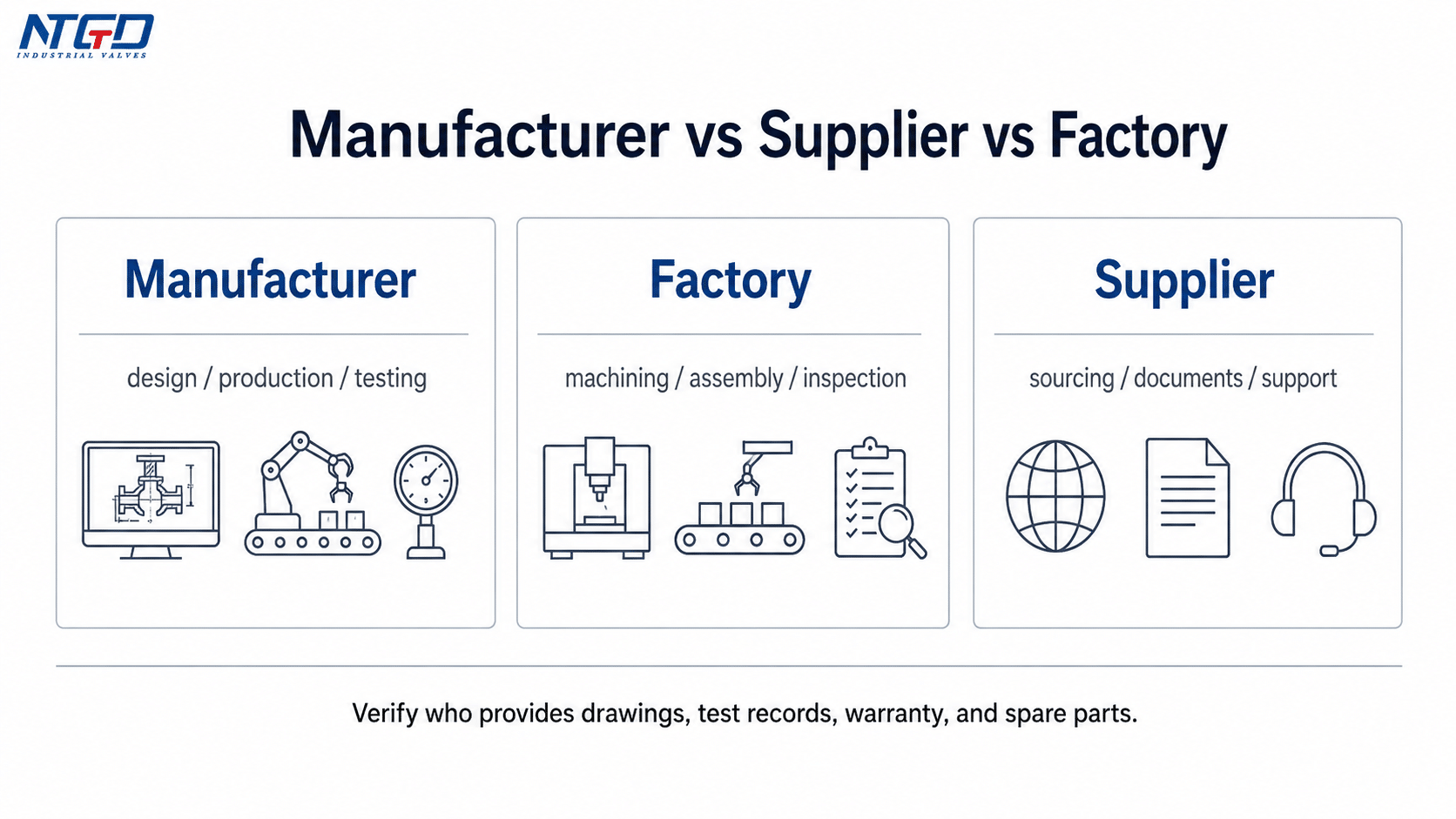
A supplier can be acceptable if it provides clear access to the manufacturer’s documents, drawings, test records, and after-sales support. The risk increases when the supplier cannot confirm who made the valve, which standard was used, or whether the supplied design matches the project specification.
For non-critical utility service, a supplier with clear sourcing and complete documents may be acceptable. For oil and gas pipeline isolation, high-pressure service, hazardous media, or projects with strict approval procedures, prioritize a manufacturer or factory-level source that can support design review, original test records, and after-sales responsibility.
For DBB ball valves, the safest approach is to ask:
- Who manufactures the valve?
- Where is the valve assembled and tested?
- Which standards apply to this exact valve?
- Can the supplier provide original test reports?
- Who handles warranty and spare parts?
- Can engineering questions be answered before purchase?
This distinction helps buyers handle searches such as double block and bleed valve companies, DBB ball valve suppliers, and double block and bleed ball valve factory without splitting the article into separate supplier or factory pages.
RFQ-Ready Checklist for Selecting a DBB Ball Valve Manufacturer
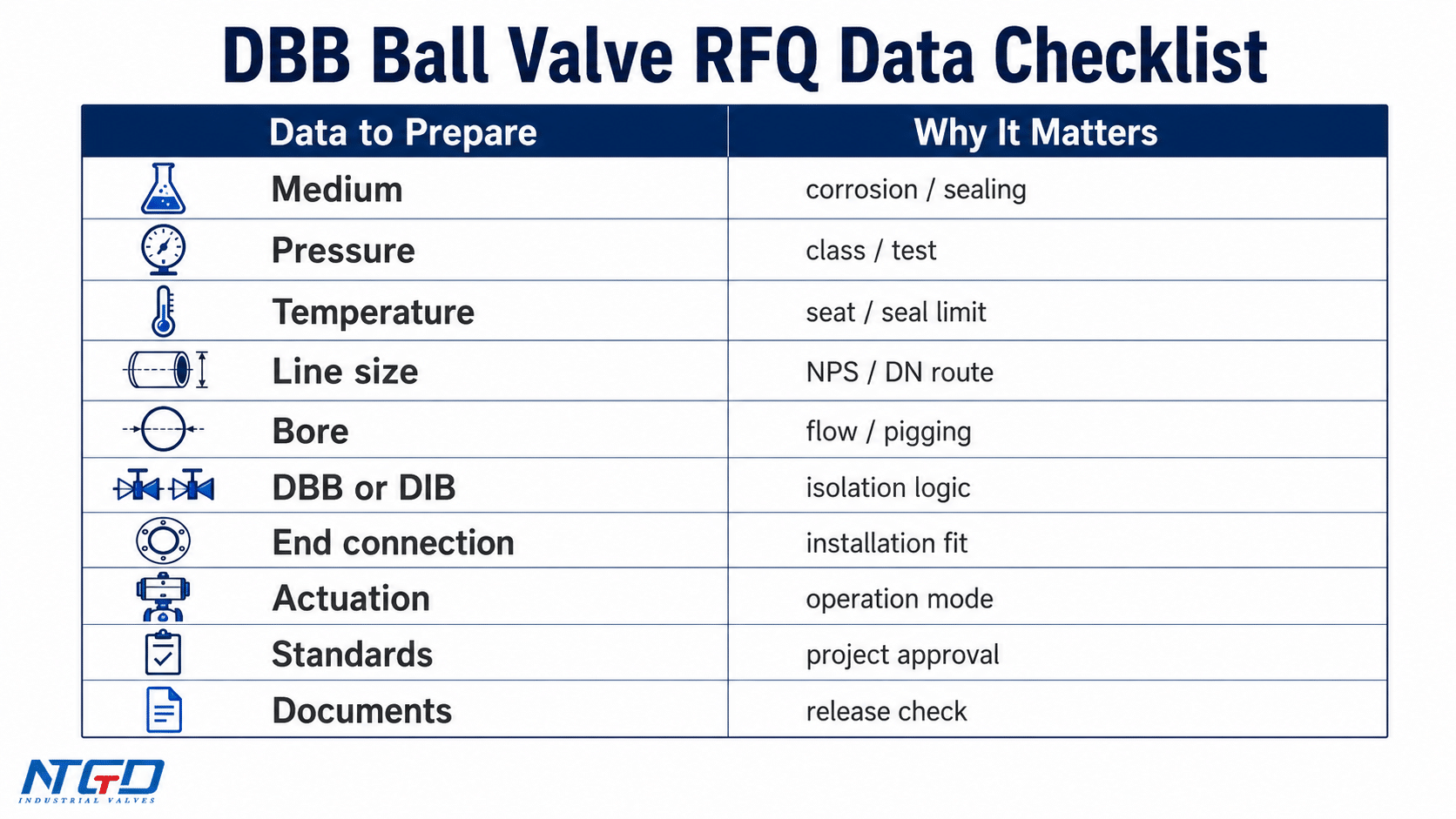
Before contacting a DBB ball valve manufacturer, prepare the data that affects ball valve sizing and bore route, construction, material, testing, delivery, and price. A clear request reduces back-and-forth and helps the manufacturer recommend the correct valve route.
Application data to prepare
| Data Needed | Why It Matters |
|---|---|
| Fluid or gas | Determines corrosion, sealing, and material compatibility |
| Operating pressure and design pressure | Determines pressure class and test requirement |
| Operating temperature | Affects seat, seal, body material, and fire-safe requirement |
| Pipe size and bore requirement | Determines NPS/DN size, full bore or reduced bore |
| DBB or DIB requirement | Affects seat sealing philosophy and isolation expectation |
| Flow direction and installation position | Affects bleed arrangement, drainage, and access |
| End connection | Flanged, welded, threaded, or special connection route |
| Actuation requirement | Manual, gear, pneumatic, electric, or hydraulic operation |
| Applicable standards | API, ASME, ISO, fire-safe, emission, or regional requirements |
| Required documents | MTR, test report, drawing, datasheet, certificate, inspection record |
| Delivery requirement | Stock, standard production, or custom manufacturing |
| Spare parts need | Seats, seals, stem packing, service kits |
Technical documents to request
Ask the manufacturer for:
- General arrangement drawing
- Datasheet
- Material list
- Pressure test procedure or report
- Seat leakage test record
- MTR
- Certificate copies when required
- Recommended spare parts list
- Installation and maintenance instructions
- Packing and marking details
Final fit-check before contacting manufacturers
Use this final check before sending an RFQ:
- Have you confirmed the project needs a DBB ball valve, not a DBB plug, needle, manifold, or gate valve arrangement?
- Is the required construction floating, trunnion, modular, single-body, or dual-ball?
- Is the pressure class, size, and bore combination inside the manufacturer’s documented supply range?
- Are material, seat, and seal requirements clearly defined?
- Are API / ASME / ISO / fire-safe / emission requirements stated?
- Are test reports and MTRs required before shipment?
- Who is responsible for spare parts, warranty, technical clarification, and after-sales response, and can that responsibility be confirmed before the order?
- Is delivery time realistic for stock, standard, or custom valves?
A good double block and bleed ball valve manufacturer will ask technical questions before quoting. That is not a delay. It is often a sign that the manufacturer is checking the real service conditions instead of only selling a catalog item.
FAQ
What should I check before choosing a double block and bleed ball valve manufacturer?
Check the manufacturer’s DBB ball valve route, pressure class range, material capability, seat and seal design, test standards, documentation support, delivery ability, and spare parts availability. For critical isolation service, verify design route, testing documents, and seat / seal arrangement before comparing price or lead time. A company name alone is not enough.
What is the difference between a DBB valve manufacturer, supplier, and factory?
A manufacturer usually controls design, production, testing, or engineering support. A factory is the production site. A supplier may sell the valve without producing it. A supplier can still be acceptable if it can provide original drawings, test reports, certificates, and warranty support from the manufacturing source.
Which standards matter for DBB ball valves?
Commonly referenced standards include API 6D, ASME B16.34, API 598, API 607, ISO 15848, and sometimes API 6A or regional approvals depending on the project. The exact requirement depends on service conditions, end-user specifications, and local regulations. Ask which standards apply to the exact valve being supplied.
What documents should I request before ordering?
Request the datasheet, drawing, material list, MTR, pressure test report, seat leakage test record, applicable certificates, inspection record, and recommended spare parts list. For fire-safe or low-emission service, ask for the related test evidence.
Should I choose a floating or trunnion DBB ball valve?
Floating DBB ball valves are commonly used in smaller sizes or moderate pressure services. Trunnion-mounted DBB ball valves are preferred for larger sizes, higher pressure classes, lower operating torque, and pipeline isolation duties. Confirm the route with the manufacturer based on pressure, size, actuation, and isolation requirement.
How do DBB and DIB differ?
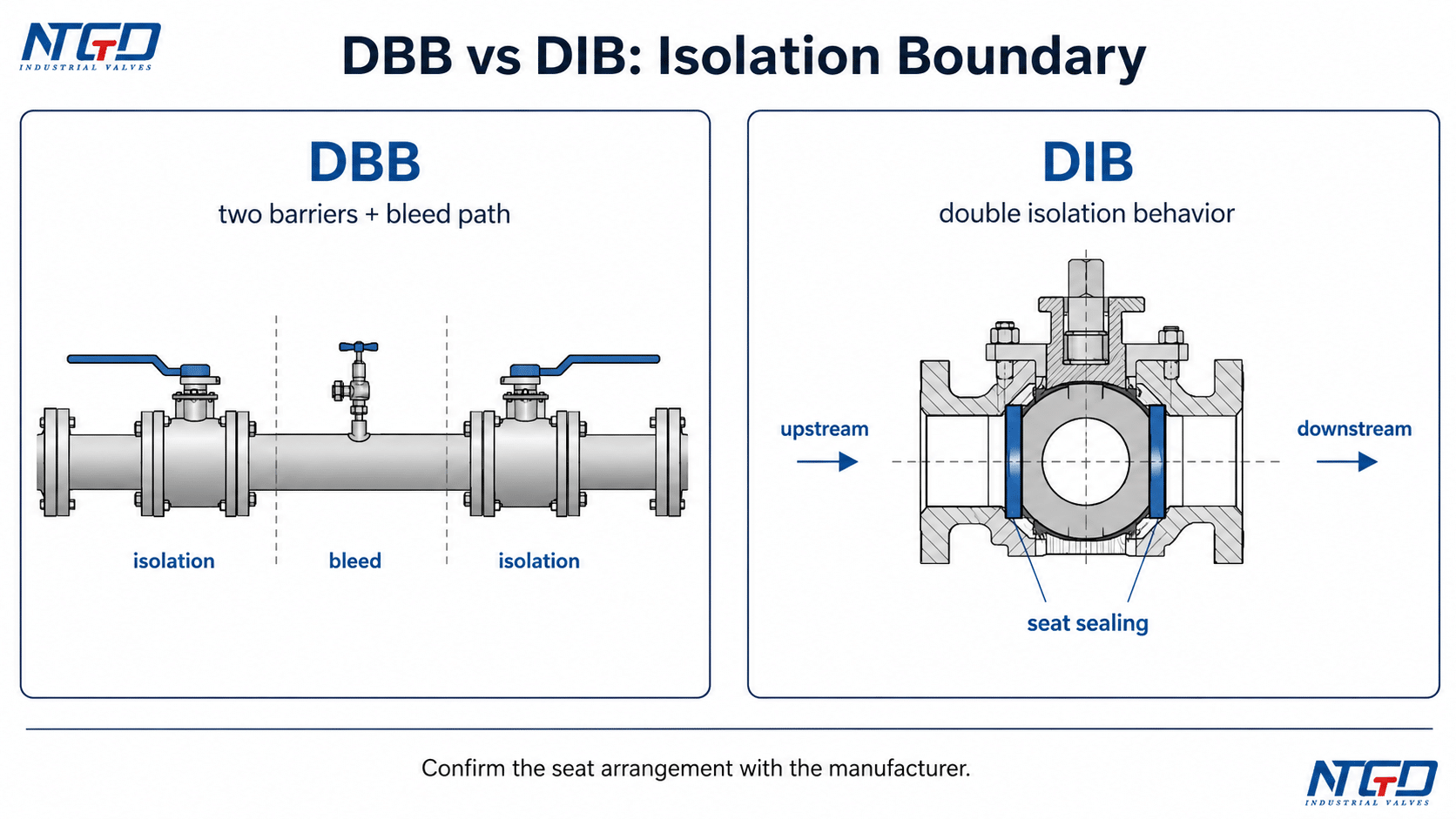
DBB and DIB are related but not identical isolation concepts. In isolation practice, double block and bleed focuses on two closed isolation points with a drain or vent path between them. DIB generally refers to double isolation from both directions. The difference depends on seat design and pressure sealing behavior. For critical service, ask the manufacturer to explain the seat arrangement and the applicable standard definition.
Can a supplier provide DBB ball valves if they are not the original manufacturer?
Yes, but only if the supplier can provide clear technical support and original documentation from the manufacturing source. If the supplier is not the original manufacturer, confirm whether it can provide original test records, drawings, MTRs, warranty responsibility, and an engineering clarification channel before the order is placed.
What should I verify for oil and gas DBB ball valve service?
For oil and gas service, verify pressure class, bore type, trunnion or floating construction, material compatibility, fire-safe requirement, seat leakage test, API-related requirements, MTR, and delivery support. Pipeline isolation and hazardous service require stronger documentation than ordinary utility service.
Conclusion
The best double block and bleed ball valve manufacturer is not simply the largest company or the first supplier to quote. For industrial buyers, the stronger choice is the manufacturer that can connect DBB isolation duty to valve construction, material selection, seat and seal design, pressure testing, documentation, and project support.
Use the manufacturer list to build an initial supplier pool. Then use the capability matrix, product route checks, standards checklist, application fit table, and RFQ-ready data list to narrow that pool. This approach protects the core goal of the page: helping buyers find reliable double block and bleed valve manufacturers while avoiding a shallow supplier directory, a product catalog, or a price-driven procurement decision.
Final Application Check
If you are preparing a DBB ball valve inquiry, NTGD Valve can help review the application conditions and cross-check the specification before quotation. Share the medium, pressure, temperature, line size, end connection, actuation requirement, applicable standards, and isolation requirement so the valve route, material, seat / seal design, and documentation needs can be checked against the actual service.
