
Nom de l'auteur : Bruce Zheng
Rôle de l'auteur : Cofondateur et ingénieur en vannes chez NTGD Valve
Bio de l'auteur : Bruce Zheng est cofondateur et ingénieur en vannes chez NTGD Valve, qui se concentre sur la sélection des vannes industrielles, les applications et le contenu technique pour les acheteurs B2B mondiaux.
Dernière mise à jour : July 13, 2026
Choosing a globe valve is not only about body material, trim, pressure class, or operation method. The end connection determines how the valve joins the pipeline, how much work installation will require, how easily the valve can be removed later, and what connection details must be confirmed before purchase.
The main globe valve end connection types are flanged, threaded, socket weld, and butt weld. Each option can be appropriate when it matches the piping system, service conditions, maintenance plan, and specification requirements.
This guide compares the four options from a practical selection and RFQ point of view. It helps buyers and engineers decide which connection direction to evaluate before confirming final dimensions, ratings, drawings, and datasheets.
Quick Answer: Which Globe Valve End Connection Should You Choose?
Start by deciding whether the valve should be easy to remove or permanently welded into the line. Flanged ends fit maintenance-heavy systems when the layout leaves room for bolting, gasket handling, and valve removal. Threaded ends fit smaller specified services only when threaded joints are allowed and sealing conditions are understood. Socket weld and butt weld ends fit welded piping strategies, but they make later replacement a weld-work and inspection decision rather than a simple disassembly task.
| Priorité de sélection | Connection to evaluate first | Practical reason |
|---|---|---|
| Easy removal for inspection or replacement | A brides | The bolted joint can usually be disassembled when space, gasket handling, and bolt access are available. |
| Compact connection in smaller specified services | Fileté | The connection can be simple and compact, but thread type, sealing method, and service suitability must be checked before it is treated as a low-effort choice. |
| Compact welded joint | Soudure par emboîtement | The pipe fits into the socket and is welded, which can suit compact welded piping layouts when welding procedure and inspection expectations are defined. |
| Permanent welded pipeline connection | Soudure bout à bout | The valve end is welded directly to the pipe end and is usually selected when a permanent joint is preferred and replacement work is planned around cutting, welding, and inspection. |
Choose flanged ends when removal and maintenance access matter
Flanged globe valve ends are often the first option to review when the valve may need to be removed for maintenance. They also make the RFQ easier to define because the buyer can specify flange rating, face type, material, and applicable connection standard.
Prefer this direction when access for bolts, gasket replacement, lifting, and alignment can be provided. Avoid treating flanged ends as automatically convenient if the installed location leaves no room for safe disassembly.
Choose threaded ends for smaller installations where threaded joints are allowed
Threaded globe valve ends can be suitable in compact systems when the piping specification allows threaded connections. The thread type, sealing method, service conditions, and maintenance expectations should be confirmed before selection.
Prefer this direction only when the thread form and sealing approach match the service. Avoid using threaded ends as a shortcut in services where vibration, corrosion, repeated disassembly, or specification rules make thread condition hard to control.
Choose socket weld ends for compact welded sealing
Socket weld globe valve ends can fit compact welded piping layouts where the line requires a welded connection and the project allows this end style. The pipe schedule, material, welding procedure, and inspection requirements should be checked.
Prefer this direction when compact welded installation is part of the piping strategy. Avoid treating it as interchangeable with butt weld, because the connection geometry, preparation, and inspection discussion are different.
Choose butt weld ends for permanent welded pipeline service
Butt weld globe valve ends are typically reviewed when the piping system requires a permanent welded joint. They can suit welded-line applications, but replacement usually requires cutting, weld preparation, welding, inspection, and downtime planning.
Prefer this direction when permanent welded continuity is more important than easy removal. Avoid selecting butt weld ends without planning the future maintenance method, because the valve cannot be removed like a flanged assembly.
What Is a Globe Valve End Connection?
A globe valve end connection is the interface between the valve and the pipe. It defines how the valve is attached to the piping system and which connection details must be included in the specification.
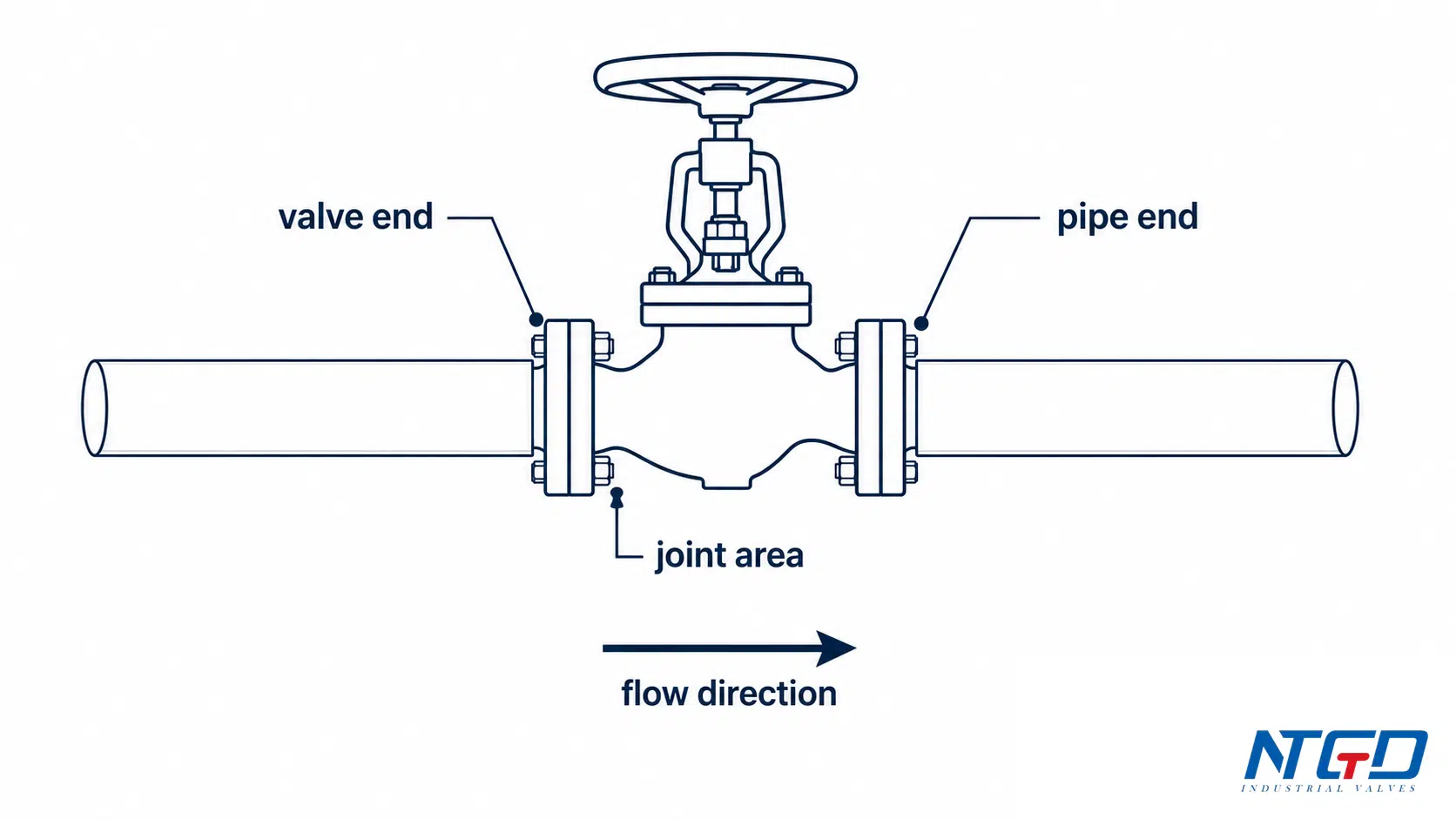
If the broader valve family still needs confirmation, NTGD’s globe valve category can help connect the end connection choice to the correct product direction.
End connection is separate from body style, trim material, bonnet design, actuator type, and pressure class. A buyer may know the required globe valve type but still need to define whether the ends are flanged, threaded, socket weld, or butt weld.
This article keeps the discussion within a globe-valve selection lens. General valve connection advice can be useful, but the final choice still needs to match the globe valve’s service duty, installation location, and piping specification.
End connection vs valve body style, trim, and actuator
A globe valve may have different body patterns, trim materials, seat designs, or operating methods. Those details describe how the valve is built and operated. The end connection describes how the valve joins the pipeline.
For component-level context, the pièces et composants des robinets à soupape guide explains how the body, bonnet, disc, seat, stem, packing, and gasket fit into the full valve specification.
Keeping these fields separate reduces RFQ confusion. A complete inquiry should define both the valve design requirements and the connection details.
What this guide includes and excludes
This guide includes the four common end connection options used for globe valve selection: flanged, threaded, socket weld, and butt weld. It explains how they differ, when each may fit, and what buyers should confirm.
It does not provide final product dimensions, product model lists, price information, detailed standard clauses, or complete welding procedures. Those details should be checked against the project specification, manufacturer datasheet, drawing, or applicable standard.
It also does not replace the piping specification. The purpose is to help the buyer define the connection direction before checking the exact product and project documents.
Why end connection choice affects installation, maintenance, and sealing
The connection type affects field work. Flanged ends depend on gasket and bolting practice. Threaded ends depend on thread compatibility and sealing method. Socket weld and butt weld ends depend on welding quality and inspection.
The connection also affects long-term maintenance. A removable connection can reduce replacement difficulty when access is available. A welded connection may support joint integrity but can increase rework during replacement.
Globe Valve End Connection Comparison Table
The table below compares the options across the factors that affect selection.
Before reading the details, separate the options into two practical groups: removable joints and welded joints. Flanged and threaded ends are reviewed when the project may need disassembly; socket weld and butt weld ends are reviewed when the piping strategy accepts a permanent welded interface.
| Type de connexion finale | Removable or permanent | Installation method | Maintenance effect | Sealing / joint-integrity review | Sens de sélection typique | RFQ details to confirm |
|---|---|---|---|---|---|---|
| A brides | Removable | Bolted flange joint with gasket | Easier to remove when access is available | Depends on gasket selection, flange face condition, alignment, and bolting practice | Maintenance access, inspection, replacement planning | Size, pressure class or PN, flange standard, face type, material |
| Fileté | Removable, with thread-condition limits | Threaded pipe connection | Compact, but repeated disassembly can affect threads | Depends on thread form, engagement, sealing method, and service conditions | Smaller services where threaded joints are permitted | Thread type, size, material, sealing method, service suitability |
| Soudure par emboîtement | Permanent welded joint | Pipe inserted into socket and welded | Removal normally requires cutting or weld work | Depends on weld quality, material compatibility, and inspection expectations | Compact welded connection in suitable services | Socket weld end, pipe schedule, material compatibility, inspection needs |
| Soudure bout à bout | Permanent welded joint | Valve end welded directly to pipe end | Removal normally requires cutting, weld preparation, and inspection | Depends on weld preparation, alignment, weld quality, and inspection expectations | Permanent welded pipeline service | Butt weld preparation, pipe schedule, material, inspection/testing requirements |
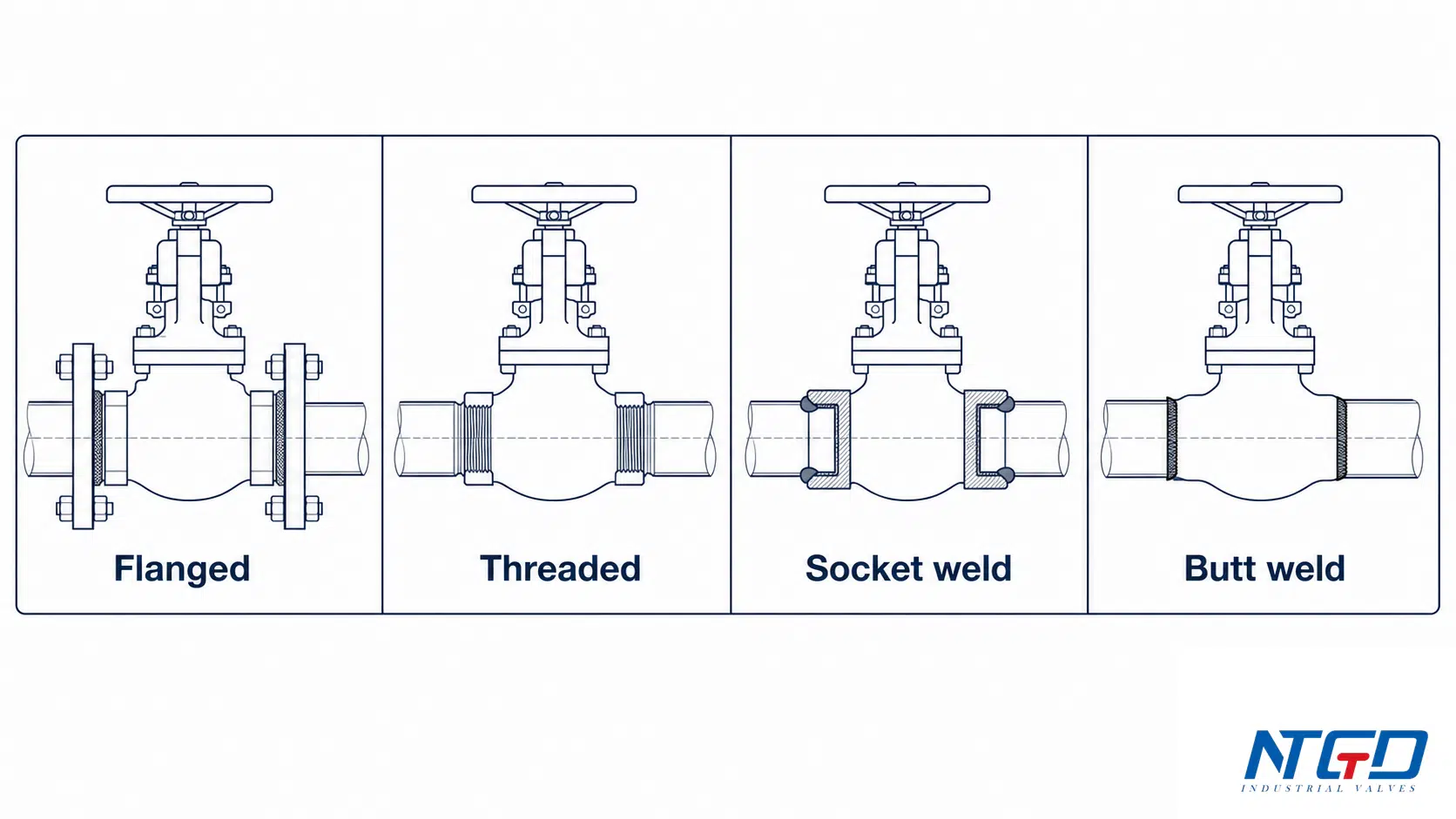
Removable vs permanent connection options
Flanged and threaded ends are generally removable options. Socket weld and butt weld ends are welded options. This difference matters because the maintenance plan may be very different. A removable valve can often be taken out of the line more easily, while a welded valve may require cutting and rework.
Pressure, leakage, installation, maintenance, and standards tradeoffs
No connection type is automatically best for every service. Flanged joints require gasket and bolting control. Threaded joints require correct thread engagement and sealing method. Welded joints require welding procedure and inspection control.
Joint integrity is reviewed differently for each option. In corrosive, high-pressure gas, or other leakage-sensitive service, the connection choice should be checked against the piping class, assembly method, inspection plan, and maintenance access. The final decision should match the piping class, service conditions, installation practice, and maintenance plan.
How to read the comparison before checking product specifications
Use the comparison table to narrow the connection direction. Then verify the details with project documents and manufacturer information. Final selection may require checking size, rating, material, face type, thread form, weld preparation, pipe schedule, inspection requirements, and documentation.
Four Main Globe Valve End Connection Types
Each end connection option has a different installation logic. The explanations below focus on selection value rather than product catalog detail.
Flanged globe valve ends
Flanged globe valve ends connect to matching pipe flanges with bolts and a gasket. They are often selected when the valve may need to be removed during inspection, maintenance, or replacement.
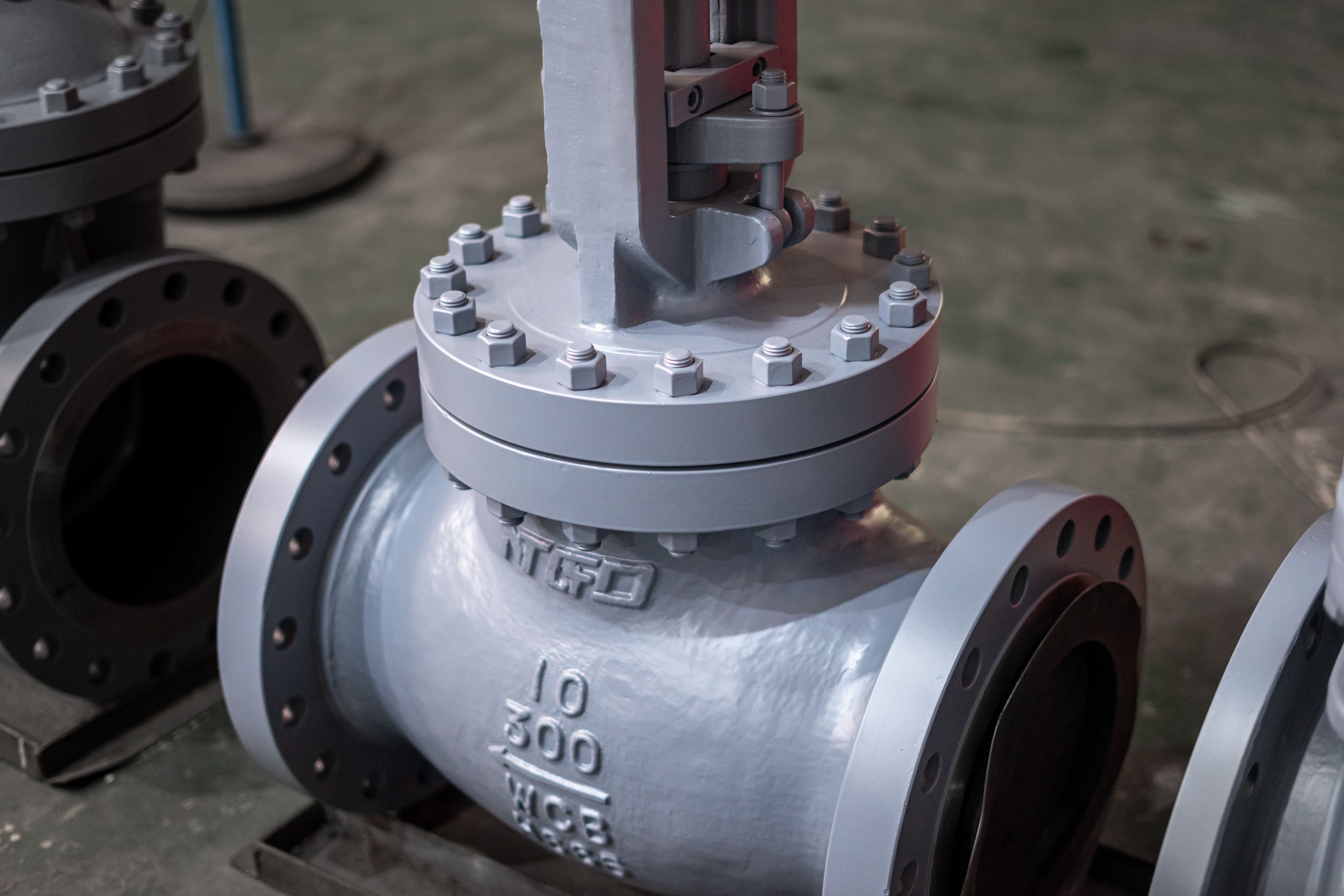
The main advantage is removability. The main cautions are gasket compatibility, flange face condition, bolt tightening practice, alignment, and space around the valve. A flanged connection is not automatically easy to maintain if the installation does not provide access.
Prefer flanged ends when planned access and disassembly matter. Avoid relying on them for maintenance convenience if the installation blocks bolt access, lifting space, or gasket handling.
When the inquiry moves from selection logic to product confirmation, the flanged globe valve page is the better place to review product-level configuration details.
Threaded globe valve ends
Threaded globe valve ends connect through pipe threads. They can be compact and practical in smaller specified services where threaded joints are allowed.
The key details are thread type, thread engagement, sealing method, service conditions, and future maintenance. Threaded ends should not be selected only because they seem simple. The connection must match the pressure, temperature, medium, vibration, and maintenance expectations of the system.
Prefer threaded ends when the specification clearly permits threaded joints and the service does not make thread sealing or future disassembly difficult. Avoid them when the project needs a more controlled removable joint or when thread condition is likely to become a maintenance risk.
Socket weld globe valve ends
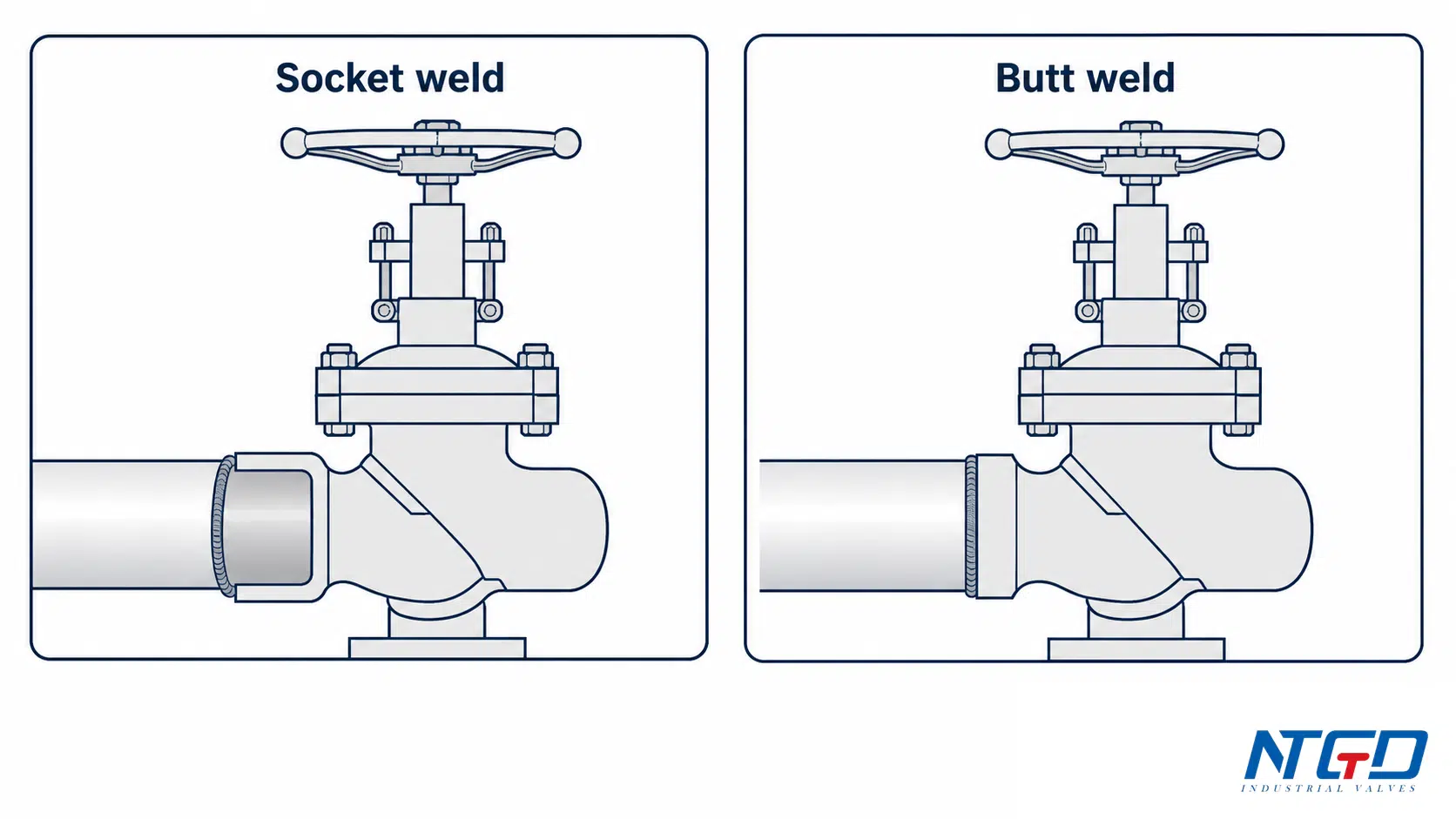
Socket weld globe valve ends use a socket where the pipe is inserted and welded. This connection may suit compact welded piping layouts and applications where a welded joint is preferred.
The specification should confirm pipe schedule, material compatibility, welding procedure, inspection expectations, and any project restrictions. A socket weld end should not be confused with a butt weld end; both are welded options, but their connection geometry and preparation are different.
Prefer socket weld ends when compact welded installation is suitable for the piping design. Avoid expanding the choice into a welding procedure decision unless the project documents define the welding and inspection requirements.
Butt weld globe valve ends
Butt weld globe valve ends are prepared so the valve end can be welded directly to the pipe end. This creates a permanent welded joint and is often reviewed for welded pipeline systems.
The main benefit is alignment with permanent welded piping. The main tradeoff is replacement effort. A butt weld valve normally cannot be removed by unbolting; cutting, weld preparation, welding, inspection, and downtime planning may be required.
Prefer butt weld ends when the system prioritizes permanent welded continuity. Avoid selecting them as a default choice if the maintenance plan expects quick valve removal or frequent replacement.
How to Select the Right End Connection for a Globe Valve
Selection should start with the service and maintenance strategy. The matrix below connects common decision conditions to practical connection choices.
| Facteur déterminant | A brides | Fileté | Soudure par emboîtement | Soudure bout à bout | Ce qu'il faut vérifier |
|---|---|---|---|---|---|
| Maintenance removal | Strong fit when future removal is expected and access is available | Possible, but thread condition and sealing method matter | Not preferred for frequent removal | Not preferred for frequent removal | Isolation plan, bolt or tool access, lifting space, gasket handling, downtime tolerance |
| Compact layout | Modéré | Strong in suitable smaller services | Strong for compact welded layout | Depends on pipe layout and weld access | Available space, tool access, welding access, inspection space |
| Welded joint requirement | Not the primary fit | Not the primary fit | Strong fit in suitable welded services | Strong fit for permanent welded piping | Welding procedure, material compatibility, pipe schedule, inspection, project rules |
| Joint integrity expectation | Depends on flange face, gasket, alignment, and bolting | Depends on thread fit and seal control | Depends on weld quality and inspection | Depends on weld preparation, weld quality, and inspection | Service medium, corrosion risk, pressure, temperature, inspection need |
| Product detail confirmation | Flange face and class/PN | Thread type and size | Socket weld end and pipe schedule | Weld end preparation and pipe schedule | Datasheet, drawing, standard, project specification |
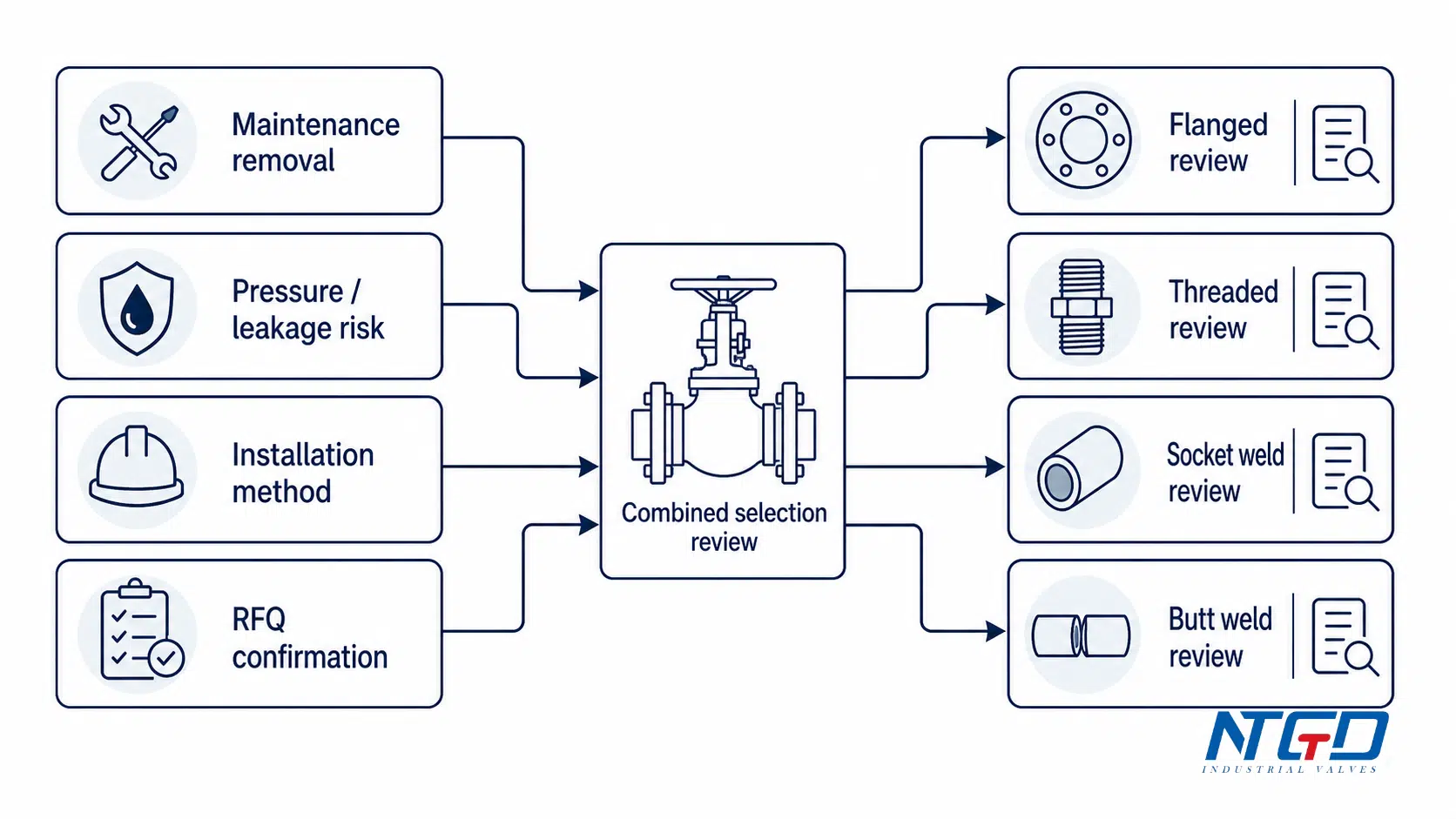
Pressure and temperature requirements
Pressure and temperature requirements affect the valve rating, material, sealing method, and connection details. Do not infer suitability from the connection type alone. Confirm the rating and limits against project requirements and manufacturer documentation.
Leakage control and joint integrity
Each connection controls leakage differently. Flanged joints depend on gasket compression, face condition, and bolting. Threaded joints depend on thread fit and sealing method. Welded joints depend on welding quality, material compatibility, and inspection.
For services where leakage risk is a major concern, the choice should be reviewed as a joint-control decision, not only as an installation preference. The selected connection should match the leakage risk and joint integrity expectations of the service.
Maintenance access and removability
If the valve may need to be removed during maintenance, flanged ends usually deserve early review. Threaded ends can be removable, but thread condition and access can limit repeated service. Welded-end valves should be selected with replacement work and downtime in mind.
For a closer look at why bolted joints can support maintenance access, NTGD’s flanged globe valve installation and maintenance guide expands that serviceability discussion.
Installation method and field welding requirements
Flanged and threaded ends avoid welding at the valve connection, but still require correct assembly. Socket weld and butt weld ends require welding capability, qualified procedure where applicable, inspection planning, and suitable field conditions.
Pipe size, material, and service conditions
Pipe size, pipe schedule, material, medium, corrosion risk, and cleanliness requirements can all influence the end connection. Welded ends often require closer attention to material compatibility and pipe schedule. Threaded ends require clear thread specification.
Cost, downtime, and replacement planning
A lower initial connection cost may not produce the lowest total cost. Consider installation labor, welding work, gasket and bolting requirements, inspection, future removal, and shutdown time. The best connection is the one that fits the full service and maintenance plan.
RFQ and Specification Checklist for Globe Valve End Connections
The checklist below helps buyers prepare the technical information needed for specification review. Clear connection details reduce the chance that a supplier quotes the right globe valve type with the wrong pipe interface, face detail, thread form, or weld end preparation.
| RFQ field | Pourquoi c'est important | What to prepare |
|---|---|---|
| Type de vanne | Confirms the base product category and avoids quoting the wrong valve family | State the required valve type and service purpose. |
| Type de connexion finale | Defines the pipe-to-valve interface and prevents connection mismatch | Specify flanged, threaded, socket weld, or butt weld. |
| Taille | Matches the valve to the piping system | Provide the nominal size required by the project. |
| Pressure class / PN / rating | Aligns the valve with pressure-temperature requirements | Confirm the rating language used in the project. |
| Matériau du corps | Supports service compatibility | Provide required body material or project material class. |
| Connection detail | Prevents assembly mismatch and rework | Confirm flange face, thread type, socket weld detail, or butt weld preparation. |
| Pipe schedule / wall thickness | Important for welded ends and weld-end fit | Provide pipe schedule where socket weld or butt weld ends are requested. |
| Conditions de service | Helps confirm technical fit before quotation | Medium, operating pressure, operating temperature, corrosion, solids, and duty. |
| Inspection and documentation | Supports project quality control and review approval | Drawings, datasheets, certificates, inspection, testing, or traceability requirements. |
End connection type and standard
The RFQ should clearly state the connection type and the applicable project or connection standard. This prevents a supplier from quoting the correct valve type with the wrong pipe interface.
Size, pressure class, material, and face or weld preparation
Size, rating, material, and connection detail should be provided together. A flanged valve needs flange face and rating information. A threaded valve needs thread type. A welded-end valve needs weld preparation and pipe schedule information.
Thread type, weld type, and inspection requirements
Threaded and welded connections require specific wording. Thread type should not be assumed. Socket weld and butt weld should not be treated as interchangeable. Inspection and documentation requirements should be listed when the project requires them.
For inspection vocabulary, ISO 5208:2015 for pressure testing of metallic valves can help buyers distinguish general testing language from project-specific acceptance requirements.
When to confirm dimensions, datasheets, and product details outside this guide
After choosing the connection type, confirm product-level details with the manufacturer. Drawings, dimensions, pressure-temperature ratings, face-to-face length, material details, and standard compliance should be checked before final purchase.
Standards and Engineering Confirmation Notes
Standards and project specifications help turn a connection choice into a purchasable valve configuration. This guide identifies confirmation points, but it does not replace the applicable standard or project specification.
For a deeper RFQ-focused standards bridge, NTGD’s globe valve standards guide explains how design, testing, documentation, and end connection language fit into quotation review.
Practical standards vocabulary for flanged, threaded, socket weld, and butt weld ends
Common specification vocabulary may include pressure class or PN, flange facing, thread type, weld end preparation, pipe schedule, material, inspection, testing, and documentation. Buyers may also see terms such as face type, end preparation, wall thickness, test report, certificate, drawing, and traceability in project or supplier documents. The exact wording depends on the project and manufacturer documentation.
For broad valve end-connection terminology, B16.34 for valves with flanged, threaded, and welding ends is a useful reference point to confirm the correct vocabulary without copying standard clauses.
What to confirm with the piping specification or project standard
Confirm whether the selected connection is allowed by the piping class, whether the rating and material match the service, whether the connection detail matches the pipe, and whether inspection or documentation is required.
Why this section is not a complete standards manual
Standards include detailed requirements that must be checked directly in the applicable documents. Avoid assuming compliance from a short product description. Use this guide to identify what needs confirmation, then verify the exact requirement.
Common Mistakes When Specifying Globe Valve End Connections
Most mistakes happen when connection type is treated as a small label instead of a practical installation and maintenance decision.
Treating product dimensions as selection logic
Dimensions matter, but they should be checked after the connection type is chosen. A valve can fit the available space and still be wrong for the maintenance plan, joint type, or project specification.
This mistake can lead to a valve that fits on paper but creates installation, removal, or inspection problems in the field.
Confusing end connection type with globe valve body type
End connection describes the pipe interface. Body type describes the valve configuration. Trim, seat, bonnet, actuator, pressure rating, and material are separate details. A clear RFQ keeps these fields separate.
Mixing these fields can cause quotation mismatch because the supplier may clarify the valve design while the pipe interface remains undefined.
Mixing ball valve or generic valve assumptions into globe valve selection
Generic valve connection advice may not answer globe-valve-specific selection questions. Keep the discussion focused on the globe valve, the required service, and the selected pipe interface.
Using another valve type as the comparison base can send the selection toward the wrong product detail instead of the correct globe valve end connection.
Overlooking maintenance access, weld rework, or downtime risk
A welded-end valve may fit the piping specification but require more work during replacement. A flanged valve may be removable but still needs access for bolting and gasket handling. A threaded valve may be compact but still needs thread and sealing control.
This mistake can turn a reasonable first purchase into a difficult maintenance job when the valve must be inspected, removed, or replaced.
FAQ About Globe Valve End Connections
What are the common end connection types for globe valves?
The common types are flanged, threaded, socket weld, and butt weld. They differ by installation method, removability, joint type, and specification detail.
What is better for maintenance-heavy systems: flanged or threaded globe valves?
Flanged ends are usually the stronger first option when planned removal, inspection, and replacement access matter. Threaded ends can be compact in smaller specified services, but thread condition, sealing method, and repeated disassembly need careful review.
How should I choose between socket weld and butt weld globe valves?
Socket weld ends use a socket into which the pipe is inserted before welding, while butt weld ends are welded directly to the pipe end. Both are welded options, so the choice should follow the piping specification, pipe schedule, weld preparation, inspection plan, and maintenance strategy.
When should a welded-end globe valve be used?
A welded-end globe valve can be used when the piping specification requires welded joints or when permanent welded installation is preferred. The welding procedure, material, inspection, and service conditions still need confirmation.
What information should be included in an RFQ for globe valve end connections?
Include valve type, end connection type, size, rating, material, connection detail, service conditions, inspection requirements, and required documentation.
Summary and RFQ Fit Check
A practical end connection choice starts with the installation and maintenance requirement. Use flanged ends when removal access is important. Consider threaded ends where the project allows threaded joints in suitable smaller services. Use socket weld or butt weld ends when the system requires welded connections and the maintenance plan accepts welded installation.
Before sending an inquiry, review how the selected connection will be installed, sealed, inspected, maintained, and eventually removed if replacement is required. Then confirm the connection type, size, rating, material, connection detail, service conditions, and documentation needs in the RFQ.
Final dimensions, drawings, ratings, and compliance details should be confirmed against the applicable datasheet, drawing, or project specification. If the application conditions are not fully defined, prepare those fields before requesting quotation support. A clearer technical inquiry helps the supplier review the correct valve configuration faster.
