
Nom de l'auteur : Bruce Zheng
Rôle de l'auteur : Cofondateur et ingénieur en vannes chez NTGD Valve
Bio de l'auteur : Bruce Zheng est cofondateur et ingénieur en vannes chez NTGD Valve, qui se concentre sur la sélection des vannes industrielles, les applications et le contenu technique pour les acheteurs B2B mondiaux.
Dernière mise à jour : 15 juin 2026
A wedge gate valve is a linear-motion shut-off valve that uses a wedge-shaped gate to open or close the flow path. When the valve is opened, the wedge moves away from the seats and creates a straight-through passage. When the valve is closed, the wedge moves down between two seats and forms sealing contact against the valve body seats.
In buyer language, a wedge gate valve may sometimes be shortened to “wedge valve.” This shorthand can be useful in internal communication, but project specifications, RFQ documents, and procurement discussions should return to the complete term “wedge gate valve” to avoid confusion with other valve types or closure designs that may also use a wedge-like element.
This article explains what a wedge gate valve is, how the wedge structure works, what the main parts are, and how common wedge designs differ. The main selection context is fully open or fully closed isolation service. A wedge gate valve is not normally selected as a throttling or regulating valve because partial opening can expose the wedge and seats to erosion, vibration, and unstable sealing conditions.
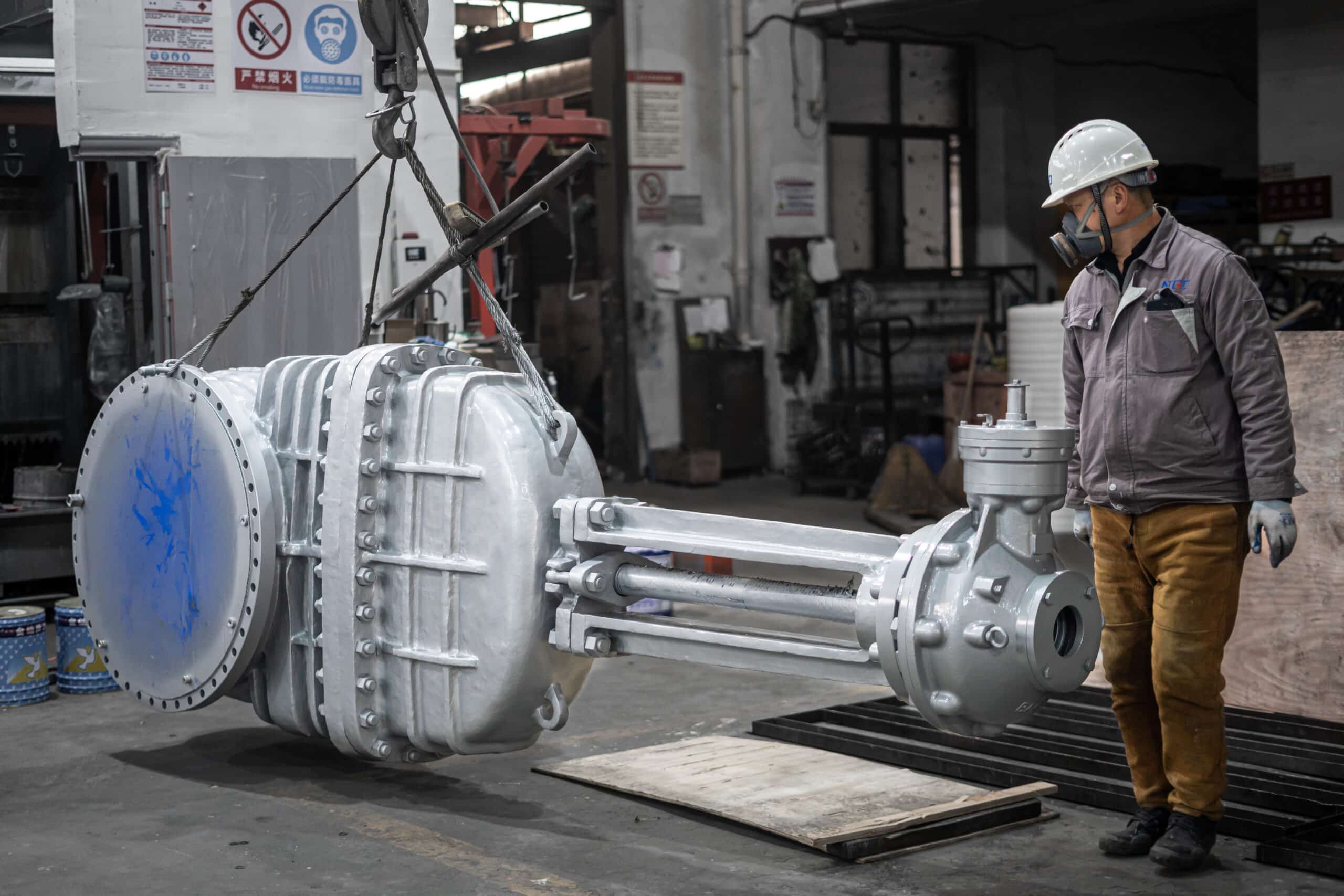
What Is a Wedge Gate Valve?
A wedge gate valve is a type of vanne à opercule in which the closure element has a wedge-shaped profile. The wedge moves up and down through the valve body by the action of the stem. In the closed position, the wedge contacts two inclined seats and blocks the flow path.
The main difference between a wedge gate valve and a generic gate valve description is the sealing geometry. In this valve type, the tapered closure element helps press the gate against the seats during closure. This wedging action supports shut-off performance, but it also means that material selection, seat design, operating torque, temperature condition, and debris in the line can affect valve operation.
Most wedge gate valves are selected for isolation service in piping systems where the valve remains either fully open or fully closed for long periods. In the full-open position, the flow path is relatively unobstructed compared with many flow-control valve designs. In the closed position, the wedge and seats provide the shut-off function.
Many wedge gate valves can seal in either flow direction, but installation should still be verified against the valve design, body markings, project specification, and manufacturer documentation. Assuming bidirectional service without this verification can create sealing expectation, installation review, or operation problems in the field.
A wedge gate valve should not be treated as interchangeable with check valves, globe valves, knife gate valves, or regulating valves. Using it in the wrong service can lead to poor shut-off, abnormal operating torque, accelerated seat wear, or unstable operation.
How Does a Wedge Gate Valve Work?
A wedge gate valve works by converting handwheel, gearbox, or actuator input into linear movement of the stem and wedge. The wedge moves perpendicular to the flow path, not along the direction of flow.
La séquence de travail de base est la suivante :
- Opening begins The handwheel, gearbox, or actuator turns the stem or stem nut. This movement lifts the wedge away from the seats.
- Flow path opens As the wedge rises, the opening through the valve body increases. Once the wedge is fully lifted, the valve provides a relatively straight-through flow passage.
- Closing begins When the operator reverses the motion, the stem drives the wedge downward toward the seats.
- Wedge contacts the seats In the closed position, the wedge presses against the seat surfaces. The sealing performance depends on wedge geometry, seat condition, material compatibility, line pressure, temperature, and operating condition.
- Stem sealing controls external leakage risk The packing and gland area help seal around the stem as the stem moves or rotates, depending on the valve design.
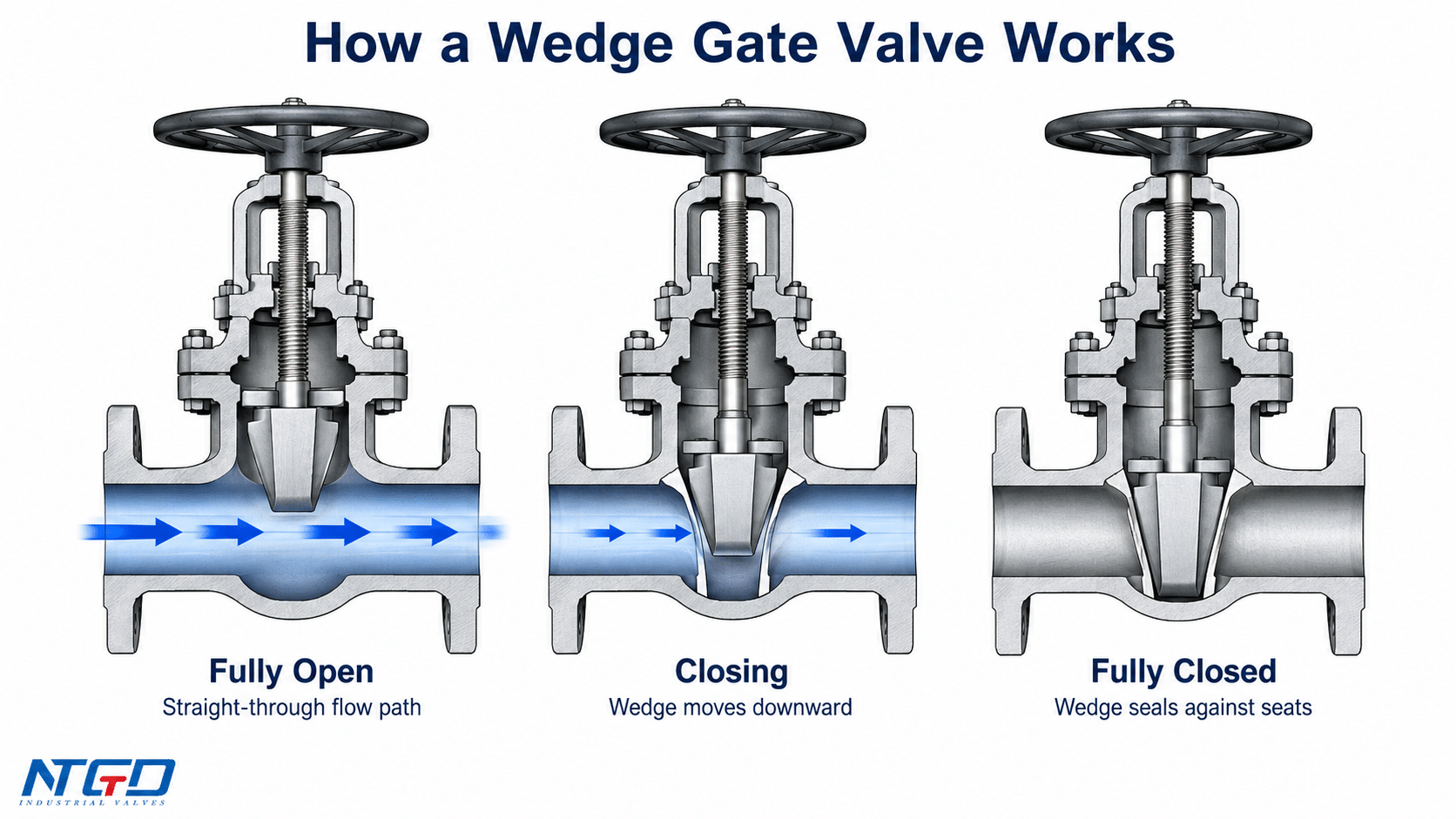
If the wedge stops partway through its travel, whether because of incorrect operation, obstruction, debris, or mechanical resistance, the valve no longer provides the intended isolation function. The seat and wedge surfaces may also be exposed to damage if flow continues across a partially open closure area.
The important engineering point is that this valve type is designed for isolation. If it is left partly open for flow control, the flow can pass across the lower area of the wedge and seats at high local velocity. This can increase erosion, vibration, noise, and seat wear. For selection, the first check is whether the service is truly full-open / full-closed isolation; the next check is whether the wedge design and seat type match the operating condition.
In rising stem designs, stem position can also help indicate whether the valve is open or closed. In non-rising stem designs, the external valve height may stay more compact, so position indication and operating procedures should be reviewed according to the valve design and manufacturer IOM.
Wedge Gate Valve Structure and Main Components
A wedge gate valve structure includes the pressure-containing body and bonnet, the wedge or gate, the seats, the stem, and the stem sealing system. The old term “disc” is sometimes used in valve descriptions, but for this valve type, “wedge,” “gate,” or “wedge disc” is more precise because the closure element has a wedge profile.
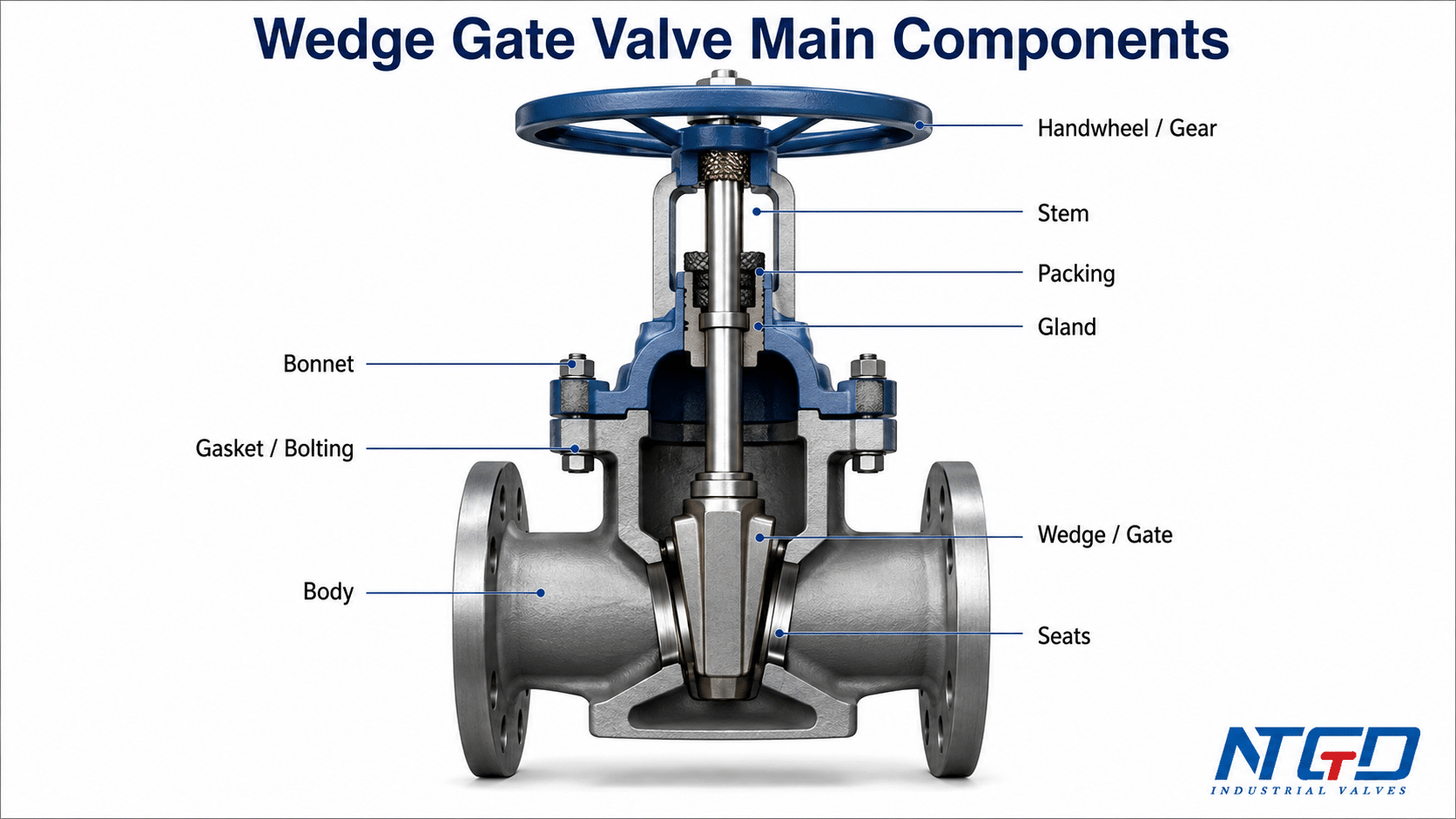
Main Parts of a Wedge Gate Valve
| Partie | Fonction | Why It Matters for Selection or Operation |
|---|---|---|
| Corps | Contains the flow path, seats, and internal closure element | Must match the pressure, temperature, corrosion, and end-connection requirements of the piping system |
| Bonnet | Covers the upper body opening and supports access to internal parts | Bonnet design affects the pressure boundary, maintenance access, and suitability for high-pressure or high-temperature service |
| Wedge / Gate / Disc | Moves up and down to open or close the flow path | Wedge geometry directly affects shut-off, torque, thermal binding risk, and seat contact |
| Sièges | Provide sealing surfaces for the wedge | Seat material and condition influence leakage performance, wear resistance, tight shut-off suitability, corrosion resistance, and temperature capability |
| Stem / Spindle | Transfers motion from the handwheel, gearbox, or actuator to the wedge | Stem design affects operation, available space, torque transmission, and rising or non-rising stem configuration |
| Stem Nut / Yoke Area | Converts rotational input into stem or gate movement in many designs | Important for operating torque, manual force, gearbox selection, actuator force transmission, and accessibility |
| Emballage | Joints autour de la tige pour réduire les fuites externes | Packing selection must suit media, temperature, pressure, and operating frequency |
| Fouloir / Suiveur de fouloir | Compresses and supports the packing set | Helps maintain stem sealing performance when adjusted according to the valve design |
| Joint et boulonnerie | Seal and secure pressure-boundary joints such as body-bonnet connections | Must suit pressure-temperature conditions, media compatibility, joint integrity, and assembly requirements |
| Handwheel / Gearbox / Actuator | Provides the force needed to operate the valve | Operation method affects torque, accessibility, opening time, automation, and fail-position requirements |
How the Wedge, Seats, Stem and Packing Work Together
The wedge in a gate valve is the main closure part. During closing, the stem drives the wedge downward until it contacts the seats. The inclined contact between the wedge and seats creates the shut-off interface. If the wedge, seat surfaces, or guiding area are damaged, fouled, or misaligned, the valve may become harder to operate or may not seal as expected.
The stem transfers input force from the handwheel, gearbox, or actuator to the wedge. In rising stem designs, stem movement also provides a visual indication of valve position. In non-rising stem designs, the external height may stay more compact, but position indication and service conditions require closer review.
The packing system is separate from the internal wedge-seat sealing system. The wedge and seats control flow through the valve. The packing controls leakage risk around the stem. Both sealing areas are important, but they solve different problems.
The body, bonnet, wedge, seats, stem, packing, gasket, bolting, and operation method must be reviewed as one valve system. A valve may have the correct body material but still be unsuitable if the seat design, trim material, packing, bolting, or actuator arrangement does not match the media, pressure-temperature condition, or operating requirement.
Common Wedge Gate Valve Types
The phrase “wedge type gate valve” can refer to different wedge designs. The main designs include solid wedge, flexible wedge, split wedge, and resilient wedge. This section gives a controlled summary of wedge gate valve types rather than a full types hub. For quick comparison, review structural simplicity, tolerance to thermal or pressure cycling, and the seat material boundary for each design.
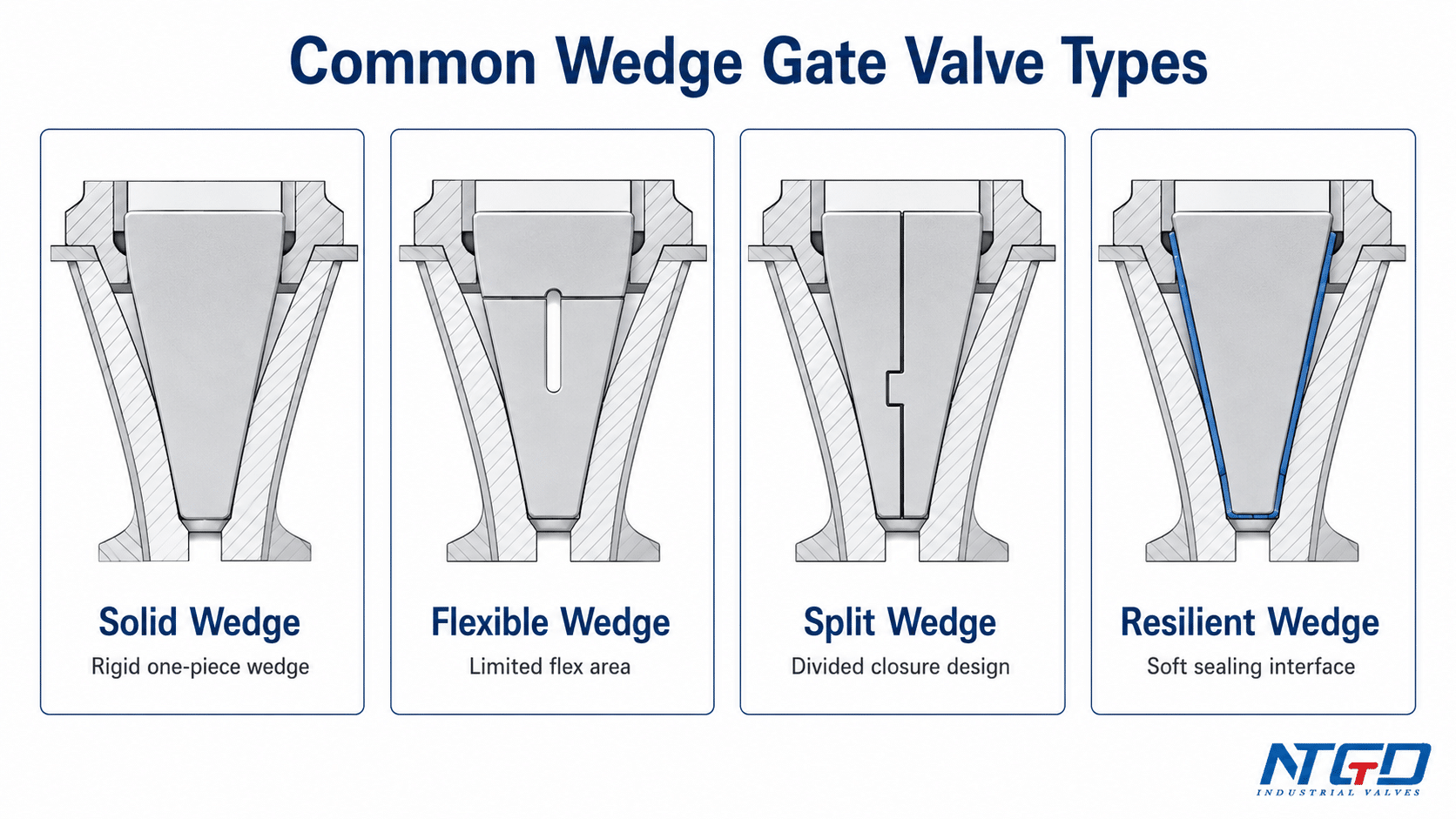
| Wedge Design | Basic Structure | Principal avantage | Main Limitation or Selection Note |
|---|---|---|---|
| Solid wedge gate valve | One-piece rigid wedge | Simple structure and strong shut-off design for many general isolation services | More sensitive to thermal binding or seat misalignment in some temperature or pressure conditions |
| Flexible wedge gate valve | One-piece wedge with a flexible cut or flex area | Can better accommodate minor seat deformation or thermal effects than a rigid solid wedge | Design details vary by manufacturer and should be reviewed for the service condition |
| Split wedge / double-disc wedge gate valve | Two-piece or split closure arrangement | Can help adapt to seat alignment and pressure conditions in certain services | More complex than a solid wedge and should not be selected only by name |
| Resilient wedge gate valve | Wedge with resilient covering or soft sealing interface in many waterworks-style designs | Useful where soft-seated shut-off and corrosion protection are required in suitable services | Temperature, media compatibility, pressure rating, and waterworks intent must be checked carefully |
The best wedge design is not determined by the type name alone. Media, pressure-temperature condition, corrosion risk, seat material, operating frequency, shut-off requirement, and the possibility of binding or seat wear should all be part of the selection review.
A solid wedge and flexible wedge review may be useful where service stability, temperature effects, pressure cycling, or seat alignment are important. Resilient wedge designs follow a different service profile and should not be treated as the same as metal-seated industrial wedge gate valves.
Advantages and Limitations of Wedge Gate Valves
A wedge gate valve is useful when the piping system needs reliable isolation with a relatively open flow path in the full-open position. The same design also has limitations. Many of these limitations are directly connected to the wedge-seat interaction, full-open / full-closed operating requirement, and wedge design choice described above.
| Point | Ce que cela signifie | Note de sélection |
|---|---|---|
| Full-open low resistance | When fully open, the wedge is lifted out of the main flow path | Useful for isolation service where pressure loss should be kept low |
| Tight shut-off potential | The wedge and seats create a mechanical sealing interface | Shut-off depends on seat condition, material, pressure, temperature, and correct operation |
| Bidirectional service potential | Many wedge gate valves can be used in either flow direction | Verify body markings, design details, and project requirements before installation |
| Not for throttling | Partial opening exposes the wedge and seats to unstable flow | Use mainly fully open or fully closed unless the valve design and service permit otherwise |
| Thermal binding risk | Temperature changes can affect wedge-seat contact and operating torque | Wedge design and material selection should be reviewed for hot service |
| Debris and solids risk | Solids can collect near the seat area or damage sealing surfaces | Dirty or solids-bearing service requires careful valve type and seat review |
| Higher operating torque | Large sizes, high pressure, or difficult service may require higher operating force | Gearbox or actuator sizing should be reviewed instead of assuming manual operation is suitable |
| Seat wear risk | Repeated operation under poor flow or dirty conditions can damage sealing surfaces | Operating frequency and media cleanliness should be considered during selection |
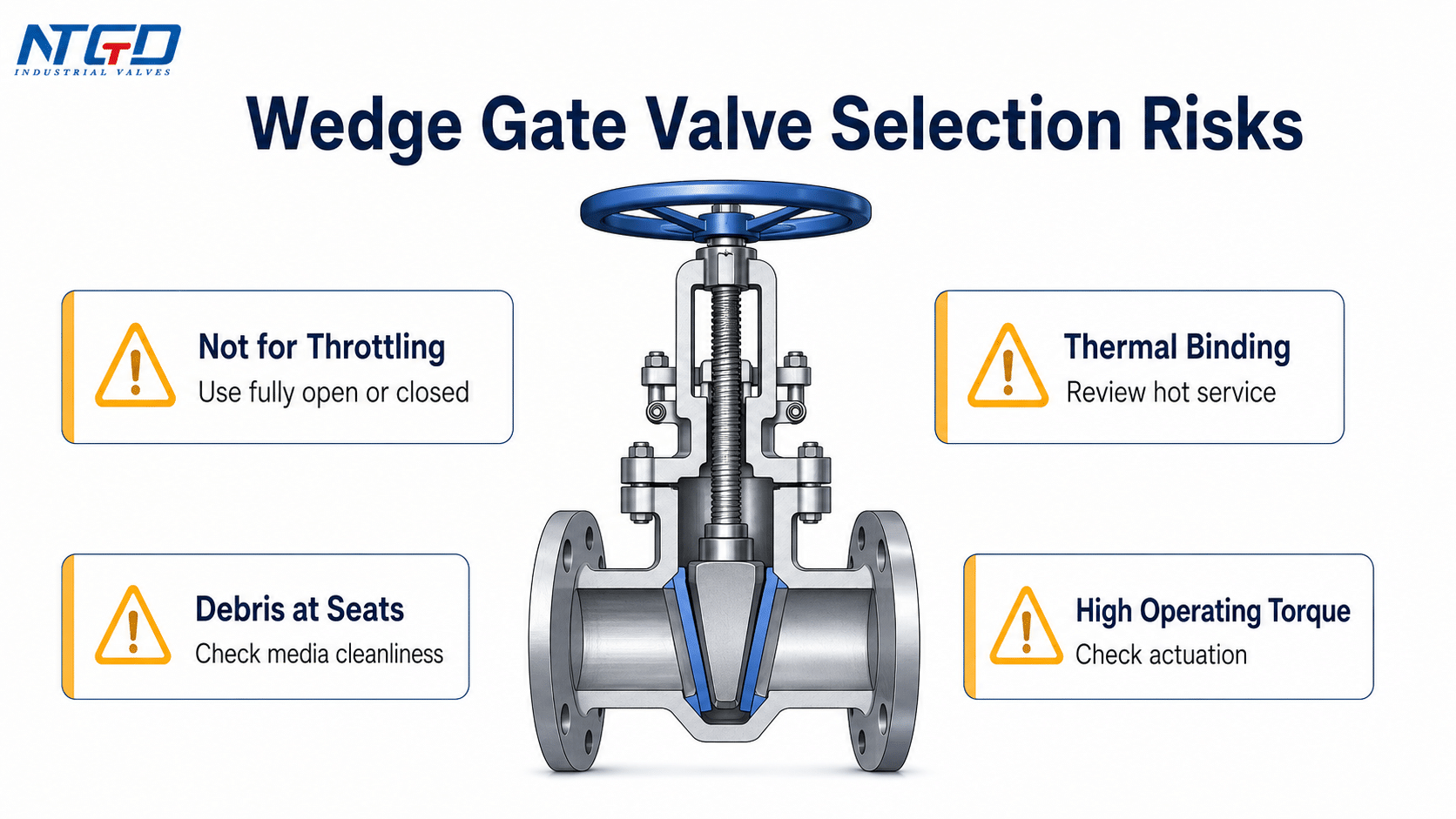
The main advantage of a wedge gate valve is not precise control. Its value is isolation. If the application requires frequent modulation, accurate flow control, or reliable operation in heavy slurry, the valve type should be reviewed rather than forcing a wedge gate valve into the service.
Thermal binding, operating torque, seat wear, and debris sensitivity also influence which wedge design should be reviewed. A solid wedge, flexible wedge, split wedge, and resilient wedge may respond differently to temperature change, pressure cycling, seat condition, and media cleanliness, so these risks should be part of the configuration review rather than an afterthought.
Where Wedge Gate Valves Are Commonly Used
Wedge gate valves are commonly used in industrial piping systems where isolation is required and the valve normally stays fully open or fully closed. The exact design should still be matched to the service condition, because the same valve type can be configured with different materials, seats, stems, bonnets, end connections, and actuation methods.
| Service Area | Utilisation typique | Sélection Attention |
|---|---|---|
| Oil and gas piping | Isolation of process lines, utilities, and pipeline sections | Confirm pressure class, material, trim, fire-safe needs, and API 600 gate valve requirements if applicable |
| Traitement chimique | Isolation in compatible liquid or gas services | Review corrosion resistance, packing compatibility, and seat material |
| Power and steam systems | Isolation in high-temperature or high-pressure services | Review thermal binding risk, bonnet design, pressure-temperature rating, and operating torque |
| Eau et eaux usées | Line isolation, pump station isolation, and utility service | Resilient wedge or coated designs may be relevant depending on waterworks specifications |
| General plant utilities | Isolation for air, water, non-aggressive fluids, and auxiliary systems | Avoid using the valve as a regulating valve unless the design permits it |
| Industrial maintenance boundaries | Isolation before equipment or system sections | Confirm lockout, operation access, and position indication requirements according to site procedures |
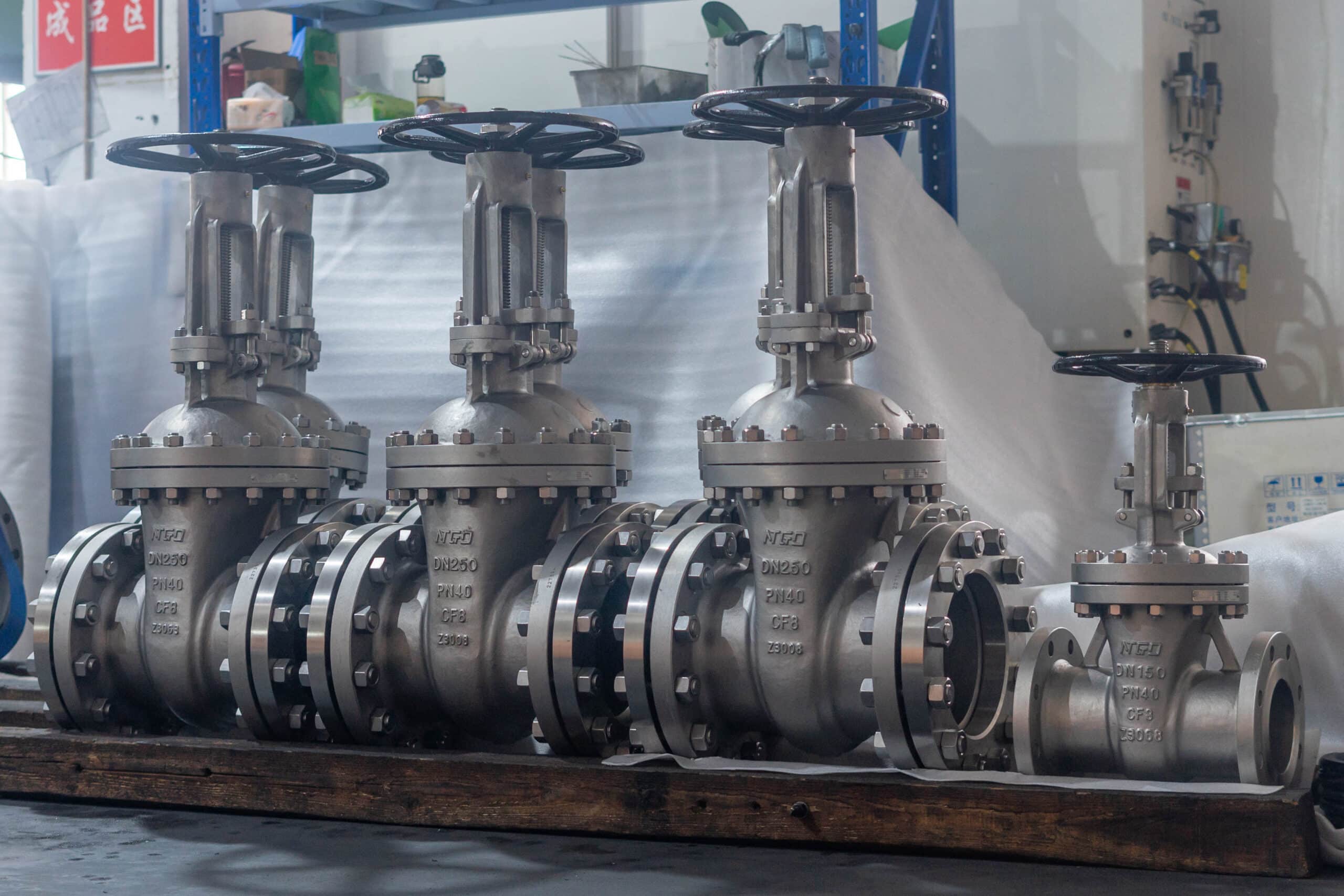
A wedge gate valve should be selected as part of the whole piping specification, not outside the broader sélection de vannes industrielles process. Media, pressure, temperature, materials, valve size, end connection, operating method, and available installation space all influence whether the valve is suitable.
Services involving frequent modulation, high-cycle operation, strongly abrasive media, heavy slurry, or precise flow control should be reviewed carefully before selecting this valve type. In those cases, another valve design, seat arrangement, or wedge configuration may be more appropriate.
Wedge Gate Valve Selection and RFQ Checklist
Before requesting or reviewing a wedge gate valve quotation, the buyer should prepare enough technical information for the manufacturer or supplier to confirm the correct design. The goal is not only to name the valve type, but to define the service conditions that control the valve configuration.
| Point de l'appel d'offres | Pourquoi c'est important |
|---|---|
| Les médias | Determines corrosion risk, seat compatibility, packing material, and cleaning requirements |
| Pression et température | Controls valeurs nominales de pression et de température, body material, bonnet design, gasket, bolting, and trim review |
| Matériau du corps | Must suit pressure, temperature, corrosion, and project specification |
| Trim / seat material | Affects sealing, wear resistance, corrosion resistance, and temperature suitability |
| Wedge design | Solid, flexible, split, or resilient wedge designs suit different service conditions |
| Type de tige | Rising or non-rising stem affects operation, space, indication, and service suitability |
| Raccordement final | Flanged, butt-weld, threaded, or other ends must match the piping specification |
| Mode opératoire | Handwheel, gearbox, pneumatic, electric, or hydraulic operation affects torque and accessibility |
| Installation orientation and access | Determines whether the valve can be operated, inspected, and maintained safely |
| Drawing or spare parts requirement | Helps confirm dimensions, components, and replacement compatibility without turning the article into a parts catalog |
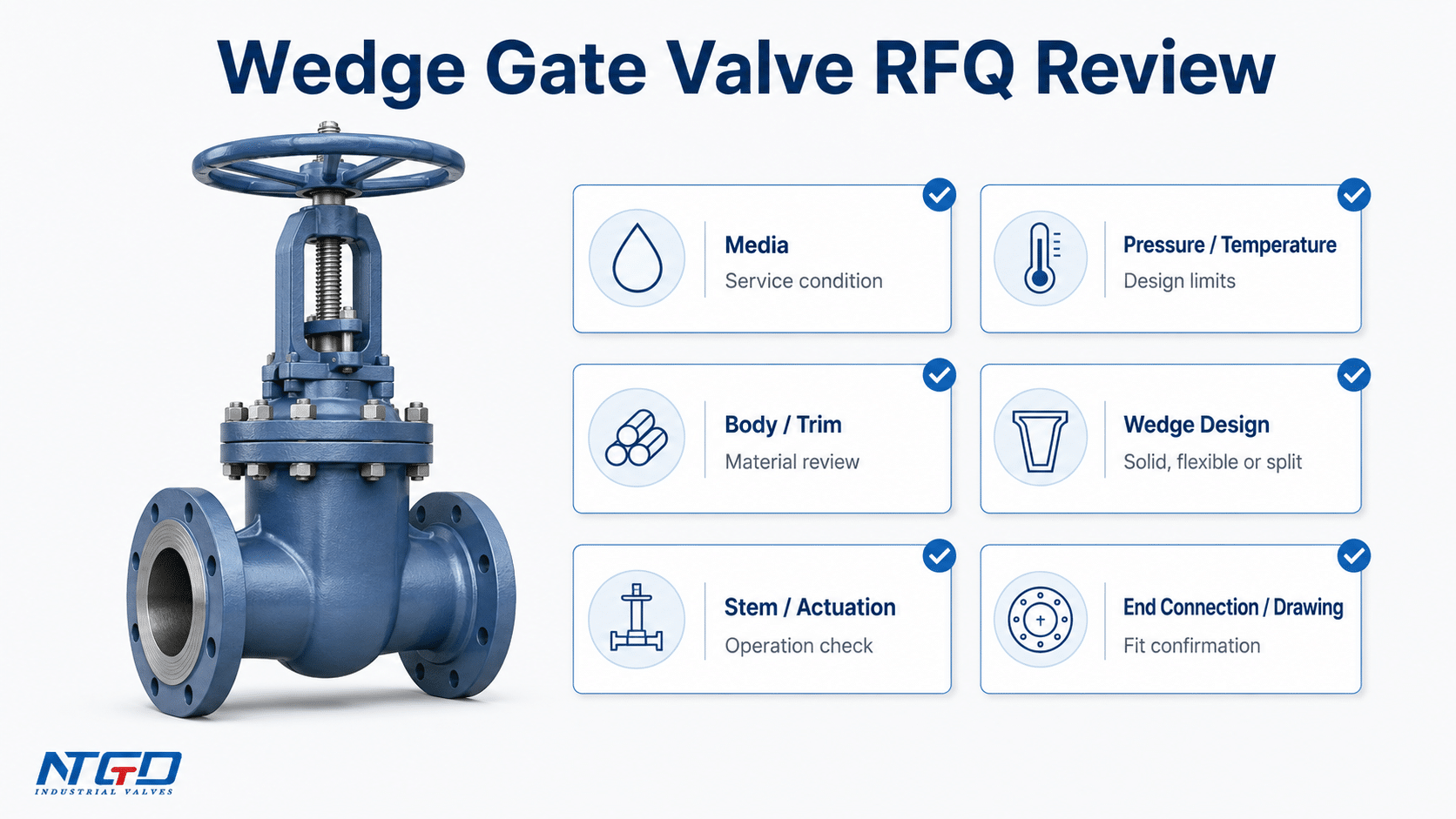
These items are inputs for specification review, not just RFQ paperwork. They help confirm whether the matériau de la carrosserie et de la garniture, seat, wedge design, stem type, operation method, and pressure-boundary details fit the service condition.
For replacement projects, do not rely only on the phrase “wedge valve” or “gate valve wedge.” Confirm the valve type, size, pressure class, material, end connection, face-to-face dimension, stem type, seat design, and operation method from drawings, datasheets, or the existing valve nameplate when available. Face-to-face dimension, end connection, pressure class, material, and operation arrangement should be checked early because they directly affect whether a replacement valve can fit the existing piping system.
FAQ
Is a wedge valve the same as a wedge gate valve?
In many buyer searches, “wedge valve” is used as a short form for wedge gate valve. It may be understood in conversation, but the project specification or RFQ should use “wedge gate valve” because it identifies both the valve type and the wedge-shaped closure element. This reduces confusion with other valve designs that may use a wedge-like part.
What is the wedge in a gate valve?
The wedge in a gate valve is the closure element that moves up and down to open or close the flow path. In the closed position, the wedge contacts the seats and blocks flow. Its shape, material, and fit against the seats directly affect shut-off performance and operating torque.
What are the main parts of a wedge gate valve?
The main wedge gate valve parts include the body, bonnet, wedge or gate, seats, stem, packing, gland, gasket, bolting, and handwheel, gearbox, or actuator. Each part affects a different selection factor, such as pressure boundary, sealing, operation, leakage control, or installation access.
Is the wedge the same as the disc or gate?
In wedge gate valve language, the terms wedge, gate, disc, or wedge disc may be used depending on the manufacturer or document. “Wedge” is the most specific term because it describes the tapered closure element. “Gate” describes the closure member in a gate valve. “Disc” is broader and can be less precise if used alone.
What is the difference between a solid wedge and a flexible wedge gate valve?
A solid wedge is a one-piece rigid wedge. A flexible wedge is generally also one piece, but it includes a design feature that allows limited flexibility. As a general engineering consideration, solid wedge designs are common in stable isolation services, while flexible wedge designs are often reviewed where minor seat distortion from thermal or pressure cycling is possible. The final choice still depends on service temperature, pressure, material, and manufacturer design.
What is a split wedge or double-disc wedge gate valve?
A split wedge, double-disc, or double-plate wedge gate valve uses a divided closure arrangement instead of one rigid wedge. This design may help the closure element adapt to seat contact in certain services. It is more complex than a simple solid wedge, so it should be selected based on the service condition rather than the name alone.
Is a resilient wedge gate valve the same as a standard wedge gate valve?
A resilient wedge gate valve is a specific type of wedge gate valve, often associated with soft sealing or coated wedge designs in suitable services such as waterworks applications. It should not be treated as the same as every metal-seated industrial wedge gate valve. Media, temperature, pressure, and project specifications must be checked.
Can a wedge gate valve be used for throttling?
A wedge gate valve is not normally used for throttling. It is designed mainly for fully open or fully closed service. Partial opening can create turbulence, erosion, vibration, and seat damage, especially when the valve is exposed to high velocity, dirty media, or solids near the seat area.
Is a wedge gate valve bidirectional?
Many wedge gate valves are suitable for bidirectional isolation, but this should be verified against the actual valve design, body markings, and project specification. Some applications or designs may have preferred installation requirements, so the valve should not be installed based only on a general rule.
Is a wedge gate valve the same as a parallel gate valve?
No. A wedge gate valve uses a tapered wedge that seals against inclined seats. A vanne à opercule parallèle uses a different closure and seating arrangement. The two designs may both be gate valves, but they should not be selected interchangeably without reviewing the service condition, sealing requirement, temperature condition, and project specification.
Can I use generic replacement parts for a wedge gate valve?
Generic replacement parts should not be assumed to fit a wedge gate valve. Even if two valves have the same nominal size and pressure class, the wedge, seat, stem, packing, gasket, bolting, and bonnet details may differ. The safest starting point is to provide the valve drawing, nameplate data, size, pressure class, material, end connection, photos, and any available model information for technical review.
Conclusion
A wedge gate valve is an isolation valve that uses a wedge-shaped gate to open or close a straight-through flow path. Its performance depends on how the wedge, seats, stem, body, bonnet, packing, gasket, bolting, and operation method work together.
For selection, the key question is not only “what is a wedge gate valve?” but whether the wedge design, seat material, body and trim material, pressure-temperature condition, stem type, and operation method match the actual service. Solid, flexible, split, and resilient wedge designs can all be useful, but each has a different engineering boundary.
The RFQ checklist above is a practical starting point for confirming that fit before specification review or replacement discussion.
Specification support: If you need a wedge gate valve specification review, prepare the media, pressure-temperature condition, material requirement, wedge design preference, seat type, end connection, stem type, operation method, and available drawings. These details allow a focused technical discussion about service fit rather than a generic valve-name request.
