
Nom de l'auteur : Bruce Zheng
Rôle de l'auteur : Cofondateur et ingénieur en vannes chez NTGD Valve
Bio de l'auteur : Bruce Zheng est cofondateur et ingénieur en vannes chez NTGD Valve, qui se concentre sur la sélection des vannes industrielles, les applications et le contenu technique pour les acheteurs B2B mondiaux.
Dernière mise à jour : 15 juin 2026
Une vanne à coin est une vanne d'arrêt à mouvement linéaire qui utilise un obturateur en forme de coin pour ouvrir ou fermer le passage. Lorsque la vanne est ouverte, le coin s'éloigne des sièges et crée un passage direct. Lorsque la vanne est fermée, le coin s'enfonce entre les deux sièges et forme un contact étanche contre les sièges du corps de vanne.
Dans le jargon des acheteurs, une vanne à coin peut parfois être désignée par l’abréviation “ vanne à coin ”. Cette abréviation peut s’avérer utile dans la communication interne, mais les cahiers des charges, les appels d’offres et les discussions relatives aux achats doivent reprendre le terme complet “ vanne à glissière ” afin d’éviter toute confusion avec d’autres types de vannes ou d’autres systèmes de fermeture pouvant également utiliser un élément en forme de coin.
Cet article explique ce qu'est une vanne à coin, comment fonctionne la structure en coin, quels en sont les principaux composants et en quoi diffèrent les modèles courants de vanne à coin. Le principal critère de sélection est l'isolation en position entièrement ouverte ou entièrement fermée. Une vanne à coin n'est généralement pas choisie comme soupape d'étranglement ou de régulation car une ouverture partielle peut exposer la cale et les sièges à l'érosion, aux vibrations et à des conditions d'étanchéité instables.
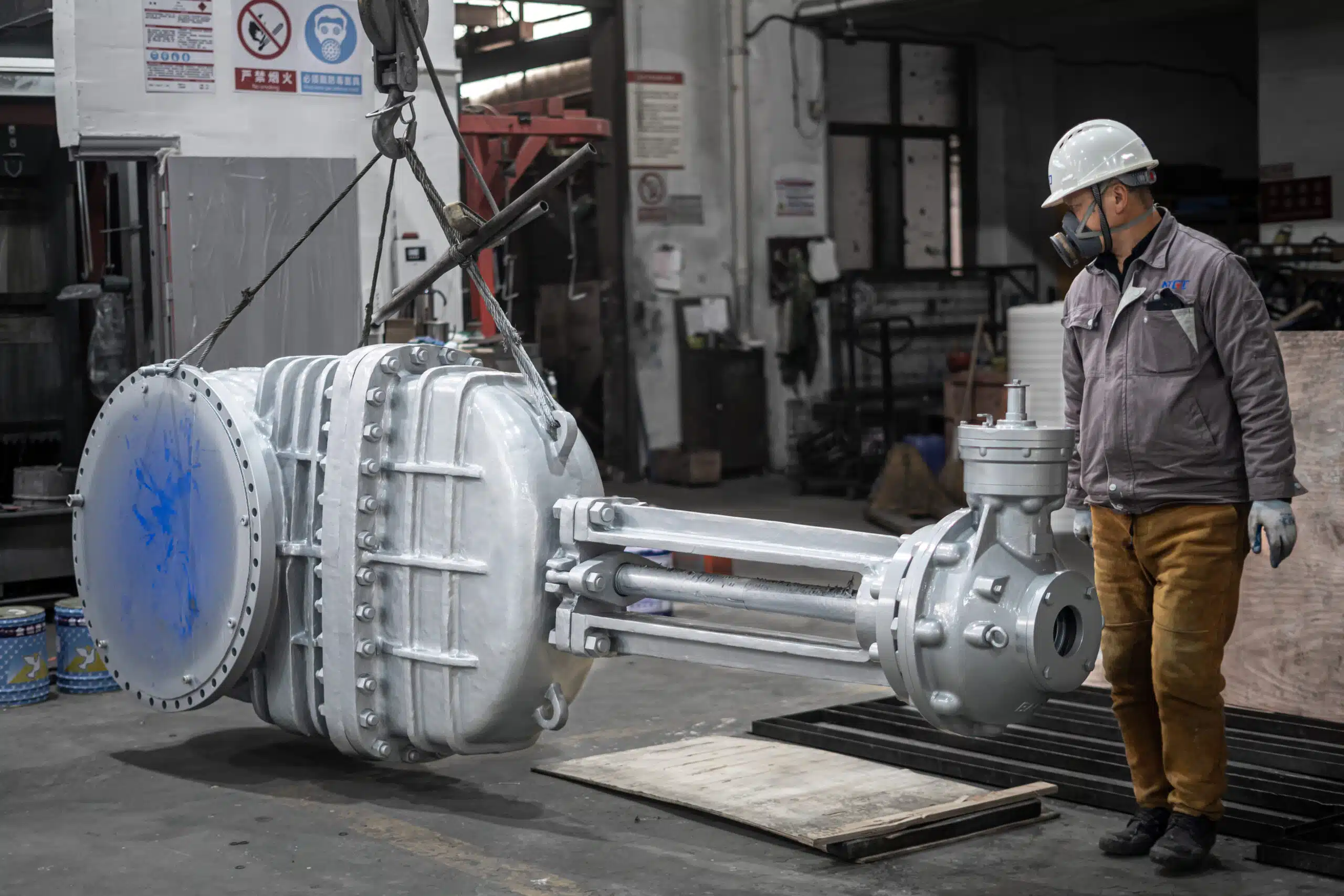
Qu'est-ce qu'une vanne à coin ?
Une vanne à coin est un type de vanne à opercule dans laquelle l'élément de fermeture présente un profil en forme de coin. Le coin se déplace de haut en bas à l'intérieur du corps de la vanne sous l'action de la tige. En position fermée, le coin vient en contact avec deux sièges inclinés et bloque le passage du fluide.
La principale différence entre une vanne à glissière conique et une vanne à glissière classique réside dans la géométrie d'étanchéité. Dans ce type de vanne, l'élément de fermeture conique contribue à presser la glissière contre les sièges lors de la fermeture. Cette action de calage améliore les performances de fermeture, mais cela signifie également que le choix des matériaux, la conception des sièges, le couple de manœuvre, les conditions de température et la présence de débris dans la conduite peuvent affecter le fonctionnement de la vanne.
La plupart des vannes à coin sont choisies pour assurer l'isolation dans des réseaux de tuyauterie où la vanne reste soit entièrement ouverte, soit entièrement fermée pendant de longues périodes. En position entièrement ouverte, le passage du fluide est relativement peu obstrué par rapport à de nombreux modèles de vannes de régulation de débit. En position fermée, le coin et les sièges assurent la fonction d'arrêt.
De nombreuses vannes à coin peuvent assurer l'étanchéité dans les deux sens d'écoulement, mais il convient néanmoins de vérifier l'installation au regard de la conception de la vanne, des marquages sur le corps, du cahier des charges du projet et de la documentation du fabricant. Supposer un fonctionnement bidirectionnel sans procéder à cette vérification peut entraîner des attentes en matière d'étanchéité, des problèmes lors de la vérification de l'installation ou des difficultés de fonctionnement sur le terrain.
Une vanne à coin ne doit pas être considérée comme interchangeable avec les clapets anti-retour, les vannes à soupape, les vannes à guillotine ou les vannes de régulation. Son utilisation dans une application inadaptée peut entraîner une fermeture insuffisante, un couple de manœuvre anormal, une usure accélérée du siège ou un fonctionnement instable.
Comment fonctionne une vanne à coin ?
Une vanne à coin fonctionne en transformant le mouvement du volant, du réducteur ou de l'actionneur en un mouvement linéaire de la tige et du coin. Le coin se déplace perpendiculairement au trajet d'écoulement, et non dans le sens du flux.
La séquence de travail de base est la suivante :
- Le coup d'envoi est donné Le volant, le réducteur ou l'actionneur fait tourner la tige ou l'écrou de tige. Ce mouvement soulève le coin pour l'éloigner des sièges.
- Le circuit d'écoulement s'ouvre À mesure que le coin remonte, l'ouverture dans le corps de la vanne s'agrandit. Une fois le coin complètement relevé, la vanne offre un passage d'écoulement relativement droit.
- Début de la clôture Lorsque l'opérateur inverse le sens du mouvement, la tige entraîne le coin vers le bas, en direction des sièges.
- La cale touche les sièges En position fermée, le coin exerce une pression contre les surfaces du siège. L'efficacité de l'étanchéité dépend de la géométrie du coin, de l'état du siège, de la compatibilité des matériaux, de la pression dans la conduite, de la température et des conditions de fonctionnement.
- L'étanchéité de la tige permet de limiter le risque de fuite externe La garniture et la zone du presse-étoupe contribuent à assurer l'étanchéité autour de la tige lorsque celle-ci se déplace ou tourne, selon la conception de la vanne.
Pour connaître les paramètres de fonctionnement de référence généraux communs aux différents modèles de vannes à guillotine — notamment les états « ouvert », « partiellement ouvert » et « fermé » —, consultez le document de NTGD intitulé Guide sur le principe de fonctionnement des vannes à guillotine.
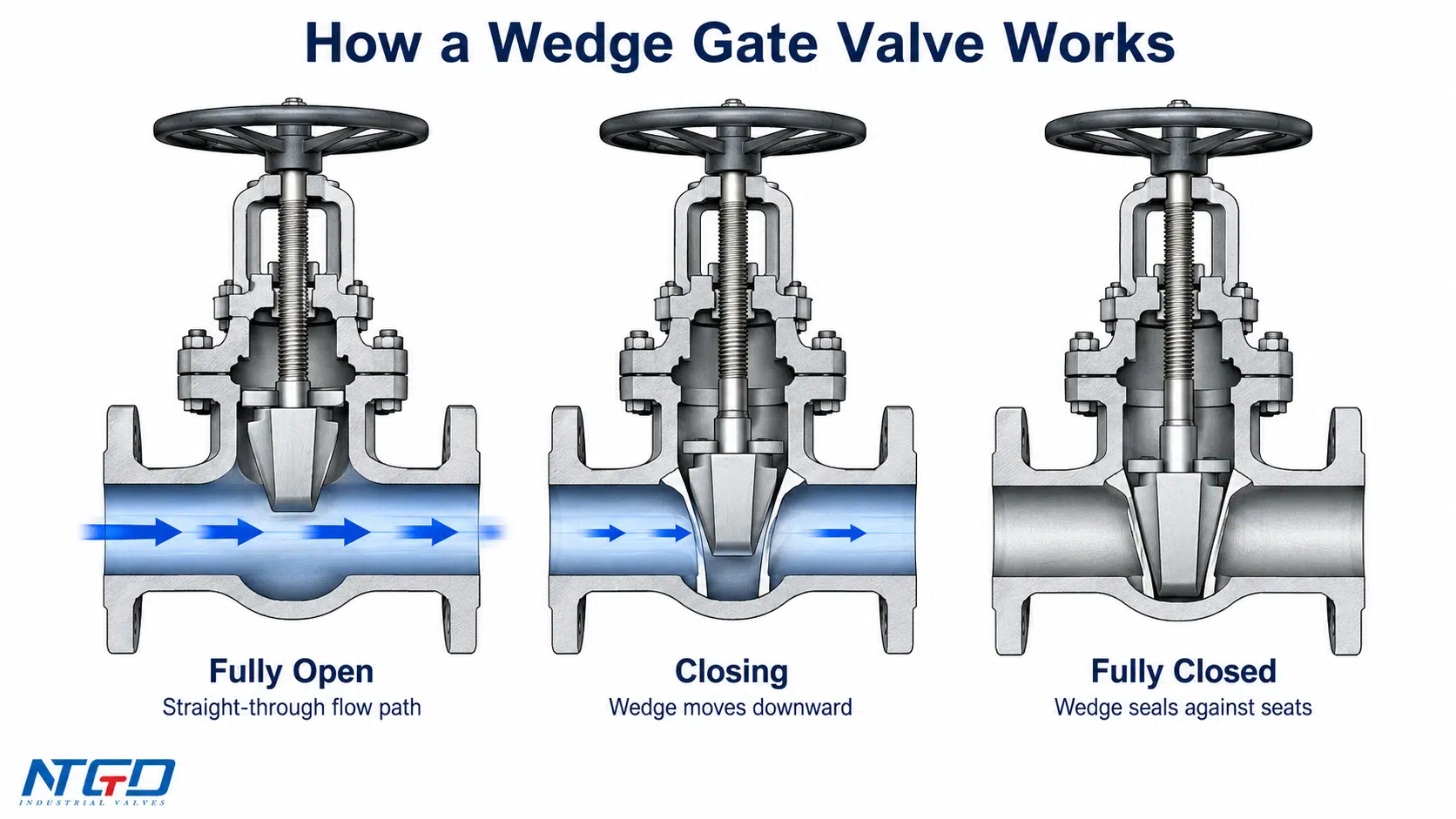
Si le coin s'arrête à mi-course, que ce soit en raison d'une mauvaise manipulation, d'un obstacle, de débris ou d'une résistance mécanique, la vanne ne remplit plus sa fonction d'isolation prévue. Les surfaces du siège et du coin risquent également d'être endommagées si le débit continue de s'écouler à travers une zone de fermeture partiellement ouverte.
Le point technique important à retenir est que ce type de vanne est conçu pour l’isolement. Si elle est laissée partiellement ouverte pour réguler le débit, le fluide peut s’écouler dans la partie inférieure du coin et des sièges à une vitesse locale élevée. Cela peut accroître l’érosion, les vibrations, le bruit et l’usure des sièges. Pour le choix de la vanne, il convient tout d’abord de vérifier si l’application nécessite véritablement une isolation par ouverture totale / fermeture totale ; il faut ensuite s’assurer que la conception du coin et le type de siège sont adaptés aux conditions de fonctionnement.
Dans les modèles à tige montante, la position de la tige peut également aider à déterminer si la vanne est ouverte ou fermée. Dans les modèles à tige non montante, la hauteur extérieure de la vanne peut rester plus compacte ; il convient donc de vérifier l’indication de position et les procédures d’utilisation en fonction de la conception de la vanne et du manuel d’utilisation fourni par le fabricant.
Structure et principaux composants d'une vanne à coin
Une vanne à coin se compose d'un corps et d'un chapeau sous pression, du coin ou de la lame, des sièges, de la tige et du système d'étanchéité de la tige. L'ancien terme “ disque ” est parfois utilisé dans les descriptions de vannes, mais pour ce type de vanne, les termes “ coin ”, “ tiroir ” ou “ disque en coin ” sont plus précis, car l'élément de fermeture présente un profil en coin.
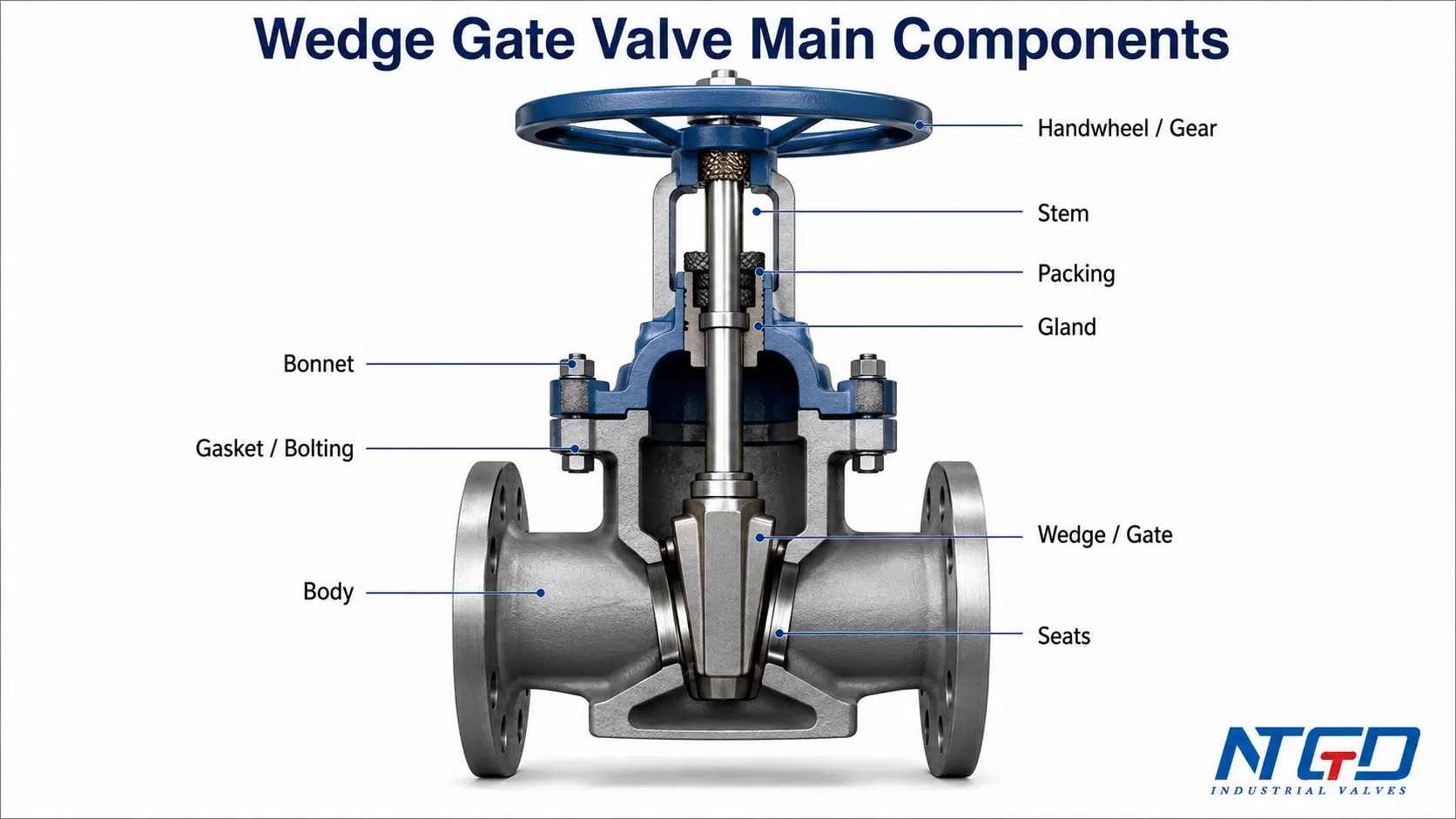
Principaux composants d'une vanne à coin
| Partie | Fonction | Pourquoi est-ce important pour la sélection ou l'exploitation ? |
|---|---|---|
| Corps | Comprend le circuit d'écoulement, les sièges et l'élément de fermeture interne | Doit répondre aux exigences du système de tuyauterie en matière de pression, de température, de résistance à la corrosion et de raccordements d'extrémité |
| Bonnet | Couvre l'ouverture supérieure du corps et facilite l'accès aux composants internes | La conception du chapeau a une incidence sur l'étanchéité à la pression, l'accès pour la maintenance et l'aptitude à un fonctionnement à haute pression ou à haute température. |
| Cale / Barrière / Disque | Se déplace vers le haut et vers le bas pour ouvrir ou fermer le circuit d'écoulement | La géométrie de la cale a une incidence directe sur la fermeture, le couple, le risque de grippage thermique et le contact avec le siège |
| Sièges | Prévoir des surfaces d'étanchéité pour la cale | Le matériau et l'état du siège influent sur l'étanchéité, la résistance à l'usure, la capacité à assurer une fermeture hermétique, la résistance à la corrosion et la résistance thermique. |
| Tige / Axe | Transmet le mouvement provenant du volant, du réducteur ou de l'actionneur à la cale | La conception de la tige influe sur le fonctionnement, l'espace disponible, la transmission du couple et le choix entre une configuration à tige montante ou non montante. |
| Écrou de tige / Zone de l'étrier | Convertit un mouvement rotatif en un mouvement de la tige ou du clapet dans de nombreux modèles | Éléments importants à prendre en compte pour le couple de fonctionnement, la force manuelle, le choix du réducteur, la transmission de la force de l'actionneur et l'accessibilité |
| Emballage | Joints autour de la tige pour réduire les fuites externes | Le choix de la garniture doit être adapté au fluide, à la température, à la pression et à la fréquence de fonctionnement. |
| Fouloir / Suiveur de fouloir | Compresse et maintient le kit d'emballage | Contribue à préserver l'étanchéité de la tige lorsqu'il est réglé conformément à la conception de la vanne |
| Joint et boulonnerie | Étanchéifier et sécuriser les joints des parois sous pression, tels que les raccords entre le corps et le capot | Doit répondre aux exigences en matière de pression et de température, de compatibilité avec les fluides, d'intégrité des joints et de montage |
| Volant / Réducteur / Actionneur | Fournit la force nécessaire au fonctionnement de la vanne | Le mode de fonctionnement influe sur le couple, l'accessibilité, le temps d'ouverture, l'automatisation et les exigences en matière de position de sécurité en cas de défaillance. |
Comment la cale, les sièges, la tige et la garniture fonctionnent ensemble
Le coin d'une vanne à guillotine constitue l'élément de fermeture principal. Lors de la fermeture, la tige entraîne le coin vers le bas jusqu’à ce qu’il vienne en contact avec les sièges. Le contact oblique entre le coin et les sièges crée l’interface d’étanchéité. Si le coin, les surfaces des sièges ou la zone de guidage sont endommagés, encrassés ou mal alignés, la vanne peut devenir plus difficile à manœuvrer ou ne pas assurer l’étanchéité escomptée.
La tige transmet la force d'actionnement exercée par le volant, le réducteur ou l'actionneur au coin. Dans les modèles à tige montante, le déplacement de la tige permet également de visualiser la position de la vanne. Dans les modèles à tige non montante, l'encombrement extérieur peut être plus réduit, mais l'indication de position et les conditions d'utilisation nécessitent un examen plus approfondi.
Le système de garniture est distinct du système d'étanchéité interne à claie et siège. La claie et les sièges régulent le débit à travers la vanne. La garniture limite le risque de fuite autour de la tige. Ces deux zones d'étanchéité sont importantes, mais elles répondent à des besoins différents.
Le corps, le chapeau, la cale, les sièges, la tige, la garniture d'étanchéité, le joint, le serrage des vis et le mode de fonctionnement doivent être examinés comme un seul et même système de vanne. Une vanne peut être fabriquée dans un matériau de corps approprié, mais s'avérer inadaptée si la conception de la siège, le matériau de garniture, la garniture d'étanchéité, le vissage ou la disposition de l'actionneur ne correspondent pas au fluide, aux conditions de pression et de température ou aux exigences de fonctionnement.
Types courants de vannes à coin
L'expression “ vanne à coin ” peut désigner différents types de coins. Les principaux modèles comprennent le coin plein, le coin flexible, le coin en deux parties et le coin élastique. Cette section présente un résumé structuré de Types de vannes à coin plutôt qu’un répertoire complet des types. Pour une comparaison rapide, examinez la simplicité structurelle, la résistance aux cycles thermiques ou de pression, ainsi que les limites du matériau du siège pour chaque modèle.
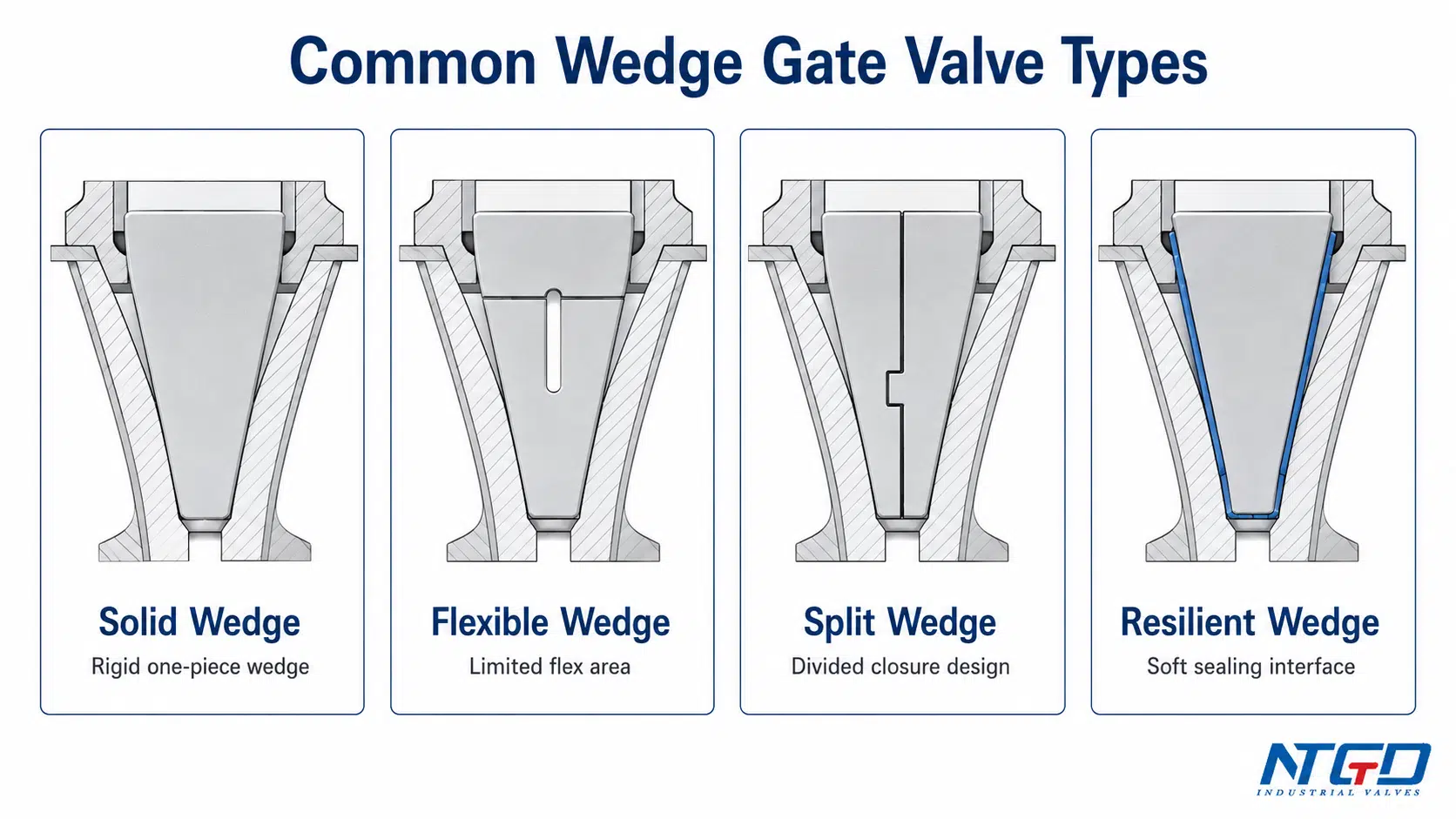
| Conception en coin | Structure de base | Principal avantage | Principale restriction ou remarque concernant la sélection |
|---|---|---|---|
| Vanne à glissière monobloc | Cale rigide monobloc | Une structure simple et un système de fermeture robuste pour de nombreuses applications d'isolation courantes | Plus sensible au collage thermique ou au désalignement du siège dans certaines conditions de température ou de pression |
| Vanne à clapet flexible | Cale monobloc dotée d'une découpe flexible ou d'une zone de flexion | Permet de mieux s'adapter aux légères déformations du siège ou aux effets thermiques qu'une cale rigide et monobloc | Les détails de conception varient selon les fabricants et doivent être examinés en fonction des conditions d'utilisation. |
| Vanne à coin fendu / vanne à coin à double disque | Système de fermeture en deux parties ou à fermeture séparée | Peut aider à s'adapter à l'orientation des sièges et aux conditions de pression dans certaines liaisons | Plus complexe qu'un coin plein, il ne faut pas le choisir uniquement en raison de son nom |
| Vanne à coin résistante | Cale avec revêtement élastique ou interface d'étanchéité souple dans de nombreuses conceptions de type « réseau d'adduction d'eau » | Utile lorsque des vannes d’arrêt à siège souple et une protection contre la corrosion sont requises dans des applications adaptées | La température, la compatibilité avec les fluides, la pression nominale et l'usage prévu dans le domaine de l'adduction d'eau doivent être vérifiés avec soin. |
Le choix de la meilleure conception de clapet à coin ne dépend pas uniquement de la désignation du modèle. Le fluide, les conditions de pression et de température, le risque de corrosion, le matériau du siège, la fréquence de fonctionnement, les exigences en matière de fermeture, ainsi que le risque de grippage ou d’usure du siège doivent tous être pris en compte lors de l’analyse de sélection.
A coin rigide et coin souple Cette analyse peut s'avérer utile lorsque la stabilité en service, les effets de la température, les cycles de pression ou l'alignement du siège sont des facteurs importants. Les modèles à coin élastique présentent un profil de fonctionnement différent et ne doivent pas être assimilés aux vannes à coin industrielles à siège métallique.
Avantages et limites des vannes à glissière
Une vanne à coin est utile lorsque le réseau de tuyauterie nécessite une isolation fiable tout en conservant un passage d'écoulement relativement dégagé en position entièrement ouverte. Ce type de conception présente toutefois certaines limites. Bon nombre de ces limites sont directement liées à l'interaction entre le coin et le siège, aux exigences de fonctionnement en position entièrement ouverte ou entièrement fermée, ainsi qu'au choix de la conception du coin décrit ci-dessus.
| Point | Ce que cela signifie | Note de sélection |
|---|---|---|
| Résistance faible en position complètement ouverte | Lorsqu'il est complètement ouvert, le clapet est retiré du circuit principal d'écoulement | Utile pour les installations d'isolation où la perte de charge doit être maintenue à un faible niveau |
| Risque de fermeture hermétique | La cale et les sièges forment une interface d'étanchéité mécanique | La fermeture dépend de l'état du siège, du matériau, de la pression, de la température et du bon fonctionnement |
| Potentiel de service bidirectionnel | De nombreuses vannes à coin peuvent être utilisées dans les deux sens d'écoulement | Vérifiez les marquages sur la carrosserie, les détails de conception et les exigences du projet avant l'installation. |
| À ne pas utiliser pour la limitation de débit | Une ouverture partielle expose la cale et les sièges à un écoulement instable | Utilisez principalement la vanne en position entièrement ouverte ou entièrement fermée, sauf si sa conception et les conditions d'utilisation permettent d'agir autrement. |
| Risque lié à la reliure thermique | Les variations de température peuvent avoir une incidence sur le contact entre la cale et son logement, ainsi que sur le couple de fonctionnement | La conception des cales et le choix des matériaux doivent être réexaminés en vue d'une utilisation à haute température |
| Risque lié aux débris et aux matières solides | Des particules solides peuvent s'accumuler près de la zone du siège ou endommager les surfaces d'étanchéité | Dans le cas d'une utilisation avec des fluides sales ou contenant des particules solides, il convient d'examiner attentivement le type de vanne et de siège |
| Couple de fonctionnement plus élevé | Les grandes dimensions, les hautes pressions ou les conditions d'utilisation difficiles peuvent nécessiter une force de manœuvre plus élevée | Il convient de réexaminer le dimensionnement du réducteur ou de l'actionneur plutôt que de partir du principe que le fonctionnement manuel est adapté. |
| Risque d'usure des sièges | Une utilisation répétée dans des conditions de faible débit ou en présence d'impuretés peut endommager les surfaces d'étanchéité | Lors du choix, il convient de tenir compte de la fréquence de fonctionnement et de la propreté du milieu. |
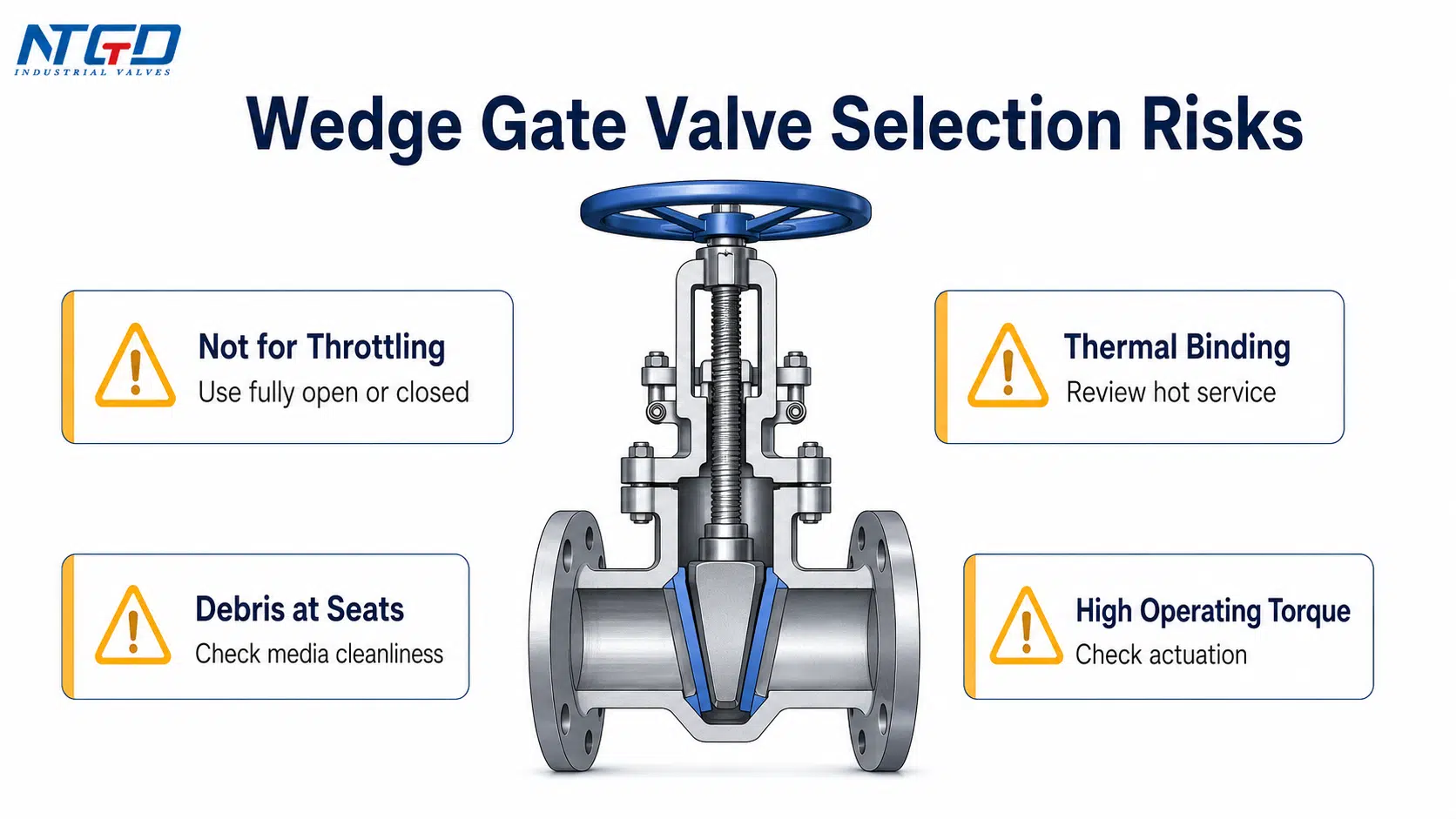
Le principal avantage d'une vanne à coin ne réside pas dans la précision du réglage. Son intérêt réside dans l'isolation. Si l'application nécessite des réglages fréquents, un contrôle précis du débit ou un fonctionnement fiable dans des boues épaisses, il convient de revoir le choix du type de vanne plutôt que d'imposer l'utilisation d'une vanne à coin.
Le grippage thermique, le couple de fonctionnement, l'usure du siège et la sensibilité aux débris influencent également le choix du type de cale à examiner. Une cale pleine, une cale flexible, une cale fendue et une cale résiliente peuvent réagir différemment aux variations de température, aux cycles de pression, à l'état du siège et à la propreté du fluide ; ces risques doivent donc être pris en compte dès la phase de conception, et non pas être considérés a posteriori.
Domaines d'application courants des vannes à coin
Les vannes à guillotine sont couramment utilisées dans les réseaux de tuyauterie industriels où une isolation est nécessaire et où la vanne reste généralement soit entièrement ouverte, soit entièrement fermée. La conception précise doit toutefois être adaptée aux conditions d'utilisation, car un même type de vanne peut être configuré avec différents matériaux, sièges, tiges, chapeaux, raccords d'extrémité et modes d'actionnement.
| Zone de desserte | Utilisation typique | Sélection Attention |
|---|---|---|
| Canalisations pour le pétrole et le gaz | Mise hors service des lignes de production, des réseaux de services et des tronçons de canalisations | Vérifier la classe de pression, le matériau, la finition, les exigences en matière de sécurité incendie, et Exigences relatives aux vannes à guillotine selon la norme API 600 le cas échéant |
| Traitement chimique | Isolation dans des circuits de liquide ou de gaz compatibles | Vérifier la résistance à la corrosion, la compatibilité des joints et le matériau du siège |
| Systèmes électriques et à vapeur | Isolation dans les applications à haute température ou à haute pression | Examiner les risques de grippage thermique, la conception du capot, les caractéristiques de pression et de température, ainsi que le couple de fonctionnement |
| Eau et eaux usées | Mise hors service de la conduite, mise hors service de la station de pompage et raccordement aux réseaux publics | Les modèles à cale résistante ou revêtus peuvent être adaptés, selon les spécifications du réseau d'adduction d'eau. |
| Services généraux de l'usine | Isolation pour l'air, l'eau, les fluides non agressifs et les systèmes auxiliaires | Évitez d'utiliser la vanne comme vanne de régulation, sauf si sa conception le permet |
| Périmètres de la maintenance industrielle | Isolation en amont des équipements ou des sections du système | Vérifier les exigences relatives au verrouillage, à l'accès aux opérations et à l'indication de position, conformément aux procédures du site |
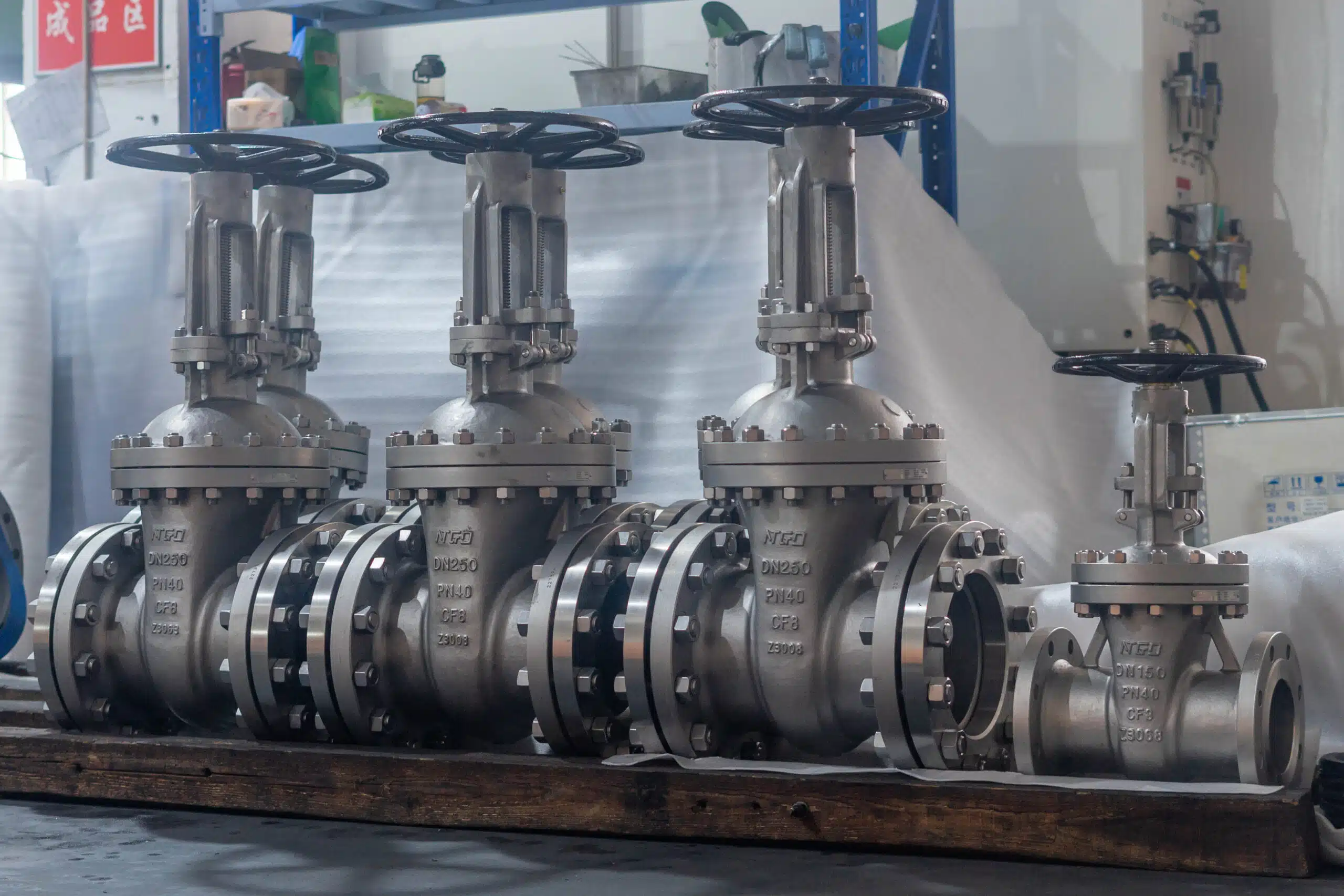
Le choix d'une vanne à coin doit s'inscrire dans le cadre du cahier des charges global de la tuyauterie, et non en dehors de ce contexte plus large. sélection de vannes industrielles processus. Le fluide, la pression, la température, les matériaux, la taille de la vanne, le type de raccordement, le mode de fonctionnement et l'espace disponible pour l'installation sont autant de facteurs qui déterminent si la vanne est adaptée.
Les applications impliquant des modulations fréquentes, un fonctionnement à cycles élevés, des fluides fortement abrasifs, des boues épaisses ou un contrôle précis du débit doivent être examinées avec soin avant de choisir ce type de vanne. Dans ces cas-là, un autre modèle de vanne, une autre disposition du siège ou une autre configuration du coin pourrait s'avérer plus approprié.
Sélection des vannes à coin et liste de contrôle pour les appels d'offres
Avant de demander ou de consulter un Devis pour une vanne à coin, l'acheteur doit fournir suffisamment d'informations techniques au fabricant ou au fournisseur pour que celui-ci puisse valider la conception. L'objectif n'est pas seulement de préciser le type de vanne, mais aussi de définir les conditions d'utilisation qui déterminent la configuration de la vanne.
| Point de l'appel d'offres | Pourquoi c'est important |
|---|---|
| Les médias | Permet de déterminer le risque de corrosion, la compatibilité des sièges, le matériau de garniture et les exigences en matière de nettoyage |
| Pression et température | Commandes valeurs nominales de pression et de température, matériau de la carrosserie, conception du capot, joint, fixation par vis et vérification des garnitures |
| Matériau du corps | Doit être adapté à la pression, à la température, à la corrosion et aux spécifications du projet |
| Garniture / matériau du siège | Influence l'étanchéité, la résistance à l'usure, la résistance à la corrosion et l'aptitude à certaines températures |
| Conception en forme de coin | Les modèles de cales pleines, flexibles, fendues ou résilientes s'adaptent à différentes conditions d'utilisation |
| Type de tige | La présence ou l'absence de tige montante a une incidence sur le fonctionnement, l'encombrement, l'indication et l'adéquation à l'usage prévu |
| Raccordement final | Les extrémités à bride, à souder bout à bout, filetées ou autres doivent être conformes aux spécifications de la tuyauterie |
| Mode opératoire | Le type d'actionnement (volant, réducteur, pneumatique, électrique ou hydraulique) influe sur le couple et l'accessibilité |
| Orientation et accès à l'installation | Détermine si la vanne peut être actionnée, inspectée et entretenue en toute sécurité |
| Besoin de plans ou de pièces de rechange | Permet de vérifier les dimensions, les composants et la compatibilité des pièces de rechange sans transformer l'article en catalogue de pièces détachées |
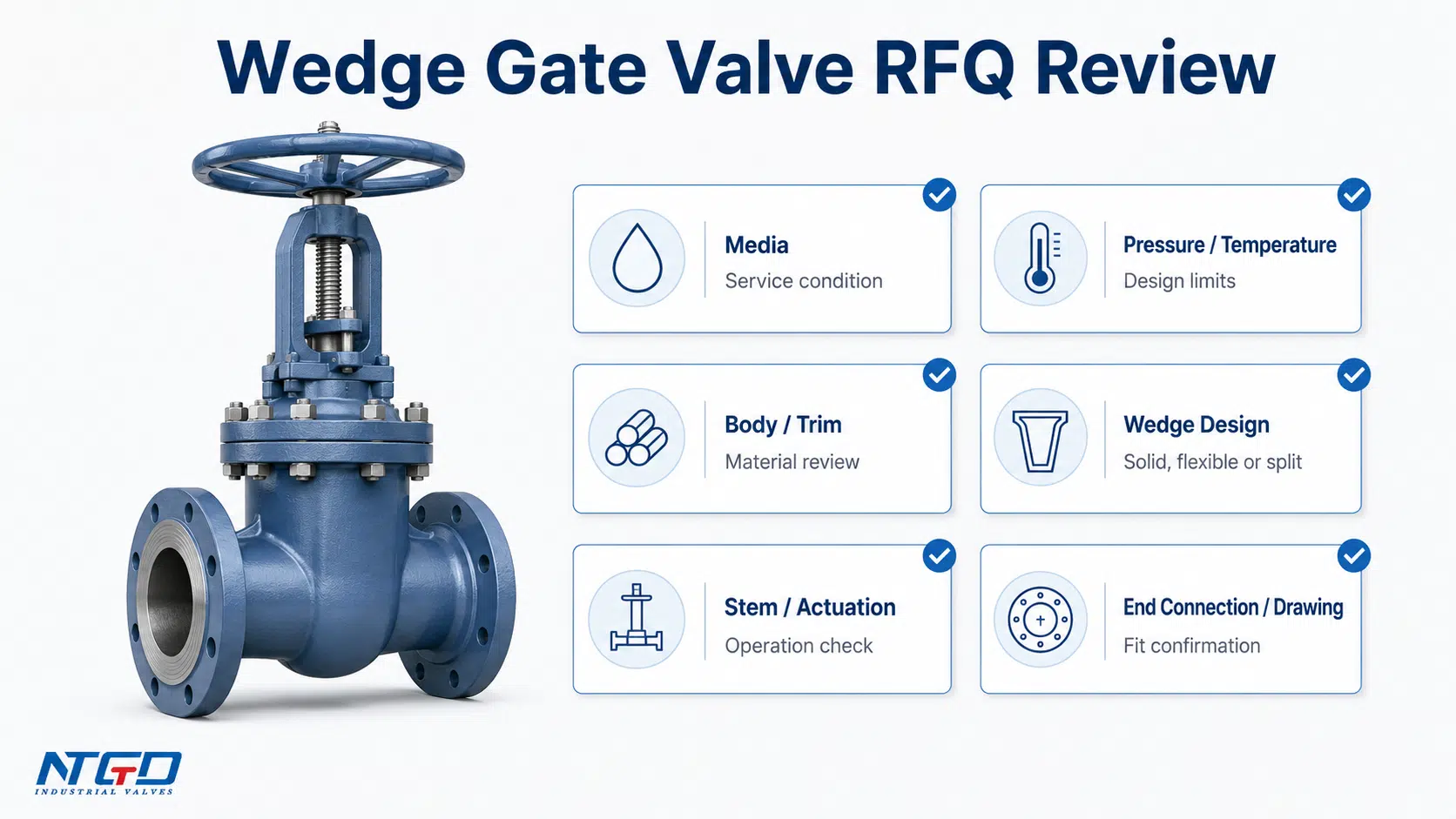
Ces éléments servent à l'examen du cahier des charges et ne constituent pas de simples formalités administratives liées à l'appel d'offres. Ils permettent de vérifier si le matériau de la carrosserie et de la garniture, le siège, la forme en coin, le type de tige, le mode de fonctionnement et les caractéristiques relatives aux limites de pression sont adaptés aux conditions d'utilisation.
Pour les projets de remplacement, ne vous fiez pas uniquement aux termes “ vanne à coin ” ou “ vanne à glissière ”. Vérifiez le type de vanne, la taille, la classe de pression, le matériau, le raccordement d’extrémité, la cote face à face, le type de tige, la conception du siège et le mode de fonctionnement à partir des plans, des fiches techniques ou de la plaque signalétique de la vanne existante, le cas échéant. La cote face à face, le raccord d'extrémité, la classe de pression, le matériau et le mode de commande doivent être vérifiés dès le début, car ils déterminent directement si une vanne de remplacement peut s'adapter au système de tuyauterie existant.
FAQ
Une vanne à coin est-elle la même chose qu'une vanne à glissière à coin ?
Dans de nombreuses recherches effectuées par les acheteurs, l’expression “ vanne à coin ” est utilisée comme abréviation de “ vanne à guillotine à coin ”. Si cette expression peut être comprise dans le cadre d’une conversation, il convient toutefois d’utiliser l’expression « vanne à guillotine à coin » dans le cahier des charges d’un projet ou dans un appel d’offres, car elle identifie à la fois le type de vanne et l’élément de fermeture en forme de coin. Cela permet d’éviter toute confusion avec d’autres modèles de vannes pouvant comporter une pièce en forme de coin.
Qu'est-ce que la cale d'une vanne à guillotine ?
Dans une vanne à coin, le coin est l'élément de fermeture qui se déplace de haut en bas pour ouvrir ou fermer le passage. En position fermée, le coin vient en contact avec les sièges et bloque le débit. Sa forme, son matériau et son ajustement par rapport aux sièges ont une incidence directe sur l'efficacité de la fermeture et le couple de manœuvre.
Quels sont les principaux composants d'une vanne à coin ?
Les principales pièces d'une vanne à coin comprennent le corps, le chapeau, le coin ou la lame, les sièges, la tige, la garniture d'étanchéité, le presse-étoupe, le joint d'étanchéité, les fixations, ainsi que le volant, le réducteur ou l'actionneur. Chaque pièce influe sur un facteur de sélection différent, tel que la limite de pression, l'étanchéité, le fonctionnement, le contrôle des fuites ou l'accès pour l'installation.
La cale est-elle identique au disque ou à la porte ?
Dans le domaine des vannes à coin, les termes “ coin ”, “ tiroir ”, “ disque ” ou « disque en coin » peuvent être utilisés selon le fabricant ou le document. Le terme « coin » est le plus précis, car il désigne l'élément de fermeture conique. Le terme « tiroir » désigne l'élément de fermeture d'une vanne à tiroir. Le terme « disque » a une acception plus large et peut s'avérer moins précis s'il est utilisé seul.
Quelle est la différence entre une vanne à coin rigide et une vanne à coin flexible ?
Une cale rigide est une cale d’un seul tenant. Une cale flexible est généralement également d’un seul tenant, mais elle intègre une caractéristique de conception qui lui confère une flexibilité limitée. D’un point de vue technique général, les conceptions à cale rigide sont courantes dans les applications d’isolation stables, tandis que les conceptions à cale flexible sont souvent envisagées lorsque des déformations mineures du siège, dues à des cycles thermiques ou de pression, sont possibles. Le choix final dépend toutefois de la température de service, de la pression, du matériau et de la conception du fabricant.
Qu'est-ce qu'une vanne à coin fendu ou à double disque ?
Une vanne à coin fendu, à double disque ou à double plaque utilise un système de fermeture divisé à la place d’un seul coin rigide. Cette conception peut permettre à l’élément de fermeture de s’adapter au contact avec le siège dans certaines applications. Elle est plus complexe qu’une simple vanne à coin plein ; il convient donc de la choisir en fonction des conditions d’utilisation plutôt qu’en se basant uniquement sur son nom.
Une vanne à coin résistante est-elle identique à une vanne à coin standard ?
Une vanne à coin résistante est un type spécifique de vanne à coin, souvent associée à des conceptions à joint souple ou à coin revêtu dans des applications adaptées, telles que les réseaux d'adduction d'eau. Elle ne doit pas être considérée comme identique à toutes les vannes à coin industrielles à siège métallique. Il convient de vérifier les fluides, la température, la pression et les spécifications du projet.
Une vanne à coin peut-elle être utilisée pour réguler le débit ?
Une vanne à coin n'est généralement pas utilisée pour la régulation du débit. Elle est principalement conçue pour fonctionner en position entièrement ouverte ou entièrement fermée. Une ouverture partielle peut entraîner des turbulences, de l'érosion, des vibrations et endommager le siège, en particulier lorsque la vanne est exposée à des fluides à grande vitesse, à des fluides en suspension ou à des particules solides à proximité du siège.
Une vanne à coin est-elle bidirectionnelle ?
De nombreuses vannes à coin permettent une isolation bidirectionnelle, mais il convient de vérifier cette caractéristique en se référant à la conception réelle de la vanne, aux marquages figurant sur le corps de la vanne et au cahier des charges du projet. Certaines applications ou conceptions pouvant présenter des exigences d'installation spécifiques, la vanne ne doit pas être installée en se basant uniquement sur une règle générale.
Une vanne à glissière en coin est-elle identique à une vanne à glissière parallèle ?
Non. Une vanne à coin utilise un coin conique qui assure l'étanchéité contre des sièges inclinés. A vanne à opercule parallèle utilise un système de fermeture et un agencement des sièges différents. Bien que ces deux modèles soient tous deux des vannes à guillotine, ils ne doivent pas être choisis de manière interchangeable sans avoir examiné les conditions d'utilisation, les exigences en matière d'étanchéité, les conditions de température et le cahier des charges du projet.
Puis-je utiliser des pièces de rechange génériques pour une vanne à coin ?
Il ne faut pas partir du principe que des pièces de rechange génériques s'adaptent à une vanne à coin. Même si deux vannes ont le même diamètre nominal et la même classe de pression, les caractéristiques du coin, du siège, de la tige, de la garniture d'étanchéité, du joint, du vissage et du chapeau peuvent différer. La démarche la plus sûre consiste à fournir le plan de la vanne, les données figurant sur la plaque signalétique, le diamètre nominal, la classe de pression, le matériau, le type de raccordement, des photos et toute information disponible sur le modèle afin qu’ils puissent faire l’objet d’une expertise technique.
Conclusion
Une vanne à glissière est une vanne d'isolement qui utilise une glissière en forme de coin pour ouvrir ou fermer un passage de fluide en ligne droite. Ses performances dépendent de la manière dont la glissière, les sièges, la tige, le corps, le chapeau, la garniture d'étanchéité, les boulons et le mode de fonctionnement interagissent entre eux.
Pour le choix d’une vanne à coin, la question essentielle n’est pas seulement “ qu’est-ce qu’une vanne à coin ? ”, mais de savoir si la conception du coin, le matériau du siège, les matériaux du corps et des pièces internes, les conditions de pression et de température, le type de tige et le mode de fonctionnement sont adaptés à l’application réelle. Les conceptions de coin pleines, flexibles, en deux parties et élastiques peuvent toutes être utiles, mais chacune présente des limites techniques différentes.
La liste de contrôle relative à l'appel d'offres ci-dessus constitue un point de départ pratique pour vérifier cette adéquation avant l'examen du cahier des charges ou toute discussion relative à un remplacement.
Prise en charge des spécifications : Si vous avez besoin d'une analyse des spécifications d'une vanne à coin, veuillez préparer les informations suivantes : fluide, conditions de pression et de température, exigences en matière de matériaux, préférence concernant la conception du coin, type de siège, raccordement aux extrémités, type de tige, mode de commande et plans disponibles. Ces détails permettent d'avoir une discussion technique ciblée sur l'adéquation au service visé, plutôt qu'une simple demande générique de nom de vanne.
