
Author Name: Bruce Zheng
Author Role: Co-Founder and Valve Engineer at NTGD Valve
Author Bio: Bruce Zheng is Co-Founder and Valve Engineer at NTGD Valve, focusing on industrial valve selection, application, and technical content for global B2B buyers.
Last Updated: July 6, 2026
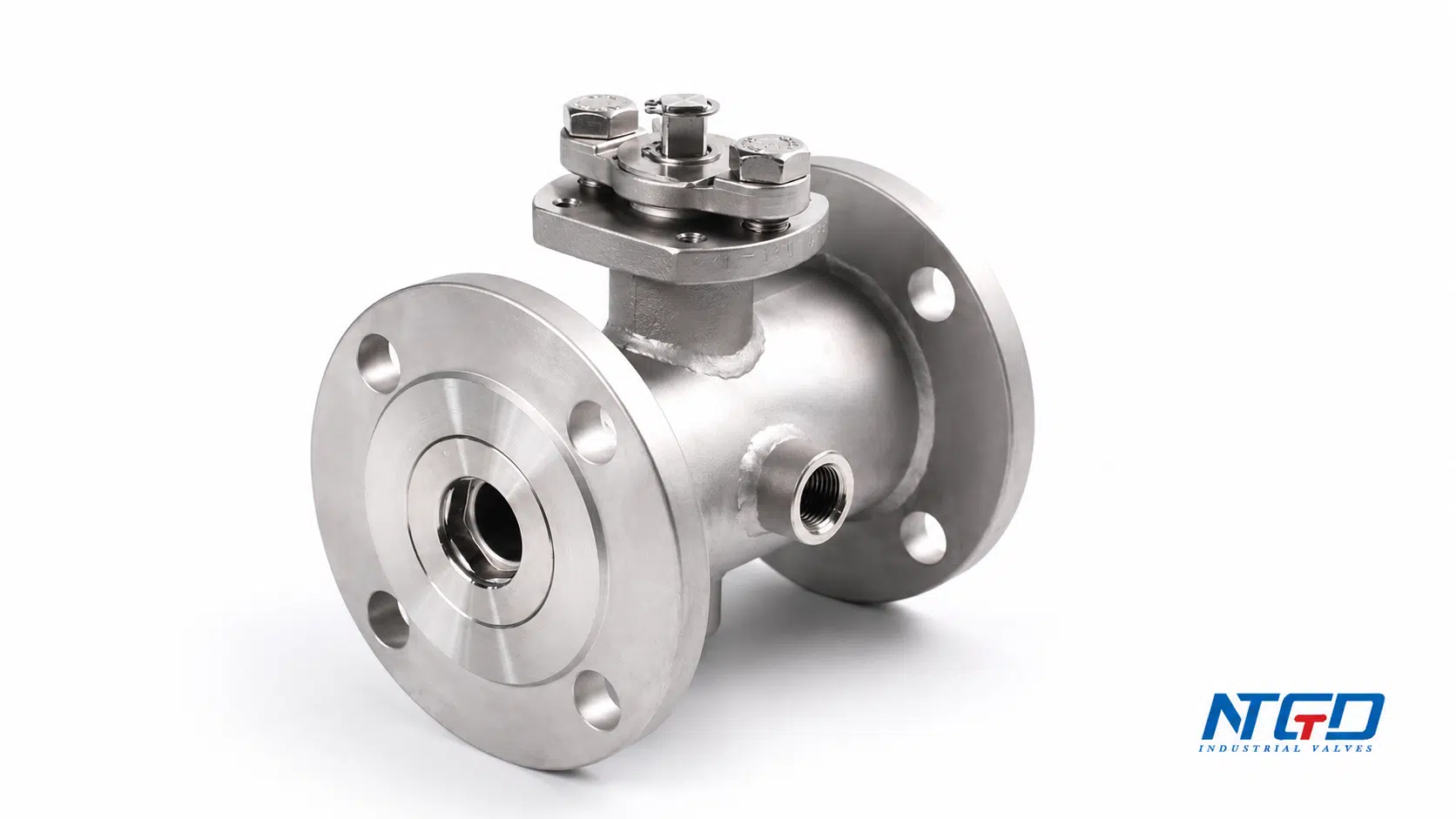
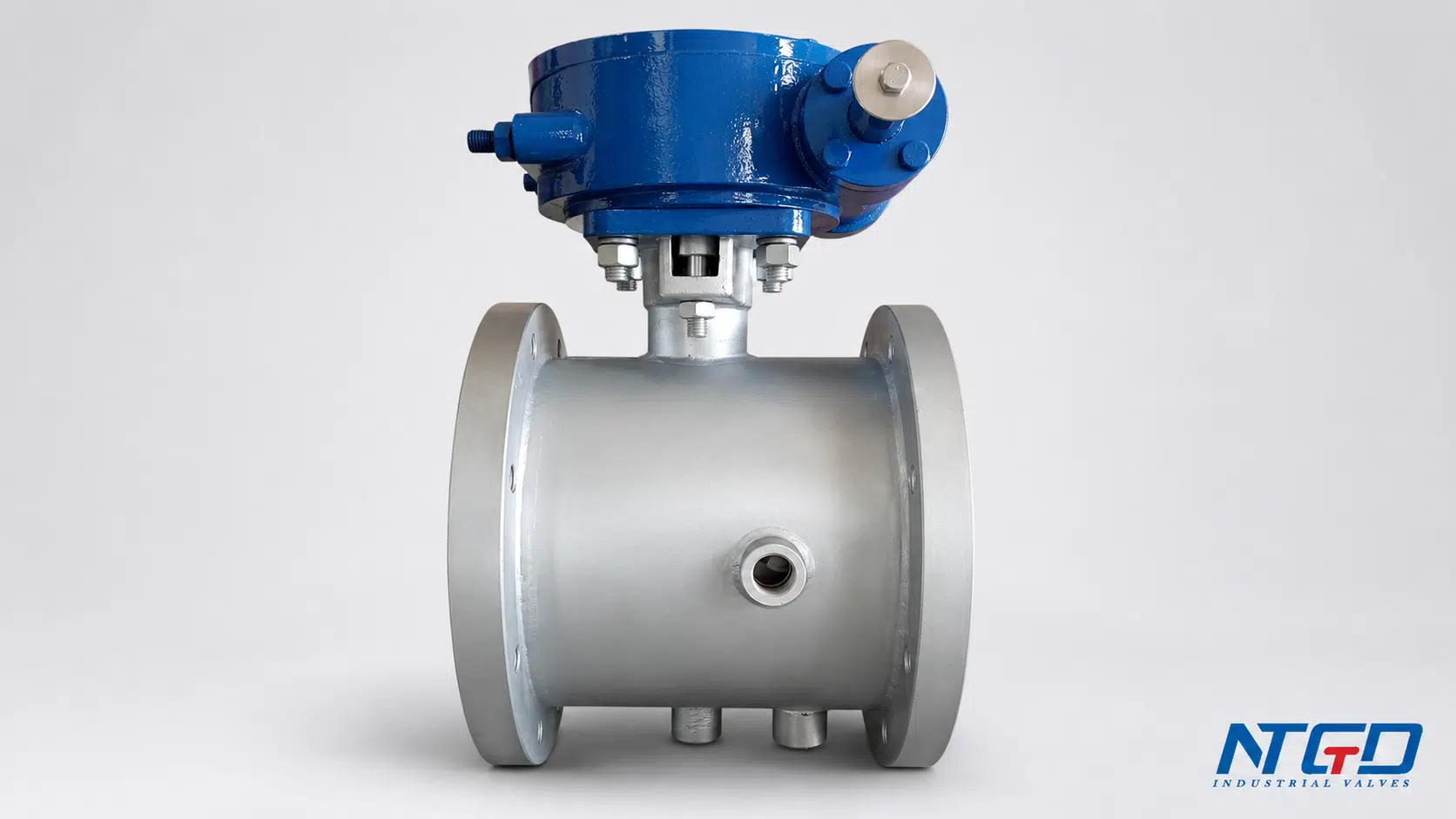
A jacketed ball valve is a ball valve with a welded or fabricated thermal jacket around the valve body. A separate heating or cooling medium circulates through this jacket so the process fluid inside the valve can remain flowable, stable, or controlled within the required temperature condition.
In B2B valve selection, a jacketed ball valve is usually considered when an ordinary ball valve may suffer from high torque, clogging, crystallization, solidification, or unstable operation caused by viscous or temperature-sensitive media. Common service examples include bitumen, asphalt, molten sulfur, wax, resin, polymer, syrup, soap, paint, ink, and other fluids that may thicken or solidify when heat is lost.
If the medium cools inside the valve cavity, near the seat area, or during a shutdown period, the next opening cycle may create high torque, seat damage, packing gland leakage, blockage, or unplanned process interruption. For this reason, the valve should be selected by media behavior and thermal requirement, not only by valve size or pressure class.
This guide explains how jacketed ball valves work, the difference between full and partial jacket designs, common jacket media, important components, typical configurations, application conditions, troubleshooting risks, and the RFQ data needed before selection.
What Is a Jacketed Ball Valve?
A jacketed ball valve is a quarter-turn isolation valve designed with an outer jacket around the main valve body. The process fluid flows through the ball valve bore, while a separate heating or cooling medium flows through the jacket cavity around the valve body.
The purpose of the jacket is not to control flow rate like a control valve. Its main function is to help maintain the process fluid at a usable temperature so the valve can open, close, and seal more reliably in difficult media.
A jacketed ball valve is one type of jacketed valve. The broader term “jacketed valve” may also include jacketed plug valves, globe valves, gate valves, check valves, or other valve families. This page focuses only on jacketed ball valves.
What makes a jacketed ball valve different from a standard ball valve?
A standard ball valve isolates flow by rotating a drilled ball 90 degrees. A jacketed ball valve keeps the same basic ball valve operating principle, but adds a thermal jacket around the valve body.
| Item | Standard Ball Valve | Jacketed Ball Valve |
|---|---|---|
| Main function | On-off isolation | On-off isolation with temperature support |
| Thermal jacket | Not included | Welded or fabricated around the valve body |
| Typical media | General liquids and gases | Viscous, crystallizing, solidifying, or temperature-sensitive media |
| Common concern | Pressure, material, seat, operation | All standard concerns plus jacket medium, jacket ports, heat transfer, and clearance |
| Selection complexity | Lower | Higher, because both process side and jacket side must be specified |
Is a jacketed ball valve the same as a jacketed valve?
No. A jacketed ball valve is a specific jacketed valve design based on ball valve construction. A jacketed valve is the broader category. When a buyer searches for a jacketed valve, the actual valve type still needs to be confirmed by service function.
For example:
- a jacketed ball valve is mainly used for on-off isolation;
- a jacketed plug valve may be considered for some viscous or slurry-type services;
- a jacketed globe valve may be considered where throttling or regulating behavior is required;
- a jacketed check valve is a different non-return valve category.
For the current page, the selection boundary remains jacketed ball valve service. If the application requires throttling, non-return service, pressure relief, or another flow function, the valve family should be reviewed separately instead of assuming that every jacketed valve works the same way.
Where the jacket is located on the valve body
The jacket is normally built around the outside of the valve body. Depending on the design, it may cover only part of the body or extend more completely from flange area to flange area. The jacket has its own inlet and outlet connections so the heating or cooling medium can circulate separately from the process fluid.
This is different from removable valve insulation jackets. Removable insulation helps reduce heat loss from the outside. A true jacketed ball valve has a body jacket that carries a thermal medium.
Why Jacketed Ball Valves Are Used and How They Work
Jacketed ball valves are used when the process fluid must stay warm, fluid, or temperature-controlled near the valve body. Without heat or cooling support, some fluids may thicken, crystallize, stick to seats, damage sealing surfaces, or prevent the ball from rotating smoothly.
Temperature control around the valve body
Because liquid viscosity is temperature dependent, temperature loss near the valve can create operational problems before the pipe itself shows a major issue. The valve body contains cavities, seats, stem sealing points, and direction changes that may become sensitive areas for viscous or crystallizing media.
A thermal jacket helps reduce this risk by transferring heat or cooling around the valve body. In heating service, the jacket medium may help keep the process fluid at a lower viscosity. In cooling service, the jacket may help prevent the process fluid from exceeding a required temperature condition.
How the ball opens and closes the process flow
A jacketed ball valve still follows the ball valve working principle: the stem rotates the ball about 90 degrees to open or block the process flow.
When the bore of the ball is aligned with the pipeline, the valve is open and process fluid can pass through. When the ball rotates 90 degrees, the bore becomes perpendicular to the pipeline and the valve closes.
The jacket does not replace this ball valve mechanism. It supports the valve by helping the process medium remain suitable for opening, closing, and sealing.
How the jacket medium circulates around the valve body
The jacket side is separate from the process side. Steam, hot oil, hot water, cooling water, or another thermal medium enters one jacket port, circulates around the jacketed area, and exits through another port.
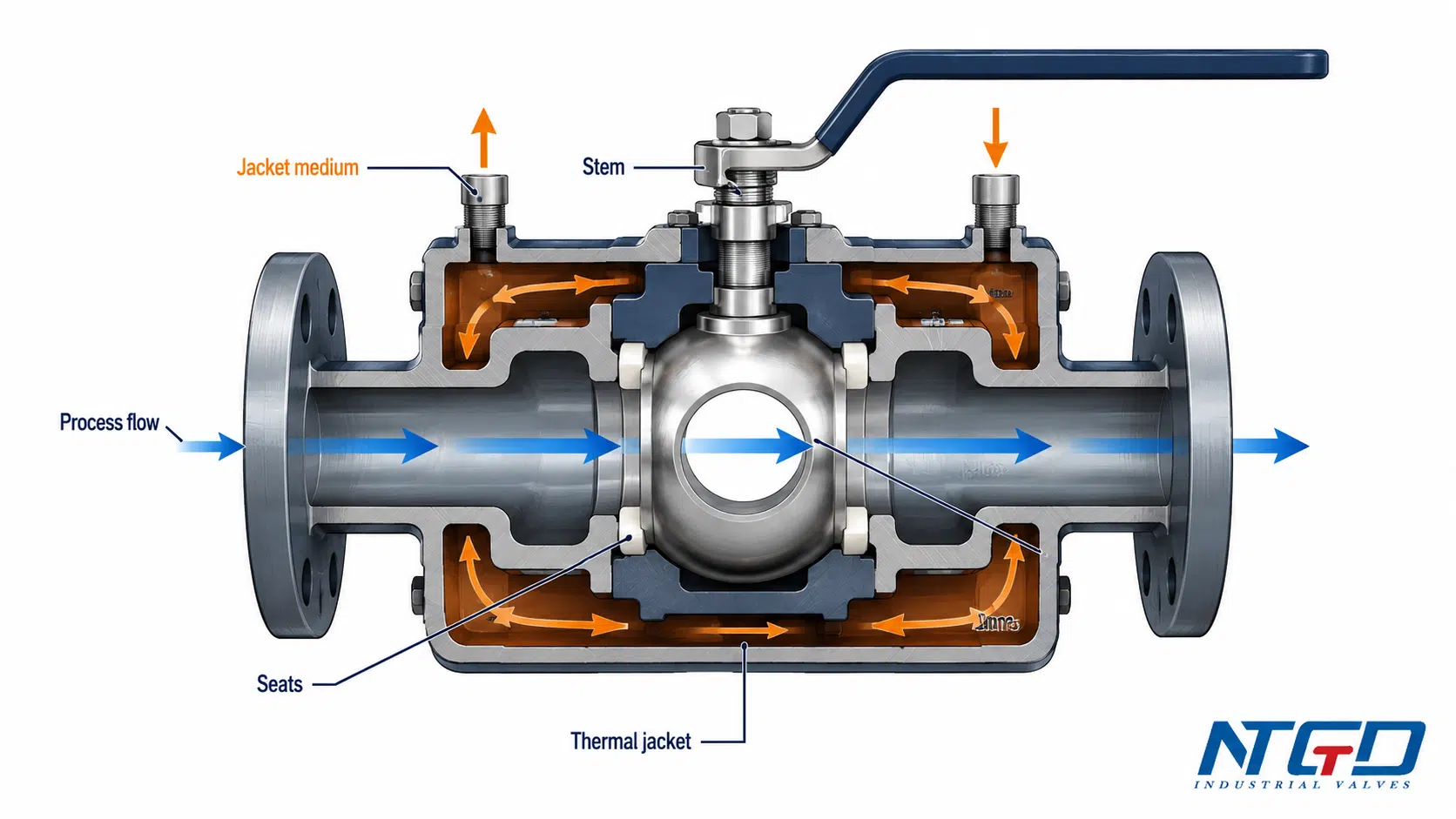
Heating medium conditions should be selected against the required holding temperature and the process fluid limit. Excessive local overheating may damage media quality, seats, packing, or sealing performance, while insufficient heating may leave the medium too viscous for reliable operation.
This means a jacketed ball valve must be reviewed as two related systems:
| Side | What flows through it | Main selection concern |
|---|---|---|
| Process side | Product fluid such as bitumen, sulfur, resin, polymer, syrup, or chemical media | pressure, temperature, viscosity, corrosion, seat compatibility, operation |
| Jacket side | Steam, hot oil, hot water, cooling water, or another thermal medium | jacket pressure, jacket temperature, connection type, port layout, drainage, heat transfer |
A valve may be correctly sized for the process line but still be unsuitable if the jacket side is not specified properly.
What can go wrong when viscosity or crystallization is not controlled
If the process fluid cools too much or leaves its required temperature range, several problems may appear:
- higher operating torque;
- slow or incomplete opening and closing;
- deposits near the ball and seats;
- damage to seats or sealing surfaces;
- packing gland leakage due to repeated operation under difficult conditions;
- blockage or poor flow through the valve body;
- jacket-side performance that does not keep the process fluid stable.
For this reason, jacket coverage, jacket medium, holding temperature, port layout, and actuation torque must match the actual media behavior. A jacketed ball valve should not be selected only by line size, pressure class, or body material.
Full Jacketed vs Partial Jacketed Ball Valve
A major selection question is whether the project needs a full jacketed ball valve or a partial jacketed ball valve. This decision affects heat transfer coverage, flange layout, bolting clearance, manufacturing complexity, and cost.
What is a full jacketed ball valve?
A full jacketed ball valve is designed with broader jacket coverage around the valve body, often described as flange-to-flange jacket coverage. The purpose is to maintain more consistent temperature around the body area where heat loss, viscosity increase, or solidification risk may affect operation.
Full jacketed construction is often considered for severe viscosity, crystallization, or solidification risk. It is also common when the process fluid must remain flowable during loading, unloading, transfer, or intermittent operation.
In intermittent operation or after shutdown, fluid trapped near the body cavity, seat area, or flange neck may cool before the next restart. If the thermal jacket does not cover the critical cold spots, the next opening cycle may require much higher torque and may damage seats or sealing surfaces.
What is a partial or half jacketed ball valve?
A partial jacketed ball valve, sometimes described as a half jacketed design, has a jacket that covers only selected areas of the valve body. It may be used where moderate temperature support is enough or where full jacket coverage is not necessary.
Partial jacket design can reduce cost and complexity, but it may not provide the same heat transfer coverage as a full jacketed ball valve.
Flange-to-flange coverage and oversized flanges
In some full jacketed designs, oversized flanges may be used to provide enough bolting clearance after the jacket is added around the valve body. This is a practical detail that should be checked early, because jacket fabrication can affect available space around the valve ends.
Bolting clearance, face-to-face length, insulation space, piping layout, and maintenance access should be reviewed before ordering.
Full jacket vs partial jacket decision table
| Selection factor | Full Jacketed Ball Valve | Partial / Half Jacketed Ball Valve |
|---|---|---|
| Jacket coverage | Broader body coverage, often flange-to-flange | Selected body area only |
| Heat transfer consistency | Higher | More limited |
| Typical use | Severe viscosity, solidification, crystallization, or heat-loss risk | Moderate temperature maintenance |
| Fabrication complexity | Higher | Lower |
| Cost tendency | Higher | Lower |
| Bolting clearance | May require oversized flange or special clearance review | Usually simpler, but still must be checked |
| Best RFQ practice | Define jacket coverage, jacket ports, medium, jacket pressure, and temperature | Define covered area, medium, ports, and service expectation |
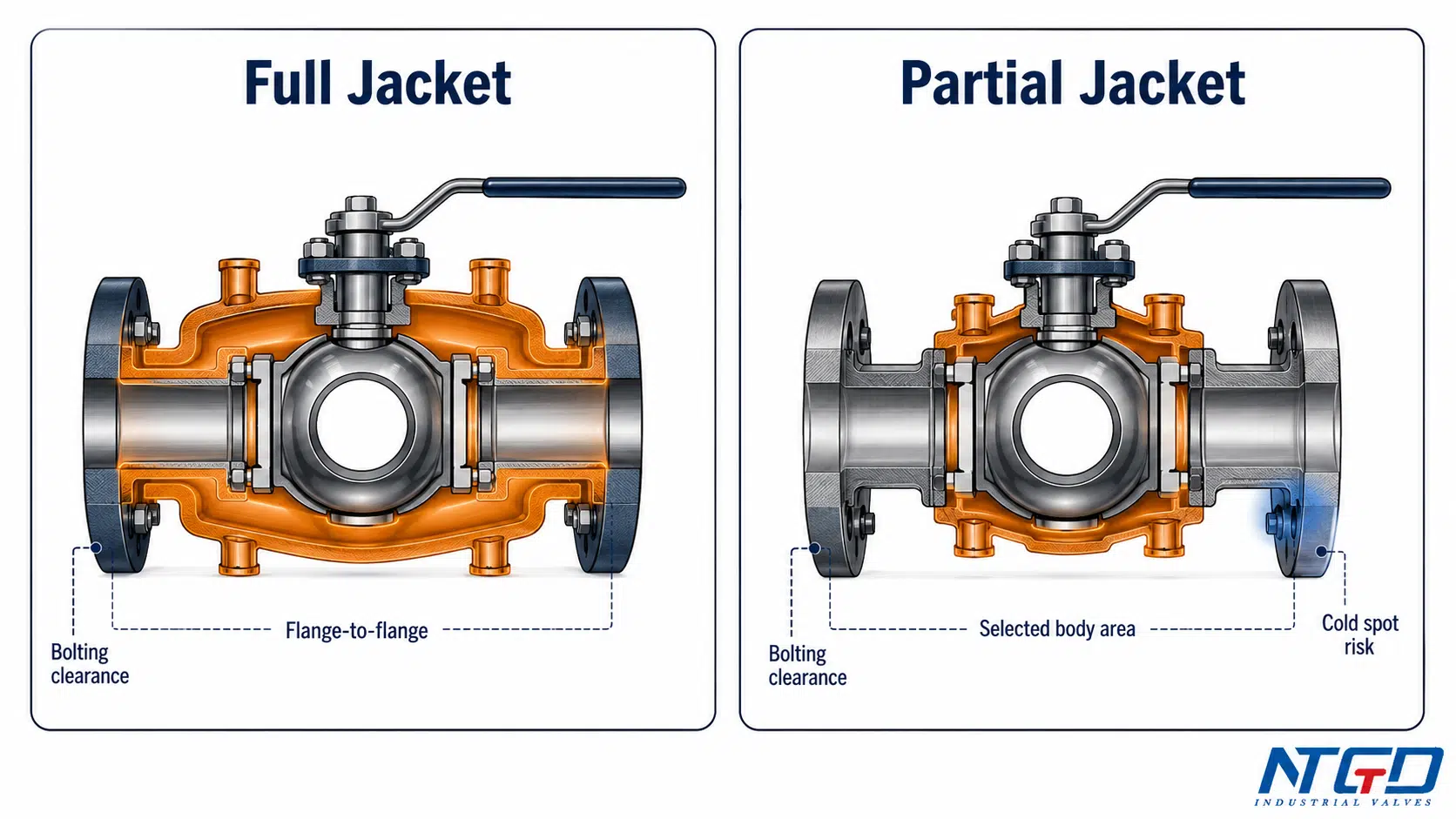
A full jacketed ball valve is not automatically better for every service. Full jacket coverage should be selected when insufficient coverage could create unacceptable solidification, restart torque, leakage, or shutdown risk. Partial jacket coverage may be sufficient when the medium remains flowable and only moderate heat-loss reduction is required.
Steam, Hot Oil, Hot Water and Cooling Jacket Media
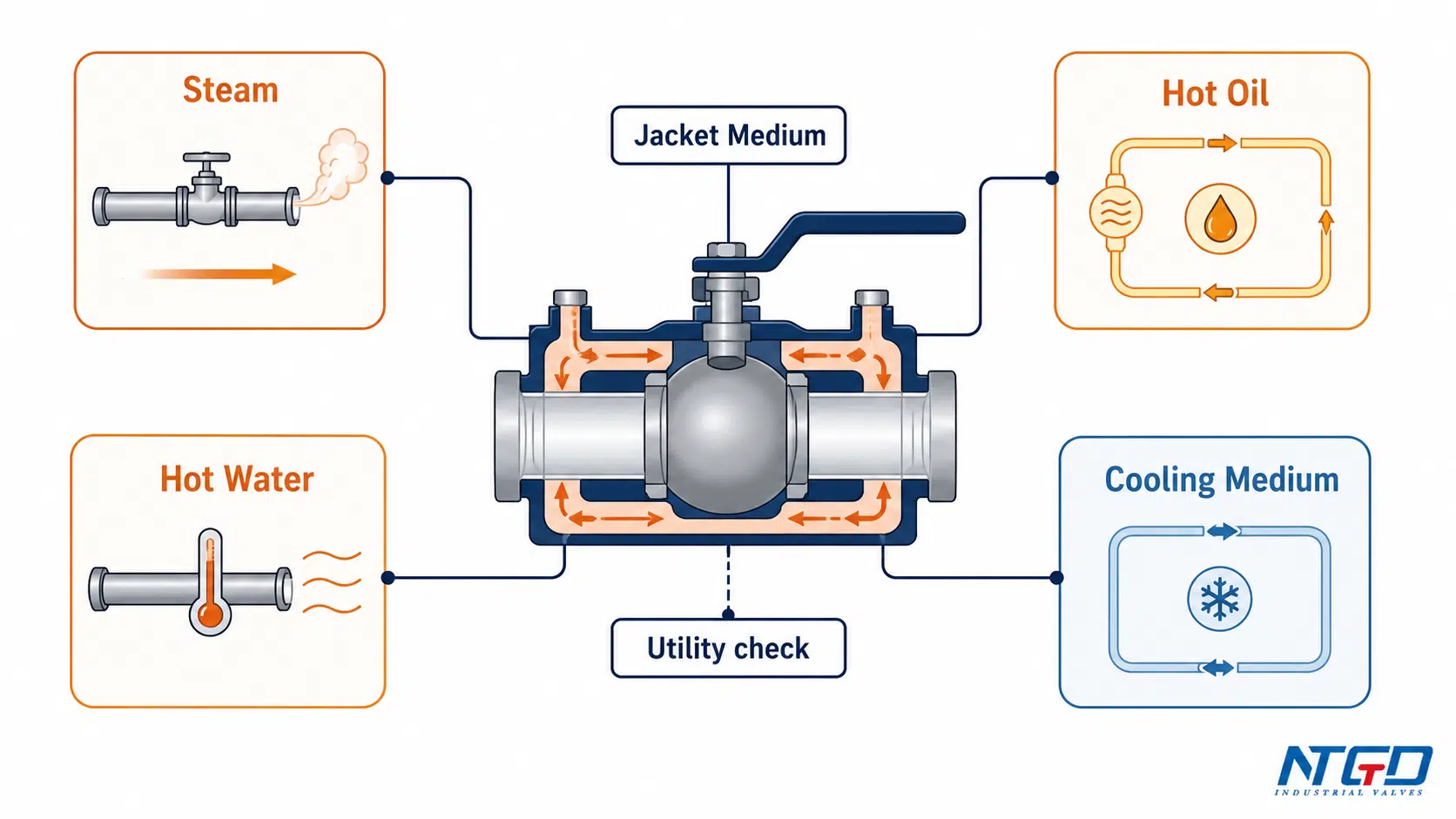
A steam jacketed ball valve is a common form of jacketed ball valve, but steam is not the only possible thermal medium. Depending on the process, the jacket may use steam, hot oil, hot water, cooling water, or another thermal fluid.
In some projects, buyers may describe this as a heating jacket ball valve, but the RFQ should still define the actual jacket medium and jacket-side condition.
Steam is usually practical when the plant already has a stable steam utility. Hot oil may be preferred where more stable or higher-temperature heating is needed and the plant has a thermal oil system. Hot water is usually limited to moderate heating duties.
What is a steam jacketed ball valve?
A steam jacketed ball valve uses steam in the jacket side to provide heat around the valve body. It is often considered for fluids that must remain hot enough to avoid thickening, crystallizing, or solidifying.
Steam jacketed service is common in many industrial processes, but the project must define the actual steam condition. The jacket side should not be treated as an unspecified accessory.
When hot oil or hot water may be used instead of steam
Hot oil may be selected when the process requires stable heating conditions, when steam is not suitable for the operating environment, or when the plant already uses thermal fluid systems.
The correct medium depends on the required holding temperature, heat transfer requirement, process safety, plant utility availability, and material compatibility.
Cooling medium for temperature-sensitive service
Not every jacket is used for heating. Some jacketed ball valves may use cooling water or another cooling medium when the process fluid must be kept below a defined temperature.
In this case, the jacket design should be reviewed for cooling performance, port position, drainage, and the temperature difference between the process side and jacket side.
Jacket ports, end connections and drain points
The jacket side needs its own inlet and outlet connections. The port arrangement should support circulation, venting, drainage, and maintenance. Poor jacket-side layout can reduce heat transfer or leave areas with uneven temperature control.
| Jacket medium | Main purpose | Suitable service cue | RFQ note |
|---|---|---|---|
| Steam | Heating and viscosity control | asphalt, bitumen, sulfur, resin, wax | confirm available steam utility, steam condition, jacket connection, and drainage requirement |
| Hot oil | Stable heating for temperature-sensitive or higher-temperature service | resin, polymer, chemical media, heat-transfer oil systems | confirm thermal oil system availability, oil type, operating temperature, and compatibility |
| Hot water | Moderate heating | syrup, oils, wax, lower-temperature viscous fluids | confirm holding temperature, available hot-water utility, and heat-loss risk |
| Cooling water / cooling medium | Cooling or temperature holding | temperature-sensitive media | confirm cooling range, jacket material, connection layout, and process temperature limit |
A steam jacketed ball valve should therefore be specified as part of a complete thermal system, not only as a valve body with a jacket.
Main Components and Selection Impact
The main ball valve components of a jacketed ball valve are similar to a standard ball valve, but the selection impact changes because the valve must handle both process conditions and jacket-side thermal conditions.
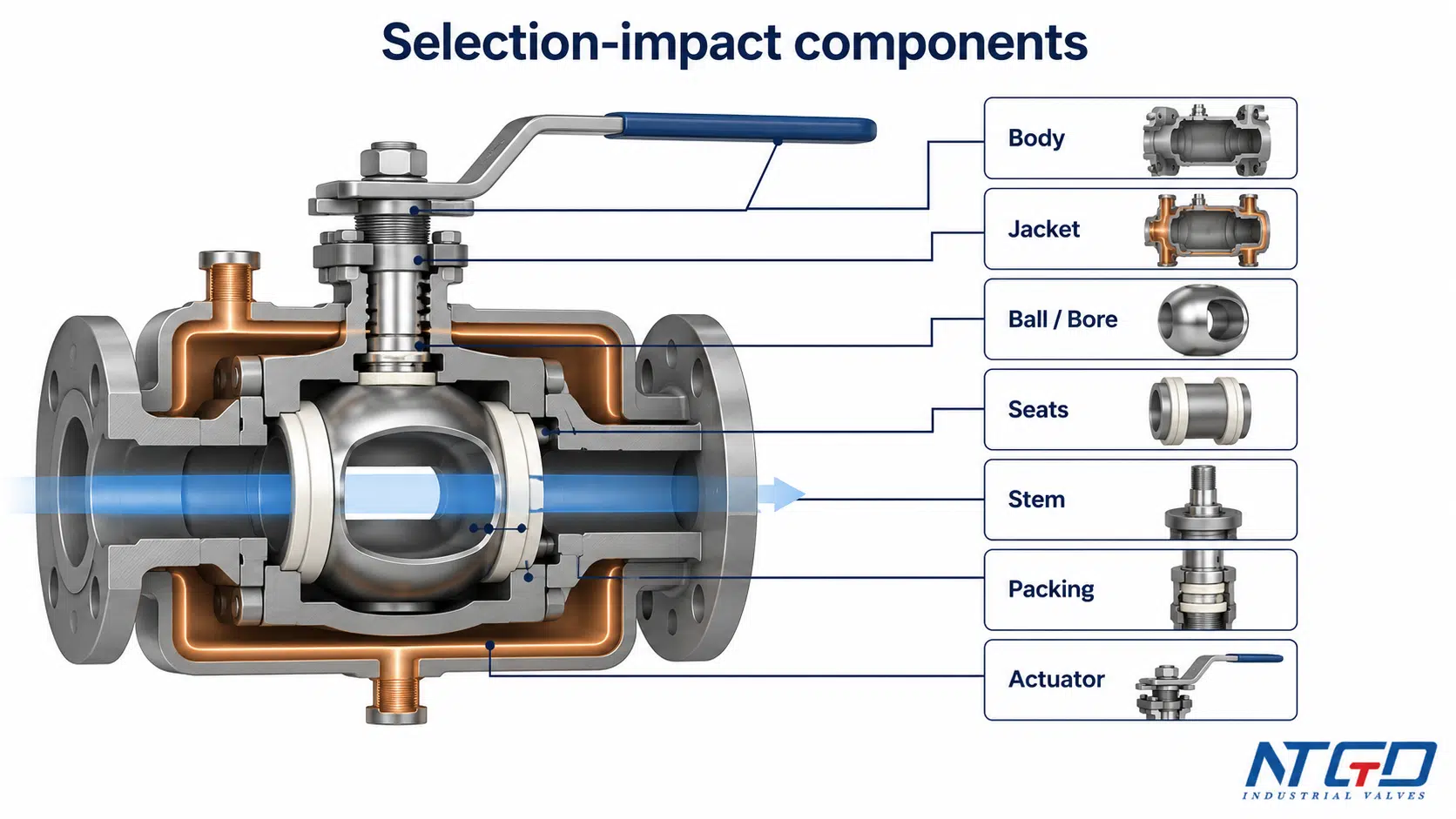
Valve body and jacket
The valve body houses the internal ball, seats, stem, and sealing areas. It also forms the pressure boundary for the process side. In jacketed construction, the body is modified or fabricated with an external jacket for heating or cooling media.
The body material, jacket material, weld quality, flange design, and jacket ports should all be checked against the process fluid and jacket medium. Jacket fabrication, jacket port layout, jacket-side pressure and temperature, and inspection requirements should be reviewed together with the body pressure boundary instead of being treated as a secondary accessory.
Ball, bore and seats
The ball controls process flow. The bore may be full bore or reduced bore depending on flow requirements, pressure drop concerns, cleaning behavior, and project specification.
Seats support the ball and help provide shut-off. In jacketed service, seat material must be reviewed against both process temperature and media behavior. Continuous heating, temperature cycling, crystallizing media, and cleaning requirements can all affect seat selection.
If the process fluid crystallizes near the seat area, the valve may become difficult to operate or may develop seat leakage.
Stem, packing gland and stem seal
The stem transfers torque from the handle, gear operator, or actuator to the ball. The stem sealing area is important because repeated operation, temperature cycling, media behavior, and pressure conditions can affect packing performance.
The ball valve packing gland should remain accessible for inspection and adjustment according to the manufacturer’s design and project maintenance practice. Ball valve packing, gland packing, and stem packing should be selected with temperature, pressure, media compatibility, and operation frequency in mind.
In viscous or crystallizing service, packing selection is not only a maintenance issue. It affects long-term leakage risk, operating reliability, and whether the valve can be serviced without excessive downtime.
Actuator, handle or pneumatic operation
Jacketed ball valves may be manually operated or automated with pneumatic, electric, or other actuators. For viscous service, actuator sizing should consider actual operating torque under service conditions, not only clean-water or room-temperature assumptions.
A pneumatic jacketed ball valve may be suitable for automated isolation service, but torque, cycling frequency, fail position, utility air, and control requirements should be confirmed before selection.
Trim and material considerations
Trim refers to internal wetted parts such as the ball, seats, seals, and related sealing surfaces. In some services, lining or special materials may be required. A lined jacketed ball valve should be reviewed carefully because lining material, temperature, chemical compatibility, and mechanical strength must work together.
| Component | What to check | Why it matters |
|---|---|---|
| Body | material, pressure class, end connection, jacket compatibility | forms the process pressure boundary and must be reviewed with jacket fabrication and inspection requirements |
| Jacket | coverage, medium, ports, connection, drainage | controls heating or cooling around the valve body and affects thermal stability |
| Ball / bore | full bore or reduced bore, surface condition, cleaning behavior | affects flow, torque, cleaning behavior, and deposit risk |
| Seats | material, temperature range, media compatibility | affects shut-off, seat leakage risk, and resistance to thermal or crystallizing service |
| Stem | torque transfer and sealing path | affects operation, automation sizing, and external leakage risk |
| Packing gland | packing type, gland access, temperature exposure, operation frequency | affects packing selection, ball valve gland leakage risk, and long-term maintenance reliability |
| Actuator / handle | manual, gear, pneumatic, electric | affects operating torque, automation fit, and response during viscous service |
| Trim / lining | material and chemical compatibility | affects special service suitability, especially for corrosive or lined jacketed ball valve applications |
Types and Configurations of Jacketed Ball Valves
Jacketed ball valves can be supplied in different body constructions and configurations. Body construction is mainly a trade-off among cost, maintenance access, cleaning requirement, pressure boundary, and how severely the medium deposits or crystallizes inside the valve.
One-piece jacketed ball valve
A one-piece jacketed ball valve uses a compact body construction. It may be suitable where a simple structure is preferred and where the service does not require frequent disassembly.
However, maintenance access is more limited than with multi-piece designs. If the process fluid can leave deposits or solids, cleaning and repair access should be considered before choosing this configuration.
Two-piece jacketed ball valve
A two-piece jacketed ball valve has a body arrangement that allows more service access than a one-piece design. It may be used in general industrial applications where cleaning or inspection may be required but full in-line maintenance is not the main priority.
The buyer should still confirm how the jacket is fabricated and whether the valve must be removed from the line for repair or cleaning.
Three-piece jacketed ball valve
A three-piece ball valve design can provide better access to internal parts such as the ball, seats, and stem sealing area; in jacketed service, the jacket piping still needs to be reviewed.
This structure is usually more complex and should be reviewed against cost, space, pressure class, and maintenance expectations. For jacketed three-piece designs, maintenance access may still be affected by jacket inlet and outlet piping, so space and utility connections should be reviewed before selection.
Three-way jacketed ball valve
A jacketed 3-way ball valve has three ports and may be used for mixing or diverting service.
This design should not be assumed as the default choice for all viscous fluids. The flow path, cleaning behavior, jacket coverage, and operation logic need confirmation.
Full bore, reduced bore, lined or automated options
Other configuration choices may include full bore or reduced bore, lined construction, manual or pneumatic ball valve operation, and special seat or packing materials.
These options should be reviewed as part of the service condition, not as isolated catalog choices.
| Configuration | Selection relevance | Do not overstate |
|---|---|---|
| One-piece | compact body and simpler construction | not ideal for all maintenance-heavy services |
| Two-piece | common industrial arrangement | jacket fabrication and sealing still need review |
| Three-piece | better access for cleaning or parts replacement | higher complexity and jacket piping layout must be checked |
| Three-way | mixing or diverting flow | not default for all viscous media |
| Lined | corrosive or special media support | lining must match temperature and media |
| Pneumatic | automated operation | torque under heated or viscous service must be confirmed |
Applications by Media Condition
Jacketed ball valves should be selected by media condition, not by industry name alone. The key question is whether the process fluid changes behavior when temperature changes near the valve body.
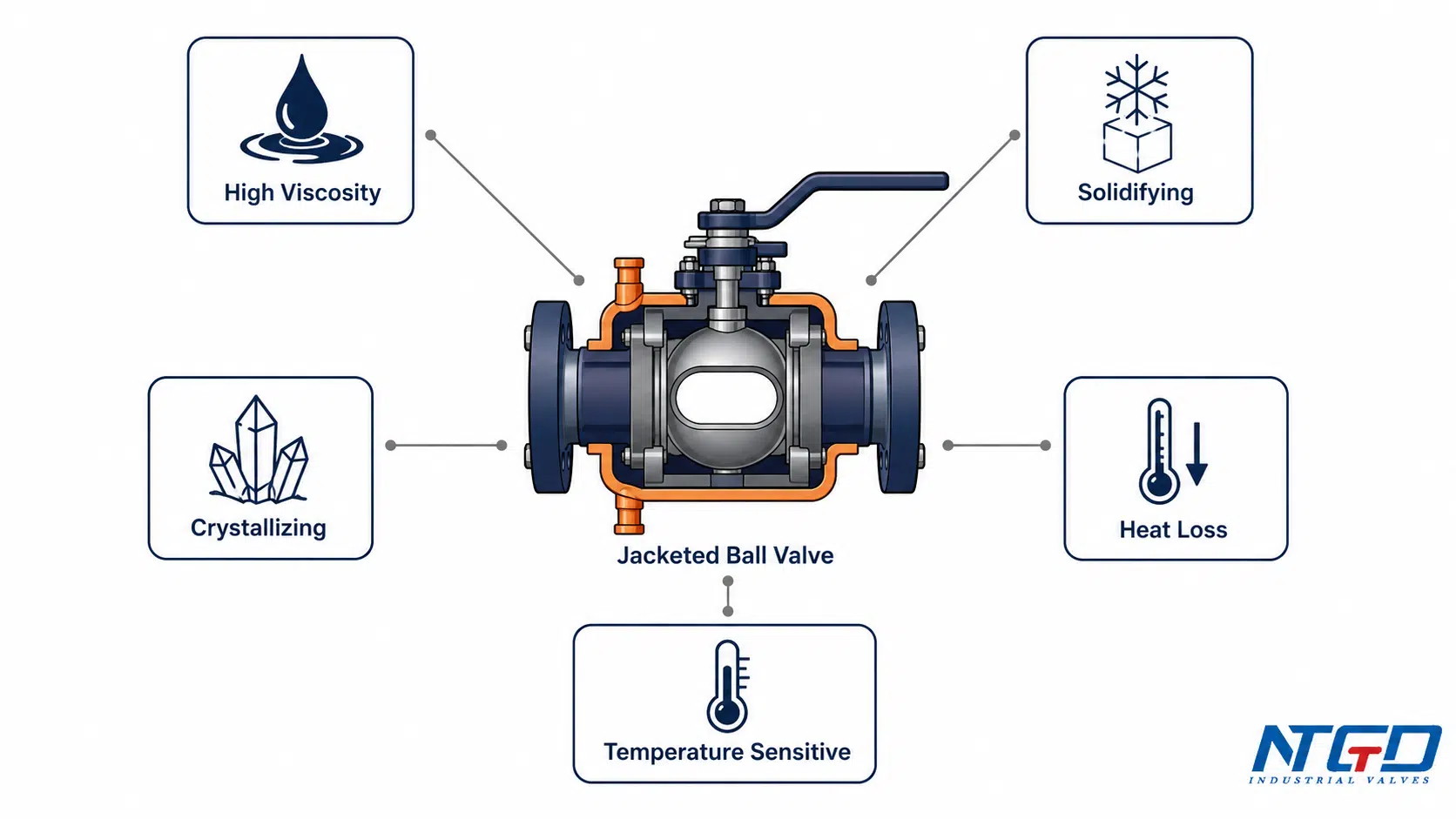
High-viscosity media
High-viscosity media can increase operating torque and may not flow smoothly through a standard valve if temperature drops. Jacketed ball valves may be used to help keep the medium flowable near the body and seat area.
Examples include bitumen, asphalt, resin, heavy oil, viscous syrup, soap, and similar fluids.
Crystallizing or solidifying media
Some fluids may crystallize, solidify, or form deposits when the temperature falls below the required process condition. In these services, a jacketed ball valve may reduce the risk of blockage and difficult operation.
Examples include molten sulfur, wax, coal tar, selected chemical solutions, polymers, and temperature-sensitive compounds.
Heat-loss sensitive media
In some transfer systems, heat loss at the valve body can create a local process problem even when the pipeline remains mostly stable. This is especially relevant in intermittent operation, loading and unloading, or batch processing.
A jacketed ball valve may help maintain continuity of operation, but the jacket coverage and thermal medium must be selected correctly.
Industry examples are secondary to media behavior
Food, chemical, petrochemical, polymer, asphalt, and sulfur services may all use jacketed ball valves, but the industry label is not the main selection basis. A food application may need cleaning and material control, while a chemical application may need corrosion resistance and compatible seats. The more useful question is whether the medium thickens, crystallizes, solidifies, sticks, or loses flowability at the valve.
If the medium remains flowable under normal ambient and operating conditions, a standard ball valve may already be sufficient and the additional jacket cost may not be necessary.
| Media condition | Example media | Why a jacketed ball valve may be considered | Key RFQ data |
|---|---|---|---|
| High viscosity | bitumen, asphalt, heavy oil | helps reduce hardening near the seat area and lowers restart torque risk after cooling | process temperature, viscosity, jacket medium |
| Solidifying | sulfur, wax, coal tar | helps reduce local solidification, blockage, and difficult restart | holding temperature, heat-loss risk |
| Crystallizing | chemical solutions, polymers | helps reduce crystallization, sticking, and deposit formation near the ball and seats | crystallization point, flushing need |
| Food or syrup service | syrup, oils, viscous liquids | helps maintain flow consistency, especially when cooling changes viscosity | cleaning requirement, seat material, process temperature |
| Corrosive plus temperature | selected chemicals, resin, polymer media | requires body, seat, packing, and lining review because heat can change sealing and compatibility risk | material compatibility, process and jacket conditions |
A jacketed ball valve may be suitable only when the process function is still on-off isolation. If the application requires accurate throttling, a different valve type or control valve solution may need review.
Selection Limits, Troubleshooting and Leakage Risks
A jacketed ball valve is not the correct answer for every difficult fluid. It adds thermal support around the body, but it cannot solve every problem caused by poor sizing, wrong material, incompatible seats, insufficient heating, or wrong valve type.
When a jacketed ball valve may not be the right choice
A jacketed ball valve may not be suitable when:
- the process requires precise throttling rather than on-off isolation;
- solids or slurry content may damage the ball and seats;
- the medium is corrosive and the body, trim, lining, or packing is not compatible;
- the jacket medium cannot maintain the required temperature;
- the system does not allow proper drainage, venting, or jacket connection layout;
- maintenance access is too limited for the expected service condition.
Jacketed ball valve not operating smoothly
Poor operation may be caused by viscous media, crystallization, seat deposits, corrosion, high torque, actuator undersizing, or insufficient heating. If the valve becomes difficult to operate, the first step is to review the process condition, jacket medium, actual temperature, and torque requirement.
Cleaning or parts replacement may be necessary in some cases, but the root cause should be checked before simply replacing the valve.
Packing gland or outside leakage
Outside leakage can occur around the stem packing, gland area, body joints, or gasketed areas. In high-temperature or frequent-operation services, the ball valve packing gland becomes an important inspection point.
Packing material, gland access, stem surface condition, operating temperature, pressure, and operation frequency should be reviewed. If gland packing performance decreases repeatedly, the issue may be related to service condition, pressure cycling, temperature cycling, or unsuitable packing material.
Early specification of packing material, gland access, operating frequency, and service temperature helps reduce repeated external leakage risk. It also helps the supplier review whether the selected packing arrangement is suitable for the actual jacketed service.
Seat leakage
Seat leakage may be caused by seat wear, thermal damage, corrosion, crystallized media, hard particles, or damaged sealing surfaces. If the seat material is not suitable for the process temperature or chemistry, leakage can appear even when the valve is otherwise correctly installed.
For media that may solidify or crystallize, seat area cleanliness and temperature stability are critical.
Jacket leakage or poor heat transfer
Jacket leakage is different from process-side leakage. It may occur at jacket welds, jacket connections, threaded ports, flanges, or drain / vent points. Poor heat transfer may also occur when jacket circulation is weak, ports are poorly arranged, or the jacket medium does not meet the process requirement.
Jacket pressure, temperature, testing, and connection details should be defined clearly in the specification.
High torque, clogging and crystallization problems
High torque often indicates that the ball, seats, or cavity area is affected by media behavior. If the fluid thickens, crystallizes, or leaves deposits, the valve may not open or close smoothly. In automated systems, this can overload the actuator or prevent full travel.
| Problem | Likely cause | What to check before RFQ |
|---|---|---|
| High torque or poor operation | media too viscous, insufficient heating, wrong actuator | confirm viscosity at operating temperature and whether the medium cools or solidifies during shutdown, no-flow periods, or restart |
| Outside leakage | packing gland, stem seal, gasket or body joint issue | packing material, gland access, operating temperature, pressure cycling, and operation frequency |
| Seat leakage | seat damage, wrong seat material, crystallized media | media behavior, temperature, seat material, cleaning need, and solidification risk near the seat area |
| Jacket leakage | jacket weld or connection issue | jacket pressure, jacket test requirement, port connection, drain / vent arrangement |
| Clogging or crystallization | poor temperature control | holding temperature, heating medium, drain / flush plan, and no-flow cooling risk |
| Uneven heating | partial jacket mismatch or poor port layout | jacket coverage, port location, circulation path, and thermal medium availability |
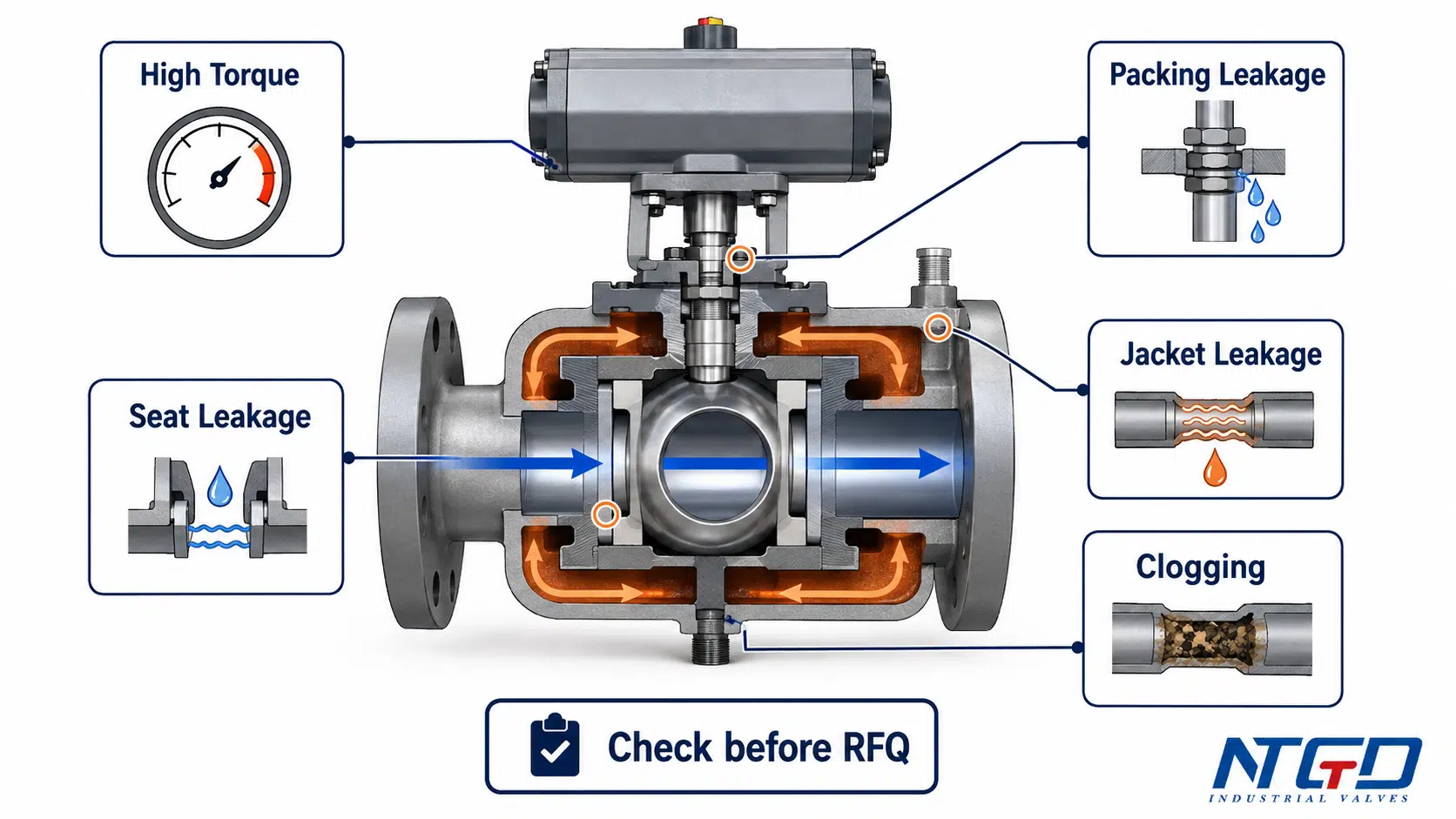
Troubleshooting should therefore be connected to selection. Most troubleshooting risks should be converted into RFQ questions before the valve is built.
RFQ Checklist and Final Fit Check
A jacketed ball valve RFQ should provide more than size and pressure class; like any industrial valve selection review, it should start with real service conditions.
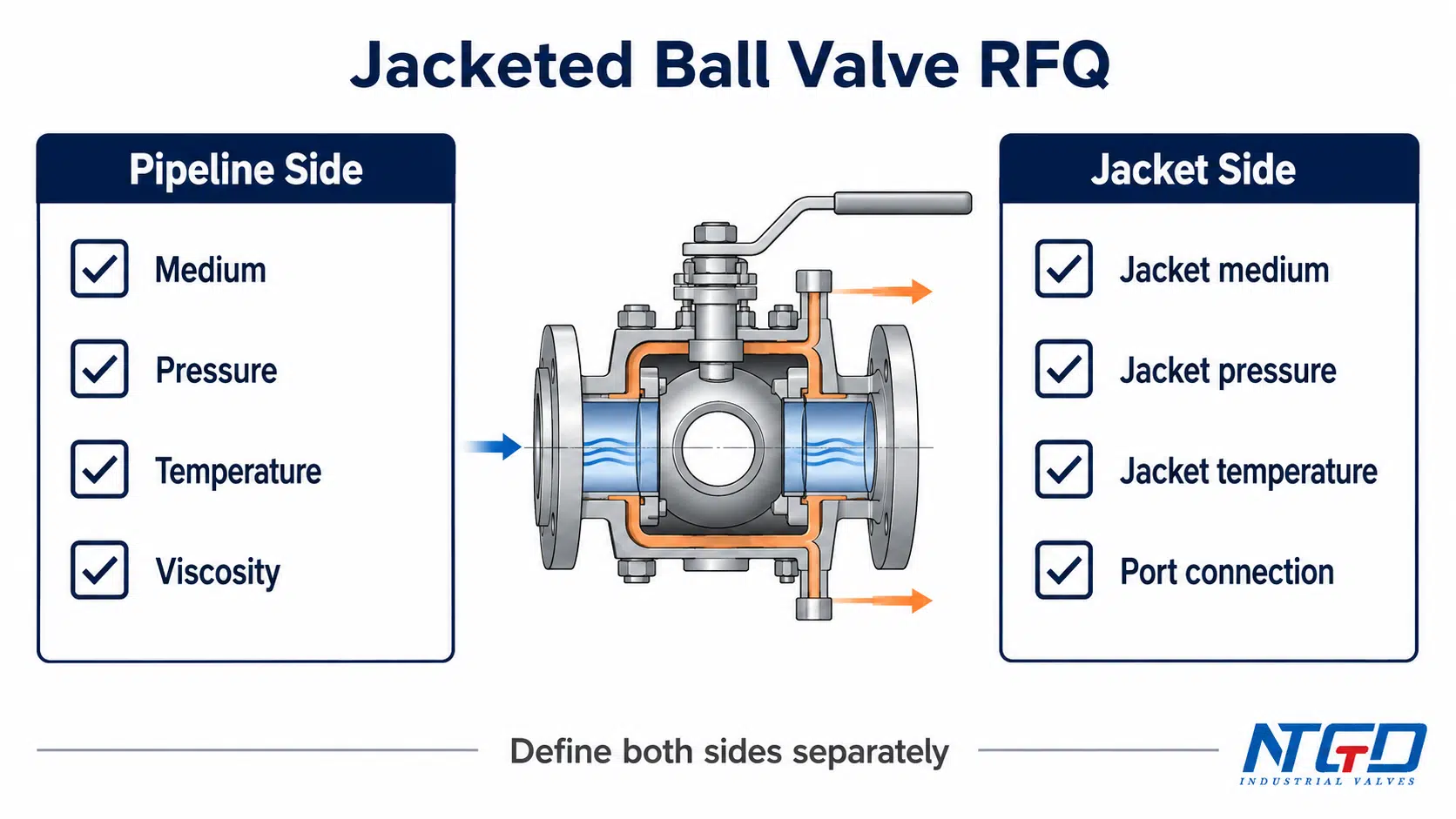
Pipeline side data to provide
For the process side, provide the medium name, viscosity behavior, crystallization or solidification point if relevant, operating pressure, operating temperature, flow condition, line size, end connection, and required material.
If the medium contains solids, polymerizes, crystallizes, or leaves deposits, this should be stated clearly.
Jacket side data to provide
For the jacket side, provide the thermal medium, such as steam, hot oil, hot water, cooling water, or another fluid. Also provide jacket-side pressure, temperature, connection type, port preference, drainage requirement, and whether full or partial jacket coverage is required.
Valve construction and operation data
The RFQ should also define valve body material, ball and seat material, packing requirement, full bore or reduced bore preference, manual or automated operation, and any pressure test or documentation requirements required by the project.
| RFQ area | Data to provide |
|---|---|
| Pipeline side | medium, viscosity, solidification or crystallization point, pressure, temperature, flow condition |
| Jacket side | steam, hot oil, hot water, cooling medium, pressure, temperature, connection type |
| Valve body | size, pressure class, material, end connection |
| Jacket design | full or partial coverage, jacket ports, drain or vent needs |
| Sealing | seat material, packing, gland access, leakage requirement |
| Operation | manual, gear, pneumatic, electric, fail position if automated |
| Testing / documentation | pressure test, leakage test, material certificate, inspection requirement if specified |
Final fit-check before selecting a jacketed ball valve
| Question | Why it matters |
|---|---|
| Does the medium become viscous, crystallize, or solidify when temperature drops? | Confirms whether a thermal jacket is needed |
| Is the valve mainly for on-off isolation? | Confirms whether ball valve construction fits the service |
| Is full jacket coverage required, or is partial coverage enough? | Controls heat transfer coverage, cost, flange layout, and cold-spot risk |
| Which jacket medium will be used? | Determines jacket connection, utility compatibility, heating or cooling stability, and material review |
| Are pipeline side and jacket side pressures defined separately? | Prevents specification mismatch between the process side and jacket side |
| Are seat and packing materials compatible with temperature and media? | Reduces seat leakage, packing gland leakage, and premature seal damage under temperature cycling |
| Is operation manual, gear, pneumatic, or electric? | Controls torque, actuator sizing, fail position, and automation selection |
| Is a broader jacketed valve type actually needed instead? | Prevents wrong valve family selection |
FAQ
What is a jacketed ball valve?
A jacketed ball valve is a ball valve with an outer jacket around the valve body. The jacket allows a heating or cooling medium to circulate around the valve body so viscous, crystallizing, solidifying, or temperature-sensitive process fluids can remain easier to handle.
What is the difference between a jacketed valve and a jacketed ball valve?
A jacketed valve is a broad category of valves with a heating or cooling jacket. A jacketed ball valve is a specific type based on ball valve construction. It is mainly used for quarter-turn on-off isolation, while other jacketed valve types may serve throttling, non-return, or other flow functions.
What is a full jacketed ball valve?
A full jacketed ball valve has broader jacket coverage around the valve body, often described as flange-to-flange coverage. It is usually considered when the medium has a high solidification, crystallization, or restart torque risk and when local cold spots around the body, seat area, or flange neck could affect operation.
When should I choose a full jacketed ball valve instead of a partial jacket?
A full jacketed ball valve is usually more suitable when insufficient jacket coverage could cause solidification, high restart torque, seat damage, or leakage risk. A partial jacket may be enough when the medium remains flowable and only moderate temperature support is required. The decision should compare heat-loss risk, media behavior, piping space, jacket medium, and cost.
Is a steam jacketed ball valve only used with steam?
No. “Steam jacketed ball valve” usually means the valve is designed for steam heating, but jacketed ball valves may also use hot oil, hot water, cooling water, or another thermal medium depending on the process requirement and available plant utilities.
Does the jacket-side pressure need to match the pipeline pressure?
Not necessarily. The process side and jacket side are separate systems and should be specified separately. The RFQ should define pipeline pressure and temperature as well as jacket-side pressure, temperature, medium, and connection type so the valve can be reviewed correctly.
What information is needed to quote a jacketed ball valve?
A complete RFQ should include process medium, viscosity behavior, pressure, temperature, line size, end connection, material, required jacket coverage, jacket medium, jacket-side pressure and temperature, jacket port connection, seat material, packing requirement, operation method, and any testing or documentation requirement.
Why does packing or gland leakage matter in jacketed ball valves?
The stem and packing gland area is exposed to operating stress, temperature effects, pressure cycling, and repeated valve movement. If the packing material or gland arrangement is not suitable for the service, outside leakage may occur. Temperature cycling, high operating torque, crystallizing media, and frequent operation make ball valve packing gland details important during selection.
Can a jacketed ball valve be used for throttling?
A jacketed ball valve is mainly selected for on-off isolation. Some special ball valve designs may handle limited control duties, but accurate throttling usually requires a different valve type or a specially engineered solution; the globe valve vs ball valve selection route is a useful boundary check. The service function should be confirmed before using a jacketed ball valve for throttling.
When should I not use a jacketed ball valve?
A jacketed ball valve may not be the best choice if the service requires precise throttling, if abrasive solids may damage the ball and seats, if the thermal medium cannot maintain the process temperature, or if another jacketed valve type is better suited to the flow function.
Conclusion
A jacketed ball valve is selected when ordinary ball valve construction needs thermal support for viscous, crystallizing, solidifying, or temperature-sensitive media. A practical selection path is:
- confirm whether the medium actually needs temperature control near the valve body;
- decide whether full jacket or partial jacket coverage is required;
- define the jacket medium and jacket-side data separately from the pipeline side;
- check seat material, packing gland arrangement, actuation method, and maintenance access.
A reliable specification should separate pipeline-side data from jacket-side data and identify any project-required valve standard, such as ASME B16.34, only when that requirement applies. This helps avoid common problems such as high torque, seat leakage, packing gland leakage, poor heat transfer, jacket leakage, and clogging caused by incomplete service information.
To avoid high torque, seat leakage, packing gland leakage, poor heat transfer, or clogging caused by incomplete service data, provide both process-side and jacket-side conditions before selection. For a jacketed ball valve application, prepare the process medium, operating temperature, viscosity behavior, required jacket medium, jacket coverage, material, seat, packing, and operation method. NTGD Valve can review these service details and help confirm whether a full jacketed, partial jacketed, steam jacketed, or automated configuration is suitable for the project.
