
Author Name: Bruce Zheng
Author Role: Co-Founder and Valve Engineer at NTGD Valve
Author Bio: Bruce Zheng is Co-Founder and Valve Engineer at NTGD Valve, focusing on industrial valve selection, application, and technical content for global B2B buyers.
Last Updated: April 30, 2026
Selection of Industrial Valves: Definitive Guide
Selecting an industrial valve is not only a matter of choosing between a gate valve, globe valve, ball valve, butterfly valve, or check valve. In an industrial piping system, wrong valve selection can lead to leakage, unstable flow control, premature seat wear, excessive operating torque, maintenance shutdowns, or unsafe operation. A practical industrial valve selection guide must start with service conditions before moving to valve type or product specification.
A practical valve selection guide should answer four questions before any product is specified:
- What is the valve function? Isolation, throttling, backflow prevention, pressure relief, diverting, draining, and venting require different valve designs. If the function is misread, the selected valve may operate, but it may not control, isolate, or protect the system correctly.
- What is the service condition? Medium, pressure, temperature, flow rate, viscosity, corrosion, solids, toxicity, and flammability decide the real valve selection criteria.
- Which valve type fits the duty? Gate, globe, ball, plug, butterfly, check, diaphragm, control, safety, trap, and other special-purpose valves solve different problems.
- Which construction details must be confirmed? Body material, trim, seat, seal, packing, connection, actuation, pressure class, inspection, and installation requirements determine whether the valve can survive the real operating condition.
This guide organizes industrial valve selection around those decisions, so engineers and buyers can move from service conditions to a clear valve specification instead of relying on a generic valve type name.
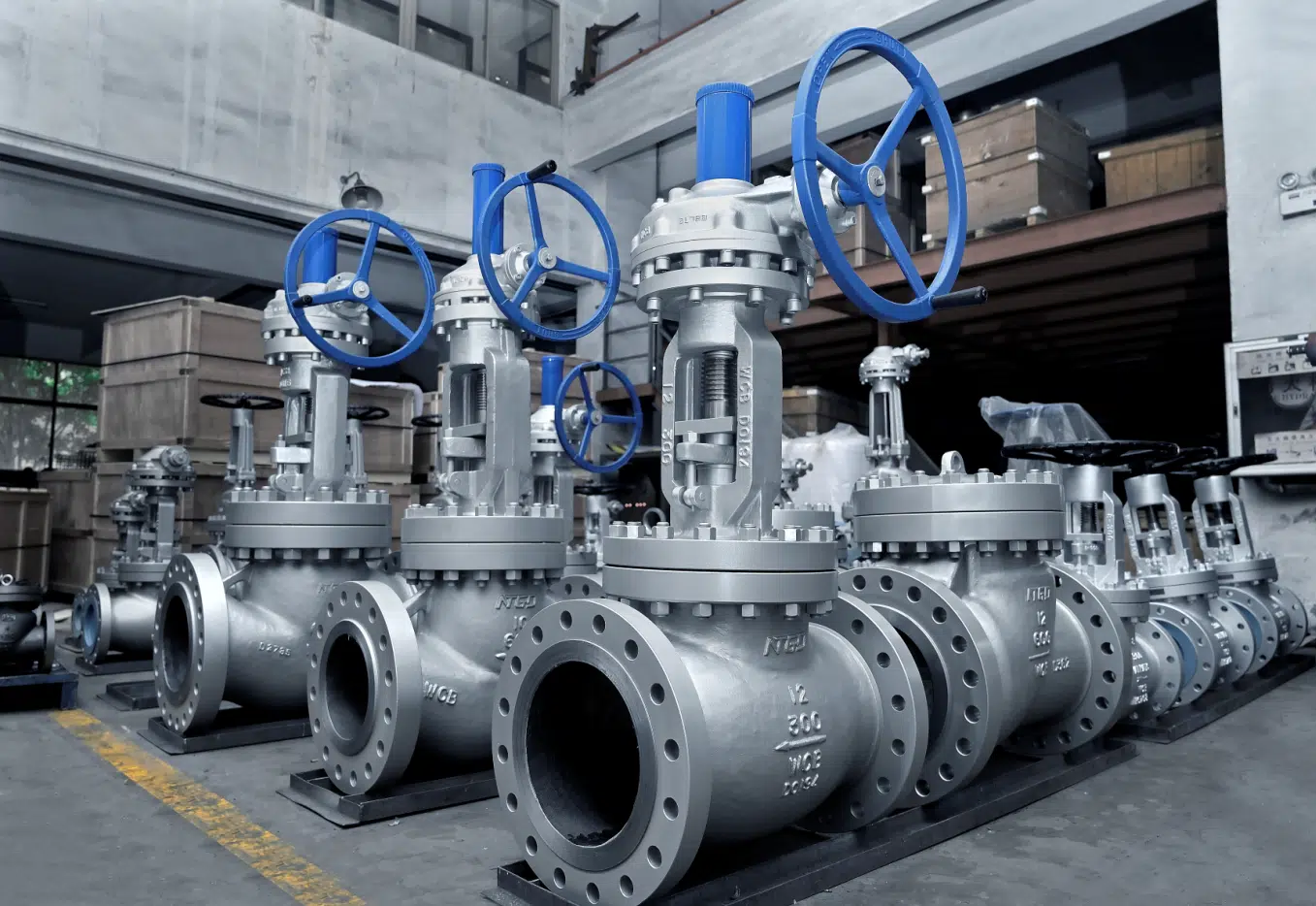
How to Select Industrial Valves for a Piping System
The most common mistake in valve selection is starting with the valve name instead of the working conditions. A gate valve, globe valve, ball valve, butterfly valve, plug valve, check valve, and diaphragm valve can all be “industrial valves,” but they do not solve the same problem.
A valve used for clean water isolation does not face the same risk as a valve used for abrasive slurry, high-temperature steam, corrosive chemical service, toxic gas, or frequent throttling. The same nominal size and pressure class can also behave differently if the medium contains solids, if the valve cycles frequently, or if the sealing material is not compatible with the fluid.
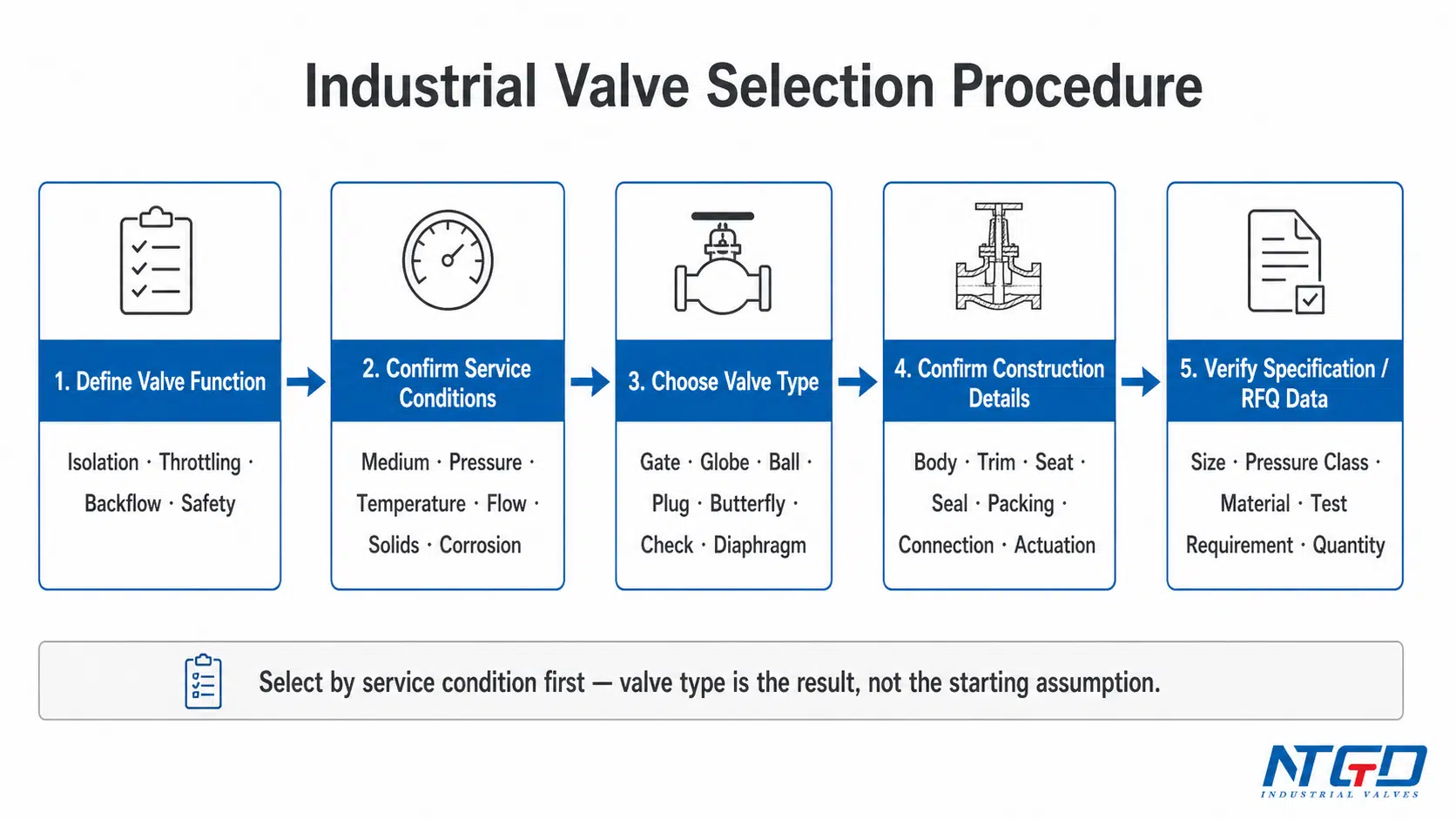
A reliable selection path is:
- Define the required function
Decide whether the valve is for on/off isolation, flow regulation, backflow prevention, pressure protection, diversion, sampling, venting, or draining. - Confirm the service conditions
Identify the medium, operating pressure, temperature range, flow rate, pressure drop, corrosion risk, viscosity, solid content, toxicity, and fire or explosion risk. - Choose the valve type
Match the function and service condition to a suitable valve family, such as gate, globe, ball, plug, butterfly, check, diaphragm, safety, pressure reducing, or steam trap valve. - Confirm construction details
Check body material, trim material, seat and seal route, stem design, packing, end connection, face-to-face length, actuation mode, and installation direction. - Verify the specification before purchase
Confirm size, pressure class, material grade, temperature range, connection standard, leakage requirement, inspection requirement, actuation method, and RFQ data.
The purpose of valve selection is not to find a universally “best” valve. The purpose is to prevent a mismatch between the valve design and the real pipeline duty. Even a valve with the correct nominal size and pressure class can fail early if the medium, cycling frequency, seat material, packing route, or actuator torque is not matched to the actual service.
Step-by-Step Industrial Valve Selection Procedure
A useful valve selection procedure should convert process information into a valve specification. The following sequence keeps the decision practical and avoids jumping too early to a catalog item.
1. Confirm the Valve Function and Operating Purpose
Start with the job the valve must perform.
| Valve Function | Main Selection Question | Typical Valve Direction |
|---|---|---|
| Isolation / shutoff | Does the valve need to fully open or fully close with low pressure loss? | Gate valve, ball valve, plug valve, butterfly valve |
| Flow control / throttling | Does the valve need to regulate flow or pressure? | Globe valve, control valve, throttling valve |
| Backflow prevention | Must the valve prevent reverse flow? | Check valve |
| Diverting or mixing | Does the flow need to change direction or split into more than one path? | Plug valve, ball valve, multi-port valve |
| Safety protection | Must excess pressure be released automatically? | Safety valve, relief valve |
| Condensate removal | Is the system handling steam condensate? | Steam trap |
| Venting or draining | Is the valve used to remove gas, liquid, or trapped medium? | Vent valve, drain valve |
The function decides the first selection boundary. For example, a gate valve may be suitable for isolation, but it is not normally selected for accurate flow control. A check valve may protect against backflow, but it cannot be used as an operator-controlled isolation valve.
Butterfly valves can serve general isolation duties in many systems, but tight shutoff, bidirectional sealing, higher differential pressure, high temperature, or abrasive service must be checked later through the seat, sealing, and valve type review.
2. Define the Medium, Pressure, Temperature, and Flow Conditions
The working medium changes the selection. Water, steam, oil, compressed air, gas, corrosive liquid, slurry, viscous fluid, powder, and toxic medium require different body materials, internal parts, sealing routes, and maintenance expectations.
Confirm at least:
- Fluid name and concentration, if chemical service is involved
- Normal and maximum working pressure
- Normal and maximum temperature
- Flow rate, pressure drop, and whether the valve must regulate flow
- Viscosity and whether the medium contains suspended solids
- Corrosion, erosion, crystallization, scaling, or sediment risk
- Toxic, flammable, explosive, or hazardous properties
- Required leakage level or shutoff tightness
A valve that performs well in clean water may fail quickly in abrasive slurry because the seat, sealing surface, and body cavity are exposed to wear. A valve that seals well at ambient temperature may not be suitable when the seat, packing, or gasket material is exposed to higher temperature.
3. Select the Valve Type and Construction Route
After the function and service conditions are known, select the valve type. This step is the core of a valve type selection guide: it matches the confirmed duty to a valve family with compatible flow path, sealing behavior, maintenance access, and wear resistance.
For example:
- Choose gate valves when low flow resistance and full-open/full-close isolation are more important than throttling. Review how a gate valve works before confirming the design, and avoid using gate valves for accurate flow regulation or frequent partial opening.
- Choose globe valves when regulation, throttling, or frequent adjustment is required and pressure loss is acceptable.
- Choose ball valves when quick shutoff, low torque, compact operation, and tight sealing are important; do not treat a standard full-port ball valve as a stable control valve unless the design is intended for that service.
- Choose plug valves when quick operation and wiping action are useful in viscous or solid-containing service; confirm torque, sleeve, lubrication, or sealing route before applying them in severe duty.
- Choose butterfly valves when large diameter, short face-to-face length, and compact installation are important; check seat limitations before using them for strict shutoff or demanding temperature service.
- Choose check valves when the system needs automatic backflow prevention; confirm flow direction, orientation, closing behavior, and water hammer risk.
- Choose diaphragm valves when corrosive, abrasive, or slurry service requires the medium to be isolated from certain internal metal parts; verify diaphragm material limits before final selection.
4. Confirm Material, Trim, Seat, Seal, Connection, and Actuation
Once the valve type is selected, the construction details must match the duty. A correct valve family with the wrong material, seat, trim, packing, or actuator can still fail.
Confirm:
- Body and bonnet material
- Disc, ball, gate, plug, or diaphragm material
- Stem and trim material
- Seat and seal material
- Packing and gasket material
- End connection: flanged, threaded, welded, clamp, ferrule, or other type
- Operation mode: manual, gear, electric, pneumatic, hydraulic, or solenoid
- Installation space, maintenance access, valve height, and operating clearance
A material upgrade does not automatically make the whole valve reliable. The body, trim, seat, packing, gasket, and actuator must be reviewed as one assembly. High differential pressure, tight shutoff, low operating torque, frequent cycling, and automated fail-position requirements can pull the selection in different directions.
Actuation should not be treated as a final accessory. Large valves, high differential pressure, high cycling frequency, emergency shutoff duty, and automation requirements can change the torque demand and the required actuator type.
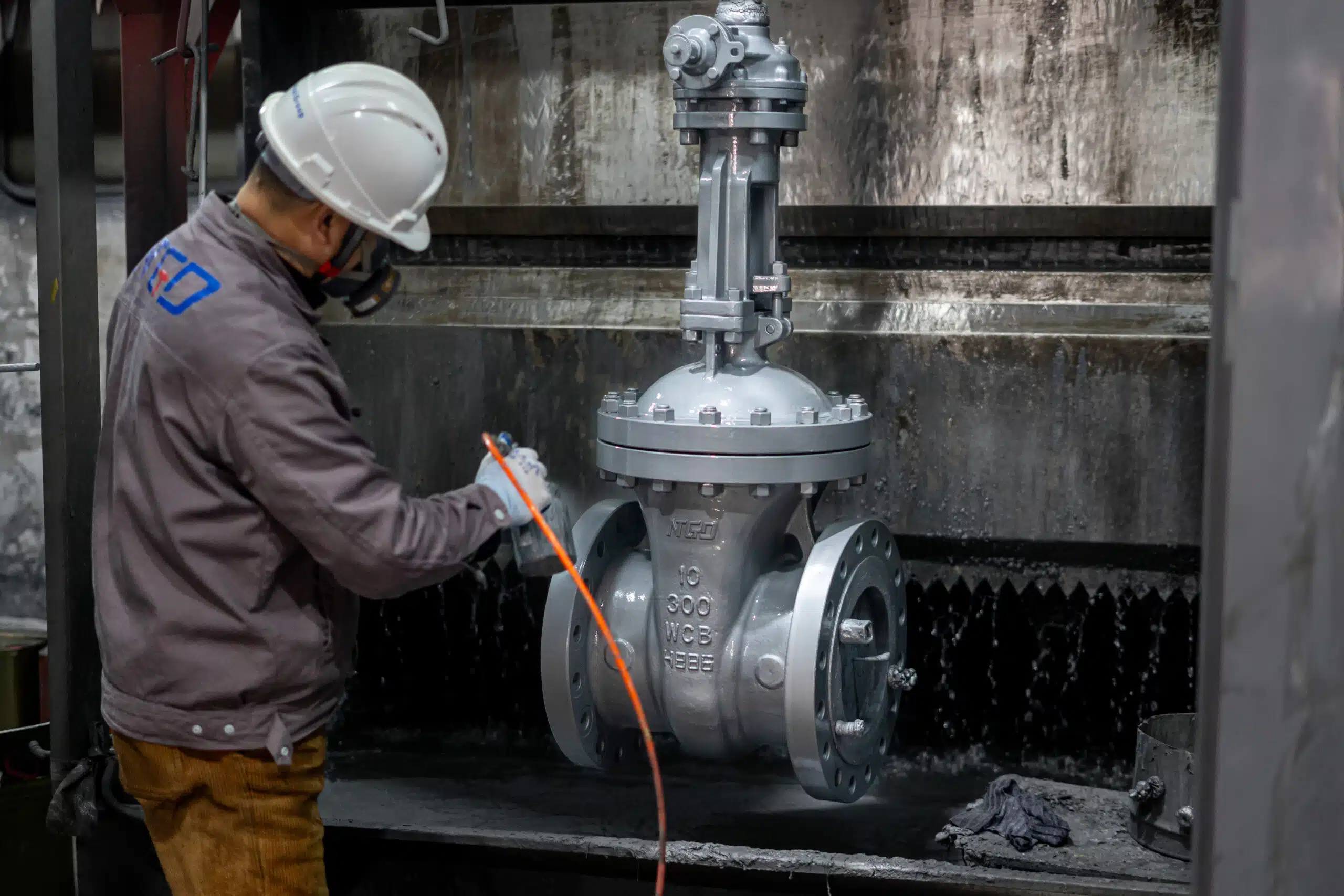
5. Check Standards, Inspection, Maintenance, and RFQ Data
Before final purchase, the selection must be converted into a specification that the supplier can quote and the end user can verify. This includes nominal size, pressure class, end connection, material, service medium, temperature range, operation mode, test requirements, and any special design requirements.
Do not rely on a product name alone. “Ball valve,” “gate valve,” or “globe valve” is not enough for procurement. The RFQ should define the service condition and construction route clearly enough that different suppliers can quote comparable valves.
Key Valve Selection Criteria and Parameters
Valve selection criteria should not be a loose checklist. Each parameter changes a specific selection decision.
| Selection Criterion | What to Confirm | Why It Matters | Typical Output |
|---|---|---|---|
| Valve function | Isolation, throttling, backflow prevention, diverting, safety, venting, draining | Determines the valve family, internal flow path, and whether the valve is expected to shut off, regulate, protect, or redirect flow | Gate, globe, ball, plug, butterfly, check, diaphragm, safety, trap |
| Medium | Water, steam, oil, gas, slurry, corrosive liquid, toxic medium, powder | Affects body material, trim, seat, seal, packing, corrosion resistance, and leakage risk | Material route and sealing route |
| Pressure | Normal pressure, maximum pressure, differential pressure | Affects pressure class, wall thickness, seat load, operating torque, and leakage risk | PN / Class / pressure rating confirmation |
| Temperature | Normal, maximum, minimum, thermal cycling | Affects body material, seat behavior, packing life, gasket compression, and bonnet design | Temperature-compatible construction |
| Flow rate | Required flow, pressure drop, velocity, control range | Affects size, Cv/Kv, pressure loss, cavitation risk, noise, and control stability | Size and flow path decision |
| Solid content | Suspended solids, slurry, granules, sediment | Affects seat wear, body cavity accumulation, jamming, cleaning access, and incomplete shutoff risk | Wiping / full-bore / slurry-suitable route |
| Viscosity | Thin liquid, high-viscosity liquid, resin, polymer, sludge | Affects pressure loss, operating torque, blockage risk, and whether a narrow or tortuous path becomes unacceptable | Full-port or special flow-path route |
| Corrosion | Acid, alkali, saltwater, chemical concentration | Affects body, trim, seat, seal, packing, gasket, and lining or coating selection | Corrosion-resistant material route |
| Leakage requirement | General shutoff, tight shutoff, hazardous medium | Affects seat type, stem sealing, packing design, testing requirement, maintenance access, and fugitive leakage control | Soft seat, metal seat, bellows seal, special packing |
| Connection | Flanged, threaded, welded, clamp, ferrule | Affects installation, maintenance, pressure boundary, pipe modification, and field replacement | End connection specification |
| Operation mode | Manual, gear, electric, pneumatic, hydraulic | Affects torque, automation, cycling duty, fail position, safety interlock, and operator access | Actuation route |
| Maintenance | Accessibility, spare parts, downtime tolerance | Affects bonnet type, packing adjustment, seat replacement, actuator access, and lifecycle cost | Maintenance-friendly construction |
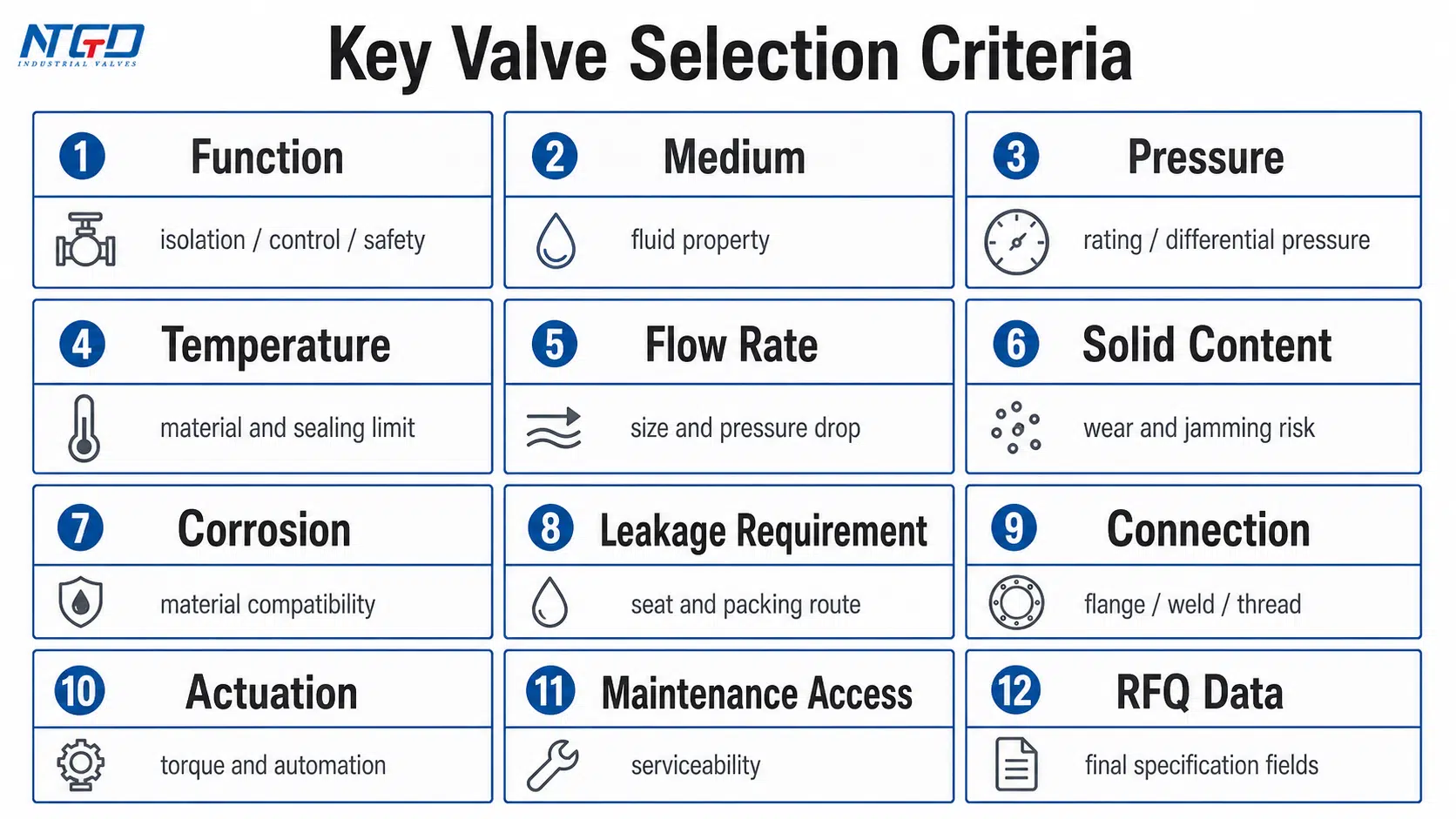
These industrial valve selection criteria follow a practical priority order. Function and medium compatibility are first-order filters. Pressure and temperature define the boundary. Flow, material, sealing route, connection, actuation, and maintenance access then convert the decision into a valve specification. Skipping that order is a common reason a valve with the correct name still fails in service.
Match Valve Type to Service Conditions
The following matrix gives a practical starting point for matching valve type to service conditions. Final selection still depends on pressure, temperature, material compatibility, size, shutoff requirement, and applicable project specifications.
| Service Condition / Function | Common Valve Direction | Avoid or Use Caution With | Engineering Reason |
|---|---|---|---|
| Full-open / full-close isolation | Gate valve, ball valve, plug valve; butterfly valve for suitable general isolation service | Globe valve if low pressure loss is critical; butterfly valve when tight shutoff or high differential pressure must be verified | Straight-through or full-bore designs reduce flow resistance. A poor isolation choice can increase pressure loss or fail to provide the required shutoff. |
| Frequent throttling or flow regulation | Globe valve, control valve | Gate valve, full-port ball valve for accurate control | Globe/control valve geometry supports more stable flow adjustment. Gate valves can suffer vibration and erosion during partial opening, while full-port ball valves may provide unstable throttling unless specifically designed for control. |
| Backflow prevention | Check valve | Manual isolation valves | Check valves close automatically under reverse flow. Manual valves depend on operator action and cannot reliably protect pumps or upstream equipment from sudden reverse flow. |
| Quick emergency shutoff | Ball valve, plug valve, butterfly valve | Slow multi-turn valves where rapid closure is required | Quarter-turn designs support fast operation. The actuator and torque route must still match differential pressure and emergency closure requirements. |
| Large-diameter water or air service | Butterfly valve, gate valve | Small-pattern valves with high pressure loss | Butterfly valves reduce size, weight, and face-to-face length, while gate valves provide low resistance. Seat material and pressure loss must still be checked. |
| High-viscosity medium | Ball valve, plug valve, selected gate valve | Narrow tortuous flow paths | Full-bore or wiping designs reduce blockage and pressure loss. Narrow passages increase torque, pressure drop, and the risk of stagnant material buildup. |
| Suspended solids or slurry | Plug valve, slurry-suitable ball valve, diaphragm valve, selected gate valve | Valves with pockets where solids settle or soft seats exposed to direct abrasion | For slurry shut-off selection, solids can damage seats, fill cavities, jam moving parts, or prevent complete shutoff; cavity control and sealing surface protection become key selection points. |
| Corrosive medium | Diaphragm valve, lined valve, corrosion-resistant ball/globe valve | Standard material route without compatibility check | Body, trim, seat, seal, packing, gasket, and diaphragm materials must match the fluid. Body material alone does not confirm corrosion suitability. |
| Steam service | Globe valve, gate valve, selected check valve, steam trap | Elastomer-limited designs unless rated for service | Temperature, condensate behavior, pressure drop, and packing route affect material and sealing selection. |
| Cryogenic or low-temperature service | Special low-temperature ball, gate, or globe valve | Standard bonnet and sealing construction | Low temperature affects material toughness, packing behavior, gasket sealing, and bonnet design. Standard construction may not maintain sealing reliability. |
| Diverting or distributing flow | Multi-port ball valve, plug valve | Single-flow-path valves unless arranged in system pairs | Multi-port designs can change flow direction more directly. Incorrect arrangement can create dead zones or require unnecessary valve combinations. |
| Toxic or hazardous medium | Bellows-sealed globe valve, special packing designs, tight-shutoff valves | Standard stem packing without leakage review | Fugitive leakage, stem sealing, gasket integrity, and maintenance access become critical. Seat leakage and external leakage must both be considered. |
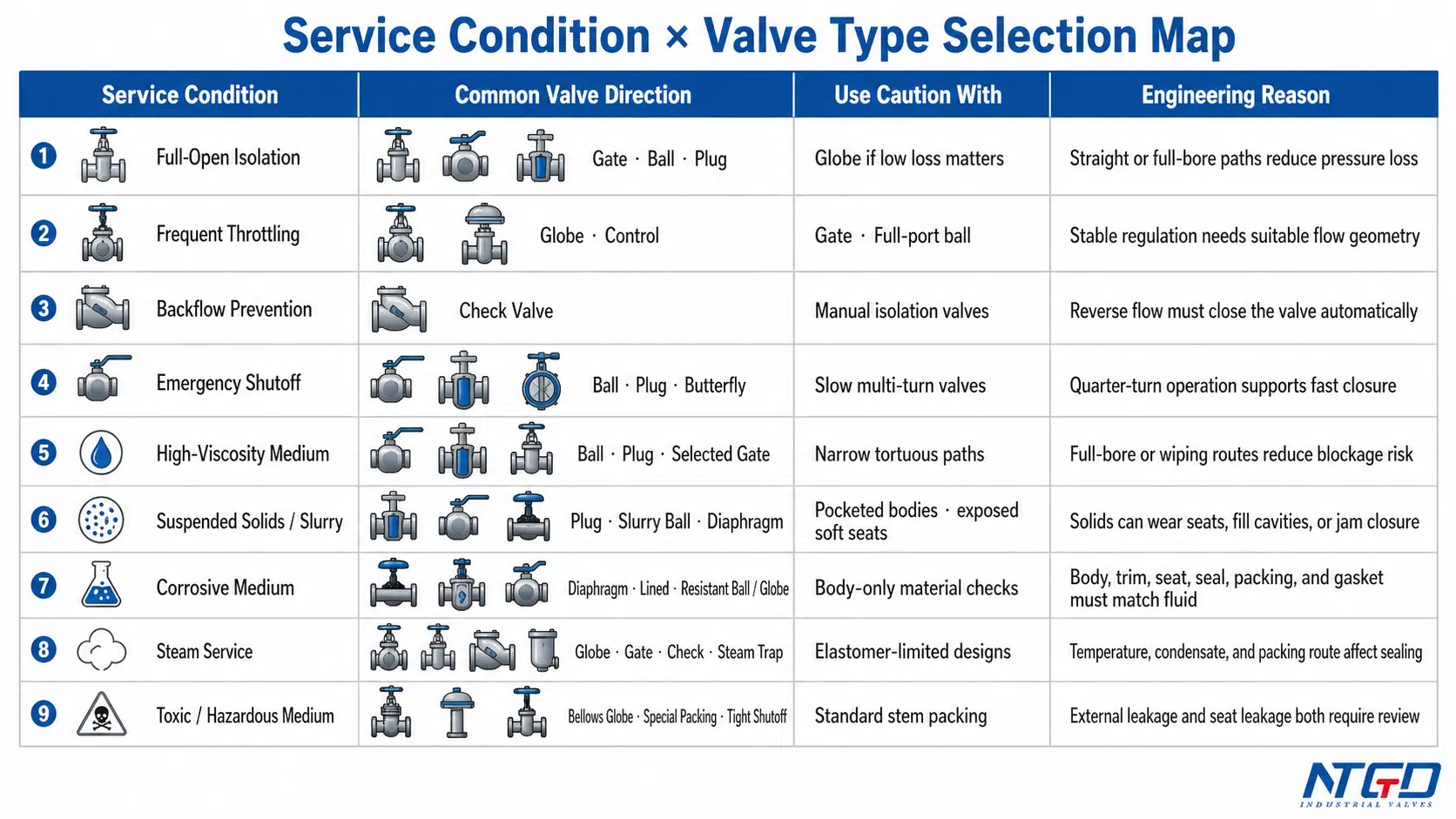
This table should be read as a selection map, not as a final specification. A valve type that fits the function can still be rejected if material compatibility, seat design, leakage performance, operating torque, or maintenance requirements do not match the actual duty.
Valve Parts That Affect Selection
Industrial valve parts are not only spare components. They directly affect pressure containment, shutoff performance, wear, leakage, maintenance, and service life. This is why the main valve parts should be reviewed during selection, especially for corrosive, abrasive, high-temperature, toxic, or frequently operated service.
| Valve Part | Selection Impact | What to Check |
|---|---|---|
| Body | Defines the main pressure boundary and first compatibility filter against the medium | Body material, pressure class, corrosion resistance, end connection |
| Bonnet / cover | Affects maintenance access, stem sealing route, gasket sealing, and temperature service | Bonnet type, bolting, gasket, maintenance access, temperature duty |
| Trim | Controls how internal metal parts resist corrosion, erosion, galling, and repeated contact with the flowing medium | Trim material, corrosion resistance, erosion resistance, hardness |
| Disc / gate / ball / plug / diaphragm | Determines the closure movement, flow path, shutoff behavior, pressure drop, and wear pattern | Closure geometry, shutoff behavior, pressure drop, wear exposure |
| Seat | Directly controls shutoff reliability and is often the first limit under heat, abrasion, or chemical attack | Soft seat vs metal seat, leakage requirement, temperature limit, wear risk |
| Stem | Transfers force to the closure element and affects alignment, corrosion exposure, and stem sealing reliability | Rising / non-rising design, strength, corrosion, alignment, backseat features |
| Packing / gland | Controls external leakage around the stem and affects adjustment frequency and fugitive leakage risk | Packing material, adjustability, fugitive leakage risk, temperature compatibility |
| Gasket | Protects body-bonnet and flange joint sealing under pressure, temperature, and bolt load | Material compatibility, temperature, pressure, bolt loading |
| Backseat | Provides an auxiliary sealing surface in some globe and gate valve designs and helps identify stem/bonnet sealing arrangements | Maintenance boundary, stem sealing support, structure identification |
| Actuator / handwheel / gear | Determines whether the valve can operate under required torque, cycling frequency, and automation conditions | Torque, cycling frequency, fail position, control signal, power supply |
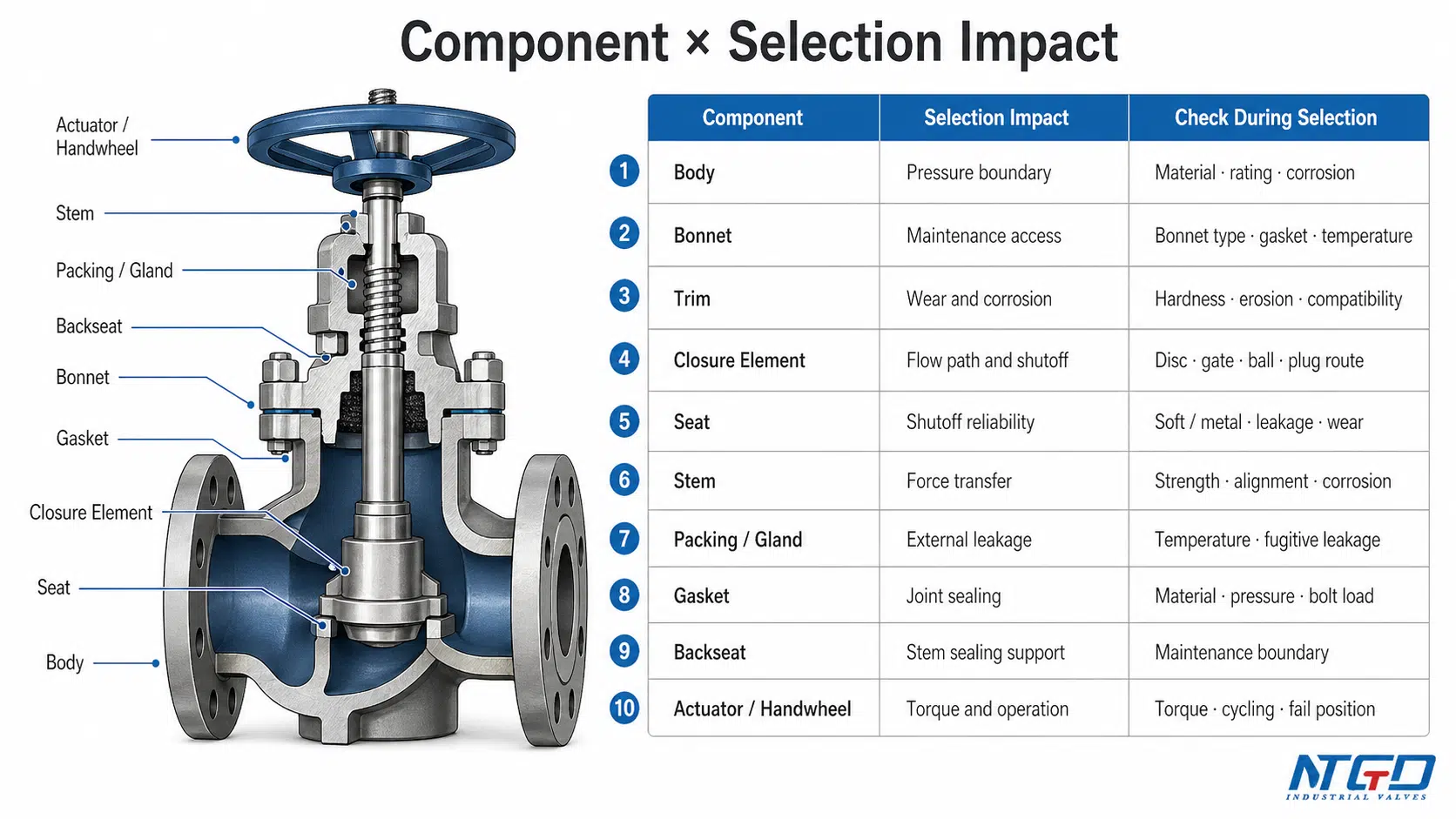
Why Parts Matter in Valve Selection
A valve body may be suitable for pressure containment, but the seat may not tolerate the service temperature. A trim material may resist corrosion, but the packing may not be suitable for toxic service. A large ball valve may have low flow resistance, but the seat load and operating torque may require a gear operator or actuator.
For globe valves, the globe valve seat, disc, stem, packing, gland, and backseat are especially relevant because the valve is often used for throttling, steam, small-line control, sampling, and instrument service. These globe valve parts affect leakage control, repeat adjustment, stem sealing, and maintenance access.
The globe valve backseat should be treated as a structural feature in the stem and bonnet sealing arrangement. It can support stem sealing and maintenance boundary planning, but it is not a substitute for correct packing, gasket selection, or leakage control review.
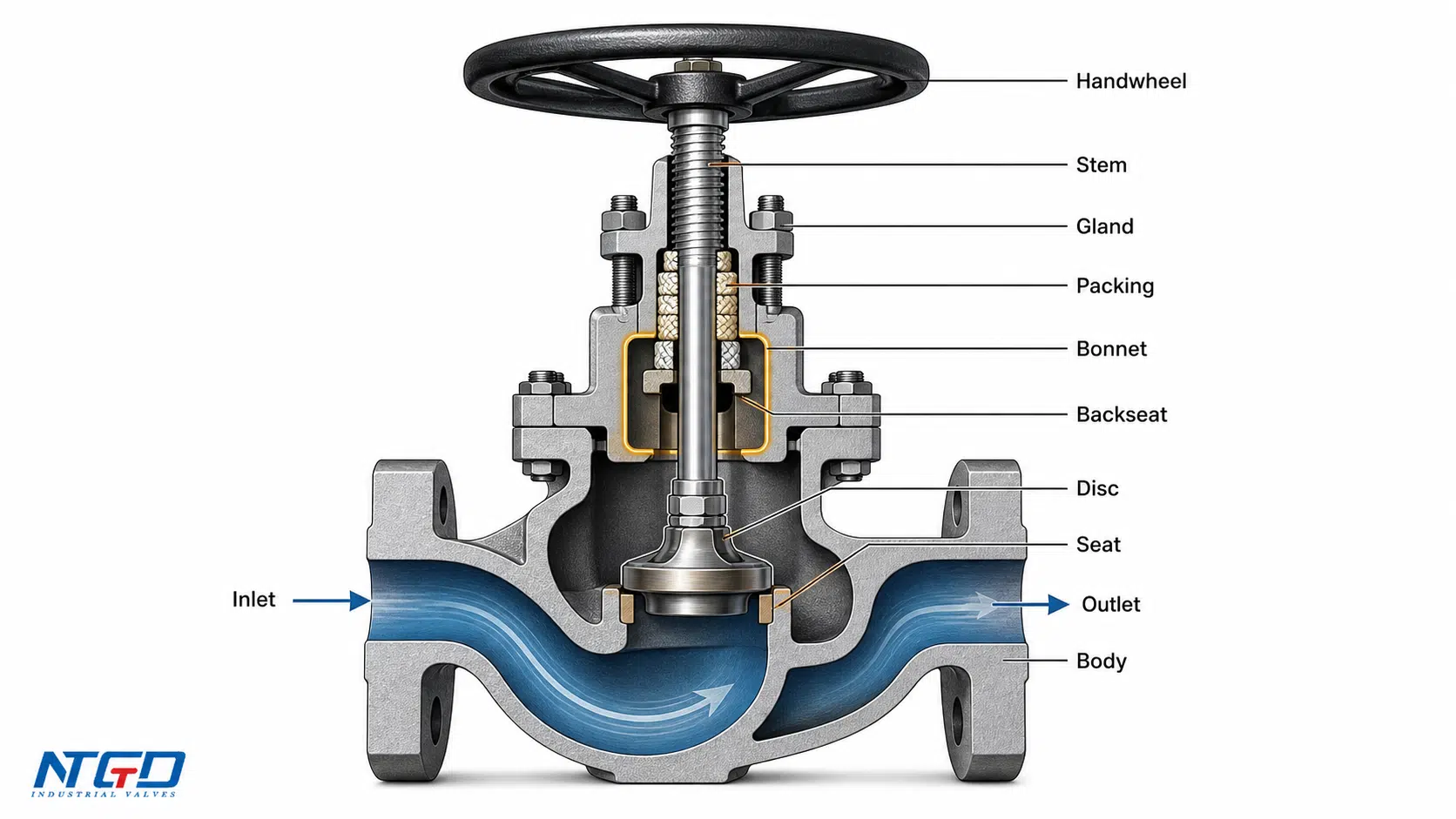
For gate valves, the gate, seat, stem, bonnet, and packing determine whether the valve can provide reliable isolation under pressure, temperature, and particle-containing conditions. For ball and plug valves, the closure element, seat, cavity, stem seal, and actuator influence quick shutoff, torque, and service reliability.
The practical rule is simple: do not specify only the valve body material. For demanding service, confirm the body, trim, seat, seal, packing, gasket, and actuator route as part of the same selection.
Pressure, Temperature, Material, and Sealing Boundaries
Pressure, temperature, material, and sealing design must be checked together. A valve can appear correct by size and pressure class, but still be unsuitable if the seat, packing, gasket, trim, or body material is not compatible with the real service.
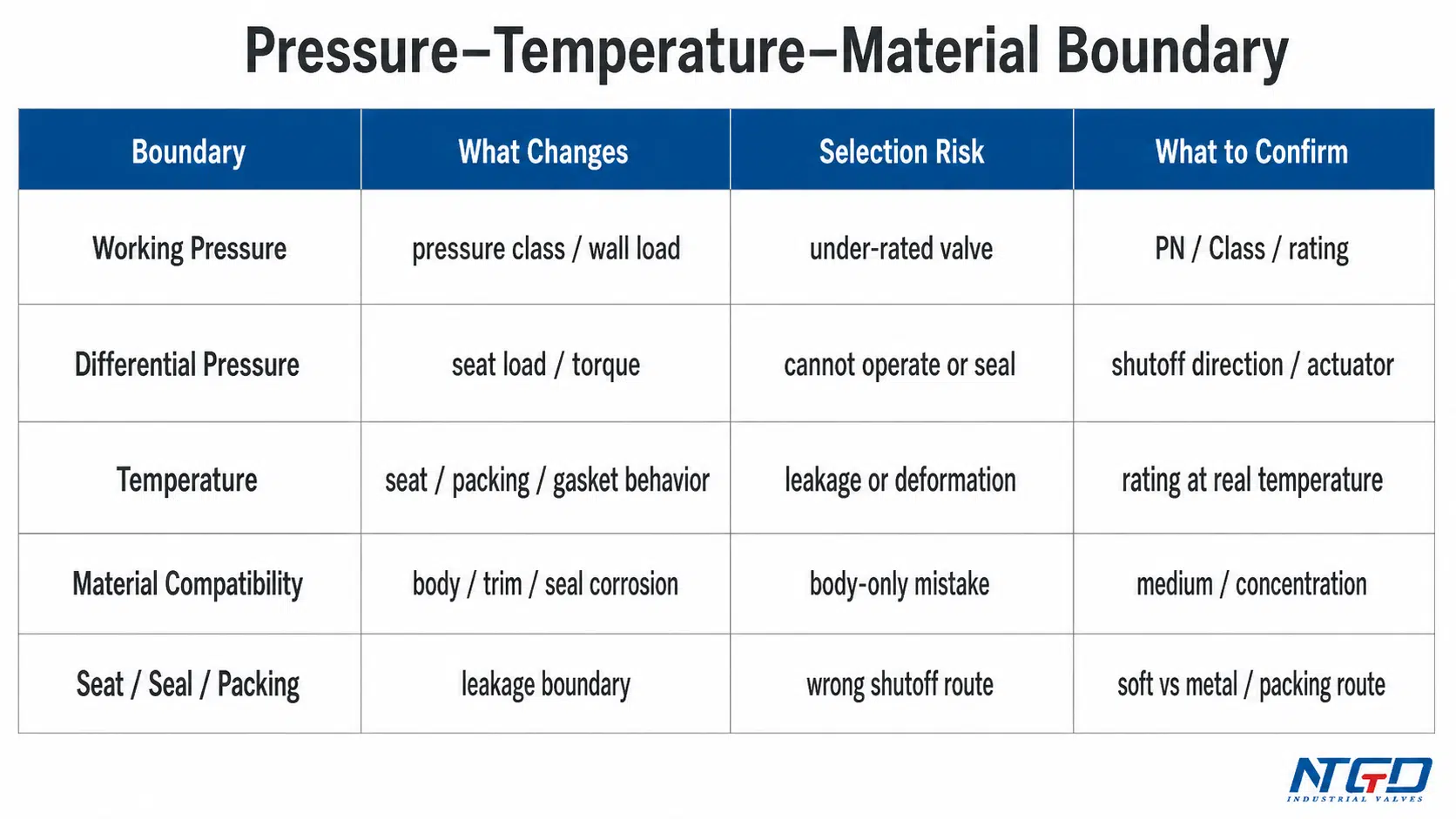
Working Pressure, Design Pressure, and Pressure Class
The valve pressure class must cover the operating pressure and expected differential pressure, but selection should not stop there. Differential pressure affects seat loading and operating torque. High pressure can make a valve harder to operate, especially in large ball valves, plug valves, and tight-shutoff applications.
For pressure selection, confirm:
- Normal working pressure
- Maximum pressure
- Differential pressure across the valve
- Pressure during startup, shutdown, and abnormal conditions
- Required shutoff direction, if applicable
- Applicable pressure-temperature rating for the selected material and standard
Temperature Effects on Materials and Sealing
Temperature affects more than the body. It can change the performance of seats, seals, packing, gaskets, coatings, and lubricants. High-temperature service may harden, soften, or deform unsuitable seat materials. It may also accelerate packing degradation, reduce gasket recovery, or require a different bonnet design. Low-temperature or cryogenic service may require special material toughness, extended bonnet design, or low-temperature-compatible sealing.
The original article classified valves by temperature ranges such as general service, high-temperature service, heat-resistant service, sub-zero service, and cryogenic service. In practical selection, those categories should not stand alone. They should be tied to material rating, seat and seal behavior, packing life, gasket sealing, and whether the valve body and trim remain suitable at the actual temperature.
Material Compatibility Is More Than Body Material
Material selection should be reviewed in layers:
| Material Layer | Why It Matters | Common Selection Risk |
|---|---|---|
| Body / bonnet | Pressure containment and contact with external and internal environment | Body material selected correctly, but trim or sealing materials ignored |
| Trim / closure element | Contact with flow, erosion, corrosion, and repeated seating | Trim wears faster than body in abrasive or corrosive service |
| Seat / seal | Controls shutoff and leakage performance | Soft seat damaged by heat, chemicals, or solids |
| Packing / gasket | Controls external leakage and joint sealing | Stem leakage or body-bonnet leakage occurs even when the main seat seals |
| Coating / lining / hard-facing | Protects selected surfaces under corrosion, abrasion, or severe service | Protection layer chosen without checking adhesion, wear, temperature, or repairability |
For corrosive media, the valve body may need stainless steel, alloy steel, lined construction, or special coating, but the internal parts must also be compatible. For abrasive media, surface hardness, seat exposure, and body cavity design may be more important than nominal material grade alone.
Leakage, Sealing Route, and Maintenance
The soft-seat vs metal-seat route can change shutoff, temperature, abrasion, torque, surface finishing, and inspection expectations.
Stem leakage is a separate issue from seat leakage. Packing design, gland adjustment, bellows sealing, gasket selection, and maintenance access should be reviewed before the valve is purchased.
For hazardous, toxic, flammable, or high-temperature media, leakage around the stem or body-bonnet joint can be as important as leakage through the main seat.
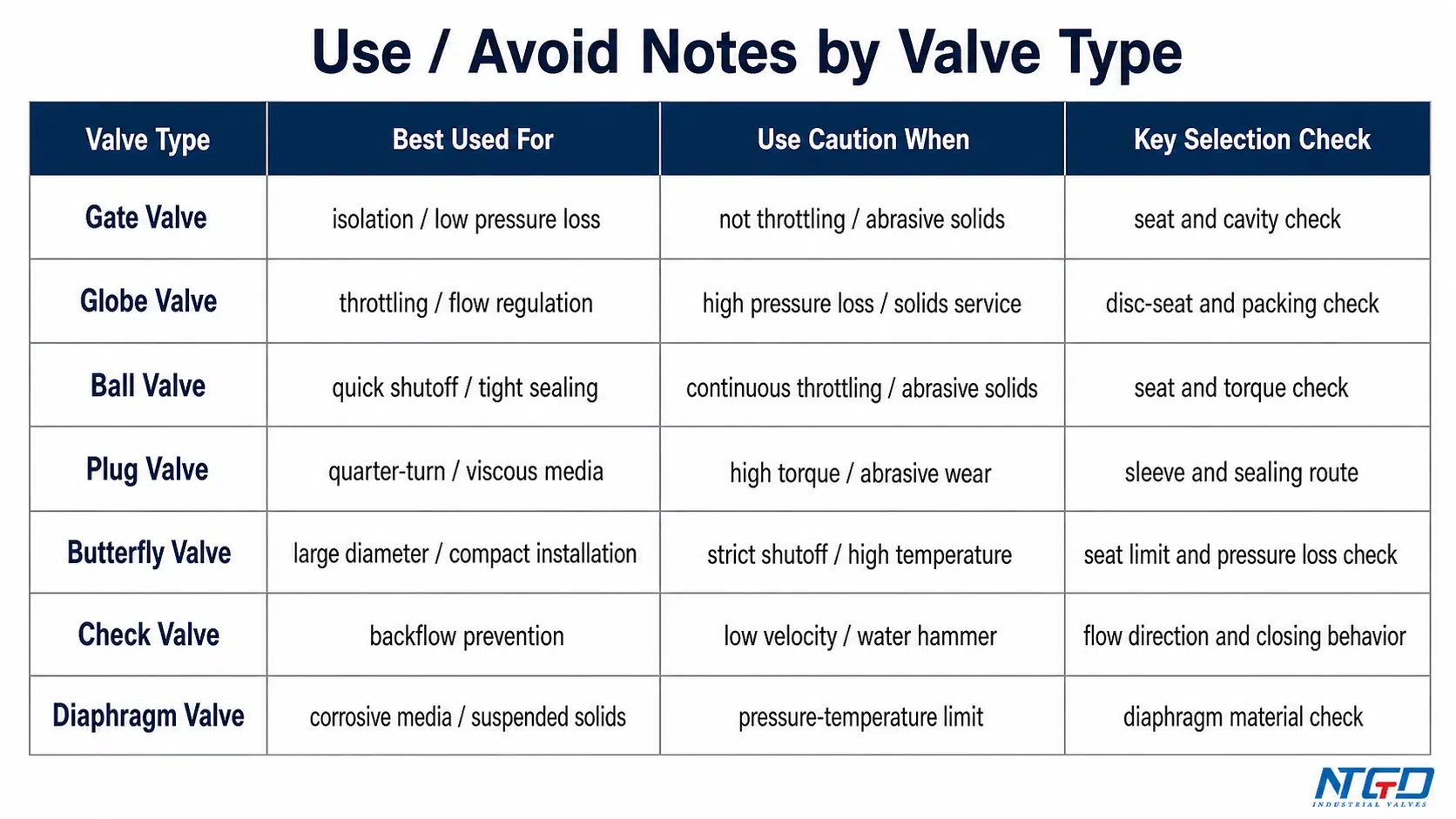
Use and Avoid Notes by Valve Type
The following notes convert the older “instructions for valve selection” into use and avoid boundaries. They are not a replacement for project specifications, but they help narrow the valve family before quotation.
Gate Valve Selection Notes
Gate valves are commonly selected for full-open and full-close isolation. They are suitable where low flow resistance is important and where the valve is not expected to regulate flow continuously.
Use gate valves when:
- The valve is normally fully open or fully closed
- Low pressure loss is required
- The medium is clean enough for reliable seating, or the valve design is suitable for the particle condition
- The system needs isolation rather than throttling
Use caution when:
- The valve will be partially open for long periods
- The medium contains abrasive solids
- Thermal expansion, high pressure, or seat alignment could affect shutoff
- The valve must be operated frequently under high differential pressure
For media containing solid particles, purge or cleaning features may be required depending on the design. For low-temperature service, special low-temperature construction may be needed.
Globe Valve Selection Notes
Globe valves are suitable where regulation, throttling, pressure adjustment, or frequent operation is required and pressure loss is acceptable. Their internal flow path creates higher resistance than straight-through valves, but that same geometry supports more controlled flow adjustment.
Use globe valves when:
- Flow regulation is more important than low pressure loss
- The line size is relatively small or medium
- Steam, sampling, instrument service, or pressure regulation is involved
- Tight control is needed and the pressure drop is acceptable
Use caution when:
- The medium is highly viscous
- The medium contains solids that can settle or damage the seat
- The system requires very low flow resistance
- The valve is expected to serve as a vent valve or low-vacuum valve without design confirmation
For toxic or hazardous media, bellows-sealed globe valves or special stem sealing arrangements may be required.
Ball Valve Selection Notes
Ball valves are selected for quick shutoff, low pressure drop, compact operation, and strong sealing performance. They are common in oil, gas, chemical, water, and many general industrial systems.
Use ball valves when:
- Fast opening and closing are required
- Low operating torque and low flow resistance are desired
- Tight shutoff is important
- The medium is compatible with the seat and seal material
- Emergency shutoff or automated operation is required
Use caution when:
- The valve will be used for continuous throttling
- The medium contains abrasive solids that can damage seats
- The body cavity can trap material
- Large diameter or high differential pressure creates high torque
Floating ball valves, trunnion ball valves, full-port designs, reduced-port designs, soft seats, metal seats, and fire-safe or anti-static requirements should be confirmed according to service. Seat material is one of the most important ball valve selection parameters because it affects temperature, chemical compatibility, leakage, wear, and operating torque.
Plug Valve Selection Notes
Plug valves are suitable for quick opening and closing, viscous media, and some services containing suspended particles. Their wiping action can help reduce accumulation on sealing surfaces, but torque and sealing design must be checked.
Use plug valves when:
- Quick quarter-turn operation is required
- The medium is viscous or contains some solids
- Diverting or multi-port flow is needed
- A cavity-free or wiping-type route is preferred
Use caution when:
- The service is high-temperature steam unless the plug valve design is rated for it
- Operating torque is high
- Sleeve, lubrication, or sealing maintenance is not acceptable
- Abrasive service may damage sealing surfaces
Butterfly Valve Selection Notes
Butterfly valves are often selected for large-diameter pipelines where compact size, low weight, short face-to-face length, and fast operation are important. They are common in water, air, cooling systems, and suitable low-to-moderate pressure services.
Use butterfly valves when:
- Large diameter and compact installation are priorities
- Weight and space must be reduced
- Fast operation is useful
- Pressure loss is acceptable for the system
Use caution when:
- The system requires very strict shutoff
- The medium is abrasive or high temperature
- The seat material is near its service limit
- The valve must operate under large differential pressure
Compared with gate valves and ball valves, butterfly valves may have higher pressure loss because the disc remains in the flow path. Seat material and shutoff direction must be confirmed.
Check Valve Selection Notes
Check valves are selected to prevent reverse flow. They operate automatically and are commonly used to protect pumps, compressors, and upstream equipment.
Use check valves when:
- Reverse flow must be prevented
- The valve should operate automatically
- The system has a defined flow direction
- Pump discharge or equipment protection is required
Use caution when:
- The medium contains solids or high viscosity fluid
- Flow velocity is too low for stable operation
- Installation orientation does not match the valve design
- Fast closure could create water hammer
Lift check valves, swing check valves, wafer check valves, buffer check valves, and silent check valves should be selected according to size, orientation, flow velocity, closing behavior, and pressure condition.
Diaphragm Valve Selection Notes
Diaphragm valves are selected where corrosion resistance, slurry handling, or isolation of the medium from certain internal parts is important. They are commonly used for water, acids, some abrasive services, and particle-containing media within the design limits of the diaphragm material.
Use diaphragm valves when:
- The medium is corrosive or contains suspended solids
- Metal-to-medium contact should be reduced
- The process benefits from a flexible sealing element
- Moderate pressure and temperature conditions fit the diaphragm material
Use caution when:
- The medium is an organic solvent or strong oxidant incompatible with the diaphragm
- Temperature or pressure exceeds diaphragm limits
- Vacuum service is required without design confirmation
- Frequent cycling may shorten diaphragm life
Weir-type diaphragm valves and straight-through diaphragm valves should be selected according to flow behavior, solids content, abrasion, cleaning requirements, and diaphragm material compatibility.
Control and Throttle Valve Considerations
When the valve is used for control purposes, additional parameters are required. Confirm maximum and minimum flow, normal pressure drop, closed pressure drop, inlet pressure, outlet pressure, control range, noise, cavitation risk, and actuator response.
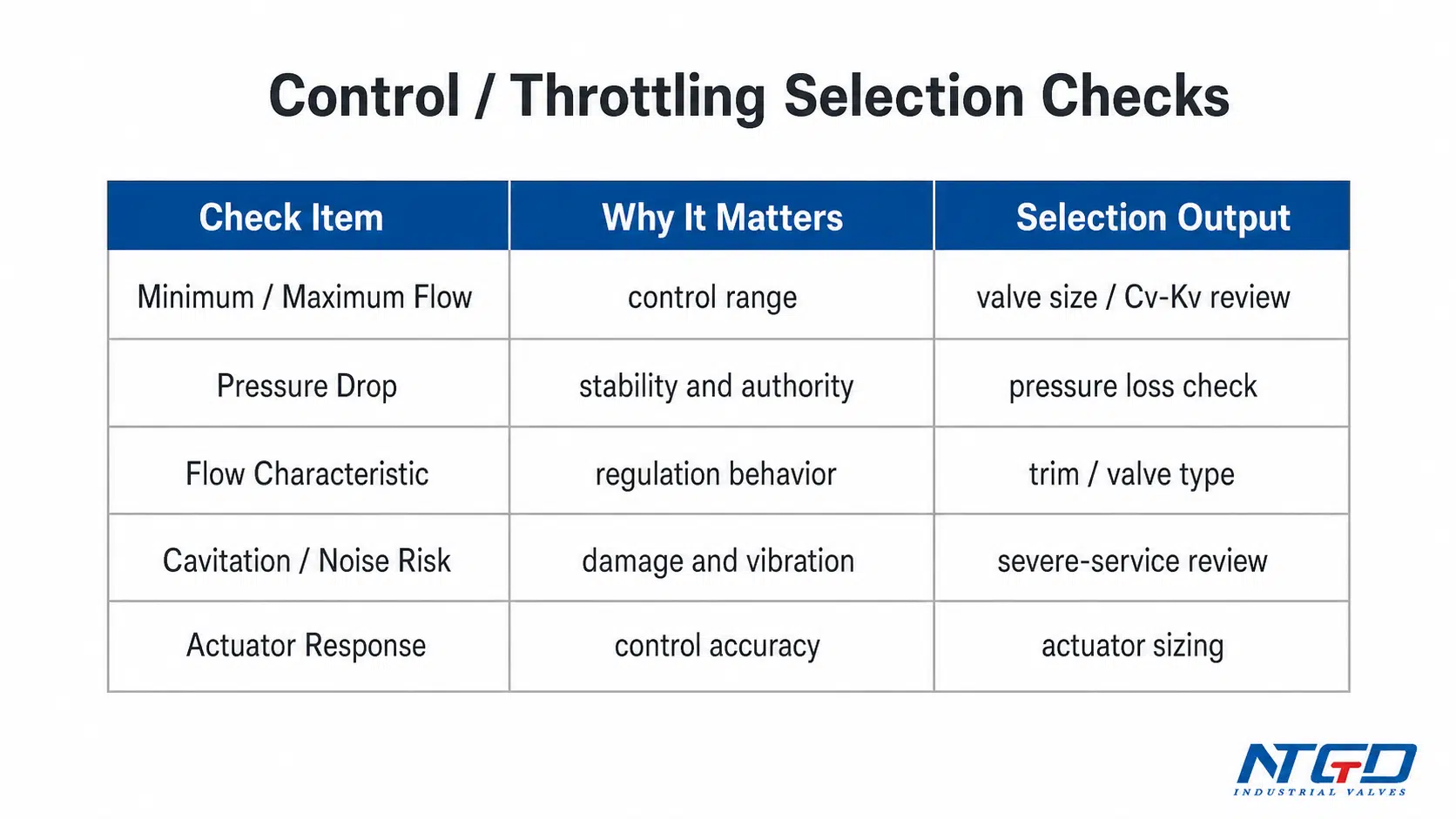
A valve that is acceptable for isolation may not be acceptable for control. Control service requires attention to valve authority, flow characteristic, actuator sizing, response stability, and the effect of pressure drop across the system.
Common Consequences of Wrong Valve Selection
Wrong valve selection usually shows up after installation, not during quotation. The most common consequences are technical, operational, and commercial.
| Wrong Selection | Likely Result | Business Impact |
|---|---|---|
| Wrong valve type for throttling | Vibration, erosion, unstable control, premature seat damage | Poor process stability, maintenance shutdown, shortened valve life |
| Wrong material route | Corrosion, erosion, trim damage, body or seat failure | Leakage, safety risk, replacement cost, unplanned downtime |
| Wrong seat or seal material | Leakage, seat deformation, chemical attack, abrasion damage | Failure to meet shutoff requirement, product loss, safety exposure |
| Wrong pressure-temperature boundary | Valve rating appears correct at ambient conditions but fails under real service | Specification rejection, safety risk, premature replacement |
| Wrong connection type | Connection point leakage, field mismatch, pipe modification | Commissioning delay, additional site work, higher installation cost |
| Undersized actuator or operator | Valve cannot open or close reliably under differential pressure | Operation failure, automation fault, emergency shutoff risk |
| Ignoring solids or viscosity | Jamming, cavity buildup, high torque, incomplete shutoff | Frequent cleaning, production interruption, seat replacement |
| Ignoring maintenance access | Packing, seat, actuator, or gasket cannot be serviced efficiently | Longer downtime and higher lifecycle cost |
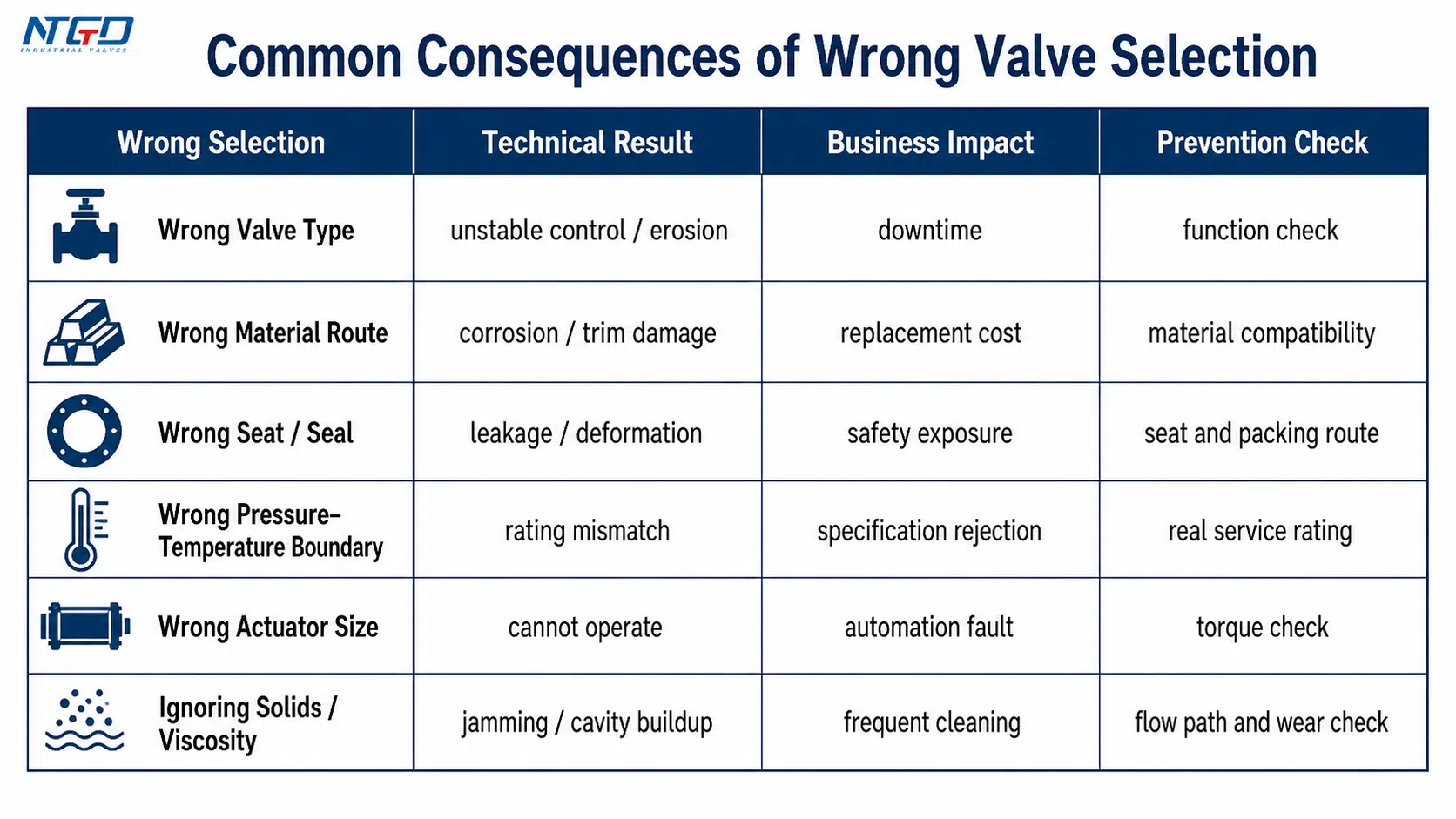
The safest selection is not always the most expensive valve. It is the valve whose design risk is understood before the purchase order is placed.
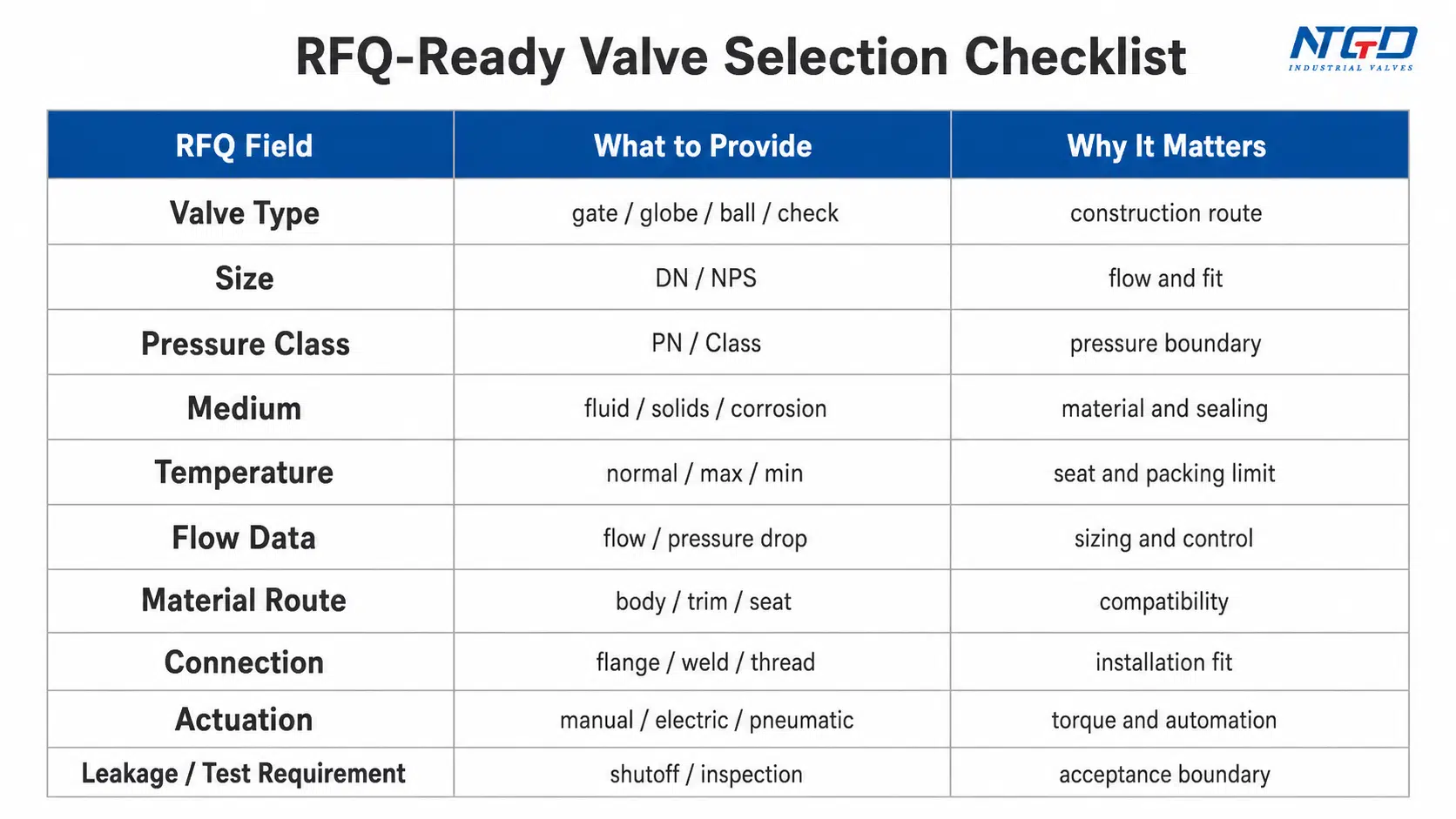
Final Selection Check, RFQ Data, and Common Questions
Before sending a valve RFQ or approving a quotation, confirm that the specification includes enough information for a supplier to select the same construction route that the project actually needs.
| RFQ Field | What to Provide | Why It Matters |
|---|---|---|
| Valve type | Gate, globe, ball, plug, butterfly, check, diaphragm, safety, trap, or other | Defines the main construction route |
| Size | DN / NPS and pipe schedule if relevant | Affects flow, pressure loss, face-to-face length, torque, and connection |
| Pressure class | PN, Class, or other applicable rating | Defines the pressure boundary, but must be checked with temperature and material |
| Medium | Fluid name, concentration, solids, viscosity, corrosiveness, toxicity | Determines material, trim, seat, seal, and packing route |
| Temperature | Normal, maximum, minimum, thermal cycling | Affects body material, seat, packing, gasket, and bonnet construction |
| Flow data | Flow rate, pressure drop, control range, velocity if available | Required for sizing, control, cavitation, noise, and pressure loss review |
| Material requirement | Body, trim, seat, seal, packing, gasket, lining or coating if needed | Prevents body-only material selection errors |
| Connection | Flanged, threaded, welded, clamp, ferrule, face-to-face requirement | Prevents installation mismatch and field modification |
| Actuation | Manual, gear, pneumatic, electric, hydraulic, solenoid, fail position | Affects operation reliability, torque, automation, and safety logic |
| Leakage / shutoff requirement | General shutoff, tight shutoff, hazardous service, external leakage control | Determines seat, seal, packing, test, and maintenance route |
| Inspection / standard requirement | Project standard, test requirement, certification, documentation | Ensures the supplied valve can be accepted by the project |
| Quantity and operating duty | Quantity, cycling frequency, operation mode, installation position | Helps confirm durability, actuator sizing, and maintenance access |
FAQ
1. How do I select the right valve for a pipeline?
Start with the valve function and service conditions. Confirm whether the valve is for isolation, throttling, backflow prevention, safety, diverting, venting, or draining. Then define the medium, pressure, temperature, flow, material compatibility, sealing requirement, connection type, and operation method before selecting the valve type.
2. What parameters are needed for valve selection?
The key valve selection parameters are not only size and pressure rating. They include valve function, medium properties, pressure-temperature condition, flow data, material compatibility, leakage requirement, connection type, actuation method, installation position, and maintenance access. These parameters work together; changing one can change the suitable valve type, material route, or sealing design.
3. What is the difference between valve selection criteria and valve selection procedure?
Valve selection criteria are the technical factors used to judge whether a valve is suitable, such as medium compatibility, pressure, temperature, flow, material, and leakage requirement. A valve selection procedure is the sequence used to apply those criteria. In simple terms, criteria are what you check; procedure is the order in which you check them.
4. Which valve is best for slurry or suspended solids?
There is no universal best valve for all slurry service. Plug valves, selected ball valves, diaphragm valves, and specially designed gate valves may be considered depending on particle size, abrasiveness, pressure, temperature, and shutoff requirement. Key risks include seat wear, body cavity accumulation, jamming, and incomplete closure.
5. Which valve is best for flow control?
Globe valves and control valves are commonly selected for flow regulation because their internal geometry supports throttling. Gate valves and full-port ball valves are better suited for isolation. A gate valve can suffer vibration and erosion when partially open, while a standard full-port ball valve may not provide stable control unless designed for throttling.
6. Which industrial valve parts affect sealing and leakage?
Seats, seals, packing, gaskets, stem, disc, gate, ball, plug, and backseat features all affect sealing and leakage. For hazardous or high-temperature service, stem packing and gasket selection can be as important as the main seat design.
7. Why is globe valve backseat important?
A globe valve backseat is part of the stem and bonnet sealing arrangement in many designs. It can help identify the valve structure and support the stem sealing boundary when reviewing globe valve parts for maintenance and leakage control. It should not be treated as a replacement for correct packing, gasket, or leakage control selection.
8. Should valve selection start with valve type or service condition?
It should start with service condition. Valve type is the result of the selection process, not the first assumption. Function, medium, pressure, temperature, flow, material compatibility, and leakage requirement should determine which valve type is suitable.
Conclusion
Industrial valve selection should move from service conditions to valve construction, not from a product name to a guess. A reliable selection process starts with valve function, then checks medium, pressure, temperature, flow, material, sealing route, connection, actuation, maintenance, and RFQ data. Gate, globe, ball, plug, butterfly, check, and diaphragm valves all have valid uses, but each one has limits. The best choice is the valve whose design, materials, internal parts, and operating method match the real pipeline duty.
Final Application Check
For projects involving corrosive media, high temperature, slurry, toxic service, large sizes, or strict shutoff requirements, a technical review before purchase can prevent specification gaps. Share your medium, pressure, temperature, flow data, valve type requirement, material route, seat/seal requirement, actuation method, and RFQ information with NTGD Valve’s engineering team before final quotation. We can help review whether the valve type, construction route, sealing system, and specification fields match the intended service.
