
Author Name: Bruce Zheng
Author Role: Co-Founder and Valve Engineer at NTGD Valve
Author Bio: Bruce Zheng is Co-Founder and Valve Engineer at NTGD Valve, focusing on industrial valve selection, application, and technical content for global B2B buyers.
Last Updated: April 21, 2026
Metal-Seated vs. Soft-Seated Ball Valves: A Ball Valve-Specific Selection Guide
When comparing metal-seated vs. soft-seated ball valves, seat selection is a service-duty decision, not just a materials label. The core trade-off is straightforward: soft seats protect tight shutoff in clean, moderate service, while metal seats protect sealing geometry and service life when heat, wear, solids, or severe cycling would quickly damage non-metallic seats.
That distinction matters because the wrong seat type rarely fails on paper first. It fails in operation—through lost shutoff margin, rising maintenance frequency, growing actuation burden, or repeated replacement under conditions the seat was never meant to survive. For engineers and industrial buyers, the real question is not which seat sounds better in general. It is which seat direction matches the actual operating burden of the line.
This page compares soft seated vs metal seated valves only in the context of ball valve selection.
- Soft-seated ball valves fit best when clean media, tight shutoff, and lower operating severity drive the decision.
- Metal-seated ball valves become the safer direction when temperature, abrasion, corrosive wear, flashing risk, or severe cycling threaten soft-seat life.
- The correct choice is determined by how shutoff expectation, media cleanliness, temperature, pressure, wear exposure, torque consequence, and lifecycle burden interact in the real service.
Soft-Seated vs. Metal-Seated Ball Valves: Scope and Terminology for This Comparison
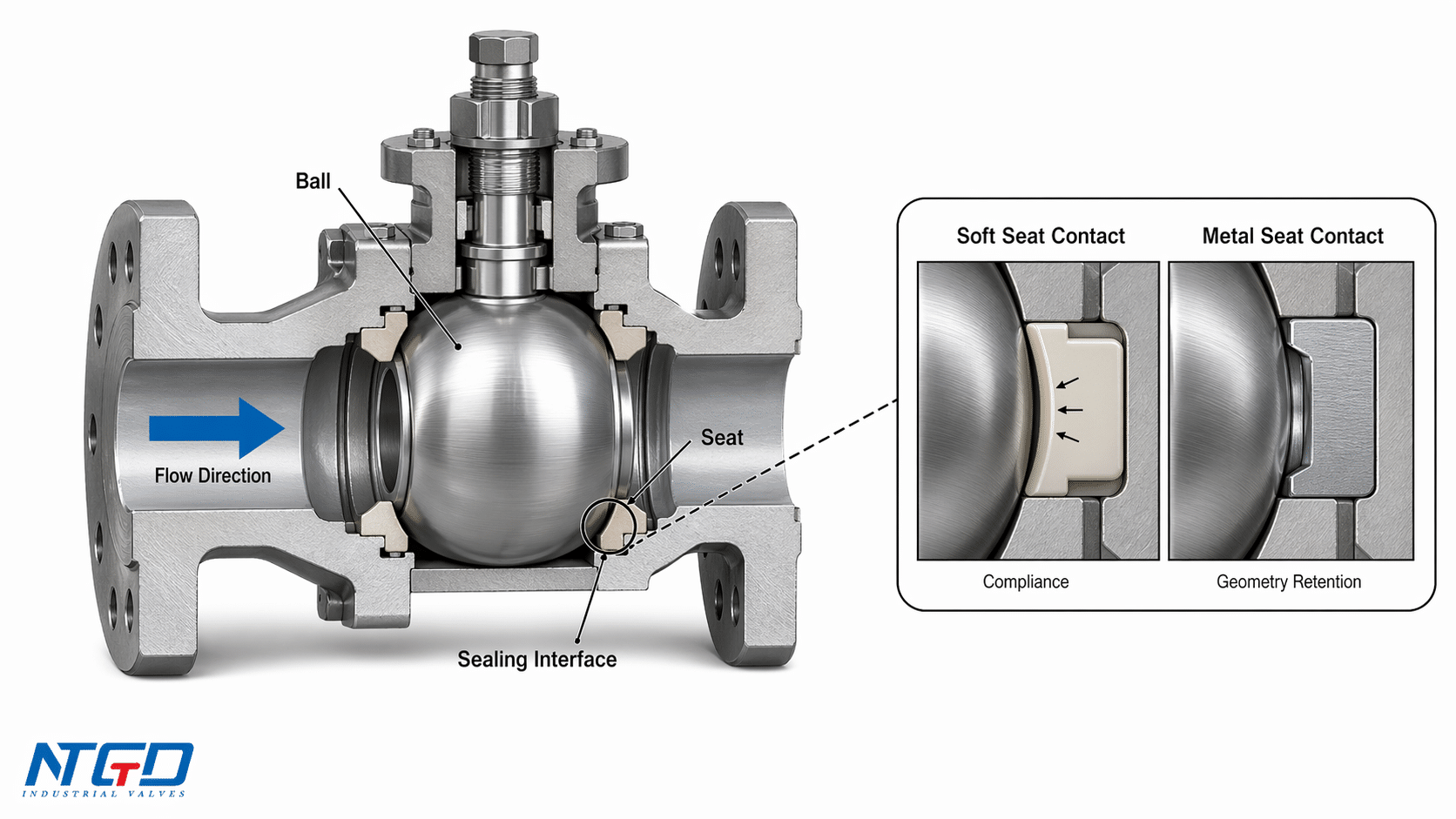
This article focuses on ball valves only. That boundary matters because seat behavior is valve-type specific. A ball valve seals through contact between the ball and the seat, as shown in a floating ball valve sealing principle. How that contact is created, maintained, and degraded over time is different from gate, butterfly, check, or globe valve service.
In this page:
- Soft-seated ball valve means a ball valve using non-metallic seat materials such as PTFE or related engineered polymers to create sealing contact.
- Metal-seated ball valve means a ball valve using a metal-to-metal sealing interface, often supported by hard-facing, coating, or trim treatments intended for harsher service.
- The comparison is not a broad “all seated valves” discussion. It is a ball valve seat-type decision.
That distinction is important because the broad search phrase soft seated vs metal seated valves often mixes valve types and application logic. Here, the question is narrower and more useful: what changes in a ball valve when the seat is soft, and what changes when it is metal?
Soft Seat vs. Metal Seat: The Primary Selection Boundary
The fastest way to understand metal seated ball valves vs soft seated valves is to identify what each seat type is designed to protect first.
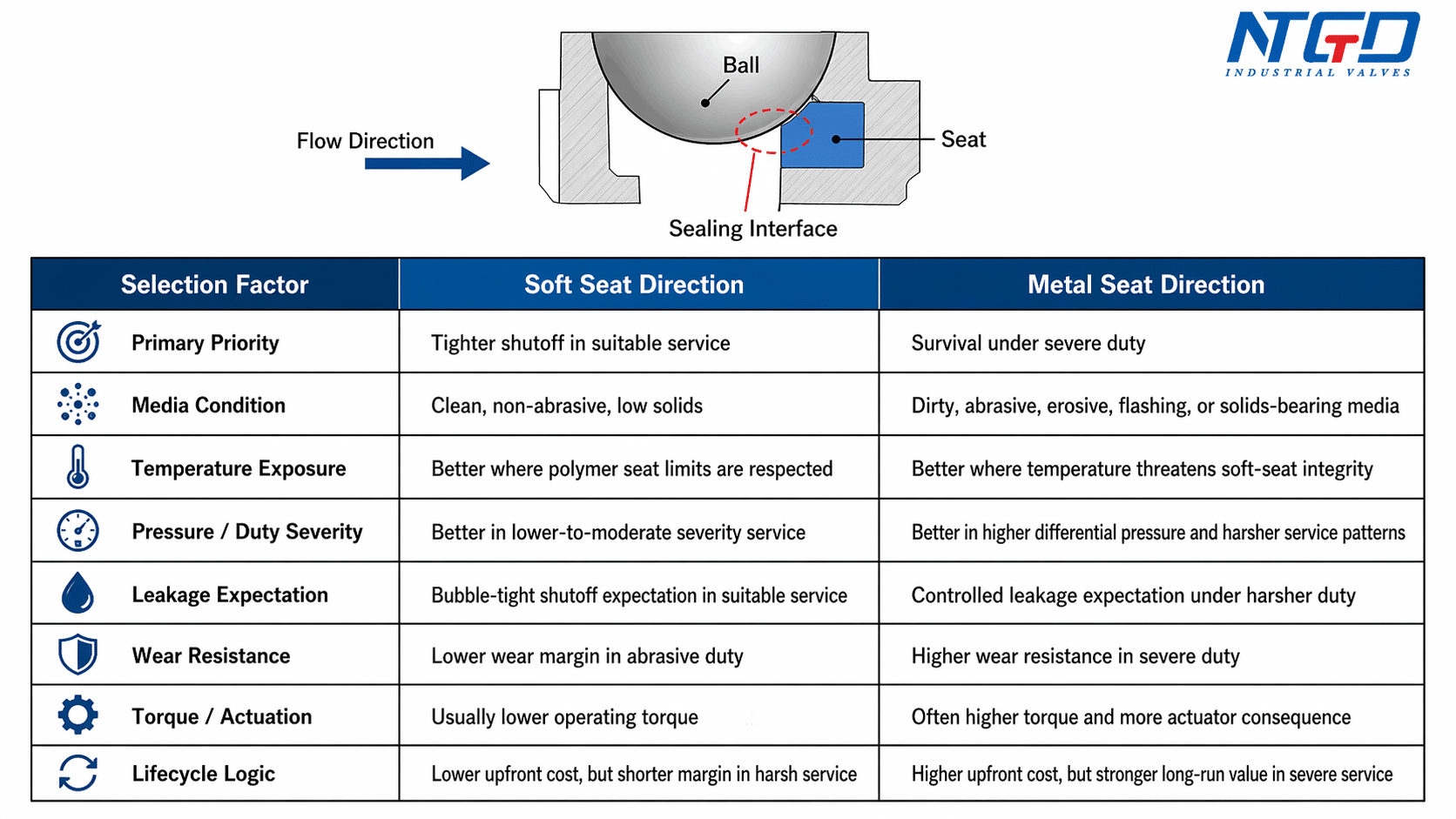
| Selection Factor | Soft-Seated Ball Valve Direction | Metal-Seated Ball Valve Direction |
|---|---|---|
| Primary priority | Tighter shutoff in suitable service | Survival under severe duty |
| Media condition | Clean, non-abrasive, low solids | Dirty, abrasive, erosive, flashing, or solids-bearing media |
| Temperature exposure | Better where polymer seat limits are respected | Better where temperature threatens soft-seat integrity |
| Pressure / duty severity | Better in lower-to-moderate severity service | Better in higher differential pressure and harsher service patterns |
| Leakage expectation | Bubble-tight shutoff expectation in suitable service | Controlled leakage expectation under harsher duty |
| Wear resistance | Lower wear margin in abrasive duty | Higher wear resistance in severe duty |
| Torque / actuation | Usually lower operating torque | Often higher torque and more actuator consequence |
| Lifecycle logic | Lower upfront cost, but shorter margin in harsh service | Higher upfront cost, but stronger long-run value in severe service |
The matrix is the judgment layer, not the full answer; a broader ball valve selection guide is still useful when seat direction is only one part of the decision.
Published shutoff language and test basis matter, but they do not tell you how that performance will hold once the valve sees solids, temperature cycling, erosive flow, rising torque, or repeated service exposure.
Soft-Seated Ball Valves: Shutoff Priority, Clean Media Fit, and Material Strategy
How soft-seat sealing works in a ball valve
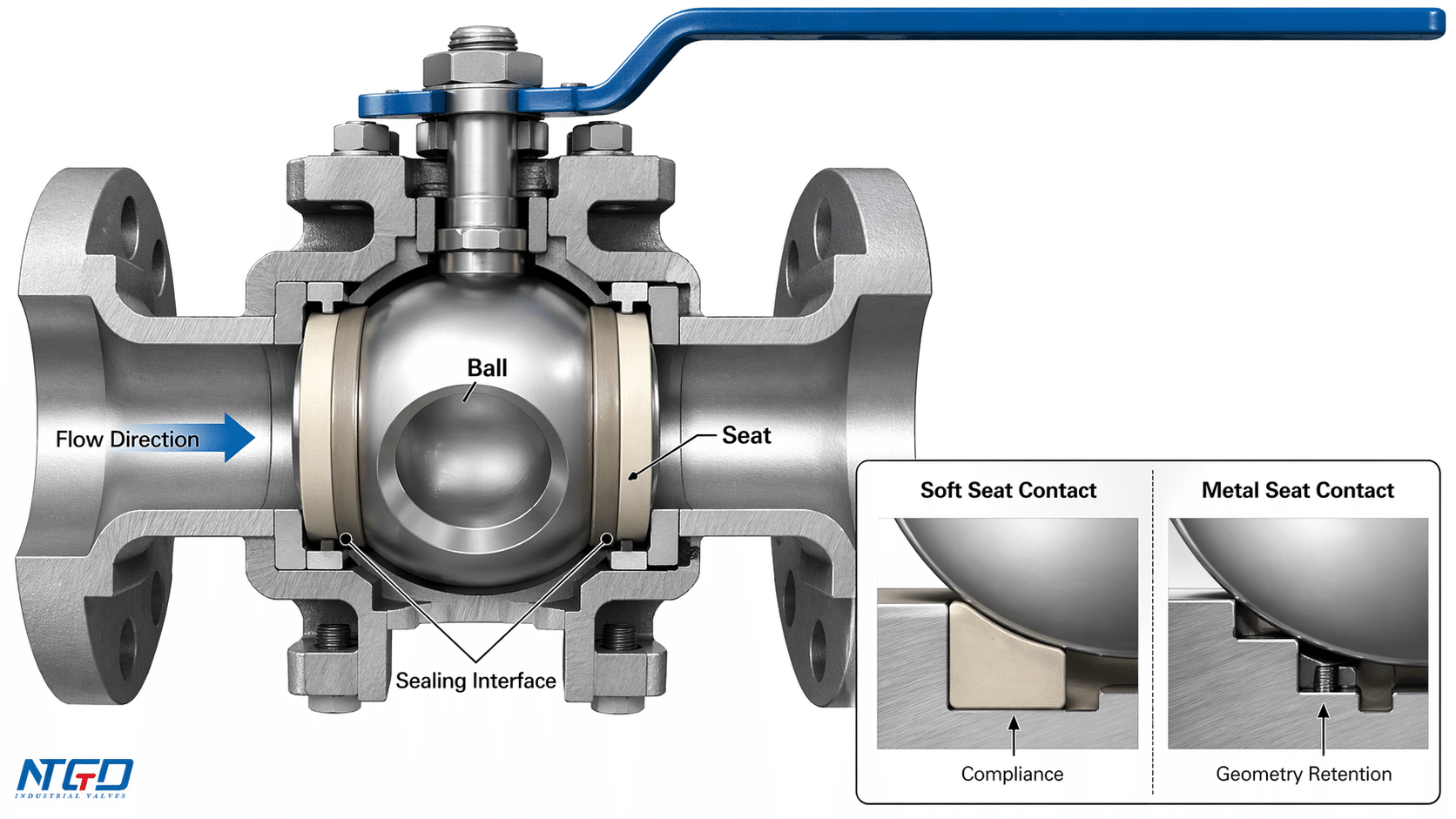
A soft seated ball valve seals because the non-metallic seat can conform to the ball surface. That compliance creates a tighter seal path, which is why soft-seated designs are closely associated with bubble-tight shutoff performance in suitable service.
The same compliance that makes the seal effective is also what limits the seat in harsher conditions. Once heat, abrasion, embedded solids, or repeated mechanical damage begin to affect the seat surface, the shutoff advantage can fall quickly. In practical terms, a soft seat works best when the service allows it to behave as a sealing element, not as a wear component under attack.
Where soft-seated ball valves fit best
A soft seated ball valve fits best when the service has most of the following characteristics:
- The media is clean or at least not strongly abrasive.
- Tight shutoff matters more than severe-duty survival.
- Temperature stays within the practical limit of the seat material.
- The valve does not face repeated destructive contact from solids, flashing, or erosive flow.
- Lower operating torque or simpler actuation is part of the selection goal.
Soft seated ball valves are therefore common in cleaner process service, utility isolation, compatible chemical lines, and hygienic or contamination-sensitive systems.
Soft-seat material strategy
The table below should be read as a service-fit tool, and a separate PTFE vs. PEEK seal comparison can help when the shortlist narrows to common soft-seat materials.
Actual limits still depend on compound, valve design, pressure, cycling pattern, manufacturer-specific seat construction, and published chemical and thermal resistance data for the seat material.
| Soft-Seat Material | Typical Temperature Window | General Use Direction | Main Limitation to Watch |
|---|---|---|---|
| PTFE | Approx. -50°F to 400°F | Clean media service, strong shutoff priority, broad chemical compatibility | Temperature and wear margin under harsher duty |
| Modified PTFE | Approx. -50°F to 450°F | Similar clean-service direction where added performance margin is desirable | Still a soft-seat family choice, not a severe-service cure |
| Delrin | Approx. -50°F to 180°F | Lower-temperature service with defined pressure conditions and controlled media | Narrower temperature window |
| Nylon | Approx. -30°F to 200°F | Selected utility or process service where compatibility fits and duty remains moderate | Less suitable where temperature or media severity rises |
| PEEK | Approx. -70°F to 550°F | Higher-performance soft-seat direction where more temperature and wear margin is needed | Still must be checked against full duty severity, not temperature alone |
The better selection question is: Which soft-seat material keeps the shutoff advantage without letting the service turn the seat into a consumable wear part?
Where soft seats start to lose margin
Soft-seated ball valves begin to lose margin when one or more of the following conditions become dominant:
- Solids or abrasives can scratch, score, or embed into the seat.
- Temperature approaches or challenges the seat material limit.
- Severe cycling or high differential pressure raises deformation or wear risk.
- Flashing, erosive flow, or dirty media forces the seat to absorb repeated damage.
- The process penalizes the seat’s compliance faster than the seat can preserve shutoff.
A soft seat is not a lower-grade choice. It is an optimized choice for clean service where shutoff quality and lower operating burden matter most. It becomes the wrong choice when the service attacks the seat faster than the seat can hold the seal.
Metal-Seated Ball Valves: Metal-to-Metal Logic, Severe-Service Fit, and Hard-Facing Relevance
How metal-to-metal sealing works in a ball valve
A metal-seated ball valve does not depend on soft material compliance to create the sealing interface. Instead, it relies on a metal-to-metal contact system designed to keep usable sealing behavior while surviving conditions that would quickly damage a soft seat.
For that reason, severe-service metal seated ball valves appear so often in discussion of high temperature, high pressure, corrosive, and erosive duty.
The engineering logic is simple: if the service will damage a polymer seat faster than the process can tolerate, the decision moves toward metal seat.
Where metal-seated ball valves earn their place
A metal seated ball valve earns its place when service includes one or more of the following:
- High temperature exposure that challenges soft-seat stability
- Abrasive media or solids that can erode softer materials
- Corrosive or erosive combinations that shorten seat life
- Severe-duty cycling where seat survival matters more than the lowest initial cost
- Flashing, hydraulic shock, or other punishing service conditions
Metal-seated ball valves are therefore common in severe-service ball valve applications, hotter process lines, harsher chemical duty, mining-related service, and other wear-heavy applications.
Hard-facing, coating, and trim relevance
Hard-facing, coating, and trim decisions matter because they change how the sealing surfaces resist wear, retain geometry, and survive contact with difficult media.
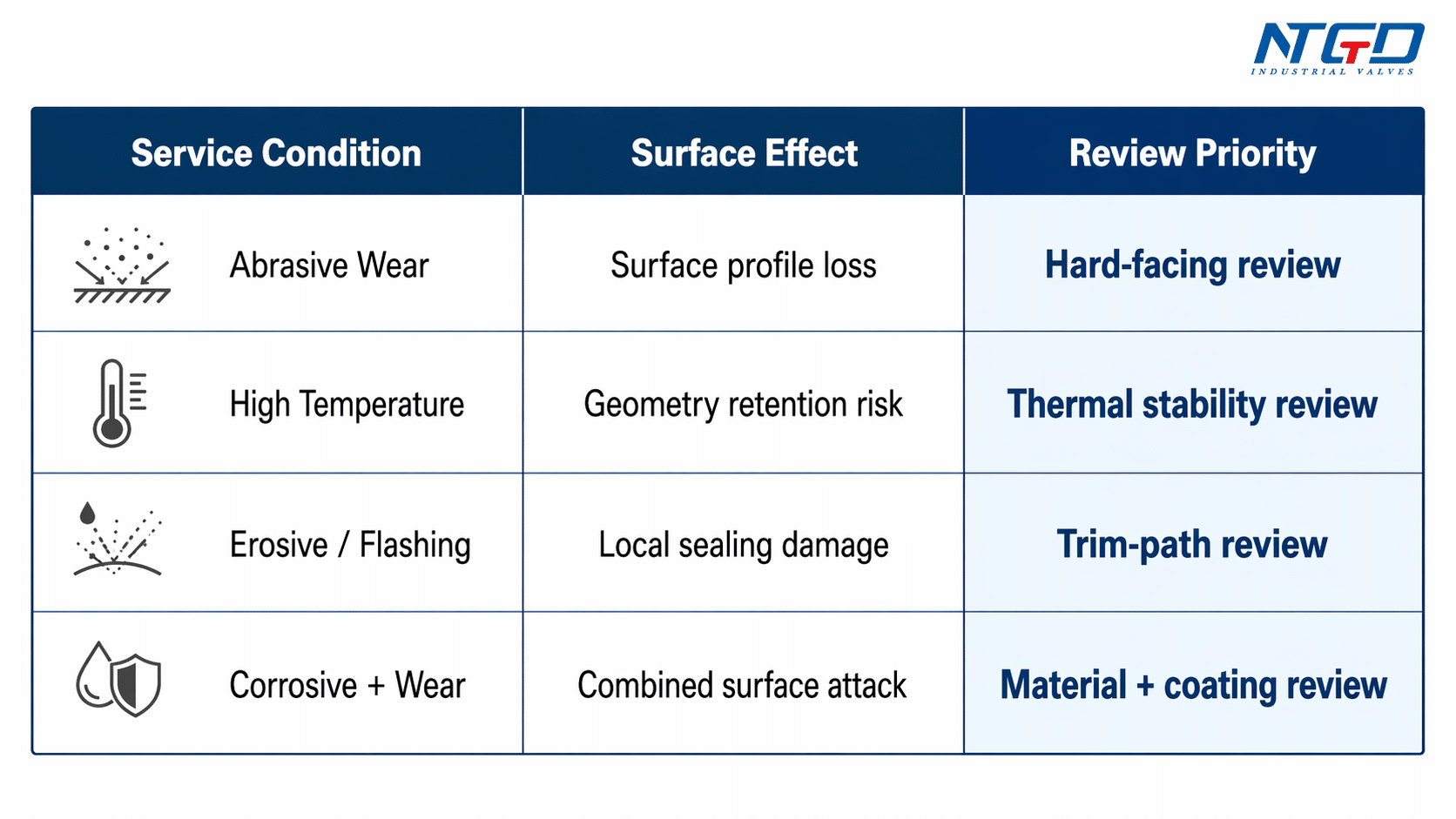
| Severe-Service Condition | Why Surface Strategy Matters | Selection Direction |
|---|---|---|
| Abrasive particles / wear exposure | Base metal alone may not hold the sealing surface long enough | Move seat-surface survival to the front of the review and check whether standard metal-seat geometry will keep its sealing profile long enough |
| High temperature duty | Surface stability and geometry retention matter more | Treat thermal stability and contact-geometry retention as design checks before finalizing the metal-seat direction |
| Erosive flow / flashing | Local damage can destroy sealing contact | Review trim path and sealing-surface protection early, because localized damage can reset leakage behavior quickly |
| Corrosive service with wear | Combined attack shortens seat life quickly | Evaluate base material and surface strategy together, since separating them can leave the sealing interface under-protected |
Weaker comparison pages often stop at “metal seat is better for severe service.” The better engineering question is more precise: how will the sealing surface survive the actual service, and what happens if it does not?
Capability anchor: high temperature, wear exposure, and harsh-duty service signals
This page is not a product catalog, but it still needs to acknowledge the capability logic behind metal to metal seated ball valves. A metal seat direction is easier to justify when the service includes a combination of:
- High temperature that threatens soft-seat stability
- Repeated wear exposure from solids or erosion
- Severe-duty cycling
- Higher consequence of unplanned replacement
- Service where seat survival matters more than the lowest torque or lowest initial cost
That is the right level of capability anchor for a comparison page. It explains why metal seat exists without turning the article into a product-series page.
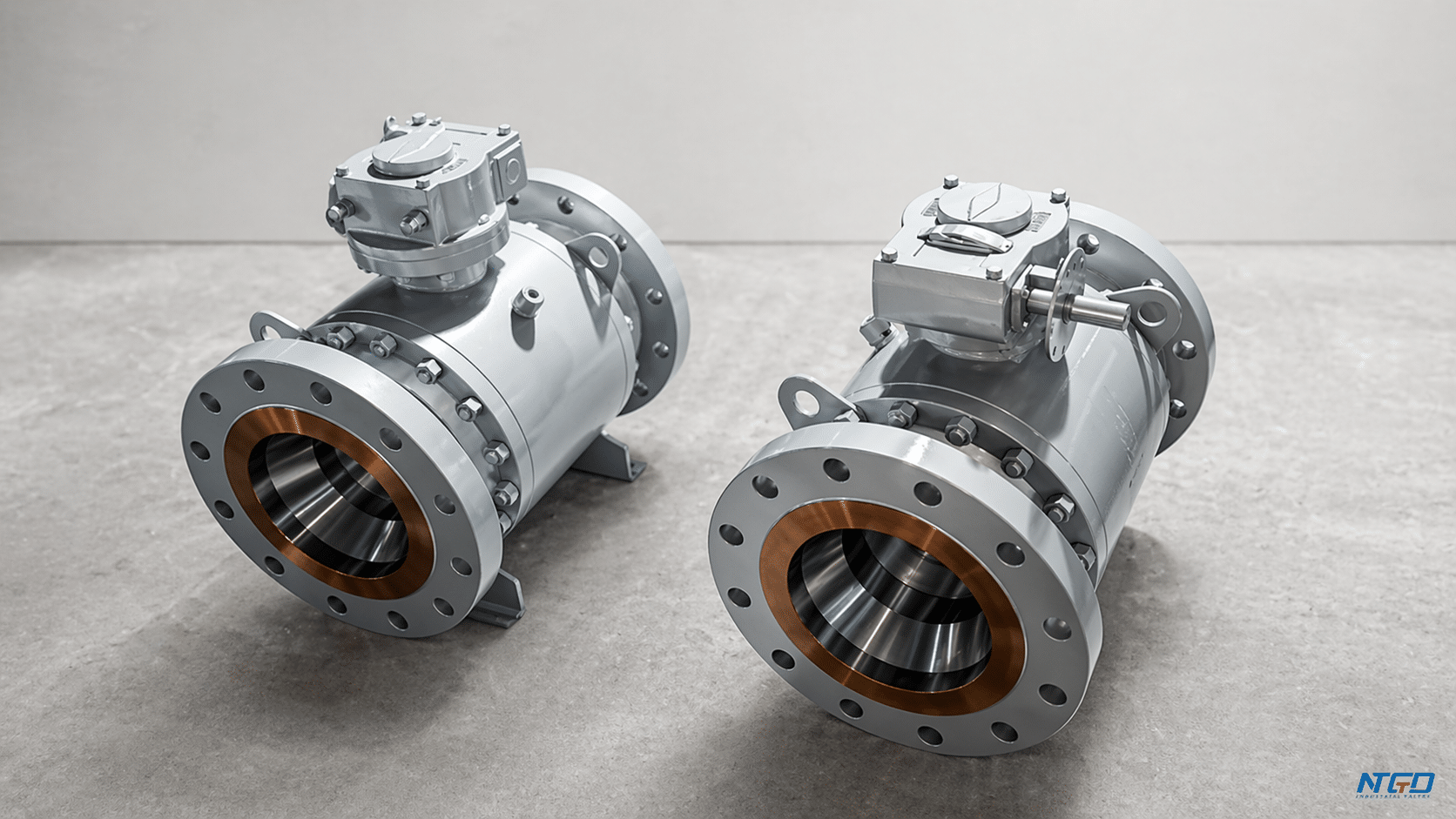
Mapping Process Conditions to Soft-Seat or Metal-Seat Direction
A seat-type decision becomes clearer when the variables are checked in the right order. The routing logic below is more useful than a flat checklist because it forces the selection to follow service consequence, not just feature language.
1. Start with shutoff requirement
First ask what the process expects from shutoff.
- If the priority is the tightest shutoff in a clean service, that pushes the decision toward soft seat.
- If the process can accept a different sealing trade-off because service survival is the dominant risk, that pushes the decision toward metal seat.
Do not start with price. Do not start with material names. Start with the sealing duty the valve has to deliver.
2. Then check media cleanliness, solids, and abrasion
Media condition often changes the answer faster than a brochure comparison does.
- Clean, non-abrasive media supports the soft-seat direction.
- Dirty, solids-bearing, abrasive, or erosive media pushes the decision toward metal seat.
- If the media is chemically aggressive but still clean, corrosive-service material compatibility and temperature still have to be checked before assuming soft seat is safe.
3. Then check temperature and pressure
Temperature and pressure matter because they change seat stability, contact behavior, and wear margin.
- If the service temperature approaches the practical limit of the soft-seat material, metal seat becomes more relevant.
- If differential pressure and cycling severity rise, the valve should not be selected on shutoff language alone.
- A high temperature ball valve seat decision is not about surviving heat once. It is about surviving repeated duty at heat.
4. Then weigh lifecycle and operating practicality
At this stage, the remaining question is usually whether the softer shutoff advantage will survive long enough to matter.
- If soft seat provides the required shutoff and the service will not punish it, lower upfront cost and lower torque may remain the better answer.
- If the service will force frequent seat replacement, more downtime, or repeated shutdown cost, metal seat may become cheaper over the operating life even when purchase price is higher.
- If automation, actuator sizing, or operating torque margin is already tight, that consequence has to be included before final selection.
| Condition Check | Pushes Toward Soft Seat | Pushes Toward Metal Seat |
|---|---|---|
| Shutoff priority | Highest shutoff expectation in suitable service | Severe-duty survival outweighs softer shutoff advantage |
| Media cleanliness | Clean, non-abrasive media | Dirty, abrasive, erosive, solids-bearing media |
| Temperature | Within soft-seat material margin | Temperature threatens soft-seat integrity |
| Pressure / duty severity | Moderate duty | Higher severity, harsher service, punishing cycles |
| Lifecycle logic | Lower burden over time in suitable service | Lower total operating burden in severe service |
| Operating practicality | Lower torque / easier actuation matters | Service durability is worth the torque trade-off |
When conditions conflict, the safest approach is to prioritize the most frequent and highest-consequence operating condition. If the line demands tight shutoff but sees only occasional solids, the decision should focus on whether those solids are light enough and infrequent enough not to control seat life. If elevated temperature or solids exposure will repeatedly determine wear, the seat direction should follow that harsher burden rather than the cleaner ideal case.
What Happens When the Wrong Seat Type Is Chosen
Seat misapplication is expensive because it fails in operation, not in the original purchase comparison.
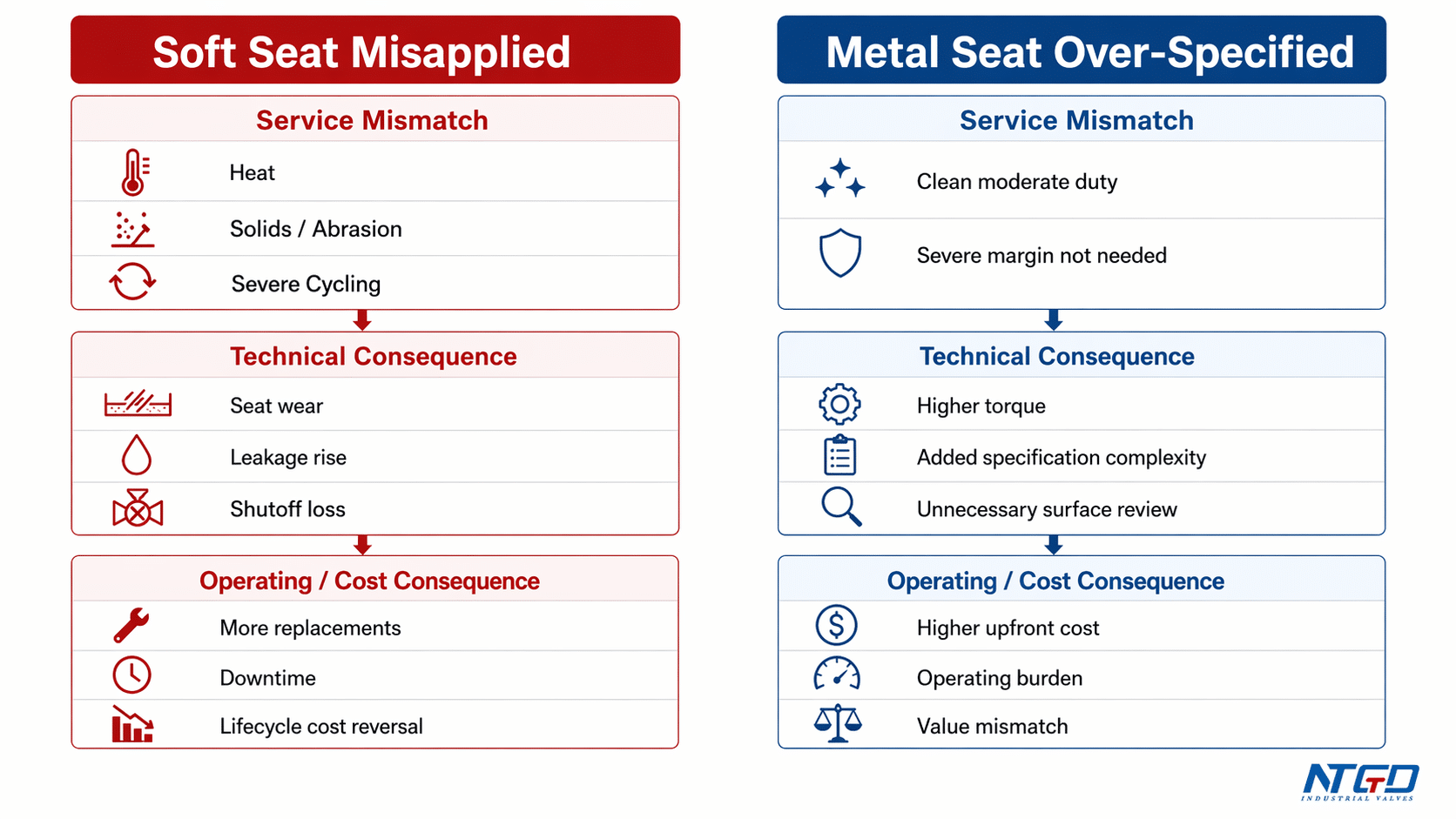
Common soft-seat misapplication risks
If a soft seat is placed into service that is too hot, too dirty, too abrasive, or too severe, the usual damage path looks like this:
- Accelerated seat wear under solids or abrasion, leading to faster loss of sealing contact and earlier shutoff deterioration
- Thermal or mechanical damage to the seat, reducing seat stability and shortening useful service life
- Leakage rise after relatively limited exposure, which can turn a shutoff-driven choice into a maintenance-driven problem
- More frequent replacement intervals, increasing labor demand and interrupting service continuity
- Downtime and repeated intervention, which can reverse the apparent cost advantage of the lower purchase price
A soft seat should not be selected only because it seals well in ideal conditions. It also has to keep that shutoff margin in the actual process.
Common metal-seat over-specification costs
If a metal seat is selected where the service does not need it, the cost path looks different:
- Higher upfront specification cost without enough service burden to justify the extra margin
- Higher torque and more demanding actuation requirements, even though the duty could have been handled by a simpler seat direction
- Added specification complexity, including heavier focus on surface strategy or package matching that the service may not require
- Paying for severe-service survivability in a duty that is fundamentally clean and moderate, which can add operating burden without adding real process value
Metal seat is not the wrong technology in those cases. It is the wrong fit when the process mainly rewards shutoff quality, lower complexity, and lower operating burden.
Warning signs before purchase or operation
A seat-type decision deserves a second look when any of these warning signs appear:
- One variable is deciding the whole seat choice, which usually means shutoff duty, solids, temperature, or cycling have been left too vague and may later control failure instead of the purchase logic.
- The service is labeled “severe” without defining the real burden, which can drive over-specification in clean duty or under-specification in heat-, wear-, or flashing-driven duty.
- Shutoff expectation is assumed rather than stated in operating terms, which often leads to a seat that looks correct on paper but cannot hold the required margin in service.
- Media cleanliness is treated as secondary, even though it may be the factor that actually determines seat life and leakage stability.
- Lifecycle cost is discussed without downtime, intervention frequency, or actuation consequence, which can hide the real burden until the valve is already in service.
Those are not minor documentation gaps. They are signals that the selected seat may satisfy specification language while still missing the actual operating burden—and eventually show up as familiar ball valve failure causes in service.
Lifecycle Cost, Torque, and Final Fit Check
Upfront cost vs. replacement cycle and downtime exposure
Soft seated ball valves are often cheaper to buy. That advantage is real only if the service lets them keep seat life and shutoff performance long enough to avoid repeated intervention. In suitable service, a lower initial cost is a legitimate benefit.
Metal-seated ball valves usually cost more upfront. That higher purchase price makes sense when the service would otherwise drive premature wear, repeated replacement, rising maintenance burden, or shutdown cost.
The better cost question is not, “Which valve is cheaper today?” It is, “Which seat type creates the lower operating burden in this service?”
Torque, actuation, and automation consequence
Seat choice also changes valve operation.
In many applications, a metal-seated ball valve can bring higher torque demand than a soft-seated alternative. That matters because torque affects:
- manual operating effort
- actuator sizing
- automation margin
- packaging and mounting practicality
- long-run operating reliability
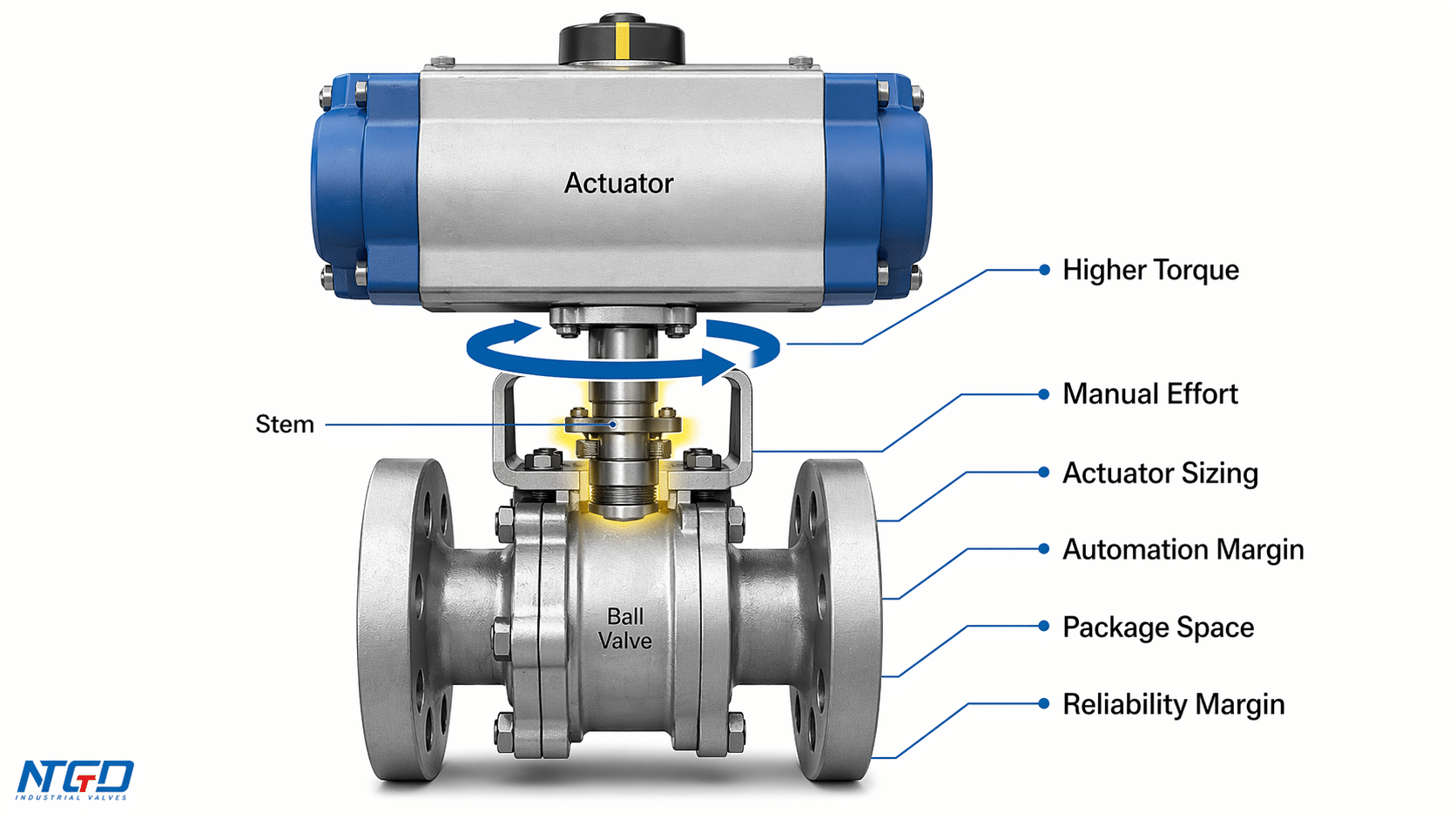
Under automated duty, higher torque is not just a number on a datasheet; it becomes an actuator sizing and implementation-margin question.
In a ball valve, seat selection changes the mechanical behavior of the valve package, not just the sealing behavior, which is why ball valve sizing and package checks matter before final selection.
Final fit check before specifying the seat type
Before finalizing the valve, ask these questions in order:
- Is the process primarily rewarding tighter shutoff or harsher-service survival?
- Is the media clean, or will solids / abrasion attack a soft seat?
- Will temperature or duty severity push the seat beyond its stable margin?
- Does the lifecycle burden justify a higher upfront specification?
- Will torque or actuation consequence change the package choice?
If the answers point toward clean service, tighter shutoff, and manageable seat limits, a soft seated ball valve is often the better fit. If the answers point toward heat, wear, dirty media, or harsh-duty survival, metal seat becomes the stronger direction. A sound final decision aligns shutoff need, seat survival, and package practicality rather than optimizing only one of them.
FAQ
1. When people compare soft seated vs metal seated valves, does that mean the same thing for ball valves as it does for other valve types?
Not exactly. The broad phrase soft seated vs metal seated valves can refer to different sealing behaviors in different valve types. In a ball valve, the comparison is specifically about how the ball-to-seat interface creates shutoff and how that interface survives service. That makes the decision more valve-type specific than the broad phrase suggests.
2. If I need very tight shutoff, should I automatically choose a soft seated ball valve?
No. A soft seated ball valve is often the first direction to evaluate when shutoff quality is critical, but it is not an automatic answer. If temperature, solids, abrasion, or severe cycling will control seat life, the shutoff advantage of the soft seat may disappear too quickly to remain the better selection.
3. Does metal seated automatically mean worse sealing performance?
Not necessarily. In most ball valve selections, metal seated means a different sealing trade-off, not a universally worse one. A metal-seated ball valve is selected because it can maintain more stable performance over time in service that would quickly damage a soft seat. The real question is whether it holds usable sealing behavior under the actual duty.
4. Is metal seated the same as hard seated in a ball valve context?
They are often used in similar conversation, but they should not be treated as interchangeable without checking the actual design language. In this article, metal seated means a ball valve using a metal-to-metal sealing interface, often supported by hard-facing, coating, or trim treatments.
5. If my line needs tight shutoff but sees occasional solids, which seat direction is safer?
That depends on whether the solids are secondary or whether they will control seat life. If shutoff is critical and solids exposure is light and infrequent, soft seat may still remain viable. If the solids are frequent enough, abrasive enough, or damaging enough to control wear, the safer direction usually shifts toward metal seat.
6. When does abrasive media become serious enough to push the choice toward metal seat?
Abrasive media becomes a strong metal-seat signal when particles are no longer incidental and start controlling how fast the seat will wear. Continuous solids flow, erosive particles, slurry-like duty, or repeated particle contact are all signs that the process is no longer rewarding soft-seat compliance.
7. Can soft seated ball valves still be used in chemical service?
Yes, if chemical compatibility is appropriate and the full duty stays within the material margin. Compatibility alone is not enough. Temperature, pressure, cleanliness, cycling, and wear exposure still determine whether a soft seat remains the right selection.
Conclusion
The real difference between metal seated ball valves vs soft seated valves is not just material choice. It is a choice between two different service priorities. Soft seats fit best where the process rewards tighter shutoff in cleaner, less punishing duty. Metal seats fit better where service conditions would shorten soft-seat life, damage the sealing surface, or turn replacement frequency into the real cost driver.
In ball valve selection, the better seat type is the one that matches the operating burden in the right order: shutoff expectation first, then media cleanliness, then temperature and pressure, and finally lifecycle and torque consequence. Once those factors are arranged correctly, the seat direction usually becomes much clearer.
Final Application Check
If you are evaluating a seat-type decision for a real ball valve application, send the key service details: media type, temperature range, pressure range, shutoff requirement, solids or abrasion exposure, and actuation needs. Our engineering team can review the duty and help identify which seat direction better fits the service burden, operating practicality, and expected lifecycle.
“`
