
Author Name: Bruce Zheng
Author Role: Co-Founder and Valve Engineer at NTGD Valve
Author Bio: Bruce Zheng is Co-Founder and Valve Engineer at NTGD Valve, focusing on industrial valve selection, application, and technical content for global B2B buyers.
Last Updated: May 5, 2026
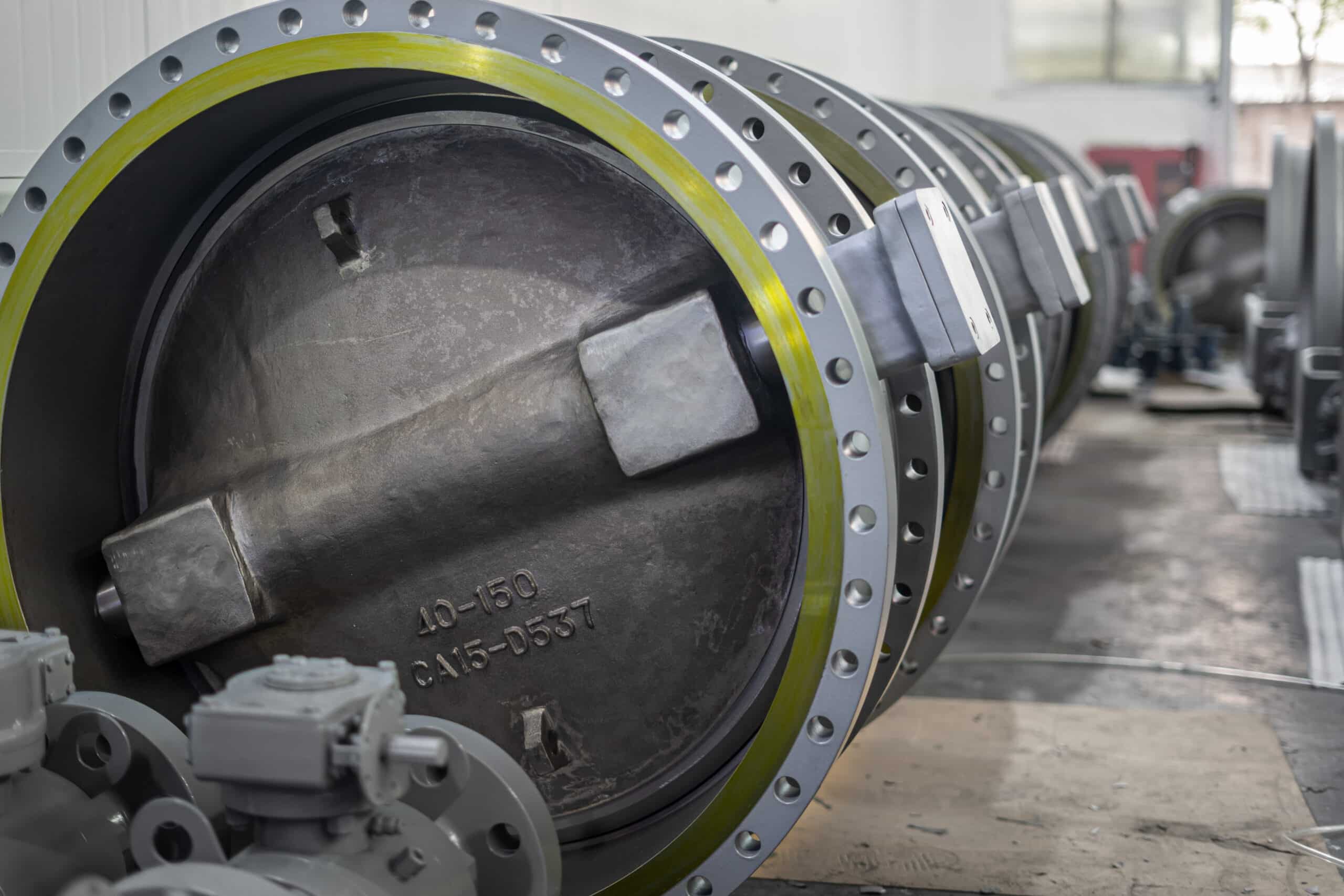
Choosing from the top butterfly valve manufacturers is not just a brand-list exercise. In an industrial project, the manufacturer you shortlist can affect valve reliability, shutoff performance, material compatibility, actuator sizing, approval documents, spare parts access, delivery risk, and long-term operating cost.
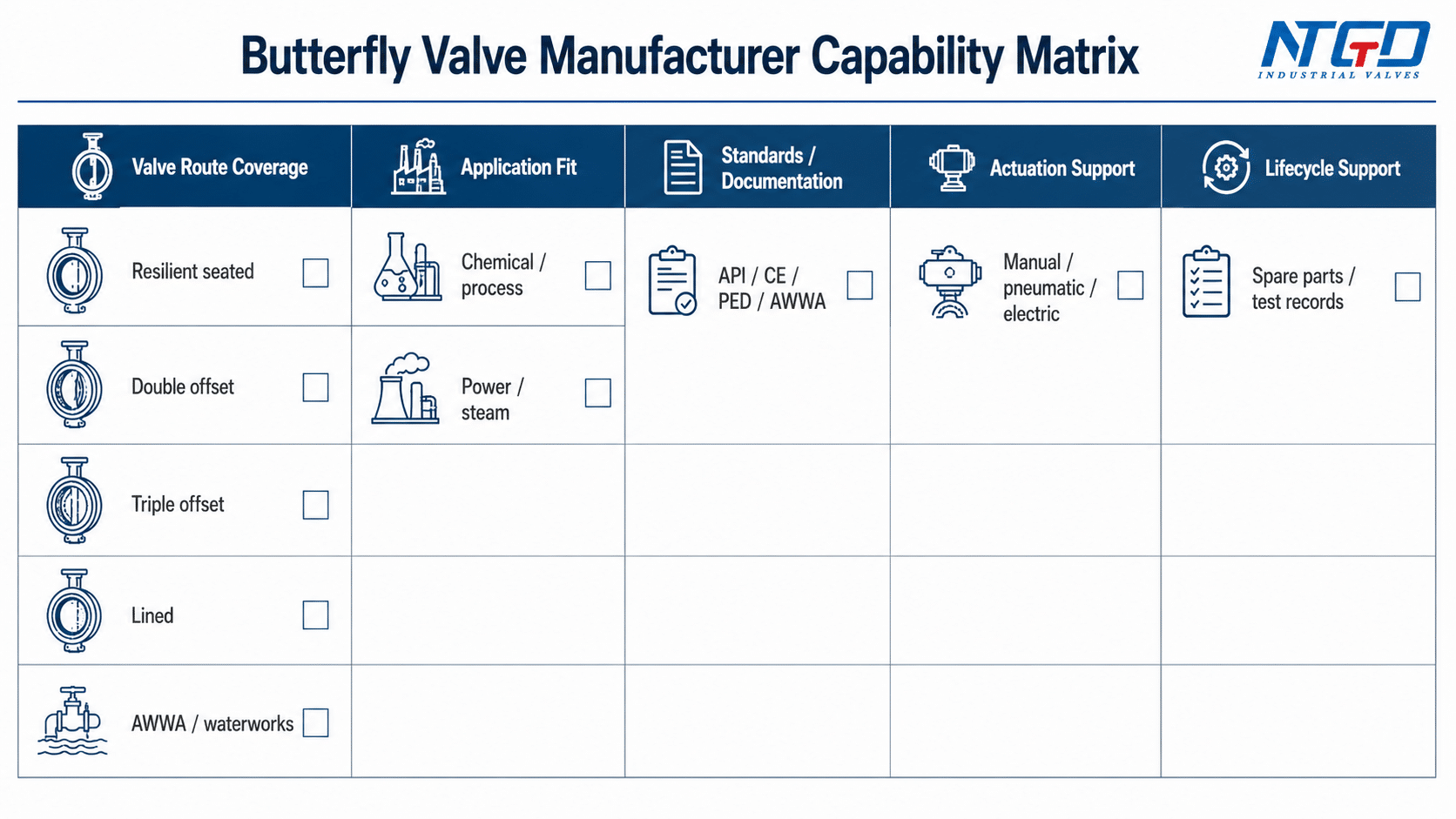
This Top 11 butterfly valve manufacturer list is built around practical industrial valve selection factors: product design coverage, application fit, standards and documentation, supplier support capability, and lifecycle risk. It is meant to help engineers and industrial buyers build a project shortlist, not simply browse a catalog.
A reliable butterfly valve manufacturer should be able to match the valve design route to the actual service condition. That may mean a resilient seated butterfly valve for water service, a lined butterfly valve for corrosive media, a high-performance or double offset butterfly valve for tighter shutoff, or a triple offset butterfly valve for high-temperature or critical isolation duty.
Quick buyer decision summary
- A qualified butterfly valve manufacturer should match the required valve route to the service condition, not just the nominal pipe size.
- Certifications such as ISO, CE, PED, API, AWWA, or NSF/ANSI only help when their scope matches the selected valve series and project specification.
- High-performance, double offset, triple offset, and lined butterfly valves require closer review of seat design, material compatibility, torque data, and test documents.
- Supplier capability matters when the project needs actuation, spare parts, inspection records, short lead time, or technical support.
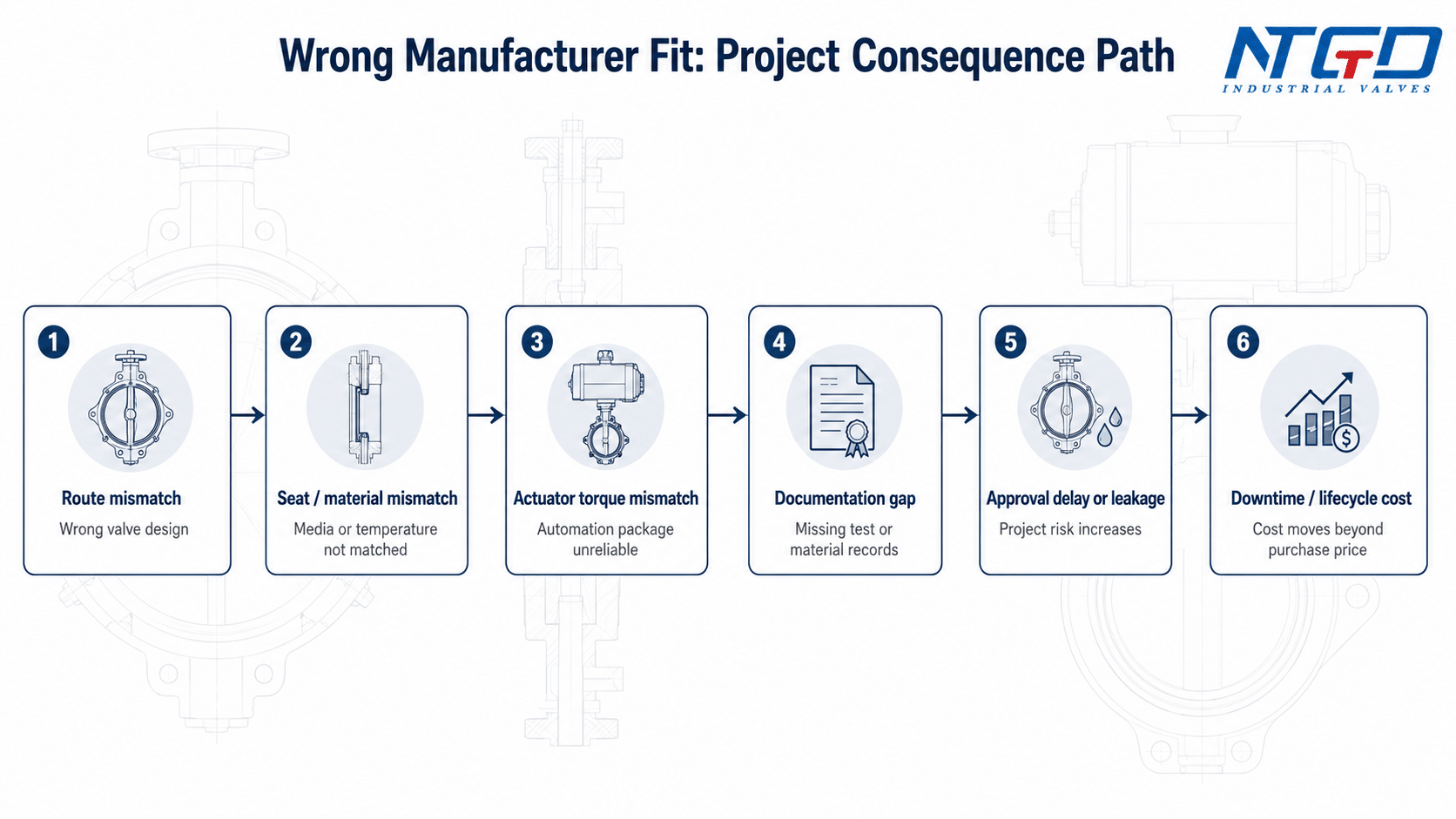
- A low initial price can become expensive when the wrong valve route causes leakage, actuator mismatch, approval delay, repeat maintenance, or unplanned downtime.
How to Evaluate Butterfly Valve Manufacturers for Reliable Industrial Service
A useful butterfly valve manufacturer list should answer a practical question: which company is suitable for the project conditions in front of me?
Before comparing brands, review these selection factors.
Product range and butterfly valve design coverage
Broad butterfly valve coverage is not only about catalog size. It means the manufacturer has the design, material, seat, seal, pressure-boundary, and actuation capability to support different service conditions.
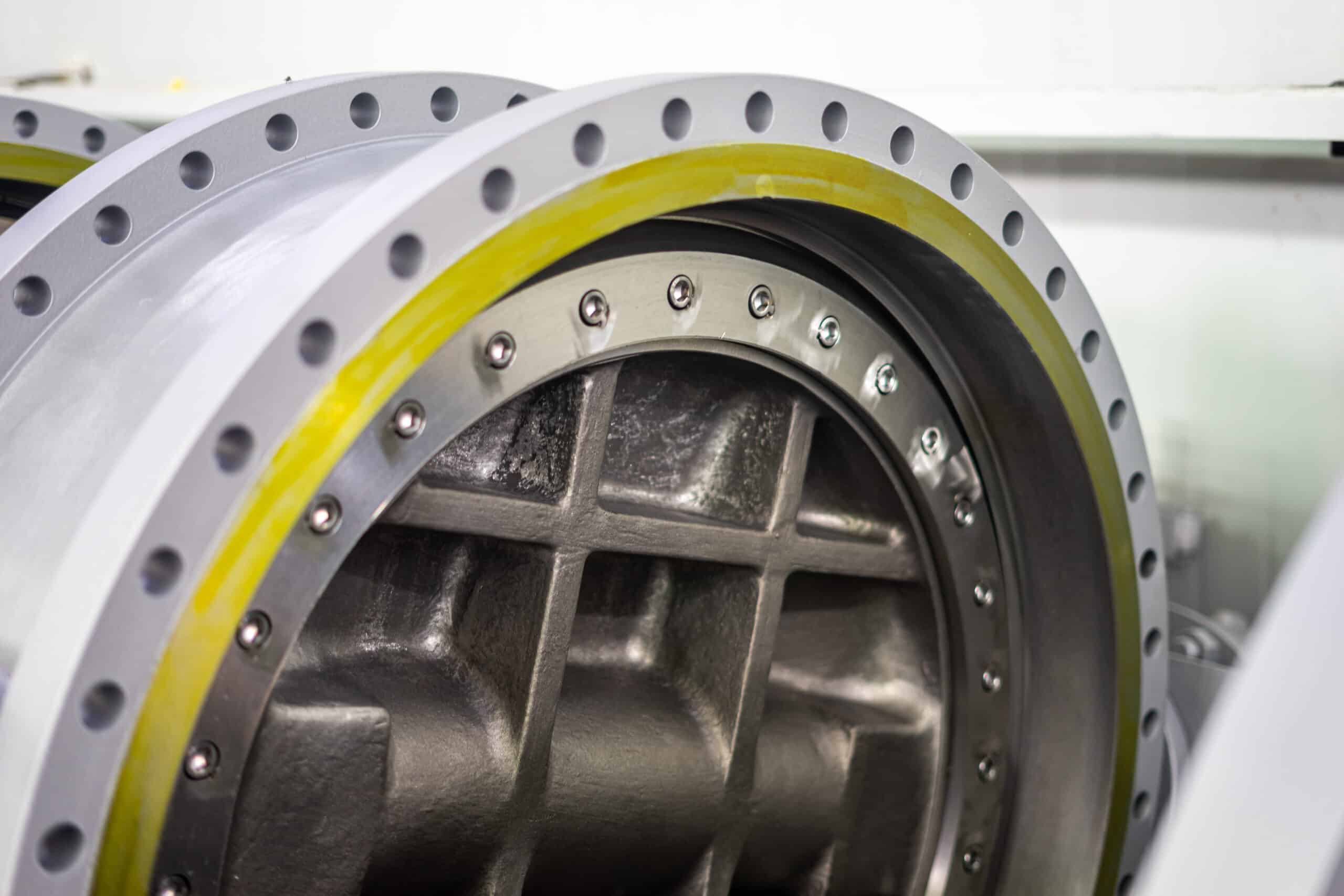
A water distribution project may require resilient seated or AWWA-type butterfly valves. A high-temperature process line may require high-performance or triple offset butterfly valves. Corrosive services may need lined designs, PTFE seats, corrosion-resistant trim, or special body materials.
A manufacturer should be evaluated by whether it can execute the required design route with repeatable quality, not simply by whether it lists “butterfly valves” in a product catalog.
Application experience and project fit
The same butterfly valve type can behave differently in water, steam, chemical media, gas, slurry, or corrosive service. A manufacturer with relevant application experience is more likely to recommend suitable seat materials, disc materials, pressure ratings, end connections, actuator options, and documentation.
A supplier experienced in municipal water may be strong in large-diameter resilient seated or AWWA butterfly valves. A process-industry manufacturer may be stronger in high-performance or triple offset designs for tighter shutoff, higher pressure, or more severe service.
Standards, certifications, and documentation
Certifications can indicate quality management and compliance discipline, but they should be read by scope. ISO 9001 supports quality management credibility. CE and PED may matter for pressure equipment in European markets. API 609 is relevant when butterfly valve design requirements are specified. API 607 may matter for fire-safe valve designs. AWWA and NSF/ANSI can matter for water and drinking water applications.
For project approval, ask for product-specific datasheets, certificates, test reports, material records, pressure test records, and applicable standard references. A company-level certificate does not automatically prove that every valve series meets every project requirement.
Engineering support, spare parts, and supplier reliability
A manufacturer or supplier may offer a good valve body but still create project risk if support is weak. Check whether the company can support actuation selection, spare parts, maintenance guidance, documentation packages, inspections, and replacement components.
For automated lines, actuator sizing and torque margin can be as important as the valve body itself. For remote projects, spare parts access and technical response can affect downtime more than the initial purchase price.
Lifecycle value instead of lowest price
Lowest upfront price rarely delivers the best lifecycle value for industrial butterfly valves. Premature seat wear, media incompatibility, actuator torque mismatch, insufficient documentation, or poor coating quality can lead to leakage, rework, failed approval, repeat maintenance, and downtime.
A reliable butterfly valve should be reviewed by total lifecycle value: purchase cost, installation fit, expected service life, maintenance frequency, energy loss, downtime risk, and documentation quality.
Top Butterfly Valve Manufacturers Comparison Table
The table below is a quick comparison guide for top butterfly valve manufacturers. It is not a final engineering approval list. Project conditions, media, pressure, temperature, connection type, actuator requirements, and required standards should still be confirmed before purchase.
| Manufacturer | Region / Market Presence | Main Butterfly Valve Routes | Typical Applications | Standards / Certification Signals | Supplier / Support Strength | Best-Fit Project Type |
|---|---|---|---|---|---|---|
| Emerson | Global | High-performance, process butterfly valves, control-focused valve solutions | Oil and gas, chemical processing, power, process control | Product-specific API, fire-safe, pressure equipment, and test documentation should be verified by series | Automation integration, control package support, service network, repair capability | Process plants where valve control, automation, and documented service support affect uptime |
| Flowserve | Global | High-performance, triple offset, soft and metal seated routes | Oil and gas, chemical, power, water, severe service | Management-system and product-line documentation should be confirmed for the selected valve | Engineered valve packages, global service capability, severe-service application support | Critical isolation or process service requiring engineered valve review and documentation depth |
| KSB | Global | Industrial and water-related butterfly valves | Water, energy, chemical processing, utilities | ISO quality management and project compliance signals should be checked by scope | Pump-and-valve system background, infrastructure and utility experience | Water, energy, and industrial infrastructure projects needing system-level fluid handling support |
| Crane Co. | Global | Process butterfly valves and severe-service valve solutions | Chemical, oil and gas, power, corrosive or erosive service | Product-specific valve documentation should be checked before approval | Broad industrial valve portfolio and process application coverage | Process industries that need a wide valve brand portfolio, with final selection controlled by product-series documentation |
| Bray International | Global | Resilient seated, high-performance, triple offset, lined butterfly valves | Water, chemical, oil and gas, power, industrial automation | Product-specific ISO, CE, PED, fire-safe, or pressure equipment documents should be verified | Strong actuation, automation, and butterfly-valve-focused support | Projects needing broad butterfly valve route coverage plus actuator and automation coordination |
| Valmet | Global | Metal seated, soft seated, high-performance butterfly valves | Pulp and paper, energy, chemical, process control | Multi-site quality and HSE signals; product-specific documents required | Process automation, control reliability, tight shutoff support | Process industries where valve performance and control behavior directly affect plant efficiency |
| AVK Group | Global / strong water infrastructure presence | Resilient seated, double eccentric, wafer/lug, water-focused butterfly valves | Water, wastewater, gas distribution, fire protection | ISO and waterworks-related standards should be verified for the selected product | Water infrastructure focus, utility project experience, field-oriented product support | Municipal water, wastewater, and infrastructure projects where sealing reliability and service life matter |
| NTGD Valve | China / export-focused industrial valve supplier | Resilient seated, double eccentric, triple offset, wafer/lug/flanged, actuated options | Oil and gas, water treatment, chemical processing, power | ISO, API, CE, and project documentation claims should be verified before approval | Export-oriented supply support, detailed RFQ clarification, valve route and actuation discussion | Buyers needing project-specific butterfly valve route review, documentation coordination, and industrial supply support |
| Velan | Global | High-performance and critical-service butterfly valve solutions | Power, oil and gas, petrochemical, critical service | Quality management history and product-specific compliance documents should be requested | Critical-service reputation, custom engineering support | Demanding services where shutoff reliability, material selection, and engineering review outweigh commodity cost |
| DeZURIK | North America / global installations | High-performance, water, wastewater, severe-service butterfly valves | Water treatment, wastewater, power, process industries | Water-service and project-specific compliance may matter by application | Water and process valve specialization, engineered application support | Water, wastewater, and selected severe-service applications needing specialized valve experience |
| Val-Matic | USA / waterworks and industrial focus | AWWA-style, high-performance, triple offset, water/wastewater butterfly valves | Water treatment, wastewater, municipal, industrial systems | AWWA, MSS, ASME, ISO, and waterworks-related documentation should be verified by product | Waterworks documentation, municipal specification support, engineered valve selection | Municipal water and wastewater projects needing standards alignment and long-term infrastructure reliability |
Top 11 Butterfly Valve Manufacturers: Profiles and Selection Notes
1. Emerson
Emerson is one of the most recognized names in industrial automation and flow control. Its butterfly valve offering is commonly considered in process industries where valve performance, control integration, documentation, and service support matter.
Emerson is a strong candidate for oil and gas, chemical processing, power generation, and automated process lines. Its strength is not only the valve body, but also the broader control and automation environment around the valve. For projects involving actuators, control loops, severe operating conditions, or long-term service requirements, Emerson can be a practical shortlist option.
When reviewing Emerson butterfly valves, compare the exact product series, seat design, material options, pressure and temperature limits, actuator compatibility, and applicable test documentation. The brand is most relevant when the project needs engineered support rather than a simple commodity valve.
Selection note: Emerson is a shortlist priority when process control, automation integration, service infrastructure, and documented reliability are part of the valve decision.
2. Flowserve
Flowserve is a global flow control manufacturer with a broad valve portfolio for demanding industrial services. Its butterfly valve solutions are often associated with high-performance applications, triple offset designs, tight shutoff, lower operating torque, and engineered service requirements.
Flowserve is relevant for oil and gas, chemical processing, water, power, and severe service applications. Its valve portfolio is often considered when projects require robust design, global support, and documentation discipline. For high-pressure, high-temperature, or critical isolation duties, review the exact valve series, seat construction, material selection, and testing requirements.
Flowserve’s value is strongest when the project needs a manufacturer with engineered product support and global service capability. Product-line certifications and standards should still be confirmed rather than assumed from the brand name alone.
Selection note: Flowserve fits projects where engineered valve packages, high-performance routes, and global support coverage are more important than commodity procurement.
3. KSB
KSB has a long history in pumps, valves, and industrial fluid handling systems. Its butterfly valves are commonly considered for water, energy, utilities, and chemical processing applications where reliability, operating efficiency, and system compatibility are important.
KSB is a practical option for buyers who need both valve and broader fluid system experience. Its strengths are especially relevant in infrastructure, energy, and water-related projects. When evaluating KSB butterfly valves, compare available seat materials, body materials, end connections, pressure ratings, and project-specific certifications.
The company is also suitable when the buyer values established engineering experience and a stable industrial supplier background.
Selection note: KSB is a strong fit for water, energy, and infrastructure projects where valve selection is tied to system-level fluid handling requirements.
4. Crane Co.
Crane Co. has a long industrial history and a broad valve portfolio across multiple process industries. Its butterfly valve solutions may be considered for chemical, oil and gas, power, corrosive, erosive, or high-purity applications depending on the specific product line.
Because Crane Co. covers many valve brands and industrial applications, the company name alone should not be treated as a technical specification. The correct selection should be based on valve design, seat type, material route, pressure and temperature limits, and applicable documentation.
Older content around certifications should be reviewed carefully. Some quality, environmental, safety, or welding-related standards may be relevant to company management or manufacturing processes, but not every listed standard is automatically a butterfly valve product certification. For procurement, request product-specific datasheets, test standards, material records, and certificates.
Selection note: Crane Co. is useful when a project needs broad process-valve coverage, but final approval should stay tied to the selected valve series and its documentation package.
5. Bray International
Bray International is widely known for butterfly valves and actuation products. Its product range includes resilient seated, high-performance, triple offset, and lined butterfly valves, making it one of the more focused names in butterfly valve selection.
Bray is relevant for water, wastewater, chemical processing, oil and gas, power, and automated valve packages. Its strength is the combination of valve design coverage and actuation capability. This makes the company useful when the project requires more than a manual valve, especially when pneumatic or electric operation is part of the package.
For corrosive media, lined butterfly valves may be suitable. For higher pressure, tighter shutoff, or more demanding process service, high-performance or triple offset designs should be reviewed.
Selection note: Bray is a strong shortlist option when the project needs broad butterfly valve routes plus actuator selection, automation accessories, and package coordination.
6. Valmet
Valmet is a flow control and automation company with strong process industry experience. Its butterfly valve portfolio includes soft seated and metal seated designs for shutoff and control applications. The company is especially relevant in pulp and paper, energy, chemical processing, and process automation environments.
Valmet’s butterfly valve strengths include tightness, torque control, process efficiency, and engineered service support. For buyers, the main task is to match the valve design to the actual duty. A soft seated butterfly valve may be suitable for lower-temperature shutoff service, while metal seated or high-performance designs may be required for higher temperature, pressure, or critical shutoff requirements.
Valmet is also relevant when the valve is part of a larger automation or process control package.
Selection note: Valmet deserves priority when process efficiency, control reliability, and shutoff behavior directly influence plant output.
7. AVK Group
AVK Group is strongly associated with water infrastructure, wastewater, gas distribution, sewage treatment, and fire protection systems. Its butterfly valve range includes resilient seated, double eccentric, high-performance, wafer, and lug-type designs.
AVK is particularly relevant for municipal and utility projects where corrosion resistance, reliable sealing, installation convenience, and long service life matter. In water and wastewater applications, compare coating systems, rubber seat materials, pressure ratings, face-to-face dimensions, operation type, and applicable waterworks standards.
AVK’s strength is its clear infrastructure focus. It is not necessarily the first shortlist option for every severe process service, but it is a strong candidate for water, wastewater, and utility-oriented butterfly valve projects.
Selection note: AVK fits water infrastructure, wastewater, fire protection, and utility projects where sealing reliability and field service life are central.
8. NTGD Valve
NTGD Valve supplies industrial valves for global B2B buyers, including butterfly valves for water treatment, chemical processing, oil and gas, power, and general industrial services. Its butterfly valve range can include resilient seated, double eccentric, triple offset, wafer, lug, flanged, manual, pneumatic, and electric-actuated options depending on project requirements.
NTGD is most relevant for buyers who need export-oriented supply support, detailed RFQ clarification, and project-specific discussion around valve route, material, actuation, and documentation. For butterfly valve projects, buyers should confirm size, pressure class, body material, disc material, seat or liner material, connection type, actuator type, applicable standard, and inspection documentation.
NTGD should be evaluated under the same criteria as other manufacturers in this list: product route, application fit, documentation, support capability, and lifecycle reliability.
Selection note: NTGD is a practical shortlist option when the buyer needs detailed RFQ communication and project-specific butterfly valve route review before confirming the final specification.
9. Velan
Velan is known for industrial valves used in demanding services, including power generation, oil and gas, petrochemical, and critical process applications. Its butterfly valve offering is most relevant where high-performance construction, tight shutoff, temperature resistance, and custom engineering support may be required.
For critical services, evaluate whether the butterfly valve design is suitable for the required pressure, temperature, seat leakage requirement, fire-safe expectation, and material compatibility. Velan can be a strong candidate where project reliability and proven industrial experience are more important than lowest initial cost.
Critical service valves require careful documentation. Buyers should request product-specific datasheets, test reports, material records, and applicable compliance documents before approval.
Selection note: Velan fits projects where critical service experience, custom engineering, and severe-duty reliability matter more than standard catalog availability.
10. DeZURIK
DeZURIK is a recognized manufacturer for water, wastewater, power, and process applications. Its butterfly valves are commonly considered in services where long operating life, tight shutoff, throttling capability, or severe service performance may be required.
For water and wastewater applications, compliance with drinking water or waterworks requirements may be important. For steam, high-temperature, or process applications, verify the valve design, seat construction, pressure-temperature ratings, and test documentation.
DeZURIK is especially useful when a project requires more than a simple commodity valve and the buyer needs a manufacturer with specialized valve experience in water and process environments.
Selection note: DeZURIK is a strong fit for water, wastewater, and selected severe service applications where engineered performance and application history matter.
11. Val-Matic
Val-Matic is a valve manufacturer with strong recognition in water, wastewater, municipal, and industrial flow control applications. Its butterfly valves are commonly considered for treatment plants, water distribution systems, wastewater facilities, and related infrastructure.
Val-Matic is especially relevant when AWWA-style requirements, municipal specifications, large-diameter pipelines, drinking-water compliance where required, and long-term water service reliability are part of the project. Some product routes may also support high-performance or triple offset applications, but buyers should confirm the exact valve type and documentation before specifying.
For municipal and infrastructure projects, Val-Matic’s strengths include waterworks experience, standards participation, and engineered support for valve selection.
Selection note: Val-Matic fits municipal water and wastewater projects where specification alignment, waterworks documentation, and long infrastructure service life are primary selection drivers.
Butterfly Valve Design Routes to Check Before Choosing a Manufacturer
A manufacturer list becomes more useful when it explains what type of butterfly valve the buyer actually needs. The same manufacturer may be strong in one butterfly valve route but less suitable for another.
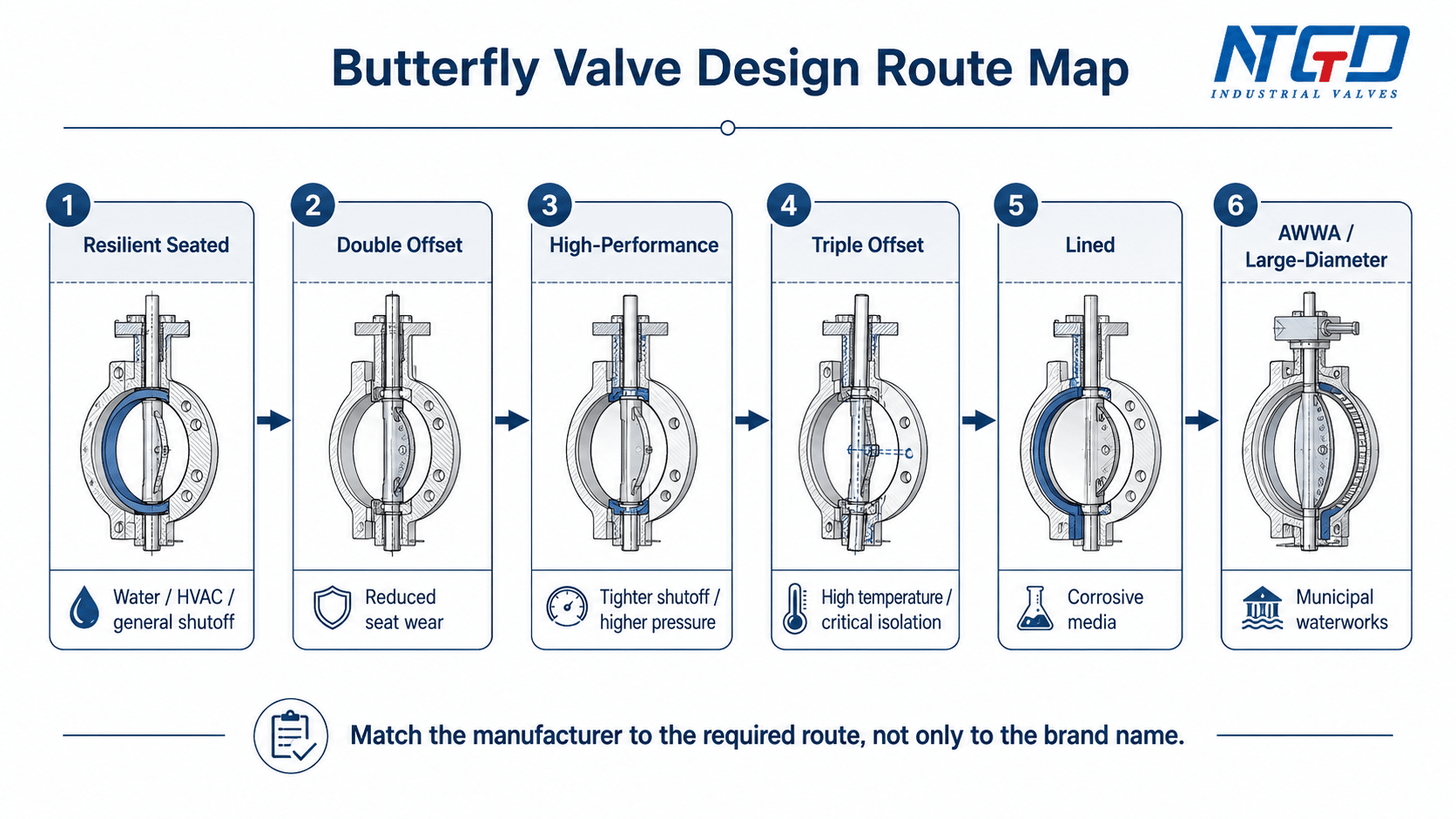
Resilient seated butterfly valves for general water and HVAC service
Resilient seated butterfly valves are commonly used in water, wastewater, HVAC, fire protection, and general low- to medium-pressure services. They rely on an elastomeric seat for shutoff. Buyers should check seat material, temperature range, chemical compatibility, pressure rating, and whether the valve is wafer, lug, flanged, or double-flanged.
When evaluating manufacturers for this route, ask for evidence of stable seat material quality, coating consistency, waterworks documentation where required, and field suitability for the target service. A catalog listing alone does not prove repeatable resilient seated valve quality.
Double offset and high-performance butterfly valves for tighter shutoff
Double offset and high-performance butterfly valves are used when the service requires tighter shutoff, reduced seat wear, higher pressure capability, or better torque behavior than a standard resilient seated valve can provide.
These designs are relevant in chemical processing, oil and gas, power, and demanding industrial services. When evaluating high performance butterfly valve manufacturers, compare seat construction, shaft sealing, material options, fire-safe availability where required, torque data, and actuator compatibility.
A manufacturer should be able to explain why the high-performance route fits the service instead of treating it as a generic upgrade.
Triple offset butterfly valves for high-temperature or critical shutoff service
Triple offset butterfly valves are often selected for high-temperature, high-pressure, steam, gas, power, and critical shutoff applications. Their sealing geometry reduces rubbing between the disc and seat, which can improve sealing life in demanding service.
This design route should be matched to actual service conditions. A mismatched triple offset selection can create unnecessary cost, actuator sizing problems, seat wear risk, or leakage risk if the seat, torque, material, and testing requirements are not aligned with the duty.
A qualified manufacturer should provide pressure-temperature ratings, seat leakage requirements, material options, actuator torque requirements, and test documentation for the selected valve series.
Lined butterfly valves for corrosive media
Lined butterfly valves are used when the fluid may attack the valve body or seat materials. PTFE, rubber, or other lining materials may be selected based on chemical compatibility. These valves are common in chemical processing, wastewater, and corrosive services.
The key question is whether the manufacturer can support the correct liner material, disc material, stem sealing arrangement, and documentation for the chemical environment. A low-cost lined valve can fail early if the liner is not compatible with the medium, concentration, or temperature.
For corrosive service, ask the manufacturer to confirm liner compatibility and the boundary between standard lined service and more severe corrosion-control requirements.
Wafer, lug, flanged, and actuated options for installation and control needs
Connection type affects installation, maintenance, and piping constraints. Wafer butterfly valves are compact, lug designs may allow downstream piping removal in some configurations, and flanged or double-flanged valves are common in larger or more demanding pipeline systems.
Operation method also matters. Manual gear operation may be enough for infrequent use, while a pneumatic or electric-actuated butterfly valve may be required for automation, remote operation, or process control. The manufacturer or supplier should confirm torque, actuator sizing, mounting interface, control accessories, and fail-safe requirements before the valve package is approved.
Match Butterfly Valve Manufacturers to Industrial Applications
Different applications create different risks. A strong manufacturer for municipal water may not be the best option for high-temperature gas service. A severe service valve manufacturer may be unnecessary for a low-pressure HVAC line.
| Application | Typical Butterfly Valve Need | Manufacturer Capability to Check |
|---|---|---|
| Water and wastewater | Resilient seated, AWWA-style, large diameter, corrosion protection | Coating system, rubber seat quality, large-diameter manufacturing capability, waterworks documentation |
| Chemical processing | Lined, corrosion-resistant, high-performance, tight shutoff | Liner compatibility, seat and disc material route, corrosion documentation, ability to discuss media concentration and temperature |
| Oil and gas | High-performance, fire-safe where required, triple offset, automated packages | High-performance / triple offset route, actuator support, fire-safe or project-specific documentation where specified, severe service experience |
| Power generation | High-temperature, steam, tight shutoff, metal seated options | Pressure-temperature suitability, metal seat design, torque data, test records, critical isolation experience |
| HVAC and building systems | Resilient seated, compact wafer/lug, automated control | Cost stability, actuator availability, leakage performance, building-system control compatibility |
| Fire protection | Reliable shutoff, visual indication, listed or approved designs where required | Applicable approvals, documentation, visual indication, field reliability |
| Marine and process industries | Corrosion resistance, compact installation, actuation support | Material route, coating, documentation, supplier support, installation-space awareness |
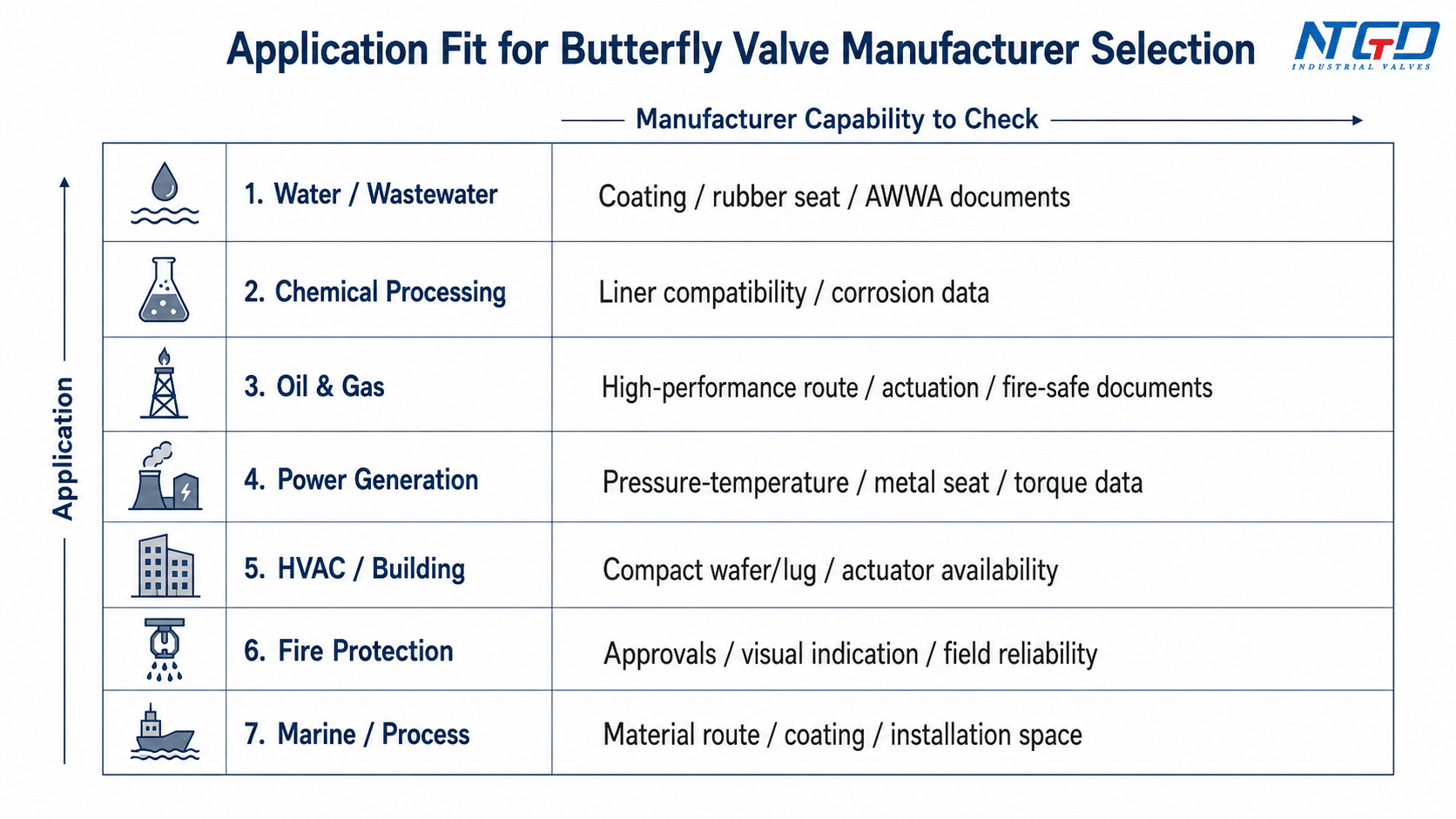
This matrix should not be used as a hard ranking of manufacturers. It helps buyers define what type of manufacturer to shortlist: waterworks-focused, process-control-focused, severe-service-focused, automation-focused, or export-support-focused.
Standards and Certifications to Check Before Shortlisting a Butterfly Valve Manufacturer
Standards and certifications help buyers verify quality systems, product compliance, and documentation discipline. They should not be treated as marketing labels. The key is to match the standard to the project.
| Standard / Certification Signal | Why It Matters in Butterfly Valve Procurement | Buyer Checkpoint |
|---|---|---|
| ISO 9001 | Indicates a documented quality management system | Verify whether the manufacturing site and product scope are covered |
| CE / PED | Relevant for pressure equipment in European markets | Verify whether the selected valve series, pressure category, and project market require compliance |
| API 609 | Commonly referenced for butterfly valve design requirements | Verify whether the valve type, class, dimensions, and documentation match the project specification |
| API 607 | Relevant for fire-safe testing in specific valve designs | Verify whether the selected valve series is fire-safe tested where the service requires it |
| AWWA C504 / C516 | Relevant for waterworks and municipal butterfly valves | Check whether the project specification, valve size, and application call for AWWA-style compliance |
| NSF/ANSI 61 | Relevant for drinking water contact materials | Confirm drinking water certification where the project requires it |
| Material test reports | Support material traceability | Request MTRs when pressure, corrosion, material, or project specs require them |
| Pressure / seat test records | Support inspection and acceptance | Ask for test standards, acceptance criteria, and product-specific test records |
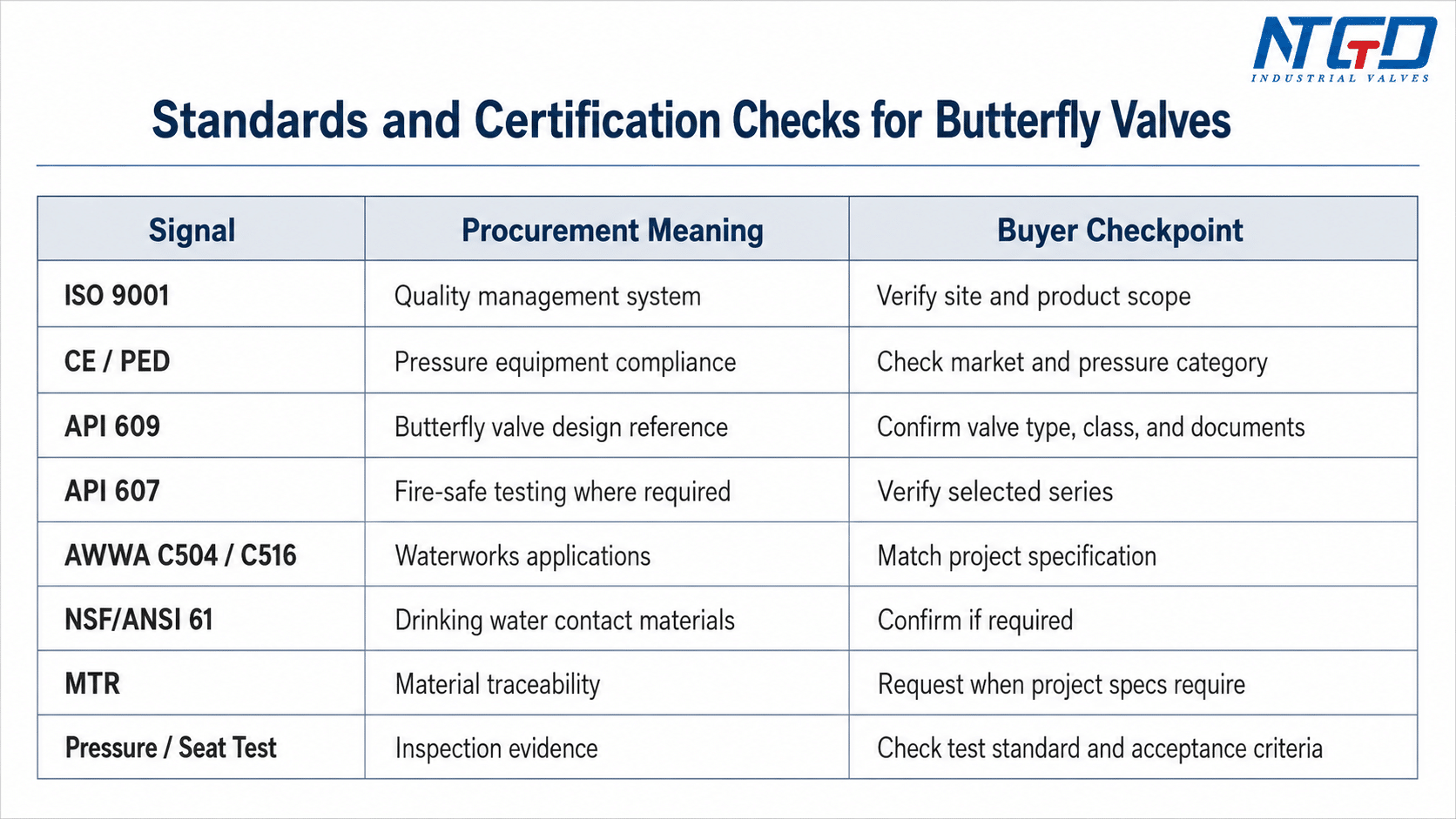
Company-level certification, product-line certification, and project specification are not the same thing. A manufacturer may hold an ISO certificate, but that does not automatically mean every butterfly valve series meets API, AWWA, PED, or NSF requirements.
For shortlist decisions, verify certification scope against the actual valve series and the project specification. Broad certification claims are useful only when they can be supported by product-specific documentation.
Supplier Capability and RFQ-Ready Checklist
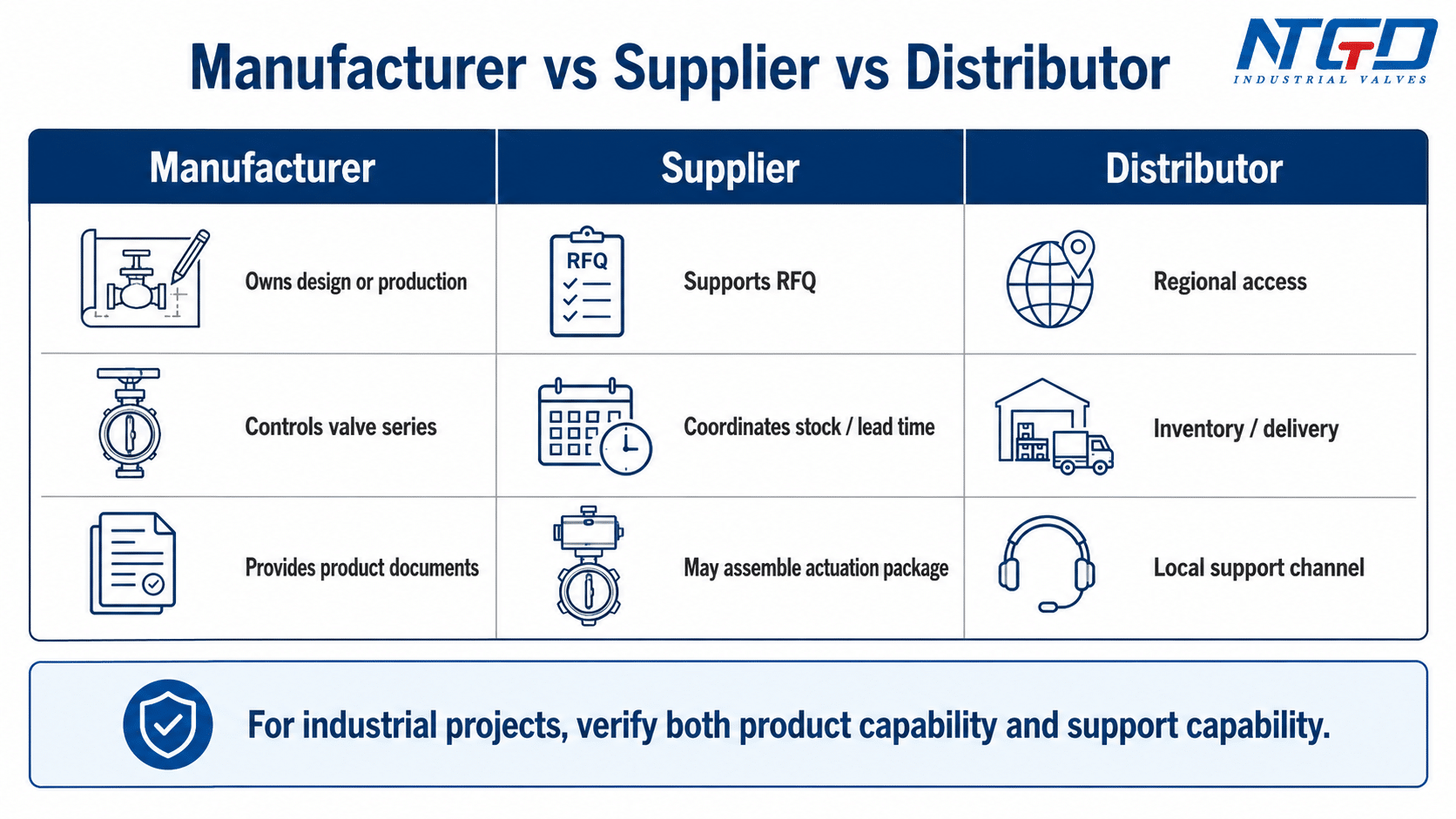
A manufacturer may design and produce valves. A supplier may stock, assemble, distribute, configure, document, or support valves for a project. In some cases, one company performs both roles. In other cases, the buyer works through a distributor or regional supplier.
For butterfly valve procurement, this difference matters because supplier capability can affect lead time, actuator matching, documentation, spare parts, and after-sales response.
| Capability Area | What to Check | Why It Matters |
|---|---|---|
| Product availability | Stock, production lead time, size range | Reduces project delay risk |
| Actuation support | Manual, gear, pneumatic, electric, accessories | Prevents torque mismatch and control issues |
| Documentation | Datasheets, certificates, test reports, MTRs | Supports approval, inspection, and project handover |
| Spare parts | Seat, liner, disc, stem seal, actuator parts | Reduces downtime when replacement is needed |
| Technical support | Application review, material guidance, installation notes | Improves selection accuracy before purchase |
| Customization | Material, connection, actuator, coating, inspection | Supports non-standard project needs |
| After-sales service | Warranty, repair, troubleshooting, replacement | Protects lifecycle reliability |
RFQ-ready checklist
Before contacting a butterfly valve manufacturer or supplier, prepare the following information. Complete RFQ data does more than improve quotation accuracy; it helps the supplier confirm whether it has the design route, material capability, actuation support, documentation package, and delivery capacity needed for the project.
| RFQ Field | What to Provide |
|---|---|
| Valve size | DN / NPS / pipe size |
| Pressure rating | PN, ASME class, or required working pressure |
| Temperature | Normal and maximum service temperature |
| Medium | Water, wastewater, gas, steam, chemical, slurry, or other fluid |
| Corrosion / solids | Chemical concentration, abrasive solids, scaling risk |
| Valve design route | Resilient seated, double offset, triple offset, lined, AWWA, high-performance |
| Connection type | Wafer, lug, flanged, double-flanged, grooved, or other |
| Body / disc / seat material | Required material or service condition for selection |
| Operation | Manual lever, gear, pneumatic, electric, hydraulic |
| Standards | API 609, API 607, AWWA, CE/PED, NSF/ANSI, project specification |
| Quantity and schedule | Order quantity, delivery date, documentation deadline |
| Inspection documents | Test report, certificate, MTR, coating report, pressure test record |
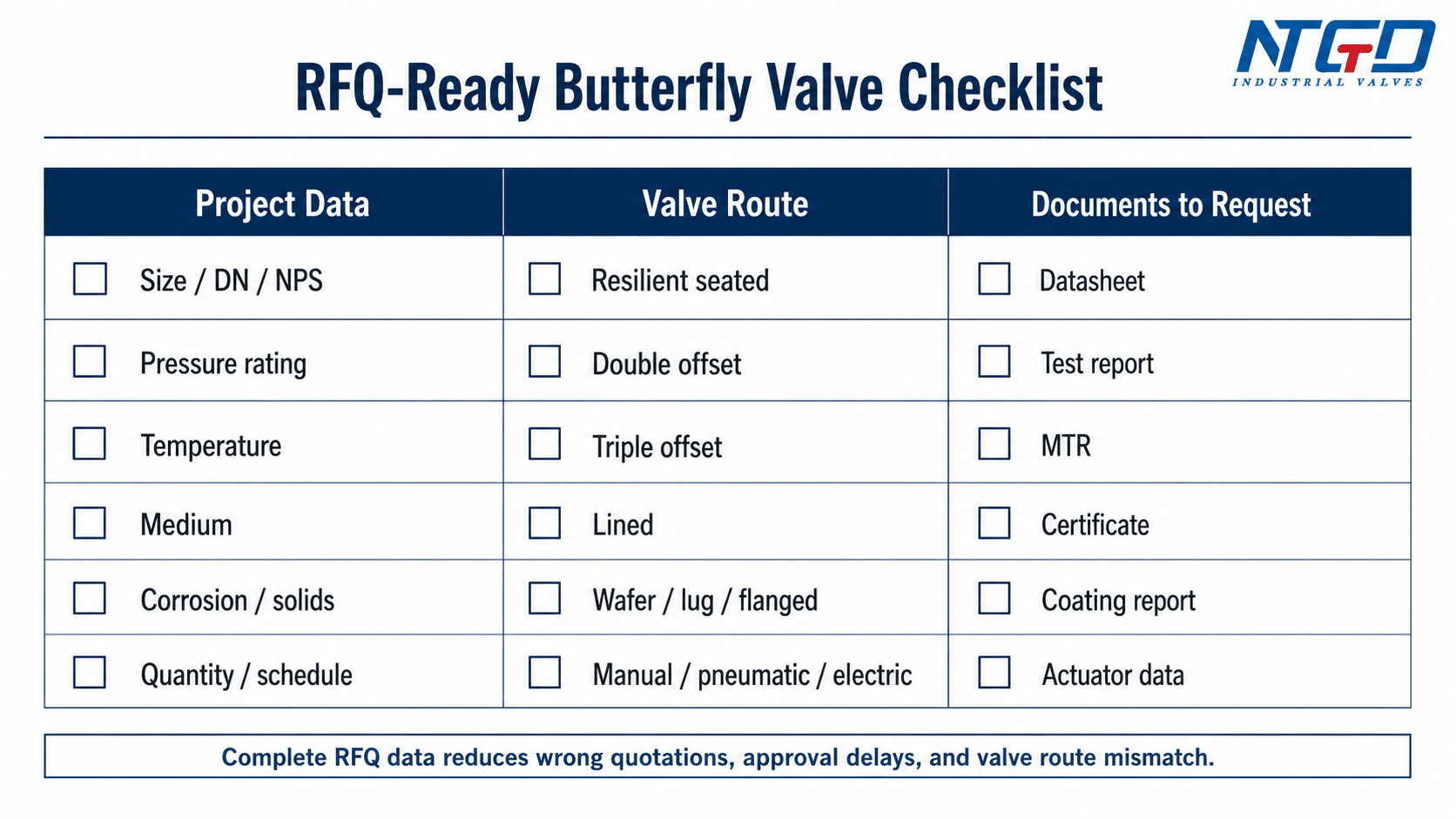
The most important fields are not always the longest ones. Medium, temperature, pressure rating, seat or liner material, operation method, and required standards usually decide whether a standard resilient seated valve is enough or whether a lined, double offset, high-performance, or triple offset butterfly valve is needed.
A clear RFQ also reduces wrong quotations, approval delays, and late-stage specification changes.
FAQ About Butterfly Valve Manufacturers and Suppliers
Who are the top butterfly valve manufacturers?
Commonly shortlisted butterfly valve manufacturers include Emerson, Flowserve, KSB, Crane Co., Bray International, Valmet, AVK Group, NTGD Valve, Velan, DeZURIK, and Val-Matic. For water infrastructure, waterworks-focused manufacturers are usually the first group to review. For process control, chemical, power, or critical isolation service, high-performance and engineered valve manufacturers should receive closer attention.
How do I choose a butterfly valve manufacturer?
Start with the service condition. Confirm media, pressure, temperature, valve size, seat material, connection type, actuation, and required standards. Then compare manufacturers by product route, application experience, certification scope, documentation support, spare parts, and lifecycle value.
What is the difference between a butterfly valve manufacturer and a butterfly valve supplier?
A manufacturer produces the valve or owns the product design. A supplier may distribute, stock, configure, assemble actuators, provide documents, or support RFQs. Some companies do both. For industrial projects, supplier capability matters when delivery time, documentation, spare parts, and actuation support are important.
Which butterfly valve brand is best for industrial service?
There is no single best butterfly valve brand for every service. A water treatment project may prioritize resilient seated or AWWA-style butterfly valves, while a power or steam application may require high-performance or triple offset designs. The best brand is the one whose product route, documentation, and support capability match the service condition.
When should I choose a high-performance or triple offset butterfly valve manufacturer?
Choose a high-performance or triple offset butterfly valve manufacturer when the service involves higher pressure, tighter shutoff, higher temperature, steam, gas, critical isolation, or more demanding lifecycle requirements. These designs are not universal upgrades; they should be selected only when the operating conditions justify the design route.
Is API 609 important when selecting a butterfly valve manufacturer?
API 609 can be important when the project specification requires butterfly valves designed and documented according to that standard. Buyers should verify whether the selected valve series, pressure class, materials, dimensions, and testing documents match the project requirement.
Can regional butterfly valve manufacturers support international projects?
Yes, but buyers should check export experience, documentation language, applicable standards, inspection support, packaging, lead time, spare parts, and after-sales communication. A regional manufacturer can be suitable if it can meet the project’s technical and documentation requirements.
Should price be the main factor when choosing butterfly valve manufacturers?
No. Price should be reviewed together with material suitability, sealing performance, documentation, actuator compatibility, delivery reliability, and after-sales support. A low-cost valve can become expensive if it causes leakage, approval delays, repeat maintenance, actuator problems, or unplanned downtime.
Conclusion
The best butterfly valve manufacturer is not always the largest company or the lowest-price supplier. A strong choice is the manufacturer whose valve design route, application experience, standards documentation, supplier capability, and after-sales support match the actual project conditions.
For general water or HVAC service, resilient seated butterfly valves may be sufficient. For corrosive media, lined designs and material compatibility become more important. For high-temperature, high-pressure, steam, or critical shutoff service, high-performance or triple offset butterfly valves may be required. For municipal water projects, AWWA standards and long-term service reliability may drive the selection.
Use this manufacturer list as a starting point, then narrow the shortlist by application, valve route, standards, documentation, support capability, and RFQ readiness.
If you are preparing a butterfly valve inquiry or reviewing a supplier shortlist, an engineering team can help verify whether the selected valve route and RFQ data match the application. Share the service medium, size, pressure rating, temperature, connection type, material requirements, actuator preference, applicable standard, and documentation needs so the correct resilient seated, lined, double offset, triple offset, manual, pneumatic, or electric-actuated butterfly valve route can be reviewed before final purchase.
