
Author Name: Bruce Zheng
Author Role: Co-Founder and Valve Engineer at NTGD Valve
Author Bio: Bruce Zheng is Co-Founder and Valve Engineer at NTGD Valve, focusing on industrial valve selection, application, and technical content for global B2B buyers.
Last Updated: April 21, 2026
Gate Valve Materials: Choosing Between Carbon Steel and Stainless Steel
Gate valve material selection between carbon steel and stainless steel is not a generic metals comparison. It is a decision that directly affects service life, maintenance burden, downtime risk, and total ownership cost. For most industrial buyers, the real question is not which alloy sounds stronger on paper, but when a carbon steel gate valve is the right fit and when stainless steel is the safer long-term direction.
This guide is built for that decision. It gives you a practical selection framework for real gate valve service, then explains why corrosion exposure, temperature, pressure, maintenance access, and specification requirements can push the material choice in very different directions.
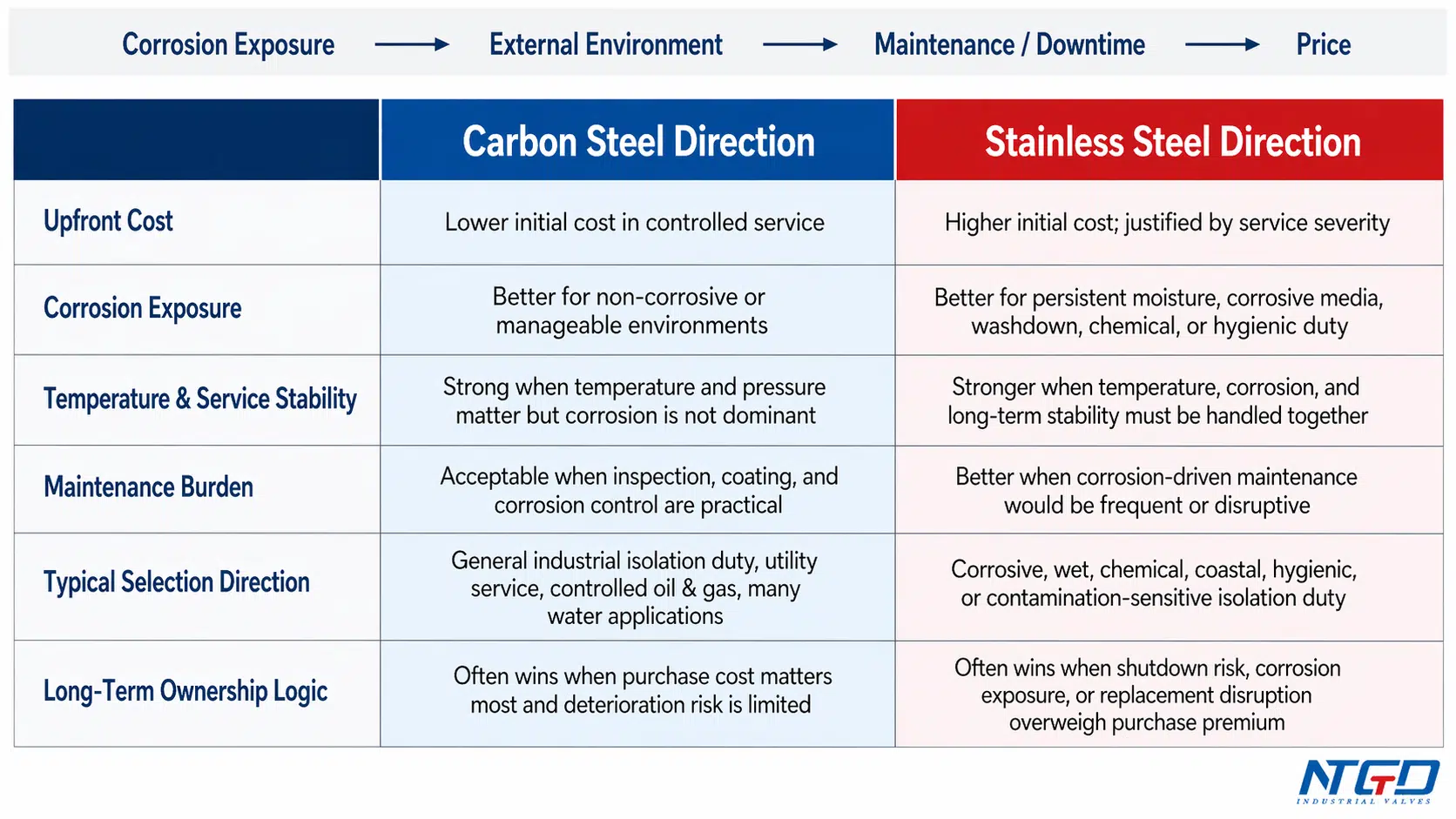
| Selection Factor | Carbon Steel Gate Valve | Stainless Steel Gate Valve |
|---|---|---|
| Upfront cost | Lower initial cost when service conditions are controlled | Higher initial cost, usually justified only when service severity makes it necessary |
| Corrosion exposure | Better fit for non-corrosive or manageable environments | Better fit for persistent moisture, corrosive media, washdown, chemical, or hygiene-sensitive duty |
| Temperature and service stability | Strong option when thermal and pressure demands are present but corrosion is not the dominant threat | Stronger direction when temperature, corrosion, and long-term service stability must be handled together |
| Maintenance burden | Often acceptable when inspection, coating, and corrosion control are practical | Usually better when corrosion-driven maintenance would be frequent, disruptive, or difficult to manage |
| Typical selection direction | General industrial isolation duty, utility service, many controlled oil and gas or water applications | Corrosive, wet, chemical, coastal, hygienic, or contamination-sensitive isolation duty |
| Long-term ownership logic | Often wins when purchase cost matters most and environment-related deterioration is limited | Often wins when shutdown risk, corrosion exposure, or replacement disruption outweigh purchase premium |
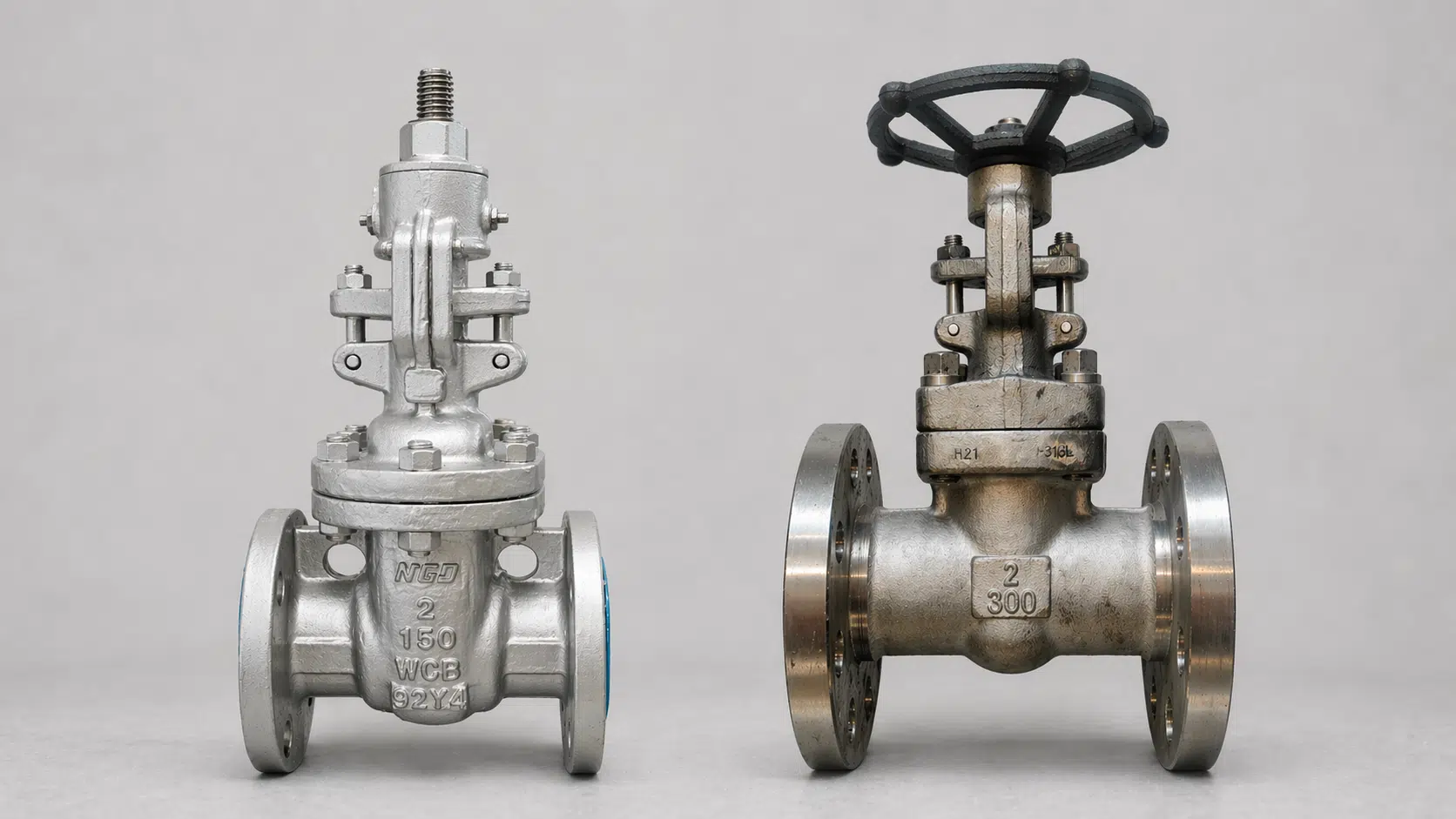
How to Judge Gate Valve Material Selection Between Carbon Steel and Stainless Steel
The first question is not price. The first question is what is most likely to shorten the valve’s useful life in your service.
Start with corrosion exposure and external environment. Then look at how difficult maintenance or replacement will be if the valve degrades early. Only after those two points are clear does price become a meaningful comparison. In practice, many material decisions can be narrowed down quickly: if corrosion is low and service is controlled, carbon steel usually deserves serious consideration; if corrosion, washdown, moisture, or contamination risk are constant features of the job, stainless steel usually moves ahead before quotations are compared.
When Carbon Steel Is the Better Direction
Carbon steel is often the better direction when the service is primarily non-corrosive, the valve is being used for standard isolation duty, and the economic case favors a durable but cost-controlled body material. This is why carbon steel gate valves are common in oil and gas, general industrial utilities, and many water or process systems where the environment is controlled and corrosion can be managed through specification, coatings, inspection, or normal maintenance practice.
This is also where the advantages of carbon steel valves become commercially meaningful: lower upfront cost, strong mechanical performance, wide market familiarity, and more practical scaling across projects with multiple valve positions.
When Stainless Steel Is the Better Direction
Stainless steel becomes the better direction when corrosion resistance is not optional. Chemical handling, washdown-heavy service, wet processing areas, coastal exposure, hygienic systems, and contamination-sensitive duties are the most common triggers. In those services, the material choice is not about paying extra for a premium alloy. It is about avoiding corrosion-driven inspection, early degradation, contamination concerns, and replacement activity that can cost more than the initial price difference.
Stainless steel also becomes easier to justify when service interruption is expensive. If premature deterioration can create shutdowns, cleaning problems, or repeated intervention, stainless steel often protects total lifecycle performance better than a lower-cost carbon steel body.
What to Check First Before Comparing Price
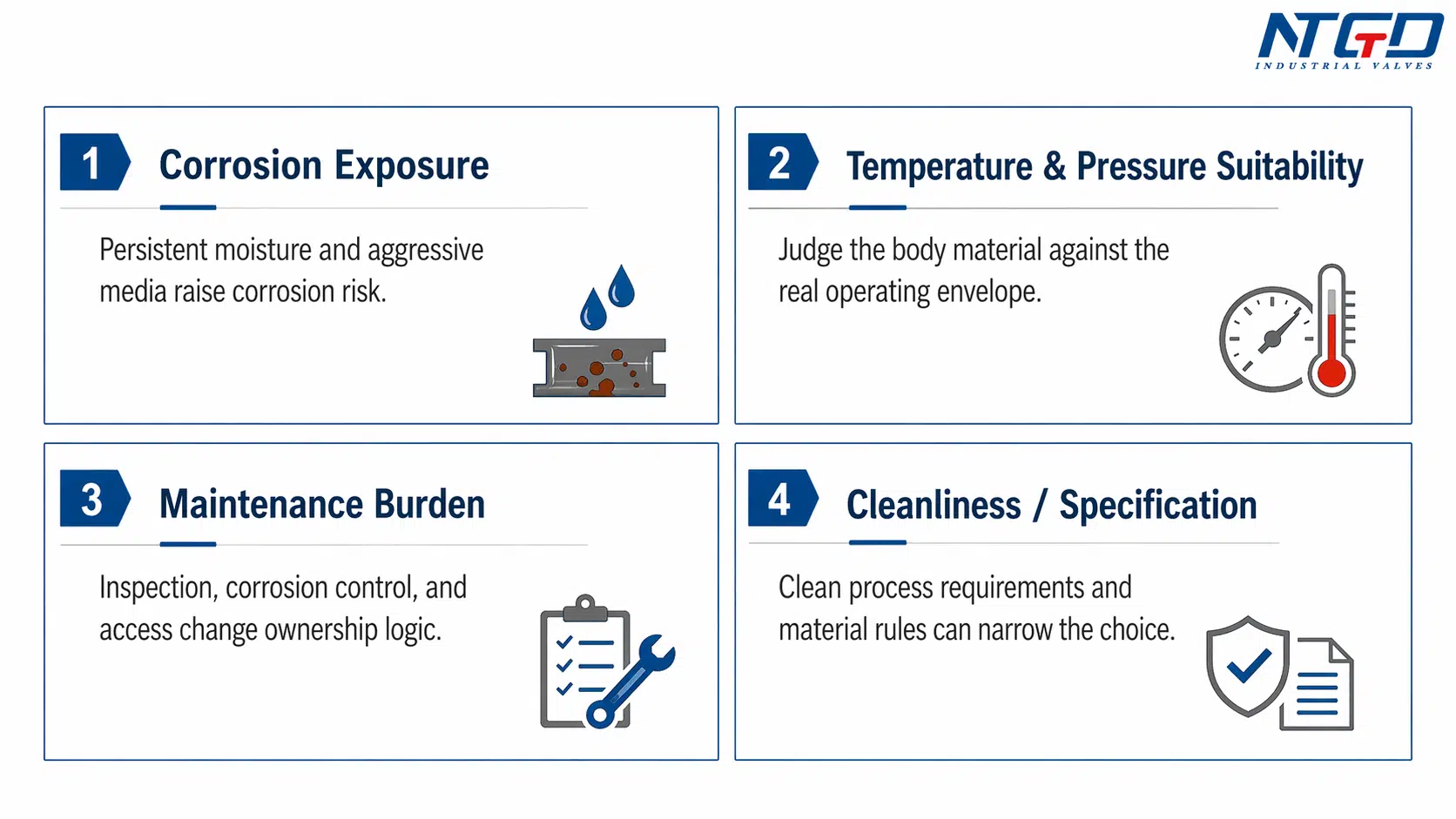
Before comparing quotations, screen the application in this order:
- Media corrosiveness
- External environment, including humidity, washdown, salt exposure, or aggressive cleaning
- Temperature and pressure severity in combination with the service environment
- Maintenance access and inspection frequency
- Downtime consequence if the valve degrades earlier than expected
- Cleanliness, contamination, or specification requirements
This order matters. A low quotation is only an advantage after you know the service will not erase it through maintenance, corrosion control, or earlier replacement.
Why These Factors Change the Material Choice in Gate Valves
A gate valve is selected for isolation duty, so the body material has to support shut-off reliability over time. What changes the decision is not a generic list of material properties, but how those properties affect body integrity, corrosion exposure, maintenance effort, and service continuity in the actual line.
Corrosion and Media Exposure
Corrosion is the clearest divider between carbon steel and stainless steel. Carbon steel can perform very well in non-corrosive service, but once the body is exposed to persistent moisture, aggressive chemicals, or corrosive media, the maintenance burden rises and the useful life can shorten. The problem is not cosmetic rust alone. Corrosion can affect inspection intervals, coating and corrosion-protection strategy, external hardware condition, body surfaces, and confidence in long-term service stability.
Stainless steel is selected to reduce that exposure. It is not universally immune to every chemical environment, and alloy selection still matters, but it is usually the more appropriate direction when corrosion resistance is the main driver of reliability.
Temperature, Pressure, and Mechanical Service
Temperature and pressure do not automatically mean stainless steel. Carbon steel body grades are widely used in demanding industrial service when corrosion is not the dominant threat. Stainless steel becomes more attractive when thermal or pressure severity is combined with corrosive exposure, wet external conditions, or cleanliness requirements that make long-term service stability harder to maintain with carbon steel.
For gate valves, this is not just a question of whether the body can withstand pressure. It is also a question of whether the selected body material can maintain reliable isolation duty over time under the actual operating envelope. In real selection work, temperature and pressure push the discussion toward the appropriate material grade and pressure-temperature suitability for that valve body.
That is why the right question is not “Which material handles higher numbers?” but “Which body material direction fits the combined temperature, pressure, media, and service environment of this valve position?”
Maintenance Burden and Lifecycle Cost
Carbon steel may win the purchase-price comparison, but that does not automatically make it the lower-cost option over time. If the service environment causes repeated repainting, corrosion control, earlier replacement, or more frequent inspection, the low initial price becomes less persuasive.
Stainless steel often costs more at purchase but may reduce corrosion-driven maintenance, especially where access is difficult, shutdowns are expensive, or replacement activity disrupts production or compliance routines.
Standards, Cleanliness, and Industry Requirements
Some services narrow the choice quickly. Clean process requirements, contamination sensitivity, chemical compatibility expectations, or internal material specifications can push the decision away from price and toward a more corrosion-resistant material direction. In those cases, stainless steel may be preferred not because carbon steel lacks strength, but because the application expects a cleaner or more resistant body material baseline.
At the same time, many oil and gas, utility, and general process services still use carbon steel successfully under recognized industrial standards. Standards are not a separate paperwork topic. They shape what body material direction is acceptable in the first place.
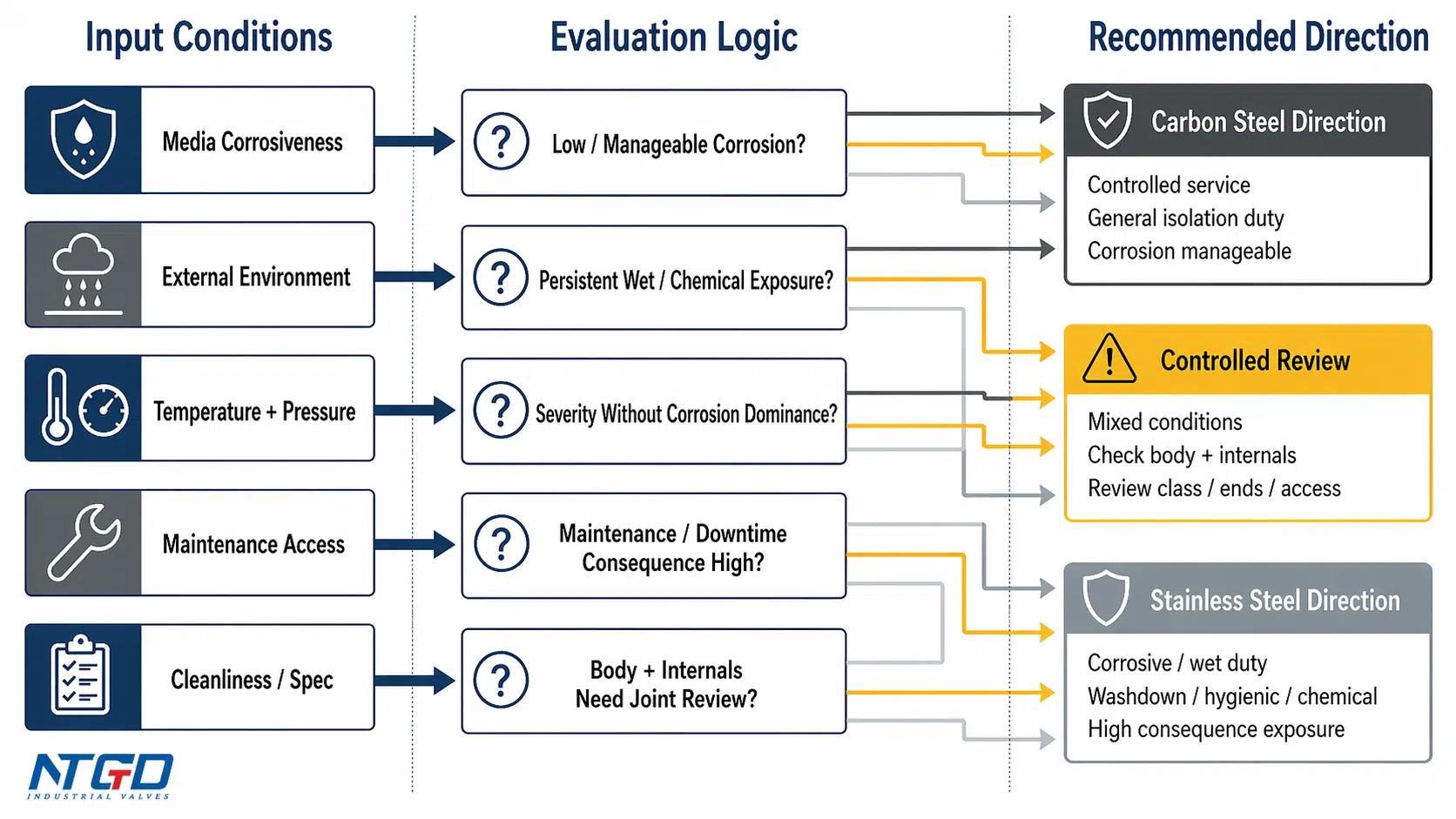
Mapping Service Conditions to Carbon Steel or Stainless Steel Gate Valves
Industry names alone do not decide the material. The underlying service condition does.
Non-Corrosive Utility and General Industrial Service
If the valve is handling non-corrosive media in a controlled environment, carbon steel is often the logical starting point. This includes many utility lines, general industrial isolation duties, and systems where external corrosion is limited and maintenance access is realistic.
In this type of service, the value of carbon steel is economic practicality. It delivers industrially proven body strength and acceptable service life without forcing a premium material choice where the environment does not justify it.
Corrosive, Wet, Hygienic, and Chemical Service
If the valve will face corrosive fluids, frequent washdown, aggressive cleaning agents, humid exposure, or hygiene-sensitive processing, stainless steel is usually the safer direction. Chemical plants, food and beverage systems, pharmaceutical environments, coastal installations, and wet process lines often fall into this range.
The key issue here is service exposure. Once corrosion risk and cleanliness requirements become persistent operating realities, stainless steel becomes harder to avoid because it reduces deterioration risk and lowers the chance that the body material will become the weak link in long-term service.
Oil and Gas, Water Treatment, and Process Plant Contexts
These sectors are not one-material categories. The right answer depends on the actual service condition inside them.
- Oil and gas service often supports carbon steel when the duty is general isolation, the environment is controlled, and corrosion is not the dominant threat.
- Water treatment can justify carbon steel in controlled, non-aggressive service, but it can move toward stainless steel when wet exposure, chemistry, or maintenance burden changes the ownership logic.
- Process plants often push toward stainless steel when chemical compatibility, repeated washdown, or contamination sensitivity matter more than minimizing initial spend.
That is why gate valve material for oil and gas service and gate valve material for corrosive service should not be treated as the same selection question. The service condition behind the industry label is what moves the decision.
Gate Valve-Specific Boundaries That Change the Material Decision
This page is about gate valve material selection, not generic valve metallurgy. That matters because the valve type changes what the body material is actually supporting.
Isolation Duty vs Throttling Misuse
A gate valve is primarily an isolation valve.
It is intended to be fully open or fully closed, not used as a control valve for regular throttling.
If a gate valve is repeatedly left partially open, flow conditions can increase wear and disturb the surfaces that matter to shut-off performance.
That does not make body material irrelevant. It means body material should not be expected to compensate for the wrong duty pattern. A carbon steel gate valve used correctly in the right service can perform very well. A stainless steel gate valve used in the wrong duty pattern can still develop avoidable wear and sealing problems.
For the common operating sequence that does not change with carbon steel or stainless steel body selection, see NTGD’s guide to the general gate valve working principle.
Body Material vs Trim, Seat, Seal, and Stem
One of the most important clarifications in gate valve material selection is that body material is not the whole valve material story.
This page compares carbon steel and stainless steel mainly as body material directions. But valve performance is also affected by trim materials and gate valve internal specifications, including:
- trim materials
- seat arrangement
- stem material
- sealing and packing components
- any hard-facing or wear-related details required by the duty
The body material sets the outer service-fit boundary. The internal materials determine whether the valve continues to isolate reliably once it is installed. In gate valve service, that distinction becomes practical very quickly: a body may still look acceptable from a corrosion or strength standpoint while the seating surfaces, stem-related parts, or sealing elements become the first source of harder operation, weaker shut-off confidence, or leakage-related maintenance attention.
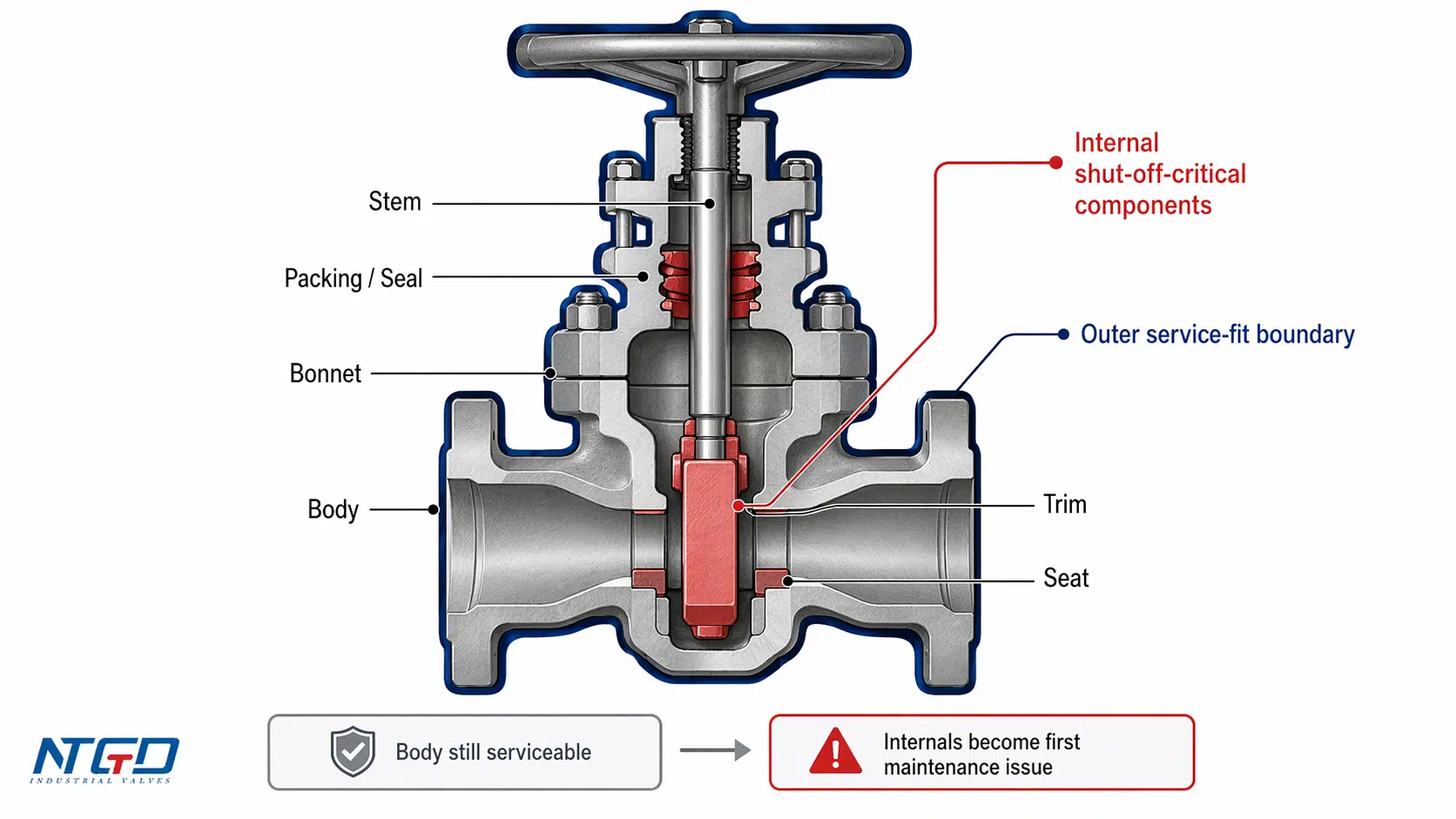
Why Full Valve Performance Is Not Decided by Body Material Alone
A body material decision does not replace full specification review. Shut-off performance, leakage control, wear behavior, cycling durability, and long-term operability are also shaped by the internal materials and design details. In edge cases, the first meaningful problem may not come from the body at all. It may show up first at the seating surfaces, sealing elements, or stem-related components.
That is why selecting a stainless steel body does not automatically solve every corrosion or sealing concern, and why a carbon steel body is not automatically disqualified if the full valve specification is properly matched to the service. In some boundary cases, the body can remain serviceable while the components that actually protect shut-off reliability become the first maintenance problem. The right engineering question is not just “carbon steel or stainless steel?” It is “which body material direction fits the service, and what supporting internal specification must go with it?”
Product-Side Variables That Still Matter After the Material Direction Is Chosen
This page is not a product page, but real buyers do not stop at body material. Once the material direction is clear, a few product-side variables still matter because they help confirm whether the chosen direction is being carried into the right valve form.
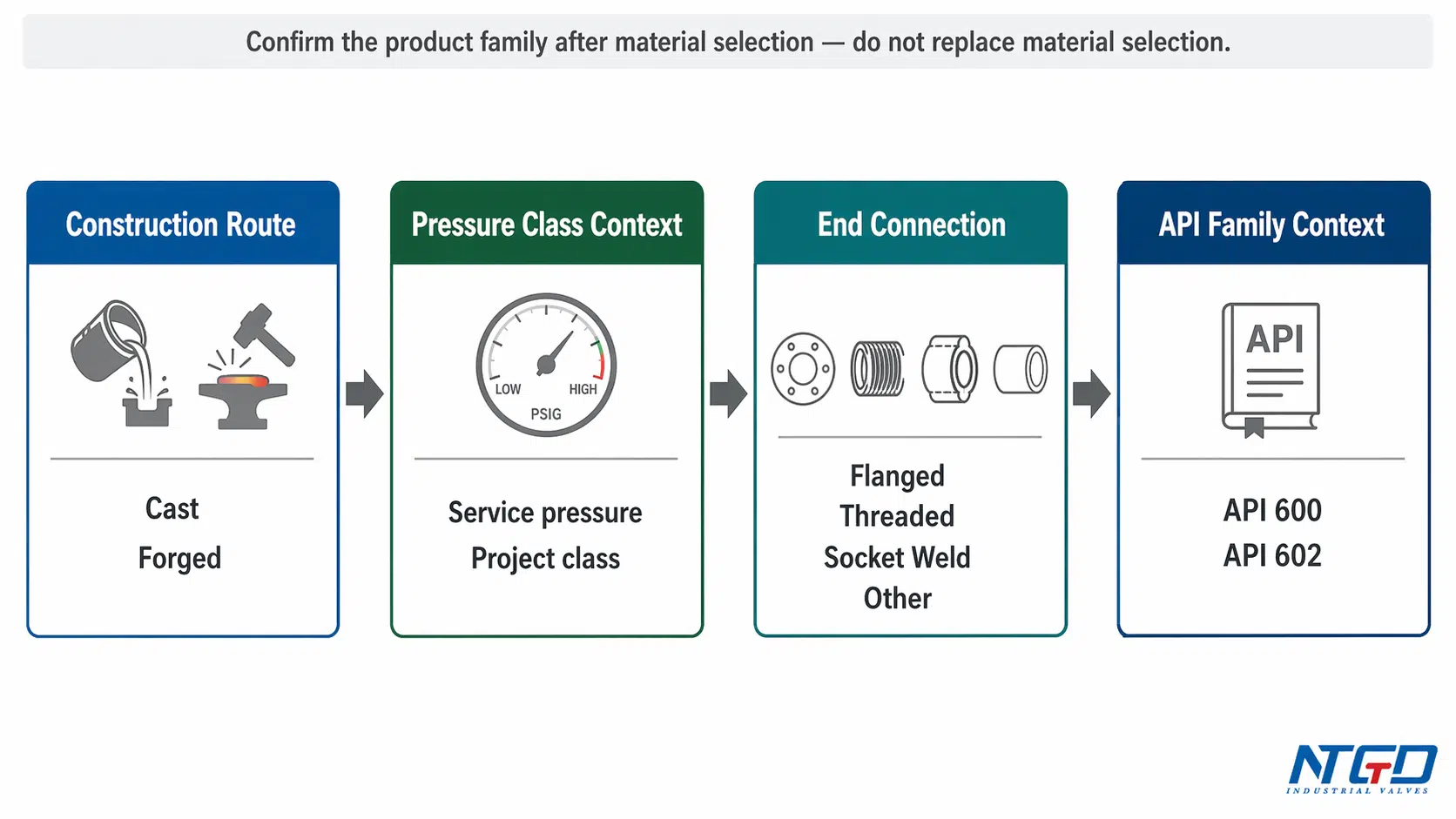
Cast vs Forged Carbon Steel Gate Valve
For buyers looking at a carbon steel gate valve, one of the next practical questions is cast versus forged construction. That question matters because it usually reflects the expected size range, pressure class context, project specification, and manufacturing route. It is not a replacement for material selection. It is a construction and specification filter that follows material selection.
In practice, the cast-versus-forged question matters because the same carbon steel direction can be delivered through different product forms depending on how the valve will actually be specified and procured. When project specification, pressure class context, or construction route already narrows the eligible product family, this is no longer a descriptive detail. It becomes an early screening step that affects which carbon steel gate valve candidates belong in the RFQ list at all.
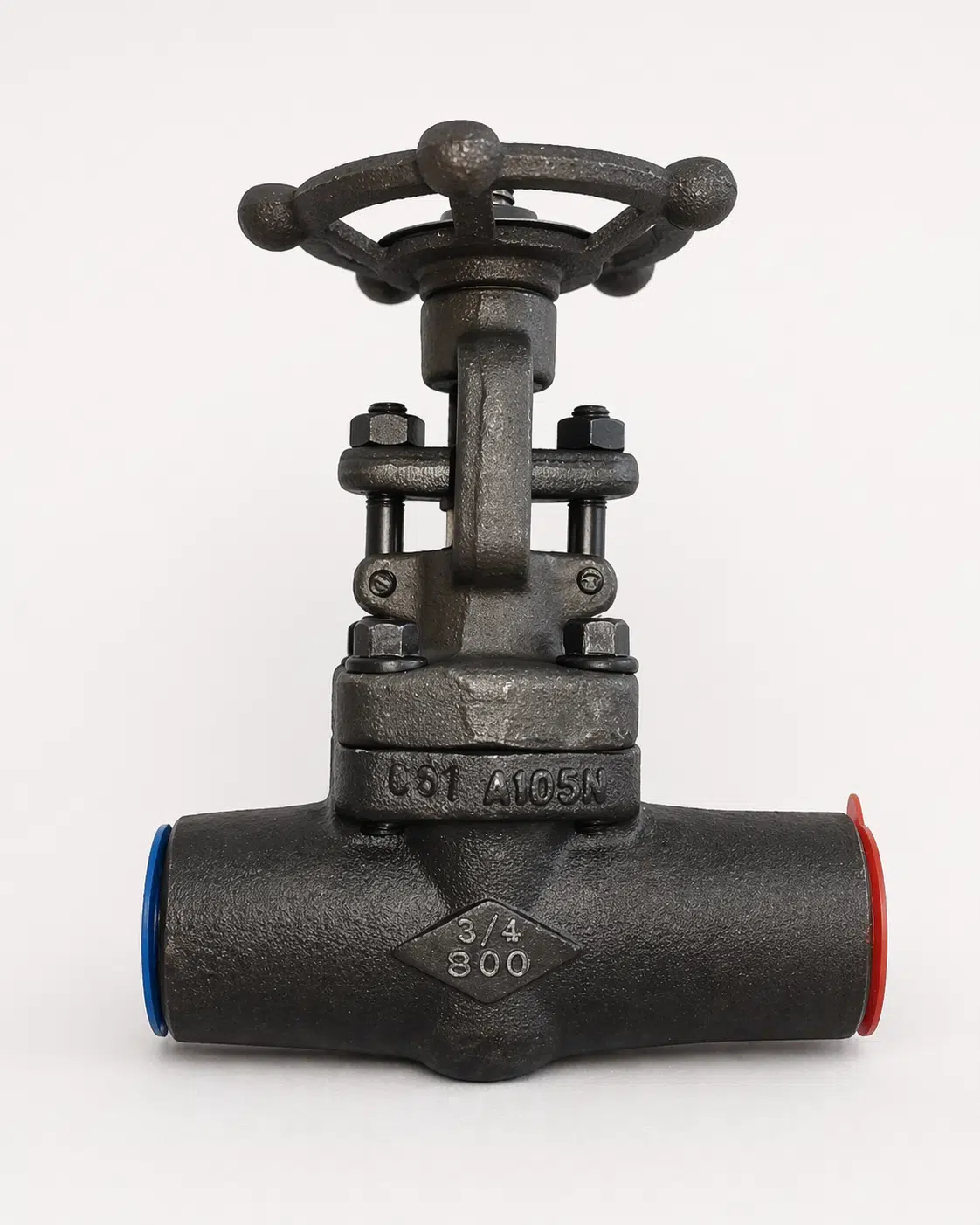
Class, End Connection, and Typical Specification Filters
After choosing the material direction, buyers still need to confirm the normal specification filters:
- pressure class
- size range
- flanged, threaded, socket weld, or other end connection
- plant or project specification requirements
These variables do not replace material selection, but they determine whether the selected material direction is being matched to the right gate valve format for the job.
Where API 600 / API 602 Context Actually Matters
Standards and design references matter most when they affect the valve family, construction context, and procurement screen that follows the material decision.
They help confirm whether the selected body material direction is being evaluated in the correct product context.
This context matters when the buyer is no longer asking “carbon steel or stainless steel?” in the abstract, but “which gate valve family and construction route should even be screened after the material direction is chosen?” For this page, the practical point is simple: use product-side variables to confirm the selection, not to replace the selection logic.
What Happens When the Wrong Gate Valve Material Is Chosen
A material mismatch is not just a technical imperfection. It usually creates a visible operational cost consequence.
| Wrong Selection Pattern | Likely Result | Practical Cost Impact |
|---|---|---|
| Carbon steel used in corrosive or persistently wet service | Rust-related degradation, more inspection, shorter service life | More frequent inspection, coating rework, earlier replacement planning, and greater shutdown exposure if deterioration is missed |
| Stainless steel selected for mild, non-corrosive, budget-sensitive duty with no clear service benefit | Over-specification | Higher initial spend and weaker capital efficiency without a proportional operating return |
| Body material selected correctly, but trim / sealing boundary ignored | Valve underperforms relative to expectation | Troubleshooting effort, re-specification, service interruptions, or premature internal repair activity |
| Gate valve used outside normal isolation duty | Wear and shut-off performance concerns | Avoidable maintenance work, reduced sealing reliability, and earlier intervention than the buyer expected |
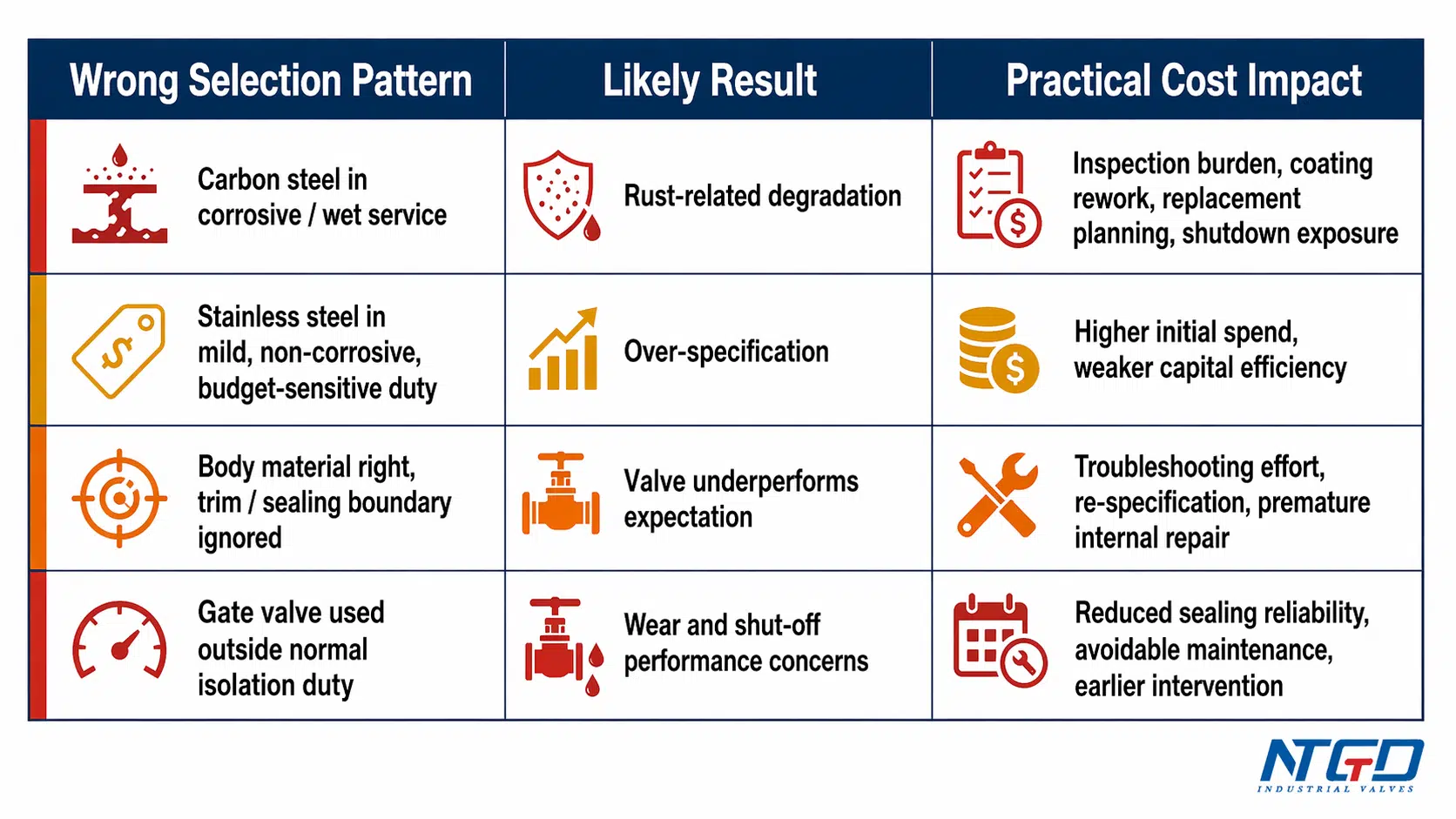
Carbon Steel in Corrosive or Wet Service
When carbon steel is used where corrosion exposure is persistent, the problem is rarely instant failure. The more common pattern is cumulative burden: more coating attention, more inspection, more concern about body condition, and less confidence in long-term service stability. As corrosion exposure increases, inspection and maintenance effort rise with it, and that is where a low purchase price starts to lose its advantage.
Stainless Steel in Budget-Sensitive General Service
The opposite mistake is quieter but still real. If the service is dry, non-corrosive, and economically controlled, stainless steel may add cost without changing the operating outcome enough to justify it. In those cases, the issue is not that stainless steel is technically wrong. The issue is that the buyer is allocating premium material cost to resistance the service may not need.
Common Misread Signals Before Cost Escalation
A material decision is probably drifting off course when:
- the body material is being chosen before media exposure is clarified
- price is compared before corrosion risk is checked
- the service is described by industry name only, without actual conditions
- body material is being treated as the entire specification
- a gate valve is expected to solve a throttling problem it was not selected for
Lifecycle Cost, Final Fit-Check, and Selection Close
The last step is not to repeat the comparison. It is to screen the choice one more time against the actual service and ownership risk.
Upfront Cost vs Total Ownership Logic
If the service is controlled and corrosion is low, carbon steel often keeps the ownership logic simple. Lower purchase cost, broad industrial familiarity, and acceptable service life can make it the right answer.
If corrosion risk, moisture exposure, cleanliness requirements, or shutdown consequence are high, stainless steel often becomes the better long-term decision. In those cases, the purchase premium may be smaller than the cost of corrosion-driven maintenance, disruption, or earlier replacement.
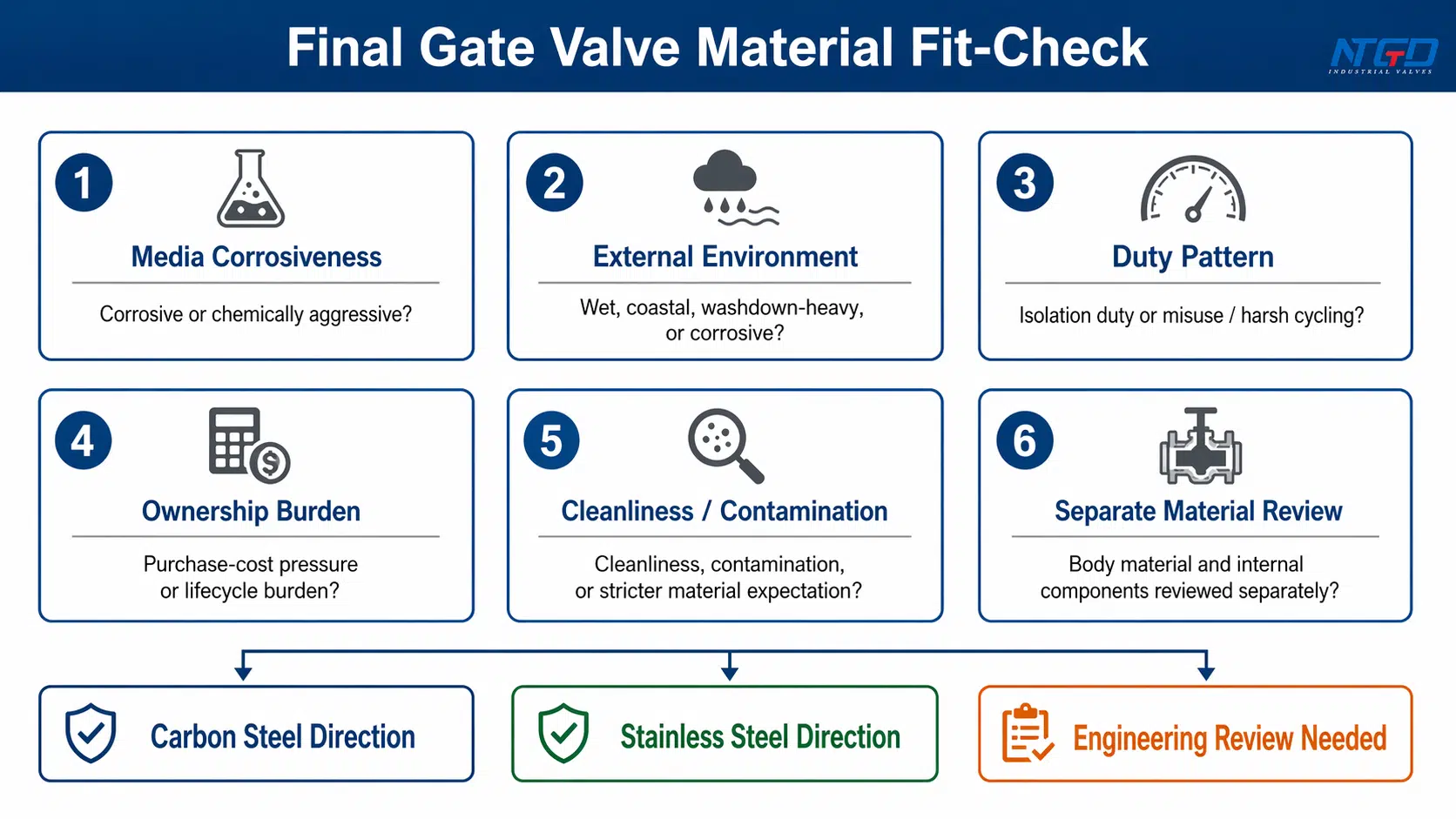
A Final Gate Valve Material Fit-Check
Use this checklist as a final review before locking the material direction:
- Is the media corrosive or chemically aggressive?
- Is the external environment wet, coastal, washdown-heavy, or otherwise corrosive?
- Is this standard isolation duty, or a service likely to involve misuse or harsh cycling?
- Is the cost pressure mainly at purchase, or mainly over time through maintenance and downtime?
- Does the specification involve cleanliness, contamination, or stricter material expectations?
- Have body material and internal component material been reviewed separately?
If the answers point to controlled general service, carbon steel often remains a strong and economical fit. If they point to corrosion, hygiene, or high replacement consequence, stainless steel is usually the safer direction. This is the point where ownership logic and service risk should outweigh habit or quotation-first thinking.
When to Ask for an Engineering Review
If the application sits near the boundary between the two material directions, the right move is not to guess. It is to review the actual service conditions, pressure class, connection type, and internal material requirements together. That is especially true when the valve is part of a larger specification package rather than a one-off replacement item.
FAQ
1) When should you use a carbon steel gate valve?
Use a carbon steel gate valve when corrosion is low, the environment is controlled, and the duty is standard isolation rather than a severe exposure case. If routine inspection, coating, and normal maintenance can realistically keep deterioration under control, carbon steel usually remains the economical direction.
2) When should you use a stainless steel gate valve?
Use stainless steel when corrosion resistance is part of the service requirement, not just a precautionary upgrade. Repeated washdown, wet process duty, chemical exposure, coastal installation, or hygiene-sensitive service are the conditions that most often make that direction harder to avoid.
3) Is carbon steel gate valve suitable for non-corrosive service?
Yes. A carbon steel gate valve is often suitable when “non-corrosive” also means controlled external conditions, manageable corrosion risk, and normal shut-off duty. It becomes a weaker choice when non-corrosive media is paired with persistent moisture, poor maintenance access, or other exposure that changes the ownership burden.
4) Is stainless steel gate valve better for corrosive environments?
Usually, yes. Once corrosive media, frequent moisture, aggressive cleaning, or contamination-sensitive processing become part of normal operation, stainless steel usually becomes the safer body-material direction. The remaining question is often alloy suitability, not whether carbon steel still carries the same service margin.
5) Does gate valve body material decide the whole valve performance?
No. The body material sets the outer service-fit boundary, but trim, seat, stem, sealing, and packing details also affect shut-off performance, durability, and long-term operability. A correct body material decision still needs the right supporting internal specification.
6) Can a gate valve be used for throttling if the body material is upgraded?
It is a reasonable question, but it solves the wrong problem. Upgrading the body material does not change the fact that gate valves are designed for isolation, not regular flow control. If the duty involves throttling, the valve type and internal design need separate review.
7) Can a carbon steel body still make sense if the trim is upgraded for a mildly corrosive service?
Sometimes, yes, but that is a boundary decision rather than a default rule. In mildly corrosive service, some buyers review whether internal material upgrades can support the duty without moving the entire valve body to stainless steel. That only works when the full service condition, maintenance burden, and body exposure are all understood clearly.
Conclusion
The practical decision is not carbon steel versus stainless steel in the abstract. It is whether the valve body, the internal shut-off-critical components, and the real service boundary all point to the same material direction. If the service is controlled, non-corrosive, and economically driven, carbon steel is often the right gate valve material direction. If corrosion exposure, cleanliness demands, or replacement consequence dominate the job, stainless steel usually becomes the safer long-term choice. The strongest selection closes only when body material, internal specification, and service conditions still agree with each other.
Final Application Check
If your application sits near the line between carbon steel and stainless steel, a short application check is usually more useful than another round of price-first comparison. Reviewing the media, environment, pressure class, connection type, and internal material matching together can usually confirm the safer material direction before RFQ or final specification work starts.
