
Author Name: Bruce Zheng
Author Role: Co-Founder and Valve Engineer at NTGD Valve
Author Bio: Bruce Zheng is Co-Founder and Valve Engineer at NTGD Valve, focusing on industrial valve selection, application, and technical content for global B2B buyers.
Last Updated: June 24, 2026
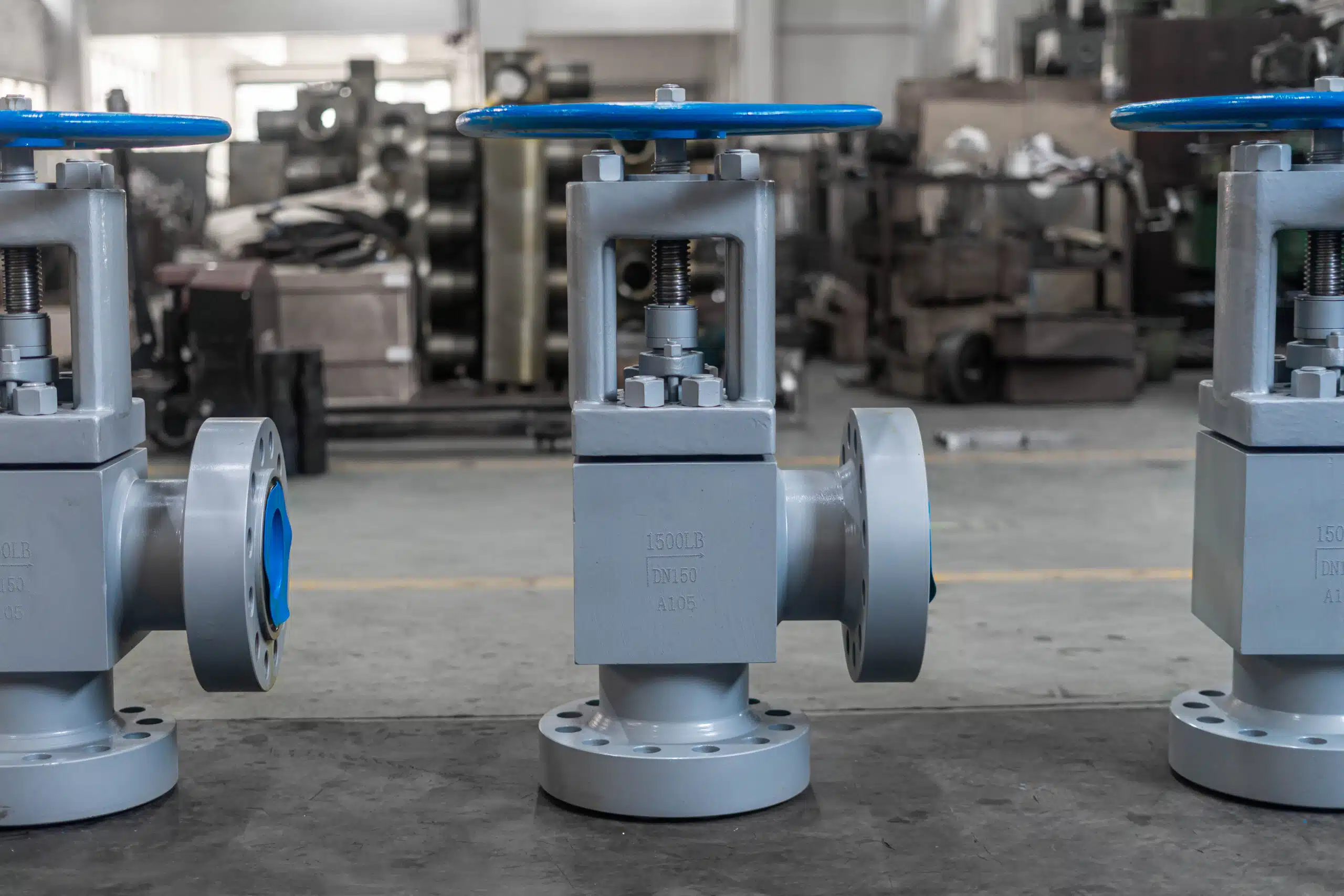
A high pressure globe valve is a linear-motion valve used when a piping system needs controlled flow, throttling, or shutoff under high pressure, high temperature, or severe operating conditions. It uses a stem, disc or plug, and seat to regulate the opening through the valve body. Compared with many straight-through valve designs, a globe valve gives better flow control, but it also creates a higher pressure drop.
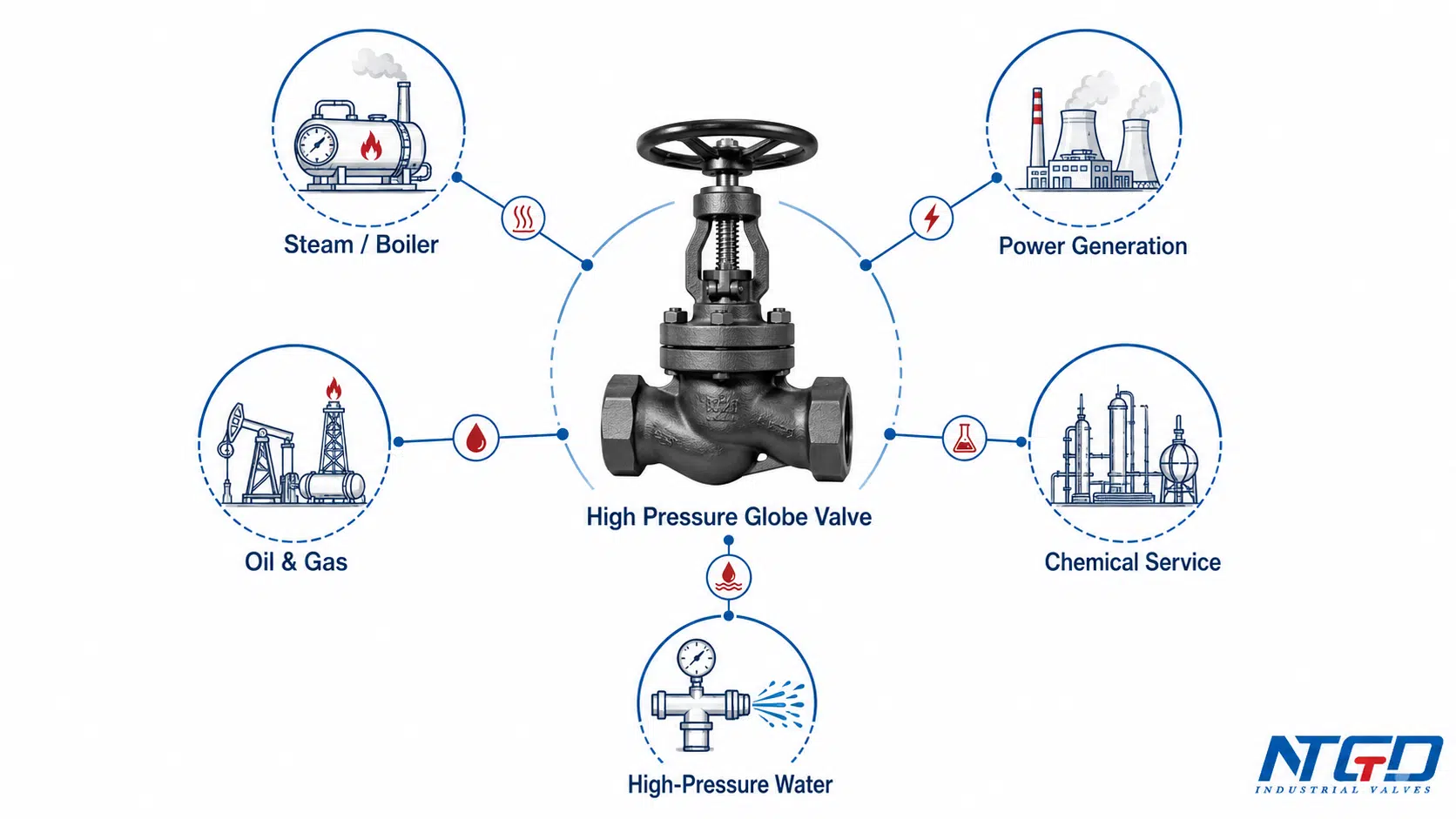
In industrial service, a high pressure globe valve is commonly reviewed for steam lines, boiler systems, power generation, refinery service, petrochemical units, chemical processing, high-pressure water lines, and gas or oil service. The final industrial valve selection should not be based on pressure alone. The pressure boundary and internal sealing parts must be reviewed together, including the body, bonnet, packing, trim, disc, seat, gasket or seal ring, end connection, operation method, and testing requirement.
This guide explains where high pressure globe valves are used, which design factors affect selection, what advantages and limitations should be checked, and how to troubleshoot common problems without turning the article into a full repair manual. The goal is to connect application fit, high-pressure design choices, and field symptoms so that buyers and engineers can make a more reliable selection before purchase or replacement.
Quick Answer: What Is a High Pressure Globe Valve?
A high pressure globe valve is not merely a standard globe valve used at a higher pressure. It is a globe valve whose pressure boundary, stem sealing system, trim, body pattern, and bonnet design are selected for the combined effects of pressure, temperature, medium, pressure drop, and required shutoff performance.
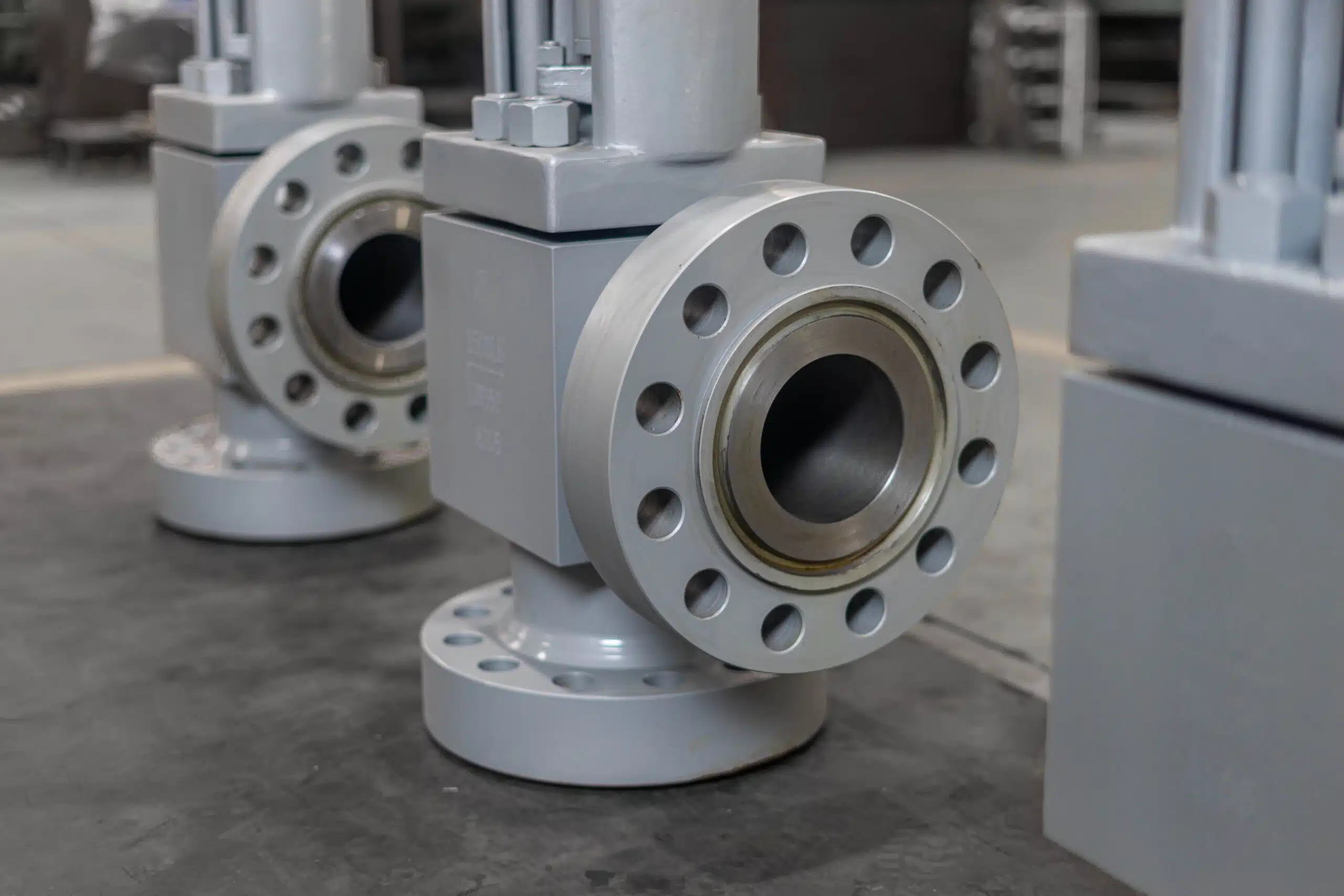
| Question | Quick Answer |
|---|---|
| What is it? | A linear-motion valve using a stem, disc or plug, and seat to control flow through a globe-style body under demanding pressure or temperature conditions. |
| What is it used for? | High-pressure steam, boiler feedwater, power plant lines, refinery service, chemical processing, and gas or oil lines where throttling, controlled opening, or reliable shutoff is needed. |
| What must be checked first? | Pressure class, temperature, medium, body material, trim, bonnet type, packing, body pattern, end connection, and operating method. |
| What is the main advantage? | Better throttling and flow control than many simple on/off valve designs. |
| What is the main limitation? | Higher pressure drop because the flow path changes direction inside the valve body. |
| What should be done before troubleshooting? | Isolate the valve, relieve pressure, allow hot lines to cool when applicable, and follow the plant procedure or IOM. |
A high-pressure globe valve should be treated as an engineering selection item, not just a valve name. Two valves may both be called high pressure globe valves, but they may differ in body pattern, bonnet design, trim material, packing arrangement, seat design, and suitability for steam, oil, gas, water, or corrosive media. In high-pressure or high-temperature service, these differences can directly affect sealing reliability, pressure drop control, operating torque, service life, and the probability of leakage or failure.
Watch this 1500LB high pressure angle globe valve reference video before reviewing the application and selection factors below.
How a High Pressure Globe Valve Works in Service
The high pressure globe valve working principle is based on moving the stem in a linear direction to open, throttle, or close the flow path. The stem moves the disc or plug toward or away from the seat. When the disc moves away from the seat, the flow area increases. When the disc moves toward the seat, the flow area decreases. When the disc is fully seated, the valve closes according to its design and specified leakage performance.
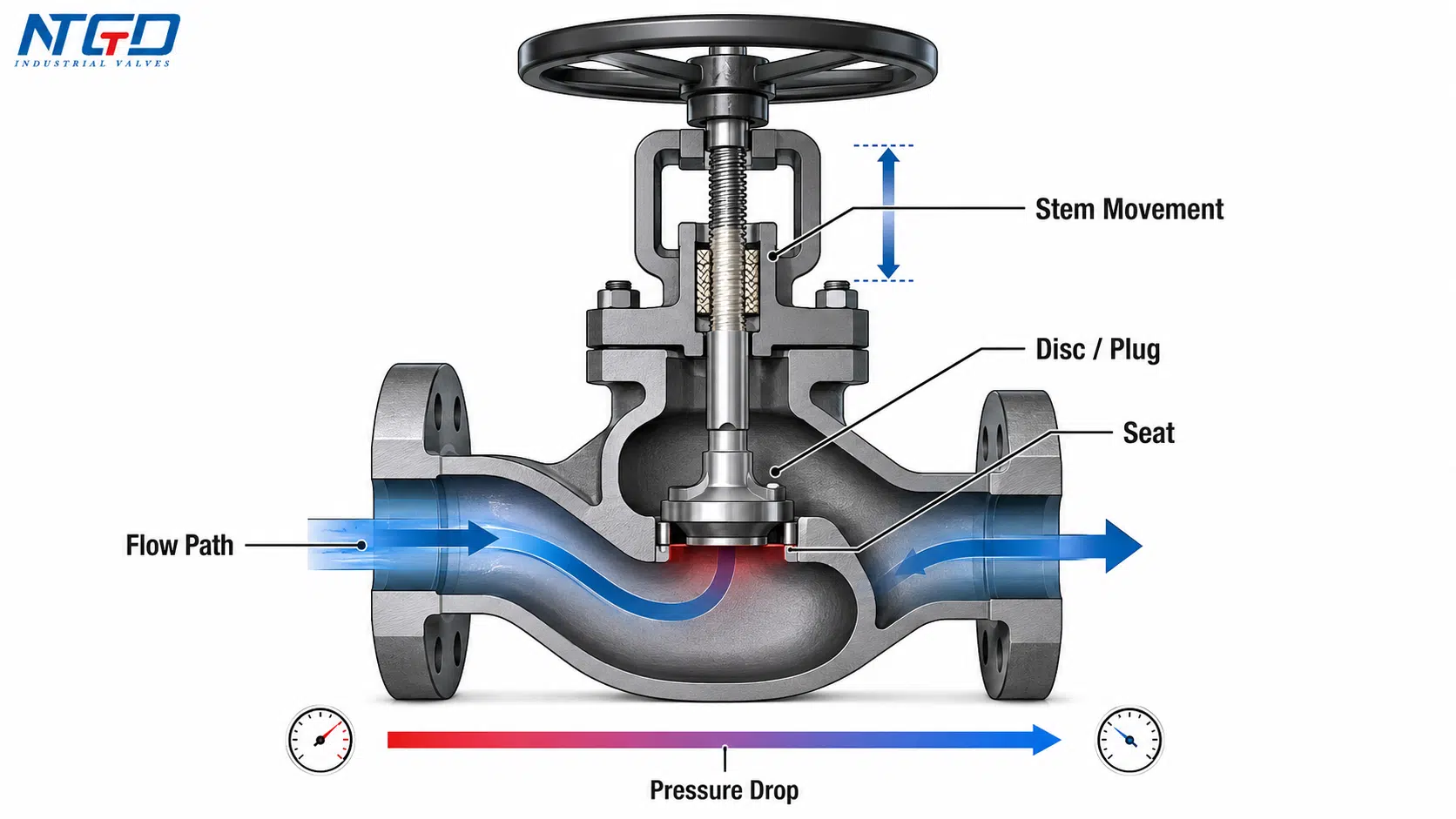
Linear Stem Movement, Disc and Seat Sealing
The high pressure globe valve structure includes the body, bonnet, stem, disc or plug, seat, packing, and handwheel or actuator. In manual designs, the handwheel turns the stem or stem nut. In actuated designs, a pneumatic, electric, or hydraulic actuator may move the stem.
This linear motion is one reason globe valves are often used for flow regulation. The disc position can be adjusted more gradually than a quarter-turn on/off valve. For high pressure service, this control can be useful in steam, boiler, bypass, vent, drain, and process control lines where a sudden change in flow may create operating problems.
However, high-pressure throttling also creates a wear boundary. If the valve operates at a very small opening for long periods, or if the differential pressure is high, the disc and seat may be exposed to high-velocity flow. This can accelerate seat wear, erosion, wire drawing, noise, vibration, or internal leakage.
For applications requiring continuous modulating control with an actuator and positioner, the system should be evaluated as a control valve assembly, not only as a manual globe valve. This article explains the basic high pressure globe valve selection and troubleshooting logic, but it does not replace full control valve sizing.
Why Pressure Drop and Flow Direction Matter
A globe valve can reduce pressure because its internal flow path restricts and redirects flow. In some applications, this is useful. In others, excessive pressure drop can increase noise, vibration, erosion, energy loss, or seat damage.
Flow direction also matters, but it should not be assumed from a generic rule. The correct flow direction depends on valve design, disc type, body pattern, pressure direction, service condition, and the valve maker’s marking or IOM. Some high-pressure or high-temperature services may have special requirements for pressure under or over the disc.
For this reason, the body arrow, project specification, drawing, and IOM should be checked before installation or troubleshooting. Incorrect flow direction in high pressure service may increase operating torque, accelerate seat erosion, load the stem in an unintended direction, shorten packing life, or create symptoms that look like a valve quality problem when the real issue is installation or application mismatch.
High Pressure Globe Valve Design Factors
High pressure globe valve selection should start from the service conditions. A valve that works well in a moderate water line may not be suitable for high-temperature steam, sour gas, corrosive chemical media, or high-cycle throttling service.
| Design Factor | Why It Matters in High Pressure Service | Buyer / Engineer Check |
|---|---|---|
| Pressure class | Determines whether the valve body, bonnet, and pressure boundary can be reviewed for the design pressure and temperature. | Confirm the required pressure class and pressure-temperature rating against the project specification. |
| Operating temperature | High temperature can affect packing, gasket, bolting, material strength, body-bonnet sealing, and operating torque. | Check maximum, normal, startup, and upset temperatures. |
| Medium | Steam, gas, oil, water, slurry, and corrosive fluids create different leakage, corrosion, erosion, and trim risks. | Confirm fluid type, cleanliness, corrosion risk, solids content, and phase condition. |
| Body material | Carbon steel, alloy steel, stainless steel, and special alloys have different pressure, temperature, and corrosion limits. | Match material to pressure, temperature, corrosion, and project standard. |
| Forged or cast body | Forged steel globe valves are often reviewed for smaller high-pressure or severe-service valves; cast bodies may be used in other size and service ranges. | Do not choose by material form alone; check pressure class, size, standard, trim, maintenance access, and cost. |
| Body pattern | T-pattern, Y-pattern, and angle pattern affect flow resistance, pressure drop, piping layout, and troubleshooting symptoms. | Match body pattern to pressure drop allowance, flow condition, and installation layout. |
| Bonnet design | Bolted, welded, and pressure seal bonnet designs create different sealing and maintenance boundaries. | Review bonnet type for high pressure, temperature cycling, body-bonnet leakage risk, and maintenance access. |
| Packing system | Packing controls leakage around the stem and affects operating torque. | Check packing material, temperature compatibility, gland condition, stem finish, and emission requirement. |
| Disc and seat | The disc-seat interface controls shutoff and is exposed to erosion, wire drawing, and wear. | Review trim material, hardfacing, seating design, pressure drop, and media cleanliness. |
| End connection | Flanged, butt-weld, socket-weld, or threaded ends have different pressure and installation implications. | Match end connection to pipe class, welding requirement, inspection plan, and maintenance philosophy. |
| Operation method | Manual, gear, electric, pneumatic, or hydraulic operation affects torque, response, and control. | Confirm whether the valve is for manual isolation, throttling, automated control, or emergency operation. |
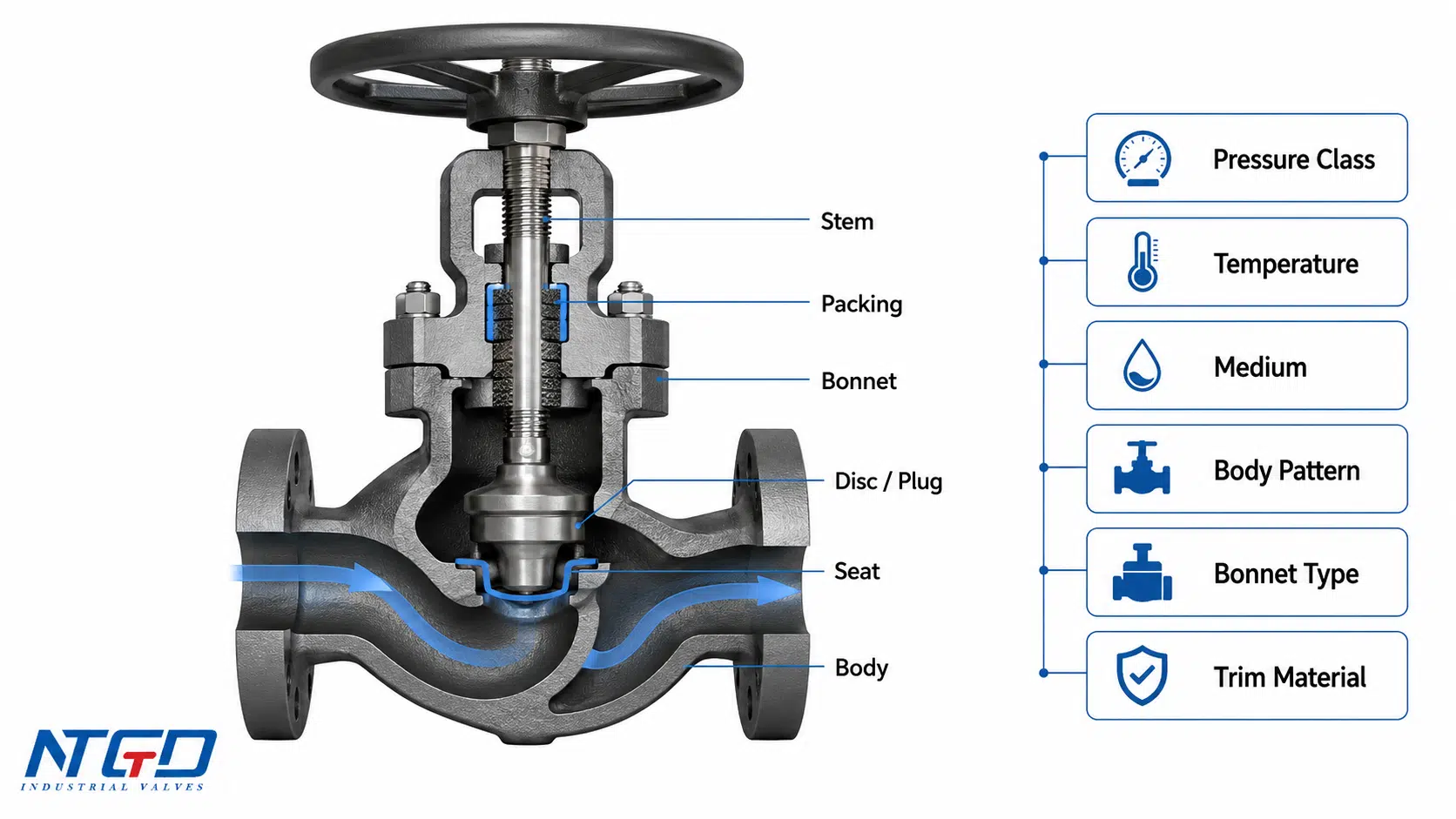
Pressure Class, Temperature and Body Material
The pressure class is not a decorative number. It defines a pressure-temperature boundary that must be checked against the actual line conditions. For example, a project may refer to a Class 1500 globe valve, but the actual suitability still depends on body material, working temperature, end connection, seat design, and applicable project standards. The same nominal pressure class can have different practical limits when the material and temperature change.
Material selection is also service-dependent. Carbon steel may be suitable for many general high-pressure services. Alloy steel may be needed for elevated temperature or severe steam conditions. Stainless steel or special alloys may be needed where corrosion, clean service, or chemical compatibility is important.
A forged steel globe valve may be reviewed when the service involves smaller sizes, high pressure differential, frequent operation, thermal cycling, or a stricter pressure boundary requirement. This does not mean forged construction alone makes the valve suitable. Size, class, trim, bonnet design, seat material, end connection, standard, maintenance approach, and cost still need to be evaluated together.
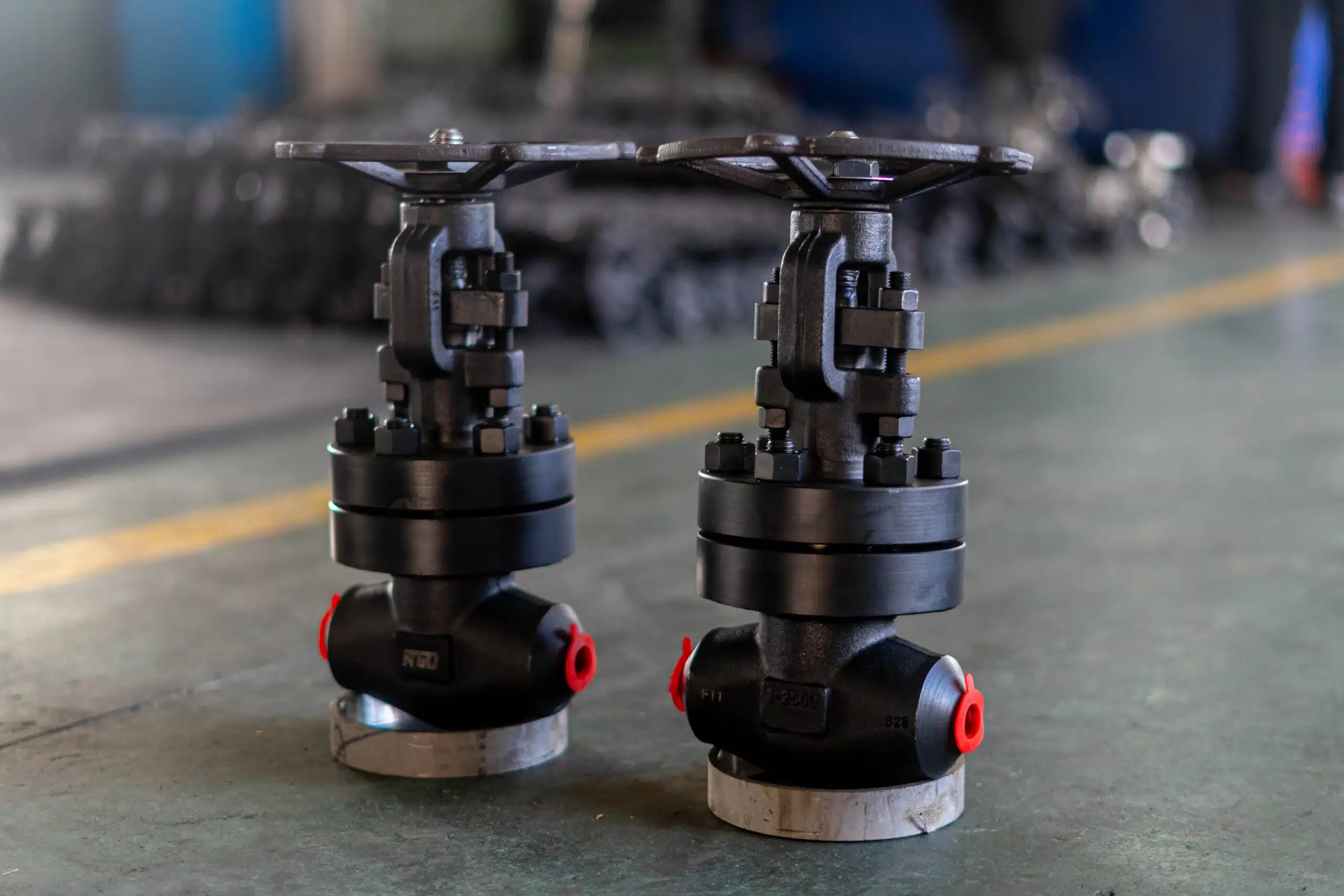
For high pressure service, the body and bonnet should be reviewed as pressure-boundary parts. The trim, packing, bolting, gasket or seal ring, and seat surfaces should be reviewed as reliability boundaries.
T-Pattern, Y-Pattern and Angle Pattern
High pressure globe valves may use different body patterns.
| Body Pattern | Typical Use Logic | Selection Caution |
|---|---|---|
| T-pattern globe valve | Common globe valve body style, often used where throttling and shutoff are required. | Higher flow resistance may be acceptable in throttling service but should be checked when pressure drop is limited. |
| Y-pattern globe valve | Provides a more streamlined path than a standard T-pattern body and is often considered when pressure drop needs to be reduced. | Still not a full-bore straight-through valve; pressure drop and layout must be reviewed. |
| Angle pattern globe valve | Changes the flow direction by approximately 90 degrees and can simplify certain piping layouts. | Application depends on piping geometry, flow direction, support, and service conditions. |
For high-pressure selection, tee pattern and y pattern globe valve selection matters because body pattern directly affects pressure drop, flow stability, piping layout, maintenance access, and troubleshooting symptoms. If a valve shows unexpected noise, vibration, high torque, or unstable flow, the body pattern and operating position should be reviewed together with sizing and service conditions.
Bolted, Welded and Pressure Seal Bonnet Designs
Bonnet design is especially important in high pressure and high temperature service. A bolted bonnet may be suitable for many pressure classes and maintenance conditions. A welded bonnet may reduce external leakage paths but changes the maintenance approach. A pressure seal bonnet uses internal pressure to help energize the body-bonnet seal, which is why pressure seal globe valves are often associated with high-pressure and high-temperature steam or power service.
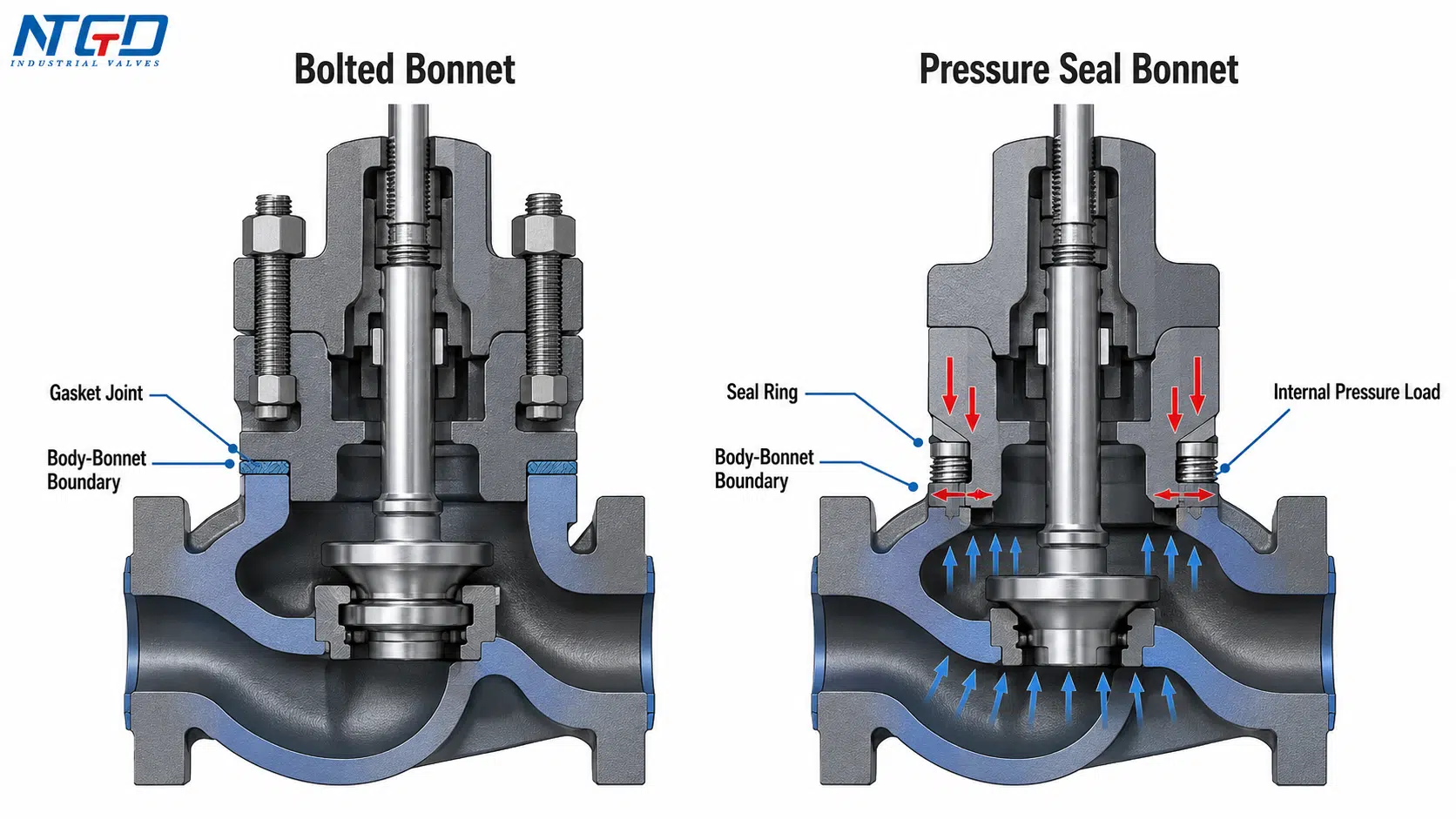
A pressure seal globe valve is not automatically required for every high pressure line. It should be reviewed when the pressure, temperature, cycling conditions, body-bonnet leakage risk, and project specification make it appropriate. The correct choice depends on design conditions, valve size, pressure class, maintenance philosophy, and applicable standards.
This bonnet decision also affects troubleshooting. If leakage appears at the body-bonnet joint, the review should not stop at bolt tightness alone. The engineer should also check gasket or seal ring condition, thermal cycling history, assembly condition, and whether the selected bonnet design is suitable for the service.
Packing, Stem, Disc, Seat and Hardfacing
High pressure service can make small component issues more serious. Packing that is acceptable in low-temperature service may not perform well under high-temperature cycling. A stem that is slightly bent, corroded, or scored can increase handwheel torque or accelerate packing leakage. A seat that is worn, eroded, or contaminated can cause internal leakage even when the handwheel is fully closed.
Disc and globe valve seat material should be reviewed when the service includes steam, erosive flow, dirty media, corrosive chemicals, or frequent throttling. Hardfacing or special trim may be required in some severe services, but the exact requirement should be verified against the project specification and valve datasheet.
High Pressure Globe Valve Applications
The application of a high pressure globe valve should be judged by service conditions, not only by industry name. The same valve type may be suitable in one steam line and unsuitable in another if the pressure drop, temperature, cycle frequency, or medium changes.
| Application Area | Typical Medium / Service | Why a High Pressure Globe Valve Fits | Selection Caution |
|---|---|---|---|
| Steam, boiler, and power generation | High-pressure steam, boiler drains, vents, bypass lines, feedwater service | Suitable where controlled opening, throttling, or shutoff must be combined with high temperature and pressure-boundary reliability. | Check pressure class, temperature, bonnet design, packing, trim, and flow direction. |
| Oil & gas, refinery, and petrochemical service | Hydrocarbon liquid, gas, refinery process lines, auxiliary systems | Useful where controlled flow or shutoff is needed under pressure-temperature conditions that exceed the reliable operating range of standard light-duty valves. | Check material compatibility, fire-safe requirement if specified, sour service conditions, leakage requirement, and seat erosion risk. |
| Chemical processing and corrosive media | Acids, alkalis, solvents, chemical process fluids | Can regulate flow and provide shutoff in high-pressure chemical feed or process lines when wetted materials are compatible with the medium. | Confirm body, trim, packing, gasket, corrosion allowance, solids content, and crystallization risk. Do not choose by pressure class alone. |
| Boiler feedwater and high-pressure water lines | Feedwater, high-pressure clean water, bypass or control lines | Suitable where controlled flow and shutoff are needed in a high-pressure water circuit and the pressure drop has been reviewed. | Review cavitation, velocity, pressure drop, seat wear, and operating torque. |
| High-pressure gas or oil service | Gas, oil, utility fluids, process media | Can be used for isolation or regulation when the pressure boundary, packing system, and trim are selected for the actual medium. | Check leakage requirement, packing system, temperature, pressure drop, end connection, and operation method. |
Steam, Boiler and Power Generation Service
A steam globe valve is frequently reviewed for steam and boiler-related service because these lines often require controlled opening, reliable shutoff, and resistance to high temperature. Common examples include boiler drains, vents, bypass lines, feedwater circuits, and auxiliary steam systems.
In these applications, a boiler globe valve may need more than a high pressure class. The valve should also be checked for bonnet design, packing material, trim selection, seat/disc hardfacing, correct flow direction, and the pressure-temperature rating of the selected body material. A pressure seal bonnet may be relevant in some high-pressure steam applications, but it should be selected based on project requirements rather than assumed as a universal solution.
Oil & Gas, Refinery and Petrochemical Service
In oil and gas or refinery systems, high pressure globe valves may be used where the process needs controlled flow, throttling, or shutoff in hydrocarbon service. The key issue is not only pressure. The medium may be flammable, corrosive, erosive, or subject to temperature variation.
Material compatibility, trim selection, packing performance, and leakage requirement should be reviewed carefully. If the service includes sour gas, high temperature, dirty media, or frequent operation, the valve design should be verified with the project specification before purchase or replacement. Otherwise, the valve may meet a nominal pressure class but still fail early because the trim, packing, or sealing boundary is not matched to the real service.
Chemical Processing and Corrosive Media
Chemical service requires more than a pressure rating. The body material, trim material, packing, gasket or seal ring, and seat design must be compatible with the fluid. A high pressure globe valve may be suitable for corrosive chemical service when the wetted materials are correctly selected, but the wrong material can cause rapid leakage, corrosion, internal damage, or packing failure.
For chemical applications, the buyer should provide the chemical name, concentration, temperature, pressure, and whether the fluid contains solids or crystallizing compounds. If corrosive attack, solids, or crystallization is not considered, the valve may experience accelerated trim wear even when the pressure class appears correct.
Boiler Feedwater and High-Pressure Water Lines
Boiler feedwater and high-pressure water systems can create high velocity, pressure drop, and erosion risk. A globe valve may be selected for regulation or shutoff, but pressure drop and cavitation should be reviewed. If the valve is oversized, undersized, or used too close to a damaging operating point, the seat and disc may wear quickly.
For high-pressure water applications, the valve should be checked against flow rate, differential pressure, operating position, and expected cycle frequency. Cavitation, flashing, or high-velocity erosion can turn a normal throttling application into a repeated troubleshooting problem.
High-Pressure Gas or Oil Service
Gas and oil service can create different leakage and safety requirements. Gas service may require closer attention to stem packing, seat leakage, and body-bonnet sealing. Oil service may require attention to viscosity, temperature, fire safety requirements if specified, and cleanliness of the fluid.
A globe valve used for high pressure gas or oil service should be selected with the full operating envelope, not only the maximum pressure. The same pressure rating may behave differently when the medium, temperature, leakage requirement, or operation frequency changes.
Advantages and Limitations in High Pressure Service
A high pressure globe valve is often selected because it can control flow more accurately than many simple on/off valves. However, the same internal design that supports throttling also creates limitations.
| Selection Point | Advantage | Limitation / Risk |
|---|---|---|
| Flow regulation | Good for throttling and gradual flow control. | Not ideal where a straight-through, low-resistance path is required. |
| Shutoff | Can provide tight shutoff when trim and seat are properly selected. | Seat wear, debris, erosion, or wire drawing can cause internal leakage. |
| High pressure service | Suitable for demanding service when pressure class, material, bonnet, and trim are correct. | Incorrect pressure-temperature selection can create safety and reliability risks. |
| Maintenance and inspection | Many designs allow inspection or repair of trim and packing, which can reduce downtime compared with valves that must be removed from the line. | In high-pressure service, any work that disturbs the pressure boundary requires strict isolation, correct procedures, and possible re-testing before return to service. |
| Body pattern flexibility | T-pattern, Y-pattern, and angle pattern can support different layouts. | Wrong body pattern can increase pressure drop, noise, vibration, or layout problems. |
| Operation | Manual or actuated operation can be selected for the service. | High differential pressure, packing load, stem damage, or unsuitable actuation can increase operating torque. |
Where High Pressure Globe Valves Perform Well
High pressure globe valves perform well when the system needs controlled flow, throttling, or shutoff under demanding pressure or temperature conditions. They are often useful where the valve will not simply remain fully open for its entire service life.
They are also useful when the process engineer expects a pressure drop across the valve and has included that pressure drop in the system design. In this case, the globe valve’s flow resistance is part of the operating logic rather than a defect.
Where They May Not Be the Best Fit
A high pressure globe valve may not be the best fit when the line requires very low pressure drop, fast quarter-turn operation, full-bore pigging, or minimal flow resistance. It may also be unsuitable for dirty or erosive media if the seat and disc are not selected for the service.
If the system needs simple on/off isolation with minimum pressure loss, a globe valve vs gate valve review may be useful before selecting the final valve type. If the system needs precise automated control over a wide operating range, the valve may need to be reviewed as part of a control valve package rather than as a basic manual globe valve.
In low-pressure-drop service, full-bore service, or frequent fast operation, choosing a globe valve only because it is familiar may increase energy loss, operating torque, maintenance frequency, or reliability problems. Other valve types, such as gate valves or ball valves, may need to be reviewed, but the final choice should still be based on medium, pressure, temperature, operation, and shutoff requirements.
Troubleshooting High Pressure Globe Valves
Troubleshooting a high pressure globe valve should begin with safety and operating context. A leaking packing gland, a stiff handwheel, or internal seat leakage may look like a small issue, but high pressure and high temperature can make the consequence more serious.
Safety Boundary Before Troubleshooting
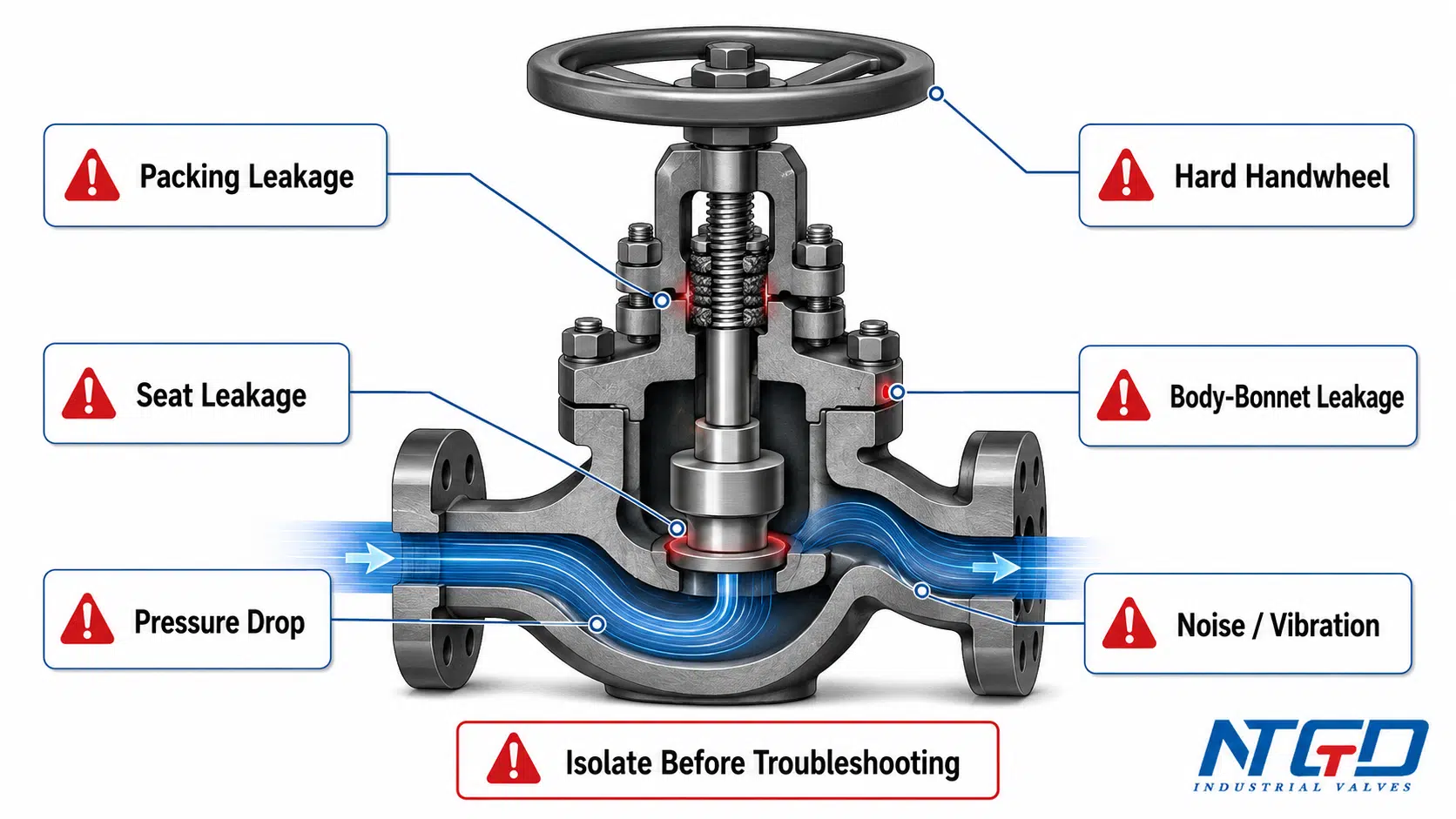
Before troubleshooting a high pressure globe valve, isolate the valve according to the plant’s hazardous energy control procedure, relieve system pressure, allow hot lines to cool when applicable, and follow the project IOM or maintenance procedure. Do not loosen packing, bonnet bolts, pressure-retaining parts, or pressure-boundary joints while the valve is pressurized.
Do not force a stuck handwheel or apply extra leverage without identifying the cause. Excessive force can damage the stem, stem nut, disc, or seat and may turn a service issue into a pressure-boundary or shutoff problem.
If the valve shows body leakage, persistent packing leakage, body-bonnet leakage, abnormal vibration, suspected body cracking, or any sign of pressure-boundary damage, stop operation and escalate the review according to plant procedure. This section provides diagnostic direction only. It is not a step-by-step repair manual.
Common Symptoms, Causes and Field Checks
| Symptom | Likely Cause | Field Check | Corrective Direction |
|---|---|---|---|
| Leakage through the packing | Worn packing, loose gland, packing not suitable for temperature, stem scoring, packing compression loss from thermal cycling | Inspect stem area, gland compression, visible leakage path, stem surface condition, and operating temperature | Adjust gland only if safe and permitted; replace packing if worn or incompatible; review packing material, stem condition, and temperature cycling for service suitability |
| Seat leakage or failure to shut off | Worn seat, damaged disc, debris on seat, erosion, wire drawing, misalignment, improper closing force | Check whether leakage continues after full closure; inspect pressure drop, shutoff behavior, and possible debris | Clean and inspect internals; repair, lap, or replace seat/disc if required; review trim and operating position for erosive or high-differential-pressure service |
| Leakage between body and bonnet | Loose bolting, damaged gasket or seal ring, thermal cycling, incorrect assembly, body-bonnet sealing damage, unsuitable bonnet design for the service | Inspect bonnet joint, leakage location, bolt condition, seal ring or gasket history, temperature cycling, and service history | Follow IOM for retightening or seal replacement only after safe isolation; review bonnet type, gasket or seal ring condition, pressure seal suitability, and whether the service requires a different body-bonnet sealing approach |
| Handwheel hard to turn or high operating torque | Over-tightened packing, stem corrosion, bent stem, dry or damaged stem threads, high differential pressure, stem nut wear, internal galling | Check stem travel, handwheel movement, gland load, lubrication condition, thread condition, and whether the issue appears during opening or closing | Do not force operation; lubricate where appropriate; adjust packing load only if safe; replace damaged stem, stem nut, packing, or internal parts after engineering review |
| Noise or vibration | Excessive pressure drop, cavitation, flashing, water hammer, high velocity, loose internals, wrong operating position, unsuitable valve size or pattern | Compare upstream and downstream pressure, actual flow, valve opening, line condition, and noise location | Review actual flow versus valve size, pressure drop, and operating position; inspect trim for cavitation or flashing damage; evaluate whether special trim, a different body pattern, or a different control approach is required |
| Unexpected high pressure drop or unstable flow | Valve partly closed, oversized/undersized valve, blocked flow path, damaged disc/seat, wrong body pattern for service | Check valve position, pressure readings, process flow response, and possible blockage | Clean and inspect the valve; review pressure drop allowance, valve sizing, operating position, and body pattern |
| Visible damage, corrosion, or suspected body crack | External corrosion, material incompatibility, pressure-temperature overload, mechanical impact, severe thermal cycling | Inspect external body, bonnet, bolting, supports, and service history | Stop operation if pressure boundary integrity is uncertain; escalate engineering review before returning the valve to service |
When to Stop Operation or Escalate the Review
A high pressure globe valve should be taken seriously if any pressure boundary damage is suspected. Escalate the review when there is visible body cracking, persistent packing leakage after proper adjustment, body-bonnet leakage, abnormal vibration, sudden pressure instability, a bent stem, severe corrosion, or signs that the service exceeds the valve’s pressure-temperature rating.
In high pressure service, a repeated leak is not only a maintenance issue. It may indicate wrong material selection, wrong packing, unsuitable trim, excessive pressure drop, incorrect flow direction, or a mismatch between valve design and actual operating conditions.
Maintenance and Prevention Checks
Globe valve maintenance should support reliability, not replace correct valve selection. A well-maintained valve can still fail early if it is installed in the wrong service, exposed to incompatible media, or operated outside its design envelope.
Routine Inspection Points
| Inspection Point | What to Check | Why It Matters |
|---|---|---|
| Packing and gland | Leakage, gland load, packing condition, stem scoring | Packing leakage can worsen quickly in high pressure service and may create media release or safety risk if ignored. |
| Stem and handwheel | Smooth travel, corrosion, thread damage, abnormal torque | Stiff operation can indicate deeper mechanical, packing, or stem alignment problems. |
| Body-bonnet joint | External leakage, bolt condition, seal ring or gasket history | This is a pressure-boundary sealing point; leakage here can lead to unplanned shutdown or escalation of the failure. |
| Seat and disc | Shutoff performance, internal leakage, erosion signs | Seat damage can cause failure to close tightly and may worsen under high differential pressure. |
| Supports and alignment | Pipe stress, vibration, external load on valve | Poor support can increase leakage, vibration, and stem alignment issues. |
| Operating record | Pressure, temperature, medium, cycle frequency, symptoms | Troubleshooting is more accurate when operating data is available. |
Operating Data to Record Before Troubleshooting
To make troubleshooting faster and more accurate, a technician or engineer should first document the valve’s operating context. Record the valve size, pressure class, operating pressure, operating temperature, medium, normal opening position, frequency of operation, symptom, leakage location, and whether the valve is manual or actuated.
For a suspected internal leakage problem, also record whether the valve is fully closed, whether debris may be present, and whether the problem started after startup, shutdown, maintenance, or process change. These records help separate a selection mismatch from a maintenance issue, operating change, process upset, or installation-related problem.
RFQ and Selection Checklist for High Pressure Globe Valves
A good RFQ should describe the operating conditions clearly. Without pressure, temperature, medium, material requirement, and end connection, the valve selection may be incomplete. For high pressure service, the priority checks are pressure class, operating pressure-temperature condition, medium compatibility, bonnet type, trim and seat material, and end connection. The remaining items complete the specification review.
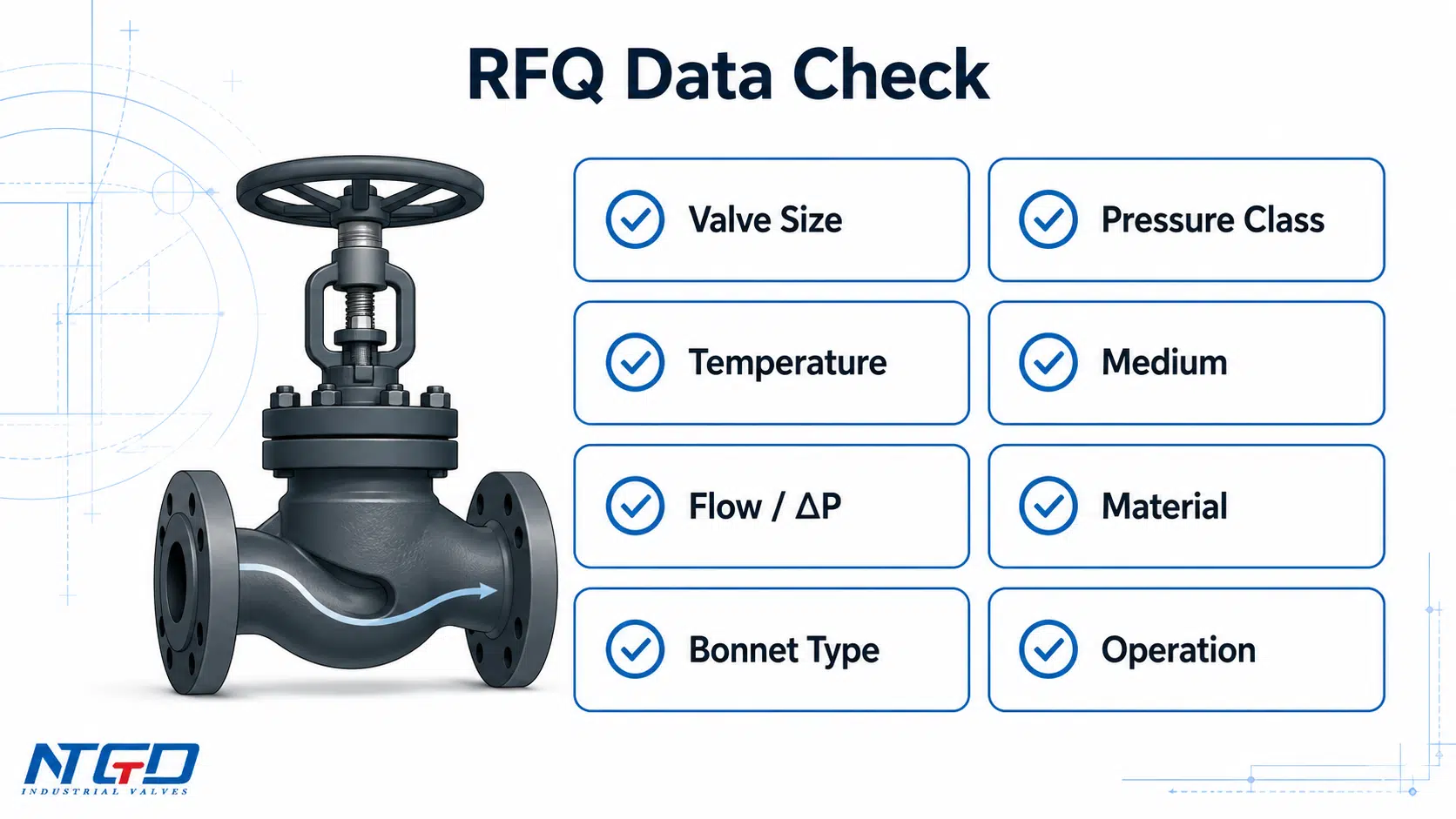
| RFQ / Review Item | Why It Is Needed |
|---|---|
| Valve size | Confirms pipeline size and flow capacity requirement. |
| Pressure class | Defines the pressure-temperature boundary to be reviewed. |
| Operating pressure and temperature | Confirms normal, maximum, startup, and upset conditions. |
| Medium | Determines material, packing, gasket, and trim compatibility. |
| Flow rate and pressure drop | Helps review whether globe valve pressure drop is acceptable. |
| Body material | Must match corrosion, temperature, pressure, and project standard. |
| Trim / seat material | Affects shutoff, erosion resistance, and service life. |
| Bonnet type | Bolted, welded, or pressure seal bonnet may be selected depending on service. |
| Body pattern | T-pattern, Y-pattern, or angle pattern affects layout and pressure drop. |
| End connection | Flanged, butt-weld, socket-weld, or threaded ends must match piping specification. |
| Operation method | Manual, gear, electric, pneumatic, or hydraulic operation affects torque and control. |
| Testing / inspection requirement | Confirms project quality requirements before shipment. |
| Troubleshooting symptom | If replacing an existing valve, the failure symptom helps avoid repeating the same problem. |
For example, a request for a “forged steel globe valve Class 1500” gives only part of the picture. The valve still needs to be checked against medium, temperature, pressure drop, end connection, bonnet design, trim, operation method, and the actual function in the system.
FAQ About High Pressure Globe Valves
What are high pressure globe valves used for?
High pressure globe valves are selected when an industrial piping system needs throttling, controlled opening, or reliable shutoff under pressure-temperature conditions that would create higher leakage, wear, or operating risk in ordinary service. They are common in steam, boiler feedwater, power generation, refinery, petrochemical, chemical, high-pressure water, gas, and oil service because the trim, packing, bonnet, and pressure boundary must work together under demanding conditions.
Are globe valves suitable for high-pressure steam?
Yes, globe valves are often used in high-pressure steam service when the valve is correctly selected for pressure class, temperature, body material, bonnet design, packing, trim, and flow direction. High-pressure steam service should always be checked against the project specification and valve IOM.
Does a globe valve reduce pressure?
A globe valve can create pressure drop because the flow path changes direction inside the valve body. This pressure drop may be useful in throttling service, but excessive pressure drop can cause noise, vibration, erosion, or operating instability.
What is a pressure seal globe valve?
A pressure seal globe valve uses a bonnet sealing design in which internal pressure helps load the body-bonnet seal. It is commonly associated with high-pressure and high-temperature service, especially in steam, boiler, and power-related applications. It is a bonnet design option within the broader high pressure globe valve selection process.
Do I always need a pressure seal bonnet for high pressure service?
No. A pressure seal bonnet is not required for every high pressure globe valve. The correct bonnet type depends on pressure, temperature, thermal cycling, valve size, body design, body-bonnet leakage risk, maintenance plan, and project specification. Bolted or welded bonnet designs may also be suitable in many services.
Why does a high pressure globe valve leak from the packing?
Packing leakage may occur because the packing is worn, loose, unsuitable for the temperature, damaged by stem scoring, or affected by thermal cycling. In high pressure service, packing leakage should be checked carefully because it may worsen quickly if the root cause is not corrected.
Why is the handwheel hard to turn?
A hard-to-turn handwheel may be caused by over-tightened packing, stem corrosion, damaged threads, bent stem, dry stem nut, high differential pressure, or internal damage. Do not force the handwheel without checking the cause, because excessive force can damage the stem, disc, or seat.
When should a high pressure globe valve be repaired or replaced?
Repair or replacement should be reviewed when there is persistent leakage, severe seat damage, body-bonnet leakage, visible corrosion, abnormal vibration, damaged stem parts, pressure boundary damage, or service conditions that exceed the valve’s rated design. In high pressure service, repeated symptoms should trigger an engineering review, not only local repair.
Conclusion
A high pressure globe valve is useful when an industrial system needs controlled flow, throttling, or shutoff under demanding pressure or temperature conditions. Its value comes from the linear stem movement, disc-seat control, and ability to regulate flow more carefully than many simple on/off valve designs.
The same design also creates limits. Globe valves usually create higher pressure drop, may require higher operating torque, and depend heavily on correct pressure class, body material, bonnet design, packing, and seat/disc selection. For steam, boiler, refinery, chemical, high-pressure water, gas, or oil service, the valve should be selected from the full operating condition, not only from the name “high pressure globe valve.”
Troubleshooting should start with safety, pressure isolation, and operating data. Packing leakage, seat leakage, body-bonnet leakage, stiff handwheel operation, noise, vibration, and unstable flow can all indicate deeper selection, maintenance, installation, or service-condition problems.
Clear operating conditions reduce the risk of wrong selection and misdiagnosis. In high pressure service, a small mismatch in pressure class, material, bonnet type, packing, trim, or application condition can lead to leakage, unplanned downtime, or safety risk.
For a high pressure globe valve application or troubleshooting review, prepare the valve size, pressure class, operating pressure, temperature, medium, end connection, body material, trim requirement, operation method, and current symptom if the valve is already in service. These details allow the valve design, application fit, and failure risk to be reviewed more accurately.
