
Краткий ответ: Поворотный клапан или дроссельная заслонка
Основное отличие в одном предложении
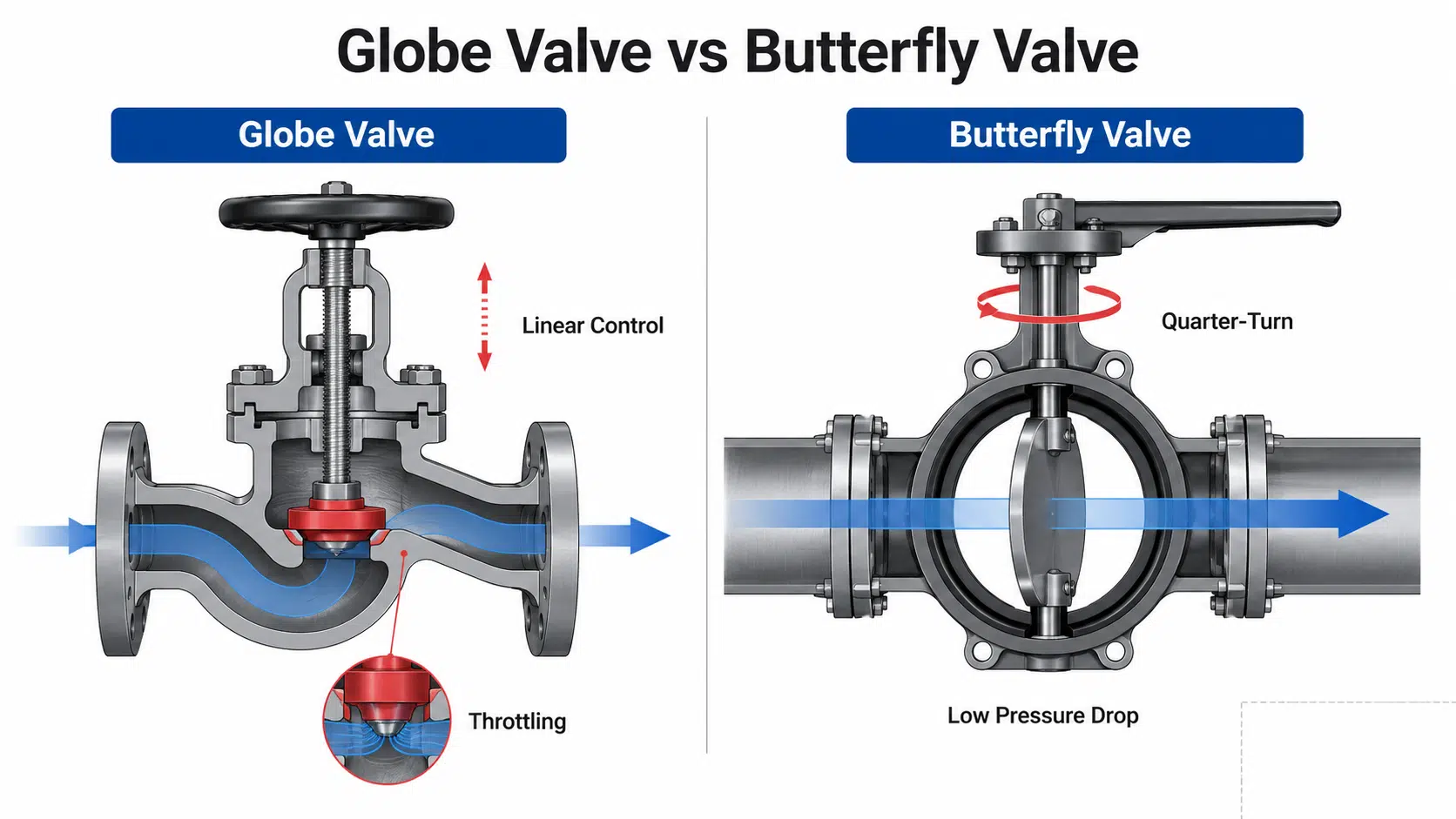
Основное отличие между шаровым клапаном и дроссельной заслонкой заключается в способе регулирования потока. В шаровом клапане используется линейное перемещение штока, приводящее к прижатию заслонки или диска к седлу, что делает его более подходящим для точного дросселирования и регулирования расхода. В поворотном клапане используется поворотное движение на четверть оборота, приводящее к повороту диска внутри трубопровода, что делает его более компактным и эффективным для работы с большими расходами, быстрого управления и меньшего падения давления.
При выборе промышленного арматуры, как правило, отдается предпочтение клапану шаровому, если технологический процесс требует точного управления, стабильного дросселирования или регулирования давления. Клапан-бабочка обычно выбирается в тех случаях, когда для проекта требуется более легкая арматура, меньшая межфланцевая длина, меньшее сопротивление потоку, быстрое перекрытие или практичное решение для труб больших диаметров.
Правильный выбор зависит не только от названия клапана. Необходимо учитывать такие факторы, как рабочая среда, расход, давление, температура, требуемая точность регулирования, допустимый перепад давления, ожидаемый уровень утечки, размер трубопровода, конструкция седла, способ привода и доступ для технического обслуживания. Неправильный выбор может привести к нестабильности контура регулирования, установке излишне ограничивающего клапана в изолирующей линии с низкими потерями, увеличению нагрузки на насос с течением времени или возникновению проблем с техническим обслуживанием, которых можно было бы избежать на этапе определения технических характеристик.
Когда выбор, как правило, падает на каждый из клапанов
Выберите шаровой клапан когда процесс требует контролируемой регулировки, а не простого открытия-закрытия. К ним относятся: дросселирование, регулирование давления, балансировка расхода, регулирование подачи пара, дозирование химикатов, управление байпасом, а также операции, при которых клапан может оставаться частично открытым в течение длительного времени.
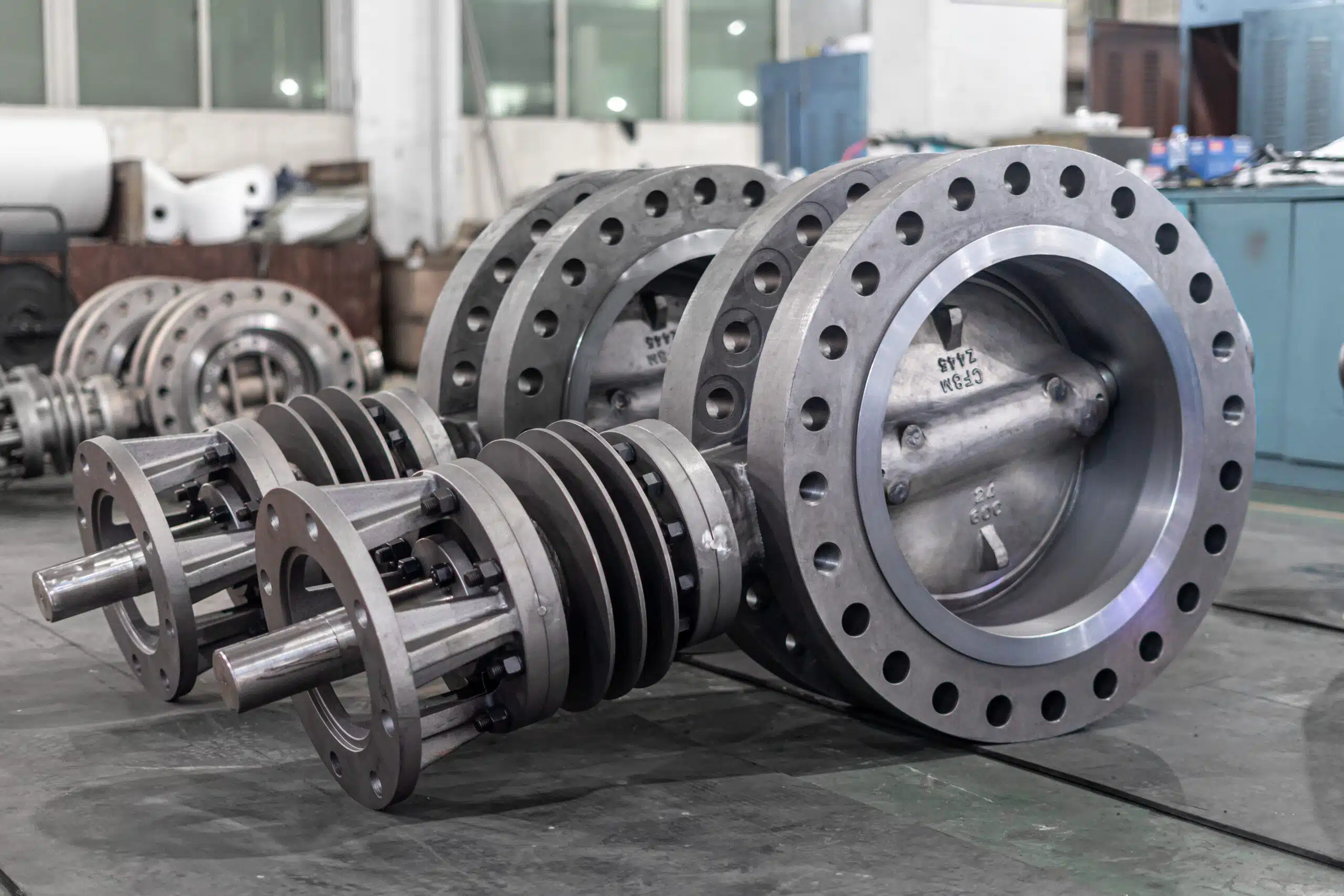
Выберите поворотный клапан когда системе требуется компактный клапан для отсечки, пропускания больших расходов, обеспечения низких потерь давления, быстрого срабатывания или использования в трубопроводах большого диаметра. Поворотные заслонки широко применяются в системах водоснабжения, охлаждающей воды, вентиляции и кондиционирования воздуха (ОВКВ), канализации, инженерных сетях, а также во многих областях промышленности, где важны такие факторы, как занимаемое пространство, вес и перепад давления.
В случае эксплуатации в тяжелых условиях, при высоком перепаде давления, риске кавитации, абразивных средах, высоких температурах или строгих требованиях к герметичности перед утверждением окончательной спецификации необходимо тщательно проанализировать конструкцию клапана, материал седла, внутренние детали, форму корпуса, класс давления и технические характеристики.
Краткое сравнение шарового и дроссельного клапанов
Таблица сравнения основных различий
| Фактор выбора | Шаровой клапан | Заслонка | Что это означает для отбора |
|---|---|---|---|
| Основная функция | Регулирование расхода, дросселирование, регулирование давления, отключение (если предусмотрено) | Изоляция, работа с большим расходом, быстрое срабатывание, ограниченное или специальное дросселирование в зависимости от конструкции | Выбирайте шаровой клапан, если основным требованием является точность регулирования; выбирайте клапан «бабочка», если основным требованием является компактность и низкое сопротивление потоку. |
| Тип движения | Линейное перемещение | Поворотное движение на четверть оборота | В клапанах шарового типа открытие седла происходит плавно; в клапанах бабочкового типа диск поворачивается поперек канала потока. |
| Элемент закрытия | Плунжер или диск, приближающийся к седлу / удаляющийся от него | Диск, вращающийся внутри корпуса клапана | Различные режимы закрытия приводят к различиям в характеристиках управления и падении давления. |
| Путь потока | Ещё более извилистый путь через организм | Более прямой путь, при котором диск остается в потоке | Поворотные клапаны, как правило, создают более значительный перепад давления; дроссельные клапаны, как правило, создают меньший перепад давления в полностью открытом состоянии. |
| Дросселирование | Более мощный для точного плавного регулирования | Возможно в некоторых системах, но, как правило, точность при этом снижается, если не применяются специальная конструкция и система управления приводом | Для точной плавной регулировки сначала используйте шаровой кран. Использовать дроссельный клапан следует только после проверки чувствительности к углу открытия, управления приводом и допустимого перепада давления. |
| Точность управления | В целом лучше | Как правило, ниже для точной модуляции | Дроссельные клапаны могут подходить для грубого регулирования или для специализированных систем управления, однако необходимо комплексно оценивать клапан, привод и условия эксплуатации. |
| Перепад давления | Обычно выше | Как правило, более низкий при полностью открытом режиме работы с большим расходом | Низкий перепад давления часто является определяющим фактором при выборе дроссельной заслонки для изоляции или перекачки; контролируемый перепад давления может быть допустимым или необходимым при регулировании давления. |
| Пропускная способность / расход | Часто меньше при том же номинальном размере из-за геометрии корпуса | Часто выше из-за более открытого пути потока | Значение Cv необходимо проверять по данным производителя с учетом конкретной модели кузова, комплектации, диска и состояния отверстия. |
| Размер и вес | Как правило, более тяжелые и крупные | Как правило, более легкие и компактные | Большой диаметр труб, ограниченное пространство, ограничения по грузоподъёмности и ограничения по опорам труб зачастую заставляют при первоначальном рассмотрении остановить выбор на клапанах-бабочках. |
| Рабочая скорость | Многооборотный ход или линейный ход с управлением приводом | Быстрое поворотное управление | Дроссельные клапаны часто удобнее для быстрого открытия и закрытия. |
| Направление расходов | Часто выше в моделях больших размеров и моделях контрольного класса | Часто цена на большие размеры ниже, но особые дизайны могут привести к увеличению стоимости | Сравнивайте общую стоимость владения, а не только стоимость покупки. |
| Техническое обслуживание | Возможно, потребуется дополнительный обзор внутренних деталей, сидений и отделки | Конструкция проще, но состояние сиденья, диска, вала и уплотнения по-прежнему имеет значение | Стоимость технического обслуживания зависит от вида обслуживания, используемых материалов, условий доступа, частоты эксплуатации и конструкции клапана. |
| Ожидаемое время отключения | Зависит от диска / заглушки, седла, обшивки и требований к герметичности | В значительной степени зависит от типа седла, конструкции смещения и материала уплотнения | Укажите ожидаемый уровень утечки и конструкцию седла; не следует делать выводы о герметичности клапана, исходя исключительно из его типа. |
| Стандартный размер | Управление паром, дозирование химикатов, регулирование технологического процесса, управление байпасом | Охлаждающая вода, крупные трубопроводы, инженерные сети, изоляция, эксплуатация с низким перепадом давления | Окончательный выбор должен основываться на условиях эксплуатации, а не на общем рейтинге. |
Значение таблицы для выбора промышленных клапанов
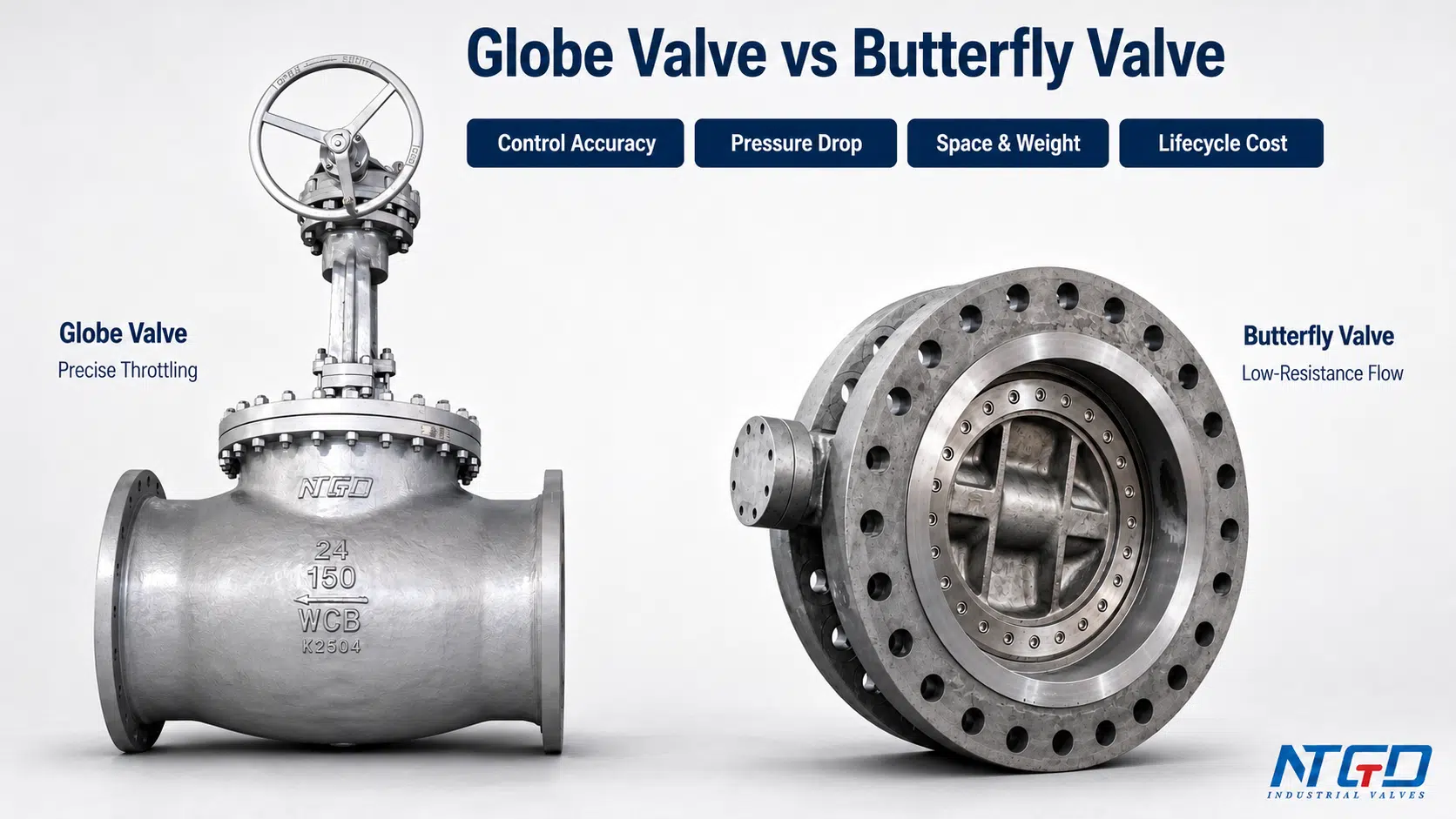
В таблице показано, почему шаровой кран и дроссельная заслонка редко могут использоваться взаимозаменяемо в условиях жестких эксплуатационных условий. Шаровой кран создает контролируемое сужение внутри корпуса клапана. Такое сужение полезно, когда клапан должен регулировать расход или компенсировать падение давления, но оно также увеличивает сопротивление при полном открытии клапана.
Дроссельная заслонка обеспечивает более простой и компактный путь прохождения потока. Даже в полностью открытом положении диск остается в проходе, однако общее сопротивление, как правило, ниже, чем у клапана шарового типа при аналогичных условиях эксплуатации с большим расходом. Это делает дроссельные заслонки привлекательным выбором в тех случаях, когда для системы важнее пропускная способность, экономия места и меньшие потери давления, чем точность регулирования.
По этой причине решение следует рассматривать как инженерный компромисс:
- Нужно точное управление? Начнем с обзора шаровых кранов.
- Вам нужна изоляция с малым перепадом давления и компактная конструкция большого диаметра? Начнем с обзора дроссельных клапанов.
- Вам нужны и регулирование, и низкий перепад давления? Перед окончательным выбором ознакомьтесь с условиями эксплуатации, конструкцией клапана, приводом, характеристикой расхода, допустимым перепадом давления и данными производителя.
Когда обязанность заключается в том, чтобы регулирование или ограничение, перепад давления на клапане может являться частью функции регулирования и должен проверяться в качестве обязательного рабочего условия. Когда режим работы полная изоляция или перекачка большого объёма, излишнее сопротивление может привести к возникновению долгосрочных проблем, связанных с нагрузкой на насос и эксплуатационными расходами.
В чём разница в принципе действия шаровых и дроссельных клапанов
Поворотный клапан: линейное перемещение заслонки или диска
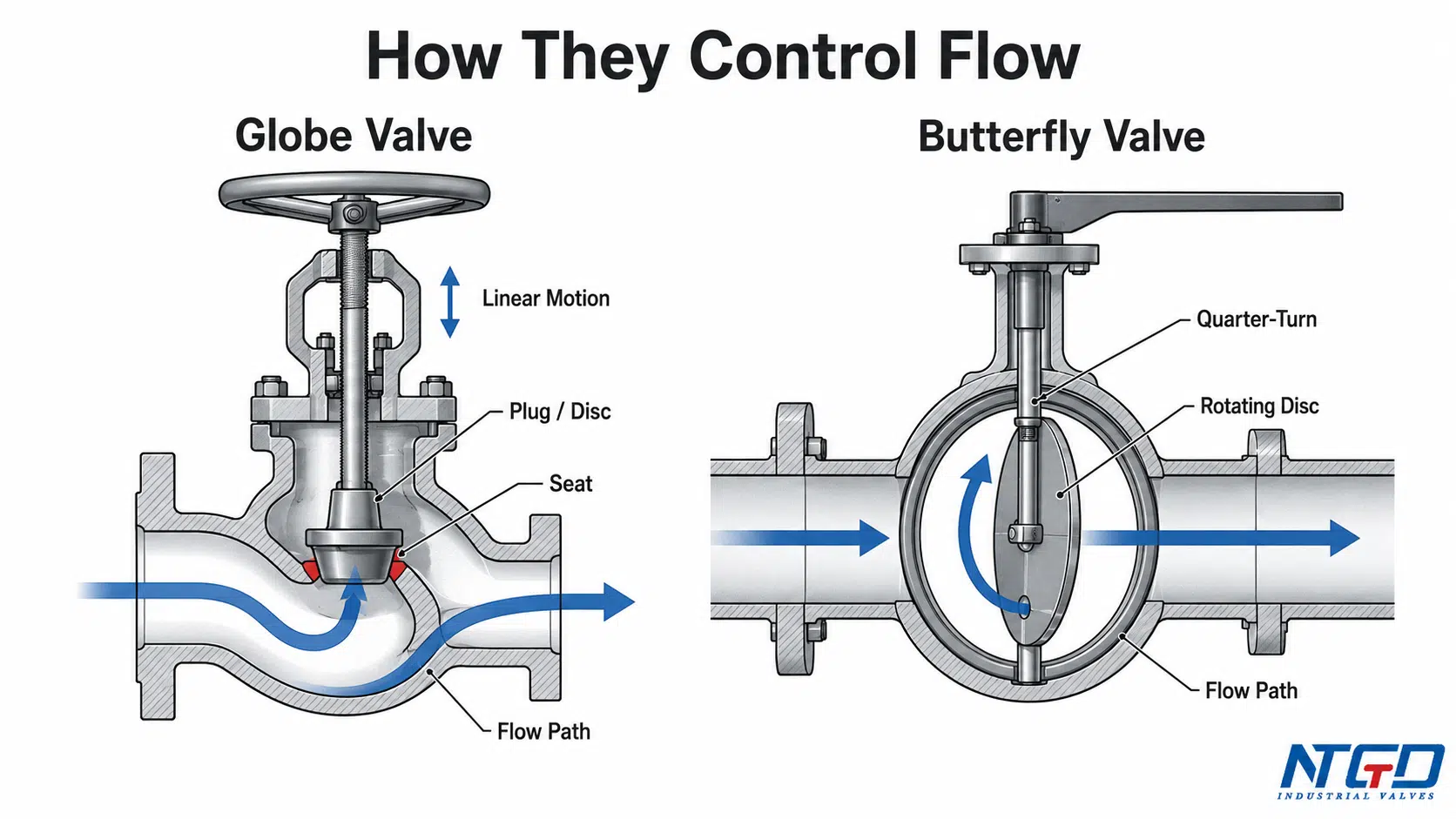
A globe valve controls flow by moving a plug or disc in a linear direction toward or away from a seat. As the stem moves, the opening between the disc and seat changes. This controlled change in flow area allows the valve to regulate flow more gradually than many quarter-turn isolation valves.
The internal body path of a globe valve is not a straight-through full-bore path. Flow must pass through a shaped passage and around the seat area. This body geometry creates resistance, turbulence, and pressure drop. In throttling service, that pressure drop may be part of the intended control function. In simple full-open service, however, it can become an unnecessary energy loss.
Globe valves may be supplied in different body patterns and trim designs. The exact pressure drop, flow coefficient, control characteristic, and shutoff performance depend on the manufacturer’s design, body pattern, trim, seat, pressure class, and service conditions.
For readers who need a deeper explanation of internal flow path, disc-seat control and shutoff behavior, NTGD’s globe valve working principle guide provides a more focused technical overview.
Дроссельная заслонка: поворот диска на четверть оборота
A butterfly valve controls flow with a disc mounted on a shaft. When the valve is open, the disc turns roughly parallel to the flow direction. When the valve is closed, the disc rotates across the bore to block the flow path. The operation is usually a quarter-turn motion, which makes butterfly valves fast to operate and easy to automate.
Because the body is compact and the flow path is relatively direct, a butterfly valve is commonly used where space, weight, and flow capacity matter. This is especially important in larger pipeline sizes, where a globe valve can become heavier, more expensive, and more difficult to support.
However, the disc is still inside the flow path. This means a butterfly valve is not a zero-resistance device. Disc shape, opening angle, seat type, offset design, shaft arrangement, and valve size all affect flow behavior, pressure drop, torque, and control stability.
For projects where the butterfly valve will use a bolted flange-end connection, the flanged butterfly valve selection guide can be reviewed together with the seat, disc clearance, pressure class and actuator requirements.
Почему тип движения влияет на поведение системы управления потоком
The difference between linear motion and rotary motion directly affects valve selection.
A globe valve changes the flow opening at the seat in a more controlled way. This makes it easier to use for fine adjustment, especially when the process requires stable control over a range of valve positions.
A butterfly valve changes flow by rotating a disc in the pipeline. At some opening angles, small changes in disc position may create larger changes in flow. This can make precise control more difficult unless the valve, actuator, and control system are designed for the application.
This does not mean butterfly valves cannot be used for throttling. It means the application must be reviewed carefully. For basic isolation and large-flow service, a butterfly valve may be the more efficient choice. For precise continuous throttling, a globe valve is usually the stronger starting point. In practical terms, linear seat control is easier to review for stable modulation, while rotary disc control is usually stronger for quick operation and low-resistance flow unless the butterfly valve package is specifically engineered for modulating service.
The following video provides a visual overview of common valve types, including globe valves and butterfly valves, and can help readers understand why linear motion and quarter-turn disc movement lead to different control behavior.
Точность управления и регулирование расхода
Почему для точного регулирования расхода обычно предпочитают использовать шаровые краны
A globe valve is usually preferred for throttling because its plug or disc moves toward the seat in a controlled linear path. This gives the valve a more predictable relationship between stem travel and flow adjustment. In process systems where the valve may remain partially open, this control behavior is often more important than low full-open pressure drop.
Globe valve throttling is common in services such as:
- steam flow regulation;
- process water balancing;
- chemical dosing;
- bypass control;
- pressure reduction;
- flow control on smaller or medium line sizes;
- applications where stable modulation is more important than minimum energy loss.
The trade-off is that a globe valve normally creates higher resistance than a butterfly valve. This is not always a disadvantage. In control service, a controlled pressure drop across the valve may be required. The key is to make sure the valve is selected for the actual control duty, not simply installed because it is called a globe valve.
Можно ли использовать клапан-бабочку для регулирования расхода?
A butterfly valve can be used for throttling in some services, especially when the required control is not extremely precise and the pressure drop is relatively moderate. High-performance butterfly valves, triple-offset butterfly valves, special disc designs, and suitable actuators can expand the usable control range in certain applications.
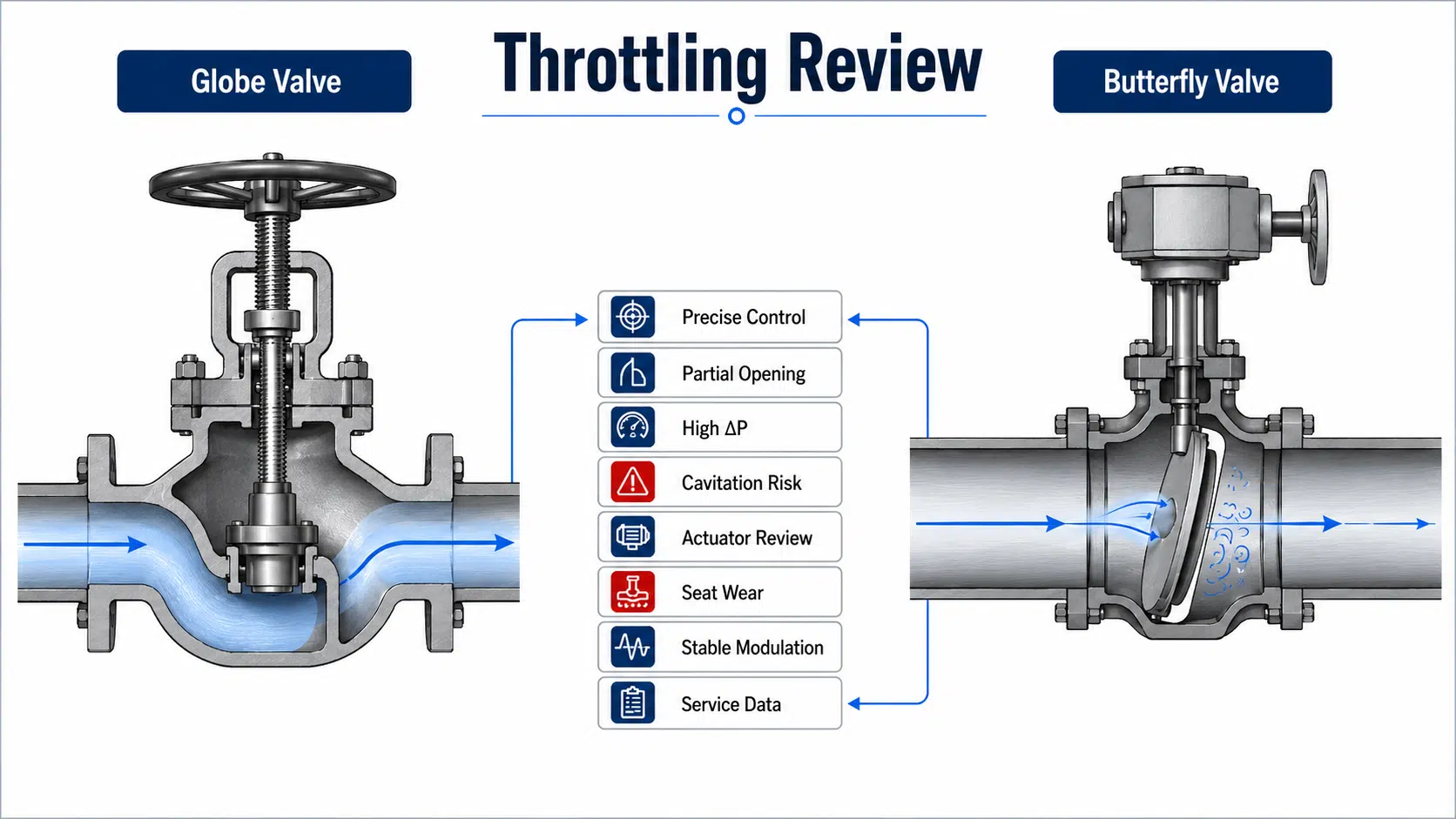
However, a butterfly valve should not be treated as a direct replacement for a globe valve in every throttling service. At partial opening, the disc can create turbulence, uneven flow distribution, vibration, noise, torque variation, or control instability. These risks depend on flow rate, pressure drop, media, valve size, disc design, actuator selection, and installation conditions.
When butterfly valve throttling is being considered, this butterfly valve Cv by opening position reference helps show why opening angle and manufacturer data should be checked before final use.
A standard butterfly valve should not be assumed suitable for high-accuracy continuous modulation, high differential pressure, flashing or cavitation risk, long-term low-opening throttling, or critical process control. In unsuitable throttling service, the result can be vibration, noise, accelerated seat wear, shaft or packing stress, unstable process response, and unplanned maintenance.
For rough regulation, balancing, or non-critical modulation, a butterfly valve may be acceptable. For precise continuous control, high differential pressure, severe throttling, flashing, cavitation, or critical process stability, the design review should be stricter.
Ограничения по регулированию расхода, высокий перепад давления и рассмотрение специальных конструкций
The selection becomes more sensitive when differential pressure is high. A valve used for throttling must control flow without causing unacceptable noise, vibration, erosion, cavitation, seat damage, or unstable operation.
Before using a butterfly valve for throttling, check:
- whether the valve is designed for modulating service;
- the expected minimum, normal, and maximum flow rate;
- the pressure drop across the valve at different positions;
- disc and seat material compatibility;
- actuator torque margin;
- required control accuracy;
- expected operating frequency;
- whether the valve will stay partially open for long periods.
Before using a globe valve for throttling, also check:
- pressure drop and energy impact;
- trim suitability;
- erosion or cavitation risk;
- temperature and pressure limits;
- actuator force requirement;
- whether the body pattern fits the allowable pressure loss.
A valve type can suggest a starting direction, but the final decision must be verified against the project specification and manufacturer data.
Падение давления и эффективность потока
Почему шаровые краны обычно приводят к большему падению давления
A globe valve usually creates higher pressure drop because the fluid must pass through a more restrictive internal body path. The flow changes direction around the seat and plug area, which increases resistance compared with a more direct flow path.
This pressure drop is one reason globe valves are widely used for flow control. The valve is designed to create a controllable restriction. When the application needs regulation, this restriction helps the valve adjust flow. If a globe valve is used only for simple on-off isolation, the same internal restriction may become a continuous, unnecessary energy loss and increase the load on the pumping system.
Pressure drop through a globe valve depends on:
- рисунок тела;
- дизайн отделки;
- размер клапана;
- открытая позиция;
- скорость потока;
- fluid density and viscosity;
- давление и температура;
- upstream and downstream piping;
- manufacturer Cv data.
If body pattern is already a key concern in the project, the tee pattern and Y-pattern globe valve comparison can help explain why different globe valve body geometries may create different pressure-drop penalties.
For this reason, a globe valve should not be selected only by nominal pipe size. The allowable pressure drop and required flow capacity should be checked during specification.
Почему клапаны «бабочка» обычно характеризуются меньшим падением давления при работе с большими расходами
A butterfly valve usually has lower pressure drop than a globe valve when it is fully open in large-flow service. The body is shorter and the flow path is more direct. Although the disc remains in the bore, the total obstruction is often lower than the internal restriction of a globe valve.
This is why butterfly valves are frequently selected for:
- large-diameter water lines;
- cooling water systems;
- utility piping;
- pump discharge isolation;
- wastewater and general industrial service;
- applications where energy loss must be limited;
- systems where installation space and valve weight are major concerns.
Lower pressure drop can reduce pump load and improve flow efficiency. However, the valve still needs to meet shutoff, pressure, temperature, material, and seat requirements. A low pressure drop valve is not automatically the correct valve if the process requires precise control.
Характеристики, начальное положение и условия полного открытия по сравнению с режимом дросселирования
Cv is one of the values used to compare valve flow capacity. In general, a higher Cv indicates that a valve can pass more flow at a given pressure drop. But Cv must be taken from manufacturer data, not assumed only from the valve type.
| Pressure Drop Factor | Шаровой клапан | Заслонка | Примечание по выбору |
|---|---|---|---|
| Fully open resistance | Usually higher because of internal body path | Usually lower because of compact body and direct flow path | Important for energy efficiency and large-flow service. |
| Throttling behavior | Usually more stable for precise regulation | Can be less linear and more sensitive to opening angle | Important for control accuracy and process stability. |
| Пропускная способность / расход | Must be checked by size, body pattern, and trim | Must be checked by size, disc design, and opening angle | Do not use generic assumptions for final sizing. |
| Energy implication | Higher pressure drop can increase pumping cost if not needed for control | Lower pressure drop can reduce energy loss in suitable service | Cost review should include OPEX, not only valve purchase cost. |
| Лучшая посадка | Control duty, pressure regulation, precise throttling | Large-flow, compact, low-loss isolation or coarse control | Final choice depends on service duty. |
For a case-based discussion of Cv, bypass valve selection and the trade-off between globe and butterfly valve behavior, see this bypass valve selection case study.
Cv should be verified for the exact body pattern, trim or disc design, opening position, and operating condition using manufacturer data. A generic valve-type comparison is useful for screening, but it is not a substitute for final sizing or specification review.
For the basic relationship between Cv, flow capacity and pressure drop, refer to this flow coefficient Cv reference before using manufacturer data for final sizing.
A useful rule is to separate two different questions:
- What is the pressure drop when the valve is fully open?
This matters for flow efficiency, pump load, and operating cost. - What pressure drop is required for control?
This matters for throttling, pressure regulation, and stable process operation.
The valve with the lowest pressure drop is not always the best control valve. If the duty is control, review controllable pressure drop, stability, and trim design first. If the duty is large-flow isolation or transfer, review low resistance, energy efficiency, and installation practicality first.
Размер, вес, занимаемое пространство и стоимость
Вопросы, связанные с трубопроводами большого диаметра
In larger pipe sizes, butterfly valves often become more practical than globe valves because they are generally lighter, shorter, and easier to fit into limited spaces. A large globe valve may require more structural support, more installation room, and more operating force or actuator capacity.
This does not mean globe valves are never used in larger sizes. It means the project should have a strong control or process reason for selecting one. If the application is mainly isolation or low-resistance flow, a butterfly valve often offers a more practical layout.
Large-diameter selection should consider:
- доступное пространство для общения лицом к лицу;
- pipe support and valve weight;
- actuator access;
- доступ для обслуживания;
- lifting and installation method;
- допустимый перепад давления;
- требуемая производительность затвора;
- torque or operating force.
Капитальные затраты, место для установки и требования к технической поддержке
Cost should not be reduced to purchase price. A valve selection affects several cost layers:
| Cost Layer | Globe Valve Consideration | Butterfly Valve Consideration |
|---|---|---|
| Initial valve cost | May be higher, especially in larger sizes or control-grade designs | Often lower in larger sizes, but high-performance designs can increase cost |
| Установочное пространство | Usually needs more space because of body shape and actuator arrangement | Usually more compact |
| Трубная опора | Higher weight may require stronger support | Lower weight may reduce support burden |
| Приведение в действие | Linear actuator or multi-turn operation may increase cost | Quarter-turn actuation is often simpler |
| Commissioning | Control service may require closer setup and verification of stable operating range | Isolation service is often simpler, but modulating use still needs control and torque review |
| Spare parts / maintenance | Trim, seat, and packing may need more detailed review | Seat, disc, shaft seals, and actuator torque remain important, especially in large sizes |
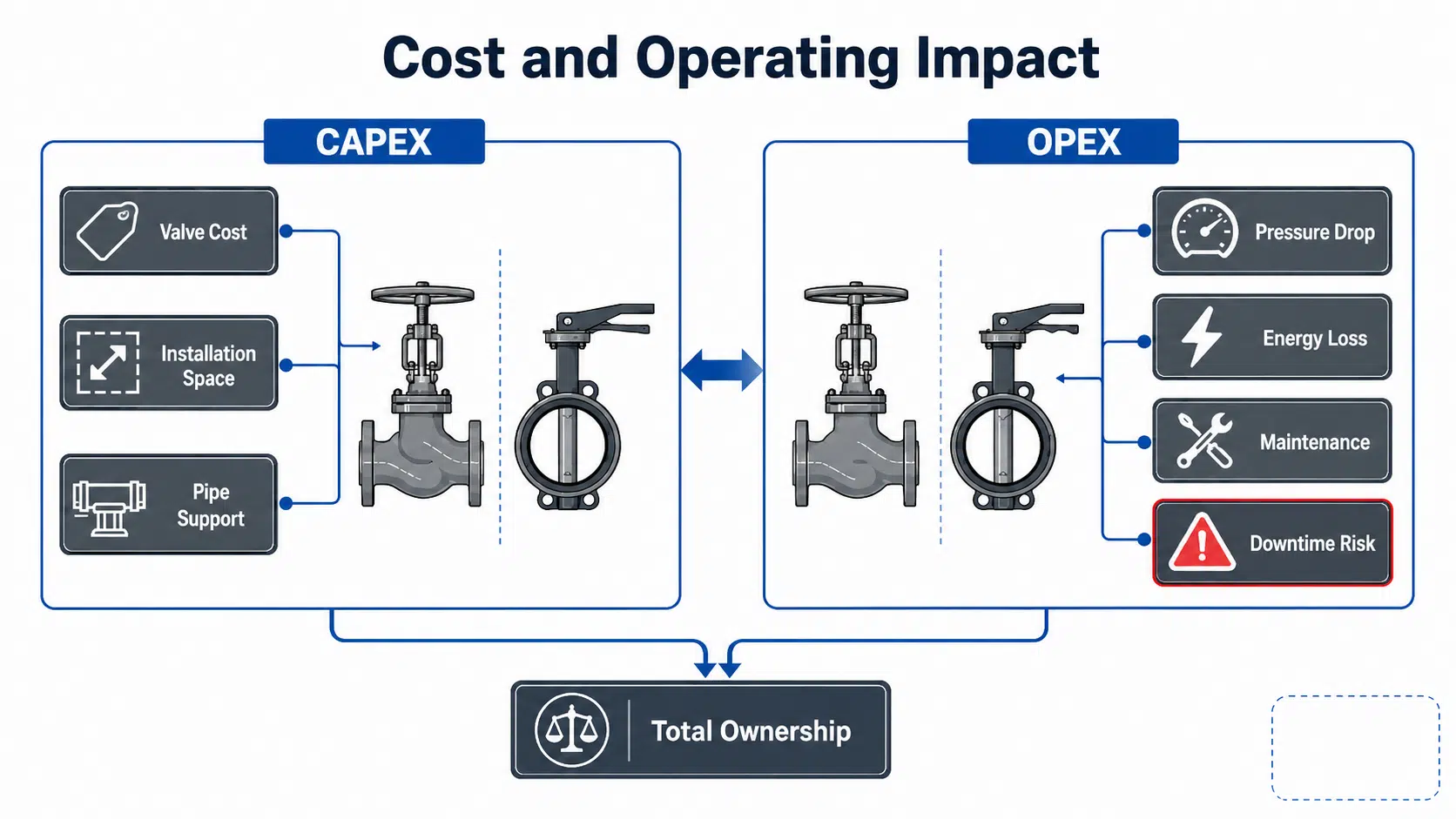
For a buyer, the lowest initial valve cost is not always the lowest project cost. If the valve causes unnecessary pressure loss, unstable control, difficult maintenance, or premature seat damage, total ownership cost can increase.
ОПЭКС: потери энергии, техническое обслуживание и простои
Operating cost is strongly linked to pressure drop, control stability, and maintenance frequency. A globe valve that is necessary for precise control may justify its higher pressure drop. A globe valve used only for full-open isolation may waste energy in a system where a lower-resistance valve could perform the duty.
A butterfly valve can reduce pressure loss in the right service, but if it is used for unsuitable throttling, the system may experience unstable flow, vibration, seat wear, or poor control. Continuous throttling, long-term full-open isolation, and frequent cycling create different OPEX risks. The wrong valve type can shift an apparent purchase-cost saving into energy loss, maintenance work, actuator problems, or downtime over the service life.
A practical cost comparison should include:
- purchase cost;
- installation labor;
- valve weight and support;
- actuator cost;
- expected pressure drop;
- pump energy;
- доступ для обслуживания;
- downtime risk;
- spare part availability;
- service life under the actual medium.
Герметизация, техническое обслуживание и ограничения по эксплуатации
Ожидания по отключению зависят от места и конструкции
Shutoff performance is controlled by seat design, sealing structure, pressure class, temperature, medium, cycling frequency, and leakage requirement. It is not safe to claim that one valve type always seals better than the other.
Globe valves can provide controlled closure against a seat and may be suitable for many isolation and control duties when correctly specified. Butterfly valves can also provide tight shutoff in many services when the seat and offset design match the application. For example, soft-seated butterfly valves may suit many clean, lower-temperature services that require tight shutoff, while metal-seated or high-performance butterfly valves and globe valve trim must be checked against temperature, pressure, media, cycling, and leakage expectation.
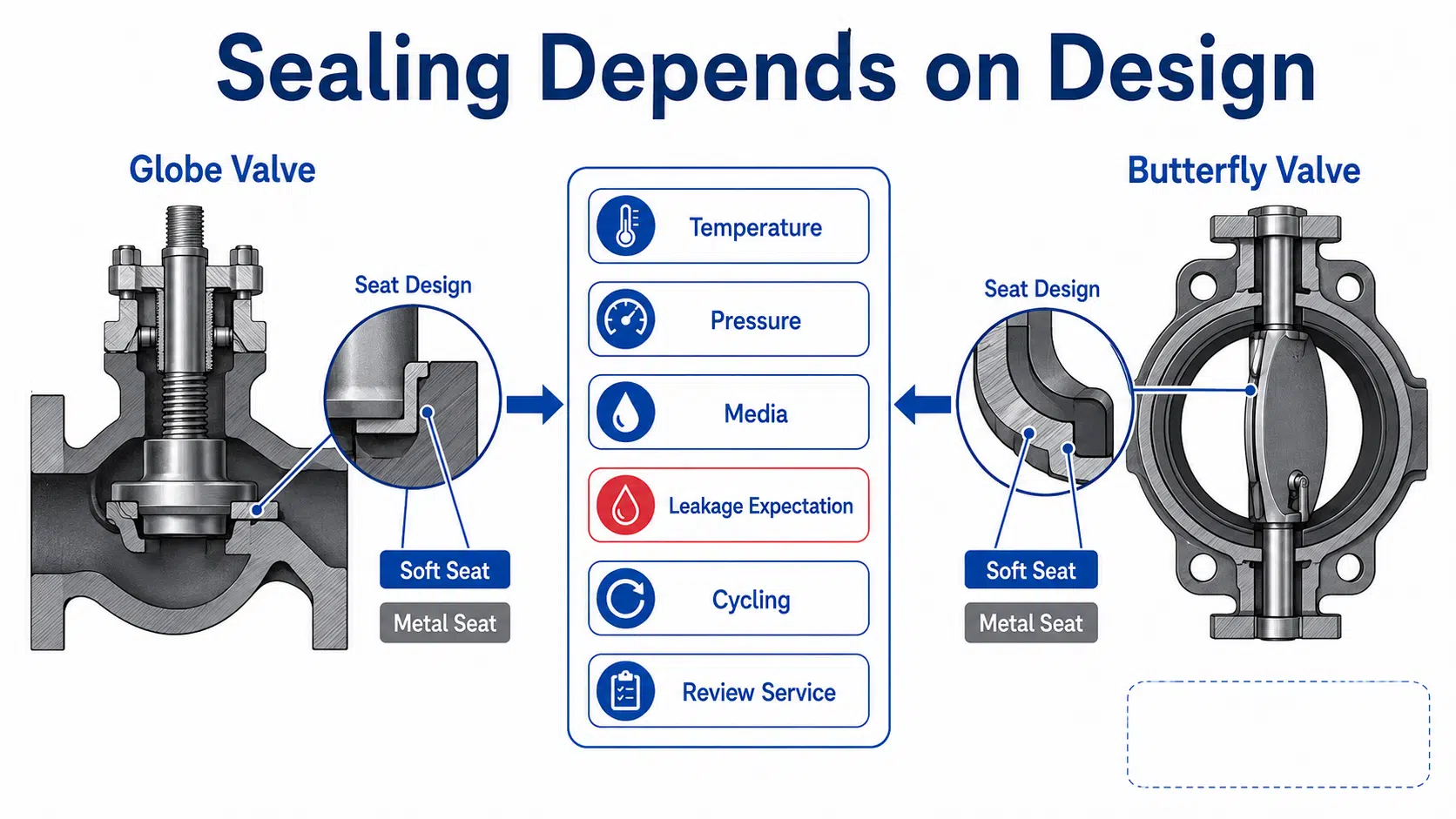
For both valve types, the leakage expectation should be stated in the project specification. If the service needs strict shutoff, high temperature, abrasive media, vacuum, hazardous media, or frequent cycling, the seat design and applicable test or leakage requirements should be confirmed before purchase.
Доступ для технического обслуживания и удобство обслуживания
Globe valves often have more internal control components, such as plug or disc, seat, stem, packing, and trim. This can make maintenance more detailed, but it may also provide repair and trim options depending on design.
Butterfly valves usually have simpler construction and fewer major internal parts. This can make them easier to handle, especially in larger sizes. However, the disc, shaft, seat, liner, and seals remain critical. If the seat is damaged or the shaft seal leaks, maintenance access and spare parts still matter.
Maintenance review should include:
- access around the valve;
- whether the valve can be removed without major piping changes;
- seat replacement method;
- packing or shaft seal maintenance;
- actuator access;
- частота работы;
- чистота носителей;
- spare parts and documentation.
Границы, определяющие среду, твердые частицы, температуру и давление
The medium can change the selection. Clean fluids, steam, gas, corrosive service, slurry, viscous media, and fluids with suspended solids do not behave the same way.
A globe valve may not be ideal if the medium contains heavy solids that can collect around internal passages or damage the trim. A butterfly valve may be more open in the flow path, but disc edge, seat, liner, and shaft areas can still be affected by abrasive or corrosive media.
High temperature and high pressure also affect seat material and valve design. A soft seat that works well in water service may not fit high-temperature service. A metal seat may handle harsher conditions but may have different leakage expectations. These boundaries should be checked during RFQ and specification review.
Когда следует выбирать шаровой кран или дроссельную заслонку
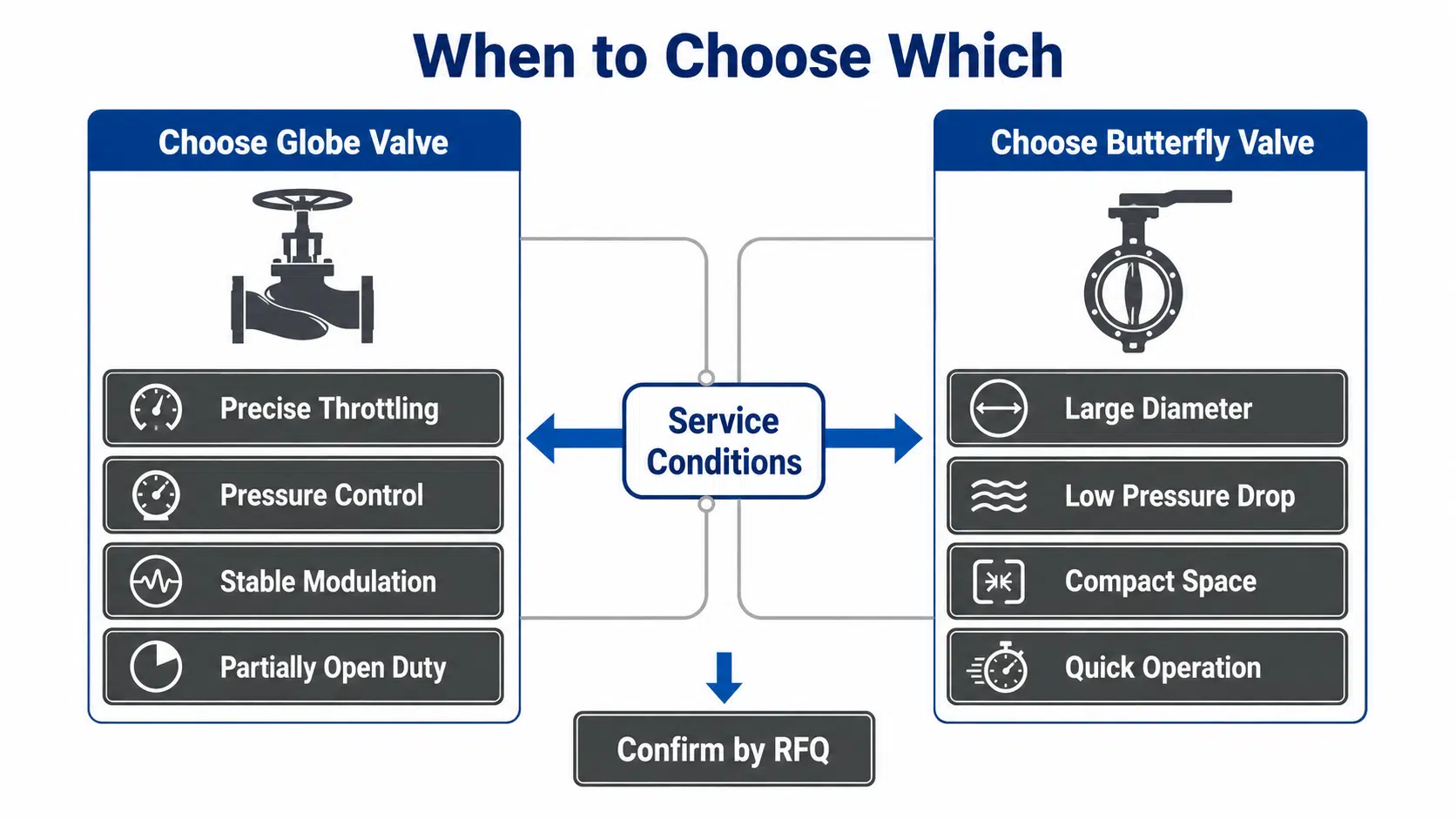
Выбирайте шаровой кран, если…
Choose a globe valve when the service needs controlled regulation more than minimum pressure drop.
| Состояние обслуживания | Направление выбора | Почему |
|---|---|---|
| Precise throttling is required | Шаровой клапан | Linear motion and seat control usually provide better modulation. |
| Flow must be adjusted frequently | Шаровой клапан | The valve is designed for controlled opening positions. |
| Pressure reduction is part of the process | Шаровой клапан | Higher pressure drop may be required for control. |
| Steam or process regulation is needed | Шаровой клапан | Stable control is often more important than compact size. |
| Smaller or medium line sizes need control | Шаровой клапан | Size and cost penalties may be acceptable for better control. |
| The valve will remain partially open | Шаровой клапан | Globe valves are generally more suitable for continuous throttling. |
A globe valve is not automatically the best valve for every service. It should be selected when its control advantage is actually needed.
Выбирайте клапан-бабочку, если…
Choose a butterfly valve when the service needs compact design, quick operation, and lower pressure loss more than precise modulation.
| Состояние обслуживания | Направление выбора | Почему |
|---|---|---|
| Large-diameter piping | Заслонка | Short face-to-face design and lighter weight are practical advantages. |
| Low pressure drop is important | Заслонка | Fully open resistance is usually lower than a globe valve. |
| Quick open-close operation is required | Заслонка | Quarter-turn operation is fast and simple. |
| Space is limited | Заслонка | Compact body helps reduce installation footprint. |
| General isolation service | Заслонка | Suitable when precise throttling is not the main duty. |
| Utility water, cooling water or similar service | Заслонка | Often practical for large-flow, low-resistance systems. |
A butterfly valve should still be reviewed for seat design, pressure rating, temperature, torque, media compatibility, and leakage expectation.
Внимательно ознакомьтесь с документом перед утверждением окончательной спецификации
Some services require more careful review before selecting either valve type:
| Review Condition | Почему это важно |
|---|---|
| Высокий перепад давления | Can increase noise, vibration, cavitation, erosion, actuator load, or unstable control. |
| Critical throttling | May require globe valve trim or a control-grade valve design. |
| Strict leakage requirement | Seat design and leakage expectation must be confirmed before purchase. |
| Abrasive or slurry service | Trim, disc, seat, liner, and body wear must be evaluated. |
| Высокая температура | Seat, packing, body, and trim materials must be compatible. |
| Large actuator torque | Operation method and safety margin must be checked. |
| Limited installation space | Face-to-face length, handwheel / actuator clearance, lifting access, and maintenance access matter. |
| Частые поездки на велосипеде | Seat wear, packing wear, shaft sealing, and actuator life should be reviewed. |
A practical selection process starts with valve type, but it does not end there. If these conditions are not checked, the project may face control instability, excessive energy loss, seat or trim damage, actuator overload, or unplanned downtime. The RFQ checklist below should be used to confirm the service data before final valve selection.
Контрольный список для запроса предложений перед окончательным выбором клапана
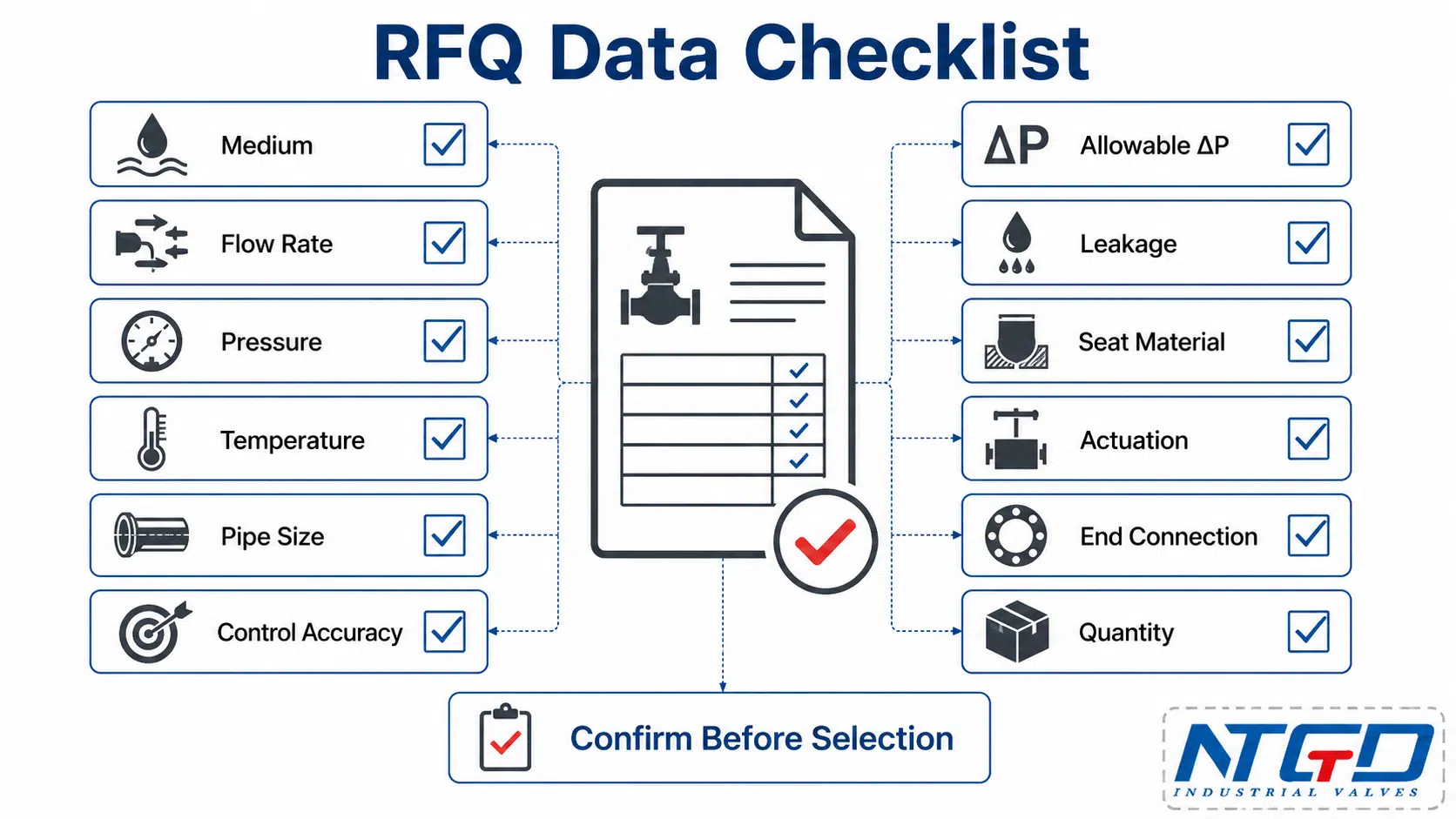
Обработать данные для подтверждения
Before requesting a quotation or finalizing a valve type, prepare the process conditions. This helps avoid selecting a valve that looks correct in a general comparison but fails in the actual system.
For a broader valve-type screening process before RFQ, use NTGD’s Руководство по выбору промышленных клапанов together with the service-specific checklist below.
| RFQ Data | Почему это важно |
|---|---|
| Средний | Determines material, seat, trim, and corrosion resistance. |
| Скорость потока | Affects valve size, Cv, and pressure drop. |
| Рабочее давление | Determines pressure class and body design. |
| Рабочая температура | Affects seat, packing, body, and trim material. |
| Размер трубы | Influences valve type, weight, cost, and installation space. |
| Required control accuracy | Determines whether globe valve or control-grade butterfly design should be reviewed. |
| Допустимый перепад давления | Critical for pump load, control duty, and flow efficiency. |
| Solid content or slurry risk | Affects wear, blockage, and seat damage. |
| Leakage expectation | Determines seat design and shutoff requirements. |
| Рабочая частота | Affects seat wear, actuator selection, and maintenance. |
Данные о конструкции и работе клапана, подлежащие подтверждению
After the process data is clear, confirm the valve-specific requirements.
| Данные клапана | Почему это важно |
|---|---|
| Тип клапана | Confirms whether globe valve or butterfly valve is being reviewed. |
| Материал корпуса | Must match pressure, temperature, and corrosion conditions. |
| Материал сиденья | Controls shutoff, temperature range, and media compatibility. |
| Trim / disc / plug material | Affects erosion, corrosion, and control behavior. |
| Концевое соединение | Must match piping specification. |
| Номинальное давление | Must match project pressure and temperature requirements. |
| Метод приведения в действие | Manual, gear, electric, pneumatic, or hydraulic operation affects control and cost. |
| Control requirement | On-off, throttling, or modulating duty must be clear. |
| Ориентация при установке | Must follow the manufacturer’s instruction and piping layout. |
| Inspection / testing requirement | Should be aligned with project specification and applicable standards. |
| Quantity and project schedule | Helps confirm production and delivery planning. |
| Требование к документации | Datasheet, drawing, material certificate, or test record may be required by the project. |
This checklist is especially important when comparing globe valve vs butterfly valve options for the same service. The wrong valve type may still fit the pipe size but fail the operating requirement.
ЧАСТО ЗАДАВАЕМЫЕ ВОПРОСЫ
В чём заключается основное различие между шаровым краном и дроссельной заслонкой?
В шаровом клапане затвор или диск перемещается по прямой линии относительно седла, поэтому он лучше подходит для регулируемого дросселирования. В поворотном клапане диск поворачивается на четверть оборота, благодаря чему он быстрее в управлении, более компактен и, как правило, лучше подходит для систем с большим расходом и небольшим перепадом давления.
У какого клапана меньший перепад давления?
В полностью открытом состоянии у клапана-бабочки падение давления обычно меньше, чем у клапана шарового, особенно при больших расходах. У клапана шарового падение давления обычно выше, поскольку его проходной канал более сужен. Фактическое падение давления по-прежнему зависит от размера клапана, конструкции корпуса, положения открытия, расхода и данных Cv, указанных производителем.
Глобусный клапан лучше подходит для регулирования расхода?
Для многих промышленных задач, требующих непрерывной регулировки и стабильного контроля расхода, шаровой кран, как правило, является оптимальным выбором на первом этапе рассмотрения. Его линейное перемещение обеспечивает более точную регулировку в зоне седла. При высоком перепаде давления, риске кавитации, испарении, эрозии или в тяжелых условиях эксплуатации по-прежнему требуется пересмотр конструкции и внутренних узлов.
Можно ли использовать клапан-бабочку для регулирования расхода?
Да, в некоторых случаях для дросселирования можно использовать клапан-бабочку, если требуемая точность регулирования и перепад давления являются приемлемыми. Необходимо тщательно проанализировать его стабильность при частичном открытии, управление приводом, крутящий момент, износ седла, вибрацию и условия эксплуатации среды. Не следует предполагать, что он сможет заменить клапан с полным проходом в критических условиях непрерывного регулирования.
В каких случаях следует выбирать шаровой кран вместо дроссельного клапана?
Выбирайте шаровой кран в тех случаях, когда в процессе эксплуатации требуется точное регулирование расхода, частое дросселирование, регулирование давления, стабильная модуляция или контролируемый перепад давления. Зачастую он является более надежным вариантом для управления технологическими процессами, регулирования подачи пара, дозирования химических веществ, а также для малых и средних линий управления.
В каких случаях следует выбирать клапан «бабочка» вместо шарового клапана?
Выбирайте клапан-бабочку, если для данного объекта требуется компактная установка, быстрое срабатывание, меньший перепад давления, высокая пропускная способность или практичный клапан для труб большого диаметра. Он часто подходит для систем водоснабжения, охлаждающей воды, инженерных сетей, сточных вод, а также для общих целей отсечки.
Глобусный клапан стоит дороже, чем дроссельный клапан?
Клапан шарового типа часто обходится дороже клапана бабочкового типа в больших размерах, поскольку он, как правило, тяжелее, длиннее и имеет более сложную конструкцию. Однако стоимость зависит от класса давления, материала, конструкции седла, внутренних деталей, привода и эксплуатационных требований. Более адекватным критерием сравнения является совокупная стоимость владения, включающая перепад давления, энергопотребление, техническое обслуживание и время простоя.
Чем задвижка отличается от клапана и дроссельной заслонки?
A gate valve is mainly used for fully open or fully closed isolation with low flow resistance. It is not normally selected for precise throttling. This article focuses on globe valve vs butterfly valve selection; gate valve comparisons should be reviewed separately when the project is choosing among multiple valve types.
For that separate boundary, see NTGD’s gate valve vs globe valve comparison before expanding the decision into a three-valve review.
Заключение
Globe valves and butterfly valves are both used in industrial piping systems, but they solve different selection problems. A globe valve is usually the better starting point when the application needs precise throttling, stable regulation, or controlled pressure drop. A butterfly valve is usually the better starting point when the application needs low pressure drop, compact installation, fast operation, and practical large-diameter service.
The key difference is not only valve shape. It is the relationship between flow control, pressure drop, space, cost, maintenance, and service condition. A globe valve can provide better control, but it usually creates more resistance. A butterfly valve can reduce weight and pressure loss, but it may not provide the same throttling stability unless the design is selected for that duty.
As a practical selection summary: review a globe valve first when the process depends on fine control or pressure regulation; review a butterfly valve first when the line needs compact, low-resistance flow handling; use the RFQ checklist when the service includes high pressure drop, strict leakage, high temperature, slurry, frequent cycling, or uncertain control requirements.
The correct selection should be confirmed with project data, including medium, pressure, temperature, flow rate, pipe size, allowable pressure drop, required control accuracy, leakage expectation, seat material, actuation, and installation conditions.
Поддержка приложений / спецификаций
If you are comparing globe valve and butterfly valve options for an industrial project, prepare the service data before final selection. NTGD Valve can review the valve type, size, pressure rating, material, seat design, actuation method, and application conditions based on your RFQ requirements.
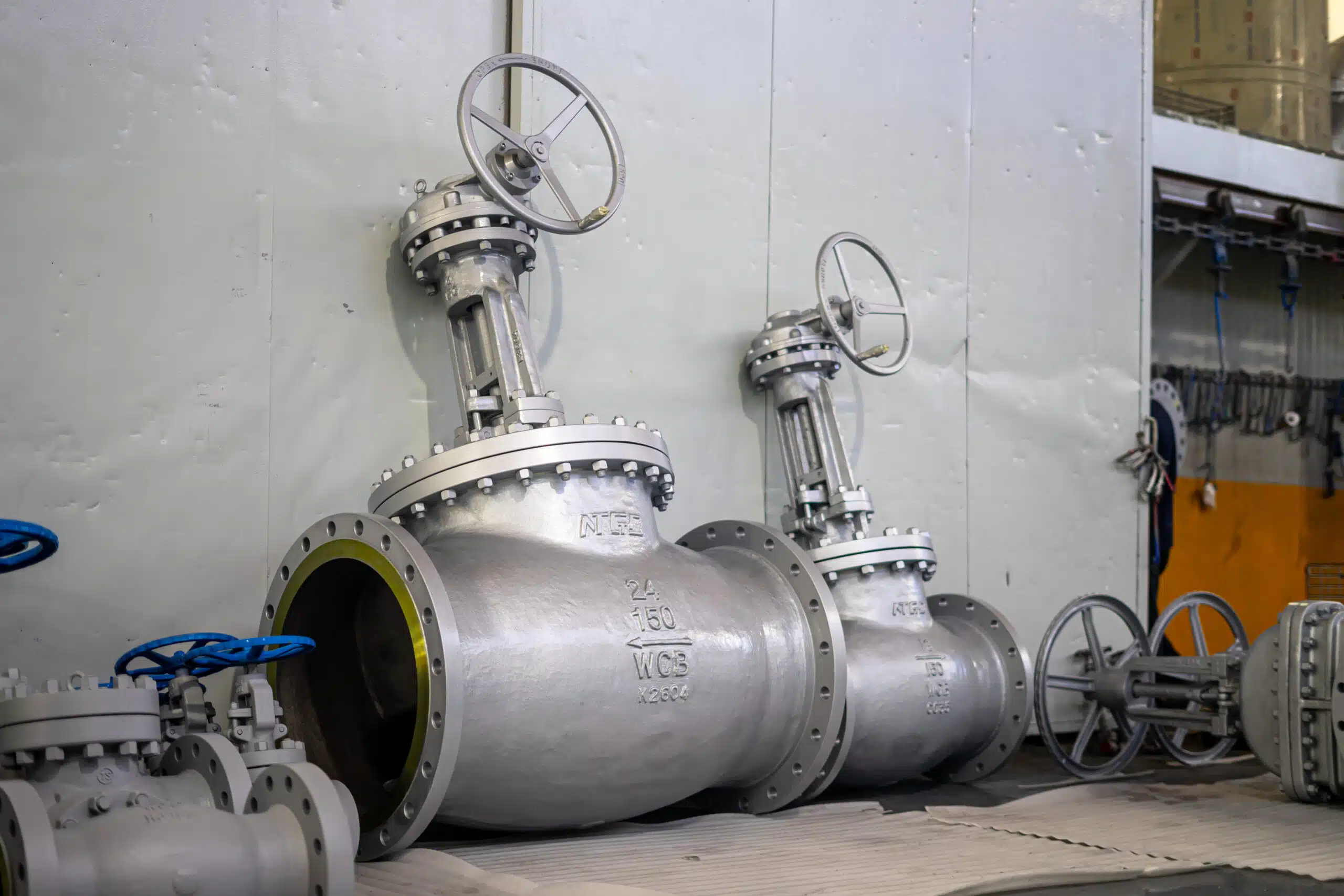
If the first review points toward globe valve regulation duty, the flange globe valve product page can support the next specification check for body material, pressure rating, end connection and operation requirements.
Complete operating data helps the engineering review focus on the correct valve fit rather than only the valve name. It can also reduce the risk of selecting a valve that fits the pipe but fails the control, pressure drop, shutoff, or maintenance requirement.
For a faster technical review, provide the medium, pressure, temperature, pipe size, flow rate, required control accuracy, allowable pressure drop, end connection, operation method, and any leakage or documentation requirements.
