
Author Name: Bruce Zheng
Author Role: Co-Founder and Valve Engineer at NTGD Valve
Author Bio: Bruce Zheng is Co-Founder and Valve Engineer at NTGD Valve, focusing on industrial valve selection, application, and technical content for global B2B buyers.
Last Updated: July 15, 2026
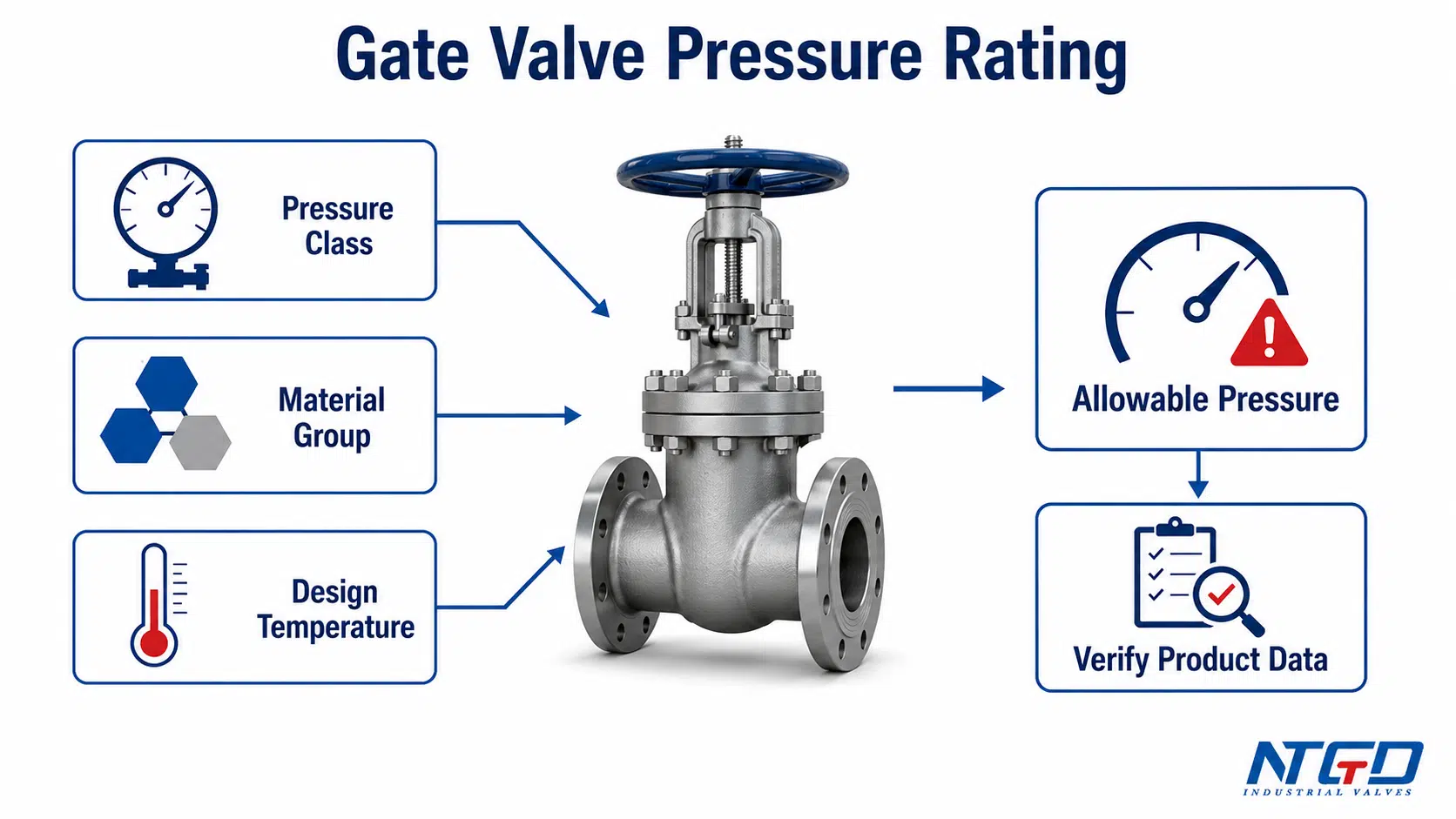
Quick answer: A gate valve pressure rating is a conditional limit, not a pressure value obtained from the Class number alone. The resulting allowable pressure depends on the gate valve pressure class, body material or material group, design temperature, applicable rating basis, complete-valve construction, end connections, and any lower restriction in the manufacturer’s datasheet or project specification.
A Class 150 gate valve is therefore neither permanently limited to nor guaranteed for one fixed psi value. The correct value is found in the applicable gate valve pressure rating chart or pressure-temperature table after the material group and design temperature have been confirmed. Selecting the wrong material group or temperature condition can overstate the allowable pressure and create a noncompliant selection; it can also understate the rating and drive an unnecessary Class upgrade.
Decision rule: Confirm the material group and governing design temperature before accepting a Pressure Class, then verify the result against the complete product data.
This guide covers conventional industrial gate valves. It does not provide a universal Class-to-psi conversion table and does not address knife gate valve pressure ratings.
What Does a Gate Valve Pressure Rating Mean?
A gate valve pressure rating defines the pressure that an applicable valve design may be permitted to contain at a stated temperature under a defined rating basis. In project work, it should be treated as a conditional engineering limit—not as a single number printed beside the word “Class.”
The useful question is not simply:
“What pressure can a Class 150 gate valve handle?”
It is:
“What allowable pressure applies to this Class, material, design temperature, valve configuration, connection, and project specification?”
Pressure Class Is a Designation, Not a Fixed Pressure Value
Class 150, Class 300, and Class 600 are rating designations within a defined system. The number identifies a rating level; it is not a direct statement of allowable psi.
Within the same applicable rating basis:
- a higher Class generally provides greater pressure-temperature capability for the same material and temperature;
- a change in body material can change the applicable allowable pressure;
- a change in temperature can change the allowable pressure;
- the complete product limit may be lower than the body rating because of seats, packing, gaskets, trim, end connections, or project restrictions.
The Class number is therefore the start of a lookup and verification process, not the final selection answer.
What “Allowable Working Pressure” Means in This Guide
In this guide, allowable working pressure means the permitted service pressure identified through the applicable pressure-temperature rating basis, subject to the documented limits of the complete valve and the governing project requirements.
It is not automatically identical to:
- normal operating pressure;
- design pressure;
- a transient pressure recorded during operation;
- shell test pressure;
- closure or seat test pressure;
- the rating of a connected flange considered in isolation.
Project terminology can vary. The piping code, project specification, valve standard, datasheet, and manufacturer documentation should be read together before the final rating is accepted.
Pressure Rating Versus Pressure Drop
Pressure rating and pressure drop answer different engineering questions.
- Pressure rating addresses whether the valve can contain the specified pressure at the specified temperature.
- Pressure drop addresses the hydraulic loss created as fluid passes through the valve.
A fully open gate valve may have relatively low flow resistance, but that does not establish its allowable containment pressure. A higher Pressure Class likewise does not define the valve’s Cv or flowing pressure loss.
For the hydraulic side of the decision, NTGD’s gate valve pressure drop and Cv guide explains how flow rate, bore design, and manufacturer Cv/Kv data affect flowing pressure loss.
Which Pressure Value Are You Comparing?
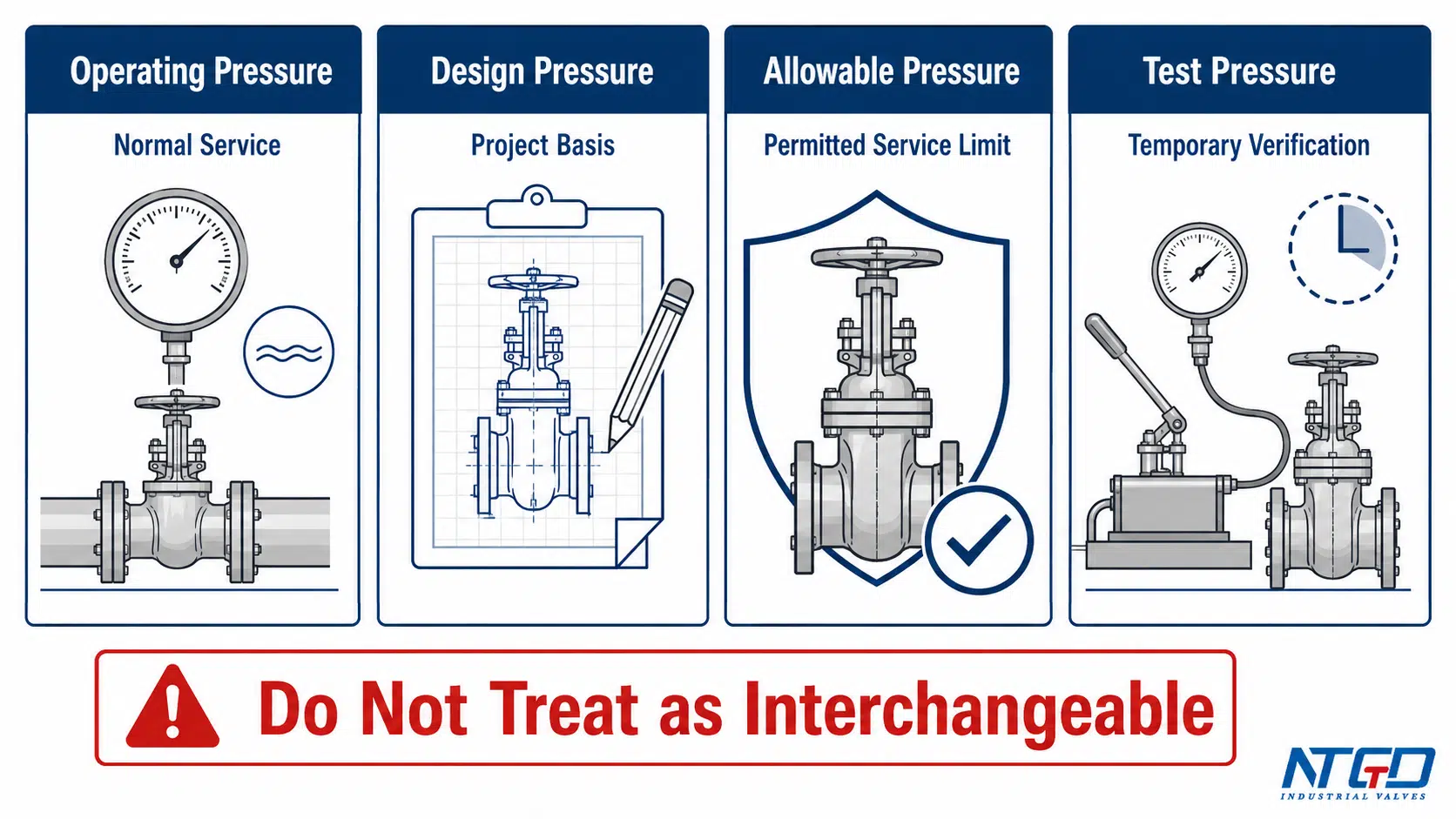
A pressure specification becomes unreliable when operating, design, allowable, and test pressures are treated as interchangeable. The comparison below separates the decision boundaries before the rating table is used.
| Term | What It Means | Selection Warning |
|---|---|---|
| Operating pressure | The pressure expected during normal process operation and across the anticipated operating range. | Normal pressure alone may omit design, upset, shutdown, or transient conditions required by the project. |
| Design pressure | The project pressure used as the basis for piping and equipment selection, paired with a corresponding design temperature. | A pressure value without its governing temperature, material, and design basis is incomplete for Class selection. |
| Allowable or rated working pressure | The permitted pressure for the applicable Class, material group, temperature, and rating basis. | It must be read from the correct source after material and temperature derating are considered; the Class number alone is insufficient. |
| Test pressure | A temporary pressure applied under a defined inspection or test procedure. | Shell and closure tests demonstrate specified test performance; neither establishes the continuous service rating. |
Operating Pressure
Operating pressure describes the process during normal service. It may be lower than the design pressure, but that does not justify selecting a valve only for the normal operating point.
The review should also account for the specified design basis, expected operating range, shutdown conditions, thermal effects, and any transient or upset condition identified by the piping or equipment specification.
Design Pressure
Design pressure is the project input against which the valve’s allowable rating is evaluated. It should always be paired with the corresponding design temperature.
A statement such as “design pressure: 40 bar” remains incomplete for rating selection when the design temperature, material, rating system, connection, or governing project requirements are missing.
Allowable or Rated Working Pressure
The allowable rating is obtained from the applicable pressure-temperature basis after the material group and design temperature have been identified. It is then compared with the project design requirement.
Where the governing piping code, client specification, or project design criteria require an additional margin or a more conservative limit, that requirement belongs in the acceptance check. It should not be replaced by an informal or universal safety factor without a governing basis.
Test Pressure
Test pressure is a temporary verification condition with a different purpose from service rating.
- A shell test evaluates the pressure-containing boundary under the specified test procedure.
- A closure or seat test evaluates shutoff or leakage performance under its specified conditions.
Passing either test confirms the stated test result; it does not convert the test pressure into the permitted continuous operating pressure. Service suitability still depends on the applicable pressure-temperature rating and the documented limits of the complete valve.
How Class, Material, and Temperature Determine Allowable Pressure
The core gate valve pressure-temperature relationship is:
Pressure Class + Material Group + Design Temperature → Allowable Pressure
Viewed as a three-input decision model, the logic becomes clear: Class establishes the rating level, material selects the correct rating family, and temperature identifies the usable value within that family.
| Core Input | Decision Function | Verification Source |
|---|---|---|
| Pressure Class | Establishes the candidate rating level within the applicable system. | Applicable rating source and product datasheet |
| Body material or material group | Selects the correct material table or rating group. | Material specification, marking, certificate, and applicable P-T source |
| Design temperature | Selects the temperature condition used to determine allowable pressure. | Project datasheet and applicable P-T source |
The official ASME B16.34 standard overview identifies pressure-temperature ratings and materials among the requirements within its scope.
After these three inputs are resolved, two post-lookup checks remain mandatory:
- the complete valve design may impose a lower limit through the seat, packing, gasket, trim, bonnet joint, or end connection;
- project requirements may impose additional service, inspection, documentation, or approval restrictions.
The lookup should therefore begin with the material group, then move to temperature and Class. Using the wrong material group can produce an allowable-pressure value that does not apply to the offered body material, potentially causing the specification to accept an inadequate Class.
The Role of the Gate Valve Pressure Class
Pressure Class provides a structured way to compare rating levels. Under the same material, design temperature, rating route, and product basis, a higher Class normally offers a higher allowable pressure than a lower Class.
The correct selection is not made by moving upward until a Class “looks safe.” A higher Class can change valve construction, flange and piping interfaces, mass, procurement cost, operating requirements, and installation planning. The correct Class is the lowest suitable rating that satisfies the full project requirement with documented confirmation.
Why Body Material and Material Group Matter
A pressure-temperature chart is not read by Class alone. The exact body material must first be matched to the material group or table defined by the governing rating source.
Two valves with the same Class can have different allowable limits when their body materials fall under different rating groups. A value for one cast carbon steel, stainless steel, low-alloy steel, or other material cannot be transferred to another material without an approved basis.
The material designation on the valve, datasheet, material certificate, purchase specification, and pressure-temperature source should agree before the rating is accepted.
For a deeper comparison of service fit, corrosion exposure, and complete-valve material variables, review NTGD’s gate valve material selection guide.
How Temperature Derating Changes the Allowable Pressure
The gate valve temperature rating is inseparable from the pressure rating. As temperature changes, the allowable pressure associated with a Class and material may also change.
The pattern is defined by the applicable pressure-temperature table; it should not be replaced by a universal linear derating rule. At elevated temperature, the allowable pressure is often lower than the value near ambient conditions, but the exact relationship depends on the material group and rating basis.
The temperature used for selection should be the governing project design condition, not merely the normal fluid temperature observed during stable operation.
Why Class Alone Cannot Complete the Selection
Class does not answer the following questions:
- Which material table applies?
- Which minimum or maximum design temperature governs?
- Is the end connection compatible with the piping system?
- Do the seat, packing, gasket, or trim impose a lower limit?
- Is the valve built to the required design standard?
- Which inspection and testing requirements apply?
- Does the product datasheet confirm the complete-valve limit?
- Does the project specification impose additional restrictions?
Until those questions are resolved, the Pressure Class remains a candidate designation rather than a complete specification.
How to Read a Gate Valve Pressure-Temperature Rating Chart
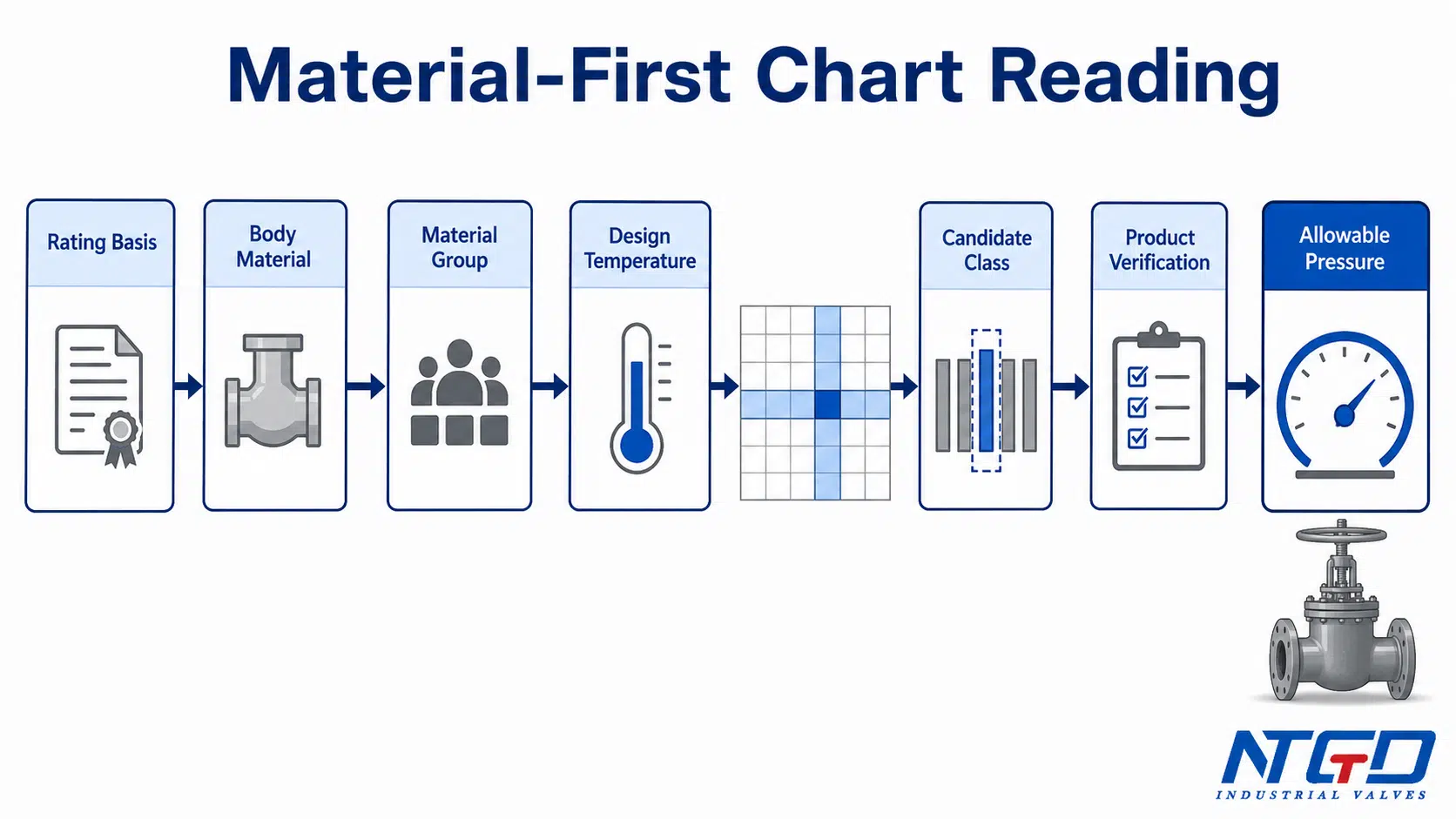
A reliable chart-reading process is material first, temperature second, Class third. The auditable workflow is:
Applicable rating route → exact body material → material group → design temperature → candidate Class → notes and product confirmation
Starting with a familiar Class and then searching for a convenient pressure can lead to the wrong material table or temperature condition.
Confirm the Applicable Standard and Rating Route
Identify the rating source, piping specification, valve design standard, and project document that control the review.
Gate valves carrying the same Class designation may follow different construction or product routes. Cast, forged, fabricated, flanged-end, and welding-end designs can involve different requirements. The purchase specification should identify the required system and applicable edition; an unresolved rating route should be treated as a technical query before selection proceeds.
Identify the Body Material and Material Group
Confirm the exact body material from the datasheet or material specification, then locate the corresponding material group in the approved pressure-temperature source.
Material grouping should be supported by the governing source. A similar alloy name, competitor table, or assumed equivalence is not a sufficient basis for selecting the group.
Select the Required Temperature Row
Use the project design temperature associated with the pressure condition being evaluated.
Where minimum and maximum temperatures differ substantially, both limits may require review because body rating, material suitability, bolting, packing, gaskets, and other component restrictions may not share the same governing condition.
Locate the Candidate Class Column
After the material group and temperature condition are identified, locate the candidate Class and compare the allowable pressure with the project design requirement using consistent units.
If the rating does not satisfy the design requirement and any margin specified by the governing code, client specification, or project criteria, evaluate another Class or product route.
Check Units, Footnotes, and Non-Tabulated Temperatures
Before accepting a value, review:
- pressure and temperature units;
- material notes and restrictions;
- standard or special rating designations;
- applicable end types;
- table footnotes;
- the approved treatment of a temperature that is not directly tabulated.
For a non-tabulated temperature, the permitted method should come from the governing rating source and project procedure rather than an assumed linear extrapolation.
Verify the Result Against the Manufacturer’s Data
A standard table establishes the rating basis; it does not confirm every limit of a specific manufactured valve.
Compare the selected value with the manufacturer’s pressure-temperature table, product datasheet, marking, approved drawing where relevant, material records, component limits, project specification, and required inspection documents.
For non-tabulated temperatures, special media, special materials, or service near a rating boundary, the final decision should follow the approved standard method, project specification, and manufacturer’s documented limit. Where product documentation states a lower limit, the lower applicable limit governs.
How Should Class 150, Class 300, and Class 600 Ratings Be Interpreted?
Class-specific questions are useful only when material, design temperature, rating basis, and product limits remain visible.
| Candidate Class | Engineering Interpretation | Required Verification |
|---|---|---|
| Class 150 | A lower rating level within the applicable Class system; it does not mean a constant 150 psi working pressure. | Material group, design temperature, rating source, complete-valve limits, and product datasheet |
| Class 300 | A higher rating level than Class 150 when both are assessed on the same material and temperature basis. | The same inputs as Class 150, plus piping, flange, and connection compatibility |
| Class 600 | A higher candidate level when lower Classes cannot satisfy the verified design condition. | Material, temperature, construction route, connections, complete-valve limits, and manufacturer confirmation |
These examples have meaning only when the material group, design temperature, applicable rating source, and product documentation are identified. No universal psi or bar value is implied.
Class 150 as a Conditional Rating Example
A Class 150 gate valve pressure rating cannot be answered accurately without the body material and design temperature.
A Class 150 valve may be acceptable for one project condition and inadequate for another even when the nominal size and valve type appear similar. The review sequence remains the same: identify the material group, select the design temperature, read the applicable allowable pressure, and verify the complete-valve datasheet.
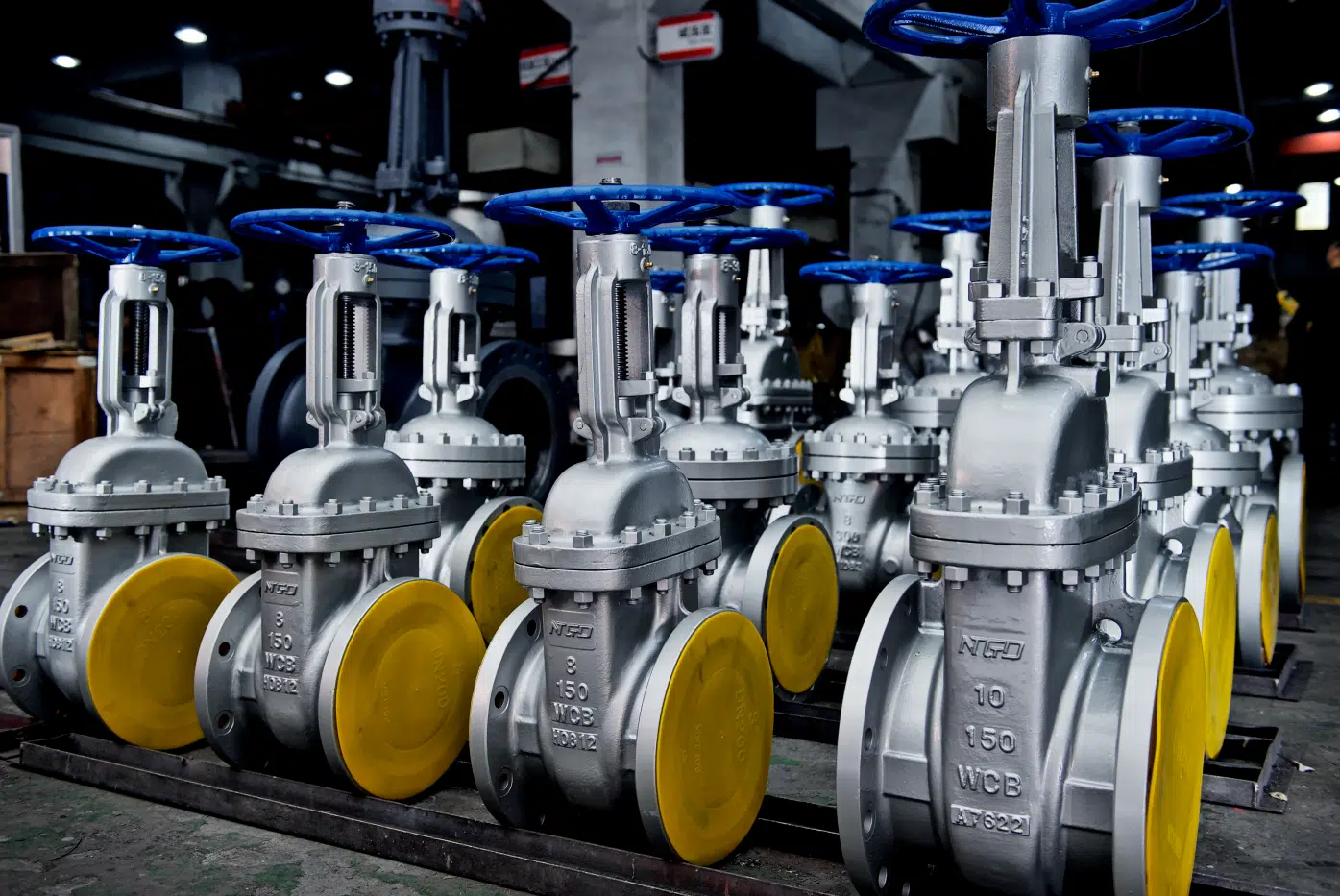
Specific size, end connection, trim, operation, and product-configuration details should be checked in the applicable product documentation or project datasheet rather than expanded into a catalog section here.
What Changes When Class 300 Is Considered
Class 300 provides a higher rating level than Class 150 when both are evaluated under the same material, temperature, and rating basis.
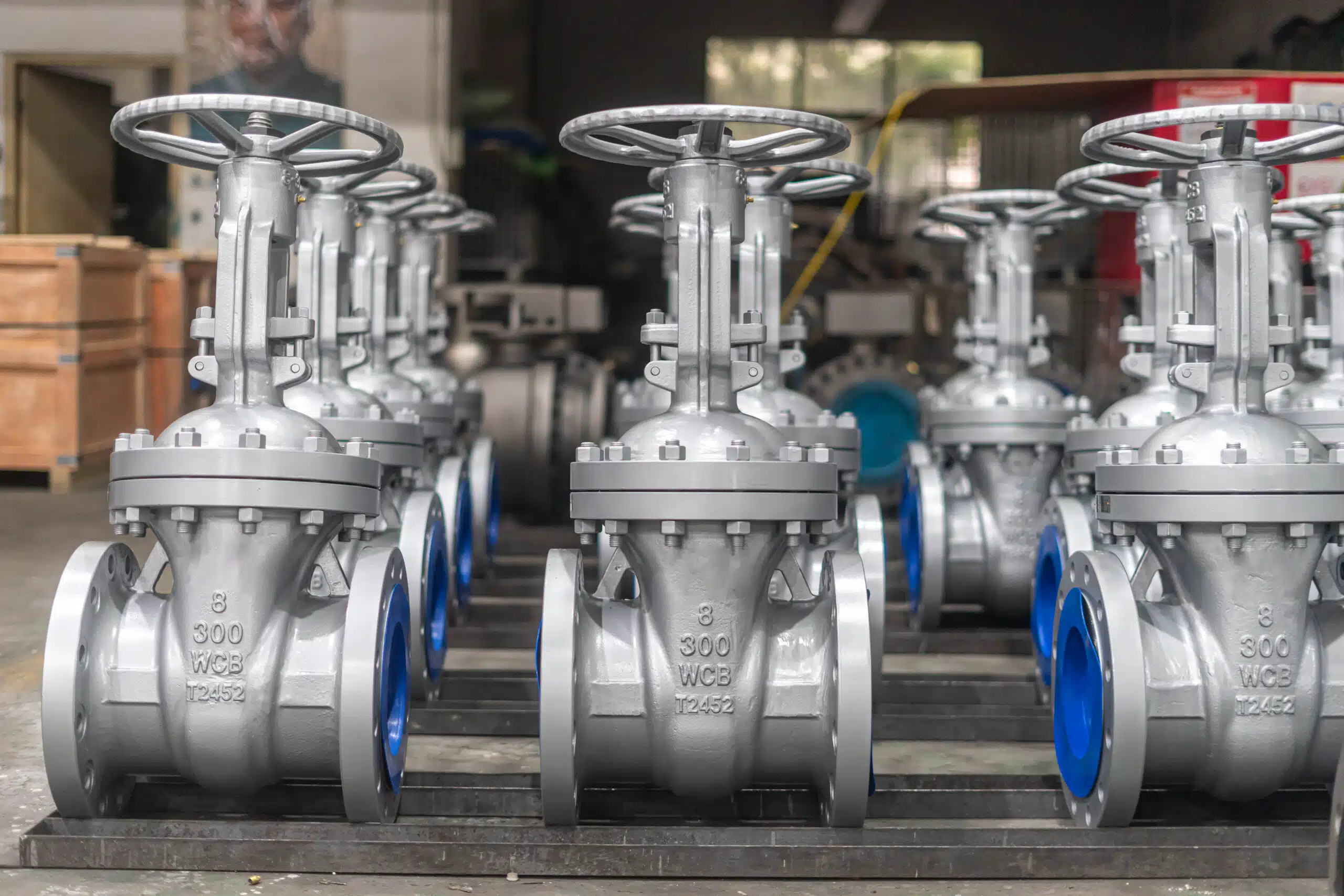
It is not automatically the correct choice. The project should still confirm whether Class 150 already satisfies the requirement, whether the connected piping and flanges match the selected system, whether the sealing and trim components support the service, and whether the product datasheet confirms the proposed configuration.
Where Class 600 Fits Without Expanding into a High-Pressure Product Guide
When Class 150 or Class 300 cannot satisfy the verified design condition, Class 600 can enter the next stage of candidate review. The material, temperature, connection, construction route, and complete-valve limits must then be checked again rather than carried forward from the lower-Class review.
This article does not extend that decision into a complete high-Class product range. Higher rating applications may require different body construction, forged designs, connection arrangements, or project controls, which belong in the relevant high-pressure technical content and product documentation.
Where the review moves beyond a limited Class 600 example into high-pressure construction, sealing, bore design, and application choices, route the discussion to NTGD’s high-pressure gate valve guide.
Which Standards Control Rating, Design, Connections, and Testing?
No single standard or datasheet answers every rating, design, connection, testing, and project-acceptance question. Treating the documents as a responsibility map helps keep each decision in the correct place.
| Standard or Document | Primary Responsibility | What It Does Not Establish by Itself |
|---|---|---|
| ASME B16.34 | Pressure-temperature rating, material, and related valve requirements for products within its scope. | Final suitability of every complete product for a specific project |
| API 600 | Gate-valve design and construction requirements for applicable steel gate valves within its scope. | A universal Class-to-psi value independent of material and temperature |
| API 598 | Inspection and pressure-testing requirements for valves within its scope. | Continuous service pressure or complete application suitability |
| Applicable flange or end-connection standard | Rating, material, dimensional, and connection requirements for the defined connection component. | The service limit of the complete assembled valve |
| Manufacturer datasheet | Product-specific materials, construction, ratings, and restrictions. | Compliance with project requirements that were not stated or reviewed |
| Project specification | Governing service conditions, selected standards, deviations, inspection, and documentation. | Product details that the manufacturer has not submitted and confirmed |
Confusing rating responsibility, construction responsibility, and testing responsibility can leave a specification with an unverified material-temperature match, an incomplete valve-design requirement, or missing acceptance documentation.
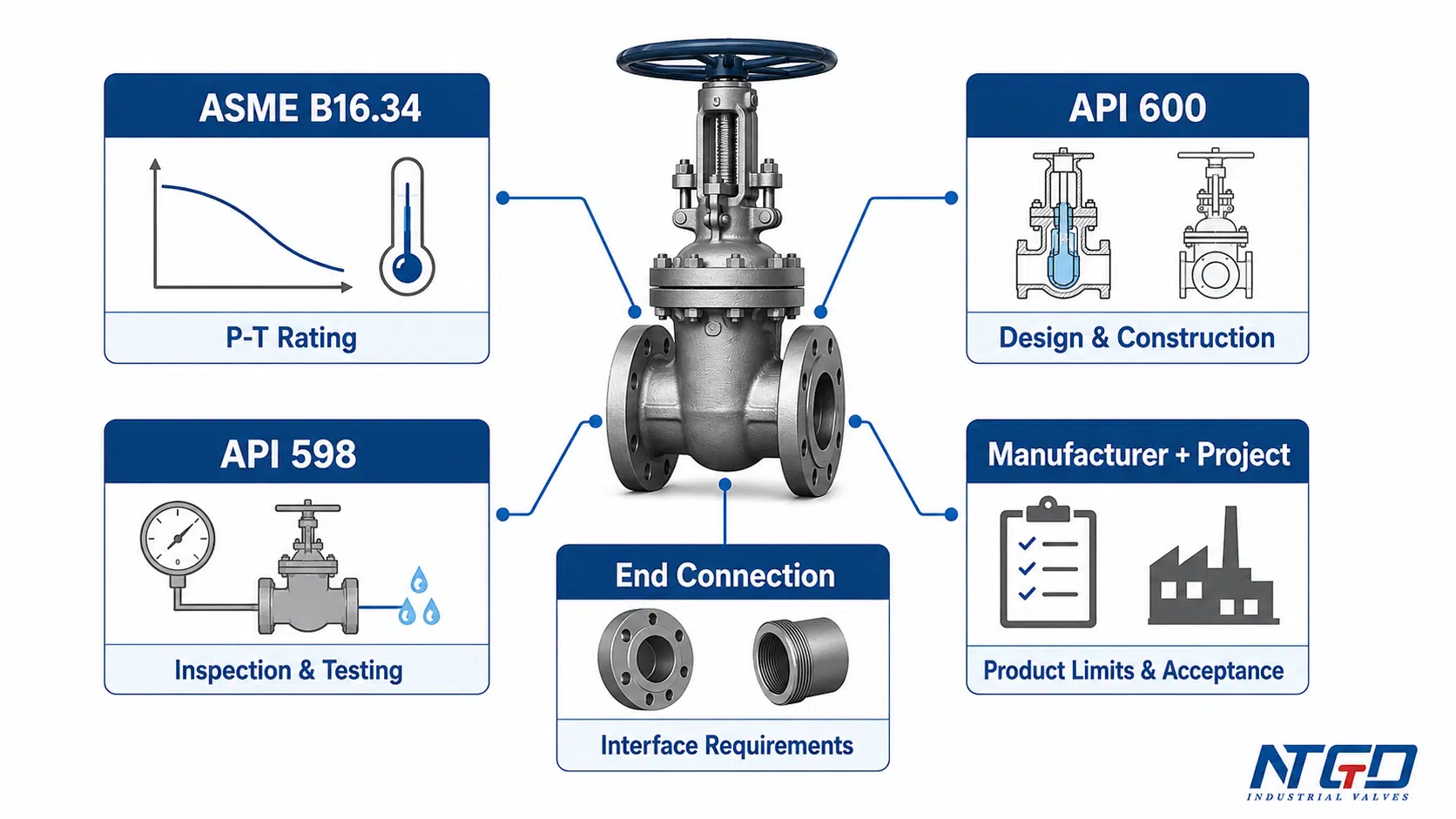
For a broader compliance map covering API 600, API 602, API 603, API 6D, and API 598 roles, see NTGD’s API standards for gate valves guide.
Pressure-Temperature Rating Responsibility
The pressure-temperature rating source defines the allowable relationship for the applicable material and Class under its stated conditions.
It establishes the rating basis but does not override lower product restrictions or the project specification.
Gate Valve Design and Construction Responsibility
A gate-valve design standard defines construction requirements for products within its scope. It does not make the standard designation a substitute for checking the material group and design temperature.
API’s official API 600 listing identifies the standard route for steel gate valves with flanged or butt-welding ends and bolted bonnets.
The design standard and pressure-temperature rating basis are related inputs with different responsibilities.
Projects that need the construction route in more detail can continue with NTGD’s API 600 gate valve standards and specifications guide.
Inspection and Pressure-Test Responsibility
Inspection and test standards define how specified tests are performed and accepted. Test records demonstrate completion of those tests; they do not replace the pressure-temperature rating used for service selection.
Shell testing and closure testing should remain separate from continuous operating capability in both the technical review and the approval records.
Flange and End-Connection Responsibility
A flanged valve must be compatible with the connected piping system. A shared nominal Class designation does not remove the need to check the applicable connection standard, material, temperature, gasket, bolting, dimensions, and project requirements.
For butt-welding ends, the review shifts toward the specified welding-end design, material compatibility, wall transition, and project welding requirements. In either case, a compatible connection does not prove that the complete valve is suitable for the service.
Manufacturer Datasheet and Project Specification Responsibility
The manufacturer’s datasheet defines the product offered. The project specification defines the service and acceptance requirements.
Technical approval requires the two to agree on material, Class, temperature, valve configuration, connection, inspection, documentation, and any stated deviation.
Why the Body Rating May Not Equal the Complete Valve Service Limit
The body or shell rating is only one part of complete-valve suitability. A pressure-containing body may meet the selected pressure-temperature rating while another component establishes a lower service limit.
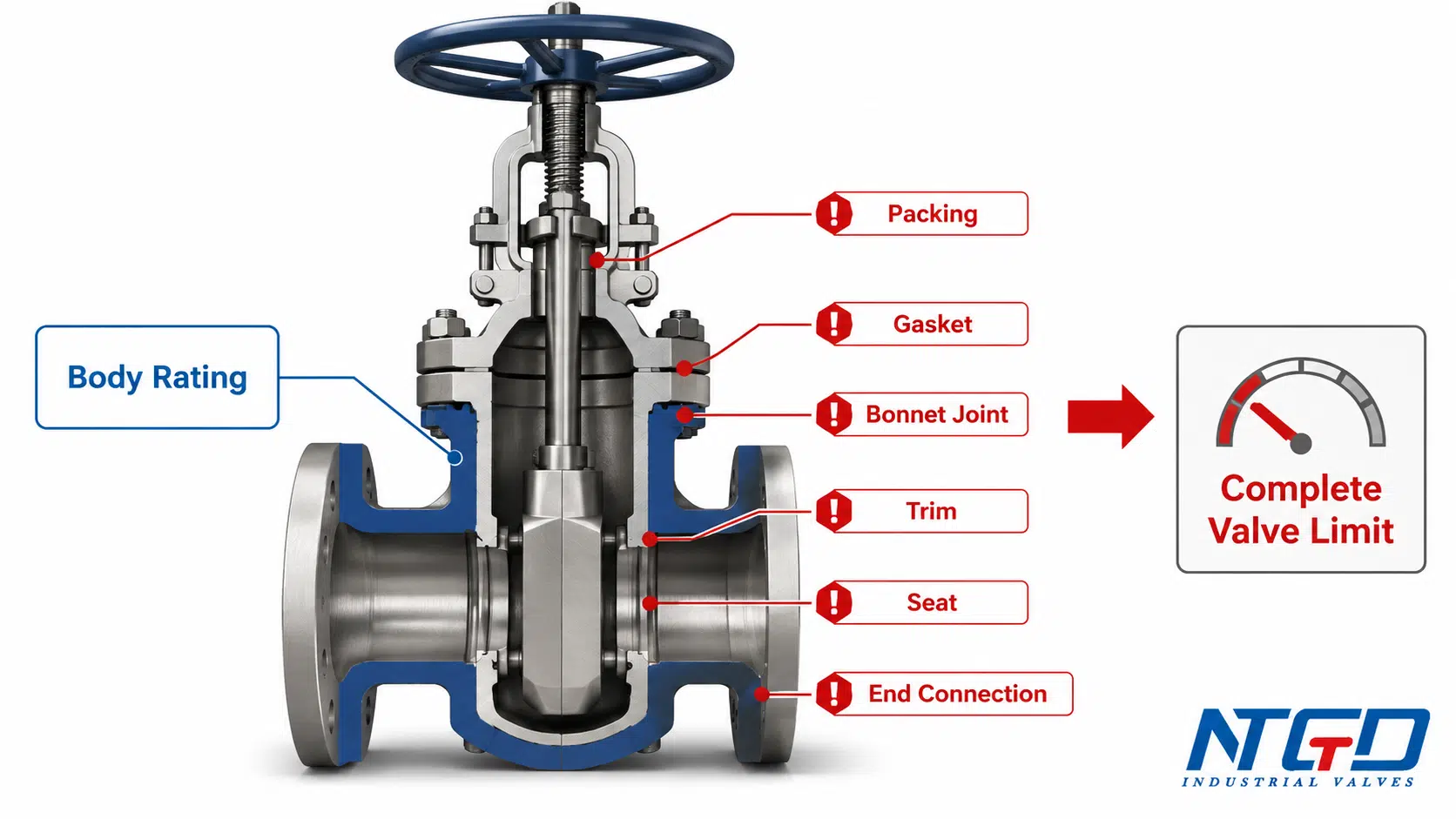
Seat, Packing, Gasket, Trim, and Bonnet Limitations
Potential governing elements include the seat construction, packing, body-bonnet gasket, trim, bonnet joint, bolting, and any lining or coating used in the service.
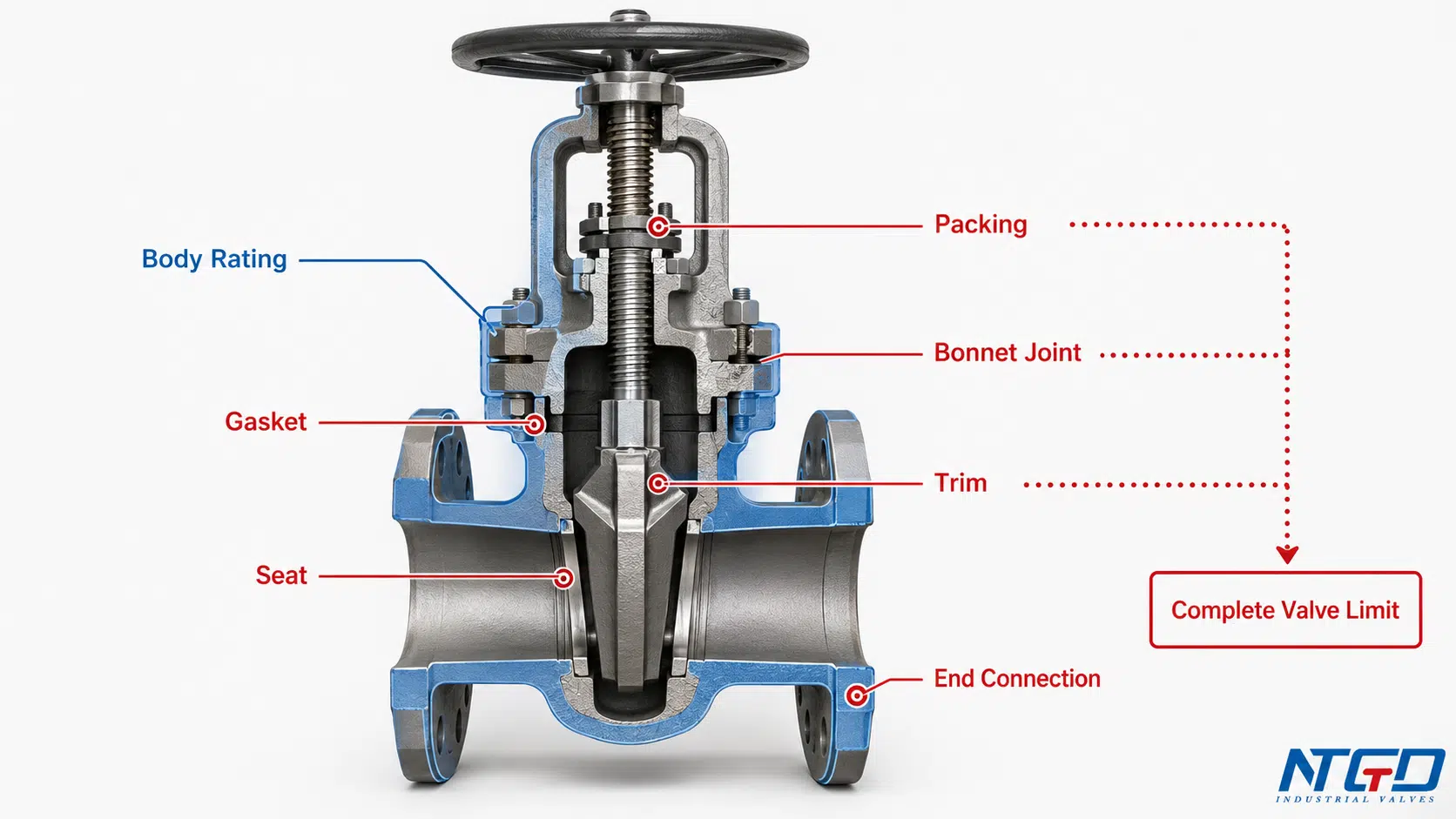
The controlling limit depends on the actual design and operating conditions; there is no universal reduction factor. In high-temperature, low-temperature, corrosive, or special-media service, a seat, packing, gasket, or trim restriction may become the governing limit below the body rating.
The correct response is to revise or confirm the component specification—not merely select a higher Pressure Class. This complete-valve fit-check should be completed after the body rating has been read and before the candidate Class is approved.
End-Connection and System Compatibility
The valve is part of a piping system. Its pressure Class must be compatible with the connected flanges or piping components, bolting, gasket selection, material basis, design temperature, and project standard.
Compatibility involves more than matching the word “Class.” For butt-welding ends, the review should address the specified end design, material compatibility, wall transition, and project welding requirements. The connection route does not remove the need to verify the complete-valve rating.
Shutoff Capability, Leakage, and Test Pressure Are Different Limits
Pressure containment, shutoff performance, and leakage acceptance are separate engineering checks.
The shell rating addresses the pressure-containing boundary. Closure testing addresses shutoff or leakage performance under stated test conditions. Neither establishes an unstated zero-leakage guarantee, operating differential limit, or continuous service pressure.
The applicable valve design, test requirements, product datasheet, and project acceptance criteria should identify each limit independently.
How to Select and Verify the Required Gate Valve Pressure Class
A practical selection process begins with project conditions and ends with product-specific documentary confirmation.
| Step | Required Review | Expected Evidence |
|---|---|---|
| 1 | Identify normal operating pressure, design pressure, and relevant upset conditions. | Process datasheet or project specification |
| 2 | Confirm minimum and maximum design temperatures for the body and other critical components. | Process and piping design data |
| 3 | Confirm the exact body material, material group, and applicable rating route. | Material specification and governing rating source |
| 4 | Compare the candidate Class allowable pressure with the design requirement and any project-defined margin. | Applicable P-T table and project design criteria |
| 5 | Check the complete valve, end connections, and connected system. | Product datasheet, approved drawings, and piping class |
| 6 | Confirm inspection, testing, certificates, deviations, and approval records. | ITP, test reports, certificates, and purchase documents |
Define the Project Pressure and Temperature Inputs
Record the normal and governing conditions before selecting the Class:
- normal operating pressure;
- design pressure;
- normal operating temperature;
- minimum design temperature;
- maximum design temperature;
- relevant transient or upset conditions defined by the project;
- unit system.
A candidate Class selected before these inputs are available is not yet an engineering selection.
Confirm the Material and Applicable Standard
Specify the exact body material and confirm the governing design and rating route.
Media compatibility, corrosion allowance, sour-service requirements, low-temperature toughness, and other project conditions may require a separate material review, but they still affect whether the selected pressure rating is usable for the project.
Compare the Allowable Pressure with the Design Requirement
Use the correct material group and design temperature to identify the candidate allowable pressure.
Accept the Class only when the rating satisfies the project design requirement and any additional margin defined by the applicable piping code, client specification, or project design criteria. A generic safety factor should not be added without that governing basis.
Check the Complete Valve and Connected System
Confirm the suitability of the body and bonnet, seat and trim, stem and packing, gasket and bolting, end connection, connected piping, operating arrangement, and any service-specific restriction.
This check prevents a correct body-table lookup from becoming an incorrect complete-valve selection.
Obtain Manufacturer Confirmation and Required Documents
The final selection should be supported by product-specific documentation, which may include:
- the manufacturer’s pressure-temperature table;
- valve datasheet;
- general arrangement drawing;
- material list and material certificates;
- inspection and test plan;
- pressure-test records;
- compliance or conformity statement;
- deviation list;
- operating and maintenance documentation.
Manufacturer confirmation is particularly important when the service is near a rating boundary, involves elevated or low temperatures, uses special materials, or includes project-specific inspection and documentation.
Common Gate Valve Pressure-Rating Specification Errors
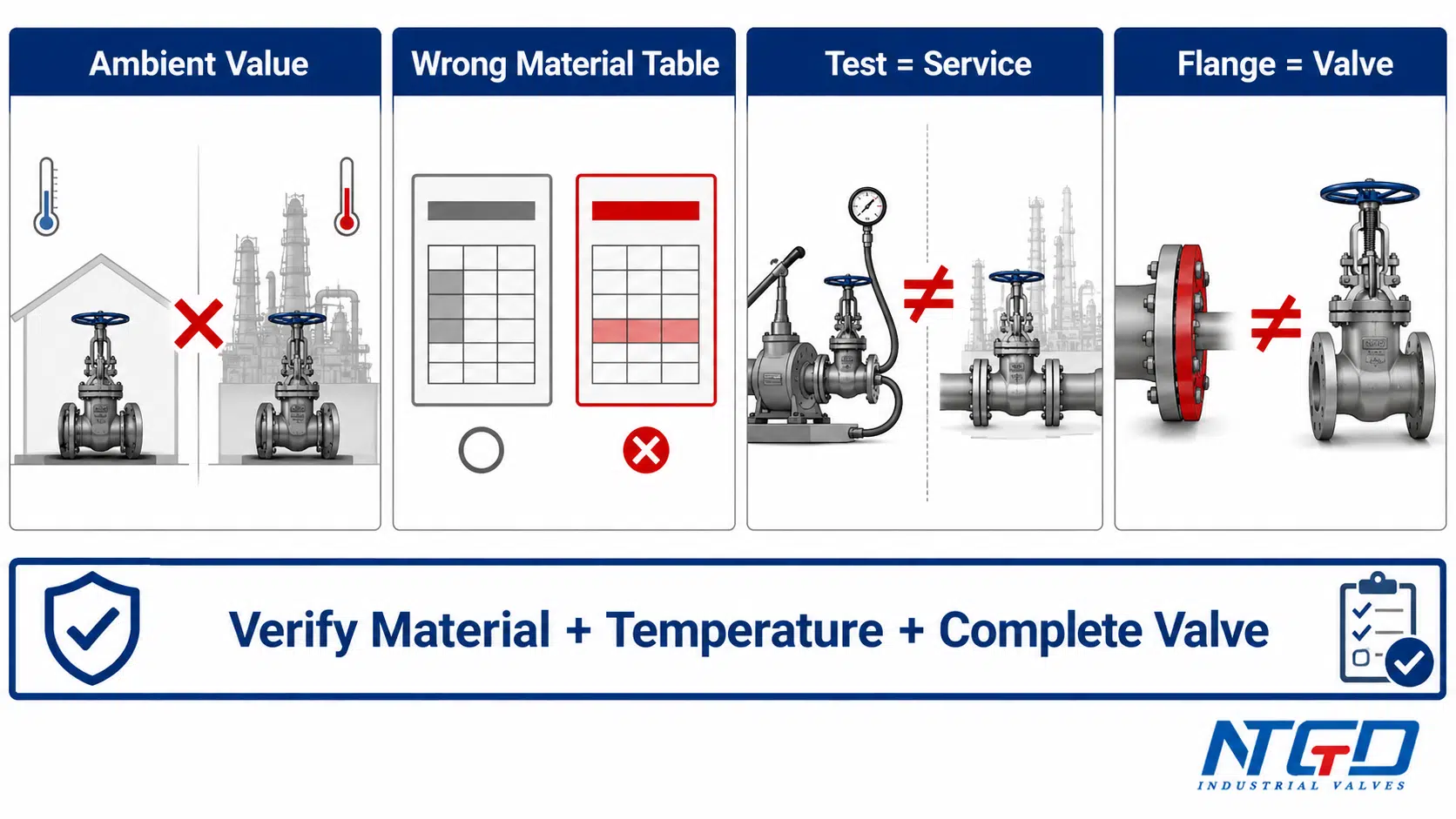
Using an Ambient-Temperature Value for a High-Temperature Service
A value near ambient temperature may not apply at the project’s maximum design temperature.
Consequence: The selected Class may satisfy the room-temperature lookup but provide insufficient allowable pressure at the governing design temperature.
Correction: Use the design temperature and the corresponding verified material table.
Reading the Wrong Material Table
A value taken from a similar but incorrect material group does not establish the rating of the offered valve.
Consequence: The specification may approve a Class using rating data that does not belong to the actual body material.
Correction: Reconcile the body material across the datasheet, material specification, marking, and certificate before reading the rating.
Treating Test Pressure as Continuous Working Pressure
A temporary test condition is not a continuous service rating.
Consequence: The valve may be accepted because a test report shows a higher pressure even though service suitability at the design temperature has not been demonstrated.
Correction: Use the test record to confirm the required test and use the applicable P-T rating plus product data to confirm service suitability.
Treating Flange Class as the Complete Valve Capability
A compatible flange designation is necessary, but it does not verify every pressure-containing and sealing element in the valve.
Consequence: The piping connection may be acceptable while the seat, packing, body joint, trim, or product-specific limit remains unresolved.
Correction: Confirm the connection standard, then complete the product-level review.
Over-Specifying the Class Without Reviewing the Full Project Conditions
A substantially higher Class is not a substitute for a complete engineering review.
Consequence: The project may add cost, mass, interface changes, or operating requirements while leaving the real material, temperature, sealing, or documentation issue unresolved.
Correction: Select the lowest suitable Class that satisfies the governing project requirements and is supported by complete manufacturer confirmation.
What Should Be Included in a Gate Valve RFQ or Specification?
A useful RFQ gives the manufacturer enough information to verify the complete valve rather than quote a nominal Class in isolation.
| RFQ Field | Required Information | Why It Matters / Required Evidence |
|---|---|---|
| Service medium | Fluid, composition, solids, corrosion, sour-service, or other relevant characteristics | Establishes material and component compatibility; support with process data |
| Pressure conditions | Normal operating pressure, design pressure, operating range, and specified upset conditions | Establishes normal and governing pressure inputs; support with process or piping data |
| Temperature conditions | Normal, minimum design, and maximum design temperatures | Determines the relevant P-T rating and component limits; support with process and piping data |
| Valve size and configuration | Nominal size, valve arrangement, operator or actuator where relevant | Defines the product configuration; support with line list or datasheet |
| Rating system | Candidate Class, PN, or project designation | Identifies the intended rating route; support with project specification |
| Body and internal materials | Body, trim, seat, packing, gasket, and any special material requirement | Identifies the material group and complete-valve limits; support with material specification |
| End connection | Flanged, butt-welding, or another approved end type | Confirms piping-system compatibility; support with piping class |
| Design standard | Applicable valve construction standard and project additions | Defines the product design route; support with purchase specification |
| Inspection and testing | Shell, closure, NDE, witness, hold, or project-specific requirements | Defines acceptance activities; support with ITP or quality specification |
| Documents and approvals | GA drawing, certificates, reports, IOM, compliance records, and deviation process | Supports technical approval and final record; support with vendor document requirements |
| Special requirements | Corrosion, low-temperature, emissions, fire-safe, NACE, or other project conditions where applicable | Prevents unstated service assumptions; support with project specification |
| Units | Required pressure and temperature units | Avoids conversion ambiguity across the RFQ, datasheet, and rating source |
A request that states only “Class 300 gate valve” does not provide enough information for technical selection. The RFQ should identify the governing pressure and temperature, material, size, connection, applicable standards, service conditions, inspection requirements, and documents.
Class-specific product information can support configuration review, but the final valve still requires project-specific pressure-temperature and complete-valve verification.
Once the project inputs are confirmed, the API 600 gate valve product page can be used to review an applicable steel gate-valve configuration before the datasheet and test-document package is finalized.
Frequently Asked Questions About Gate Valve Pressure Ratings
What Is the Pressure Rating of a Gate Valve?
There is no single value for every gate valve. The allowable pressure depends on the Pressure Class, material group, design temperature, applicable rating basis, and complete-valve limits. Verify those inputs in the correct P-T table and the manufacturer’s product data.
What Does Class 150 Mean on a Gate Valve?
Class 150 does not mean a constant 150 psi working pressure. It is a rating designation whose allowable pressure changes with material and temperature and may be further limited by the complete valve or project specification.
What Is the Pressure Rating of a Class 150, Class 300, or “ANSI 300” Gate Valve?
“ANSI 300” is an older or informal industry expression often used for Class 300; current project documents should identify the governing standard and product scope. No Class 150 or Class 300 value is valid without the specific material group and design temperature, followed by confirmation in the applicable table and manufacturer’s data.
What Is the Difference Between Class 150 and Class 300?
They are different rating levels. Under the same material, temperature, and rating basis, Class 300 generally provides greater pressure-temperature capability than Class 150. That comparison does not determine the correct connection, sealing arrangement, material, or product configuration.
Is PN10 or PN16 Equivalent to Class 150?
Not as a universal rule. PN and Class use different designation and rating bases, and their temperature relationships, material assumptions, and connection dimensions may differ. Compare the governing standards and the complete project requirements rather than using a permanent one-to-one conversion.
Which Standard Defines Gate Valve Pressure-Temperature Ratings?
The pressure-temperature rating source, valve design standard, test standard, connection standard, and product datasheet have different responsibilities. Use the applicable P-T table for the material and temperature, then confirm the complete product against the manufacturer’s data and project-specified editions.
Can Pressure Class Alone Determine the Correct Gate Valve?
No. Selection also requires design pressure, design temperature, material, medium, end connection, complete-valve component limits, standards, testing, and manufacturer confirmation. Seats, packing, gaskets, trim, or connections may impose a lower limit even when the body rating appears adequate.
Conclusion
A gate valve pressure rating is a conditional engineering limit, not a fixed number embedded in the Class designation.
The final fit-check is:
- Confirm the design pressure.
- Confirm the governing minimum and maximum design temperatures.
- Identify the exact body material and material group.
- Read the applicable pressure-temperature rating for the candidate Class.
- Check the complete valve, end connections, and connected system.
- Verify the result against the manufacturer’s datasheet and project specification.
Class 150, Class 300, and Class 600 are useful rating levels, but none should be selected independently of material, temperature, and product design. Test pressure, flange rating, and body rating must remain separate from the complete valve’s continuous service limit.
When a service is near a rating boundary, uses special materials, involves extreme temperatures, or includes additional inspection requirements, complete the manufacturer’s engineering review before procurement approval.
Application / Specification Support
For a project-specific pressure-class review, provide the operating and design pressures, minimum and maximum design temperatures, medium, valve size, body and internal materials, end connection, applicable standards, inspection requirements, and required documents.
With those inputs, the NTGD engineering team can assist with pressure-class review, material and service-condition matching, product-configuration verification, and identification of the datasheet, test, and quality records needed for technical approval. The final allowable pressure remains subject to the approved product design, governing standards, and project specification.
