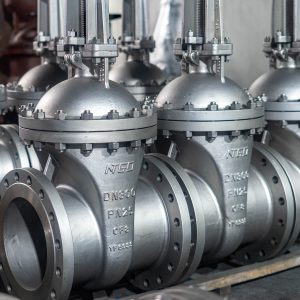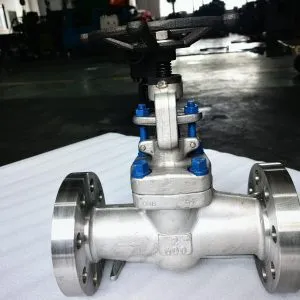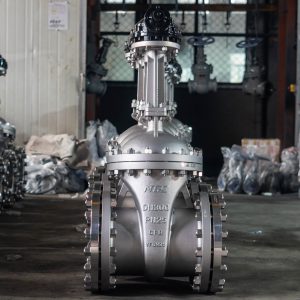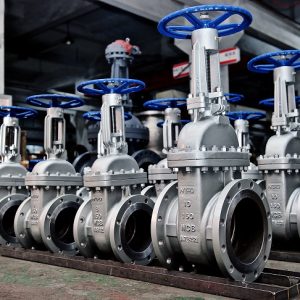

Sluice Valve (Sluice Gate Valve) for Waterworks & Wastewater
ISO 9001 Quality System | Hydrostatic Tested Before Delivery | Global Supply
Sluice valves (also called sluice gate valves) are widely used for pipeline isolation in water supply, irrigation, and wastewater systems. They are designed for fully open / fully closed service to achieve shut-off with minimal head loss when open.
Terminology Clarification (Read This First)
In global pipeline scenarios (waterworks, irrigation, wastewater treatment), “sluice valve” is commonly used interchangeably with “gate valve.” See our full range of industrial gate valves for related options.
If you are looking for an open-channel canal “sluice gate” used to control water level in channels or reservoirs, that is a different product category.
Quick Navigation
-
For Engineers: Specifications | Selection Tips | Installation
-
For Buyers: RFQ Checklist | Get a Quote
Get a Fast Quote (Minimum Required Info)
Send DN size + PN/Class, medium + temperature, end connection standard, and operation (manual/gear/actuator).
What Is a Sluice Valve?
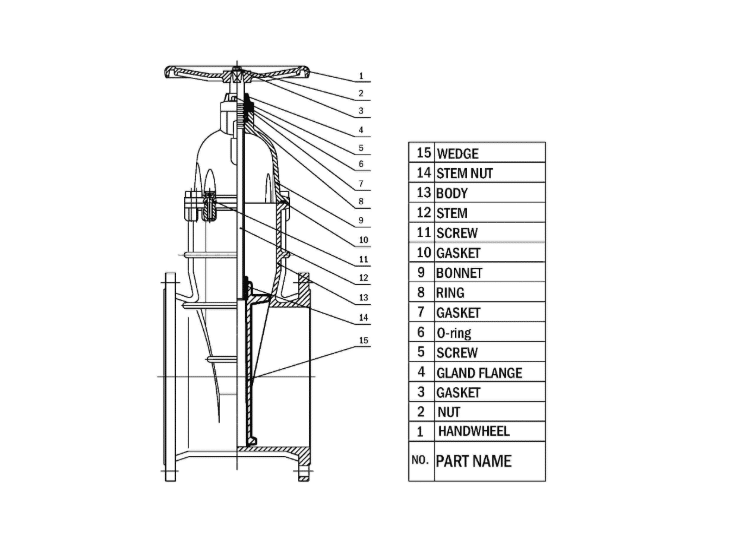
A sluice valve in pipeline service is essentially a gate valve that uses a sliding gate (wedge/plate) moving perpendicular to the flow to open or shut off the pipeline. When fully open, the gate is lifted out of the flow path, providing full-bore flow and low pressure drop.
Sluice valves are typically selected where the requirement is reliable isolation rather than flow control—especially for large diameter water pipelines.
If your project requires better tolerance for thermal expansion or minor pipeline distortion, explore flexible wedge gate valve options.
Key Features & Benefits
-
Full-bore flow path when open → low head loss, reduced pumping penalty
-
Isolation duty design → suitable for shut-off in waterworks networks
-
Manual or actuated operation → handwheel, gearbox, electric or pneumatic options
-
Large diameter suitability → common choice for municipal and irrigation lines
-
Configuration flexibility → resilient-seated or metal-seated options depending on service
Applications (Where It Fits)
Sluice valves (gate valves) are commonly used for isolation in:
-
Municipal water distribution and transmission pipelines
-
Irrigation networks and pump station isolation
-
Wastewater treatment plants (isolation duty; confirm solids/abrasion conditions)
-
Fire water systems
-
General utility water lines in industrial facilities
Not Recommended (Engineering Boundaries)
Sluice valves are not universal. For better reliability and correct selection, note the following boundaries:
-
Not for throttling / flow control duty
Long-term partially open operation can cause high-velocity impingement, leading to seat/gate erosion, vibration, noise, and eventual seal failure. -
Avoid high-velocity, high-solid abrasive slurry
For severe abrasive or high-solids slurry isolation, consider a Knife Gate Valve solution instead. -
High ΔP or frequent cycling applications (selection boundary)
For higher differential pressure or frequent operation, select gearbox / actuator configurations and confirm stem/packing materials and operating torque requirements. For frequent operation or higher differential pressure, consider Resilient seated gate valves for waterworks applications with appropriate actuator configurations. -
Unclear media / severe conditions
For corrosive, high-temperature, or hazardous media, consult our engineering team to confirm materials, sealing system, and testing requirements before ordering. For high-pressure industrial utility services where forged construction is required, refer to our forged steel gate valve solutions.
Technical Specifications
Below is a typical configuration overview. Final details are confirmed by RFQ and required standards.
| Parameter | Typical Options | Notes / Standards (Confirm in RFQ) |
|---|---|---|
| Valve Type | Sluice Valve (Gate Valve / Sluice Gate Valve) | Pipeline isolation duty |
| Size Range | DN50–DN800 (other sizes on request) | Align with your project pipe standard |
| Pressure Rating | PN10 / PN16 (Class 150 on request) | Avoid mixing PN & Class unless specified |
| Body Materials | Ductile Iron / Cast Iron | Confirm grade per project requirement |
| Seat / Sealing (resilient) | EPDM / NBR | Confirm media compatibility |
| End Connection | Flanged | EN / ASME / AWWA options upon request |
| Stem Type | Rising stem / Non-rising stem | Buried/valve chamber → often non-rising |
| Operation | Handwheel / Gearbox / Electric / Pneumatic | Confirm power/control requirements |
| Testing | Hydrostatic shell & seat testing | Testing standard per RFQ / documentation |
Purchasing Note: Please specify your pipeline standard (EN/ASME/AWWA) in the RFQ to avoid flange mismatches.
Types & Configuration Options
Different water and wastewater systems require different gate valve configurations:
Resilient-Seated Sluice Valve (Waterworks Typical)
Used widely in municipal water networks for tight shut-off with elastomer sealing.
(Add internal link: “resilient seated gate valves for waterworks” → /resilient-seated-gate-valve/)
Metal-Seated Gate Valve (Higher Temperature / Industrial Utility)
Selected when elastomer seats are unsuitable due to temperature, media, or operating conditions.
(Add internal link: “metal seated gate valves for industrial utility” → /metal-seated-gate-valve/)
Rising Stem vs Non-Rising Stem (Selection Note)
-
Rising stem: clear visual open/close indication; good for above-ground installations
-
Non-rising stem: saves height; commonly used for buried service or valve chambers
Common Selection Mistakes to Avoid (Field-Proven)
-
Mixing PN and Class in the same project
Always confirm the pipeline standard first to avoid flange dimension mismatches. -
Ignoring valve chamber height (stem type mismatch)
Non-rising stem is often preferred for buried/valve chamber installations with limited space. -
Seat material misapplication
EPDM/NBR must match the medium. If the medium is unclear or non-water-based, confirm compatibility before ordering. -
Actuation details not specified
For actuated valves, confirm power supply, control signal, and fail-safe requirements to avoid incorrect configuration.
Installation & Maintenance Guidelines
Installation Checklist
-
Confirm flange standard and face-to-face dimensions match pipeline requirements
-
Ensure pipeline is flushed before installation to prevent debris damage
-
Tighten flange bolts in a cross pattern with even torque
-
For large valves, plan safe handling and alignment to avoid stem/gate misalignment
-
Cycle the valve fully open/close after installation to verify smooth operation
Maintenance Tips
-
Do not leave the valve partially open for long periods
-
Periodically cycle the valve to prevent sticking (frequency depends on service)
-
For valve chambers/buried installations, ensure proper access and protection against flooding/debris
Important Site Notes (Experience-Based)
-
Do not use the handwheel/actuator as a lifting point during handling.
-
Keep the pipeline clean before commissioning to reduce seat damage risk.
Sluice Valve vs Gate Valve vs Sluice Gate (Clear Summary)
In Pipeline Systems (Waterworks Context)
In many regions and industries, sluice valve = gate valve (terminology difference). Selection differences usually come from seat type (resilient vs metal) and stem type (rising vs non-rising)—not from being totally different valves.
In waterworks projects, the real decision is usually seat design (resilient vs metal) rather than the name. See our resilient vs metal seated gate valve comparison.
In Open Channels (Hydraulic Structures)
A canal “sluice gate” is an open-channel gate used to regulate water level/flow in canals and reservoirs. It is not a pipeline valve.
Frequently Asked Questions
Q1: Is a sluice valve the same as a gate valve?
In pipeline scenarios (waterworks, irrigation, wastewater), “sluice valve” is commonly used interchangeably with “gate valve.” The functional purpose is the same: isolation.
Q2: Can a sluice valve be used for throttling?
No. Sluice valves are designed for fully open / fully closed operation. Long-term throttling can lead to erosion, vibration, and seal failure.
Q3: What is a sluice valve used for?
Primarily for shut-off isolation in water supply, irrigation, wastewater treatment, pump stations, and fire water systems—especially in large diameter pipelines.
Q4: Rising stem vs non-rising stem—how do I choose?
-
Rising stem: best for above-ground locations where visual position indication is useful.
-
Non-rising stem: best for buried installations or valve chambers with limited height.
Q5: What information do you need for a fast quote?
Provide: DN size, PN/Class, medium + temperature, end connection standard, and operation (manual/gear/actuator). Installation type and sealing preference help optimize the configuration.
Q6: For waterworks projects, resilient seated or metal seated?
For municipal water supply, irrigation, and wastewater isolation, resilient seated designs are commonly preferred for tight shut-off and low maintenance. For higher temperature or non-water media, consider metal seated options—final selection should be confirmed by service conditions.
For a clearer selection overview, see our resilient vs metal seated gate valve comparison.
Get a Fast, Custom Sluice Valve Quote
To receive an accurate quotation and correct configuration, please share:
RFQ Core Requirements (Mandatory)
-
DN size and pressure rating (PN/Class)
-
Medium and working temperature
-
End connection standard (EN/ASME/AWWA, etc.)
Optional Configuration Details
-
Installation type (buried / valve chamber / above ground)
-
Operation (handwheel / gearbox / electric / pneumatic)
-
Seat preference (EPDM / NBR / metal seated)
-
Any project inspection/testing documentation requirements