
Author Name: Bruce Zheng
Author Role: Co-Founder and Valve Engineer at NTGD Valve
Author Bio: Bruce Zheng is Co-Founder and Valve Engineer at NTGD Valve, focusing on industrial valve selection, application, and technical content for global B2B buyers.
Last Updated: June 29, 2026
A top entry vs side entry ball valve comparison is mainly about valve body construction and maintenance access. A top entry ball valve is accessed from above through a removable bonnet or cover, while a side entry ball valve is usually assembled from the side using a two-piece or three-piece split-body construction.
The core trade-off is inline maintenance access versus initial procurement and planned removal cost. Top entry ball valves are usually considered when valve removal is difficult, downtime is expensive, or internal access must be planned into the maintenance strategy. Side entry ball valves are often selected when lower initial cost, broad availability, and scheduled removal during maintenance are acceptable.
The better choice is not decided by the name alone. It depends on pressure class, seat design, sealing system, material, temperature, pipeline layout, installation clearance, shutdown window, and how often the valve may need internal service.
Quick Answer: Top Entry vs Side Entry Ball Valve
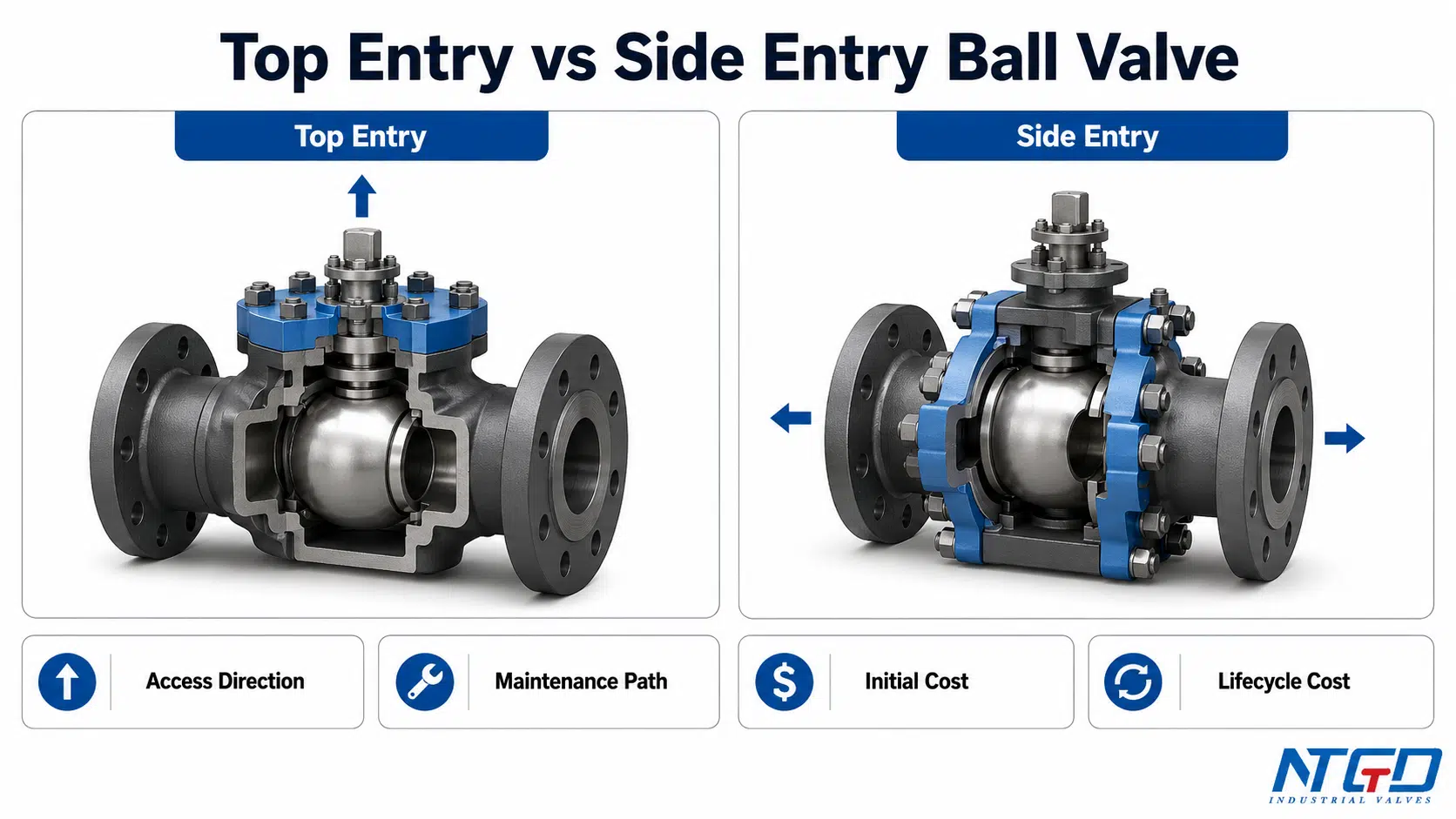
The main difference between a top entry ball valve and a side entry ball valve is how the valve internals are accessed: top entry valves are serviced from above through the bonnet, while side entry valves are assembled and serviced through the side body joint or split body.
For an engineering buyer, that difference affects more than maintenance convenience. If a valve must be removed from a difficult pipeline for routine seat inspection, a simple service task can become a larger shutdown event with lifting work, pipework disturbance, safety exposure, and re-commissioning checks. If the valve can be removed easily during a planned shutdown, a side entry design may provide a more economical solution.
Top entry is usually more attractive when inline maintenance, reduced downtime risk, welded or difficult-to-remove pipelines, or large valve size are major concerns. Side entry is usually more practical when the system is cost-sensitive, maintenance is infrequent, and planned valve removal is acceptable.
This comparison focuses on body entry design and maintenance access. It does not mean that one design is automatically stronger, safer, or better for every high-pressure or severe-service application. Final selection still depends on the complete valve specification and RFQ data.
Top Entry vs Side Entry Ball Valve Comparison Table
The table below gives a practical first-screen comparison. Use it to identify the likely direction, then confirm the final body design against the project datasheet, valve drawing, pressure class, material, seat design, medium, temperature, testing requirements, and maintenance plan.
| Comparison Point | Top Entry Ball Valve | Side Entry Ball Valve | Selection Note |
|---|---|---|---|
| Body construction | Usually uses a one-piece body with a removable top bonnet or cover | Usually uses a two-piece or three-piece split-body design | Confirm the actual body drawing. If the delivered construction does not match the expected access method, field maintenance may not match the site plan. |
| Internal access | Internals are accessed from the top | Internals are accessed by separating the body or removing the valve for service | Access direction affects how the valve will be isolated, opened, lifted, inspected, and returned to service. |
| Inline maintenance | Often supports inspection or replacement of internal parts while the body remains in the line | Often requires valve removal or more body disassembly for internal work | Important where shutdown window, lifting access, and re-commissioning time are major project risks. |
| Initial cost | Usually higher due to more complex body design and machining | Usually lower due to common split-body construction | Compare purchase cost against expected shutdown and field service cost. |
| Lifecycle cost | Can be favorable when easier access reduces downtime and removal work | Can be favorable when maintenance is infrequent and planned removal is acceptable | Lifecycle value depends on service frequency, spare parts access, labor, and shutdown cost. |
| Leak path consideration | Fewer body joints in many designs, but sealing still depends on seats, gaskets, machining, and assembly quality | More body joints in split-body construction, but a correctly engineered valve can still seal reliably | Body joint count is only one risk factor. Seat design, gasket compression, bolting, and testing remain critical. |
| Pressure and temperature | Can be selected for demanding services when class, material, seat, ball support, and standard match the duty | Can also be selected for demanding services when properly engineered | Do not select a body entry style as the only criterion for high-pressure or high-temperature service. |
| Installation clearance | Needs enough top clearance to remove the bonnet and internal parts | Needs enough side access or removal space for service | Check pipe rack layout, actuator height, insulation, lifting space, and nearby equipment before selection. |
| Best-fit situation | Critical lines, difficult valve removal, frequent internal inspection, welded or buried constraints, or high downtime cost | Standard industrial systems, planned maintenance, easier removal, broad availability, or cost-sensitive projects | The table guides first screening. RFQ data and drawings decide the final valve body design. |
The key point is that “top entry ball valve vs side entry” is not a simple good-versus-bad choice. It is a trade-off between maintenance access, purchase cost, field service planning, sealing design, pressure requirements, and project risk.
What Are Top Entry and Side Entry Ball Valves?
What is a top entry ball valve?
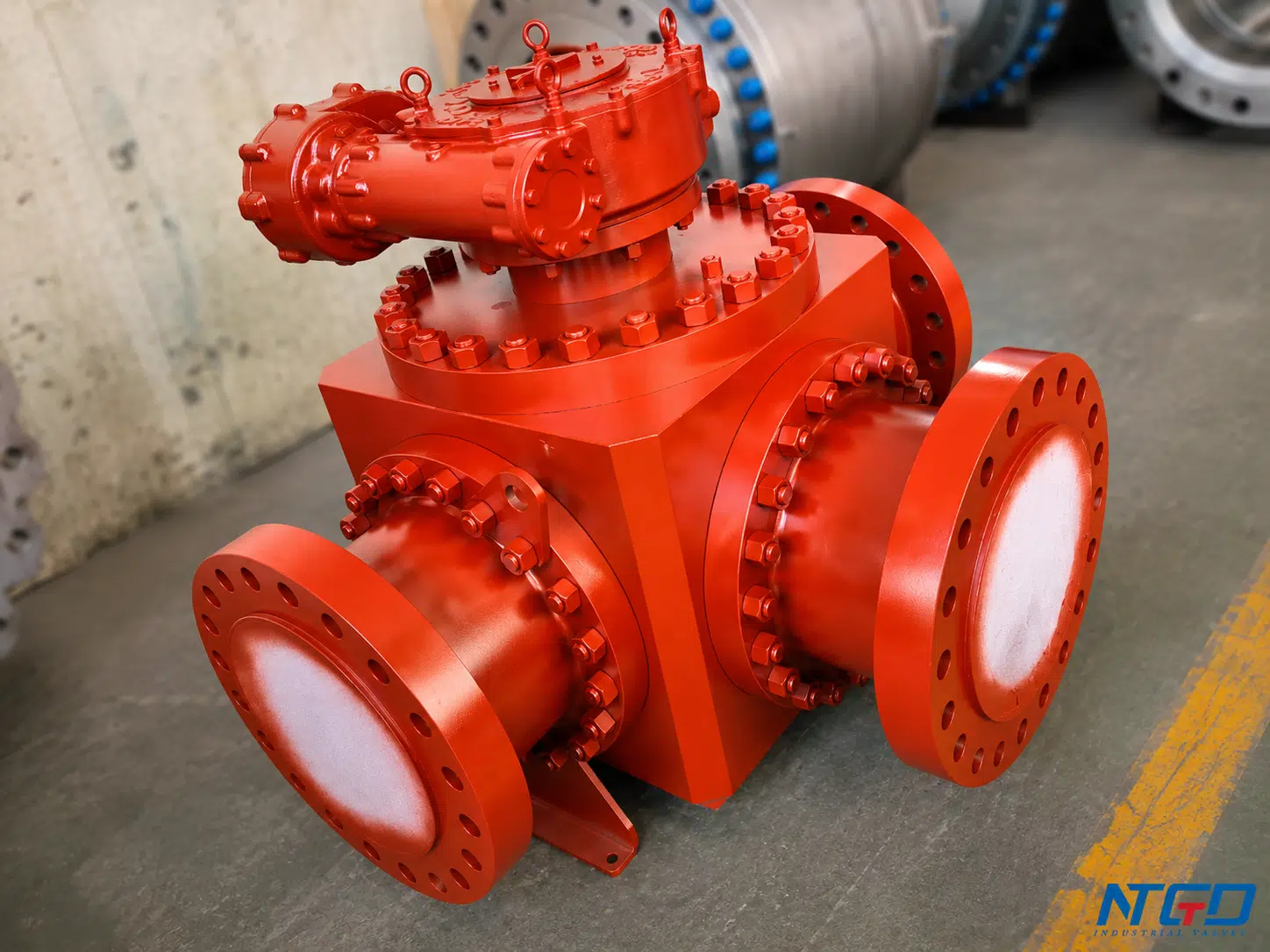
A top entry ball valve is a ball valve whose main internal parts can be accessed from the top of the valve body. In a typical design, the removable bonnet or top cover provides access to the ball, seats, stem area, and sealing parts.
For industrial selection, the important point is not only the top opening itself. The value of a top entry ball valve comes from whether that access can reduce pipeline disturbance during inspection or internal maintenance.
A top entry valve is commonly considered when removal from the line is difficult, the valve is large or heavy, or the project must reduce shutdown exposure. It should still be checked against pressure class, material, seat design, installation clearance, and service conditions.
What is a side entry ball valve?
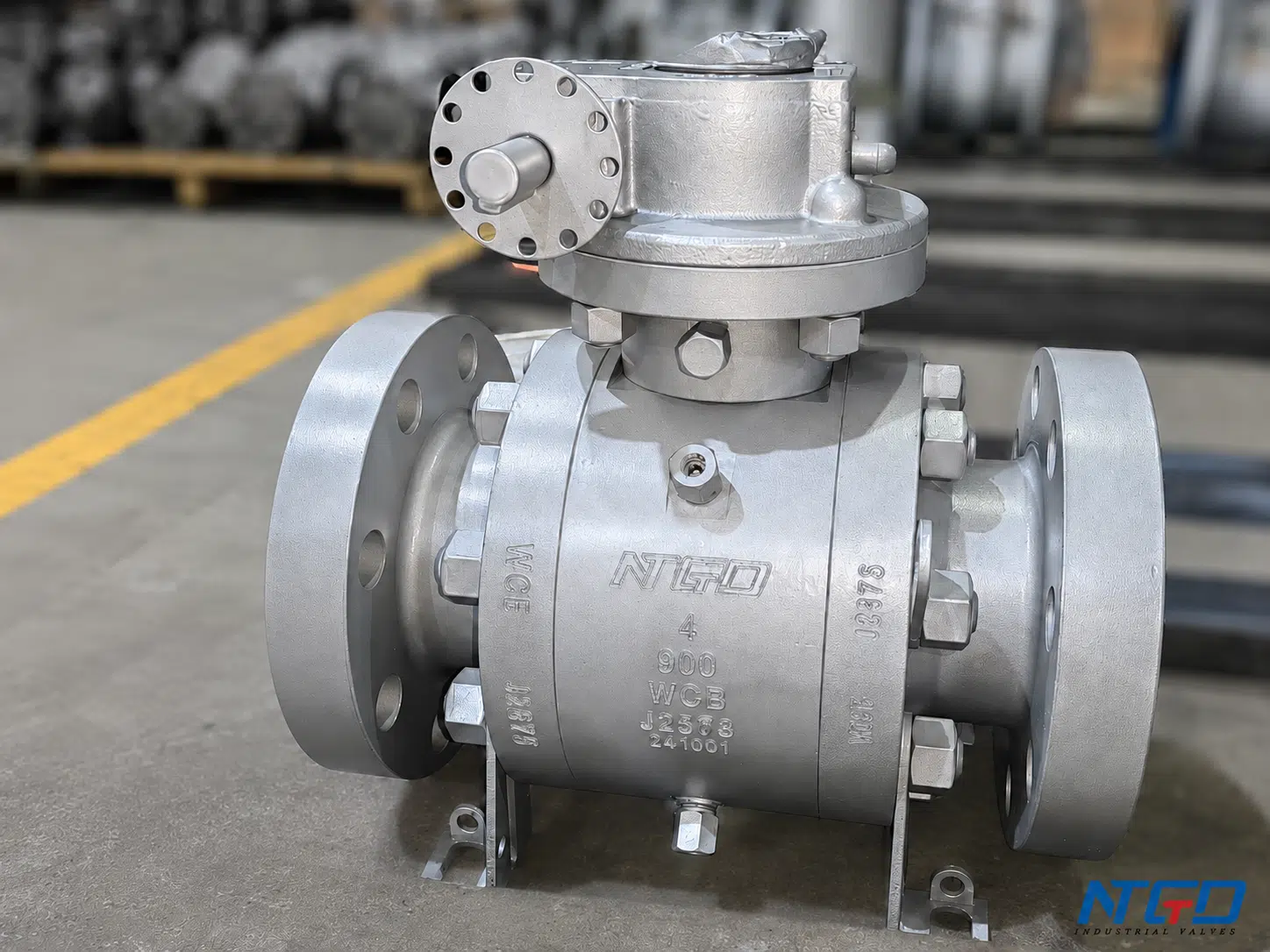
A side entry ball valve is a ball valve where the ball, seats, and seals are assembled from the side of the body. The valve body is usually built with a two-piece or three-piece split-body construction.
This design is common in industrial piping because it is practical, widely available, and often more economical at the purchase stage. A side-entry ball valve can be a reliable choice when the service is standard, the valve can be removed during planned shutdowns, and the installation allows enough access for disassembly.
The selection risk appears when the line is difficult to dismantle or when internal inspection is expected frequently. In those cases, the cost of removal and reinstallation may become more important than the initial valve price.
Why these two body designs are compared
Top entry and side entry ball valves are compared because both can provide shut-off service, but they create different field maintenance and cost consequences.
The comparison matters most when a project involves:
- difficult valve removal;
- expensive shutdown time;
- frequent internal inspection;
- large or heavy valves;
- welded, buried, remote, or hard-to-access pipelines;
- strict sealing, pressure, temperature, or testing requirements;
- limited top clearance or limited side removal space.
The more of these conditions apply to one project, the less the decision should be driven by initial cost alone. Body entry design becomes part of the maintenance strategy, not just a valve construction detail.
Body Construction: Top Bonnet Access vs Split-Body Side Entry
Top entry design: one-piece body and removable bonnet
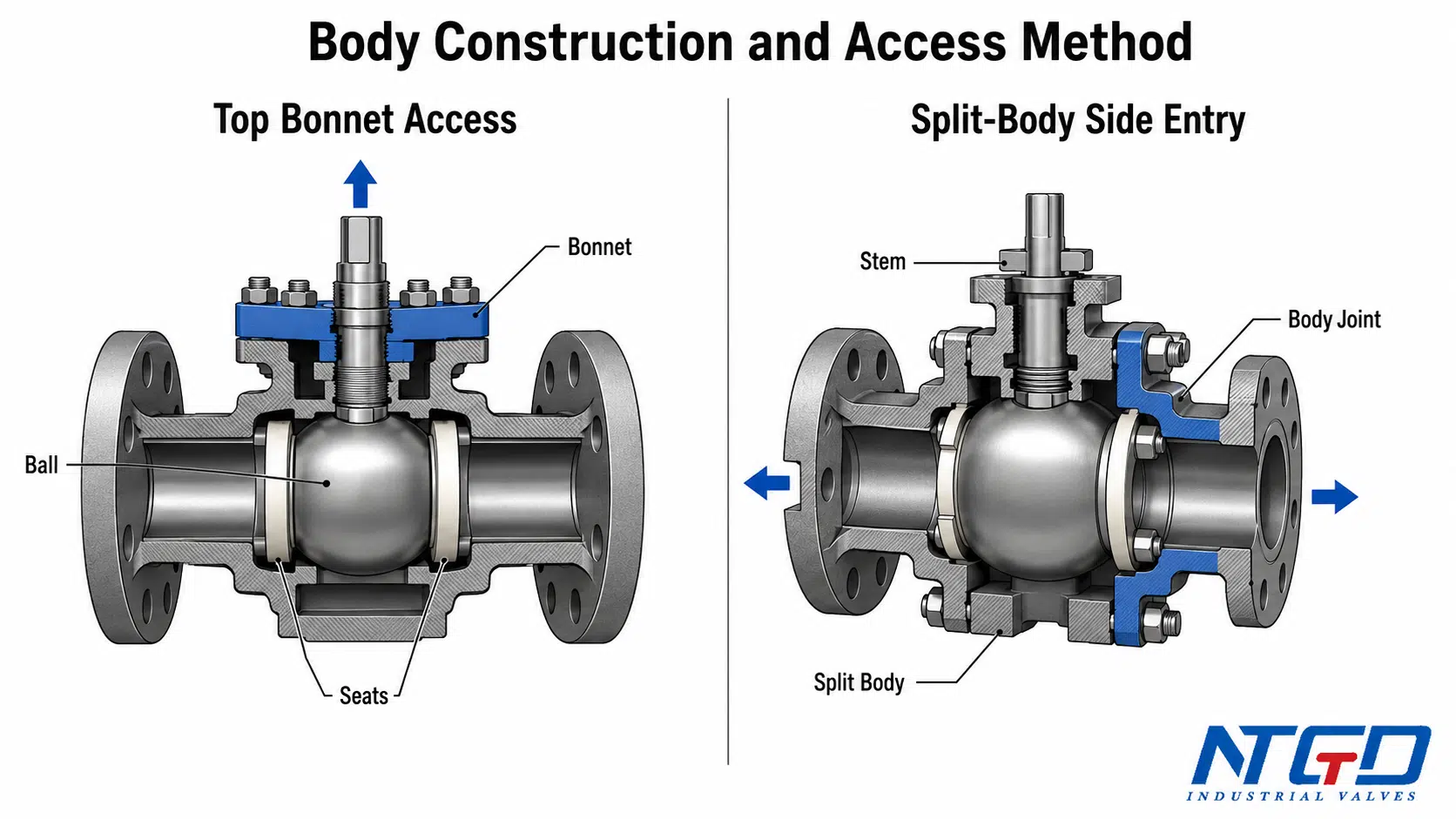
In many top entry ball valve designs, the valve body is made as a one-piece pressure-containing body. The internal components are inserted and serviced from above through a removable bonnet or cover.
This construction can reduce the need to disturb pipeline connections during maintenance. When the line is properly isolated, depressurized, drained, and made safe, technicians may be able to access the ball, seats, and seals from the top while the valve body remains installed.
The top bonnet is part of the pressure boundary. Its bolting, gasket, sealing surface, machining quality, and assembly procedure all affect long-term reliability. A top entry design only delivers its maintenance advantage when there is enough overhead clearance and when the valve design supports the intended service procedure.
Side entry design: two-piece or three-piece split body
Side entry ball valves are most commonly built with a split-body construction, often referred to as split body ball valves. The ball and seats are assembled from the side, and the body sections are joined by bolted connections or other approved body joint designs.
This construction is practical for manufacturing, assembly, and broad supply across many sizes, pressure classes, and material options. For standard services where valve removal during a planned shutdown is acceptable, the split-body design can be a cost-effective choice.
The body joint becomes an important inspection and sealing point. A split-body valve can still provide reliable sealing, but the gasket, bolting, joint surfaces, seat design, machining, and assembly quality must match the pressure, temperature, medium, and project testing requirements.
Body joints, access direction, and site clearance
The body entry design affects how the valve is installed and maintained in the field.
For a top entry ball valve, the site must provide enough overhead clearance to remove the bonnet and lift internal components. If an actuator, platform, pipe rack, insulation, or nearby equipment blocks top access, the maintenance advantage may be reduced.
For a side entry ball valve, the site must provide enough space for valve removal or body separation. If the valve is installed between rigid pipe sections with limited access, service work may require more planning, lifting equipment, and reinstallation checks.
The best body design is therefore not only a valve design decision. It is also a piping layout, lifting access, maintenance planning, and shutdown management decision.
Why body construction affects maintenance and sealing risk
Body construction affects the number of body joints, the direction of internal access, the expected service procedure, and the amount of work needed during a shutdown.
A top entry design may reduce pipeline disturbance because the valve body can often remain installed while internal parts are inspected. A side entry design may be easier and less expensive to manufacture, but internal maintenance may require more disassembly.
For sealing, body entry type is only one factor. A top entry valve with unsuitable seats, poor bonnet gasket design, or incorrect material selection can still perform badly. A side entry valve with correct seat design, controlled body joint compression, suitable gaskets, and proper assembly can perform reliably in demanding service.
Where a valve has more body joints, inspection discipline becomes more important. Gaskets, bolting, joint surfaces, compression control, and assembly quality should be reviewed carefully, but more joints do not automatically mean unacceptable leakage.
Maintenance Access, Downtime and Pipeline Removal
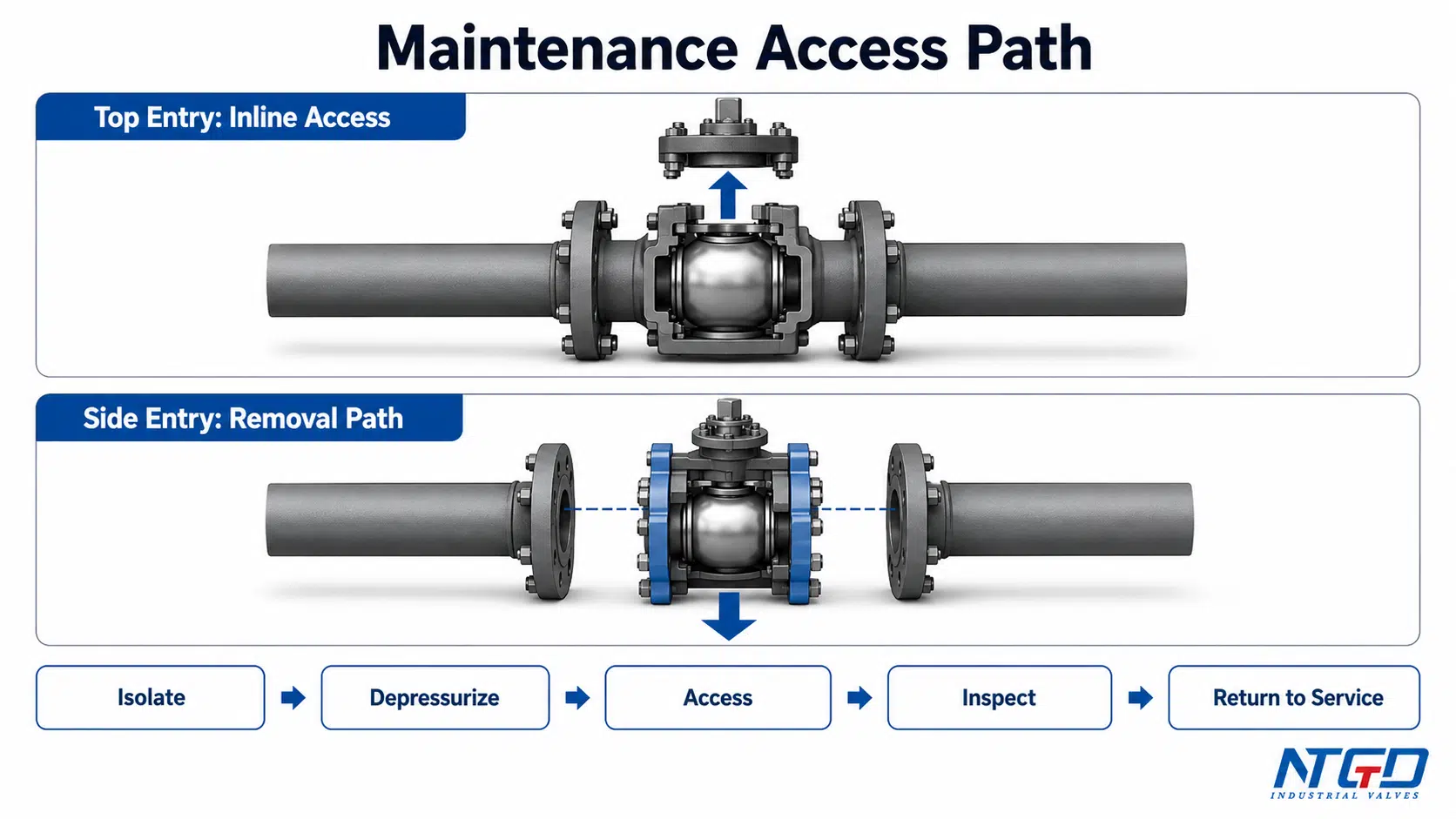
How top entry valves support inline maintenance
The main maintenance advantage of a top entry ball valve is access from above. When the valve is installed in the line, the bonnet can often be removed so technicians can inspect or replace internal parts without cutting the pipe or removing the entire valve.
This is valuable in systems where:
- the valve is welded into the pipeline;
- the line is buried or difficult to dismantle;
- the valve is large or heavy;
- crane or lifting access is limited;
- the plant cannot tolerate long downtime;
- the maintenance team needs faster access to the ball and seats.
Inline maintenance mainly applies to internal components such as the ball, seats, seals, and related parts that can be reached through the bonnet. It does not mean every problem can be fixed online. Valve body damage, end-connection leakage, pipeline connection problems, or pressure boundary damage may still require removal, repair outside the line, or replacement.
Why side entry valves may require more removal work
A side entry ball valve is usually serviced through the side body joint. In many installations, internal parts cannot be fully accessed unless the valve is removed from the pipeline or the body is separated during shutdown.
This can add work in several ways:
- flange bolts or welded connections may need to be handled;
- the valve may need to be lifted out of the line;
- gaskets and joint surfaces may need inspection or replacement;
- alignment must be restored during reinstallation;
- the line may need a longer shutdown window;
- pressure testing or leak checking may be required before restart.
This does not make side entry valves unsuitable. It simply means their maintenance plan must match the project. If the valve is small, accessible, and serviced only during planned shutdowns, side entry may be efficient and economical.
Shutdown window, labor access, and spare parts planning
Maintenance cost is not only the cost of spare parts. It also includes isolation time, labor hours, lifting work, access scaffolding, gasket replacement, reinstallation, testing, and production downtime.
A top entry valve can reduce some of these costs when inline maintenance is practical. A side entry valve can still be the better choice when downtime is not critical and the lower initial cost is more important.
Before selecting the body entry design, buyers should ask:
| Maintenance Question | Why It Matters |
|---|---|
| Can the valve be removed easily? | If removal requires heavy lifting, pipework disturbance, or extended shutdown approval, top entry may reduce field work. |
| Is there enough overhead clearance? | Top entry requires room to remove the bonnet and lift parts from above. |
| How often will internal inspection be needed? | Frequent service favors easier access and a shorter maintenance path. |
| How expensive is shutdown time? | High downtime cost may justify a higher initial valve cost. |
| Are spare seats and seals easy to manage? | Spare parts planning affects maintenance speed and lifecycle cost. |
| Is the valve welded, flanged, buried, or installed in a tight pipe rack? | Installation type changes the practical difficulty of service work. |
If a difficult-to-remove valve is selected in a service where routine seat inspection is expected, a minor maintenance task can become a larger shutdown event. That increases planning complexity, safety exposure, field labor, and lifecycle cost.
When maintenance access matters more than purchase price
Maintenance access becomes more important than purchase price when the valve is part of a critical process line, a remote installation, a large-diameter pipeline, or a system where shutdown delays are expensive.
In these cases, a higher initial valve cost may be acceptable if it reduces future downtime or avoids difficult removal work. In less critical systems, the simpler purchase decision may favor side entry construction.
A practical selection should compare total operating impact, not only the purchase price on the first quotation.
Cost, Sealing, Pressure and Temperature Comparison
Initial cost vs lifecycle maintenance cost
Side entry ball valves often have a lower initial cost because the split-body design is common and efficient to manufacture. For many standard services, this makes side entry construction a practical and economical choice.
Top entry ball valves usually cost more at the purchase stage because the body, bonnet, sealing arrangement, and machining requirements can be more complex. However, if the valve reduces future maintenance time or avoids pipeline removal, the lifecycle cost may be lower in the long run.
A practical cost comparison should include:
| Cost Factor | Why It Matters |
|---|---|
| Initial valve price | Side entry is often more competitive upfront. |
| Shutdown duration | Top entry may reduce downtime where inline service is practical. |
| Labor and lifting work | Large or hard-to-remove valves increase service cost. |
| Spare parts | Seat, seal, gasket, and bolting requirements affect lifecycle cost. |
| Reinstallation and testing | Removed valves may require more field work before restart. |
| Production loss | In critical lines, downtime can outweigh purchase price differences. |
Sealing and leak paths: what body design can and cannot decide
Body entry style does not directly define the leakage class or sealing reliability of a ball valve. It influences the body joint arrangement, but the final sealing performance is usually controlled by the complete valve design and manufacturing quality.
Important sealing factors include:
- seat design;
- seat material;
- ball surface finish;
- stem sealing system;
- body gasket design;
- body joint compression;
- bolting and assembly quality;
- pressure class;
- temperature range;
- medium compatibility;
- test requirements.
Top entry valves often have fewer body joints than split-body side entry valves. This can reduce one potential source of external leakage. However, a side entry valve with properly engineered seats, controlled body joint compression, suitable gasket selection, and correct assembly can outperform a poorly specified top entry valve in the same service.
The buyer should therefore review seat selection, seal, gasket, body joint, machining, material, and testing details instead of assuming that one body entry style always seals better.
Pressure and temperature: how to judge the real boundary
Both top entry and side entry ball valves can be designed for demanding industrial services. The actual suitability comes from pressure class, body material, seat material, ball support, sealing system, end connection, pressure-temperature rating, medium, and applicable project standard.
For large-size or severe-service projects, the discussion may also involve trunnion-mounted construction. Trunnion is a ball support design, not a body entry style. Top entry and side entry ball valves can both be built with different ball support arrangements depending on size, pressure class, and service conditions.
This matters because high-pressure service should not be selected only by body entry. A buyer should first confirm pressure class, material, seat design, ball support, testing requirements, and media conditions, then decide whether top entry or side entry construction fits the maintenance strategy.
Seat, material, class, and testing requirements
Before deciding between top entry and side entry, the buyer should verify the technical requirements that actually control valve performance:
| Technical Item | Selection Impact |
|---|---|
| Pressure class | Defines the pressure boundary requirement and must match the service. |
| Body material | Must match pressure, temperature, corrosion, and project specification. |
| Seat material | Affects sealing, torque, temperature range, and media compatibility. |
| Ball support | Floating or trunnion design changes load distribution and torque behavior. |
| End connection | Flanged, welded, or other connection types affect installation and removal. |
| Medium | Gas, liquid, slurry, corrosive fluid, or dirty service changes the risk profile. |
| Temperature | Seat and seal materials must be suitable for the operating range. |
| Testing requirement | Leakage and pressure tests should match project acceptance requirements. |
| Operation method | Manual, gearbox, pneumatic, electric, or hydraulic operation affects access and torque. |
If these items are not defined, choosing by body entry style alone is incomplete.
When to Choose Top Entry vs Side Entry Ball Valve
Choose a top entry ball valve when…
A top entry ball valve is worth considering when maintenance access is a major project concern.
Choose top entry when:
- the valve may need inline inspection or internal maintenance;
- removing the valve from the pipeline is difficult;
- the line is welded, buried, remote, or hard to dismantle;
- shutdown time is expensive;
- the valve is large or heavy;
- the system requires periodic inspection of internal parts;
- the site provides enough top clearance for bonnet removal;
- the project can justify a higher initial purchase cost for easier service access.
Top entry is selected when the maintenance strategy, pipeline layout, shutdown risk, and lifecycle cost support that choice.
Choose a side entry ball valve when…
A side entry ball valve is often the practical choice for standard industrial systems where cost, availability, and planned maintenance are the main priorities.
Choose side entry when:
- the valve can be removed during planned shutdowns;
- initial purchase cost is a major constraint;
- the service is standard and not maintenance-intensive;
- the valve size and weight make removal manageable;
- the pipeline layout allows enough access for disassembly or replacement;
- the project already uses common split-body ball valve designs;
- maintenance intervals are predictable and not frequent.
A properly engineered side entry design can be a robust and durable asset across many industrial applications. It should not be dismissed simply because top entry offers easier inline access in certain projects.
Selection matrix by maintenance, cost, access and service severity
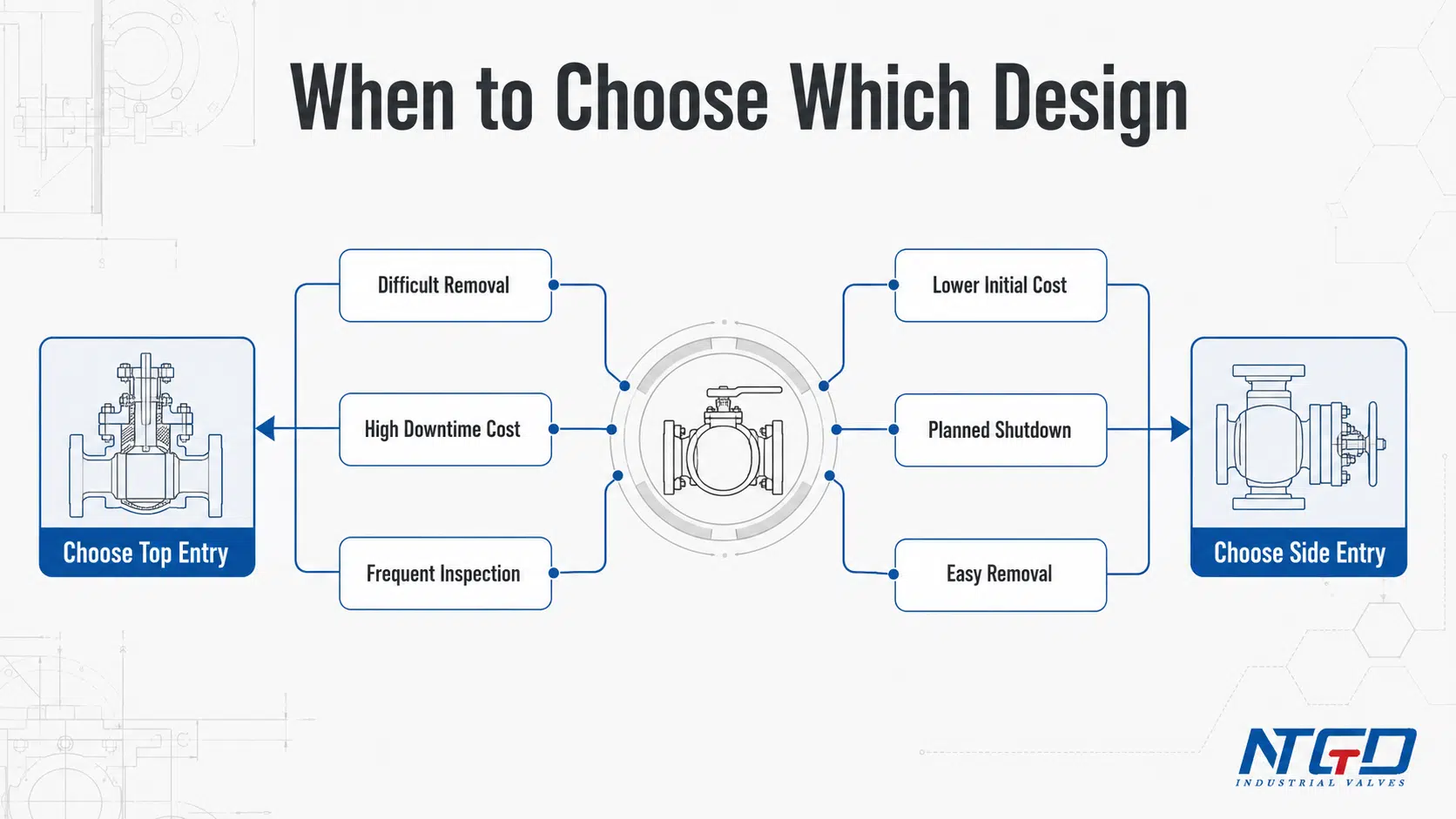
| Project Condition | Better Fit May Be | Why |
|---|---|---|
| Frequent internal inspection | Top entry | Reduces service hours and downtime risk by allowing access from above when the design and site conditions support it. |
| High shutdown cost | Top entry | May reduce the number of tasks that require valve removal, lifting, and re-commissioning. |
| Tight initial budget | Side entry | Often frees project budget for other critical components when standard planned maintenance is acceptable. |
| Easy valve removal | Side entry | Removal-based service can be practical when access, lifting, and shutdown planning are straightforward. |
| Welded or difficult-to-remove line | Top entry | Reduces pipework disturbance, safety exposure, and re-commissioning delays for many internal maintenance tasks. |
| Standard planned maintenance | Side entry | Provides a cost-effective option when service intervals are predictable. |
| Limited overhead clearance | Side entry may be easier | Top entry needs enough top access for bonnet removal and internal lifting. |
| Limited side removal space | Top entry may be easier | Side entry service may require removal space or body separation access. |
| Severe service or high pressure | Depends on full design | Prioritize pressure class, seat material, ball support, material, medium, and testing before using body entry style as the deciding factor. |
| Long-term lifecycle focus | Depends on downtime cost | Compare shutdown cost, spare parts access, maintenance frequency, and field labor before judging by initial price. |
Cases where RFQ data should decide the final choice
Some projects cannot be decided from a simple comparison table. The final decision should be based on RFQ data when:
- the pressure class is high;
- the medium is corrosive, abrasive, dirty, or high temperature;
- leakage limits are strict;
- the valve is large or heavy;
- the line is welded or difficult to remove;
- the actuator or gearbox affects access space;
- the maintenance interval is uncertain;
- the buyer needs specific testing, inspection, or documentation.
In these cases, body entry style should be reviewed together with the full datasheet and drawing.
RFQ Checklist and Final Fit-Check
RFQ data to confirm before selecting body entry design
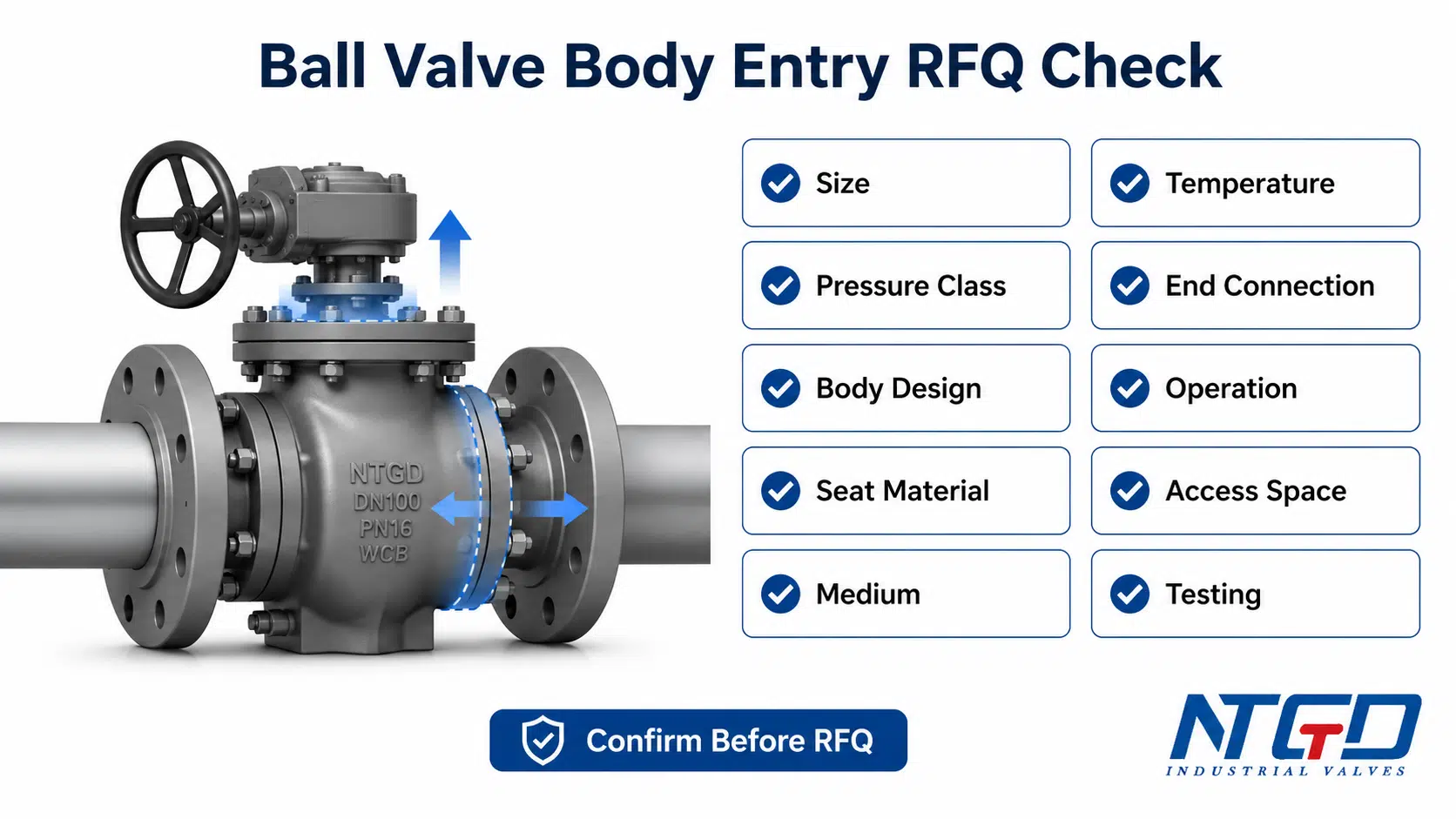
Before asking for a top entry or side entry ball valve quotation, the buyer should confirm the service data. This prevents the valve selection from being based only on a general preference.
| RFQ Item | Why It Matters |
|---|---|
| Valve size | Affects weight, access, installation, and maintenance method. |
| Pressure class | Defines pressure boundary requirements. |
| Body material | Must match service, corrosion, and project specification. |
| Seat material | Controls sealing, torque, and temperature compatibility. |
| Ball design | Floating or trunnion support affects load and torque. |
| End connection | Flanged, welded, or other ends affect removal and maintenance. |
| Medium | Determines corrosion, erosion, sealing, and cleaning concerns. |
| Temperature | Must be compatible with seat and seal materials. |
| Operation method | Manual, gearbox, pneumatic, electric, or hydraulic actuation affects access. |
| Pipeline layout | Confirms whether top access or valve removal is practical. |
| Shutdown window | Helps compare initial cost and lifecycle cost. |
| Testing and inspection requirements | Confirms pressure, leakage, and documentation needs. |
Final fit-check for engineering buyers
Use this final check before deciding between top entry and side entry:
| Question | If Yes, Consider |
|---|---|
| Will valve removal require lifting, pipework disturbance, or extended shutdown approval? | Top entry may reduce field work. |
| Is inline maintenance a project requirement? | Top entry may fit the maintenance strategy. |
| Is the purchase budget the main constraint? | Side entry may be more practical. |
| Is the service standard and maintenance infrequent? | Side entry may fit the planned maintenance model. |
| Is there enough overhead clearance for bonnet removal? | Top entry can be reviewed. |
| Is there enough space to remove the valve later? | Side entry may be practical. |
| Have pressure class, seat material, ball support, and testing requirements been confirmed? | Review the full valve design before deciding by entry style. |
| Are leakage requirements strict? | Review seat, seal, body joint, gasket, and testing details. |
| Is the valve large or heavy? | Compare lifting, access, and shutdown cost. |
| Is the line welded or difficult to dismantle? | Top entry may reduce pipeline disturbance for internal maintenance. |
What to confirm with drawings, datasheets and project conditions
The final selection should be verified with valve drawings and datasheets. At minimum, confirm:
- body construction;
- bonnet or body joint design;
- seat and seal materials;
- ball support design;
- end connection;
- face-to-face or end-to-end dimensions;
- operator or actuator clearance;
- maintenance access space;
- pressure and temperature limits;
- applicable test and inspection requirements;
- spare parts strategy.
A clear RFQ and well-defined valve selection criteria help the valve manufacturer or engineering team recommend the correct body entry design without guessing.
FAQ
What is the difference between top entry and side entry ball valve?
A top entry valve’s internals are accessed from the top through a removable bonnet, while a side entry valve uses a split body assembled from the side. The practical difference is maintenance access: top entry often supports inline service, while side entry often relies on planned removal or body disassembly for major internal work.
Is a top entry ball valve easier to maintain than a side entry ball valve?
In many installations, yes, especially when the valve design and site access allow bonnet removal from above. The advantage mainly applies to internal parts such as the ball, seats, and seals; connection or pressure-boundary problems may still require offline repair.
Does a side entry ball valve need to be removed from the pipeline?
Often it does for full internal maintenance, but this depends on the design, size, end connection, and site layout. If removal is easy and maintenance is planned, side entry can still be a practical and economical choice.
Which costs less, top entry or side entry ball valve?
Side entry ball valves usually have a lower initial purchase cost. Top entry ball valves usually cost more upfront, but they may reduce lifecycle cost when inline maintenance lowers downtime, labor, or removal work.
Which is better for high-pressure service, top entry or side entry?
High-pressure suitability is decided by pressure class, body material, seat design, ball support, sealing system, end connection, and testing requirements. Both top entry and side entry ball valves can be engineered for demanding service when the complete design matches the specification.
When should I choose a top entry ball valve instead of side entry?
Choose a top entry ball valve when inline maintenance, difficult valve removal, high downtime cost, large valve size, welded pipeline installation, or limited shutdown time is a major project concern.
When should I choose a side entry ball valve instead of top entry?
Choose a side entry ball valve when the system is cost-sensitive, the valve can be removed during planned shutdowns, maintenance is infrequent, and the service conditions are well within the selected valve design.
Conclusion
The choice between top entry and side entry ball valves should be made from the maintenance strategy outward, not from the valve name alone.
For critical lines where downtime cost, difficult access, or large valve size dominates the decision, the lifecycle value of a top entry design can justify the higher initial cost. For cost-sensitive standard systems with predictable shutdown windows and practical valve removal, side entry construction is often the more economical and widely available choice.
Body entry style should be defined in the RFQ as a technical requirement, not treated as an afterthought. The correct selection comes from matching body construction, service conditions, sealing requirements, pressure and temperature limits, pipeline layout, and maintenance access.
Use the RFQ checklist above to gather your system data before finalizing the valve body entry design. If your project involves difficult access, high downtime cost, welded or hard-to-remove pipelines, severe service conditions, or strict leakage requirements, bring those specifications into the technical review.
A targeted discussion based on valve size, pressure class, medium, temperature, end connection, seat material, maintenance access, shutdown window, and testing requirements will confirm the correct top entry or side entry design faster than a general inquiry.
