
Author Name: Bruce Zheng
Author Role: Co-Founder and Valve Engineer at NTGD Valve
Author Bio: Bruce Zheng is Co-Founder and Valve Engineer at NTGD Valve, focusing on industrial valve selection, application, and technical content for global B2B buyers.
Last Updated: June 17, 2026
For buyers searching for valve suppliers in South Africa, this page provides a structured list of supplier names, company types, regional signals, valve categories, and RFQ checks used in industrial valve sourcing.
South Africa has many valve suppliers, distributors, stockists, manufacturers, importers, automation suppliers, and valve service companies serving industrial buyers. For a buyer, the important question is not only “who sells valves,” but also whether the supplier can support the required valve type, pressure class, material, standard, delivery schedule, certificates, and after-sales service.
This guide organizes valve suppliers in South Africa from a buyer evaluation perspective. It keeps the focus on South Africa valve suppliers and valve manufacturers, while also explaining the difference between local manufacturing, distribution, stockholding, import supply, valve automation, and refurbishment.
This is not a ranked list and should not be treated as a complete local directory. Buyers should confirm each company’s current location, product scope, company type, certifications, stock availability, and technical support before issuing a purchase order.
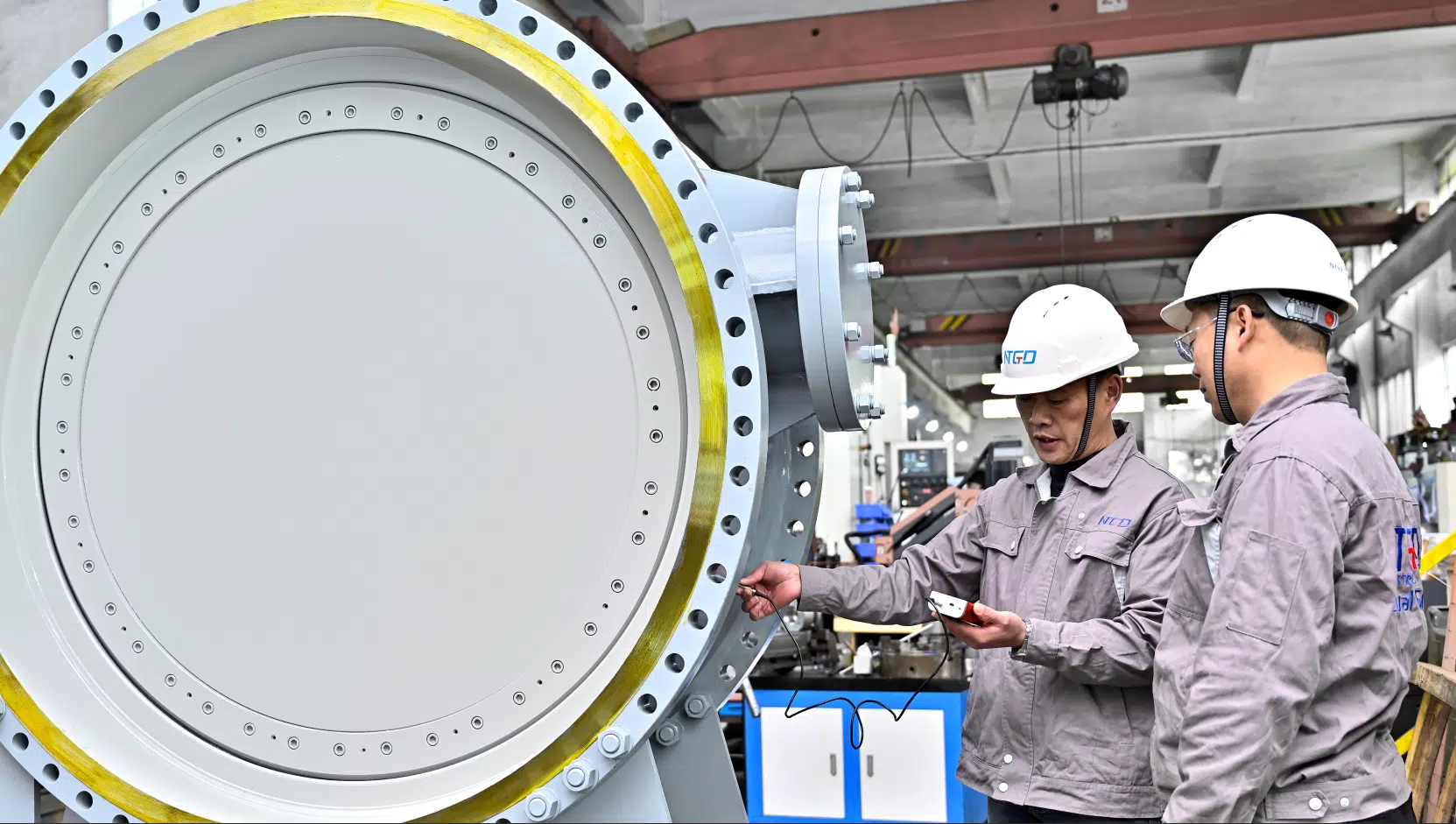
Quick Answer: Valve Suppliers in South Africa
Valve suppliers in South Africa may include local valve manufacturers, distributors, stockists, importers, valve automation companies, and industrial service providers. In many industrial searches, the terms “valve supplier” and “valve manufacturer” are used together, but they do not always mean the same thing.
South Africa’s valve supply market is commonly searched through regional terms such as Johannesburg, Gauteng, Cape Town, and Durban, as well as valve-type terms such as gate valves, ball valves, butterfly valves, diaphragm valves, pressure relief valves, check valves, and control valves. Johannesburg and Gauteng show especially strong supplier signals because many industrial suppliers and engineering companies operate in and around this area.
A valve manufacturer may produce, assemble, test, or refurbish valves. A distributor may represent local or overseas brands. A stockist may hold common valve sizes and materials for faster delivery. An importer may source valves from overseas factories. An automation supplier may add actuators, limit switches, solenoid valves, or control accessories to manual valves.
For industrial buyers, the practical screening process should start with five questions:
| Buyer question | Why it matters |
|---|---|
| What company type is this supplier? | A manufacturer, distributor, stockist, importer, and repair company may offer different capabilities. |
| Which valve types can they supply? | Ball, gate, butterfly, check, globe, diaphragm, relief, safety, and control valves require different product knowledge. |
| Which region do they serve? | Johannesburg, Gauteng, Cape Town, Durban, and other industrial areas may differ in stock, service, and delivery coverage. |
| Which standards and certificates can they support? | Industrial projects may require material certificates, pressure test reports, inspection documents, and project specifications. |
| Can they support the RFQ technically? | A reliable supplier should understand valve type, size, pressure class, material, medium, temperature, standard, and actuation requirements. |
These questions help buyers quickly separate suppliers that fit the project from suppliers that only match the keyword. A mismatch in company type, valve capability, documentation, or delivery support can lead to wrong sourcing decisions, delayed RFQ clarification, or additional rework before purchase approval.
This page focuses on South Africa. It does not try to become an Africa-wide supplier list, a hydraulic valve catalogue, a market report, or a price list.
Supplier, Manufacturer, Distributor, Stockist: What Is the Difference?
The phrase “valve manufacturers in South Africa” often appears in buyer searches, but search results and supplier lists usually include several types of companies. Before selecting a supplier, buyers should confirm the company type instead of assuming that every company is a local manufacturer.
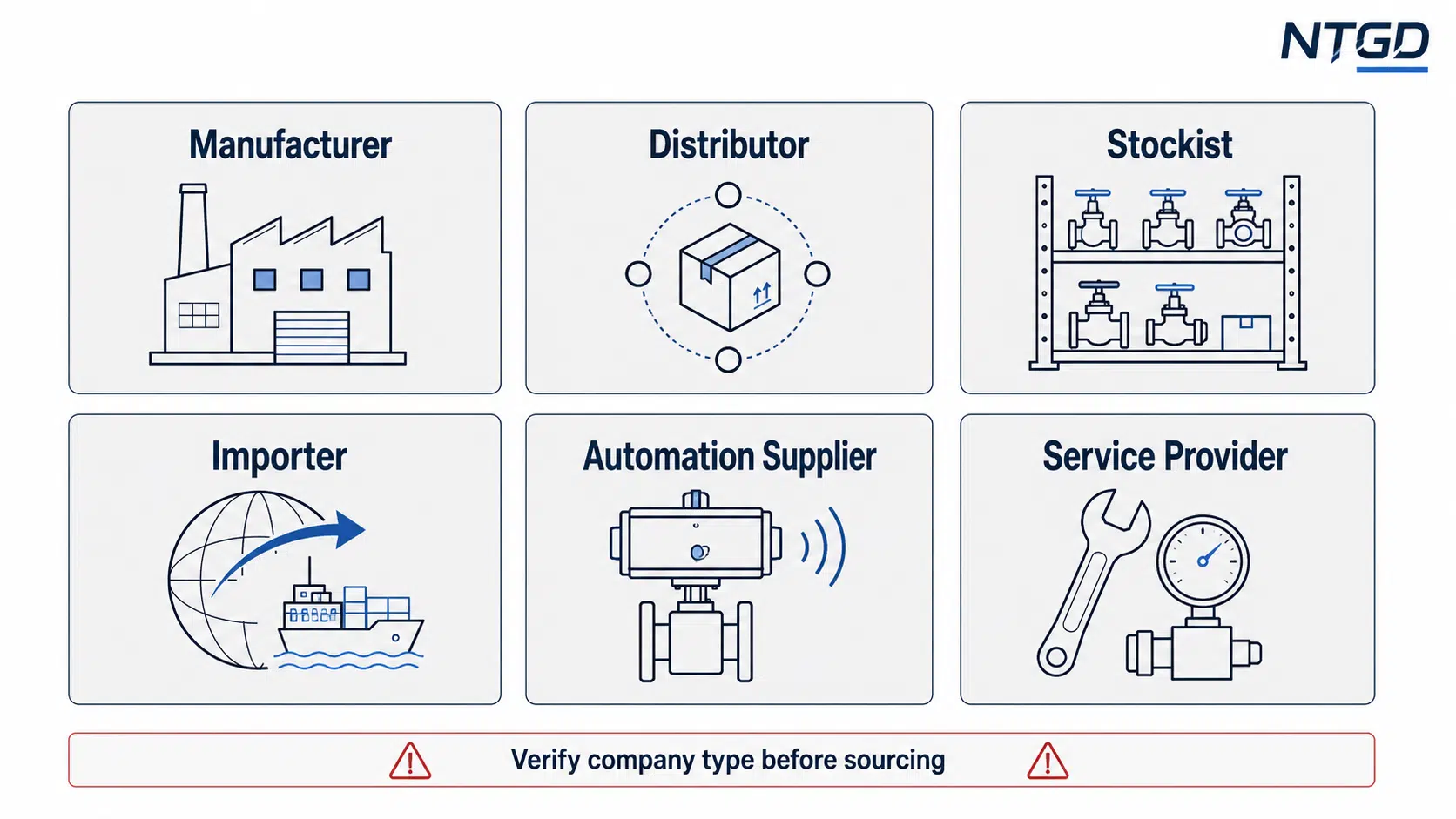
| Company type | What it usually means for buyers | What to check before sourcing |
|---|---|---|
| Valve manufacturer | May manufacture, assemble, test, or refurbish valves locally | Factory or assembly capability, valve range, test capability, certificates, and standards |
| Distributor | May represent one or more valve brands | Brand authorization, product range, stock, delivery time, and technical support |
| Stockist | May keep common valves in inventory | Available sizes, materials, pressure ratings, end connections, and replacement stock |
| Importer | May source valves from overseas manufacturers | Country of origin, documentation, lead time, quality control, and after-sales responsibility |
| Automation supplier | May supply valves with actuators or control accessories | Actuator sizing, fail position, solenoid valve, limit switch, positioner, and control signal support |
| Refurbishment or service provider | May repair, inspect, test, or overhaul existing valves | Repair scope, spare parts, test records, warranty, and service turnaround |
This distinction is important because a local stockist may be faster for common valves, while a manufacturer or overseas factory may be more suitable for engineered valves, large sizes, special materials, unusual pressure classes, or project-specific documentation.
Local Manufacturing vs Imported Valve Brands
Local manufacturing can be valuable when buyers need local support, shorter service response, refurbishment, or project-specific documentation. Imported valve brands can also be suitable when the supplier has reliable sourcing, clear documentation, stock availability, and technical support.
The buyer should not judge only by the word “manufacturer” in a company description. A supplier may manufacture some valve types, distribute other brands, import special products, or provide repair services. The safest approach is to confirm the actual supply route for the required valve.
| Supply route | When it may fit | Main buyer risk to check |
|---|---|---|
| Local manufacturing | Local project support, refurbishment, repeated supply, water or industrial infrastructure | Whether the company actually manufactures the required valve type and size |
| Local assembly | Actuated valves, project configuration, accessories, testing | Whether assembly and test records match the project specification |
| Local stockholding | Fast delivery for common industrial valves | Whether the required size, pressure class, material, and end connection are actually in stock |
| Import supply | Special materials, large sizes, special pressure classes, overseas brands | Lead time, documentation, warranty, and quality control |
| Refurbishment | Maintenance, shutdown work, valve overhaul | Whether the repaired valve can be tested and documented for the service |
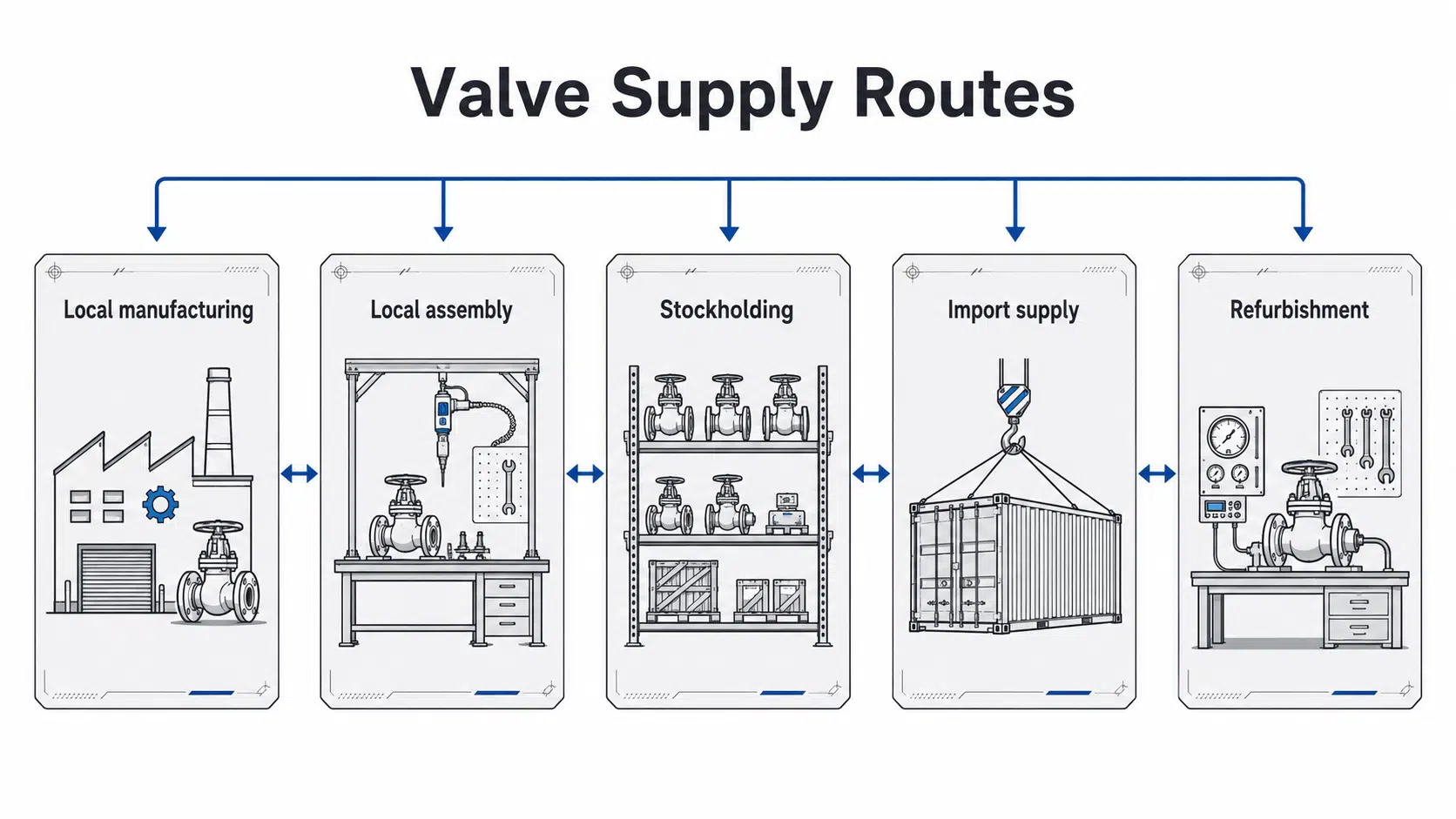
Local manufacturing or assembly may help when buyers need local service, refurbishment, testing support, or faster technical response. Imported or factory-direct supply may fit special materials, unusual pressure classes, engineered valves, or project documentation, but it should be checked against RFQ data rather than assumed from a company description.
After the company type is clear, the supplier comparison table becomes easier to read. The company type field helps buyers judge whether a supplier is closer to manufacturing, distribution, stockholding, import supply, automation support, or valve service.
Comparison Table: Valve Suppliers and Manufacturers in South Africa
The following table organizes supplier names associated with South Africa valve sourcing into buyer-screening fields. It is not a ranking. The company type, location, product range, certificates, industry fit, and current supply capability should be confirmed directly before purchasing.
| Supplier / company name | Region or location to verify | Company type to verify | Valve or sourcing angle to confirm | Industry fit to verify | Buyer note |
|---|---|---|---|---|---|
| LVSA Group | Johannesburg / South Africa | Supplier, distributor, or valve specialist | Industrial valves, butterfly valves, and project valve supply | Water, general industry, and project supply to verify | Confirm current valve range, pressure class coverage, stock status, and whether supply is stocked locally or sourced per project. |
| Macneil Steel & Valves | Johannesburg / South Africa | Supplier or stockist | Ball valves, diaphragm valves, steel and valve supply | General industry and maintenance supply to verify | Check material grades, valve sizes, end connections, and certificate availability before using it for project comparison. |
| Kerr Valve & Industrial Suppliers | Johannesburg / South Africa | Industrial valve supplier | Scope of supply should be checked against valve type, pressure rating, and documentation requirements. | General industrial supply to verify | Keep this entity in the supplier list, but confirm current product range, contact details, stock depth, and service capability. |
| D & D Valve & Engineering Supplies | Johannesburg / South Africa | Valve and engineering supply company | Industrial valve and engineering supply | General industry, engineering supply, and maintenance to verify | Confirm whether the company supplies, distributes, services, or manufactures the requested valve type before shortlisting. |
| Invincible Valve | Johannesburg / South Africa | Valve supplier or service company | Industrial valve supply and service-related capability to verify | General industrial service to verify | Confirm current company details, valve categories, service coverage, and whether the supplier can support the required documentation. |
| Heaton Valves Africa | Gauteng / South Africa | Stockist, distributor, or valve solutions provider | Industrial valves, steam, pressure, process, and related valve systems | Steam, process, pressure service, and general industry to verify | Do not automatically treat a stockist or distributor as a manufacturer; confirm company type, brand support, and documentation capability. |
| Precision Valve SA | Rosslyn / South Africa | Supplier or specialist valve company | Valve supply or precision valve-related service | Process or specialist valve applications to verify | Confirm current product scope and whether it fits industrial process valve sourcing rather than only a narrow specialist requirement. |
| Valve & Automation | Gauteng / South Africa | Valve supplier, automation supplier, or service provider | Manual valves, control valves, valve automation, repair or service support | Automation-related projects and process control to verify | Stronger fit when the project involves actuators, controls, accessories, repair capability, or control-related technical support. |
| Industrial Valve & Engineering Supplies | Kempton Park / South Africa | Industrial valve supplier | Industrial valves, pressure-related valves, and project supply | Industrial process and pressure-related service to verify | Confirm valve range, pressure ratings, material availability, certificate package, and whether supply fits the project specification. |
| AVK Southern Africa | Gauteng / South Africa | Manufacturer, supplier, or local manufacturing group entity | Water, industrial, non-return, gate, butterfly, and related valve categories to confirm | Water, infrastructure, industrial, and municipal applications to verify | Important for manufacturer-related searches, but buyers should still confirm exact product scope, applicable standards, and current documentation. |
| Bray Controls Africa | South Africa | Valve, actuator, and control-related supplier | Actuated valves, controls, solenoid valves, and automation accessories | Automation, control, and actuation-related projects to verify | Better treated as an automation and control-related supplier unless the project requires its specific valve and actuator scope. |
| RS Components South Africa | Midrand / South Africa | Broad industrial distributor | Electric valves, small valves, solenoid valves, and industrial components | Maintenance, MRO, small components, and boundary sourcing to verify | Useful as a boundary entry; not the main reference for engineered industrial valve projects requiring full valve documentation. |
| Ithuba Valves & Industrial Supplies | Gauteng / South Africa | Valve and industrial supplier to verify | Industrial valve supply | General industrial supply to verify | Keep as an entity asset, but confirm current operations, product range, company type, location, and documentation support. |
| Process Valve Corp. | Durban / South Africa | Process valve supplier to verify | Process industry valve supply | Process, coastal, petrochemical, or general industry to verify | Useful for Durban or coastal sourcing checks if current details, valve range, and product scope are confirmed. |
| Valco Group SA | Cape Town / South Africa | Valve supplier or distributor to verify | Regional valve supply | Cape Town regional industry, marine, municipal, or process supply to verify | Treat as a Cape Town regional supplier candidate pending current verification of company type, product scope, and delivery coverage. |
A good supplier table should help buyers ask better questions. It should not imply that every supplier has the same technical depth, stockholding, certification level, or manufacturing capability.
How to Read the Supplier Comparison Table
The most important column is not only the company name. For industrial valve sourcing, the buyer should read across the table and confirm:
- whether the company is a manufacturer, distributor, stockist, importer, automation supplier, or service provider;
- whether it supports the required valve type;
- whether it can supply the required material, size, pressure class, and end connection;
- whether it can provide the necessary test reports and certificates;
- whether it has local stock, local service, or project-based sourcing only.
For urgent maintenance, a local stockist may be suitable if the required valve size, material, and pressure rating are actually in stock. For engineered valves, large sizes, special alloys, or export documentation, a manufacturer or project-capable supplier may be more suitable because the offer may need technical review, testing records, drawings, and a controlled documentation package.
Regional Coverage: Johannesburg, Gauteng, Cape Town and Durban
Regional coverage matters because valve sourcing is often tied to stock availability, site service, local industry concentration, and delivery schedule. Johannesburg is a major industrial city within Gauteng, so this article separates city-level supplier signals from broader provincial coverage.
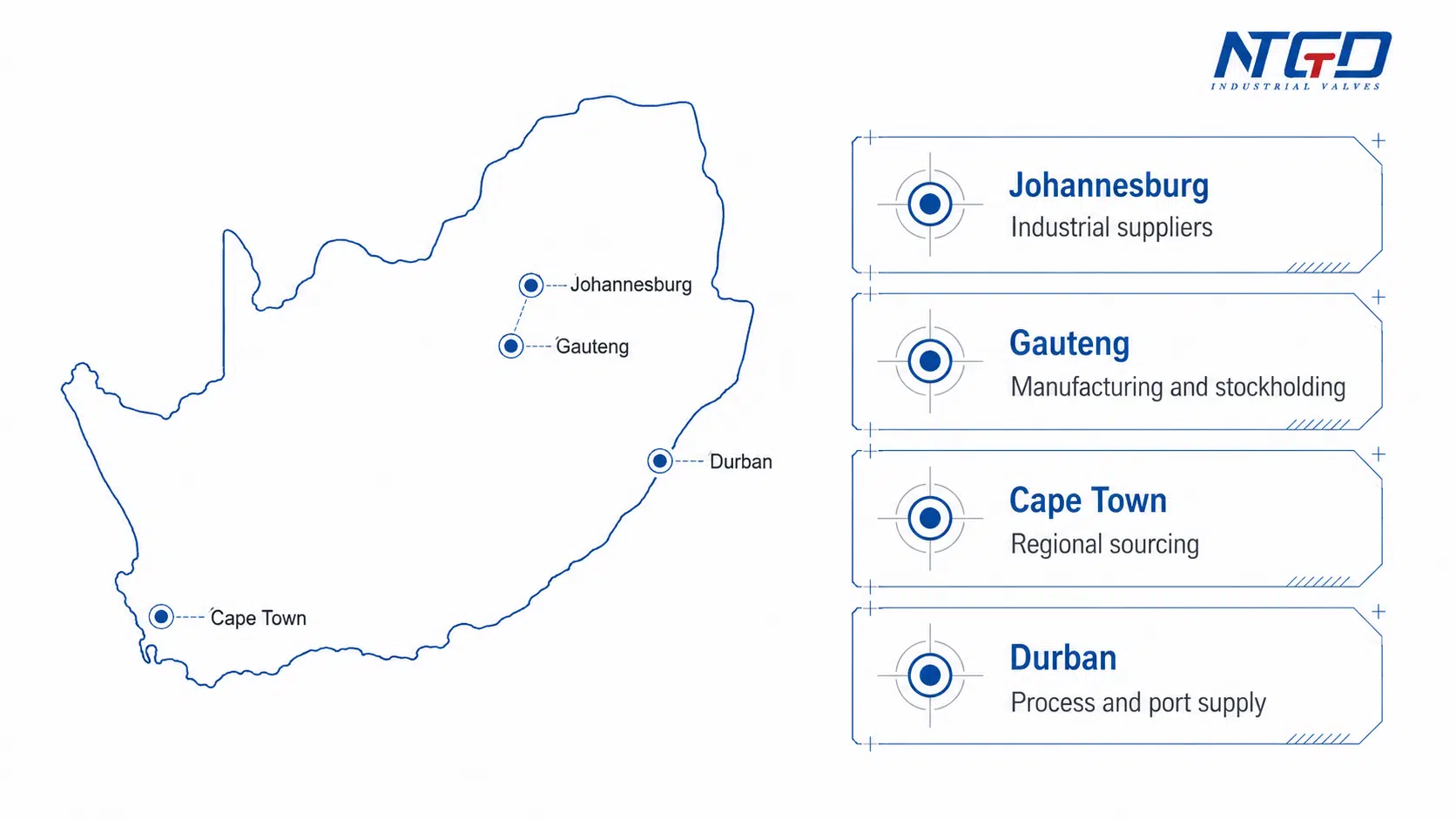
Johannesburg and Gauteng appear strongly in South Africa valve supplier searches because many industrial suppliers, distributors, and engineering companies operate in and around these areas. Cape Town and Durban should be covered, but they should not replace the main Johannesburg and Gauteng supplier assets unless current search data or company verification supports that change.
| Region | Buyer sourcing intent | Supplier examples to verify | Buyer note |
|---|---|---|---|
| Johannesburg | Local industrial supplier discovery, stockholding, engineering supply | LVSA Group, Macneil Steel & Valves, Kerr Valve & Industrial Suppliers, D & D Valve & Engineering Supplies, Invincible Valve | Keep Johannesburg as a key regional signal because it protects existing supplier and entity search intent. |
| Gauteng | Broad industrial valve supplier and manufacturer discovery | Heaton Valves Africa, Valve & Automation, Industrial Valve & Engineering Supplies, AVK Southern Africa, Ithuba Valves & Industrial Supplies | Gauteng can include manufacturers, distributors, stockists, automation suppliers, and service providers. |
| Cape Town | Regional sourcing for industrial, municipal, marine, or process needs | Valco Group SA and other verified regional suppliers | Cover lightly unless company-level verification supports deeper treatment. |
| Durban / KwaZulu-Natal | Port, process industry, petrochemical, and regional supply needs | Process Valve Corp. and other verified suppliers | Cover as a regional sourcing option, but avoid turning the page into a Durban-only list. |
| South Africa nationwide | Project-based sourcing across regions | Local and imported valve suppliers | Confirm whether the supplier serves only one region or can support national delivery. |
Johannesburg and Gauteng Supplier Signals
Johannesburg and Gauteng should not be removed from the page because they protect both regional search intent and existing supplier entity assets. However, the old structure should not remain as a simple city-by-city name list.
The improved structure should show why each region matters to a buyer. Regional coverage affects how quickly a supplier can respond, whether standard valves are available from stock, whether site service is practical, and whether technical communication can be handled during the project schedule.
Cape Town and Durban Coverage
Cape Town and Durban should be included as regional coverage rather than treated as equal main sections. They help the page cover South Africa sourcing more naturally, but they should not pull the article away from its core focus on valve suppliers in South Africa.
When buyers source from Cape Town or Durban, they should confirm the same items: valve type, material, pressure class, standards, certificates, stock availability, delivery schedule, and after-sales service.
Common Valve Types Supplied in South Africa
The old article separated ball valves, solenoid valves, butterfly valves, electric water valves, pressure relief valves, diaphragm valves, and gate valves into separate H2 sections. That structure made the page harder to use because buyers had to move through separate valve-type sections before comparing supplier capability.
For a supplier list page, a valve type coverage table is more useful. It helps buyers understand which valve categories to ask about without turning the article into a full technical guide for each valve.
| Valve type | Common sourcing use | What buyers should verify |
|---|---|---|
| Ball valves | On-off shutoff for water, gas, oil, chemical, and utility service | Bore type, body material, seat material, pressure class, end connection, fire-safe or antistatic requirement if applicable, and whether documentation can be supplied. |
| Gate valves | Isolation in water, process, utility, and pipeline systems | Wedge type, body material, pressure rating, stem design, end connection, sealing requirement, and test report availability. |
| Butterfly valves | Large-diameter water, HVAC, utility, and industrial flow control | Wafer or flanged design; lug configuration where applicable; seat material; disc material; actuation; torque requirement; and whether the supplier supports the required size range. |
| Check valves | Non-return protection in pumps, pipelines, and process systems | Swing, lift, dual plate, piston, nozzle or non-slam design; pressure drop; installation orientation; and whether the type matches the pump or pipeline condition. |
| Globe valves | Throttling, regulation, and shutoff where pressure drop is acceptable | Body material, trim material, seat design, pressure class, flow direction, and whether the supplier can support trim or throttling requirements. |
| Diaphragm valves | Corrosive, slurry, water treatment, or hygienic service depending on design | Diaphragm material, lining, body design, pressure and temperature limits, and compatibility with the medium. |
| Pressure relief and safety valves | Overpressure protection for pressure systems | Set pressure, capacity, standard, medium, temperature, certification, and test documentation. |
| Control valves | Flow, pressure, temperature, or process control | Valve sizing, actuator, positioner, control signal, trim, noise and cavitation risk, and sizing support. |
| Solenoid and electric valves | Electrically operated small flow, actuator control, or fluid-control applications | Voltage, duty cycle, media compatibility, pressure range, port size, enclosure rating, and whether the valve belongs to a general industrial or fluid-power application. |
Isolation, Control, Safety and Specialty Valves
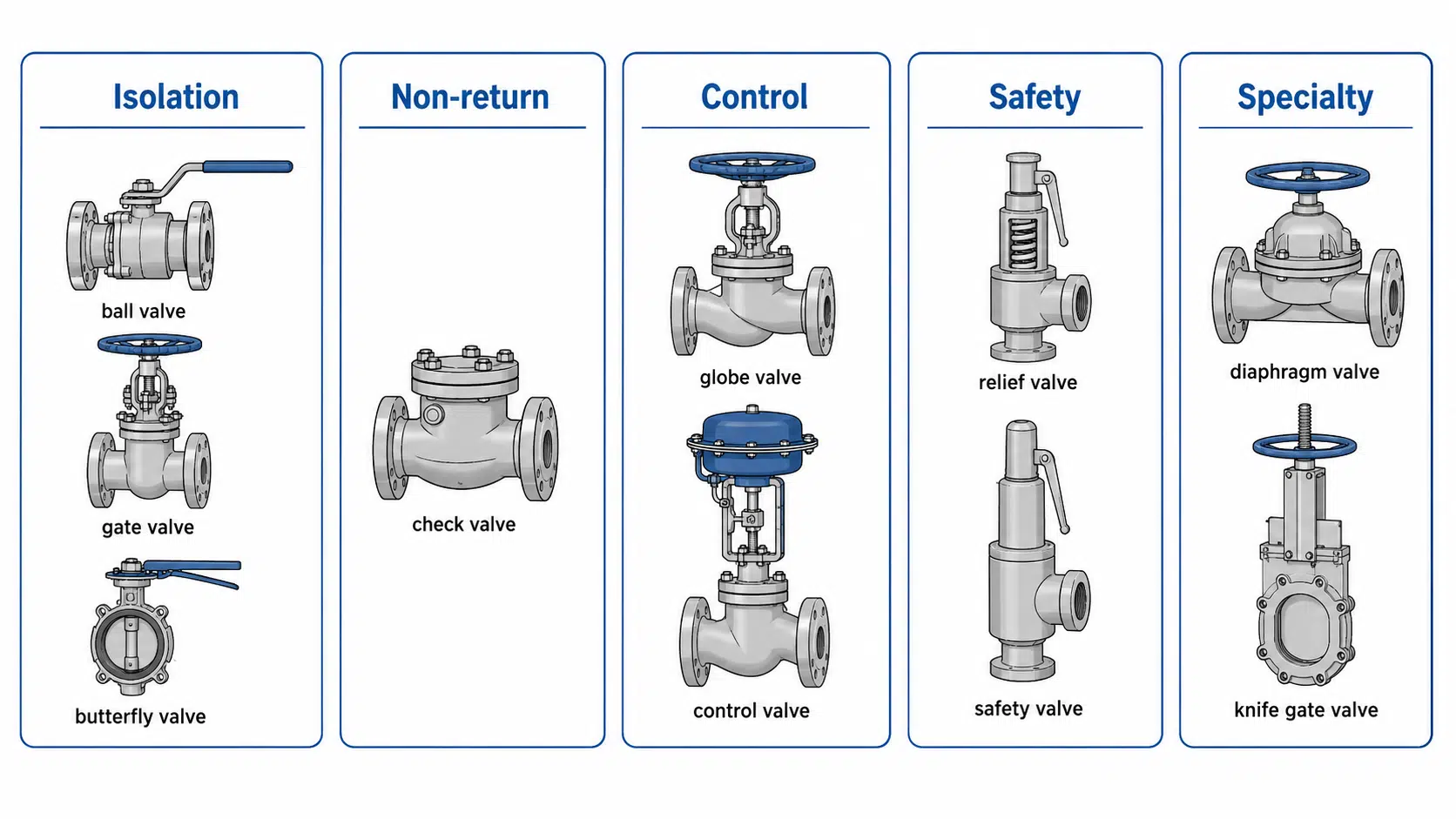
A practical way to group valve suppliers is by function:
| Function group | Common valve types | Buyer decision point |
|---|---|---|
| Isolation | Ball valves, gate valves, butterfly valves, plug valves | Can the supplier provide the right size, pressure class, material, and end connection? |
| Non-return protection | Check valves, non-slam check valves, dual plate check valves | Can the supplier match the check valve type to flow, pump protection, and installation orientation? |
| Throttling and control | Globe valves, control valves, pressure reducing valves | Can the supplier support sizing, trim selection, actuation, and control accessories? |
| Safety and pressure protection | Pressure relief valves, safety valves | Can the supplier support set pressure, capacity, standard, test certificate, and documentation? |
| Corrosive or slurry service | Diaphragm valves, lined valves, knife gate valves, specialty valves | Can the supplier confirm material, lining, abrasion resistance, and maintenance requirements? |
Isolation valves often depend on stock depth and material availability, while safety and control valves usually require stronger sizing, documentation, and certification support from the supplier.
This functional grouping helps buyers compare supplier capability by service requirement instead of reviewing valve names as a simple catalogue.
Hydraulic and Solenoid Valves as a Boundary Note
Some South Africa valve searches include hydraulic valve supplier terms. Hydraulic valves are related to fluid control, but they are often a separate product category from general industrial process valves.
Hydraulic directional valves, hydraulic proportional valves, hydraulic flow control valves, and hydraulic pressure valves usually belong in a hydraulic valve page or hydraulic product guide, not in a general South Africa industrial valve supplier list.
Solenoid valves can be mentioned lightly because they may appear in actuator packages, automation panels, or small fluid-control systems. They should not become the main structure of this page.
Industries Served by South Africa Industrial Valve Suppliers
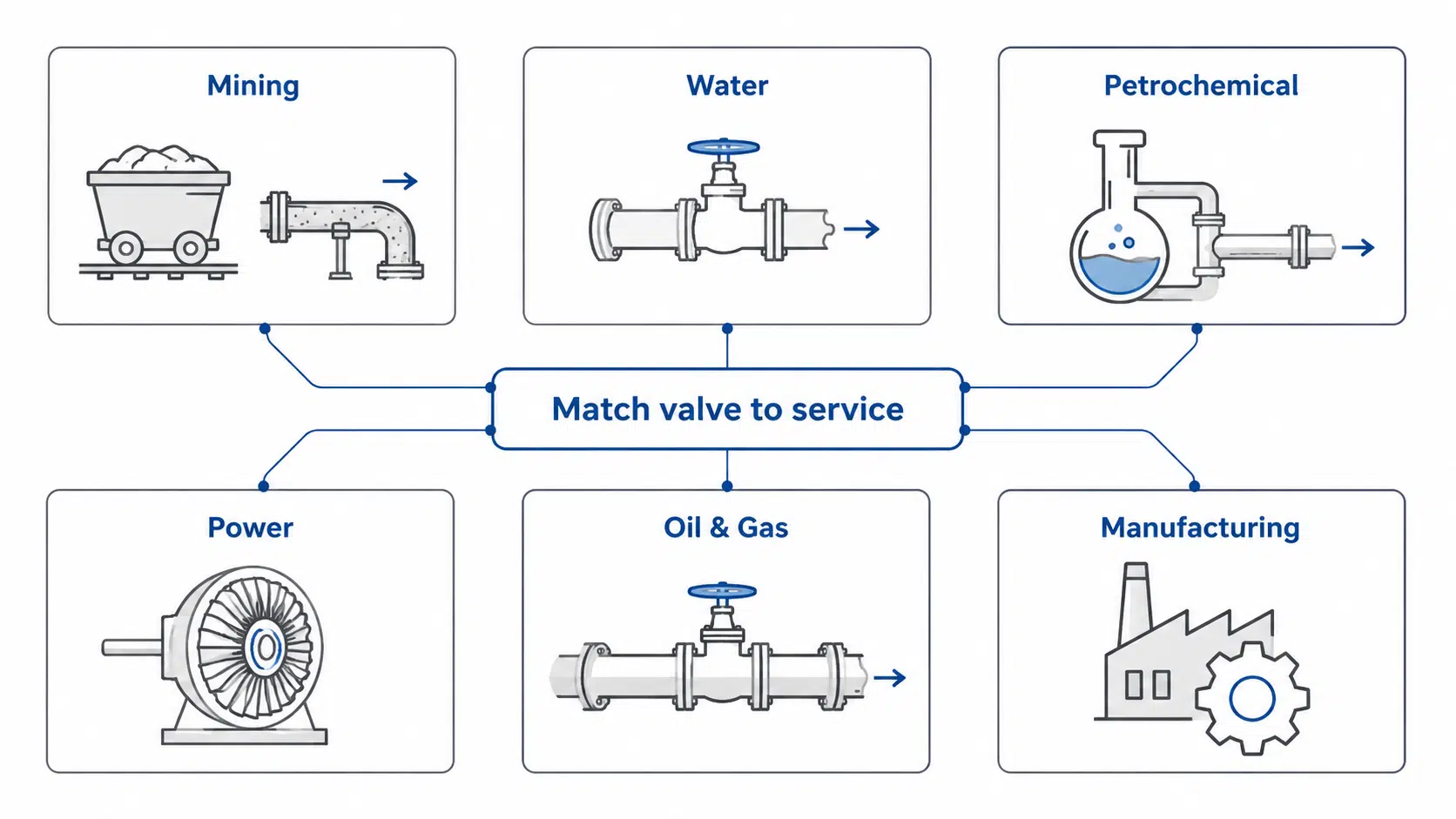
The phrase “industrial valves South Africa” is useful for this page because buyers are not only looking for company names. They are usually sourcing valves for real industrial systems.
The supplier should be checked against the industry and service conditions, not only the valve name. Valve type is only the first screening layer; the industry application changes the material, documentation, delivery, spare parts, and after-sales requirements.
| Industry or application | Typical valve needs | Supplier capability to check |
|---|---|---|
| Mining and mineral processing | Slurry isolation, abrasion resistance, shutoff, maintenance access | Knife gate valves, diaphragm valves, lined valves, abrasion-resistant materials, spare parts |
| Water and wastewater | Isolation, non-return protection, air release, flow control | Gate valves, butterfly valves, check valves, air valves, coating and corrosion protection |
| Petrochemical and chemical processing | Corrosion resistance, shutoff, pressure protection, safety | Stainless steel, alloy, lined valves, relief valves, material compatibility documentation |
| Power generation | Steam, condensate, pressure control, isolation | Globe valves, gate valves, check valves, safety valves, control valves, pressure and temperature suitability |
| Oil and gas | Shutoff, isolation, pressure containment, non-return protection | Ball valves, gate valves, check valves, pressure class, test documents, project standards |
| General manufacturing | Utility water, compressed air, steam, chemicals, process lines | Ball valves, butterfly valves, globe valves, check valves, actuation support |
| Food, pulp and paper, and cleaner process service | Cleaning, residue control, corrosion, compatibility | Diaphragm valves, butterfly valves, stainless steel components, seat and liner compatibility |
A supplier may be strong in one industry and less suitable in another. A mining project may prioritize abrasion-resistant products, slurry experience, spare parts, and maintenance support, while a power or steam-related project may require stronger pressure, temperature, test documentation, and standards review.
Standards, Certifications and Quality Checks
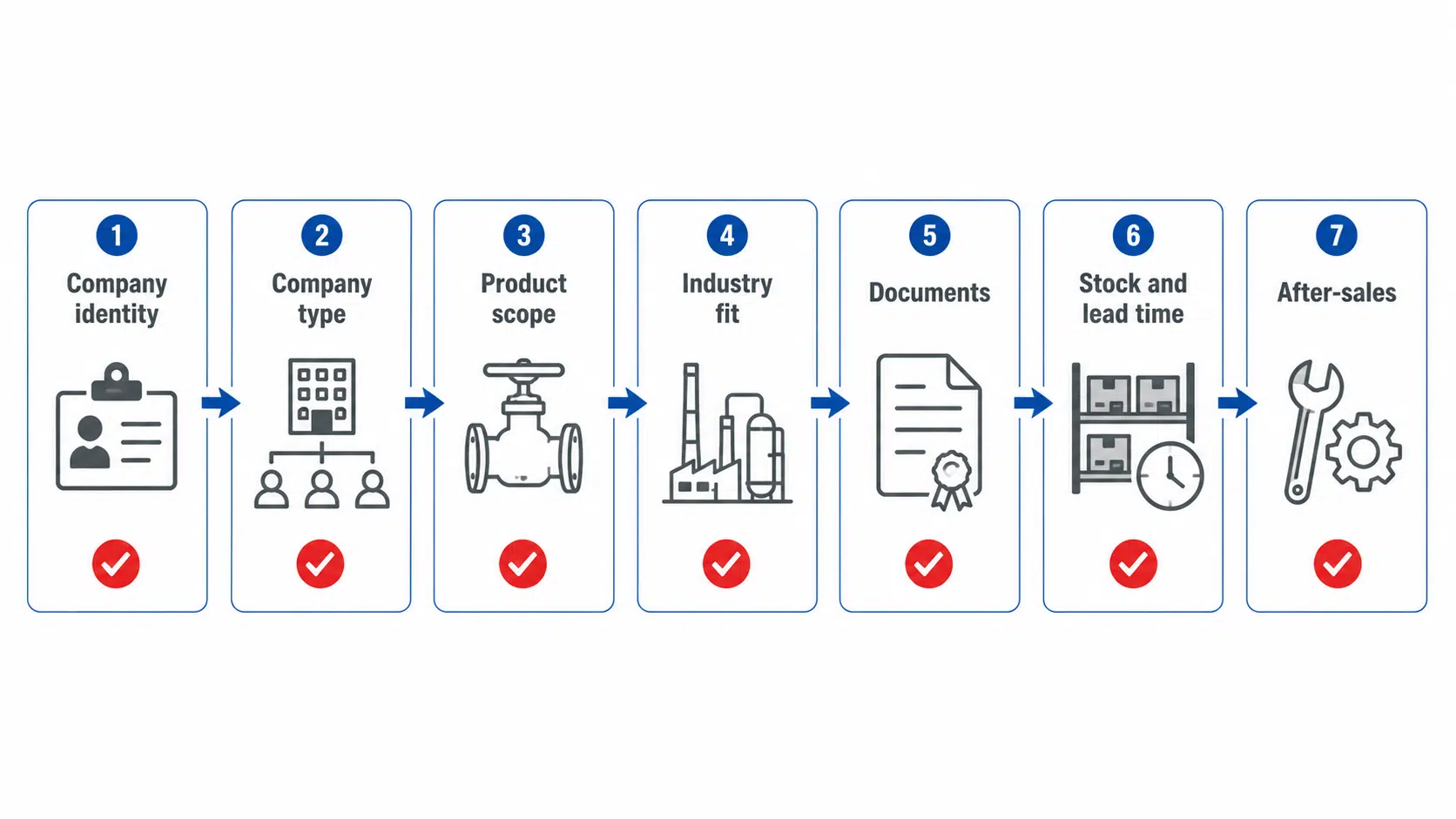
Industrial valve buyers should confirm the documents and standards required by the project. A supplier’s website or catalogue may show a product category, but the purchase decision should be based on the valve design, pressure rating, material, test documentation, and project specification.
The exact standards depend on valve type, region, application, and project requirements. Buyers should not assume that every supplier can provide the same documentation.
| Check item | What buyers should ask for |
|---|---|
| Company quality system | Relevant ISO 9001 quality management documentation from the supplier or manufacturer |
| Valve standard | Applicable API, ASME B16.34, EN, SANS, DIN, BS, or project-specific requirement, depending on the valve |
| Material certificate | Body, trim, stem, seat, disc, ball, gate, or other pressure-retaining and wetted parts as required |
| Pressure test report | Shell test, seat test, or other project-required pressure testing of valves documentation |
| Inspection document | Factory inspection, third-party inspection, or project-specific inspection record where required |
| Coating or lining record | Coating thickness, lining material, surface preparation, or corrosion protection checks where relevant |
| Actuation documents | Actuator sizing, torque data, fail position, control signal, and accessory documents |
| Traceability | Heat number, serial number, tag number, batch record, or project tag documentation where required |
| Warranty and after-sales support | Spare parts, service response, repair support, and replacement process |
What to Check Before Shortlisting a Supplier
Before a buyer shortlists a valve supplier or manufacturer, the following checks are more useful than a general company description:
- Confirm whether the supplier manufactures, distributes, stocks, imports, automates, or services valves.
- Check whether the supplier supports the required valve type and size range.
- Request confirmation of the required body material, trim material, seat material, and end connection.
- Confirm the required pressure class or PN rating.
- Ask whether material certificates and pressure test reports can be provided when required.
- Review whether the project’s applicable standard or specification can be supported.
- Check whether the supplier has local stock, local service, or only project-based sourcing.
- Confirm whether actuation, accessories, spares, and maintenance can be supported.
- Review how clearly the supplier responds to RFQ data, drawings, datasheets, and tag requirements.
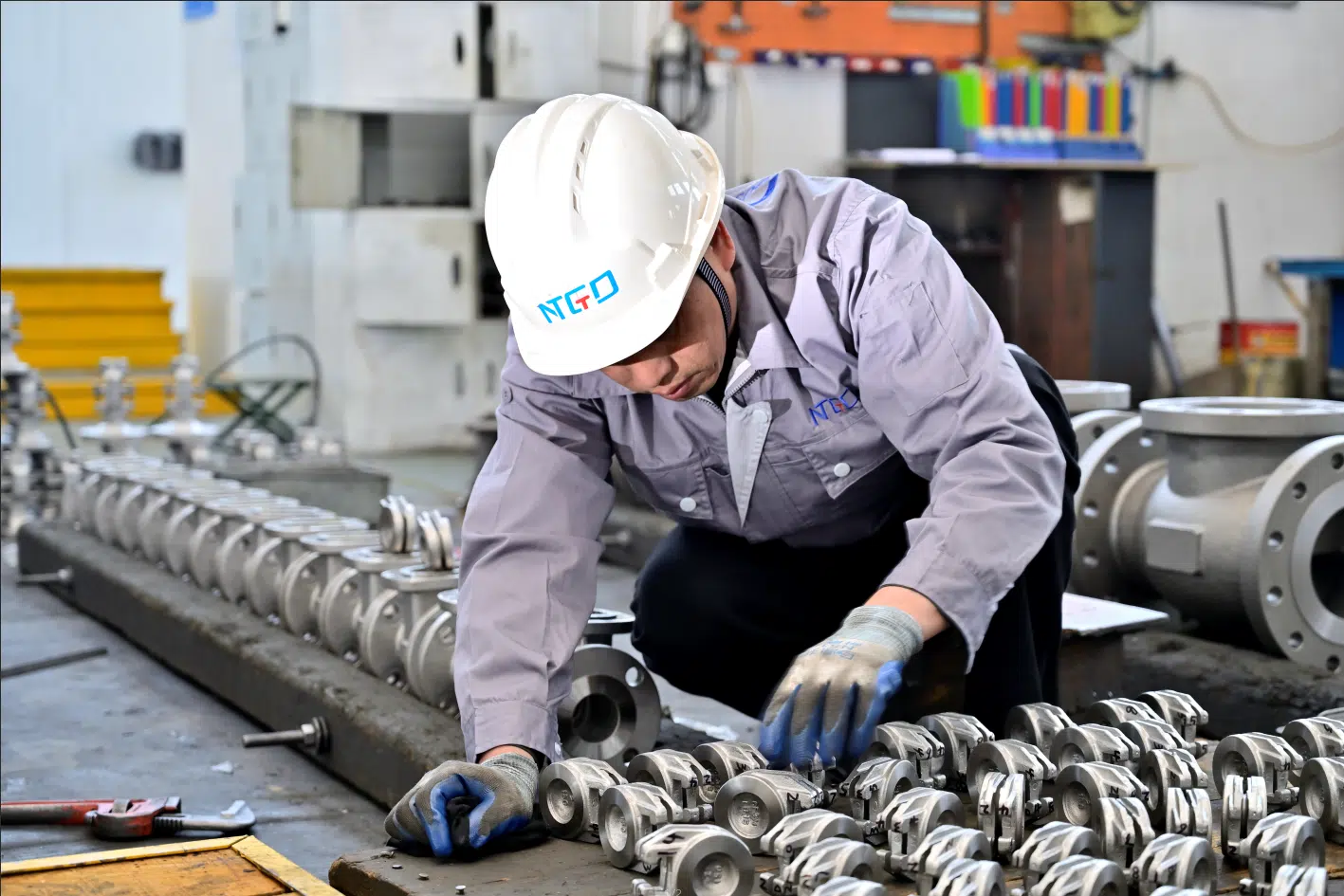
Ignoring spare parts, service response, and after-sales support can create shutdown risk, especially when the valve is installed in a critical line or maintenance window.
How to Verify a Valve Supplier or Manufacturer
A supplier list is only useful if it helps the buyer reduce sourcing risk. A name in a list is not enough. The buyer still needs to confirm whether the company can supply the required valve correctly.
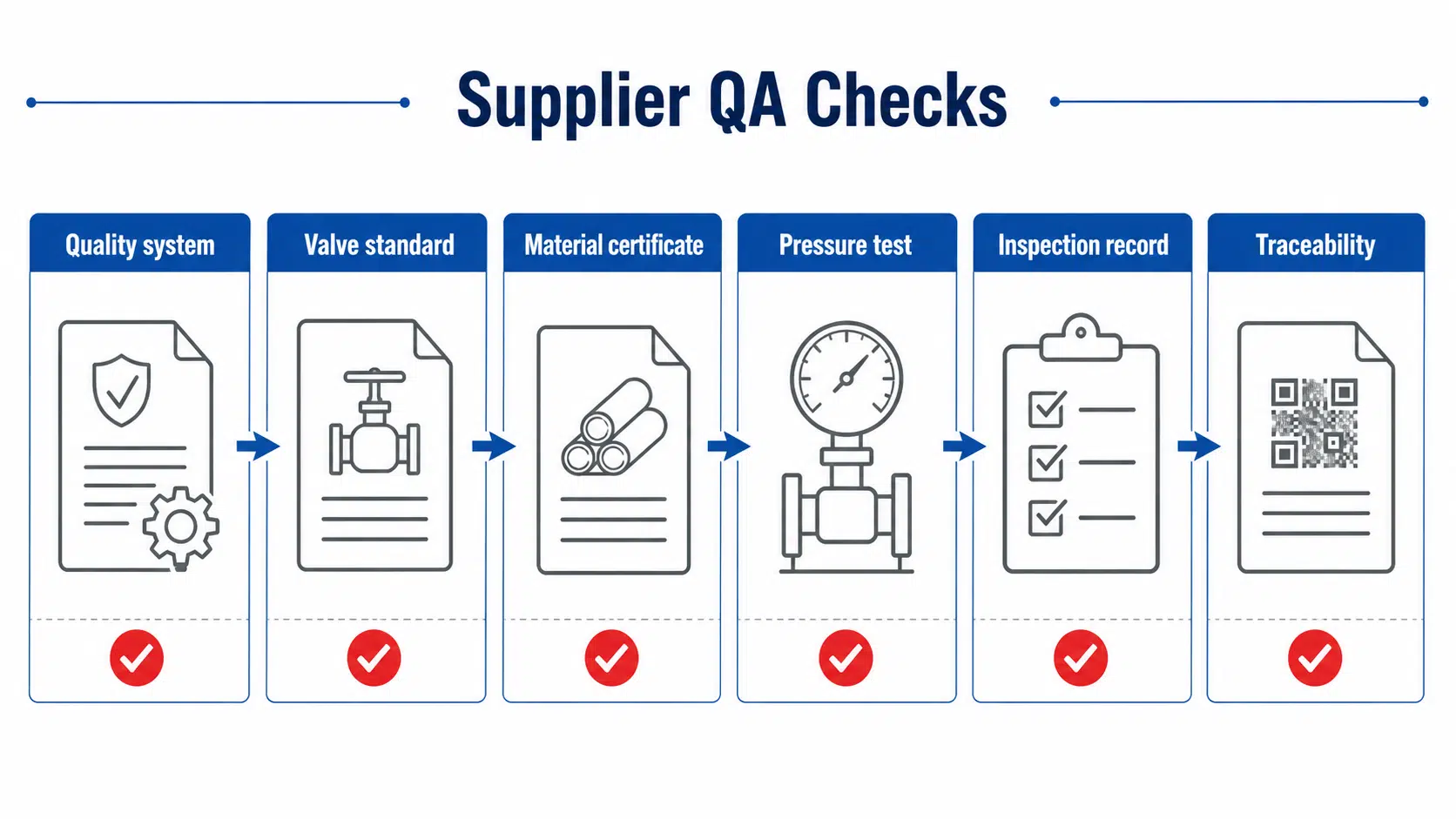
A practical verification process can follow this order:
| Verification step | What to check | Why it matters |
|---|---|---|
| Company identity | Registered name, trading name, branch, and current contact details | Prevents outdated supplier information from entering the RFQ process |
| Company type | Manufacturer, distributor, stockist, importer, automation supplier, or service provider | Avoids assuming a supplier has manufacturing capability when it does not |
| Product scope | Valve types, sizes, pressure classes, materials, end connections | Confirms whether the supplier can handle the required valve |
| Industry experience | Water, mining, petrochemical, power, steam, oil and gas, general industry | Helps match supplier capability to service conditions |
| Documentation ability | Certificates, test reports, inspection records, datasheets | Important for project approval and quality control |
| Stock and lead time | Local stock, imported supply, made-to-order, project delivery | Affects shutdown planning and delivery risk |
| Technical support | Sizing, actuation, material selection, valve replacement, specification review | Reduces wrong selection risk |
| After-sales support | Spare parts, repair, refurbishment, testing, service response | Important for maintenance and lifecycle cost |
Company Type, Location, Stockholding and After-Sales
The most common mistake in valve sourcing is treating all suppliers as interchangeable. They are not.
A local stockist may help quickly with standard ball valves, butterfly valves, or gate valves. A manufacturer may be better for engineered requirements, large sizes, custom materials, or documentation. An automation supplier may be necessary when manual valves need pneumatic or electric actuators. A service provider may be more useful during shutdown maintenance or refurbishment.
For B2B buyers, the correct question is not only “Which valve supplier is near me?” The better question is:
Which supplier type can support the valve design, service condition, documentation, lead time, and after-sales requirement of this project?
When these checks are skipped, the risk is not only a wrong supplier name on the shortlist, but also wrong valve selection, missing documentation, delivery delay, or higher maintenance exposure after installation.
Once the supplier has been screened, the next step is to prepare a technical RFQ so each supplier quotes against the same basis.
RFQ Checklist for Sourcing Valves in South Africa
A clear RFQ helps suppliers respond accurately. It also helps buyers compare offers from different valve suppliers and manufacturers.
Use this checklist to prepare a comparable RFQ, so different suppliers quote against the same industrial valve selection criteria instead of responding to incomplete or inconsistent information.
| RFQ item | What to specify | Why it matters |
|---|---|---|
| Valve type | Ball, gate, butterfly, check, globe, diaphragm, relief, safety, control, plug, knife gate, or other type | Different suppliers may specialize in different valve categories |
| Size | DN, NPS, or project size | Determines availability, body design, torque, weight, and price range |
| Pressure rating | PN, Class, or project pressure requirement | Affects body rating, wall thickness, flange connection, testing, and documentation |
| Material | Carbon steel, stainless steel, ductile iron, cast iron, alloy, lined body, or special material | Must match corrosion, temperature, pressure, and media conditions |
| Medium | Water, steam, gas, oil, slurry, chemicals, wastewater, air, or mixed service | Influences material, seat, trim, lining, and leakage risk |
| Temperature | Operating and design temperature | Affects seat material, seal material, body material, and pressure rating |
| End connection | Flanged, wafer, lug, threaded, socket weld, butt weld, grooved, or special connection | Must match the pipeline and installation standard |
| Operation | Manual lever, gearbox, pneumatic actuator, electric actuator, hydraulic actuator, or bare stem | Affects torque, automation, control signal, fail position, and accessories |
| Standard or specification | API, ASME, EN, SANS, DIN, BS, or project specification where applicable | Prevents mismatch between supplier offer and project requirement |
| Quantity and delivery | Quantity, required delivery date, shutdown schedule, or project schedule | Helps distinguish stock supply from project manufacturing |
| Certificates | MTC, pressure test report, inspection report, origin document, or project-specific certificate | Important for quality approval and traceability |
| Tagging and documentation | Tag number, datasheet, drawing, ITP, or document package | Required for project procurement and plant maintenance records |
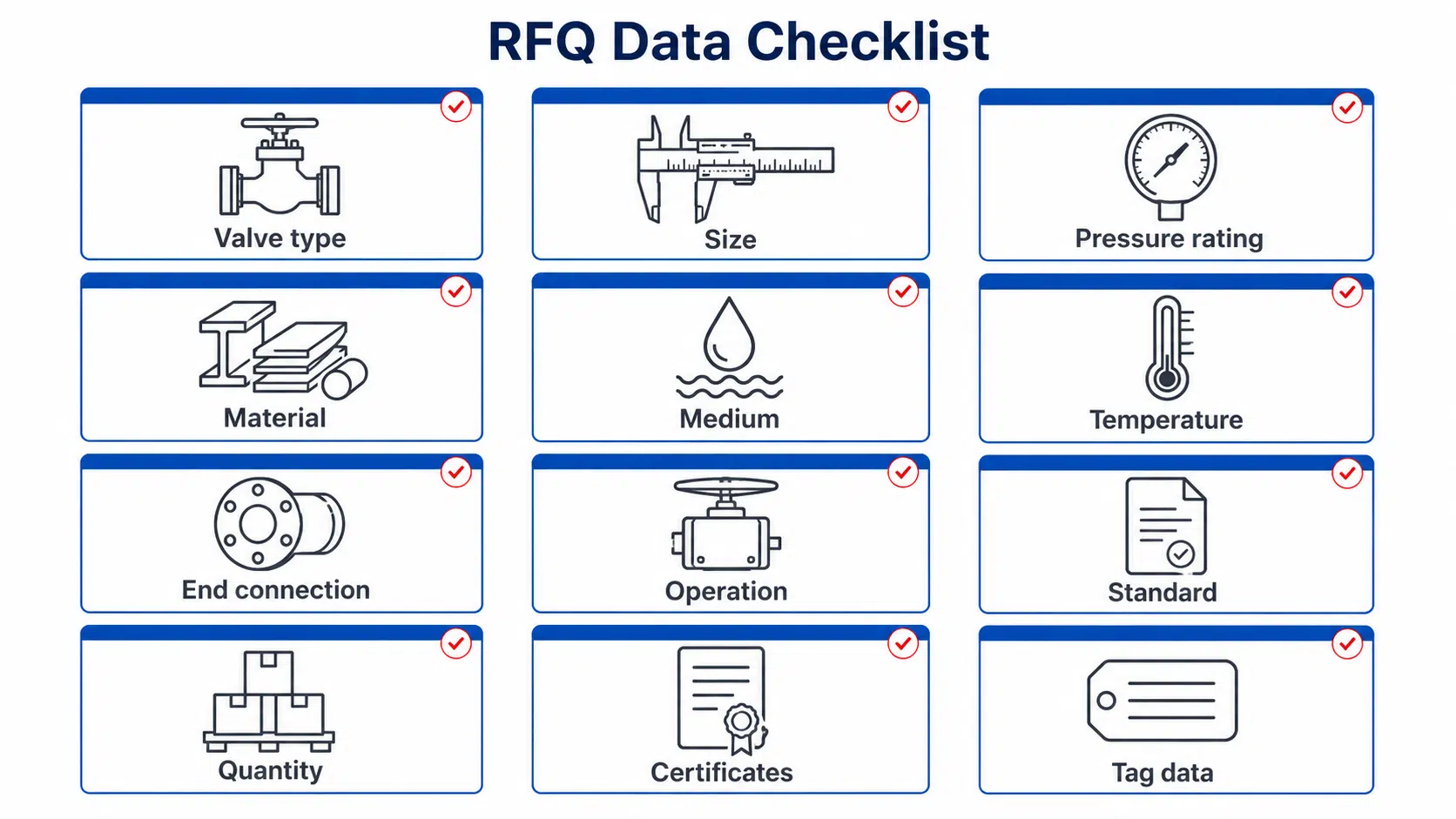
If pressure rating, medium, temperature, material, or standard is missing, suppliers may return a generic quotation that later needs revision. A supplier that asks for these details is often easier to evaluate than a supplier that only offers a generic product name and price.
FAQ About Valve Suppliers in South Africa
Are valve suppliers and valve manufacturers the same in South Africa?
No. A valve supplier may be a manufacturer, distributor, stockist, importer, automation supplier, or service provider. A valve manufacturer may produce, assemble, test, or refurbish valves, but not every supplier that appears in a manufacturer search is a local manufacturer. Buyers should confirm the company type before sourcing.
How can I verify if a valve supplier in South Africa is reliable?
Check the supplier’s current company details, company type, valve range, region, stock availability, standards support, test documentation, technical response, and after-sales capability. A reliable supplier should be able to respond clearly to valve type, size, material, pressure rating, medium, standard, certificate, and delivery requirements.
Does this list cover all Africa or only South Africa?
This page focuses on South Africa valve suppliers and manufacturers. Some suppliers may serve other African markets, but this article should not be treated as an Africa-wide valve supplier list.
Which valve types are commonly supplied in South Africa?
Common valve types include ball valves, gate valves, butterfly valves, check valves, globe valves, diaphragm valves, pressure relief valves, safety valves, control valves, plug valves, and specialty valves. Buyers should confirm the exact type, size, pressure class, material, and standard before purchasing.
Are there valve suppliers in Johannesburg and Gauteng?
Yes. Johannesburg and Gauteng are important regions for South Africa valve supplier searches. Johannesburg is a major industrial city within Gauteng, but buyers should not rely only on location. They should also confirm the supplier’s company type, valve range, stock availability, standards support, and after-sales capability.
Can buyers find gate valve or wedge gate valve suppliers in South Africa?
Gate valve suppliers may be found through general industrial valve suppliers, waterworks valve companies, manufacturers, stockists, and distributors. For wedge gate valves, buyers should specify the size, pressure class, body material, wedge design, end connection, and applicable standard.
Can general industrial valve suppliers in South Africa handle hydraulic valves, or do buyers need a separate fluid-power supplier?
Some general industrial valve suppliers may offer solenoid valves, actuator accessories, or hydraulic-related products, but hydraulic valves are often a separate fluid-power product category. Hydraulic directional valves, proportional valves, flow control valves, and hydraulic pressure reducing valves are usually selected around pump, actuator, pressure, and flow requirements, which is different from general pipeline valve sourcing.
What should buyers send before requesting a valve quotation?
Buyers should send valve type, size, pressure rating, material, medium, temperature, end connection, operation method, standard, quantity, delivery schedule, certificate requirements, and any project datasheet or drawing. Complete RFQ data helps suppliers quote the correct valve instead of a generic substitute.
When should buyers consider an overseas valve manufacturer?
An overseas valve manufacturer may be suitable when the project needs special materials, unusual pressure classes, engineered valve designs, large sizes, private label production, export documentation, or factory-direct technical support. Buyers should still compare lead time, certificates, testing, warranty, and after-sales responsibility.
Conclusion: Final Sourcing Takeaway
The best valve supplier in South Africa depends on the buyer’s project requirements, not only the supplier’s location or company name. A reliable sourcing process should distinguish manufacturers, distributors, stockists, importers, automation suppliers, and service providers.
A practical shortlist should follow three steps: first, confirm the supplier type; second, match the valve type, material, pressure class, and service condition; third, check documentation, stock availability, delivery capability, and after-sales support. This process helps reduce wrong selection risk, documentation gaps, delivery uncertainty, and lifecycle maintenance problems after installation.
Project-based valve sourcing support: NTGD can help buyers review valve selection, material compatibility, pressure class, service condition, actuation requirements, certificates, and RFQ documentation before production or supply planning. This support is most useful when a project requires factory-direct engineered valve support, special materials, export documentation, or a complete technical documentation package.
