
Europe has a long industrial valve manufacturing base, with companies serving power generation, oil and gas, chemical processing, water treatment, district heating, marine, pharmaceutical, food processing, and general industrial projects.
But choosing from different valve manufacturers in Europe is not only a matter of brand name. A buyer usually needs to confirm valve type, pressure class, material, certification, testing, documentation, after-sales support, and whether the company is a direct manufacturer, supplier, stockist, or distributor.
This guide reviews major European valve manufacturers and valve companies from a practical B2B sourcing perspective. It is intended to help buyers build a shortlist before RFQ, not to replace final technical approval, vendor qualification, or direct confirmation with each manufacturer.
Use this page to build an initial shortlist, then confirm product scope, certificates, testing documents, and regional supply responsibility directly with the manufacturer or authorized supplier before RFQ.
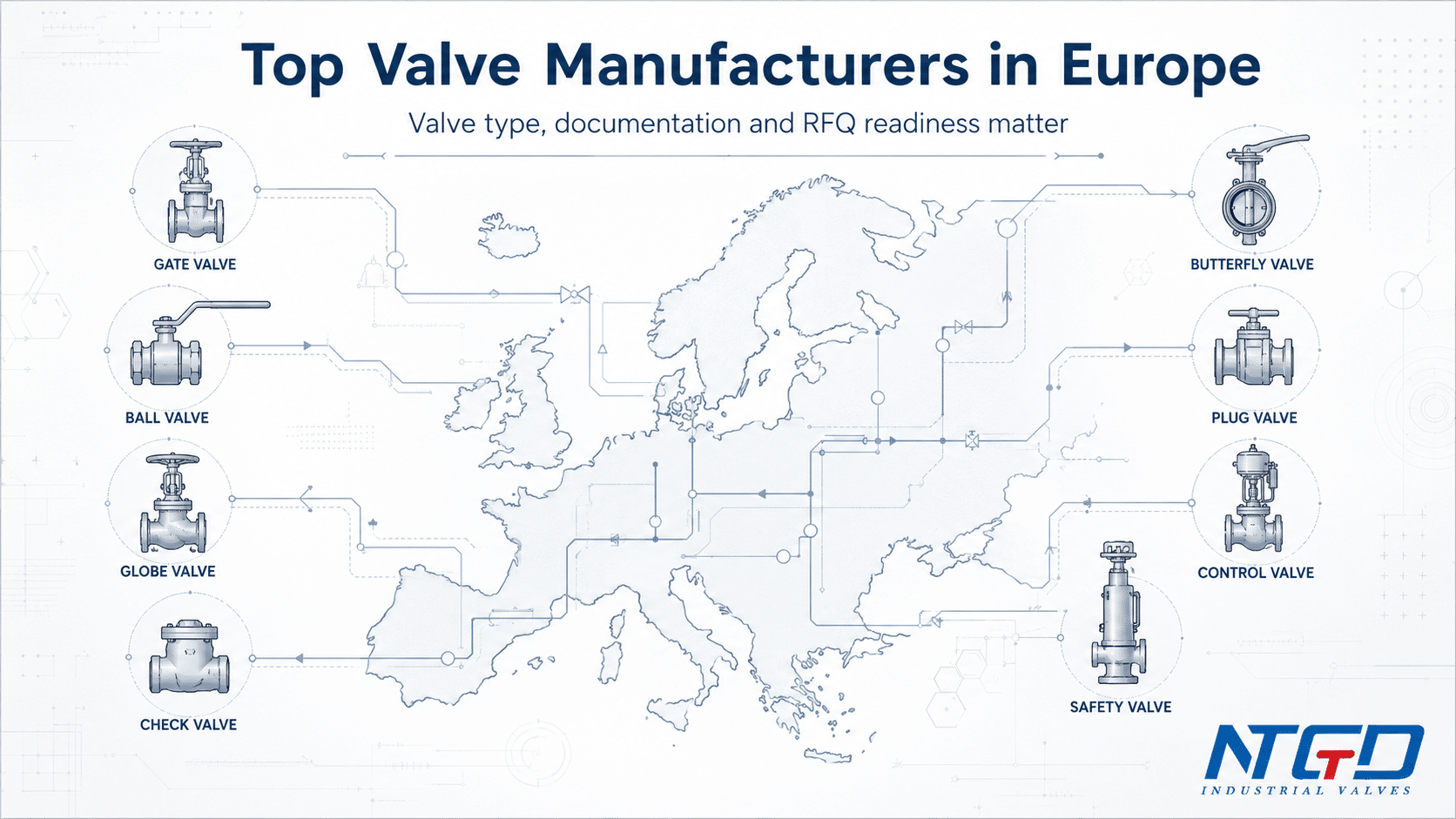
Quick Answer: How to Read This European Valve Manufacturer List
If you are comparing top valve manufacturers in Europe, start with three questions:
- What valve type do you need?
Gate valves, globe valves, check valves, ball valves, butterfly valves, plug valves, control valves, and safety valves are not evaluated in the same way. - What is the service condition?
Pressure, temperature, medium, corrosion, abrasion, shut-off requirement, throttling duty, fire-safe requirement, fugitive emission control, and actuation all change the manufacturer shortlist. - What documentation must be supplied with the valve?
For industrial projects, buyers may need material certificates, pressure test reports, inspection reports, certificates of conformity, PED / CE-related documentation, project drawings, or third-party inspection support.
A European valve manufacturer may be strong in one valve family but not necessarily the best choice for every valve type. For example, a control valve specialist may be strong in actuators, positioners, sizing, and process control, while a ball valve manufacturer may be stronger in trunnion-mounted designs, fire-safe testing, metal seats, or fully welded pipeline valves.
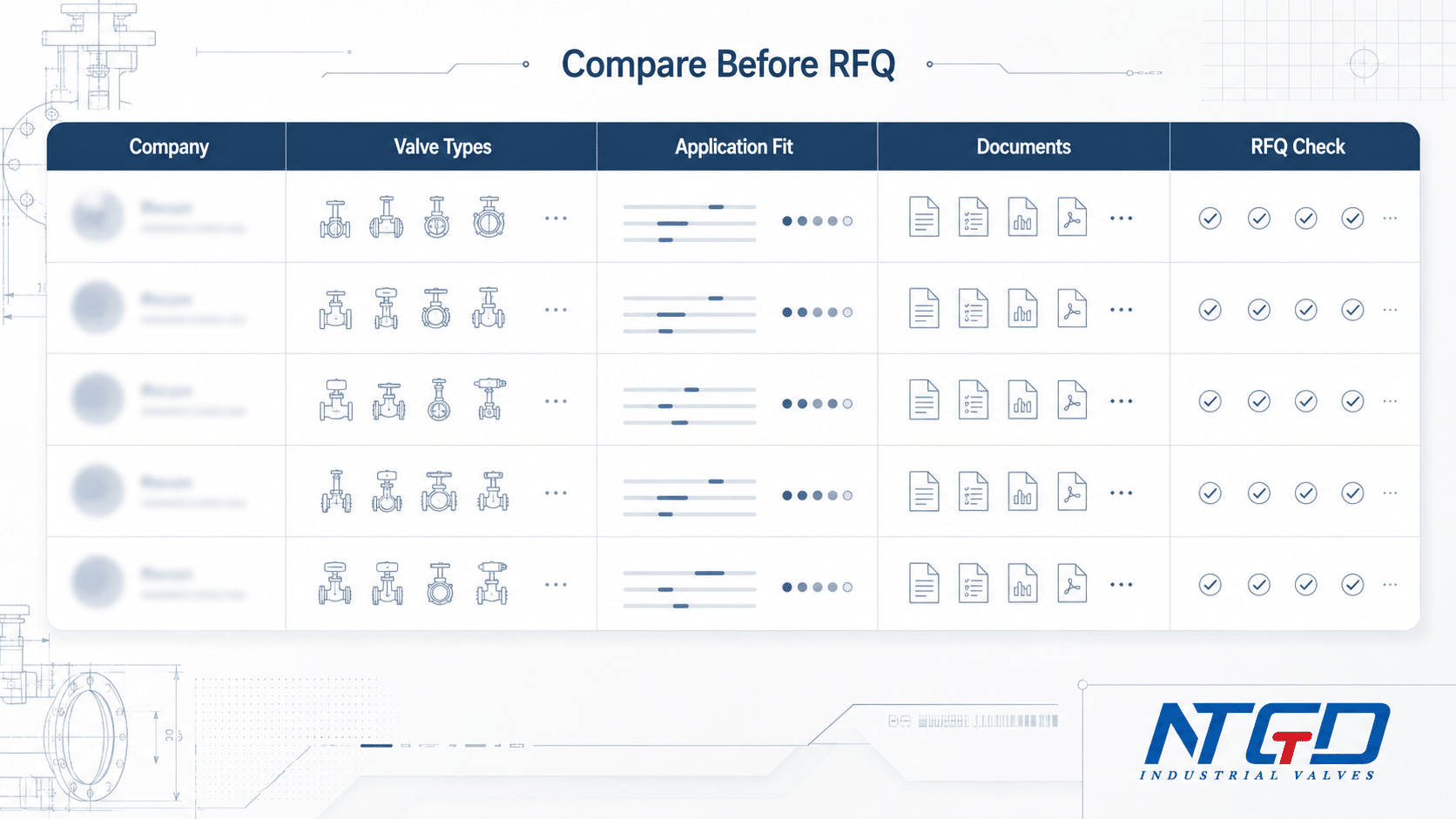
For this reason, the best approach is to review European valve manufacturers by company capability, valve type coverage, documentation readiness, and RFQ fit, rather than only by a simple ranking.
How This List Was Selected
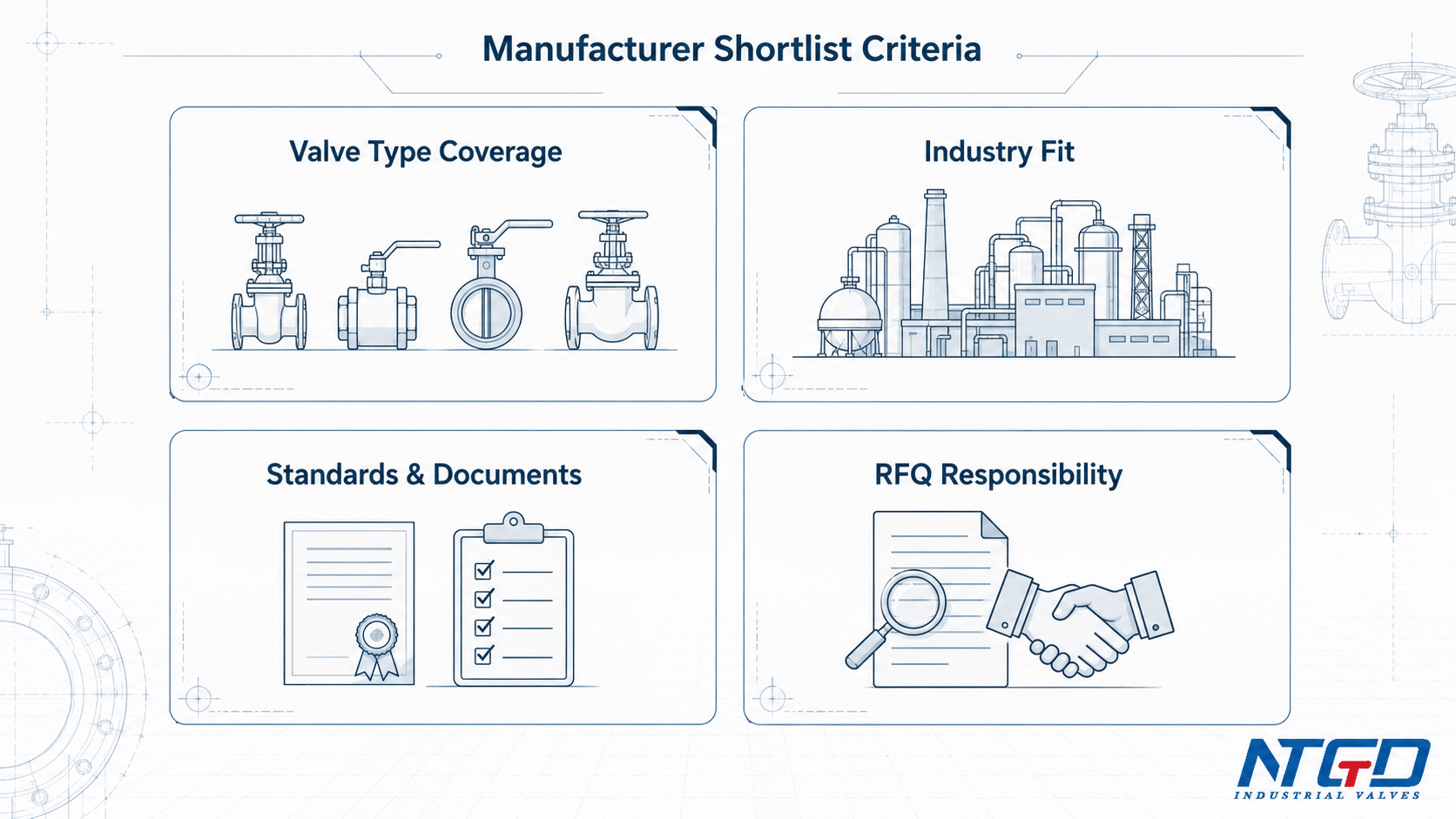
This list is organized around industrial buyer needs. It does not rank companies by price, sales volume, advertising visibility, or direct commercial relationship.
The companies and manufacturer types included here are reviewed based on the following criteria.
For a broader specification workflow, NTGD’s industrial valve selection guide explains how service conditions, valve function, material, sealing, actuation and RFQ data should be reviewed before a valve is specified.
Product Range and Valve-Type Coverage
A strong industrial valve manufacturer should have clear capability in one or more major valve groups, such as:
- Gate valves
- Globe valves
- Check valves
- Ball valves
- Butterfly valves
- Plug valves
- Control valves
- Safety valves or pressure relief valves
- Process valves or sanitary valves
- Actuated valve packages
Some companies are broad industrial valve manufacturers. Others are more specialized. Both can be valuable, but they fit different RFQ situations.
Industrial Application Fit
European valve manufacturers often serve different end markets. Some are stronger in water and wastewater. Others are more relevant for steam systems, process industries, oil and gas, chemical plants, marine applications, district heating, or severe service.
Before selecting a manufacturer, buyers should match the company’s usual application area with the actual project service.
Standards, Testing, and Documentation
For B2B industrial projects, the manufacturer name alone is not enough. Buyers should confirm the required standards and documents before placing an order.
Common items to verify include:
- API, ASME, EN, DIN, ISO, or project-specific standards
- PED / CE-related requirements where applicable
- Fire-safe or fugitive emission requirements where relevant
- Material test certificates
- Hydrostatic or pneumatic test reports
- Inspection reports
- Dimensional drawings
- Actuator and accessory documentation
- Project-specific quality documentation
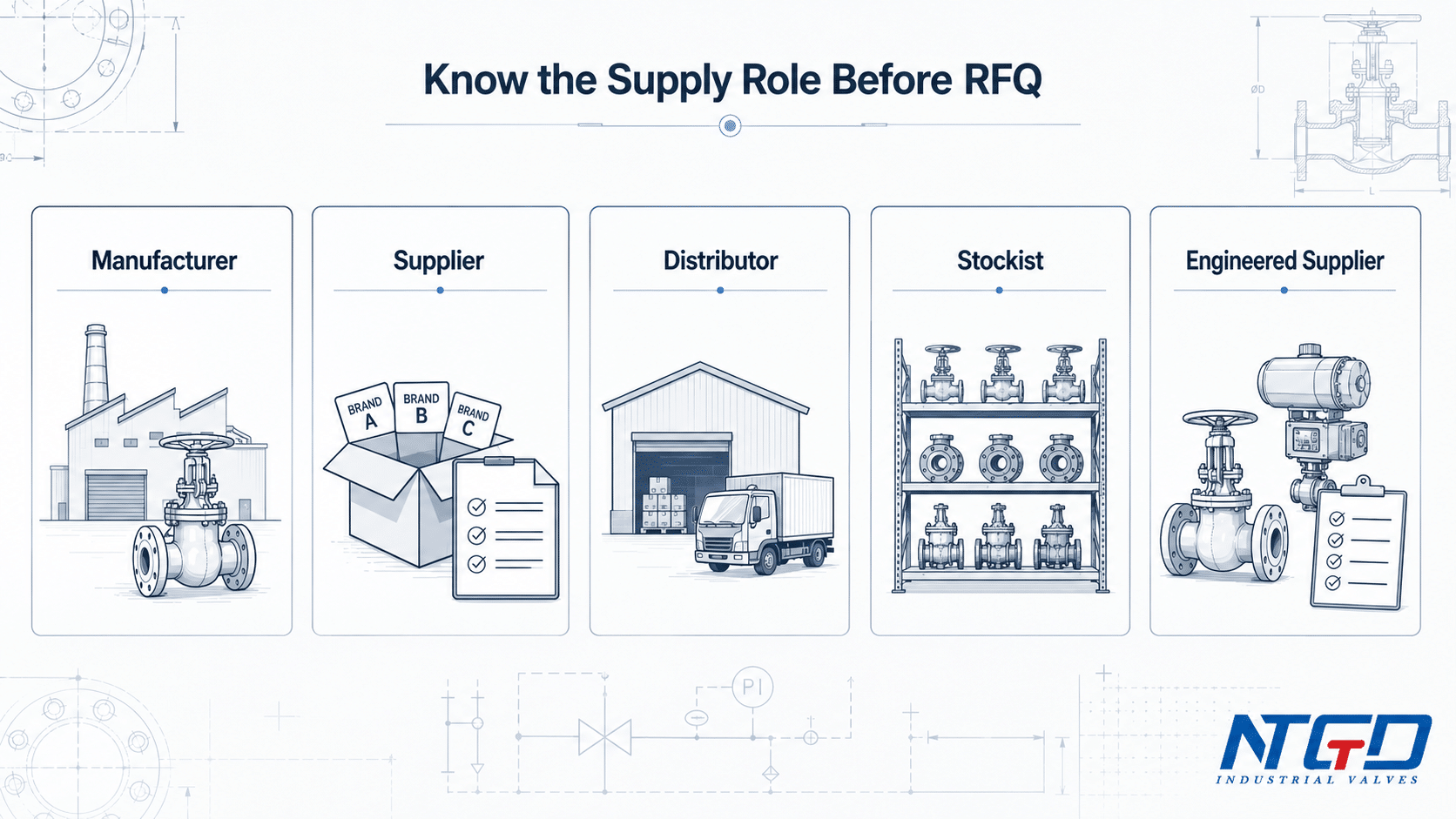
Manufacturer, Supplier, and Distributor Distinction
A manufacturer produces valves or valve components. A supplier may provide valves from multiple brands. A distributor or stockist may focus on availability, local service, replacement, or spare parts.
For standard replacement valves, a stockist or distributor may be enough. For engineered valves, severe service, special materials, high pressure, or strict documentation requirements, direct manufacturer review is usually more important.
Verification Limits
Company information can change over time. Headquarters, ownership, product lines, certifications, approvals, and regional manufacturing arrangements should always be verified with the official company before final RFQ or project approval.
This article should be used as a shortlist-building guide, not as a final approved vendor list.
European Valve Manufacturers Comparison Table
The table below is not an approved vendor list or a fixed ranking. It is a shortlist-building tool. Before using any company in a project RFQ, verify the current product scope, applicable certificates, testing documents, and regional supply arrangement directly with the official source.
| Company | European Presence | Main Valve / Flow-Control Strength | Typical Buyer Fit | What to Verify Before RFQ |
|---|---|---|---|---|
| KSB | Germany / global industrial presence | Industrial valves, pumps, water, energy and process systems | Buyers needing established European engineering coverage for water, power, and industrial projects | Valve scope, pressure class, material, applicable standards, project documentation |
| Valmet / Neles | Finland / global flow-control presence | Flow control, control valves, ball valves, automation-related valve solutions | Process plants, oil and gas, pulp and paper, chemical, and automation-heavy systems | Current brand structure, product availability, control package, actuator / positioner documentation |
| SAMSON | Germany / global control valve presence | Control valves, regulators, actuators, positioners | Process control, steam, chemical, energy, and automation applications | Sizing support, actuator package, control signal, materials, certificates |
| Babcock Valves | Spain / European valve manufacturing base | Gate, globe, check, butterfly, ball and special industrial valves | Broad industrial valve projects requiring multiple valve types | Valve range, testing, standards, documentation, industry fit |
| AVK Group | Denmark / broad European and global presence | Water, wastewater, fire protection and utility valve solutions | Water networks, municipal systems, infrastructure, fire protection | Exact valve type, coating, pressure rating, drinking-water or utility requirements |
| Bonney Forge Europe / BFE | Italy / European forged steel valve presence | Forged steel gate, globe, check and related industrial valves | High-pressure industrial projects, energy and process services | Pressure class, material grade, forged design, API / ASME / project standards |
| Alfa Laval | Europe / global process equipment presence | Hygienic and process valves, flow components, fluid handling | Food, beverage, pharmaceutical, hygienic and process industries | Sanitary standards, material, cleaning requirements, process compatibility |
| GEMÜ | Germany / European process valve presence | Diaphragm valves, process valves, automation and control-related solutions | Pharmaceutical, chemical, water treatment and process applications | Diaphragm material, actuation, automation, certification and media compatibility |
| Bürkert | Germany / fluid control systems presence | Solenoid valves, control valves, sensors, automation and fluid control systems | Automation-heavy fluid control and process systems | Control system compatibility, valve size, signal, materials, documentation |
| Spirax Sarco | UK / global steam and process presence | Steam systems, control valves, pressure management and process solutions | Steam, condensate, thermal energy and process control applications | Steam service data, pressure / temperature, control package, documentation |
| LESER | Germany / safety valve specialist presence | Safety valves and pressure relief valves | Pressure protection, boiler, chemical, oil and gas, process safety applications | Set pressure, code requirement, certification, sizing basis, test documentation |
| OMB Valves | Italy / global industrial valve presence | Energy, oil and gas, check valves, ball valves and industrial valves | Oil and gas, power, process and high-spec industrial projects | Product scope, material, pressure class, certifications, project approval requirements |
This table should not be treated as a universal ranking. A company that is suitable for a control valve package may not be the best fit for a safety valve, and a strong ball valve manufacturer may not be the best option for a waterworks butterfly valve.
Top Valve Manufacturers in Europe to Review
KSB — Broad Industrial Valve and Fluid System Capability
KSB is commonly reviewed by buyers who need a broad European industrial engineering supplier for water, energy, infrastructure, and process-related projects. Its value for valve buyers is not only the product name, but the ability to support engineered systems where pumps, valves, and service requirements may interact.
KSB may be relevant when the project involves water networks, power plants, industrial plants, or utility systems. Buyers should still verify the exact valve scope, pressure class, material, standards, documentation, and whether the required valve is supplied directly or through a regional channel.
RFQ note: confirm the exact valve type and documentation package before treating KSB as suitable for every valve category.
Valmet / Neles — Flow Control, Control Valves, and Ball Valve Review
Valmet / Neles is often reviewed in projects that require flow control, control valves, ball valves, automation support, and process industry experience. This type of manufacturer is especially relevant when valve performance is tied to process control, severe service, emissions, actuator selection, or plant automation.
For buyers comparing European valve manufacturers, Valmet / Neles can be reviewed where control performance, application engineering, and lifecycle support are more important than simple valve supply.
RFQ note: confirm current product ownership, regional availability, actuator / positioner package, and project documentation before specification.
SAMSON — Control Valve and Actuation Specialist
SAMSON is strongly associated with control valves, regulators, actuators, and positioners. It is usually more relevant to process control projects than to simple isolation valve replacement.
When comparing control valve manufacturers in Europe, buyers should look beyond the valve body. Control valve selection may require sizing data, flow coefficient, pressure drop review, actuator force, positioner compatibility, noise risk, cavitation risk, material selection, and control signal requirements.
RFQ note: prepare process data before contacting a control valve manufacturer. A control valve RFQ without flow rate, inlet / outlet pressure, temperature, medium, and control requirements is usually incomplete.
Babcock Valves — Broad European Industrial Valve Manufacturer
Babcock Valves is a useful reference for buyers looking for a European manufacturer with multiple industrial valve families. Broad valve-type coverage is valuable when a project needs gate valves, globe valves, check valves, butterfly valves, ball valves, or special valves from a manufacturing-oriented supplier.
This type of company may fit buyers who want to compare European valve manufacturers by product range, industrial application, and standards capability rather than by a single valve type.
RFQ note: confirm whether the required valve design, material, pressure class, testing, and certificate package match the project specification.
AVK Group — Water, Wastewater, and Utility Valve Applications
AVK Group is often reviewed for water, wastewater, utility, and infrastructure valve applications. This type of manufacturer may be especially relevant when the project involves distribution networks, municipal systems, fire protection, clean water, wastewater, or utility infrastructure.
For industrial buyers, AVK may not be the first name for every process valve application, but it can be highly relevant where the valve duty is linked to water systems and network reliability.
RFQ note: confirm coating, pressure rating, potable water or utility-related approvals, installation conditions, and maintenance requirements.
Bonney Forge Europe / BFE — Forged Steel Industrial Valve Review
Bonney Forge Europe / BFE is commonly reviewed for forged steel industrial valves, especially where pressure, material traceability, and industrial service conditions matter. Forged gate, globe, and check valves are often considered in power, oil and gas, petrochemical, and high-pressure industrial systems.
This type of manufacturer is relevant when the project needs pressure-boundary reliability, material control, and clear compliance documentation.
RFQ note: confirm pressure class, material grade, end connection, applicable API / ASME / EN requirements, and material certificates.
Alfa Laval — Process and Hygienic Valve Applications
Alfa Laval is more often associated with process equipment, hygienic flow components, and fluid handling systems than with a traditional heavy industrial valve catalogue. It can be relevant when the buyer is working in food, beverage, pharmaceutical, biotech, dairy, or hygienic process service.
For this reason, Alfa Laval should be evaluated by application fit. It may be highly suitable for sanitary or process environments, but not necessarily for every heavy-duty gate, globe, check, or plug valve requirement.
RFQ note: confirm sanitary standard, cleaning method, seal material, process medium, temperature, and documentation requirements.
GEMÜ — Process Valves, Diaphragm Valves, and Automation
GEMÜ is often reviewed for process valves, diaphragm valves, automation, and applications where media control, cleanliness, corrosion resistance, and reliable actuation are important.
Buyers in pharmaceutical, chemical, water treatment, semiconductor-related processes, or controlled fluid applications may review GEMÜ differently from a general industrial gate valve manufacturer. The key is to match the valve type and media requirements to the manufacturer’s strength.
RFQ note: confirm diaphragm material, body material, actuator type, control requirement, cleaning requirement, and certificates.
Bürkert — Fluid Control and Automation-Oriented Valve Solutions
Bürkert is commonly reviewed for fluid control systems, automation-related valves, solenoid valves, control valves, sensors, and integrated process control. It may be relevant where the valve is part of a broader automation or fluid control package rather than a stand-alone manual valve.
For buyers comparing valve manufacturers in Europe, Bürkert is better evaluated as a fluid control and automation supplier than as a generic heavy industrial valve manufacturer.
RFQ note: confirm signal compatibility, system integration, material compatibility, pressure / temperature range, and documentation.
Spirax Sarco — Steam, Thermal Energy, and Process Control
Spirax Sarco is often reviewed for steam systems, pressure control, condensate management, process control, and thermal energy applications. It may be relevant when the project involves steam, boiler systems, heat transfer, pressure management, or process efficiency.
For valve buyers, the key is to confirm whether the required product is a control valve, pressure reducing valve, steam valve package, trap-related system, or other process component.
RFQ note: provide steam pressure, temperature, flow rate, process duty, control requirements, and installation conditions.
LESER — Safety and Pressure Relief Valve Specialist
LESER is a specialist name often reviewed where safety valves and pressure relief valves are required. These valves are not selected like ordinary isolation valves. Set pressure, relieving capacity, applicable code, fluid state, back pressure, temperature, and certification requirements are critical.
For projects involving pressure equipment, boilers, chemical processes, oil and gas, or safety-critical systems, a safety valve manufacturer must be reviewed with strict sizing and documentation control.
RFQ note: confirm code basis, set pressure, capacity, medium, back pressure, material, test requirement, and certificate package.
OMB Valves — Energy and Industrial Valve Applications
OMB Valves is often reviewed for energy, oil and gas, industrial, and process valve applications. It can be relevant where buyers need industrial valves with project documentation, material control, pressure testing, and application fit.
For a European valve manufacturer list, OMB can support the energy and industrial valve category, especially where the buyer is comparing check valves, ball valves, and other pressure-containing valve types.
RFQ note: verify valve type, design standard, material, pressure class, testing, and documentation for the specific project.
Other Specialist European Valve Manufacturers to Verify
The companies above are not the only European valve manufacturers a buyer may review. The old page also included several specialist manufacturers that may still be useful depending on valve type and project scope.
For example, buyers may review Böhmer for ball valve capability, ABO Valve for butterfly valve or knife gate valve applications, ECONTROL for control valve projects, and Galli & Cassina for plug valve applications.
Other legacy names such as Maverick Valves and Lead Valve should be verified against their latest official product scope before being used in a project shortlist.
These names should be treated as specialist candidates to verify, not as a fixed ranking. Before using them in an RFQ, confirm the official website, manufacturing scope, current product range, certificates, testing support, and regional supply responsibility.
Valve Type Capability Matrix
A top European valve manufacturer is not automatically strong in every valve type. Buyers should map valve type to application before RFQ.
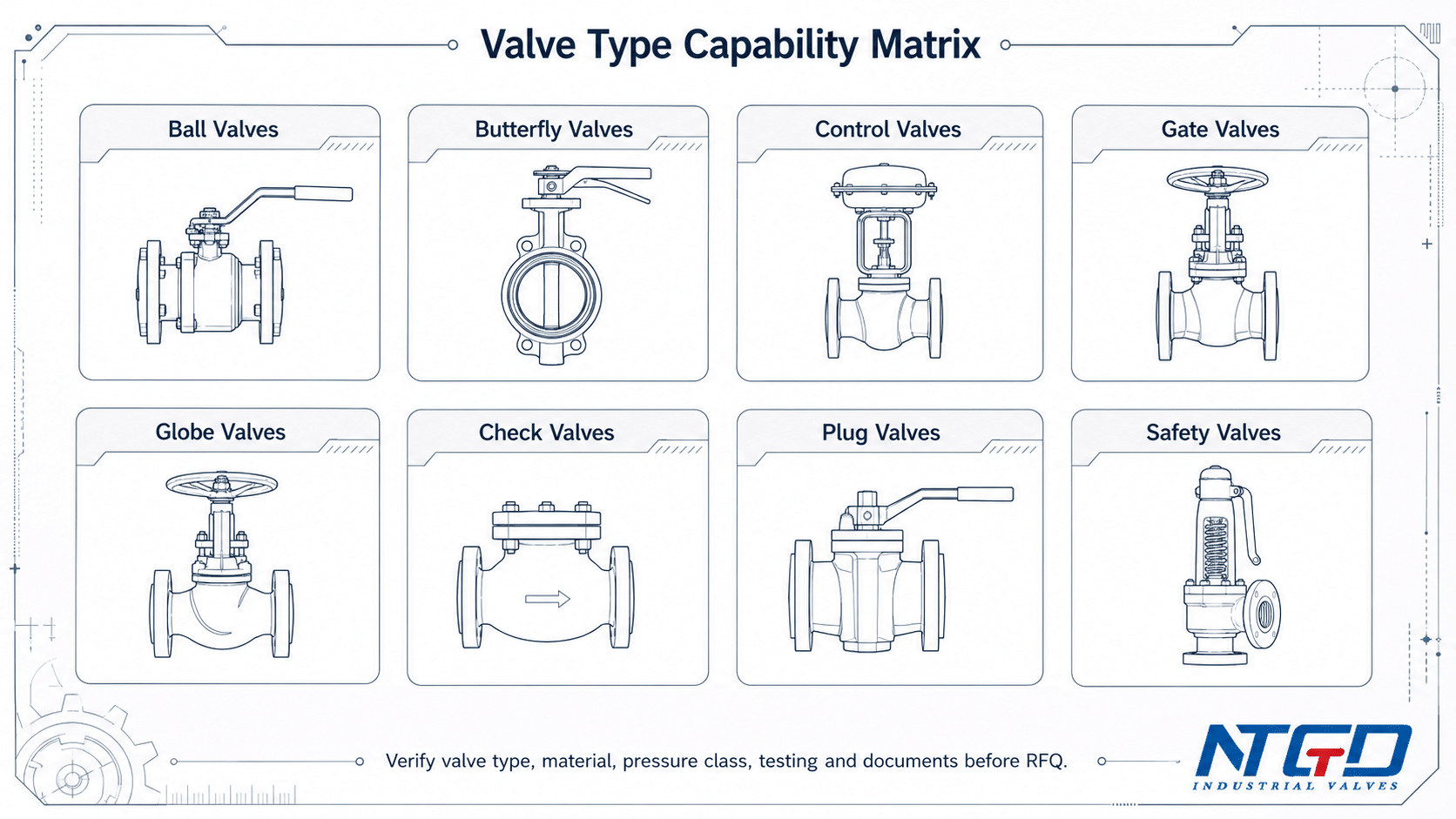
| Valve Type | What Buyers Usually Check | Manufacturer Capability to Verify | Notes Before RFQ |
|---|---|---|---|
| Ball Valves | Floating or trunnion design, bore type, seat material, fire-safe requirement, anti-static design, pressure class | Ball valve design range, materials, pressure class, testing, MTR and certificate support | For engineered ball valves, verify fire-safe, fugitive emission, low-temperature or metal-seat requirements early |
| Butterfly Valves | Concentric, double-offset or triple-offset design; sealing type; installation space; shut-off requirement | Seat design, body material, disc material, actuator compatibility, standards | Do not treat all butterfly valves as equal; offset design affects service suitability |
| Control Valves | Cv / Kv, pressure drop, actuator, positioner, signal, noise, cavitation, shutoff class | Sizing support, actuator package, control accessories, application engineering | Control valve RFQs require process data, not only size and pressure; buyers should also understand the main control valve parts involved in actuation, trim and sealing. |
| Gate Valves | Wedge / parallel / slab / knife gate design; isolation duty; pressure class | Body design, seat design, stem type, material, end connection, testing | Gate valves are usually for isolation, not throttling |
| Globe Valves | Flow control, throttling, pressure drop, seat / plug design | Body pattern, trim, material, pressure / temperature rating | Confirm whether the valve is for isolation, regulation, or control |
| Check Valves | Non-return function, closure behavior, water hammer risk, installation direction | Swing, lift, dual plate or axial design; spring / disc behavior; pressure loss | Selection depends strongly on pipeline orientation and flow stability |
| Plug Valves | Slurry, viscous media, cavity-free flow path, sealing surface | Plug design, lining, lubrication / non-lubricated design, material | Useful where clogging, solids or viscous service must be reviewed; NTGD’s plug valve vs ball valve guide explains why sealing logic and cavity behavior matter in slurry or viscous service. |
| Safety / Pressure Relief Valves | Set pressure, capacity, code, relieving scenario | Sizing, certification, testing, documentation, application review | Requires formal sizing and documentation before approval |
For ball valve capability, buyers may need to verify specialists such as Böhmer, IBOR Valves, MHA ZENTGRAF, Sesto Valves, or other ball valve-focused manufacturers, depending on the required design.
For control valve capability, companies such as SAMSON, CLA-VAL, A.Hock, Lapar, ECONTROL, or other control-valve-focused suppliers may need separate review.
These names should be verified against their latest official product scope before being used in an RFQ.
This matrix should help buyers preserve valve-type clarity without turning this page into separate ball valve, control valve, check valve, or safety valve guides.
Manufacturer vs Supplier vs Distributor in Europe
The phrase “valve suppliers Europe” can refer to different business types. Understanding the difference helps prevent RFQ mistakes.
| Type | Best For | Limitations | What to Verify |
|---|---|---|---|
| Manufacturer | Engineered valves, project specifications, special materials, pressure testing, documentation | May have longer lead times or require formal RFQ data | Manufacturing scope, standards, testing, certificates, project references |
| Supplier | Multi-brand sourcing, project supply packages, mixed valve requirements | May not manufacture the valve directly | Brand source, technical responsibility, documentation, warranty |
| Distributor | Standard products, local stock, urgent replacement, spare parts | May have limited engineering control over design | Authorization, stock origin, certificates, compatibility |
| Stockist | Fast delivery, standard valves, emergency replacement | May not support engineered or severe-service applications | Material traceability, test reports, storage condition, valve age |
| Engineered valve supplier | Customized valve packages, actuation, testing, documentation | Must be evaluated carefully for technical capability | Engineering review, assembly test, actuator validation, certificate package |
For simple replacement valves, a distributor or stockist may be practical. For critical service, severe duty, special materials, high pressure, control valves or safety valves, buyers should involve a qualified manufacturer or engineering-capable supplier.
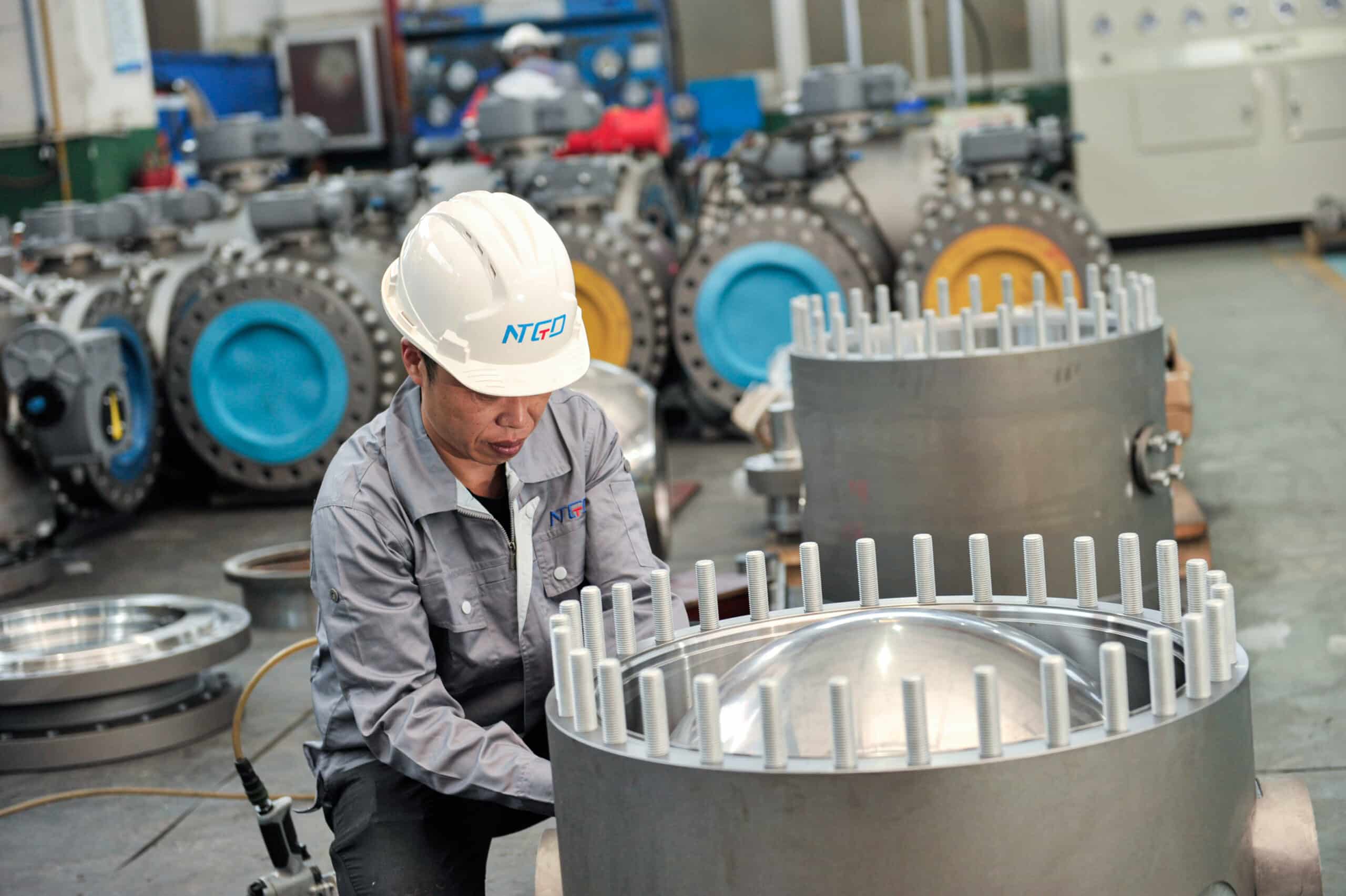
The following factory video helps illustrate why buyers should review valve type capability, testing context and project fit before building an RFQ shortlist.
How to Choose a European Valve Manufacturer or Supplier
Match Valve Type to Service Conditions
The first filter is not country or brand. It is service condition.
A valve for clean water isolation is not evaluated the same way as a valve for sour gas, high-temperature steam, abrasive slurry, cryogenic service, or precise flow control. Before selecting a European valve manufacturer, define the duty:
- Isolation
- Throttling
- Non-return
- Pressure relief
- Flow control
- Slurry or solids handling
- High-temperature steam
- Corrosive or abrasive media
- Actuated operation
- Emergency shutdown or safety service
Check Pressure, Temperature, Material, and Media
Pressure class, temperature and medium determine the valve body, trim, seat, gasket, packing and testing requirements. A valve that works in clean water may fail quickly in abrasive slurry or corrosive chemical service, so buyers should review valve corrosion prevention and material compatibility before finalizing the RFQ.
For industrial projects, buyers should prepare:
- Design pressure
- Design temperature
- Operating pressure
- Operating temperature
- Medium composition
- Corrosion or erosion risk
- Solids content
- Required leakage performance
- Cleaning or maintenance constraints
Review Standards and Certifications
European valve manufacturers may work with different standards depending on industry and valve type. Buyers should not assume that every manufacturer can provide every certificate for every product.
Common items to review include:
- API or ASME requirements
- EN or DIN requirements
- ISO quality system requirements
- PED / CE-related requirements
- ATEX where explosive atmosphere rules apply
- Fire-safe testing where required
- Fugitive emission control where required
- Material certificates
- Hydrostatic test reports
- Functional test reports
- Third-party inspection requirements
Do not assume that a company-level certificate applies to every valve model, material, pressure class, or project region. Ask for the exact certificate and test document tied to the quoted valve.
Confirm Testing and Documentation
Documentation is often where RFQs fail. A supplier may be able to provide a valve quickly, but may not provide the full documentation package needed for an EPC project or regulated industry.
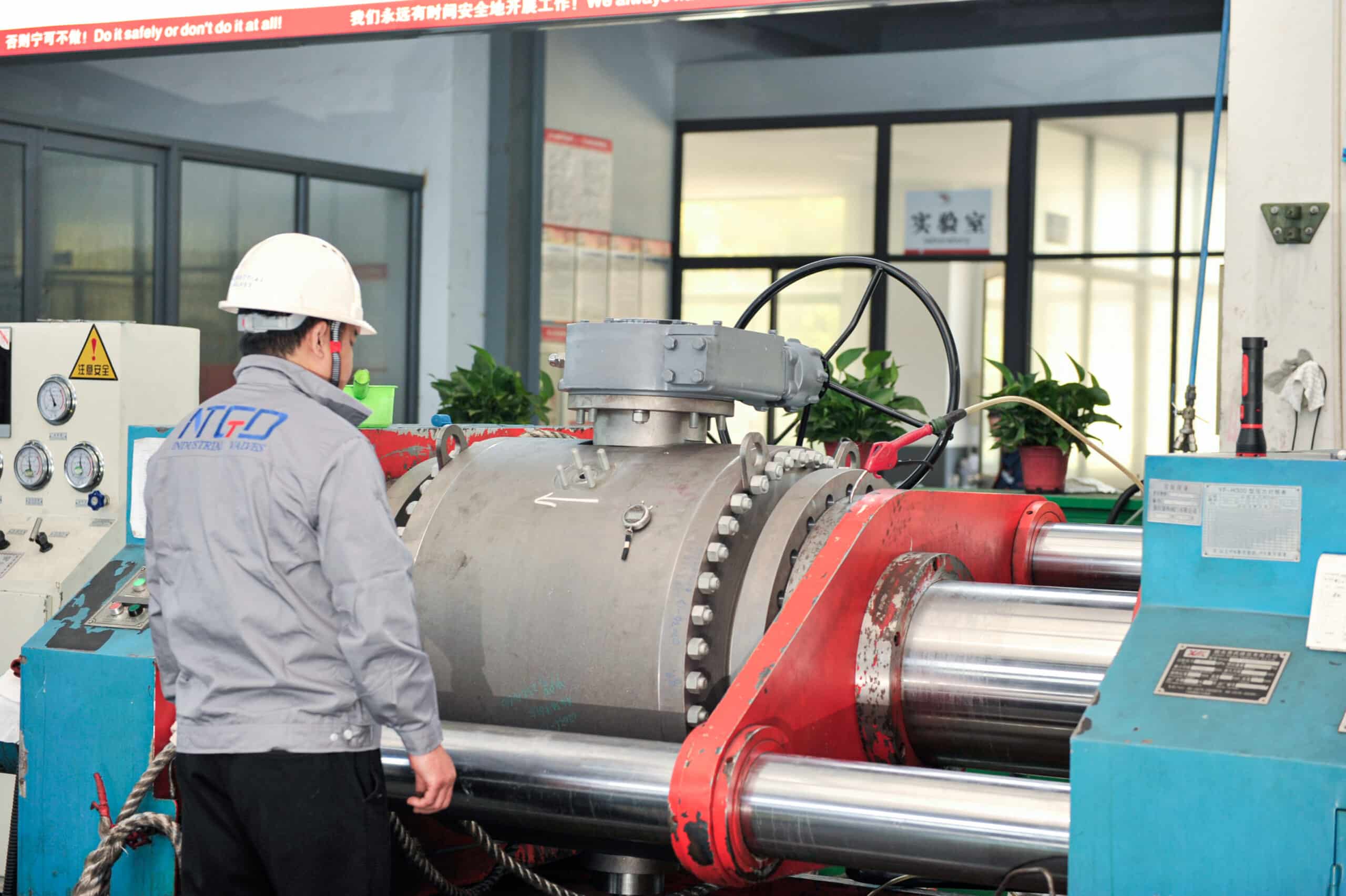
Before order placement, confirm whether the supplier or manufacturer can provide:
- Approved drawing
- Datasheet
- Material test certificate
- Pressure test report
- Functional test report
- Certificate of conformity
- Welding / NDE documents where applicable
- Actuator calibration record where applicable
- Packing list and marking requirements
- Project-specific inspection and test plan where required
Consider Lead Time, After-Sales, and Project Support
The best valve manufacturer for one project may not be the best for another. A buyer may prefer a local European distributor for urgent stock, a specialist manufacturer for severe service, or a global supplier for consolidated project supply.
Review:
- Lead time
- Spare parts availability
- Technical support
- Local service capability
- Documentation response speed
- Communication with engineering teams
- Experience in similar industries
- Ability to handle mixed valve packages
RFQ Readiness Checklist Before Contacting a Valve Manufacturer
A strong RFQ helps the manufacturer or supplier respond with a technically useful quotation.
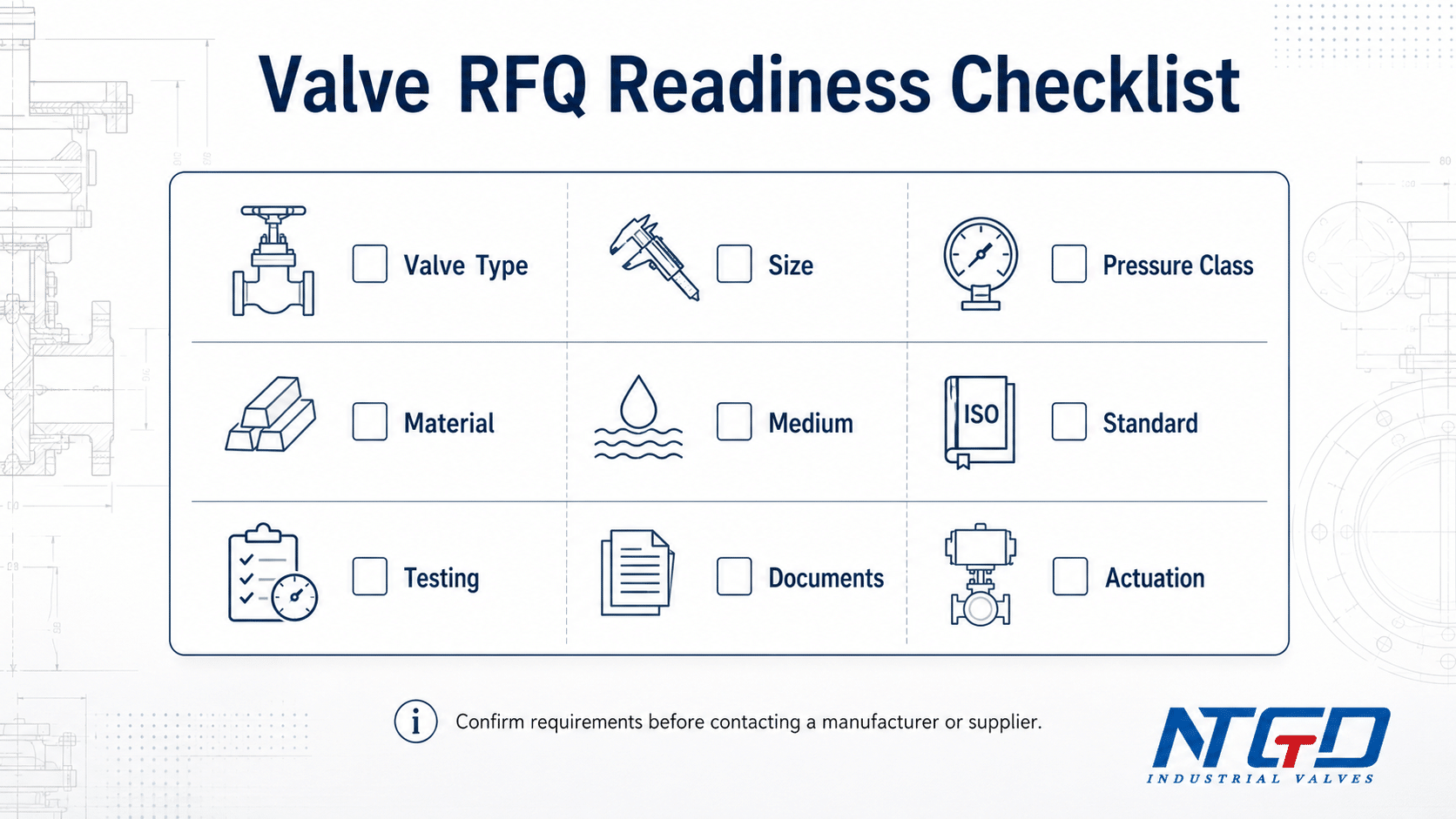
| RFQ Item | Why It Matters |
|---|---|
| Valve type | Defines whether the requirement is gate, globe, ball, butterfly, check, plug, control, or safety valve |
| Size / DN / NPS | Affects body design, pressure drop, end connection and cost |
| Pressure class / PN / ANSI | Determines body pressure rating and applicable design standard |
| Body material | Must match pressure, temperature, corrosion and project specification |
| Trim / seat / seal material | Critical for shut-off, wear, temperature and media compatibility |
| Medium | Clean water, steam, gas, oil, slurry, chemical, oxygen, hydrogen or sour service require different checks |
| Temperature | Affects material, seat, packing, gasket and actuator selection |
| End connection | Flanged, butt-weld, threaded, wafer or lug connections affect installation and standard |
| Operation | Manual, gear, pneumatic, electric, hydraulic or control package |
| Standard | API, ASME, EN, DIN, ISO, PED or project-specific requirement |
| Testing | Hydrostatic, pneumatic, leakage, seat test, fire-safe, fugitive emission or functional test; see NTGD’s pressure test methods for industrial valves for a basic testing reference. |
| Documentation | MTR, test report, inspection report, certificate, drawing and datasheet |
| Quantity and delivery schedule | Affects production planning, stock options and shipment |
| Inspection requirement | Defines whether third-party inspection or witness testing is needed |
For ball valves, add bore type, floating or trunnion design, seat material, anti-static requirement and fire-safe requirements such as API 607 vs API 6FA where relevant.
For control valves, add flow rate, inlet pressure, outlet pressure, pressure drop, Cv / Kv, actuator type, control signal, positioner, noise and cavitation review.
For safety valves, add set pressure, relieving capacity, back pressure, medium state, code basis and relieving scenario.
A complete RFQ also helps separate real manufacturer capability from simple supply availability. If a supplier cannot confirm material traceability, testing documents, actuator responsibility or applicable standards, the buyer should treat the offer as incomplete rather than simply compare price.
FAQ
Where can I find valve suppliers in Europe?
You can find valve suppliers in Europe through manufacturer websites, authorized distributors, stockists, industry directories and engineering supply companies. For industrial projects, do not rely only on a supplier list. Confirm whether the company is a manufacturer, distributor, stockist or engineered supplier, and verify valve type, pressure class, material, testing and documentation before RFQ.
For country-specific review, separate guides such as valve manufacturers in Germany, UK valve manufacturers and Italian valve manufacturers are better than turning this Europe overview into a country directory.
What is the difference between a valve manufacturer, supplier and distributor?
A valve manufacturer produces valves or valve components. A supplier may source valves from multiple manufacturers and provide project supply support. A distributor usually represents one or more brands in a region and may hold local stock. For critical service, the technical responsibility, documentation source and warranty route should be confirmed clearly.
How do I compare European valve manufacturers?
Compare European valve manufacturers by valve type coverage, industry experience, standards, materials, pressure range, testing capability, documentation support, after-sales service and application fit. A company strong in water valves may not be the best option for control valves, safety valves or severe-service ball valves.
Is this list an approved vendor list for European valve manufacturers?
No. This list is a shortlist-building guide, not an approved vendor list. Final approval depends on the project specification, end-user requirements, certificates, testing documents, inspection requirements and direct confirmation from the manufacturer or authorized supplier.
Do European valve manufacturers supply ball valves?
Yes, many European valve manufacturers and suppliers offer ball valves. However, buyers should confirm whether they need floating ball valves, trunnion-mounted ball valves, fully welded ball valves, metal-seated ball valves, fire-safe designs, special materials or actuated packages. These requirements change the manufacturer shortlist.
Do European valve manufacturers supply control valves?
Yes, several European valve and flow-control companies supply control valves or control valve packages. Control valve RFQs normally require more process data than isolation valve RFQs, including flow rate, inlet pressure, outlet pressure, temperature, medium, Cv / Kv, actuator type, control signal and positioner requirements.
What information should I prepare before requesting a valve quotation?
Prepare valve type, size, pressure class, material, medium, temperature, end connection, operation mode, applicable standard, quantity, testing requirement, documentation requirement and delivery expectation. For special service, include corrosion, abrasion, fire-safe, fugitive emission, cryogenic, high-temperature or actuator requirements.
Are top valve manufacturers always the best option for every project?
No. A large or famous manufacturer is not always the best fit. Some projects need a specialist manufacturer, while others need a distributor with local stock or an engineered supplier that can assemble and test an actuated package. The best choice depends on service condition, documentation requirement, budget, lead time and project approval rules.
Should I choose a European manufacturer or a global industrial valve supplier?
Choose based on project requirements. A European manufacturer may be preferred for local standards, European engineering support or approved vendor requirements. A global industrial valve supplier may be useful for mixed valve packages, international delivery or cost-sensitive projects. For critical valves, technical compliance and documentation should matter more than geography alone.
Conclusion
A good shortlist of valve manufacturers in Europe should not be built only from brand names. It should be built from valve type, service condition, manufacturing capability, standards, testing, documentation and supplier responsibility.
For general industrial projects, broad European valve manufacturers may be suitable. For control valves, safety valves, severe-service ball valves, sanitary process valves or water network valves, buyers should review specialist capability more carefully.
The safest path is to start with a manufacturer comparison table, confirm the valve type capability, separate manufacturers from suppliers and distributors, and prepare a complete RFQ before requesting a quotation.
If you already have a preliminary valve list, review it against valve type, pressure class, material, medium, standard, testing and documentation before RFQ. NTGD Valve can help global B2B buyers review application fit and prepare a clearer industrial valve specification.
