
Nome do autor: Bruce Zheng
Função do autor: Cofundador e engenheiro de válvulas da NTGD Valve
Biografia do autor: Bruce Zheng é cofundador e engenheiro de válvulas da NTGD Valve, com foco na seleção de válvulas industriais, aplicação e conteúdo técnico para compradores B2B globais.
Última atualização: 14 de junho de 2026
Resposta rápida: O que é uma válvula de retenção silenciosa?
Uma válvula de retenção silenciosa é uma válvula de retenção assistida por mola, projetada para impedir o fluxo reverso, ao mesmo tempo em que ajuda a reduzir o impacto da válvula, o golpe de aríete, a vibração e os picos de pressão em sistemas de tubulação adequados. Ela se abre com o fluxo normal e começa a fechar à medida que o fluxo diminui, de modo que o disco ou o obturador possa fechar antes que se desenvolva um forte fluxo reverso.
Em tubulações industriais, uma válvula de retenção silenciosa é comumente escolhida para linhas de descarga de bombas, sistemas hidráulicos, sistemas de climatização (HVAC) e de água gelada, além de outras aplicações com líquidos nas quais o fluxo reverso e a parada repentina da bomba podem causar ruído ou transientes de pressão. A seleção ainda depende do meio de serviço, da vazão, do tipo de válvula, da orientação da instalação, do material do corpo, do material da sede, do ajuste da mola e das especificações do projeto. Para serviços com sólidos pesados, meios com alto teor de lodo, forte pulsação, corrosão agressiva ou condições de temperatura/pressão fora da faixa de projeto da válvula, o tipo de válvula e a construção interna devem ser verificados antes da seleção.
O principal motivo para a escolha é o fechamento controlado, assistido por mola e de curso curto, antes que o fluxo reverso se torne intenso. Se o ajuste da mola, a faixa de vazão ou a orientação da instalação não corresponderem ao sistema real, a válvula ainda poderá vibrar, abrir de forma incompleta ou não conseguir reduzir o impacto como esperado.
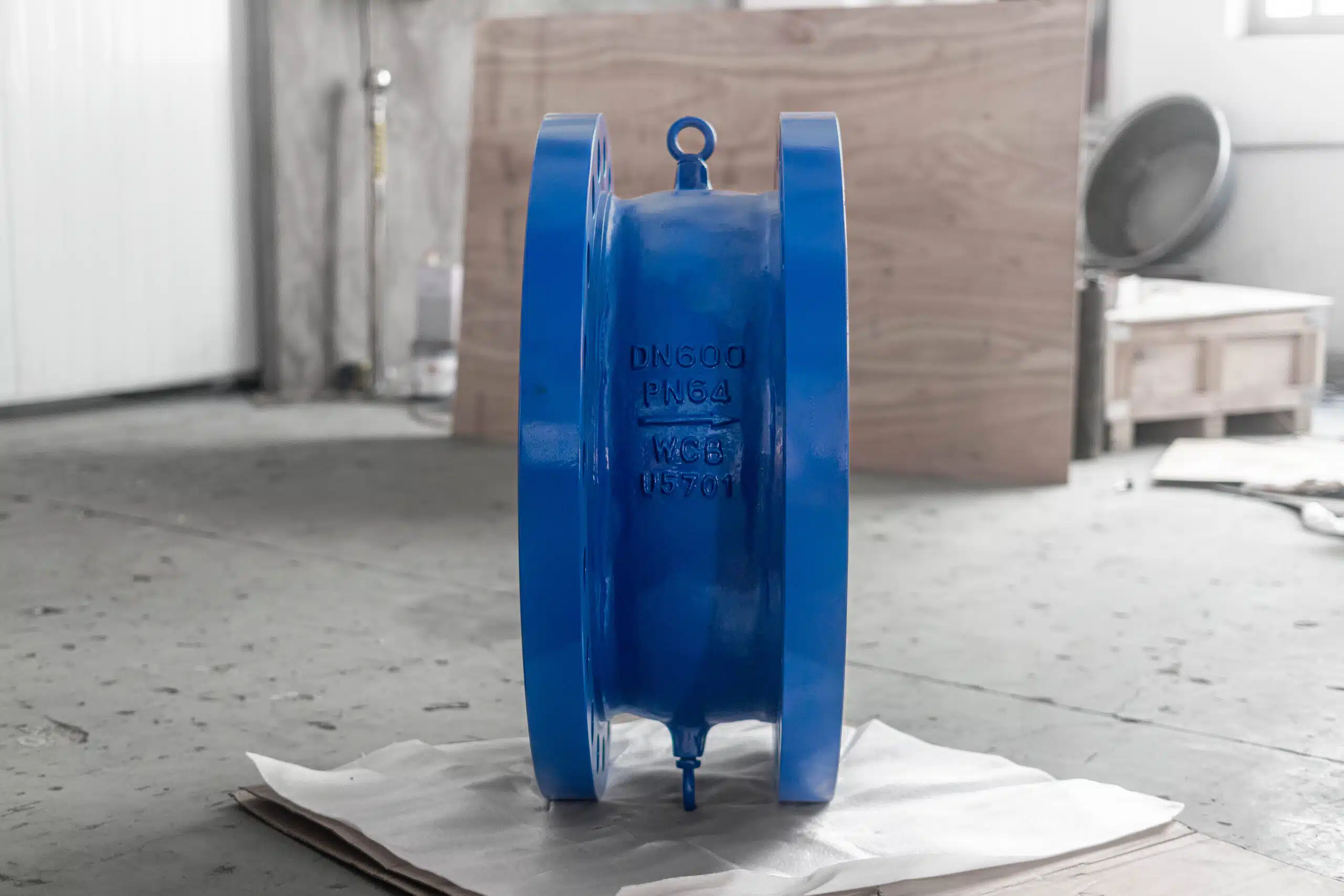
O que é uma válvula de retenção silenciosa?
Definição de válvula de retenção silenciosa
Uma válvula de retenção silenciosa é uma válvula de ação automática válvula de retenção utilizada para impedir o refluxo em um sistema de tubulação. Assim como outras válvulas de retenção, ela permite o fluxo em uma única direção e fecha quando o fluxo normal diminui ou quando há tentativa de fluxo reverso.
A diferença está no comportamento de fechamento. Uma válvula de retenção silenciosa utiliza um disco ou obturador assistido por mola, de modo que o elemento móvel possa retornar em direção à sede antes que o fluxo reverso se torne forte o suficiente para fechar a válvula bruscamente. Essa ação de fechamento controlada é a razão pela qual as válvulas de retenção silenciosas são frequentemente utilizadas em situações em que a parada da bomba, a desaceleração do fluxo, a vibração ou o golpe de aríete são motivos de preocupação.
Uma válvula de retenção silenciosa não requer volante, engrenagem, atuador ou sinal de controle externo para funcionar. Ela responde ao diferencial de pressão e às condições de vazão. Quando a pressão a montante e a vazão são suficientes, a válvula se abre. Quando a vazão diminui, a mola ajuda o disco ou o obturador a retornar à sede.
Válvula de retenção silenciosa x válvula de retenção sem batida / com mola auxiliar
Na linguagem dos compradores, os termos “válvula de retenção silenciosa”, “válvula de retenção sem batida” e “válvula de retenção assistida por mola” podem se sobrepor. Eles estão relacionados, mas nem sempre devem ser considerados idênticos.
Uma válvula de retenção silenciosa geralmente se refere a uma válvula de retenção projetada para um fechamento mais silencioso e com impacto reduzido. Uma válvula de retenção sem impacto enfatiza o mesmo objetivo de fechamento: reduzir o impacto retardado do disco após o início do fluxo reverso. A válvula de retenção com mola descreve um dos principais mecanismos utilizados para alcançar esse comportamento.
Neste artigo, o termo “válvula de retenção silenciosa” refere-se a um modelo de válvula de retenção industrial que utiliza fechamento assistido por mola, curso curto do disco ou do obturador e movimento guiado para reduzir o risco de batida e golpe de aríete em aplicações adequadas.
O que a função “Silencioso” realmente significa
“Silenciosa” não significa que a válvula elimine todas as fontes possíveis de ruído na tubulação. Significa que a válvula foi projetada para fechar de maneira mais suave do que uma válvula de retenção, que depende de um forte fluxo reverso para empurrar o elemento de fechamento de volta à sede.
Na prática, a função “silenciosa” depende de várias condições:
| Fator | Por que isso afeta o funcionamento silencioso |
|---|---|
| Taxa de fluxo | O disco ou a válvula de sede deve permanecer estável nas condições reais de fluxo. |
| Tamanho da válvula | O uso de dimensões excessivas pode causar movimento instável, vibração ou abertura incompleta. |
| Resposta da mola | A mola deve ajudar a válvula a fechar antes que se forme um fluxo reverso. |
| Guiagem por disco ou por obturador | Uma boa orientação reduz o desalinhamento, o emperramento e a vibração. |
| Condição do assento | Um assento danificado ou incompatível pode causar vazamentos ou um fechamento ruidoso. |
| Orientação da instalação | A instalação horizontal ou vertical deve estar de acordo com o projeto da válvula e as instruções do projeto. |
| Condição da mídia | Sólidos, detritos ou fluidos viscosos podem afetar o movimento e a vedação. |
A orientação não é apenas um detalhe de instalação. Se a direção do fluxo, a posição do tubo e o movimento assistido por mola não estiverem em sincronia, o disco ou o obturador podem não se deslocar suavemente, e a função de fechamento silencioso pode se tornar menos estável.
Uma válvula de retenção silenciosa pode ajudar a reduzir o golpe de aríete causado pelo fechamento tardio da válvula de retenção, mas não é uma solução universal para todos os problemas de golpe de aríete em um sistema de tubulação.
Como funciona uma válvula de retenção silenciosa?
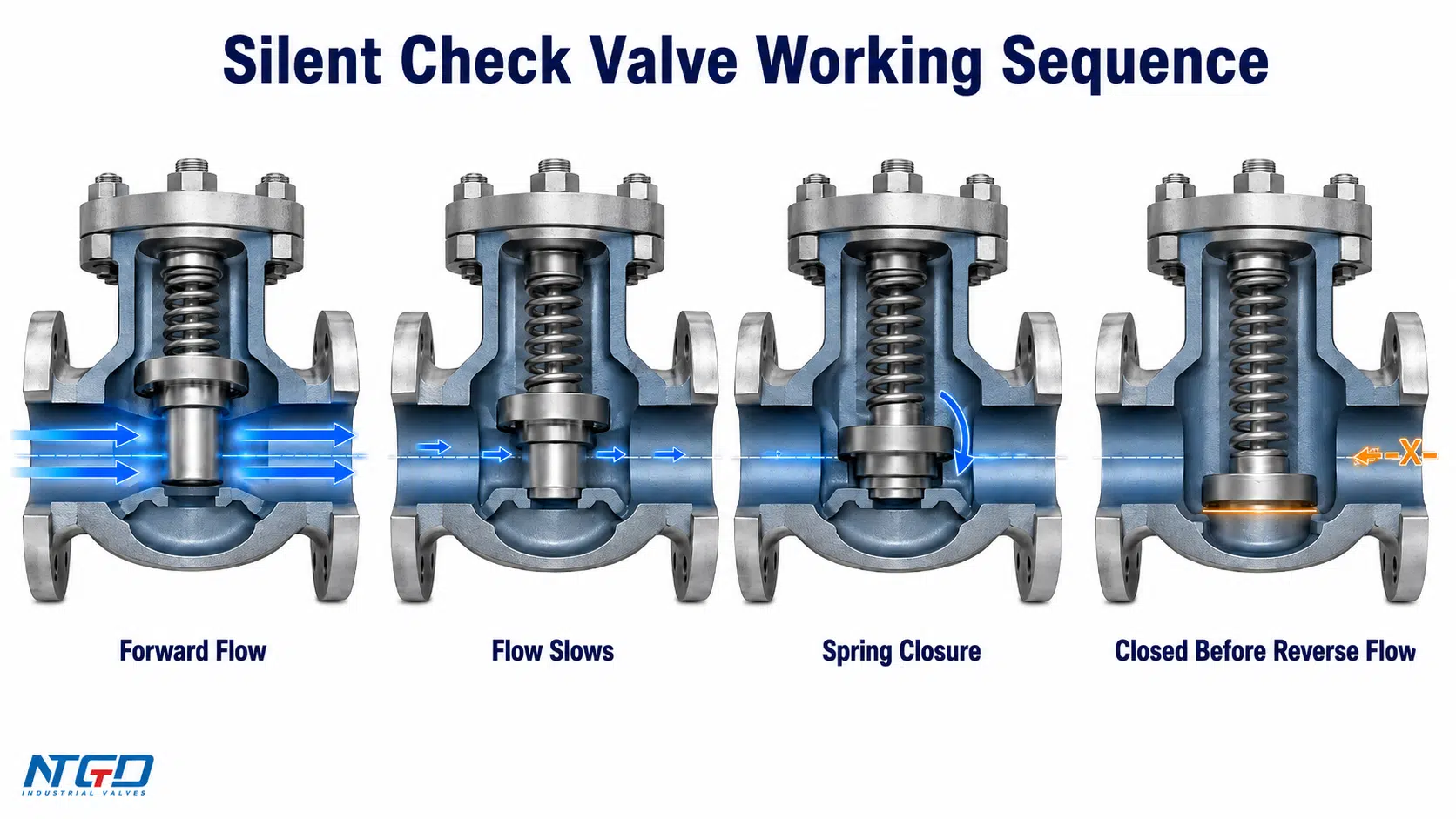
O fluxo no sentido direto abre o disco ou a válvula de retenção
Uma válvula de retenção silenciosa funciona da mesma forma princípio de funcionamento da válvula de retenção com base no diferencial de pressão. Quando a pressão a montante e o fluxo no sentido de avanço são suficientemente altos, o fluido empurra o disco ou a válvula de retenção para longe da sede. Isso cria um caminho de fluxo aberto através da válvula.
Em muitos modelos de válvulas de retenção silenciosas, o disco ou o obturador se move ao longo do eixo da válvula ou dentro de uma trajetória guiada. Isso ajuda a válvula a abrir e fechar em uma direção controlada, em vez de oscilar ao longo de um arco extenso.
O fluxo diminui ou para
Quando a bomba diminui a velocidade, para ou o fluxo no sentido direto diminui, a força de pressão que mantém o disco aberto também diminui. Nessa fase, a válvula não deve esperar que um forte fluxo reverso feche o disco bruscamente.
Esse tempo de fechamento é a principal diferença entre uma válvula de retenção silenciosa e uma válvula de retenção de fechamento retardado. Se o fluxo reverso começar a se mover para trás antes que a válvula feche completamente, o elemento de fechamento pode bater na sede com maior força, causando ruído, vibração, oscilação ou golpe de aríete.
Fechamento assistido por mola antes do fluxo reverso
A mola ajuda a retornar o disco ou o obturador à sede à medida que o fluxo de avanço diminui. Como o curso de fechamento costuma ser curto, a válvula consegue responder rapidamente.
O curso curto do disco ou o curso linear curto é uma característica fundamental do projeto. Isso reduz a distância que o elemento de fechamento precisa percorrer antes de se assentar, o que ajuda a diminuir o atraso no fechamento e reduz a probabilidade de um impacto forte após o início do fluxo reverso.
Essa é a principal razão pela qual as válvulas de retenção silenciosas são utilizadas em sistemas de bombas e de água. A válvula foi projetada para fechar antes que o fluxo reverso atinja velocidade suficiente para causar um forte impacto. O comportamento exato de fechamento ainda depende do projeto da mola, do tamanho da válvula, das condições de fluxo, da orientação e do meio de serviço.
A resposta da mola também precisa corresponder à queda real do fluxo no sistema. Uma resposta da mola muito forte pode causar fechamento prematuro ou abertura instável em condições de baixo fluxo, enquanto uma resposta muito fraca pode não conseguir impedir o fechamento tardio que a válvula foi projetada para evitar.
Posição fechada contra o assento
Quando o disco ou o obturador atinge a sede, a válvula bloqueia o fluxo reverso. A sede fornece a superfície de vedação, enquanto o corpo contém a barreira de pressão e sustenta o conjunto de fechamento interno.
Se a sede estiver danificada, se houver resíduos presos na superfície de vedação ou se a válvula estiver instalada na direção errada do fluxo, a válvula poderá apresentar vazamento ou não fechar corretamente.
Tabela de sequência de trabalho
| Etapa | O que acontece | Por que é importante |
|---|---|---|
| Fluxo para a frente | O disco ou obturador se abre sob pressão diferencial. | Permite o fluxo normal através da válvula. |
| Decaimento do fluxo | O fluxo no sentido direto diminui após a parada da bomba ou a redução da pressão. | A válvula se prepara para fechar. |
| Mecanismo de mola | A mola empurra o disco ou a válvula de retenção em direção à sede. | Reduz o atraso no fechamento. |
| Antes da reversão | O disco ou a válvula de retenção fecha antes que se forme um forte fluxo reverso. | Ajuda a reduzir o impacto, a vibração, as oscilações e o golpe de aríete. |
| Estado fechado | O disco ou a válvula de sede se veda contra a sede. | Impede o refluxo para o lado a montante. |
Por que as válvulas de retenção silenciosas ajudam a reduzir o golpe de aríete
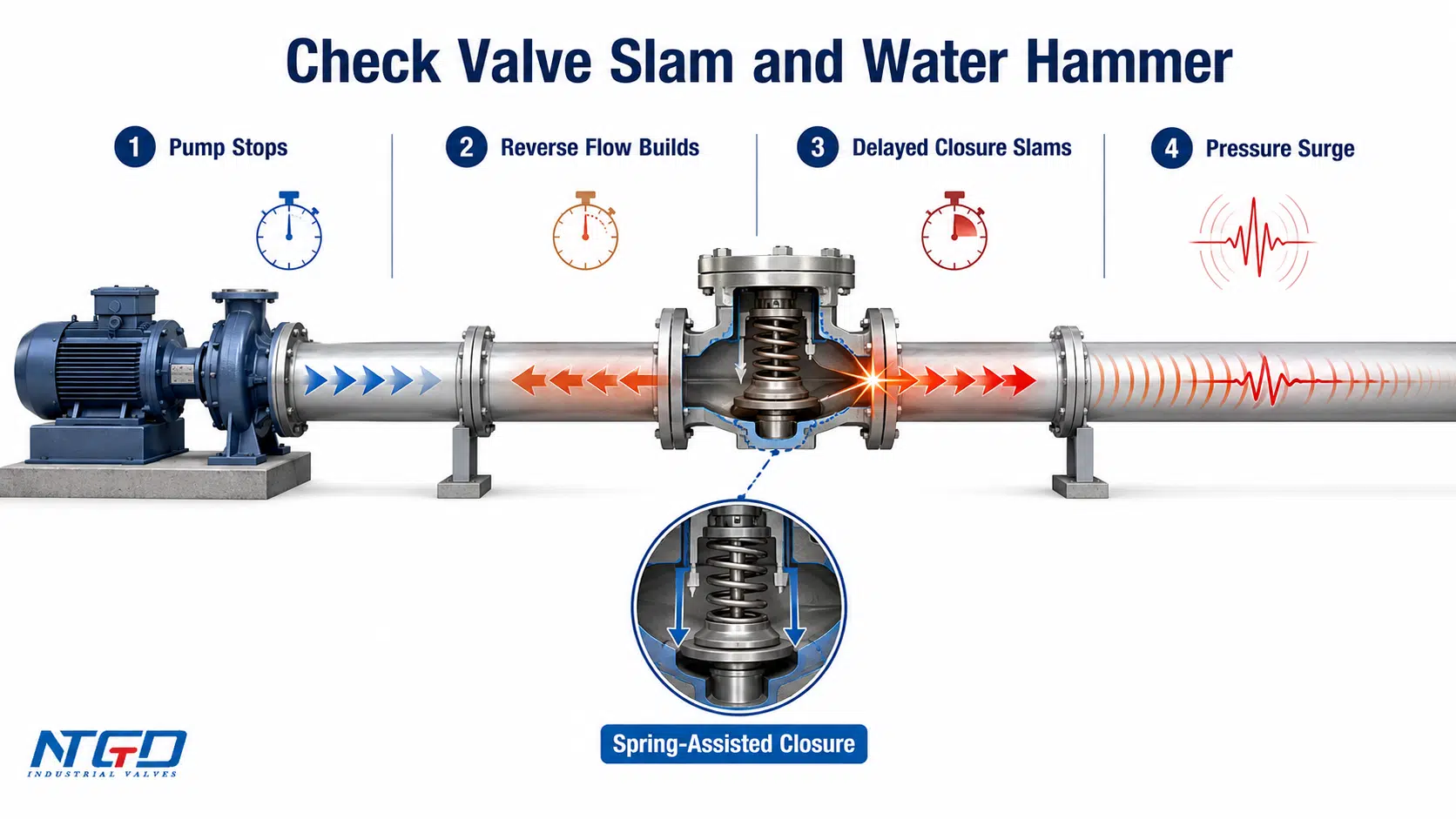
Tempo de fechamento e de fluxo reverso da válvula de retenção
Golpe de aríete pode ocorrer quando um fluido em movimento é forçado a parar ou mudar de direção abruptamente. No caso das válvulas de retenção, uma causa comum é o fechamento tardio. Se a válvula permanecer aberta por muito tempo após a interrupção do fluxo direto, o fluxo reverso pode ganhar velocidade. Quando o disco ou a aba se fecha repentinamente, o impacto pode criar um pico de pressão.
Uma válvula de retenção silenciosa ajuda a resolver esse problema específico, reduzindo o atraso entre a diminuição do fluxo e o fechamento da válvula. O movimento de curso curto, auxiliado por mola, permite que a válvula se feche antes que o fluxo reverso se torne intenso.
A sequência típica é a seguinte:
| Evento | Risco em válvulas de fechamento retardado | Objetivo do projeto da válvula de retenção silenciosa |
|---|---|---|
| A bomba para | O fluxo para a frente diminui rapidamente. | A válvula começa a fechar à medida que o fluxo diminui. |
| Início do fluxo reverso | O disco ainda pode estar aberto. | A mola empurra o elemento de fechamento em direção à sede. |
| O disco bate no assento | Podem ocorrer batidas, ruídos, vibrações ou picos de tensão. | Um percurso mais curto reduz o risco de impacto tardio. |
| Propagação da onda de pressão | O golpe de aríete pode causar tensão nos suportes das tubulações, nas juntas ou nos equipamentos. | A redução do impacto pode ajudar a diminuir a gravidade do surto. |
O golpe de aríete é um problema que afeta todo o sistema
Uma válvula de retenção silenciosa pode ajudar a reduzir o golpe de aríete causado pelo fechamento tardio da válvula de retenção, mas mitigação do golpe de aríete depende de todo o sistema de tubulação.
Entre os fatores importantes do sistema estão:
- condição de parada da bomba;
- velocidade do fluxo;
- comprimento e traçado da tubulação;
- tamanho da válvula;
- orientação de instalação;
- densidade do meio e teor de sólidos;
- estabilidade da tubulação a montante e a jusante;
- ar preso;
- dispositivos de proteção contra picos de tensão, caso sejam exigidos pelo projeto do sistema.
Por esse motivo, é mais seguro afirmar que uma válvula de retenção silenciosa pode ajudar a reduzir ou mitigar o golpe de aríete em aplicações adequadas. Ela não deve ser descrita como uma válvula que elimina totalmente o golpe de aríete em todos os sistemas.
Quando uma válvula de retenção silenciosa não é suficiente
Uma válvula de retenção silenciosa pode não resolver o problema por si só quando o golpe de aríete é causado principalmente por transientes de pressão no sistema, velocidade de fluxo muito alta, mau traçado da tubulação, desligamento repentino da bomba, dimensionamento incorreto da válvula, ar preso ou localização inadequada da válvula.
Se o golpe de aríete persistir após a instalação, a primeira questão a se levantar é se a causa principal do fenômeno foi identificada. Substituir um tipo de válvula de retenção por outra válvula de retenção silenciosa sem diagnosticar o comportamento da bomba ao parar, a velocidade do fluxo, a localização da válvula, a presença de ar preso ou o traçado da tubulação pode levar a falhas repetidas, à persistência do golpe de aríete e a custos desnecessários de substituição.
Nesses casos, a válvula ainda pode fazer parte da solução, mas o sistema também pode exigir alterações no controle da bomba, no traçado da tubulação, na proteção contra picos de pressão, na localização da válvula ou nas condições de operação.
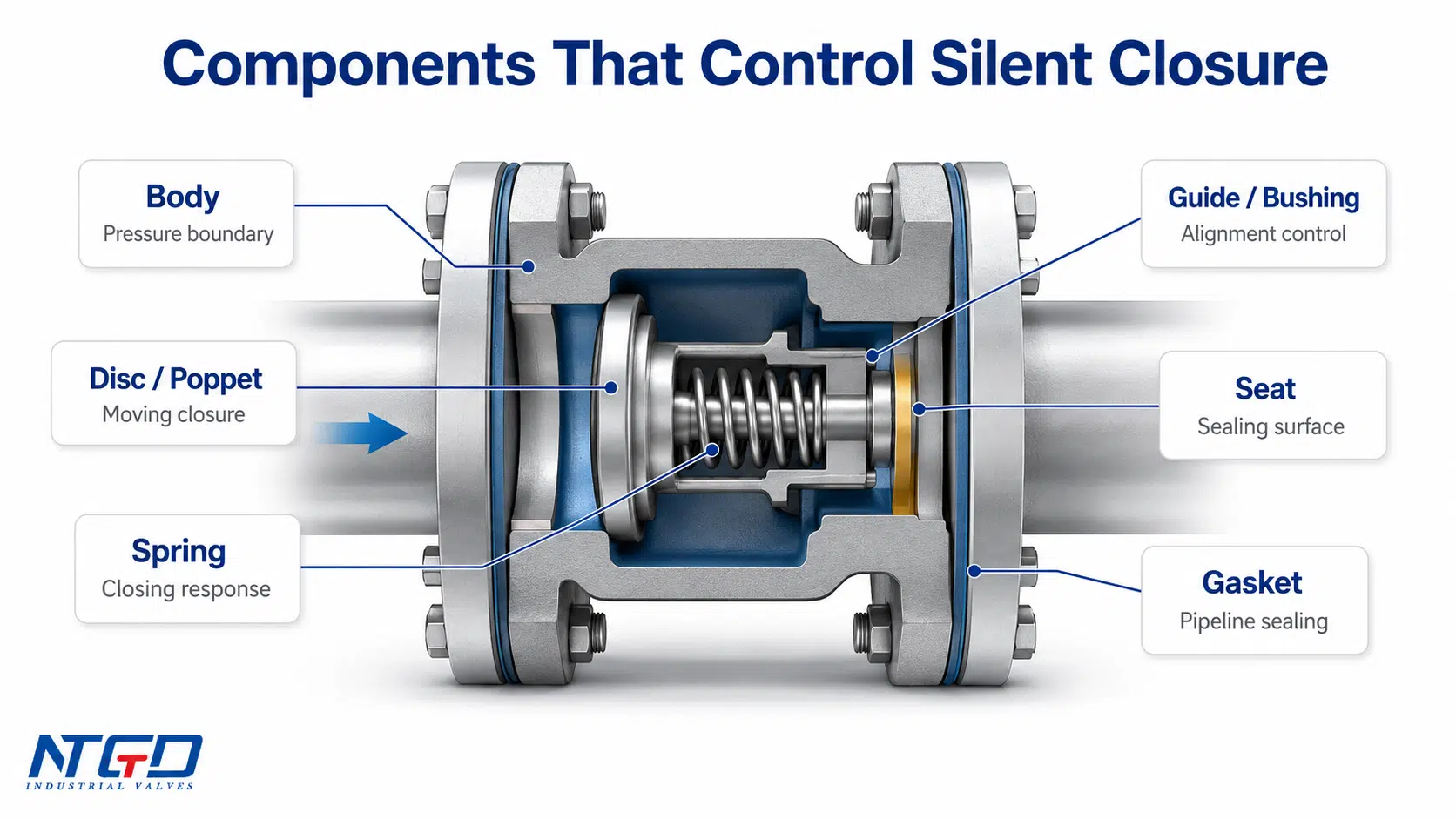
Componentes-chave e seu papel no fechamento silencioso
Corpo
O corpo é a parede de contenção da válvula de retenção silenciosa. Ele abriga a parte principal peças para válvulas de retenção e conecta a válvula ao sistema de tubulação.
O material do corpo é selecionado com base na pressão, na temperatura, no risco de corrosão, nas especificações do projeto e no meio de serviço. Os materiais industriais mais comuns para o corpo podem incluir ferro fundido, ferro dúctil, aço carbono, aço inoxidável ou outras ligas, dependendo do projeto e da aplicação.
O formato do corpo também influencia a instalação. Uma válvula de retenção silenciosa tipo wafer possui um corpo compacto instalado entre flanges, enquanto uma válvula de retenção silenciosa tipo globo apresenta um corpo mais volumoso, com um trajeto de fluxo interno guiado.
Disco ou válvula de sede
O disco ou obturador é a peça móvel de fechamento. Ele se abre quando o fluxo no sentido direto é suficiente e se fecha contra a sede quando o fluxo diminui ou quando há uma tentativa de fluxo reverso.
Em uma válvula de retenção silenciosa, o disco ou o obturador deve se mover suavemente e com curso limitado. Um curso mais curto pode ajudar a reduzir o tempo de fechamento. Se o disco estiver instável, superdimensionado, desalinhado ou afetado por detritos, a válvula pode vibrar, vazar ou não fechar corretamente.
Primavera
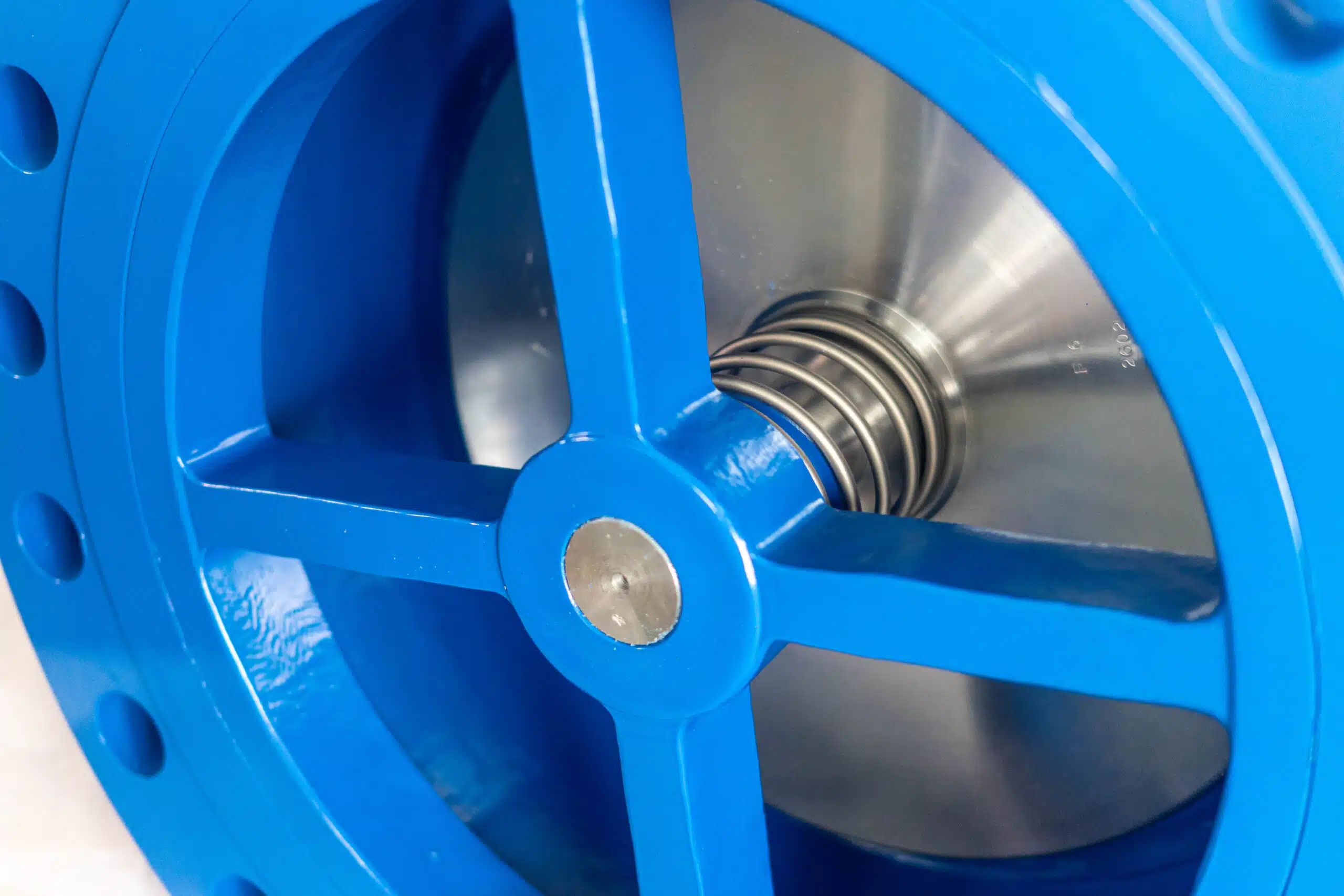
A mola é uma das peças mais importantes de uma válvula de retenção silenciosa. Ela auxilia no fechamento antes que o fluxo reverso se torne forte o suficiente para fechar a válvula com um golpe seco.
A mola deve ser adequada às condições de operação. Se a resposta da mola não for compatível com o sistema, a válvula poderá abrir tarde demais, fechar cedo demais, apresentar vibração em baixos caudais ou não conseguir reduzir o impacto de fechamento de forma eficaz. Para a análise da solicitação de cotação, pode ser necessário confirmar o material da mola, a pressão de abertura ou o ajuste da mola.
Assento
A sede é a superfície de vedação onde o disco ou a válvula de retenção se fecha. Ela afeta o desempenho de fechamento, o risco de vazamento e a compatibilidade com o fluido.
Uma sede resiliente pode permitir um fechamento mais hermético em algumas aplicações, enquanto uma sede metálica pode ser escolhida para temperaturas mais altas, maior durabilidade ou condições industriais específicas. A escolha correta depende do fluido, da temperatura, da pressão, da expectativa de vazamento e das especificações do projeto.
Guia / Haste / Bucha
Uma guia, haste ou bucha ajuda a manter o elemento móvel alinhado. Isso é especialmente importante nos modelos de válvulas de retenção silenciosas com guia central.
Um bom alinhamento ajuda a reduzir o atrito, a inclinação, o contato irregular com a sede, a vibração, a oscilação e o ruído de impacto. Um alinhamento inadequado pode aumentar o desgaste e impedir que a válvula feche suavemente.
Juntas e elementos de vedação para tubulações
A junta ou os elementos de vedação externos garantem a conexão entre a válvula e a tubulação. Eles não desempenham a função principal de fechamento da válvula de retenção interna, mas são importantes para evitar vazamentos na conexão da tubulação.
No caso das válvulas de retenção silenciosas com flange, o tipo de junta, o padrão da flange, o aperto dos parafusos e o alinhamento na instalação afetam a confiabilidade da vedação externa. Uma conexão inadequada da tubulação não altera o mecanismo interno de fechamento assistido por mola, mas ainda assim pode causar vazamentos, necessidade de retrabalho e instabilidade na instalação ao redor da válvula.
| Componente | Papel no “Silent Closure” | Impacto da seleção |
|---|---|---|
| Corpo | Define o limite de pressão e o trajeto do fluxo. | O tipo de corpo, o material, a classe de pressão e a conexão final afetam o ajuste na instalação e os limites de operação. |
| Disco / válvula de sede | Abre com o fluxo direto e fecha contra a sede. | Afeta a velocidade de fechamento, a estabilidade do movimento, o risco de vazamento, a perda de pressão e a redução do impacto. |
| Primavera | Ajuda no fechamento antes que ocorra o fluxo reverso. | Afeta diretamente a resposta de fechamento, a pressão de ruptura, o comportamento de abertura e a mitigação do golpe de aríete. |
| Assento | Proporciona uma superfície de vedação. | Afeta o controle de vazamentos, o impacto na sede, a compatibilidade com os meios, a adequação à temperatura e o fechamento a longo prazo. |
| Guia / haste / bucha | Mantém o elemento móvel alinhado. | Melhora a estabilidade no fechamento e ajuda a reduzir o emperramento, a vibração irregular, a vibração e o ruído de impacto. |
| Junta de vedação | Veda a conexão do tubo. | Contribui para a prevenção de vazamentos externos e para a confiabilidade da instalação; não é o principal elemento de fechamento interno. |
Tipos de válvulas de retenção silenciosas
As válvulas de retenção silenciosas podem ser agrupadas por estilo do corpo, tipo de conexão e material ou construção do corpo. Essas categorias não devem ser misturadas no mesmo nível. Uma válvula de retenção silenciosa tipo wafer e uma válvula de retenção silenciosa tipo globo descrevem o estilo do corpo. Uma válvula de retenção silenciosa flangeada e uma válvula de retenção silenciosa rosqueada descrevem o tipo de conexão. As descrições “fundida”, “forjada”, “plástica”, “aço carbono” ou “aço inoxidável” geralmente se referem ao material ou ao método de fabricação.
Como ponto de partida prático, as válvulas de retenção silenciosas do tipo wafer costumam ser consideradas quando a instalação compacta (distância entre faces) é importante, enquanto as válvulas de retenção do tipo globo ou do tipo globo silencioso são geralmente avaliadas quando o fechamento guiado, o serviço com líquidos industriais em grande escala ou um comportamento de fechamento mais estável são prioridades. A seleção final ainda depende das condições reais de vazão, da classe de pressão, dos requisitos de material, do espaço de instalação e das especificações do projeto.
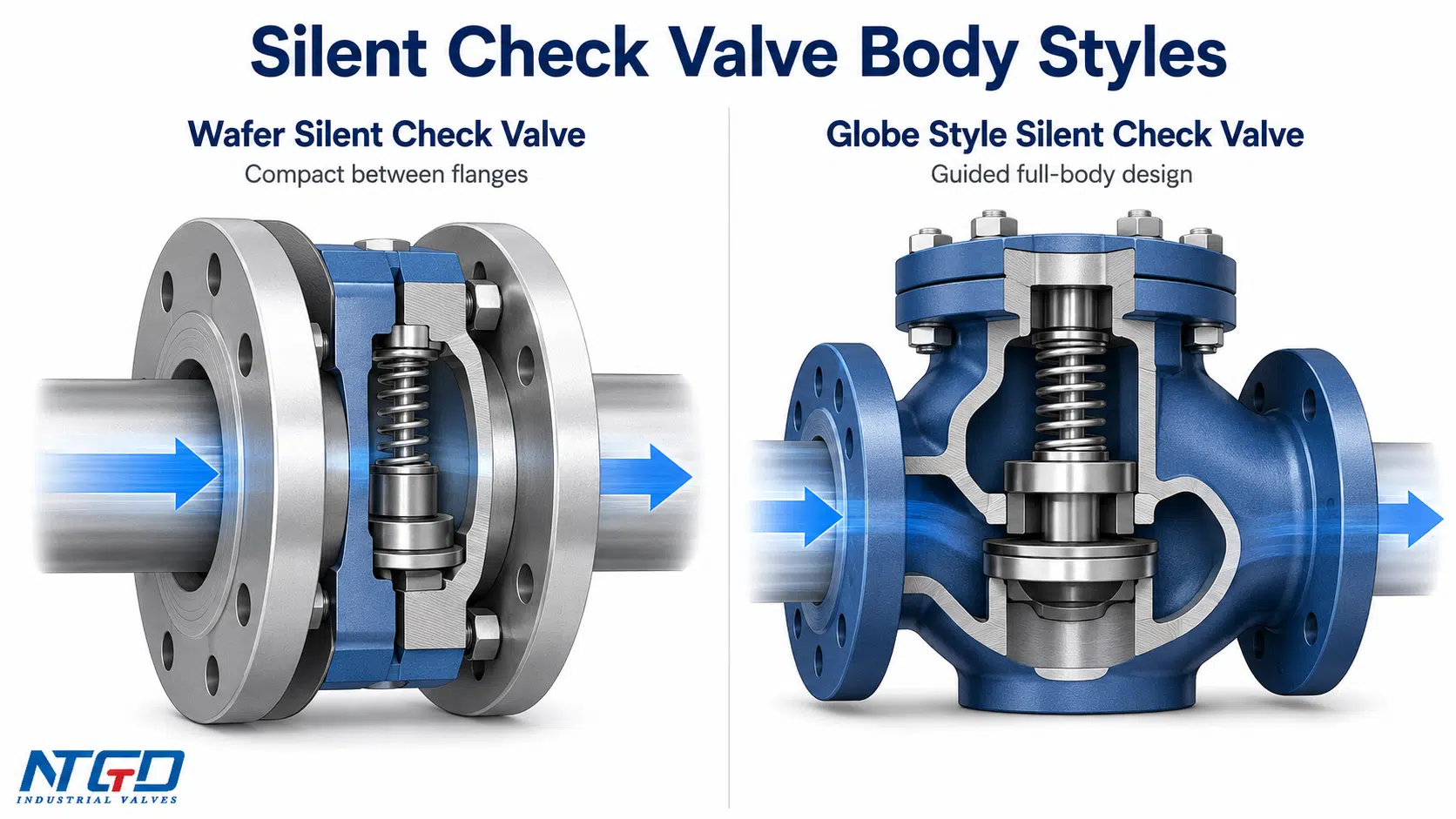
Válvula de retenção silenciosa tipo wafer
Uma válvula de retenção silenciosa do tipo wafer utiliza um design compacto válvula de retenção do tipo wafer corpo projetado para instalação entre flanges de tubulação. É frequentemente escolhido quando o espaço entre as faces é limitado e é necessário um corpo de comprimento reduzido.
Esse tipo pode ser útil em salas de bombas, sistemas de tubulação compactos e aplicações em que se prefere a instalação flange a flange. Para esse projeto, a verificação fundamental do encaixe não se resume apenas ao diâmetro nominal do tubo. A compatibilidade das flanges, o diâmetro externo do corpo, a relação entre os círculos de parafusos, o alinhamento central, o meio de serviço, a classe de pressão e a orientação da instalação precisam estar de acordo com o arranjo da tubulação.
Uma válvula de retenção tipo wafer silenciosa não deve ser tratada como parte do mesmo tópico que uma página geral sobre válvulas de retenção tipo wafer. O ponto-chave aqui é o comportamento de fechamento silencioso e assistido por mola dentro de um corpo do tipo wafer.
Tipo Globo / Válvula de retenção tipo globo silenciosa
Uma válvula de retenção do tipo globo silenciosa, às vezes chamada de válvula de retenção globo silenciosa, está relacionada à categoria mais ampla de válvula de retenção globo conceito de estrutura, mas utiliza um sistema de fechamento silencioso guiado.
Esse projeto é comumente discutido em aplicações industriais com líquidos, nas quais o fechamento guiado, o movimento mais suave, a redução do impacto e a disponibilidade de tamanhos maiores podem ser fatores importantes. Uma válvula de retenção silenciosa com guia central é geralmente considerada uma variante estrutural dentro da família das válvulas de retenção silenciosas do tipo globo, nas quais o disco móvel ou o obturador é guiado para melhorar o alinhamento e reduzir a vibração.
Os projetos do tipo “globe” costumam ser considerados quando o fechamento guiado e o comportamento estável de fechamento são mais importantes do que o arranjo face a face mais compacto. O compromisso a ser avaliado é a perda de pressão esperada ou o Cv/Kv em relação a outros estilos de corpo em condições de vazão semelhantes, juntamente com o material do corpo, do assento e dos componentes internos, a classe de pressão e os limites de serviço.
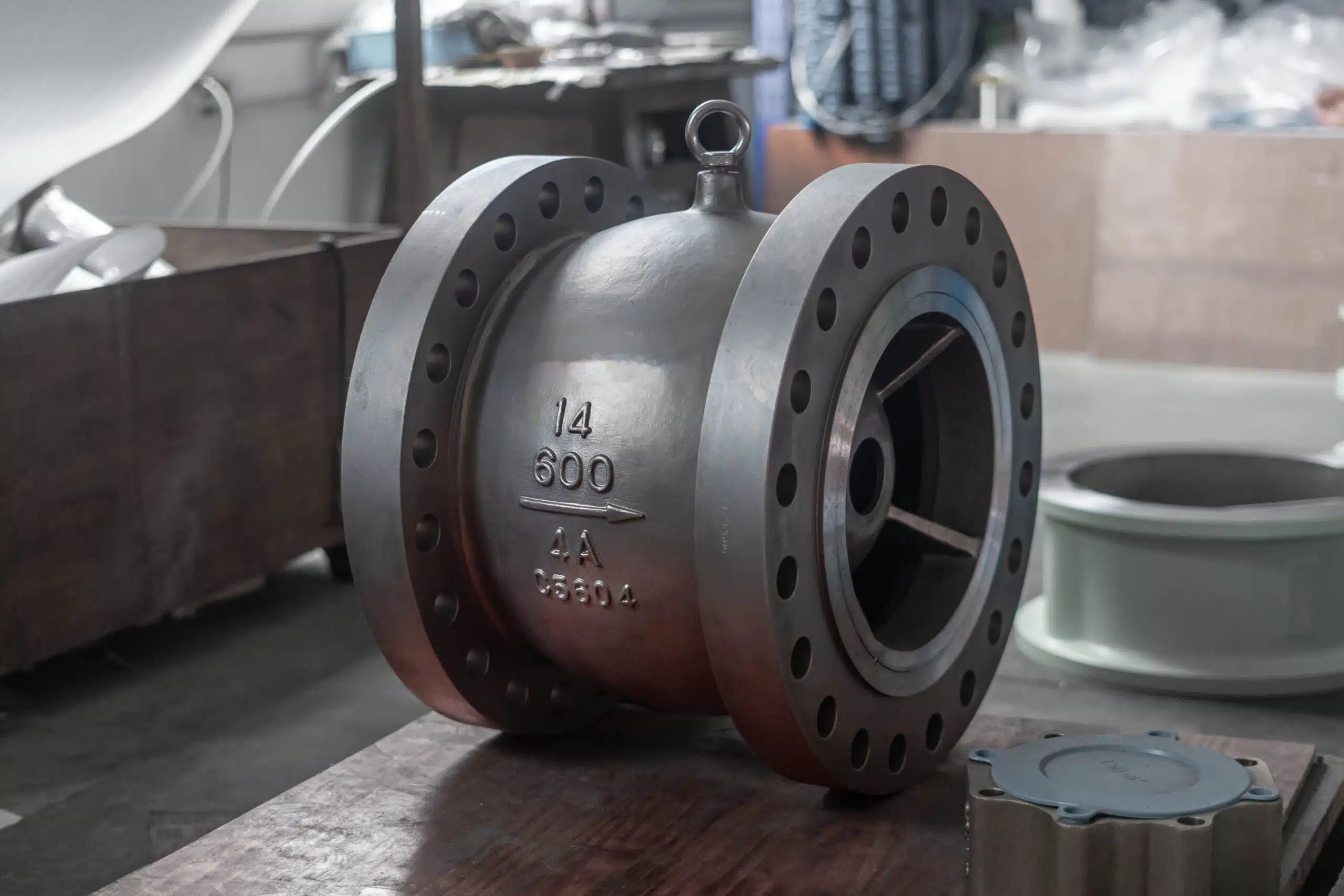
Válvula de retenção silenciosa com flanges
Uma válvula de retenção silenciosa com flange utiliza um válvula de retenção flangeada conexão para unir o sistema de tubulação por meio de flanges aparafusadas. Essa conexão é comum em tubulações industriais, nas quais a classe de pressão, a norma das flanges, a seleção da junta e o acesso para manutenção devem ser controlados.
A construção com flange pode ser escolhida para tamanhos maiores, sistemas de alta pressão ou instalações nas quais seja necessária a desmontagem por meio de parafusos. Antes da instalação, verifique a norma da flange, a junta, a compatibilidade dos parafusos, a classe de pressão e o espaço disponível para manutenção.
Válvula de retenção silenciosa com rosca
Uma válvula de retenção silenciosa rosqueada é conectada à tubulação por meio de extremidades rosqueadas. Ela é normalmente utilizada em linhas menores ou em instalações compactas, nas quais o uso de tubulação rosqueada é aceitável.
Os modelos roscados podem reduzir o espaço de instalação e o peso em comparação com válvulas flangeadas maiores. O principal risco é utilizar uma configuração roscada além de seus limites de pressão, temperatura, norma de rosca ou acesso para manutenção.
Observações sobre os materiais e a construção da carroceria
As descrições de materiais e de fabricação devem auxiliar na seleção, e não substituir a classificação principal por tipo.
As válvulas de retenção silenciosas metálicas podem ser fabricadas em ferro fundido, ferro dúctil, aço carbono, aço inoxidável ou outras ligas, dependendo das condições de operação. Podem existir válvulas de retenção silenciosas de plástico para aplicações de baixa pressão e baixa temperatura, mas não se deve presumir que sejam adequadas para aplicações industriais pesadas envolvendo alta pressão, alta temperatura ou ambientes corrosivos sem que haja verificação prévia.
A fundição e a forja são processos de fabricação. A escolha deve levar em conta a pressão, o tamanho, o material, o método de produção, os requisitos de inspeção e as especificações do projeto. As descrições de peças fundidas e forjadas não se enquadram na mesma categoria que as válvulas de retenção silenciosas do tipo wafer, globo, flangeadas ou rosqueadas.
| Tipo / Estilo | Contexto de melhor uso | O que confirmar |
|---|---|---|
| Válvula de retenção silenciosa tipo wafer | Instalação compacta, face a face, entre flanges. | Compatibilidade das flanges, diâmetro externo do corpo, relação entre os círculos de parafusos, alinhamento central, meio de serviço e orientação. |
| Válvula de retenção tipo globo / válvula de retenção de globo silenciosa | Projeto guiado de corpo inteiro para serviços com líquidos na indústria. | Material do corpo, sede, acabamento, classe de pressão, limites de operação e perda de pressão prevista ou Cv/Kv. |
| Válvula de retenção silenciosa flangeada | Sistemas de tubulação aparafusados que exigem conexão por flange. | Padrão da flange, junta, compatibilidade dos parafusos, classe de pressão e acesso para manutenção. |
| Válvula de retenção silenciosa com rosca | Tubulação roscada menor ou compacta. | Padrão da rosca, faixa de tamanhos, pressão, temperatura e acesso para manutenção. |
| Nota sobre o material / construção da carroceria | Construção em metal, plástico, fundida ou forjada, dependendo da aplicação. | Meio, corrosão, temperatura, pressão e especificações do projeto. |
Aplicações comuns das válvulas de retenção silenciosas
Linhas de descarga da bomba
A operação de descarga da bomba é um dos motivos mais comuns para se considerar o uso de uma válvula de retenção silenciosa. Quando uma bomba para, pode ocorrer um fluxo reverso que tente retornar pela tubulação. Se a válvula de retenção fechar tarde demais, pode ocorrer um batimento.
Uma válvula de retenção silenciosa pode ajudar a reduzir o risco de impacto por refluxo, fechando-se antes que a velocidade de refluxo se torne excessiva. Para essa aplicação, a seleção deve levar em conta a condição de parada da bomba, o vazão mínima, a vazão máxima, a faixa de vazão real e o tamanho da válvula.
Sistemas de climatização, água gelada e aquecimento
Em sistemas de climatização, água gelada e aquecimento, o ruído das válvulas, a vibração e os picos de pressão podem afetar a confiabilidade da tubulação e o funcionamento do sistema. Válvulas de retenção silenciosas podem ser utilizadas quando for necessário um fechamento mais suave e uma redução do ruído.
Para sistemas de vazão variável ou de baixa vazão, o principal critério de verificação do ajuste é a estabilidade. O sobredimensionamento, a baixa pressão diferencial ou uma resposta inadequada da mola podem aumentar o risco de vibração, mesmo quando o tipo de válvula é, em geral, adequado.
Serviço para Água e Líquidos Industriais
As válvulas de retenção silenciosas são comumente utilizadas em sistemas de abastecimento de água, água de serviço, água de resfriamento e sistemas de líquidos industriais, nos quais é necessário impedir o refluxo e garantir um fechamento mais suave.
Para aplicações com fluidos, a limpeza do meio é importante. Sólidos, detritos ou resíduos podem interferir no movimento do disco ou na vedação da sede. A resistência à corrosão torna-se fundamental quando o meio não é água limpa.
Linhas de produção em que o fluxo reverso e os picos de pressão são importantes
Em tubulações de processo, pode-se considerar o uso de uma válvula de retenção silenciosa quando o fluxo reverso puder danificar equipamentos, contaminar sistemas a montante ou criar condições operacionais instáveis.
Para este serviço, a principal verificação de adequação consiste em determinar se o meio do processo e o comportamento do fluxo permitem um fechamento estável assistido por mola. Serviços envolvendo gás, vapor, vácuo, lodo, meios com alto teor de sólidos, altamente corrosivos ou com forte pulsação exigem confirmação de projeto específica, em vez de serem considerados adequados por padrão.
| Aplicativo | Por que se pode usar uma válvula de retenção silenciosa | Verificação de chaves |
|---|---|---|
| Descarga da bomba | Risco de fluxo reverso e de impacto por parada da bomba. | Condição de parada da bomba, velocidade do fluxo, faixa de vazão real e orientação. |
| AVAC / água refrigerada | Controle de ruído, vibração e picos na linha de retorno. | Estabilidade do fluxo, resposta da mola, material e classe de pressão. |
| Sistemas de água | Prevenção de refluxo e fechamento mais suave. | Limpeza do serviço, material dos assentos e sentido de instalação. |
| Serviço de líquidos industriais | Proteção de equipamentos e dutos. | Limpeza do fluido, corrosão, temperatura, teor de sólidos e compatibilidade das sedes. |
| Linhas de serviços públicos ou de processo | Risco de refluxo e transientes de pressão. | Assento, mola, acabamento, limites de manutenção e histórico de picos de pressão. |
As válvulas de retenção silenciosas são mais comumente escolhidas para líquidos limpos, água industrial, líquidos de utilidade, descarga de bombas, sistemas de climatização (HVAC) e aplicações semelhantes, nas quais é necessário um fechamento mais suave da válvula de retenção. Para serviços com grande presença de lamas, meios com alto teor de sólidos, gás em alta velocidade, meios altamente corrosivos ou fluxo fortemente pulsante, o projeto da válvula deve ser verificado em relação às condições reais de serviço antes da seleção.
Observações sobre instalação, orientação e limites do serviço
Seta de direção do fluxo e direção correta de instalação
Uma válvula de retenção silenciosa deve ser instalada na direção correta do fluxo. Antes da instalação, verifique a seta indicada no corpo da válvula, a placa de identificação ou as instruções de instalação.
Se a válvula for instalada ao contrário, ela poderá bloquear o fluxo no sentido normal, não fechar corretamente, apresentar vazamentos ou causar perda de pressão anormal. A direção do fluxo também deve ser incluída na solicitação de cotação (RFQ) ou na análise da instalação quando o traçado da tubulação não estiver claro.
Análise da instalação horizontal e vertical
As válvulas de retenção silenciosas não dependem apenas da gravidade para fechar; por isso, alguns modelos podem ser instalados em tubulações horizontais ou verticais. No entanto, isso não deve ser considerado uma regra universal.
O fluxo vertical ascendente, o fluxo vertical descendente, o fluxo horizontal e as condições de descarga de bombas acopladas diretamente podem afetar o comportamento da válvula. Uma abordagem mais adequada é verificar a orientação permitida de acordo com o projeto da válvula e as especificações do projeto antes da instalação.
Limites para resíduos sólidos, detritos e serviços de limpeza
Detritos ou sólidos podem impedir que o disco ou a válvula de retenção se movam livremente ou se encaixem corretamente. Isso pode causar vazamentos, vibrações, emperramento ou fechamento incompleto.
Para aplicações com partículas, lodo, sólidos em águas residuais, incrustações ou resíduos, o tipo da válvula e o material da sede devem ser analisados com mais cuidado. Uma válvula de retenção silenciosa projetada para líquidos limpos não deve ser utilizada em aplicações com grande quantidade de sólidos sem antes se certificar de sua adequação.
Pulsações fortes e contínuas também devem ser analisadas cuidadosamente. A reversão rápida e repetida do fluxo ou um fluxo instável podem fazer com que o disco ou a válvula de retenção entrem em ciclo com frequência, o que pode acelerar a fadiga da mola, aumentar o risco de vibração e reduzir o desempenho de fechamento estável. Nessas aplicações, o projeto da válvula deve ser confirmado com base no padrão real de pulsação, em vez de ser selecionado apenas pelo tamanho da tubulação.
Perda de pressão, pressão de fissuração e ajuste do sistema
As válvulas de retenção silenciosas podem causar perda de pressão, dependendo do tipo de corpo, do trajeto do fluxo, do tamanho e do projeto do disco. A pressão de abertura ou o ajuste da mola também podem afetar o comportamento de abertura.
Sistemas com baixa pressão diferencial ou vazão variável podem exigir uma análise mais detalhada do ajuste da mola para evitar abertura tardia, abertura incompleta ou vibração. Isso se torna fundamental quando a válvula é selecionada apenas com base no diâmetro nominal da tubulação, em vez da vazão operacional real.
Este artigo não substitui um cálculo de perda de pressão nem a ficha técnica de um produto certificado. Os valores exatos devem ser verificados com base nos dados do projeto e nas informações do fabricante.
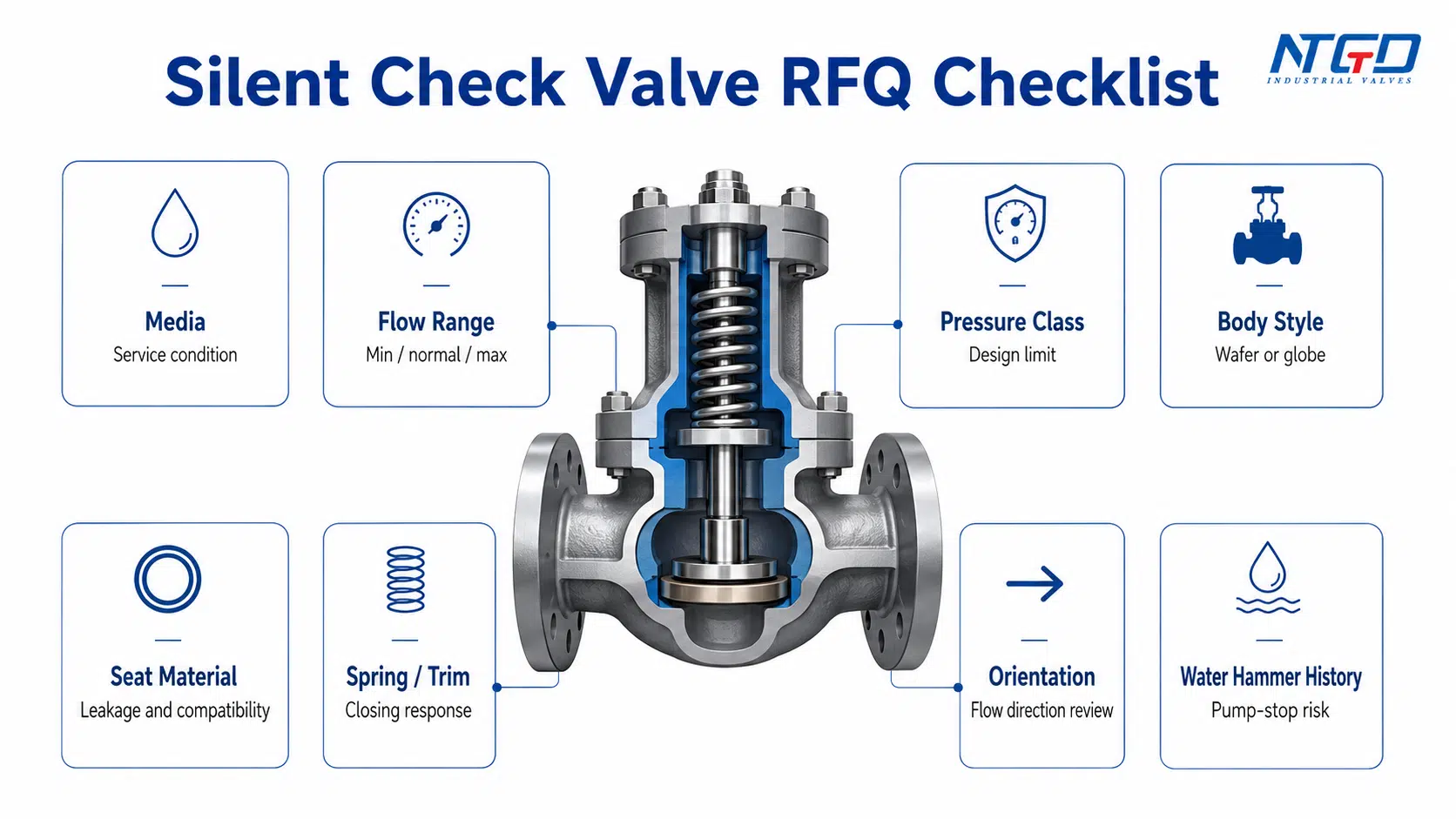
Lista de verificação para seleção e solicitação de cotação de válvulas de retenção silenciosas
Informações básicas sobre a solicitação de cotação
Uma boa solicitação de cotação (RFQ) para válvulas de retenção silenciosas deve seguir os seguintes critérios: seleção de válvulas industriais lógica e vão além do tamanho do tubo. O fornecedor ou a equipe de engenharia precisa de informações suficientes para avaliar o tipo de válvula, o material, a sede, a mola, a classe de pressão e as condições de instalação.
As informações básicas devem incluir o diâmetro do tubo, a classe de pressão, o tipo de conexão, a norma do projeto, a quantidade necessária e as condições de operação.
Informações sobre serviços e mídia
O meio de serviço influencia a escolha dos materiais da estrutura, dos assentos e das molas, além de afetar a resistência à corrosão e o risco de manutenção. Água limpa, água tratada, água resfriada, líquidos químicos, líquidos de serviço e meios de processos industriais podem exigir escolhas diferentes de materiais.
A solicitação de cotação deve indicar se o meio contém sólidos, detritos, incrustações, apresenta viscosidade, contém substâncias corrosivas, sofre fortes pulsações ou está sujeito a variações de temperatura.
Informações sobre o tipo de válvula, sede e mola
O comprador deve especificar se prefere uma válvula de retenção silenciosa do tipo wafer, globo, com flange ou rosqueada. Caso o tipo não seja conhecido, as condições de operação devem ser informadas para que o fornecedor possa ajudar a restringir a seleção.
O material da sede, o material da mola ou do revestimento, a pressão de ruptura e o desempenho esperado no fechamento também devem ser analisados. Esses fatores afetam diretamente o controle de vazamentos, o comportamento de abertura, a resposta de fechamento e a redução do impacto.
Informações sobre golpe de aríete / parada da bomba
Caso o sistema tenha histórico conhecido de golpe de aríete, batida da válvula de retenção, ruído intenso na parada da bomba ou vibração, isso deve ser incluído na solicitação de cotação. A seleção da válvula deve levar em consideração as condições de parada da bomba, a velocidade do fluxo, o vazão mínima, o vazão máxima e o traçado da tubulação.
| Campo de solicitação de cotação | Por que é importante |
|---|---|
| Mídia | Determina o material, a sede e o limite de serviço. |
| Vazão / vazão mínima / vazão máxima | Ajuda a evitar o sobredimensionamento, a vibração e o movimento instável do disco. |
| Diâmetro do tubo e classe de pressão | Define o tamanho básico da válvula e o limite de pressão. |
| Estilo da carroceria | Determina a configuração tipo wafer, tipo globo, roscada ou com flange. |
| Conexão final | Deve estar em conformidade com a norma relativa à flange, à rosca ou ao projeto. |
| Material da carroceria | Afeta a resistência à corrosão e o limite de pressão. |
| Material do assento | Afeta o controle de vazamentos e a compatibilidade com os meios. |
| Mola / material de acabamento | Afeta a resposta, a resistência à corrosão, o comportamento de fechamento e a vida útil. |
| Pressão de acionamento / ajuste da mola | Afeta o comportamento de abertura, o tempo de fechamento e o risco de vibração. |
| Orientação da instalação | Confirma os requisitos relativos à orientação horizontal, vertical e à direção do fluxo. |
| Condição de parada da bomba | Ajuda a avaliar o risco de golpe de aríete e de refluxo. |
| Histórico de golpes de aríete | Ajuda a identificar se o fechamento silencioso é um requisito essencial. |
| Especificações aplicáveis ao projeto | Evita a escolha incorreta de material, conexão ou pressão. |
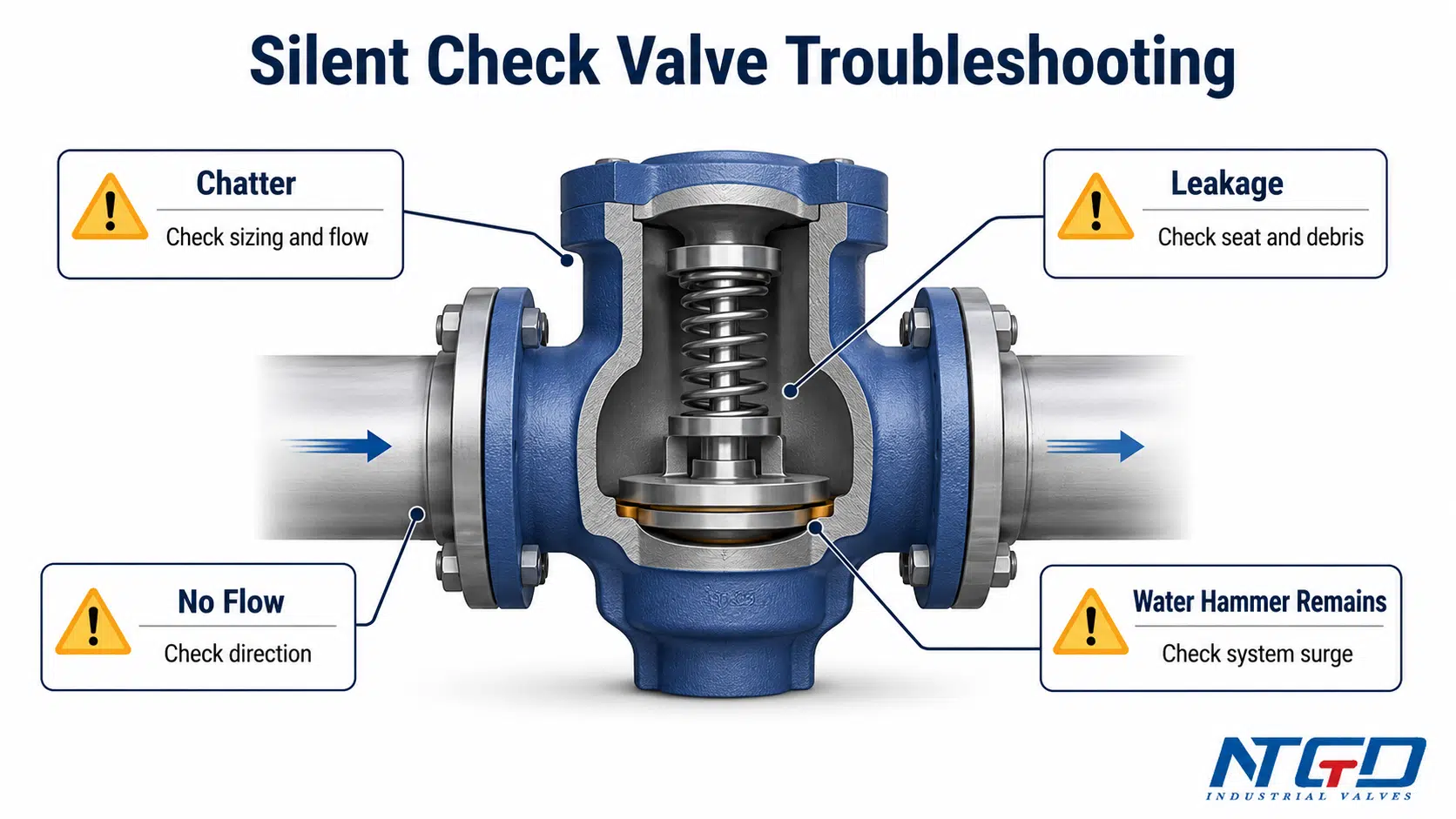
Solução de problemas em válvulas de retenção silenciosas
Ruído ou vibração
O ruído geralmente indica um movimento instável do disco ou do obturador. As causas mais comuns incluem válvula superdimensionada, baixo fluxo, fluxo instável, pressão diferencial insuficiente, orientação incorreta ou detritos que afetam o movimento.
A faixa de vazão real deve ser verificada em relação ao tamanho da válvula. Uma válvula selecionada apenas com base no diâmetro nominal da tubulação pode ser grande demais para as condições reais de vazão.
Vazamento pela válvula
O vazamento pode ser causado por detritos presos entre o disco e a sede, danos na sede, danos no disco, material inadequado da sede ou impactos repetidos causados pelo fechamento brusco.
A válvula deve ser isolada e inspecionada de acordo com os procedimentos de manutenção seguros. A sede, o disco ou o obturador, a junta e as superfícies de vedação devem ser verificados.
Não há fluxo através da válvula
Se não houver fluxo de fluido pela válvula de retenção silenciosa, isso pode indicar que a válvula foi instalada na direção errada, que o disco está emperrado, que a tubulação está entupida ou que o conjunto de mola e obturador não está se movendo corretamente.
A primeira verificação deve ser a seta de direção do fluxo e a orientação da instalação. Em seguida, verifique se há detritos, danos internos ou se a válvula escolhida está incorreta.
O barulho alto ou o golpe de aríete continua
Um estrondo alto na parada da bomba pode indicar fechamento atrasado, velocidade de fluxo reversa, tipo de válvula incorreto, tamanho incorreto, resposta inadequada da mola ou um problema de surto no nível do sistema.
Uma mola que não esteja adequada às condições reais de queda de vazão também pode contribuir para um fechamento retardado ou um comportamento de fechamento instável. Se o golpe de aríete persistir após a instalação, a causa pode não ser apenas a válvula de retenção. Pode ser necessário analisar o comportamento de desligamento da bomba, o comprimento da tubulação, a localização da válvula, a velocidade do fluxo, o ar preso e os equipamentos de controle de picos de pressão.
Problemas recorrentes com o assento ou a mola
Danos repetidos na sede, fadiga da mola ou desgaste interno podem indicar condições de operação inadequadas, presença de detritos, corrosão, ciclos excessivos, forte pulsação ou fluxo instável.
Substituir apenas o componente danificado pode não resolver a causa raiz do problema. É necessário verificar as condições de aplicação e o dimensionamento da válvula antes de substituí-la por outra com a mesma configuração.
| Sintoma | Possível causa | O que verificar | Possíveis consequências caso a questão não seja resolvida |
|---|---|---|---|
| Ruído / vibração | Válvula superdimensionada, vazão instável, baixa pressão diferencial. | Vazão real, tamanho da válvula, orientação e resposta da mola. | Desgaste da sede ou do disco, fadiga da mola, vazamento ou danos aos componentes. |
| Vazamento | Danos no assento, detritos, material inadequado do assento. | Assento, disco, sólidos, condição da vedação e compatibilidade com o meio. | Refluxo contínuo, danos à vedação e redução da confiabilidade do fechamento. |
| Sem fluxo | Direção errada, disco preso, linha bloqueada. | Seta de fluxo, detritos, movimento da mola/disco e obstrução da linha. | Interrupção do processo, sobrecarga da bomba ou perda de pressão anormal. |
| Barulho alto na parada da bomba | Fechamento retardado, velocidade de fluxo reverso, tipo de válvula incorreto, resposta inadequada da mola. | Condição de parada da bomba, especificação da mola, tipo de válvula e comportamento de fechamento. | Risco contínuo de batidas, vibrações e picos de pressão. |
| O golpe de aríete persiste | O pico de pressão no sistema não é causado apenas pela válvula de retenção. | Traçado da tubulação, dispositivos de compensação de picos de pressão, desligamento da bomba, ar preso, velocidade de fluxo e localização das válvulas. | Tensão contínua causada por picos de pressão nos suportes dos tubos, nas juntas e nos equipamentos. |
| Problemas recorrentes com o assento ou com as molas | Corrosão, ciclos de operação, resíduos, pulsação, ajuste inadequado na manutenção. | Meios, material, histórico de manutenção, condição operacional e seleção de molas. | Manutenção repetida, fechamento instável e falha prematura de componentes. |
Perguntas frequentes sobre válvulas de retenção silenciosas
Qual é a função de uma válvula de retenção silenciosa?
Uma válvula de retenção silenciosa impede o refluxo e ajuda a reduzir o impacto da válvula, o golpe de aríete, a vibração e as oscilações de pressão em sistemas de tubulação adequados. É comumente utilizada em situações em que é necessário um fechamento mais suave após a parada da bomba ou a redução do fluxo.
Como funciona uma válvula de retenção silenciosa?
Uma válvula de retenção silenciosa se abre quando o fluxo no sentido direto gera um diferencial de pressão suficiente. Quando o fluxo diminui ou cessa, uma mola ajuda a empurrar o disco ou o obturador de volta para a sede antes que se desenvolva um forte fluxo reverso.
Uma válvula de retenção silenciosa evita o golpe de aríete?
Uma válvula de retenção silenciosa pode ajudar a reduzir o golpe de aríete causado pelo fechamento tardio da válvula de retenção. Ela não deve ser considerada uma solução completa para todos os problemas de golpe de aríete, pois esse fenômeno também pode depender das condições de parada da bomba, da velocidade do fluxo, do traçado da tubulação, do dimensionamento da válvula, do ar preso e do projeto de controle de golpe de aríete. Antes de considerar a válvula como a única solução, analise as condições de parada da bomba, a velocidade do fluxo, o traçado da tubulação, o ar preso, a localização da válvula e o tamanho real da válvula.
Uma válvula de retenção silenciosa é a mesma coisa que uma válvula de retenção sem batida?
Esses termos costumam estar relacionados. Uma válvula de retenção silenciosa é geralmente projetada para reduzir o impacto e o ruído, enquanto a válvula de retenção “non-slam” descreve o objetivo de desempenho: reduzir o impacto do fechamento retardado. Nas especificações de projetos, o termo “sem batida” pode descrever o comportamento de fechamento exigido, enquanto “válvula de retenção silenciosa” é frequentemente usado para designar a família de produtos ou projetos que alcança esse objetivo por meio de um fechamento de curso curto assistido por mola.
Qual é a diferença entre uma válvula de retenção silenciosa e uma válvula de retenção oscilante?
Uma válvula de retenção silenciosa geralmente utiliza um mecanismo de fechamento de curso curto assistido por mola. A válvula de retenção de giro utiliza um disco articulado que se abre e se fecha por movimento oscilante. Uma válvula de retenção silenciosa é geralmente a opção preferida em sistemas de líquidos limpos, nos quais a parada da bomba, o risco de batida e a sensibilidade ao golpe de aríete são as principais preocupações. Uma válvula de retenção oscilante pode ser considerada em algumas linhas ou instalações maiores, com velocidade mais baixa, nas quais o projeto com disco articulado é aceitável; no entanto, seu fechamento mais lento pode aumentar o risco de batida hidráulica caso ocorra um fluxo reverso antes do fechamento.
O que é uma válvula de retenção do tipo “silent globe”?
Uma válvula de retenção silenciosa do tipo globo é uma válvula de retenção silenciosa com design do tipo globo. Geralmente possui um design de corpo inteiro, com um disco guiado ou obturador e fechamento assistido por mola. Ela deve ser considerada como um estilo de design dentro da família das válvulas de retenção silenciosas, e não como o único tipo de válvula de retenção silenciosa.
Qual é a diferença entre uma válvula de retenção silenciosa do tipo wafer e uma válvula de retenção silenciosa do tipo globo?
Uma válvula de retenção silenciosa tipo wafer possui um corpo compacto, projetado para instalação entre flanges. Uma válvula de retenção silenciosa tipo globo possui um corpo mais volumoso e, frequentemente, utiliza um disco ou obturador guiado centralmente. A escolha depende do espaço de instalação, da classe de pressão, das condições de vazão, da perda de pressão esperada, do material do corpo, da sede e dos requisitos do projeto.
As válvulas de retenção silenciosas podem ser instaladas na vertical?
Alguns modelos de válvulas de retenção silenciosas podem ser instalados em tubulações verticais, pois utilizam fechamento assistido por mola, em vez de apenas pela gravidade. No entanto, o fluxo vertical ascendente, o fluxo vertical descendente e o fluxo horizontal devem ser verificados de acordo com o projeto do fabricante e as especificações do projeto.
Uma válvula de retenção silenciosa é a mesma coisa que uma válvula de retenção industrial silenciosa?
Nem sempre. A expressão “válvula de retenção silenciosa” é frequentemente usada em pesquisas por produtos domésticos ou bombas de drenagem, onde a principal preocupação pode ser o ruído do encanamento. A seleção de uma válvula de retenção silenciosa industrial é feita com base no tipo de válvula, classe de pressão, material, sede, resposta da mola, orientação, meio de serviço, condição de parada da bomba e risco de golpe de aríete. As duas intenções de pesquisa não devem ser confundidas sem a confirmação da aplicação.
Quais informações devem constar em uma solicitação de cotação (RFQ) para válvulas de retenção silenciosas?
Uma solicitação de cotação (RFQ) para válvulas de retenção silenciosas deve incluir o meio, a vazão, o diâmetro da tubulação, a classe de pressão, o tipo de corpo, a conexão terminal, o material do corpo, o material da sede, o material da mola/componentes internos, a pressão de abertura (se necessário), a orientação de instalação, a condição de parada da bomba, a condição de pulsação e qualquer histórico de golpe de aríete ou batida.
Conclusão
Uma válvula de retenção silenciosa é escolhida quando um sistema de tubulação precisa de prevenção contra refluxo com um fechamento mais rápido, suave e assistido por mola. Seu principal valor técnico não é apenas impedir o refluxo, mas também ajudar a reduzir o fechamento tardio da válvula de retenção, a vibração, os picos de pressão e o golpe de aríete em aplicações adequadas.
Para compradores do setor industrial, o fundamental é adequar a válvula ao sistema específico. O tipo de corpo, o design do disco ou do obturador, a resposta da mola, o material da sede, a vazão, a condição de parada da bomba, a orientação da instalação, as condições do fluido, o teor de sólidos e o padrão de pulsação — todos esses fatores afetam o desempenho. Uma válvula de retenção silenciosa tipo wafer, uma válvula de retenção silenciosa tipo globo, uma válvula de retenção silenciosa flangeada ou uma válvula de retenção silenciosa rosqueada podem ser opções válidas, mas cada uma deve ser adequada aos requisitos de serviço.
Prepare sua solicitação de cotação para válvulas de retenção silenciosas
Se você estiver preparando uma solicitação de cotação (RFQ) para válvulas de retenção silenciosas, organize primeiro os principais dados operacionais: fluido, classe de pressão, faixa de vazão, modelo da válvula, material da sede, requisitos da mola, orientação de instalação, condição de parada da bomba, condição de pulsação e histórico de golpes de aríete. A NTGD Valve pode ajudar a avaliar a adequação da aplicação e esclarecer as especificações antes da seleção final da válvula de retenção silenciosa.
